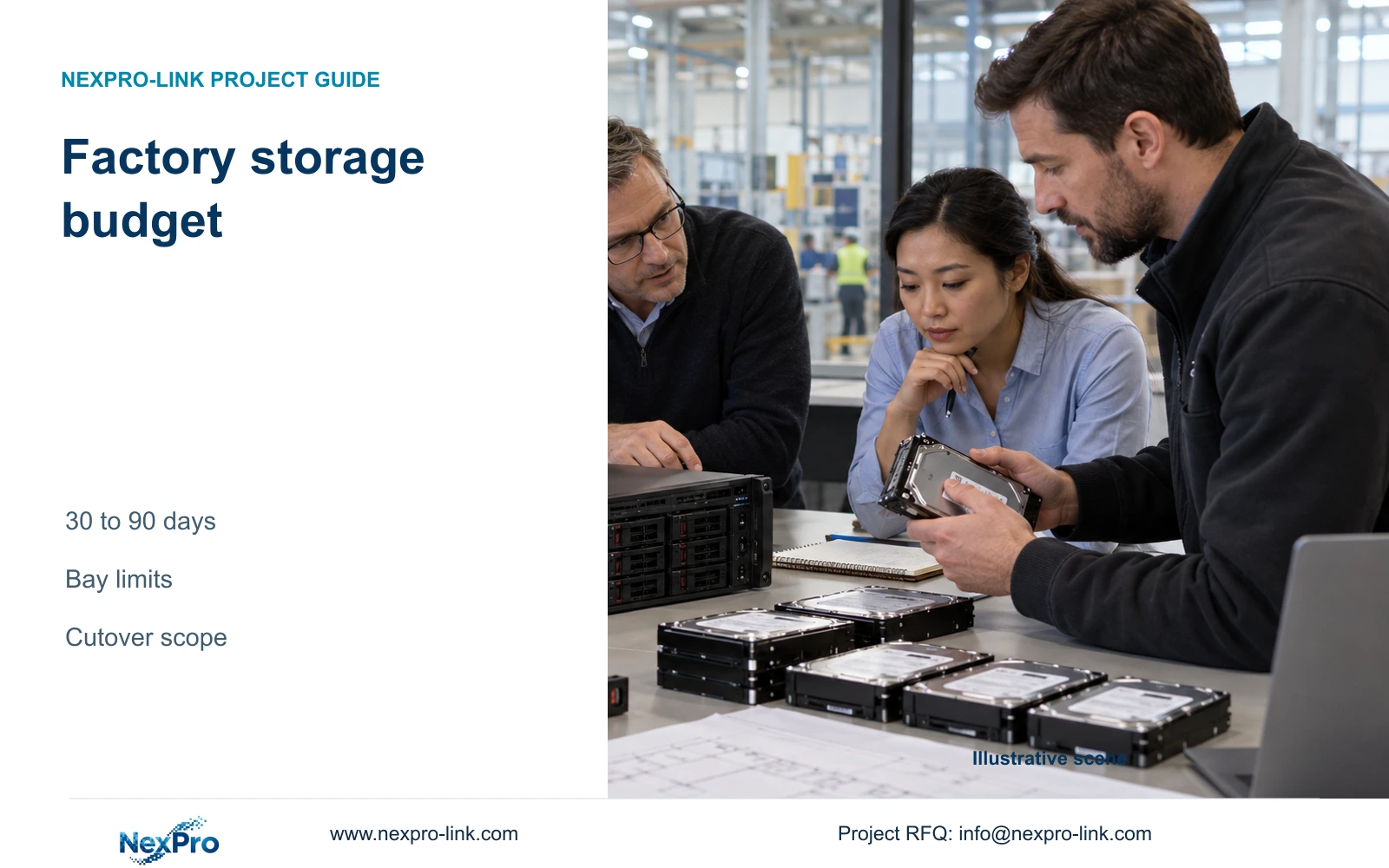
Keep receipt, accepted start trigger and commissioning dates by shipment batch. Calculate each batch's remaining contractual term from its own record and preserve any written amendment.
Section 01
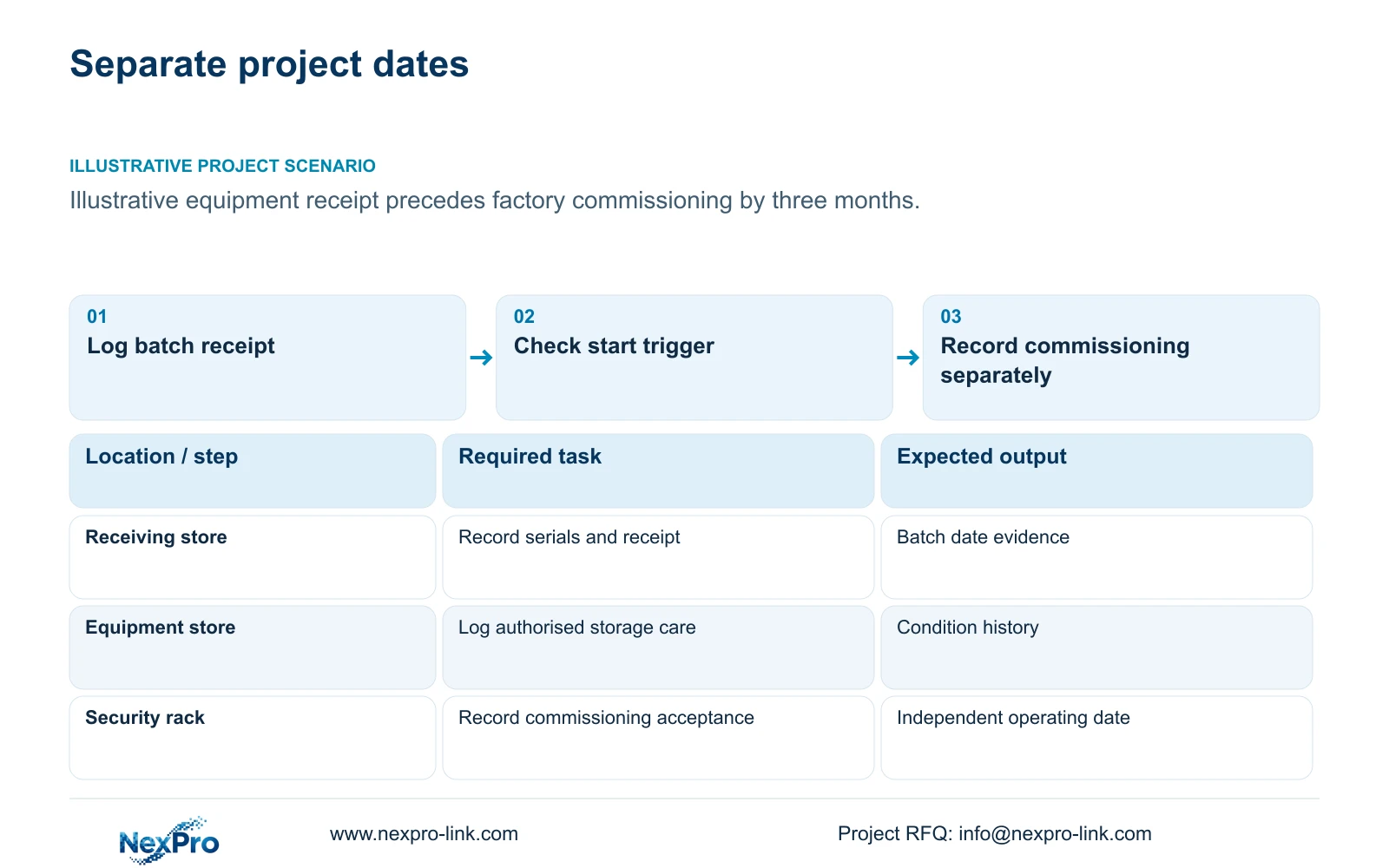
Keep receipt, commissioning and opening dates separate
Keep receipt, accepted start trigger and commissioning dates by shipment batch. Calculate each batch's remaining contractual term from its own record and preserve any written amendment. Manage stored-device readiness independently. A revised opening programme cannot silently change earlier receipt dates or establish that unused batteries remain fit for commissioning.
A delayed factory opening does not automatically restart the security-equipment warranty. Check the accepted order and applicable policy for the start trigger, then record any special arrangement separately. Receipt, installation, commissioning and production opening serve different project purposes. Replacing one date with another in the asset register can create a coverage assumption that the supplier never accepted.
Illustrative project scenario: Equipment arrives months before production begins. Using the supplied 32-camera CNC reference, assume cameras, recording equipment and the UPS are received at month 0 while commissioning is postponed until month 3. The owner plans to use the system for authorised access and material-transfer review. The timeline is hypothetical and does not describe a delivered client project.
Record dates by batch and equipment identity. Retain the delivery acknowledgement, carton or serial schedule, first inspection record and commissioning acceptance. If some cameras begin recording during construction while others stay boxed, capture that difference. A single 'plant opened' entry cannot explain when each item arrived, entered use or became the subject of an agreed service term.
Section 02
Confirm the agreed trigger before revising the programme
The supplied NexPro-Link warranty policy describes a 24-month eligible-main-equipment baseline from receipt. Check the actual quotation and order before applying it to the schedule. A commissioning-based or extended arrangement requires explicit acceptance, including the equipment covered and the evidence needed to establish its date. A revised construction programme alone is insufficient.
Where documents conflict, send the supplier the relevant clause and ask for a line-item clarification. The rack UPS source contains a 1–2-year product term, so its equipment and battery entries should be resolved independently of the general camera policy. Likewise, historical five-year project statements remain tied to their own agreed scope unless incorporated into this order.
Make the clarification useful to planning: identify the trigger, expected expiry, storage responsibilities and any reporting conditions. The project manager should circulate the answer to procurement, the commissioning team and the owner. Otherwise, one team may plan around receipt while another promises coverage from opening, leaving the discrepancy undiscovered until a claim occurs.
Section 03
Manage storage care independently of an extension request
Assign a custodian for equipment awaiting installation. Ask for model-specific storage, handling and battery-care instructions rather than applying a camera's operating-temperature field to every boxed device. Keep the equipment in suitable controlled conditions and record inspections, damage and authorised interventions. Storage care remains necessary even if a commercial extension is being discussed.
For the illustrative CNC package, separate the cameras and mounting accessories from disks and the UPS battery configuration. Confirm whether drives are installed or separately packed and how battery readiness will be checked before use. Do not infer a charging interval, storage duration or remaining runtime from the UPS's capacity label. These inputs require the selected configuration's instructions.
Maintain two records: the technical care log and the commercial adjustment request. The former explains what happened to the equipment; the latter states the requested change to coverage. Good storage records do not themselves extend a term. Conversely, an agreed extension does not establish that mishandling, installation defects or every accessory is covered.
Section 04
Show how the delay changes remaining coverage
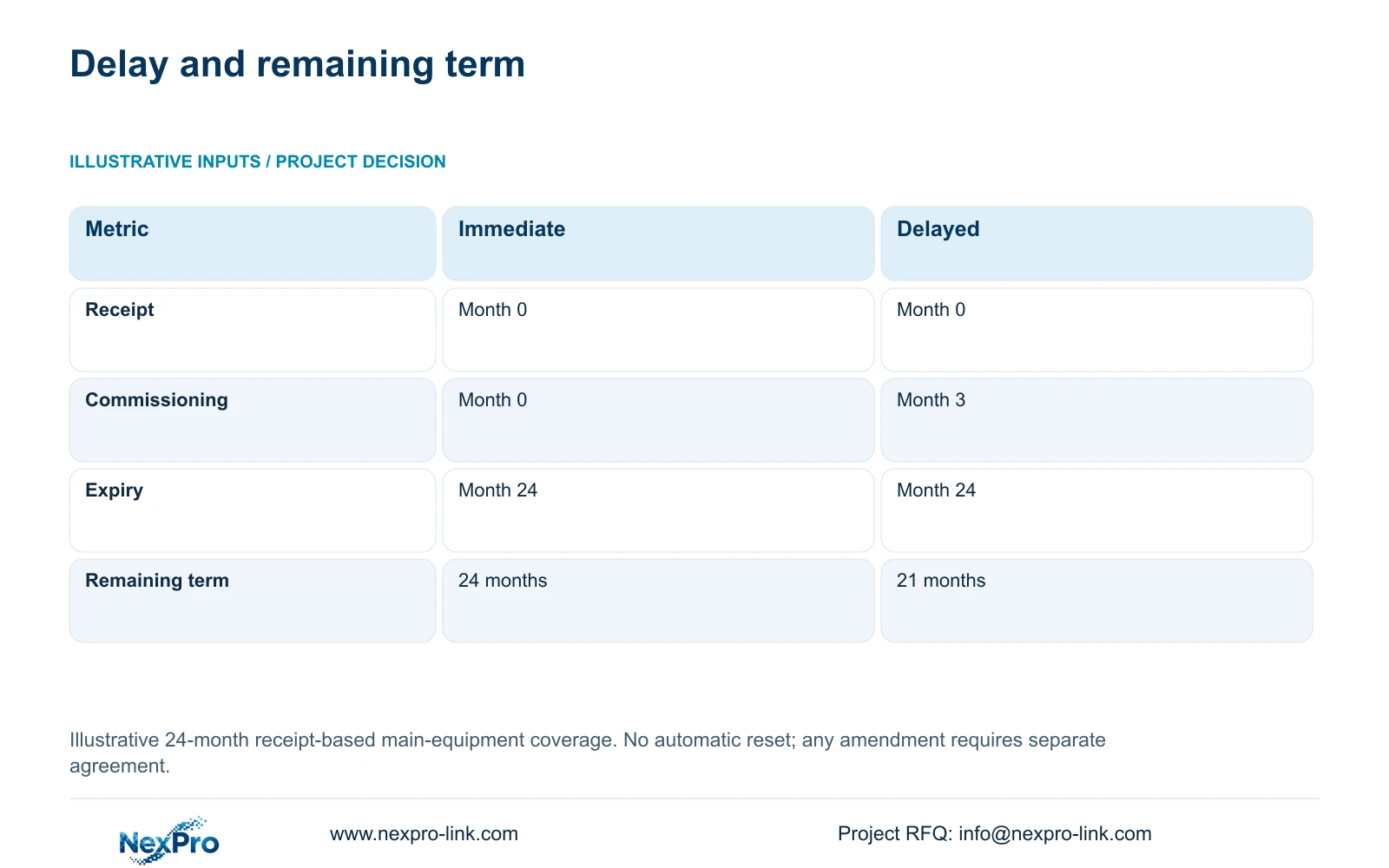
Use the supplied illustrative inputs: receipt at month 0, a 24-month receipt-based main-equipment term and commissioning at either month 0 or month 3. The calculation is remaining_term_at_commissioning = 24 months − elapsed months. Immediate commissioning leaves 24 months; commissioning three months later leaves 21 months. The example does not calculate battery, disk or onsite-service coverage.
Both options expire at month 24 under the stated assumption. The delayed option therefore has a shorter covered period after commissioning even though the headline remains '24 months'. This is the information the owner needs when considering phased delivery, early operational use or a negotiated adjustment. None of those options should be represented as already accepted.
Use actual calendar dates for the purchase, including different batch receipts where applicable. If the supplier agrees an amended trigger, retain both the original evidence and the amendment. Updating the expiry field without the supporting agreement makes later administration harder and can obscure which units were included in the change.
| Timeline item | Immediate commissioning | Delayed commissioning |
|---|---|---|
| Receipt | Month 0 | Month 0 |
| Commissioning | Month 0 | Month 3 |
| Illustrative expiry | Month 24 | Month 24 |
| Remaining term | 24 months | 21 months |
| Automatic reset | Not established | Not established |
Section 05
Choose between early use, staged delivery and adjustment
If equipment is already onsite, preserve the original receipt record and request any adjustment promptly. Explain the revised commissioning programme and identify the affected serials or batches. Ask whether the supplier can offer a written arrangement, what it covers and whether conditions or charges apply. Do not promise an extension to the owner before receiving confirmation.
For equipment not yet shipped, consider staged deliveries where complete operational packages can still be installed and checked together. Holding back cameras while sending recorders, or sending a UPS without its required configuration, can create extra handling and incomplete acceptance. Compare actual packing, transport and programme consequences before changing the shipment plan.
Early security operation may protect equipment arriving before production, but only where installation and commissioning conditions are ready. In the CNC reference, access recording can be useful before machines begin production; it does not become machine inspection or a safety system. Choose early use for an operational need, not merely to make the warranty timeline appear more favourable.
Section 06
Release a revised readiness and coverage record
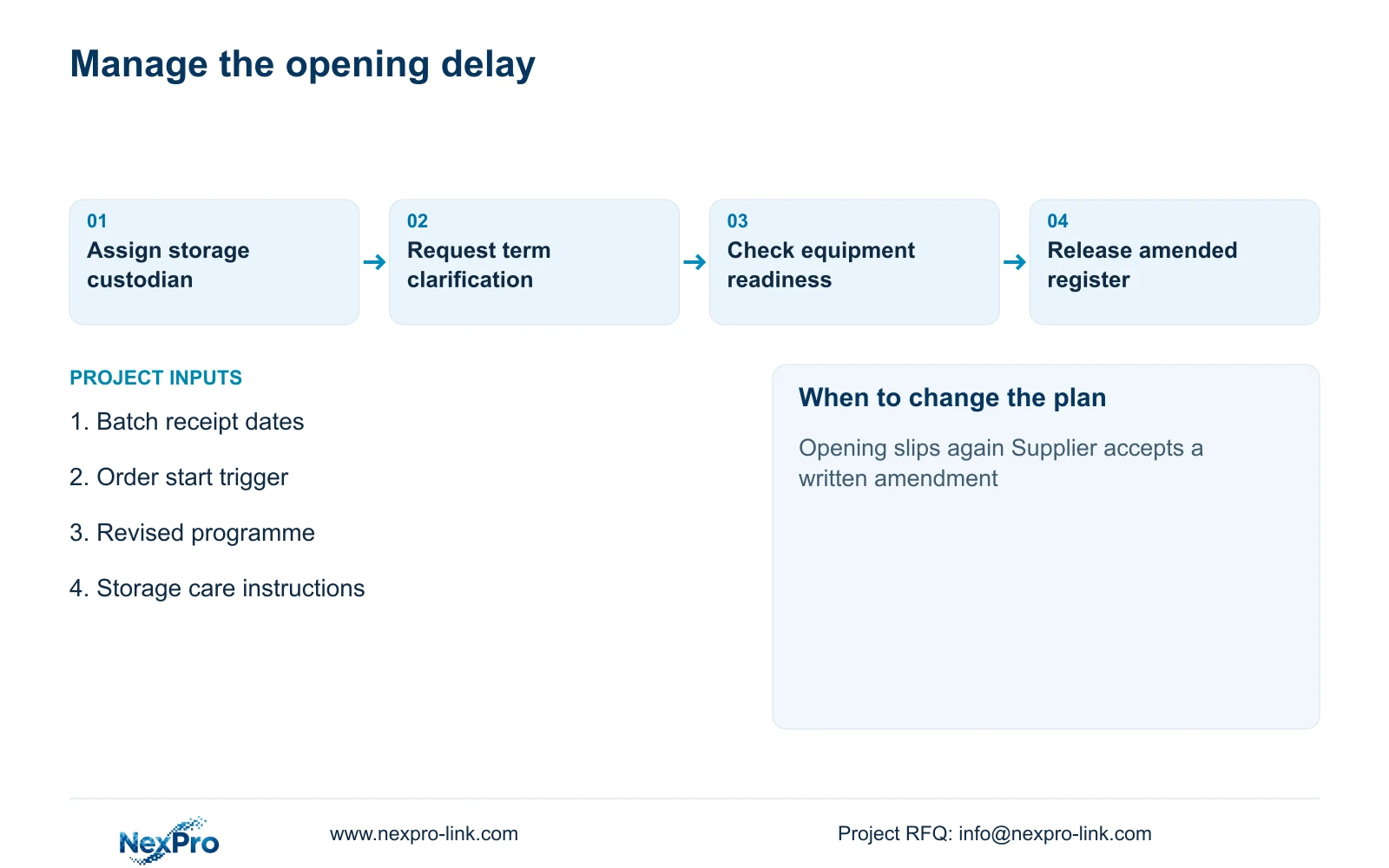
Before commissioning resumes, review stored equipment against its care instructions, the revised installation plan and the accepted model schedule. Record missing accessories, damaged packaging and unresolved readiness checks separately from warranty claims. Assign the installer the onsite checks and the supplier the configuration or documentation questions it has agreed to support.
Issue a revised batch register showing receipt, current status, planned commissioning, applicable coverage and any accepted amendment. Link it to the fault-reporting route so an operator can identify the right equipment and contact after opening. Repeat-order records should retain the approved configuration rather than treating the delayed shipment as an opportunity for unrecorded substitutions.
NexPro-Link can discuss equipment coordination, BOQ documents and project packing within its published supply scope. The buyer and local team retain programme and commissioning approval. Close the delay review with a clear distinction between agreed coverage, pending commercial requests and technical work still required; each category leads to a different next action.
Section 07
Buyer questions
Does keeping equipment unopened stop the warranty clock? Not under the illustrative receipt-based terms. Packaging status and warranty start trigger are different matters; check the accepted order for any explicit storage arrangement.
Should every batch use the final commissioning date? Only if an accepted arrangement establishes that trigger for those batches. Otherwise retain each applicable receipt or other agreed start date.
Can storage inspections replace commissioning checks? No. Storage inspections document condition and care. Commissioning must still verify the installed equipment and required recording workflow.
Section 08
Clarify coverage for a delayed opening
Email your batch receipt dates, applicable start-date clauses, revised commissioning programme and equipment storage responsibilities to info@nexpro-link.com to discuss the affected factory supply scope.
Engineering references
These sources support the general planning principles. Always use the selected product's current datasheet and applicable project standards for final design.