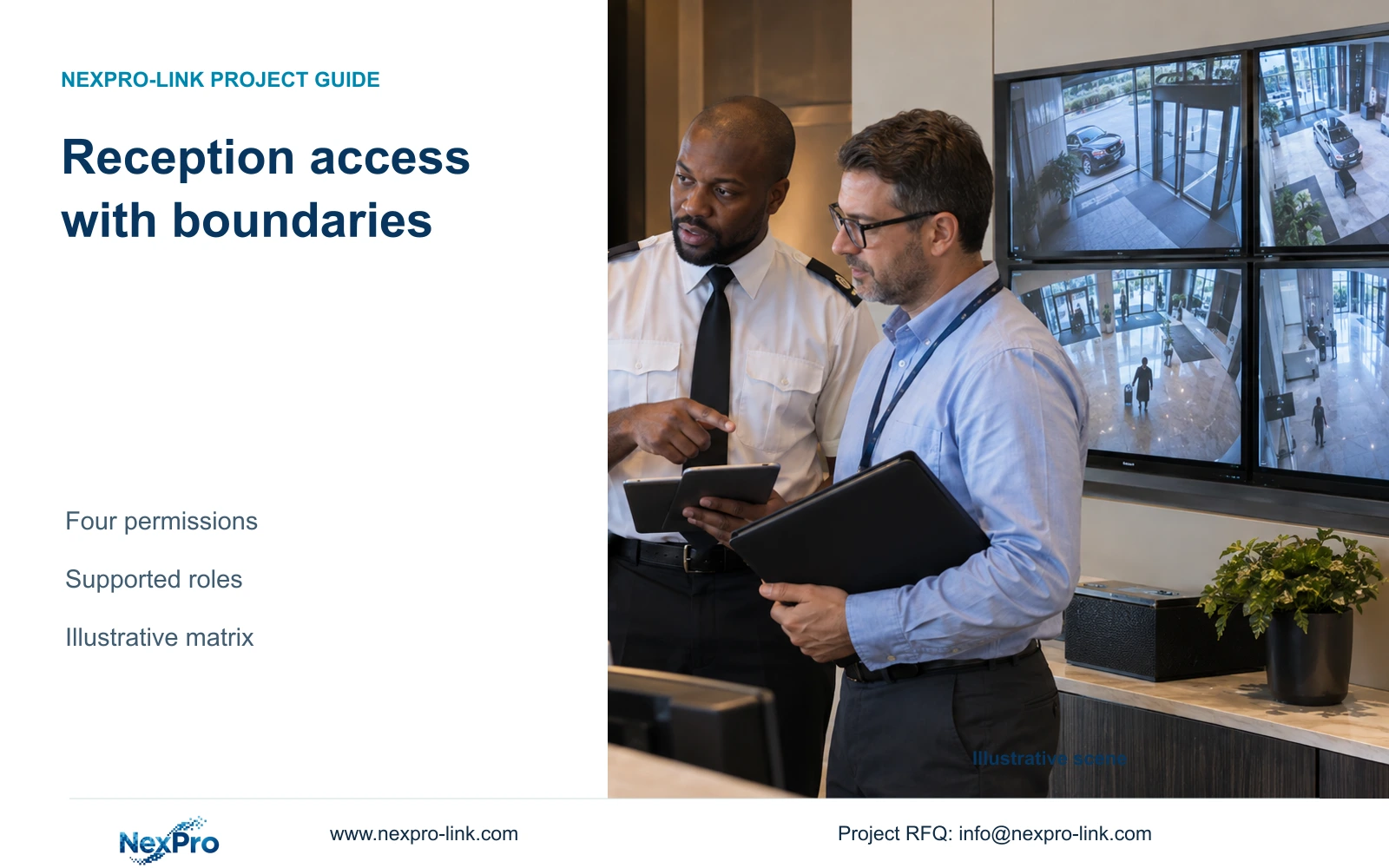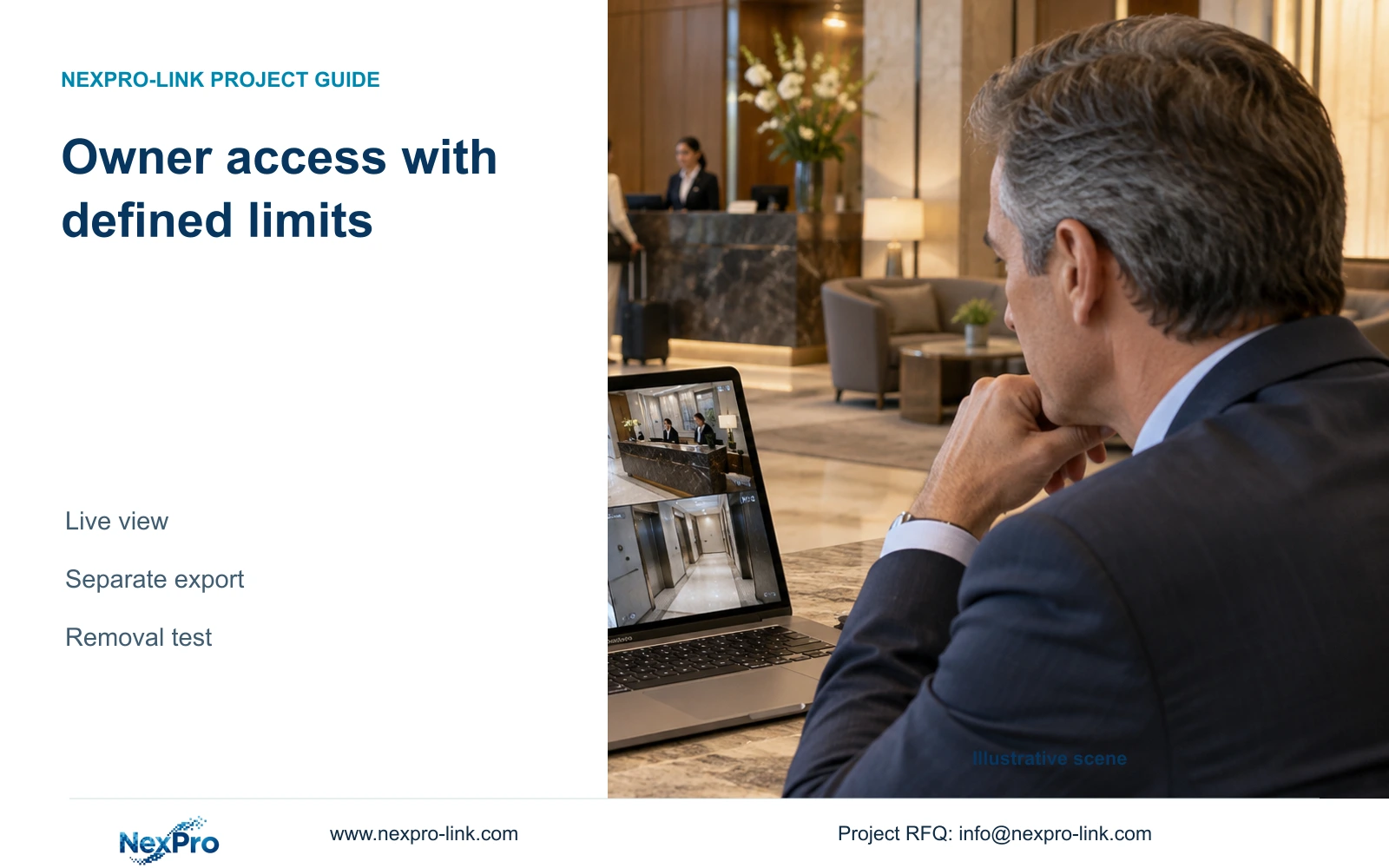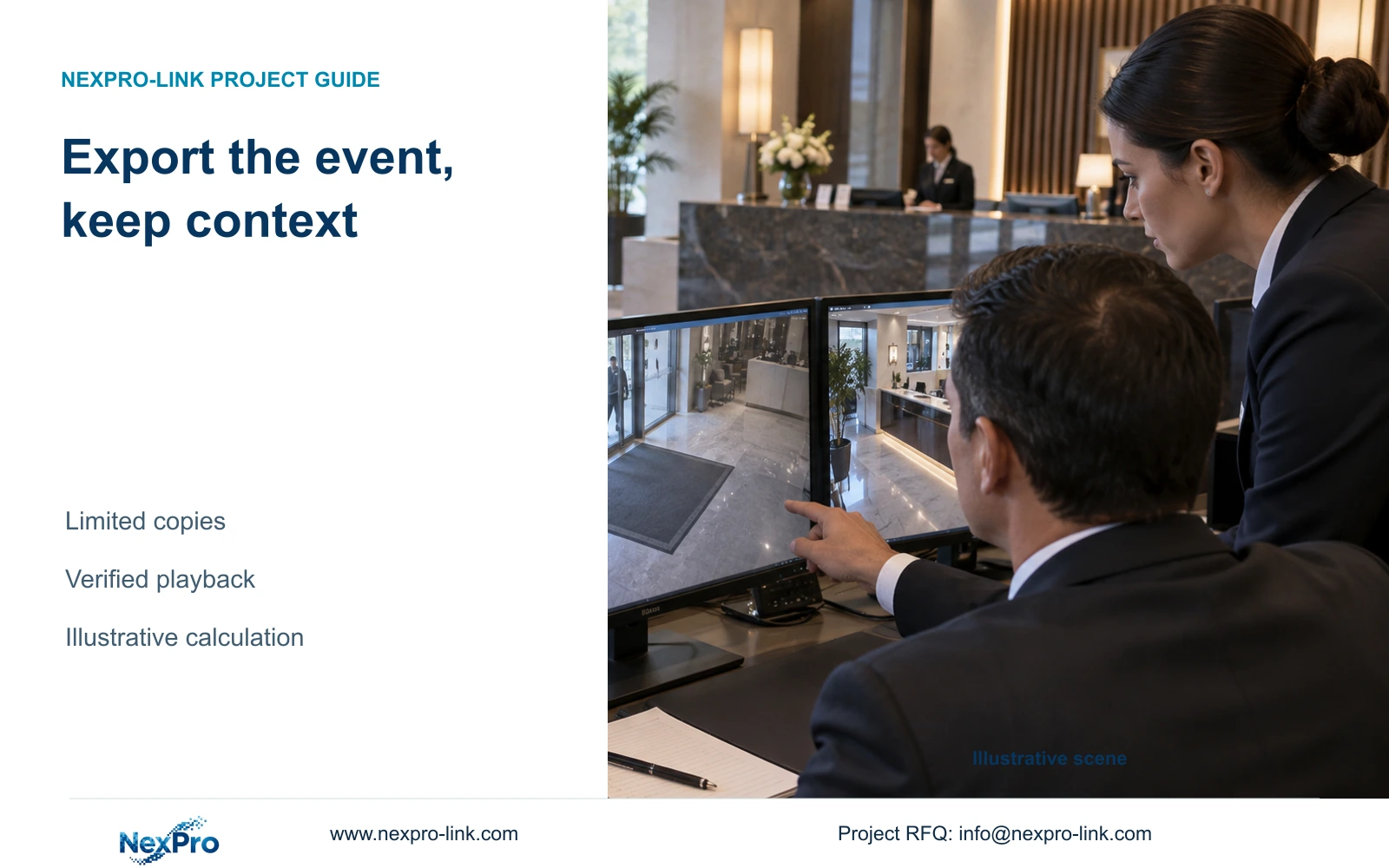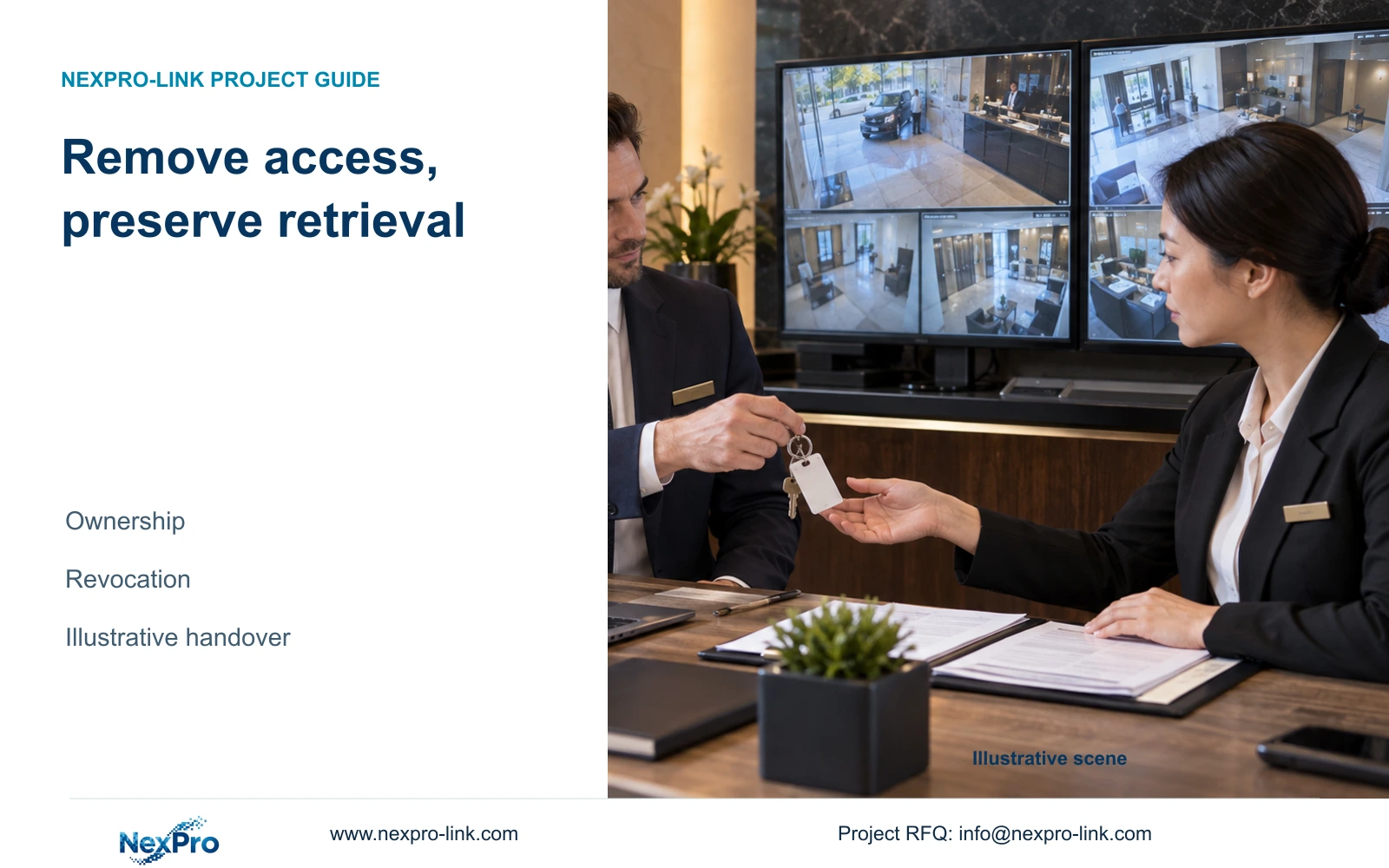
Transfer administration through the hotel's authorized process, remove the departing user's access and verify recording separately. A shared password leaves ownership and revocation unclear.
Section 01
Identify every role the departing user holds
Use an authorized takeover and access-removal process that preserves the hotel's required recording and retrieval functions. Assign identifiable users to supported roles instead of retaining a shared administrator password as the long-term operating method. If the selected platform cannot support the necessary ownership transfer or role separation, resolve that limitation with the hotel's IT team before changing the live system.
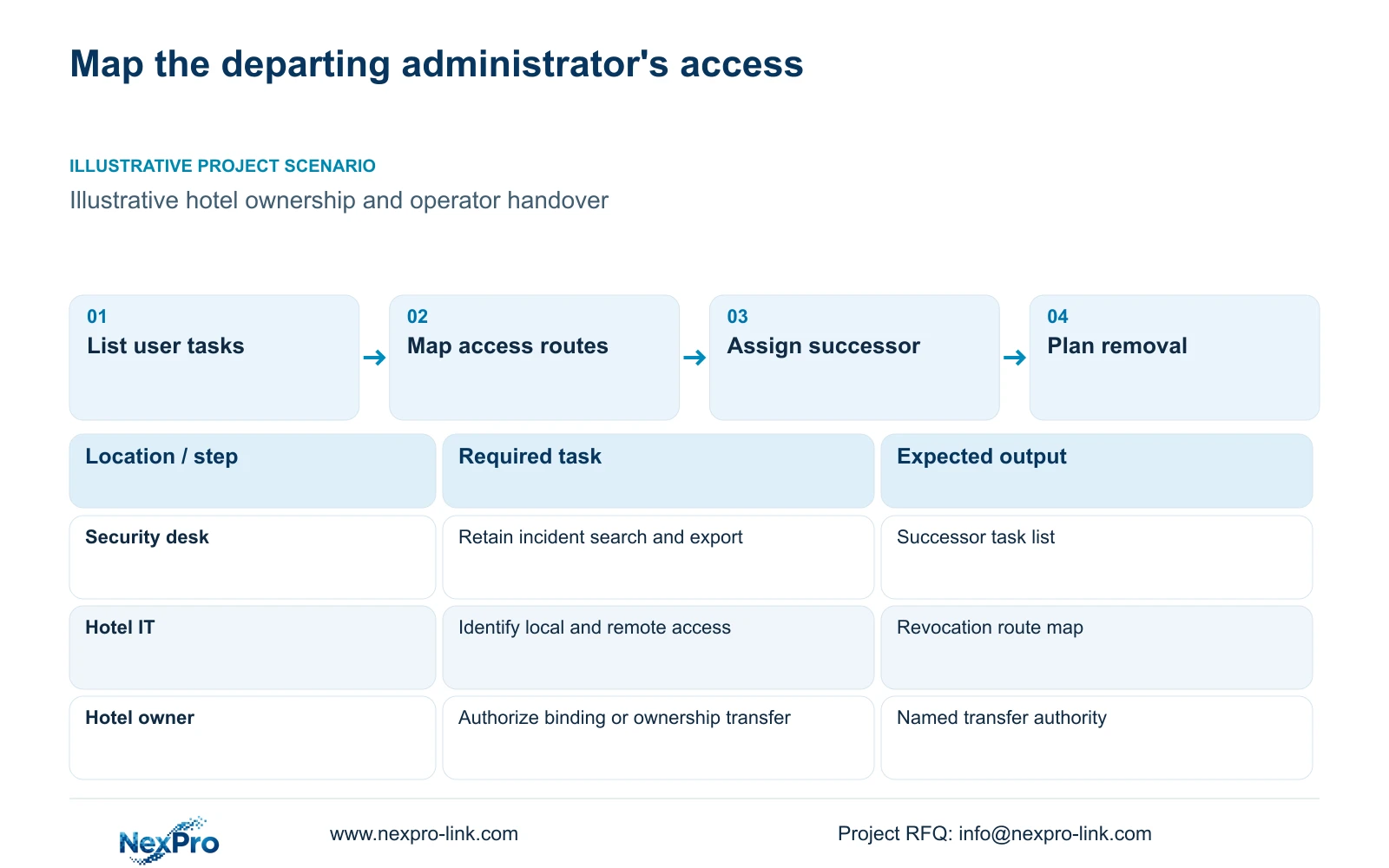
Begin with the work the departing person performs: live viewing, incident search, export, configuration or supplier support. Then identify the interfaces through which that work is possible. Local recorder access, a PC client, a mobile account and a hotel-approved remote network path may involve different controls. Removing a name from one list does not establish that every route has been addressed.
Create an inventory that identifies the responsible hotel role for each route without exposing passwords. Include the actual device and client versions so support can discuss the appropriate process. The inventory should also identify who will retrieve existing footage after departure. Recording continuity and authorized access to retained material are separate outcomes to verify.
| Required task | Given information | Decision still needed |
|---|---|---|
| Continue incident retrieval | Departing administrator performs searches | Assign and verify replacement operator |
| Remove remote access | Mobile or remote route exists | Identify account, binding and network owners |
Section 02
Separate system ownership from daily operator access
Document which hotel authority controls account ownership and which staff need operational privileges. The owner or operator may authorize a transfer, while IT executes network changes and security staff verify viewing and retrieval. A supplier's equipment contract does not automatically make that supplier the account owner or authorize unrestricted administration.
Device binding needs separate attention. An account used for remote access may have an ownership relationship with the device that differs from local recorder permissions. Confirm the supported transfer or removal behavior before deleting an account. Do not treat a proposed account workflow as a feature of every recorder or client.
Give the replacement operator the privileges needed for daily work and reserve broader administration for the approved responsible role. NexPro-Link's Seetong source describes App and PC workflows, but it does not prove uniform account behavior across all hardware and versions. The procurement schedule should identify any ownership and offboarding capability that must be demonstrated.
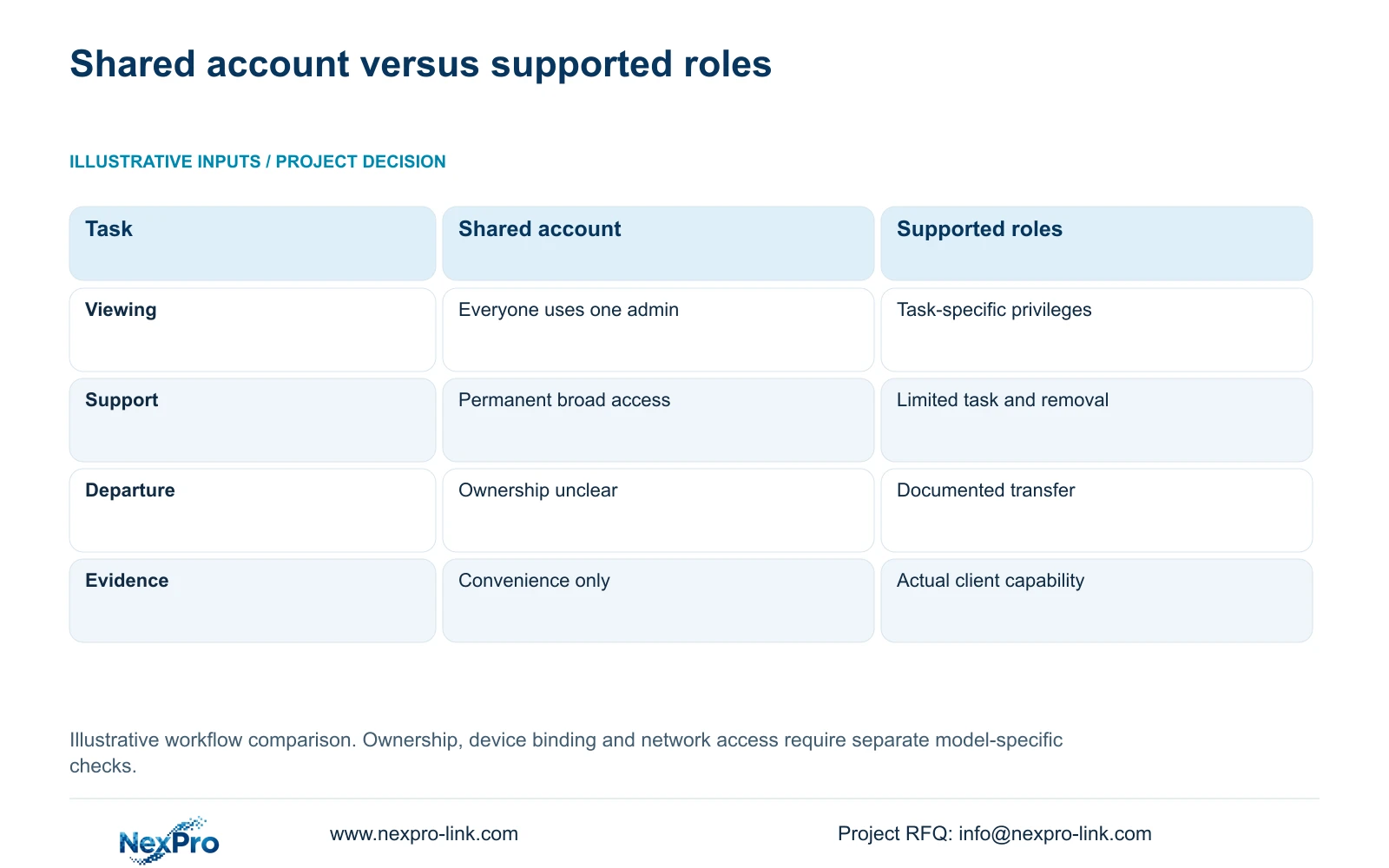
| Item | Shared access | Separated access | Effect on hotel operation |
|---|---|---|---|
| Administration | Daily staff use the owner account | Approved owner controls administration | Departure can be handled without sharing ownership |
| Incident work | Broad privileges accompany viewing | Supported search and export roles | Retains required work with narrower authority |
Section 03
Plan an authorized transfer with a working successor
Agree the transfer sequence with the hotel authority and IT team. Establish a working successor access route before removing the departing person's operational route where the supported process permits it. Identify any binding change, credential update or support intervention required. Keep the sequence tied to the actual platform instead of using an assumed universal reset procedure.
The inputs for this article's permissions comparison are illustrative roles and operating states. They have no numerical units and do not describe a completed transfer. The method compares routine operation, external support and departure against observable outcomes: the successor can perform approved work, the former user cannot, and necessary recordings remain available.
Remote assistance should have an approved task and an agreed removal boundary. Share device identity and symptoms through the authorized support channel, without publishing privileged credentials in project documents. If a transfer depends on a third party, name that dependency and preserve the hotel-approved retrieval method while the issue is resolved.
Section 04
Compare account changes with device changes
Use supported account removal or privilege changes for an access problem when they meet the required outcome. A device reset or replacement can introduce different configuration and retrieval questions, so it needs its own authorized scope. Confirm the effect on recording settings and access to retained footage before using a disruptive device action.
Compare changes against the actual departure outcomes in the checklist below: a successor can retrieve approved footage, former access is removed and recording continues. The original role illustration explains the general distinction, but it does not establish a transfer function on any model. Where an account, binding or network route cannot be changed as required, retain that gap and request the authorized platform-specific procedure.
Evaluate any additional platform or support cost against the missing task. A more capable platform is worth considering when essential role separation or ownership handling cannot be achieved with the existing combination. Keep migration, configuration and operator training within the evaluated scope. No prices or savings can be inferred from this qualitative comparison.
| Layer or outcome | Evidence required | Stop or unresolved condition |
|---|---|---|
| Successor workflow | Allowed views, replay and export under the successor role | Required task fails or requires unapproved broad access |
| Local/client account | Former role's relevant actions checked after approved changes | Session/removal behavior not confirmed |
| Remote binding or ownership | Actual supported transfer/removal and authorized owner | External ownership remains unresolved |
| Hotel network route | IT verifies the former approved route is removed as required | A separate remote path remains available |
| Recording and retained material | Change interval and existing approved event retrievable | Do not reset or retire equipment without resolving the gap |
Section 05
Verify removal and retained operating functions
Check the former user's relevant access routes through the hotel's authorized verification process. Record which local, client and remote routes were checked and which remain unresolved. Where session behavior or account binding affects removal, obtain the model-specific procedure instead of assuming that a password change completes every control.
Test the successor's approved tasks separately. Open the necessary public-zone view, retrieve a defined time window and perform an authorized export if that role requires it. Confirm that recording continues through the change and that existing material remains available within the approved retention policy. Record observed results without pre-filling successful outcomes.
ONVIF compatibility does not establish cloud-account transfer, detailed privileges or all client behavior. Likewise, an available screen does not prove that the former user has lost remote access. Keep verification tied to the account and network layers actually used by the hotel. The hotel's access rules should also reflect applicable privacy requirements; UK ICO guidance is not a global offboarding law.
Section 06
Retain a controlled handover record
Keep a short record of the authorized transfer, affected devices, changed access routes and verification results. Name the new responsible roles and the escalation contact for unresolved functions. Store privileged material through the hotel's approved secure process, separately from general commercial correspondence or public equipment schedules.
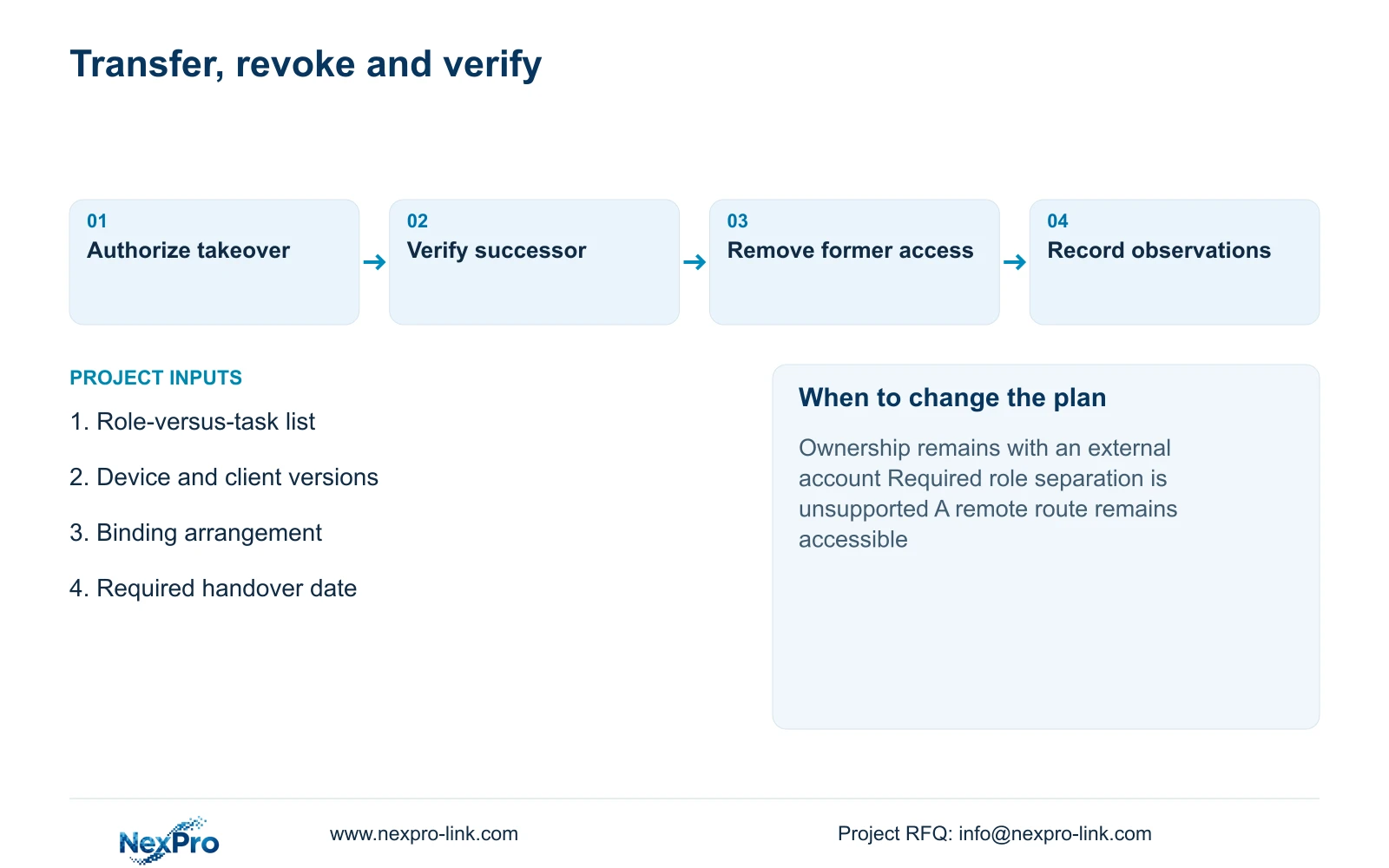
Recommend supported role-based offboarding when the hotel can assign ownership, verify successor operation and revoke the former user's routes. Change the proposal when ownership remains outside the hotel's control, required revocation behavior is unsupported, or an operator-mandated platform defines a different transfer process. These conditions may require platform-specific assistance or a scoped migration, with existing recordings protected during the work.
For equipment or workflow support, email info@nexpro-link.com with the role-versus-task list, device and client versions, known binding arrangement and required handover date. NexPro-Link can discuss model matching and coordinated support scope through the hotel project entrance. Local IT changes, account authorization and any on-site work need named responsibilities. Initial inquiries should contain neither guest footage nor personal credentials.
Section 07
Buyer questions
Must we replace the NVR when an administrator leaves? An employee departure alone does not establish that replacement is necessary. First confirm supported account, binding and credential changes. Replace or migrate only if the required access outcome cannot be achieved through the existing authorized configuration.
Does ONVIF support guarantee account transfer? No. Profile matching concerns relevant device and client functions. Cloud binding, account ownership and user-removal behavior require separate confirmation for the actual platform.
What belongs in the commercial handover request? Include model and version references, required successor tasks, the responsible hotel authority and unresolved access routes. Keep passwords, recovery secrets and guest imagery out of the initial request.
Engineering references
These sources support the general planning principles. Always use the selected product's current datasheet and applicable project standards for final design.