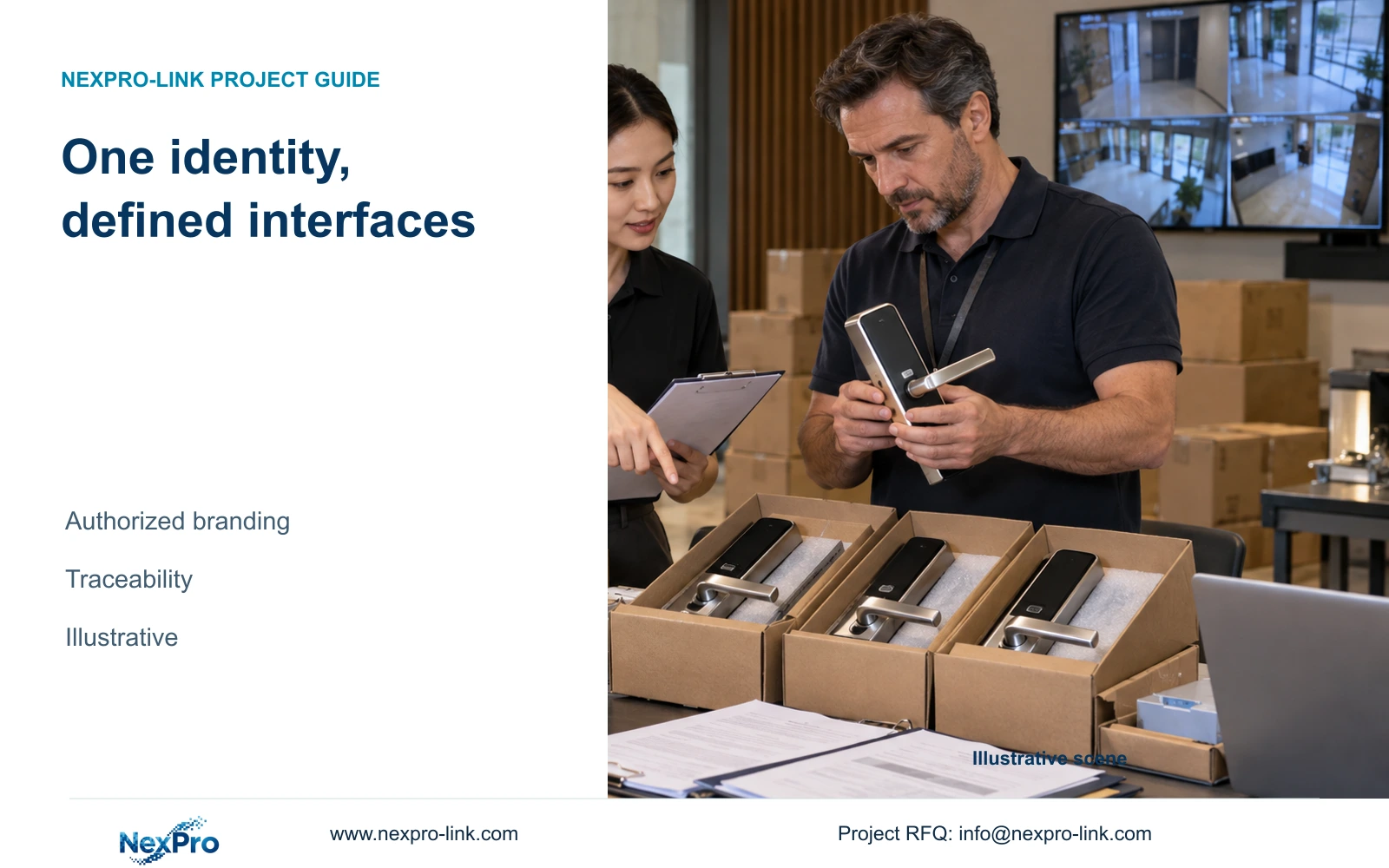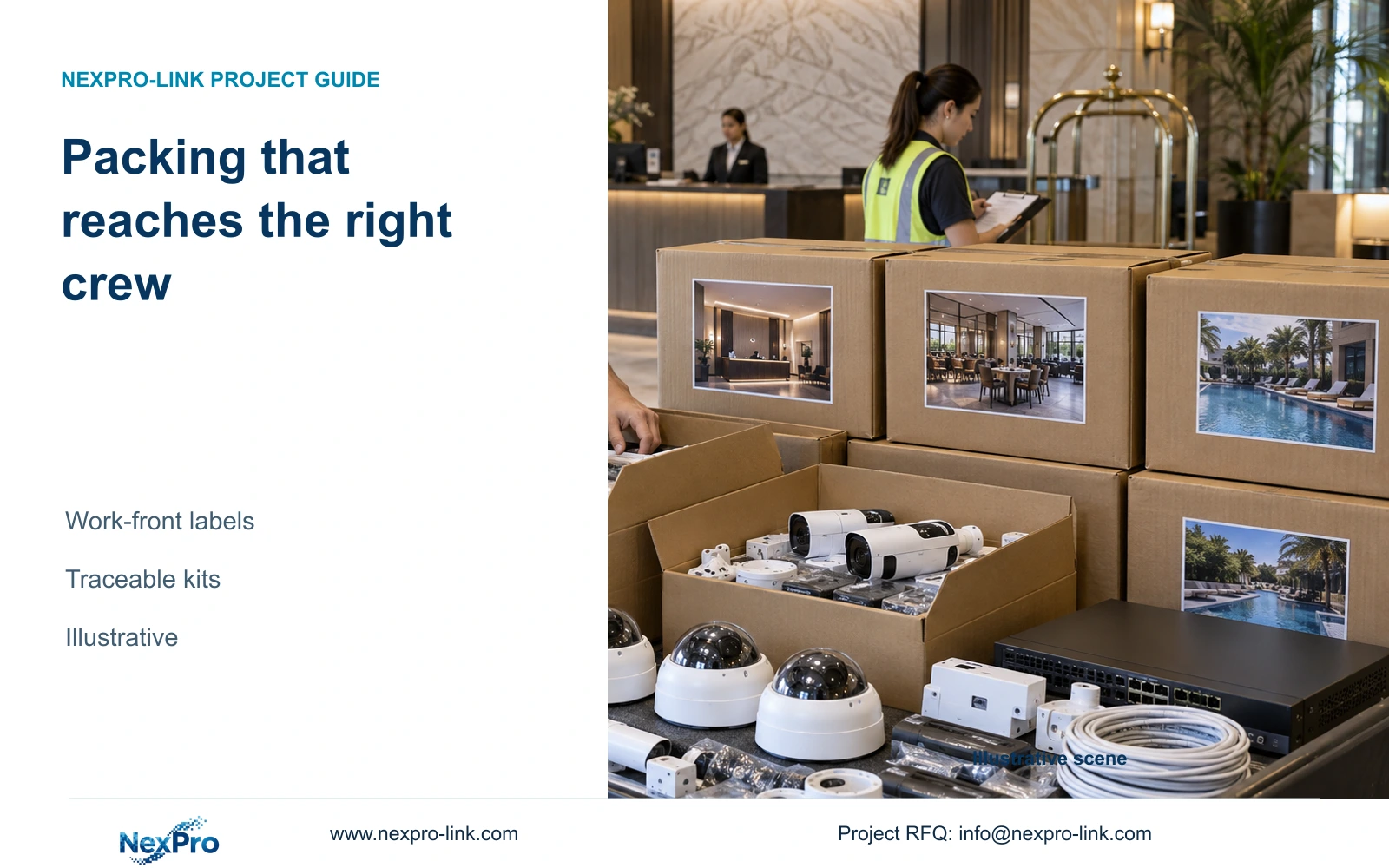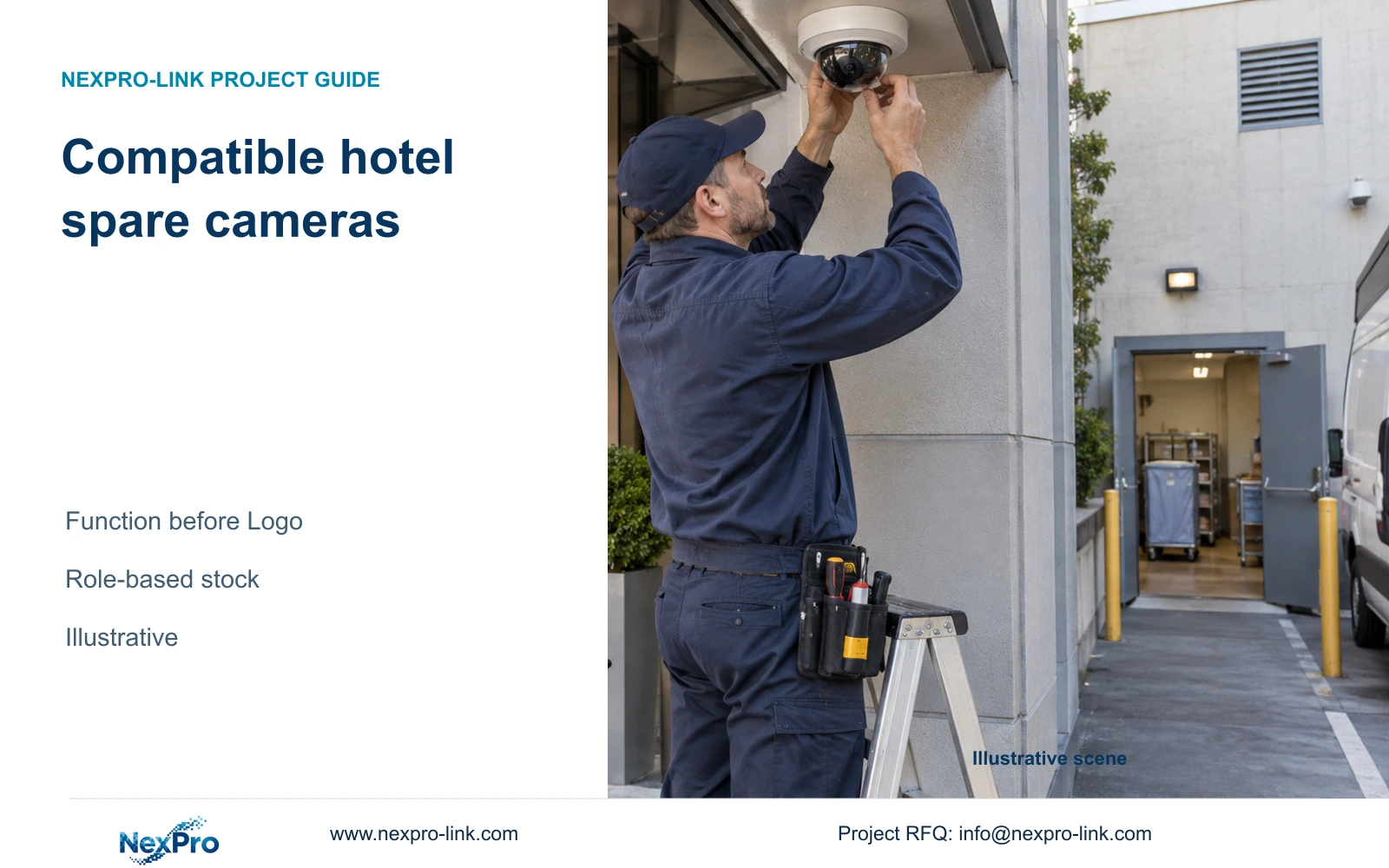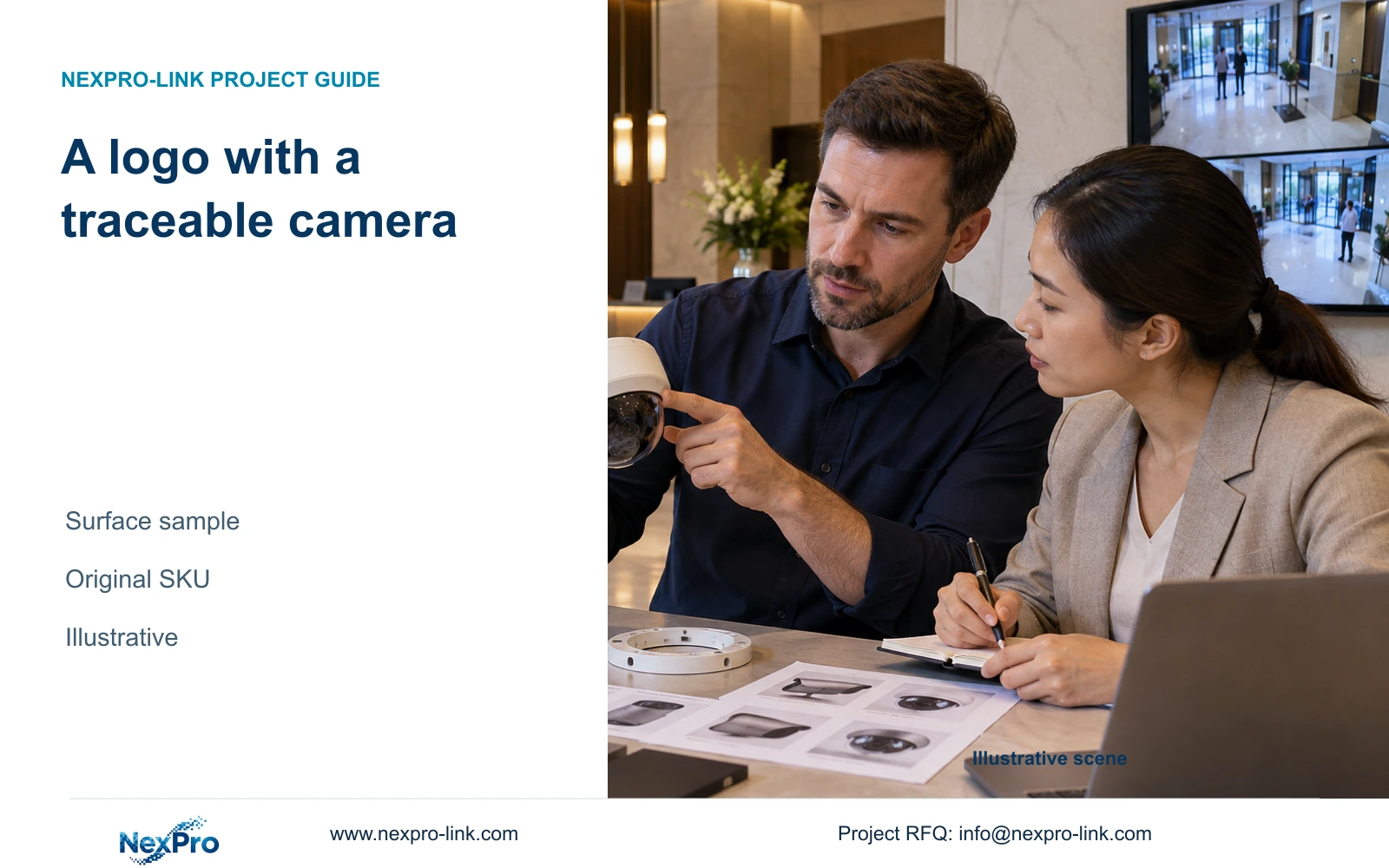
Specify camera laser branding by housing, location and approved artwork. A representative sample should establish the appearance while model and serial information remain available for service.
Section 01
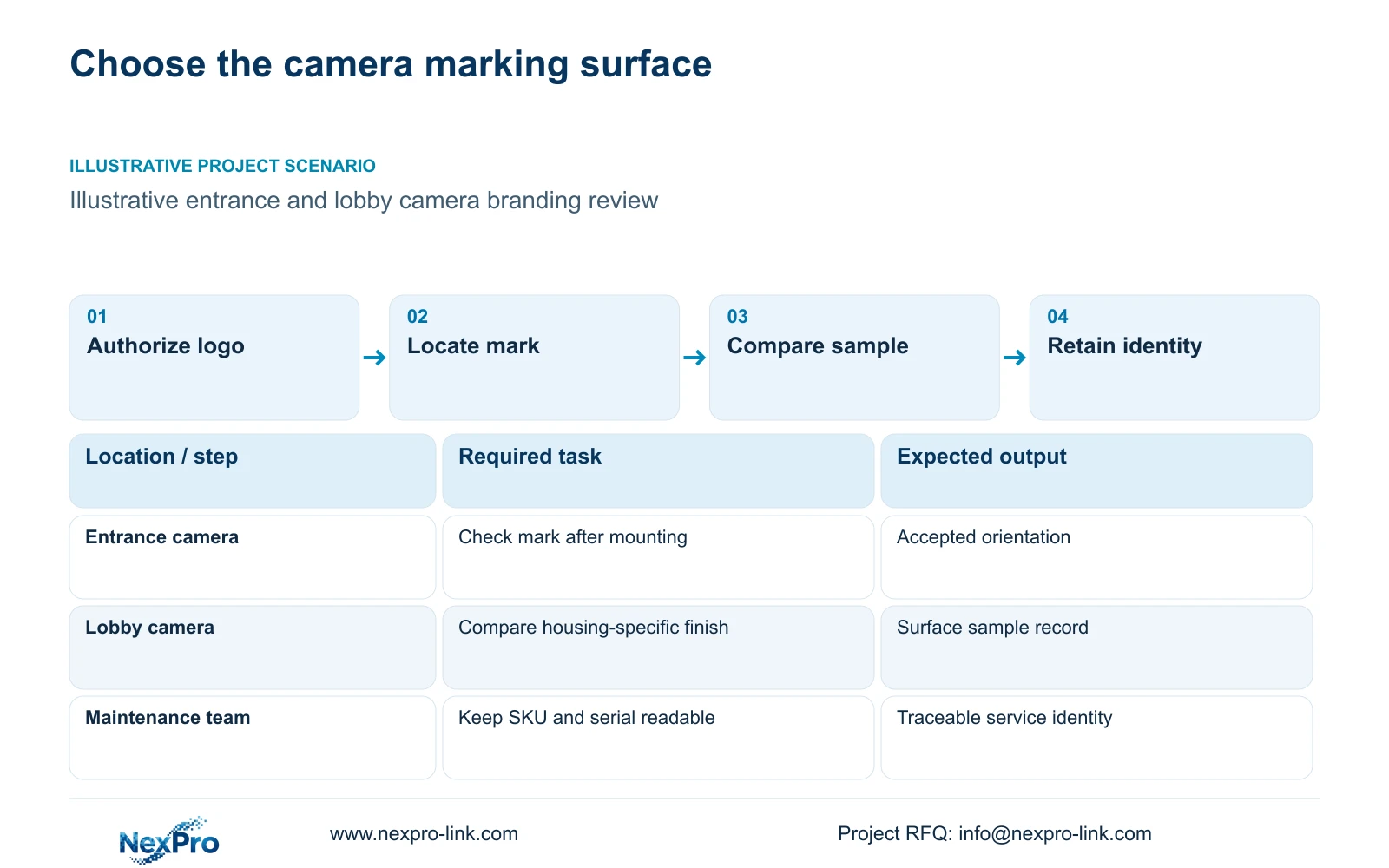
Confirm logo ownership and the artwork version
Specify laser branding only after the authorized logo, exact camera housing and permitted marking area are defined. Preserve the model and serial labels, and use a representative sample to agree the appearance. Choose a label or printing option if the selected surface cannot provide the accepted laser result.
The artwork package should identify the customer entitled to authorize its use and the version intended for production. Define the mark's size and orientation in relation to the housing. A logo image taken from an earlier presentation can leave uncertainty about proportions, wording or whether the operator has accepted that version.
NexPro-Link's laser-logo capability is described in the supplied business evidence, while the OEM/ODM record supports the wider branding scope. The effect on a particular finish remains a sample decision. Permission to mark camera hardware does not confer rights over Seetong or another third-party software name, interface or application listing.
| Required task | Given information | Decision still needed |
|---|---|---|
| Use the customer's logo | Authorized artwork supplied | Accepted production version |
| Mark the selected camera | Exact SKU identified | Housing surface and mark dimensions |
| Preserve service identity | Model and serial labels exist | Clear marking area |
Section 02
Choose a permitted location on the housing
Locate the mark on the actual selected housing, including its intended mounting orientation. A position that reads clearly on a loose sample may face the ceiling or disappear behind a bracket after installation. The project manager should decide whether the purpose is visible branding in public areas or identification during maintenance.
Avoid placing artwork over necessary labels or functional areas. Keep the proposed marking boundary clear of the lens and other areas whose operation or maintenance must remain unchanged. The supplier should identify a suitable surface for the agreed process; a generic drawing cannot establish permission to mark every part of a camera.
The illustrative boutique-hotel case includes entrance, lobby and public-corridor cameras, where appearance and maintenance access can differ. NexPro-BL2812M55-5MP-DIC-AI and NexPro-DM2812M55-5MP-DIC-AI are source-backed camera candidates, but their different housing identities do not establish identical marking results. Review each relevant housing and finish separately when those differences affect the logo.
| Position choice | Benefit to assess | Condition to check |
|---|---|---|
| Visible exterior surface | Brand readable after mounting | Orientation and permitted surface |
| Maintenance-facing surface | Identity available during service | Access after installation |
| Area near existing labels | Brand and identity viewed together | No label coverage or confusion |
Section 03
Compare laser marking, labels and printing
Compare processes using the same artwork dimensions and intended viewing condition. Laser marking acts on the selected surface, a label adds a separate identification layer, and printing has its own surface and production requirements. The available evidence does not establish one process as universally clearer, more durable or less expensive.
Use sample criteria that the buyer can inspect: placement, legibility at the agreed size, consistency with the artwork and separation from equipment markings. If a durability requirement matters, put that requirement into the quotation and sample scope. Do not assign an unsupported lifetime to the mark or infer a coating performance from its appearance.
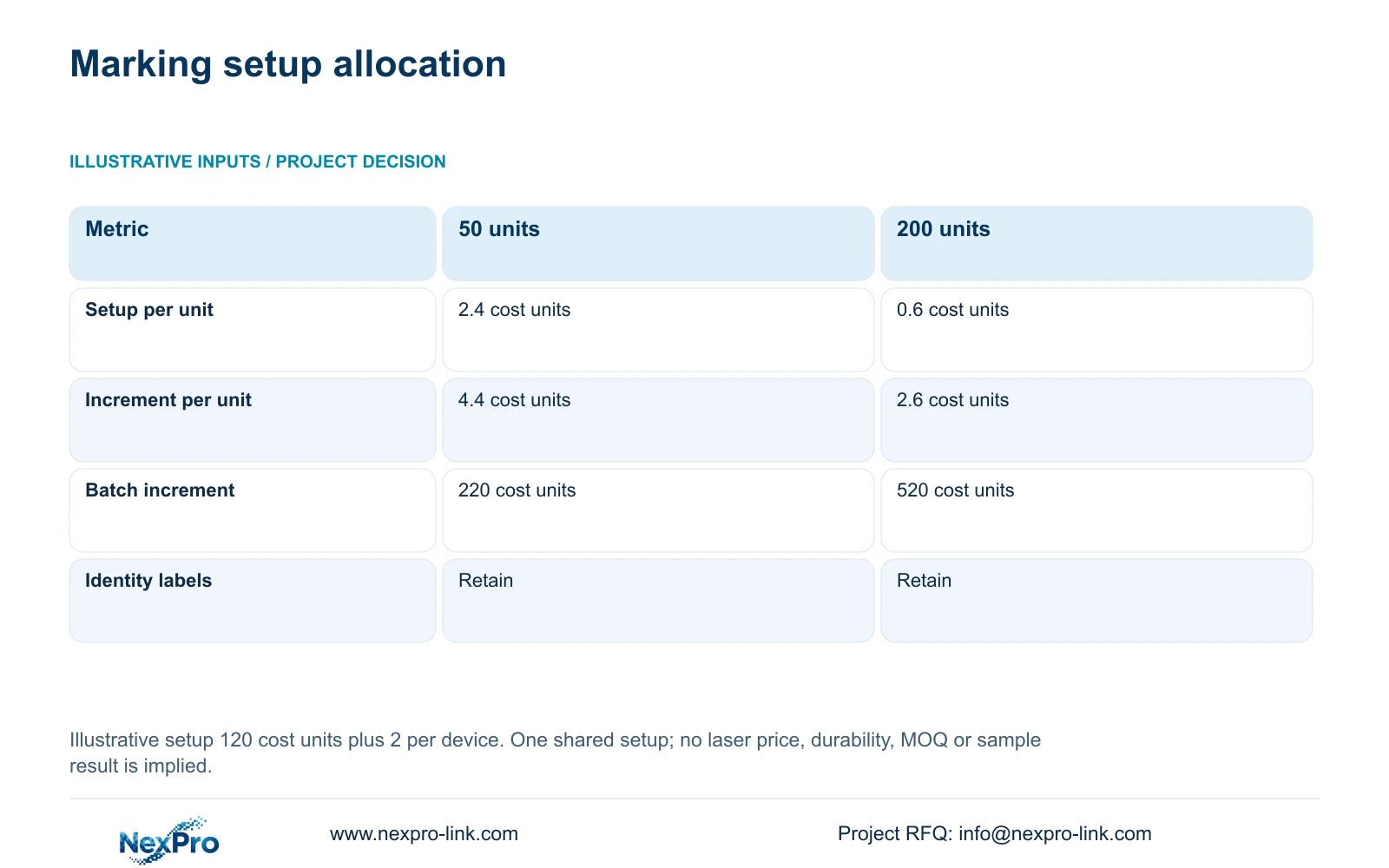
Keep process costs separate from equipment costs. The teaching model assumes 120 cost units for artwork/setup and 2 cost units per device for marking, labelling or packing. Increment per unit equals setup divided by quantity, plus the per-unit increment. It demonstrates allocation only; it cannot determine the price difference between laser marking and a printed label.
Section 04
Keep technical identity visible after branding
The service record must retain the exact SKU and physical device serial. A customer logo identifies the commercial presentation, while an asset tag identifies the hotel's equipment record. Neither replaces the model information used to select a replacement or describe a technical problem. Keep all three roles distinguishable on the device and in the handover records.
The supplied BL2812M product PDF identifies NexPro-BL2812M55-5MP-DIC-AI as a 5MP motorized-varifocal candidate with a 2.8-12 mm lens range. A logo applied to that housing does not change the recorded product identity or add functions. For example, the standard camera must not acquire an ANPR description merely because the customer's artwork uses vehicle-security language.
The same traceability should extend to replacement units and support requests. The supplied policy record, checked on October 7, 2026, states a usual 24-month limited hardware baseline for applicable main equipment from receipt, subject to controlling written terms. Branding does not establish a new period or automatically extend the same coverage to batteries, disks, cables or special OEM scope.
Section 05
Calculate setup across the planned order quantities
Use the actual purchasing quantity after the marking method is qualified. In the illustrative comparison, 120 divided by 50 gives 2.4 cost units of setup per device; divided by 200, it gives 0.6. Adding the assumed 2-unit increment produces 4.4 and 2.6 cost units per device.
The total batch increment is 220 cost units for 50 devices and 520 for 200. The larger batch reduces the average allocation but requires a higher total spend. These batches are independent of the 24-camera hotel reference and do not establish a minimum order quantity. Buying additional equipment solely to spread setup can leave stock that the project does not need.
A repeat order may reuse unchanged artwork, but obtain a quotation for what actually remains reusable. A new housing, finish, logo size or production method can change the preparation scope. Where there are several technical or artwork variants, request separate setup lines so the comparison does not conceal additional work inside an apparently low unit rate.
| Metric / condition | 50-unit teaching batch | 200-unit teaching batch |
|---|---|---|
| Batch quantity | 50 units | 200 units |
| Setup cost per unit | 2.4 cost units | 0.6 cost units |
| Total incremental cost per unit | 4.4 cost units | 2.6 cost units |
| Total incremental batch cost | 220 cost units | 520 cost units |
| Model and required labels | Retain | Retain |
Section 06
Freeze the repeat-order marking standard
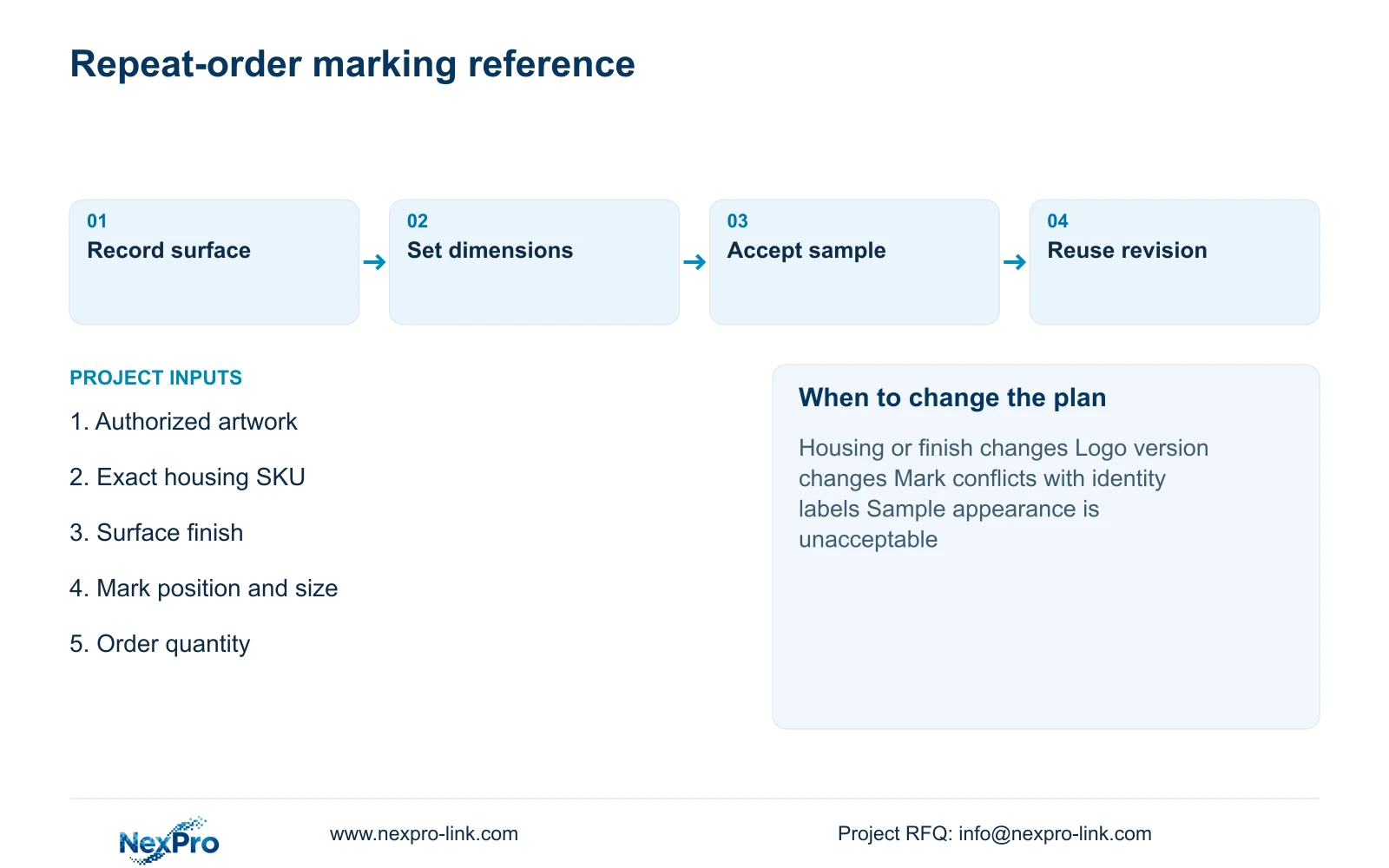
Record the accepted artwork version, housing identity, surface finish, position and size with the sample reference. Keep quantity and installation-zone fields outside that stable marking standard. A later order can then reuse the unchanged design while its packing and asset allocation follow the new project schedule.
Select laser marking when the authorized artwork produces an accepted result on the specified surface and leaves equipment identity readable. Reopen the process choice when the housing or finish changes, the approved size becomes illegible, or necessary labels conflict with the mark. A customer request for a different logo should also trigger a new artwork reference.
Send the authorized logo, exact camera models, intended marking position and size, quantities and delivery destination to info@nexpro-link.com. NexPro-Link can discuss a representative marking sample and a scoped OEM quotation. The agreed response should distinguish camera manufacturing work from coordinated supply of other hotel equipment, and identify any project packing required for the marked units.
Section 07
Buyer questions
Can one accepted logo sample cover both bullet and dome cameras? Only when the relevant surface, finish and marking arrangement are explicitly covered. A sample from one housing does not establish the appearance on a different housing.
Can a repeat order use the previous artwork without a new design? Reuse the unchanged authorized version, but identify it in the order. Changes to the housing, finish, size or process need a revised sample scope and cost response.
Does the logo allow us to omit the original model number? No. Preserve the exact model and serial identity for replacement and support. Customer branding and hotel asset tags belong in separate fields.
Engineering references
These sources support the general planning principles. Always use the selected product's current datasheet and applicable project standards for final design.