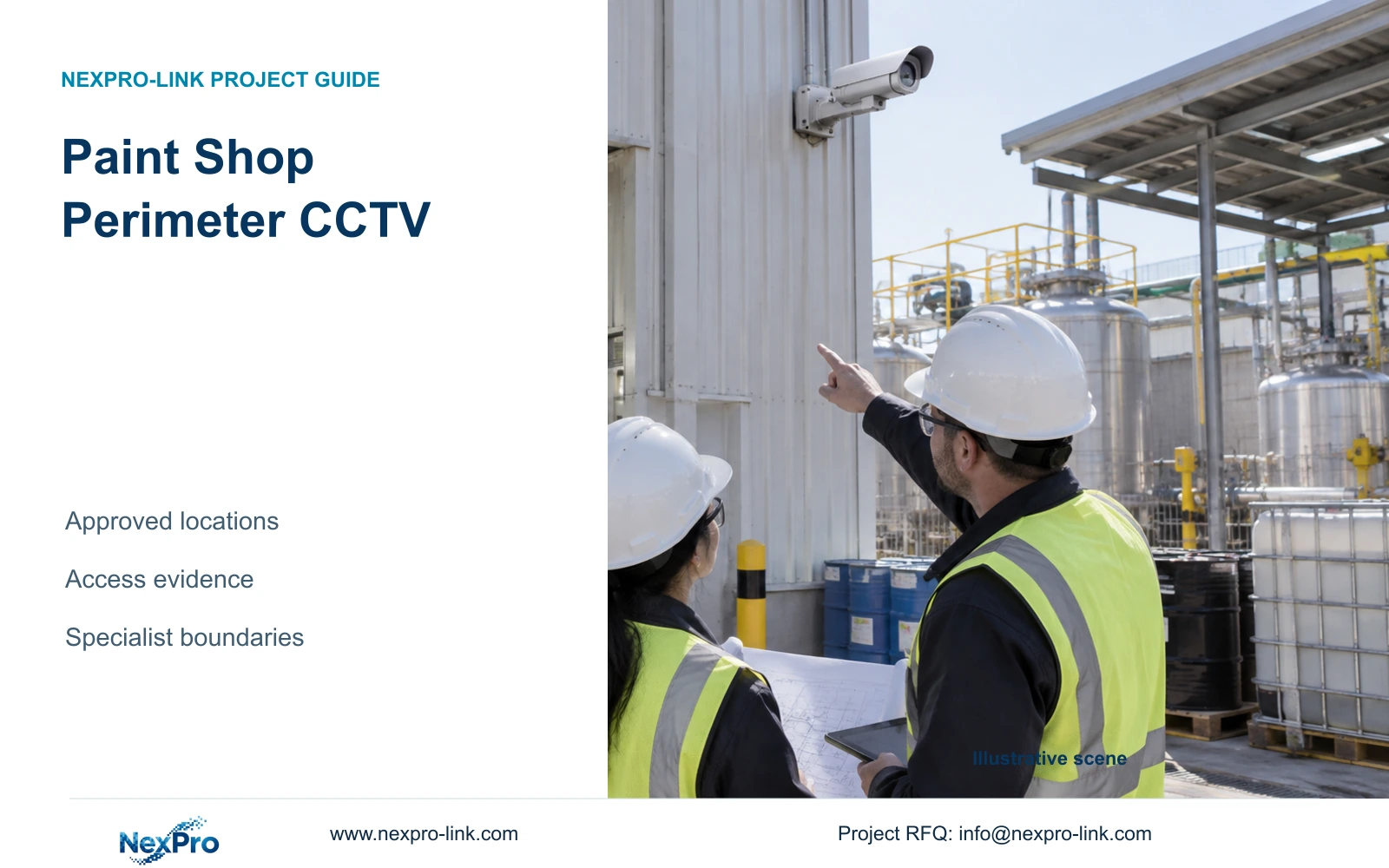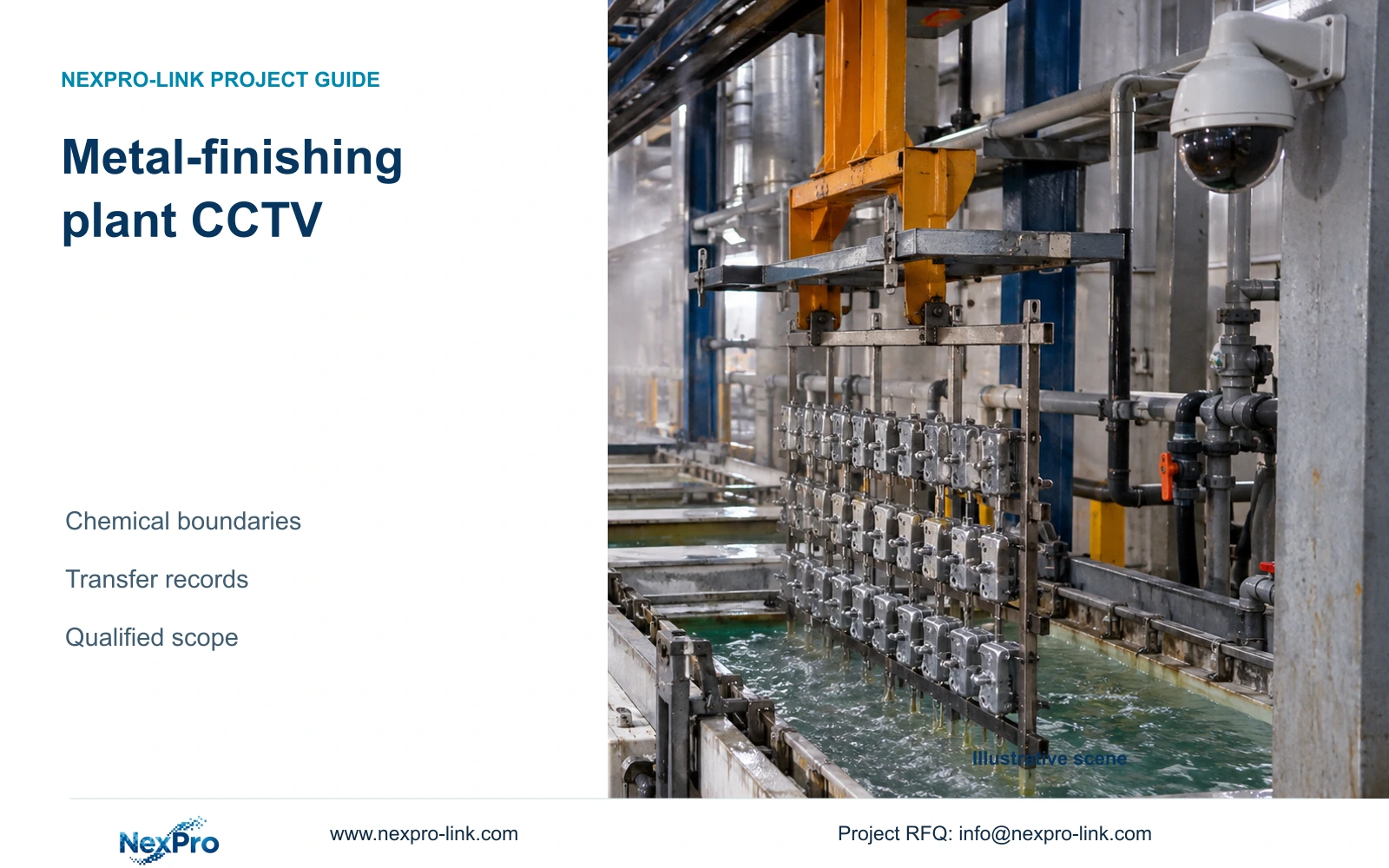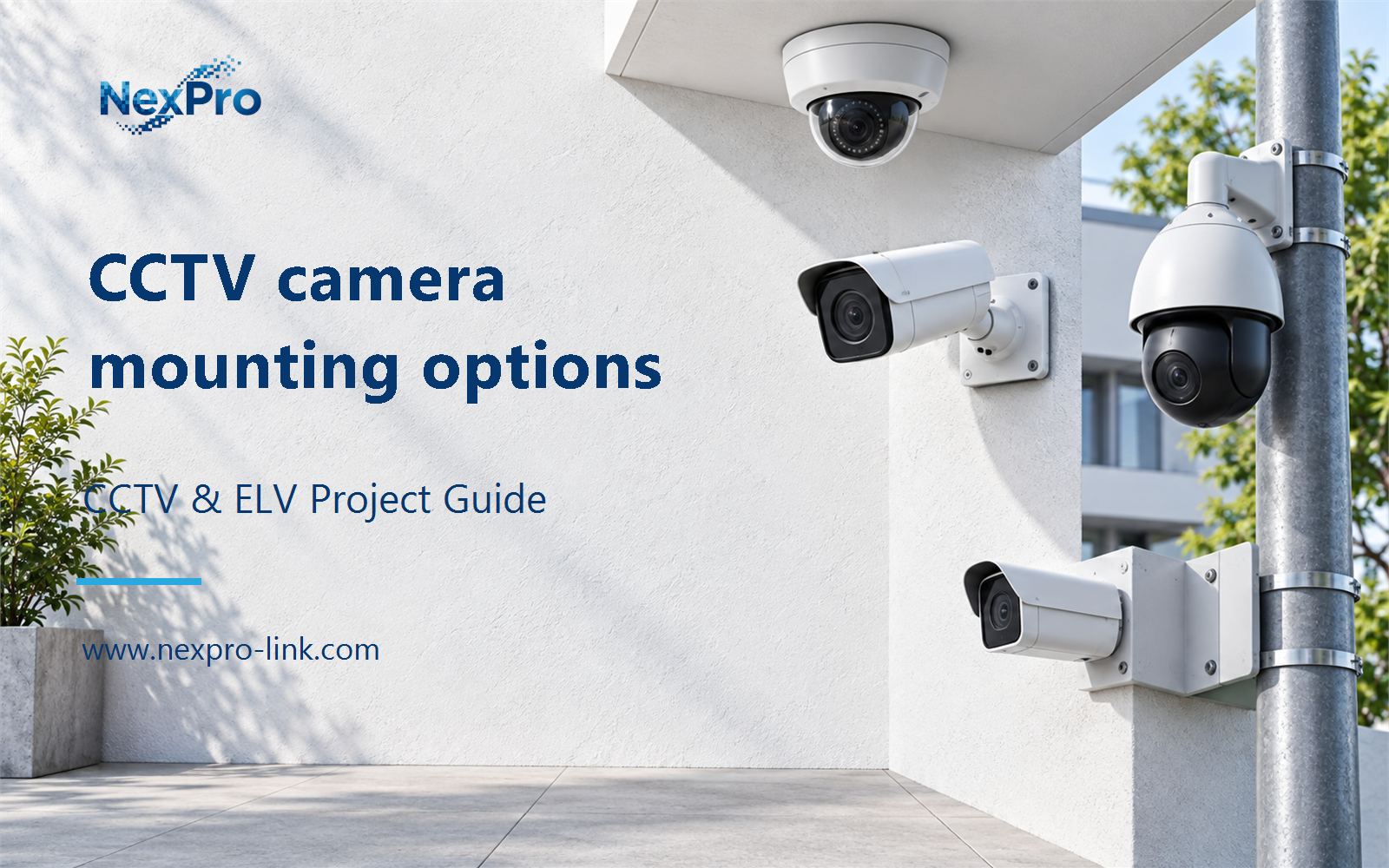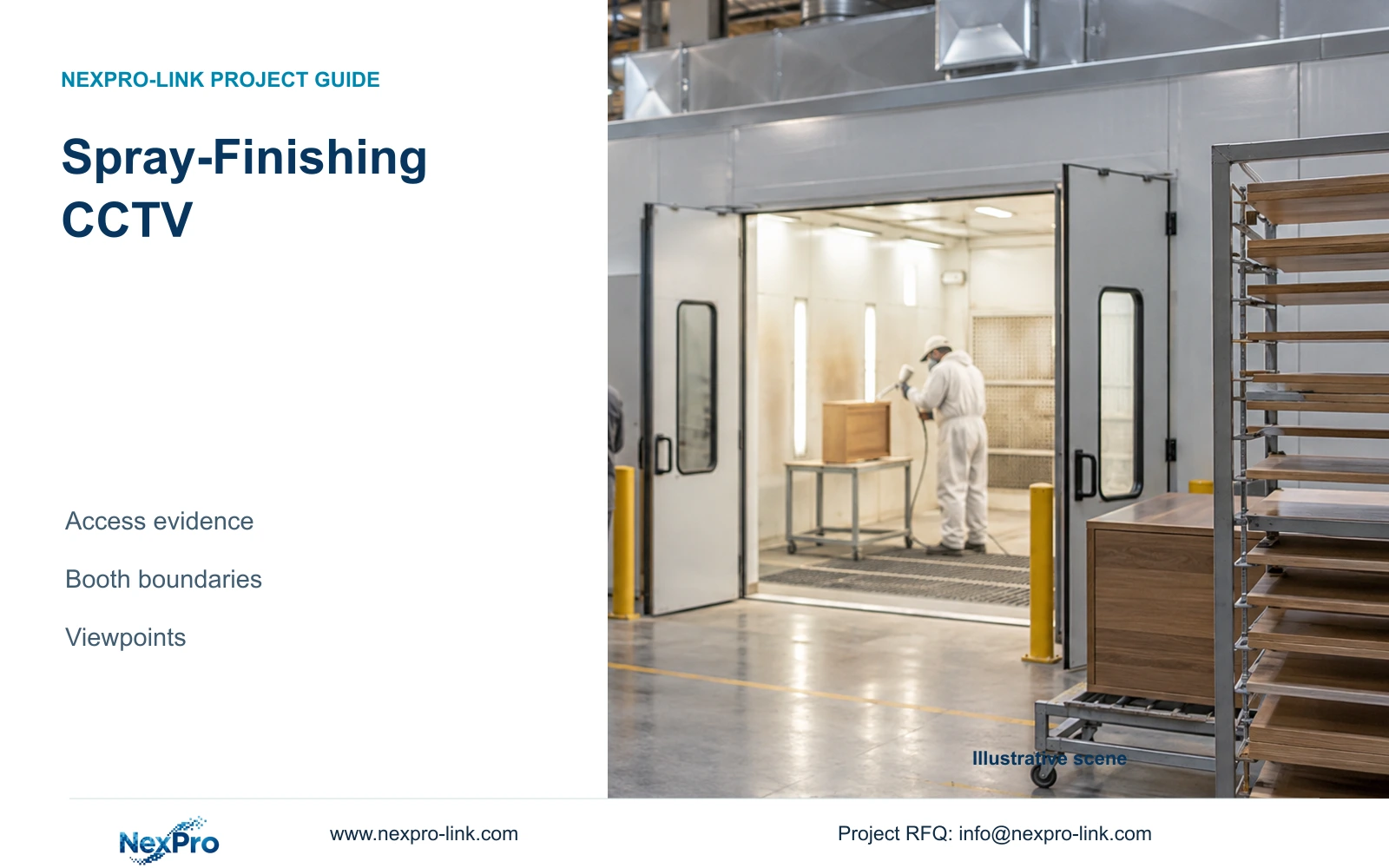
Test access footage with the normal door sequence and tall furniture in the staging area. Document which crossing remains visible before accepting an external view instead of interior observation.
Section 01
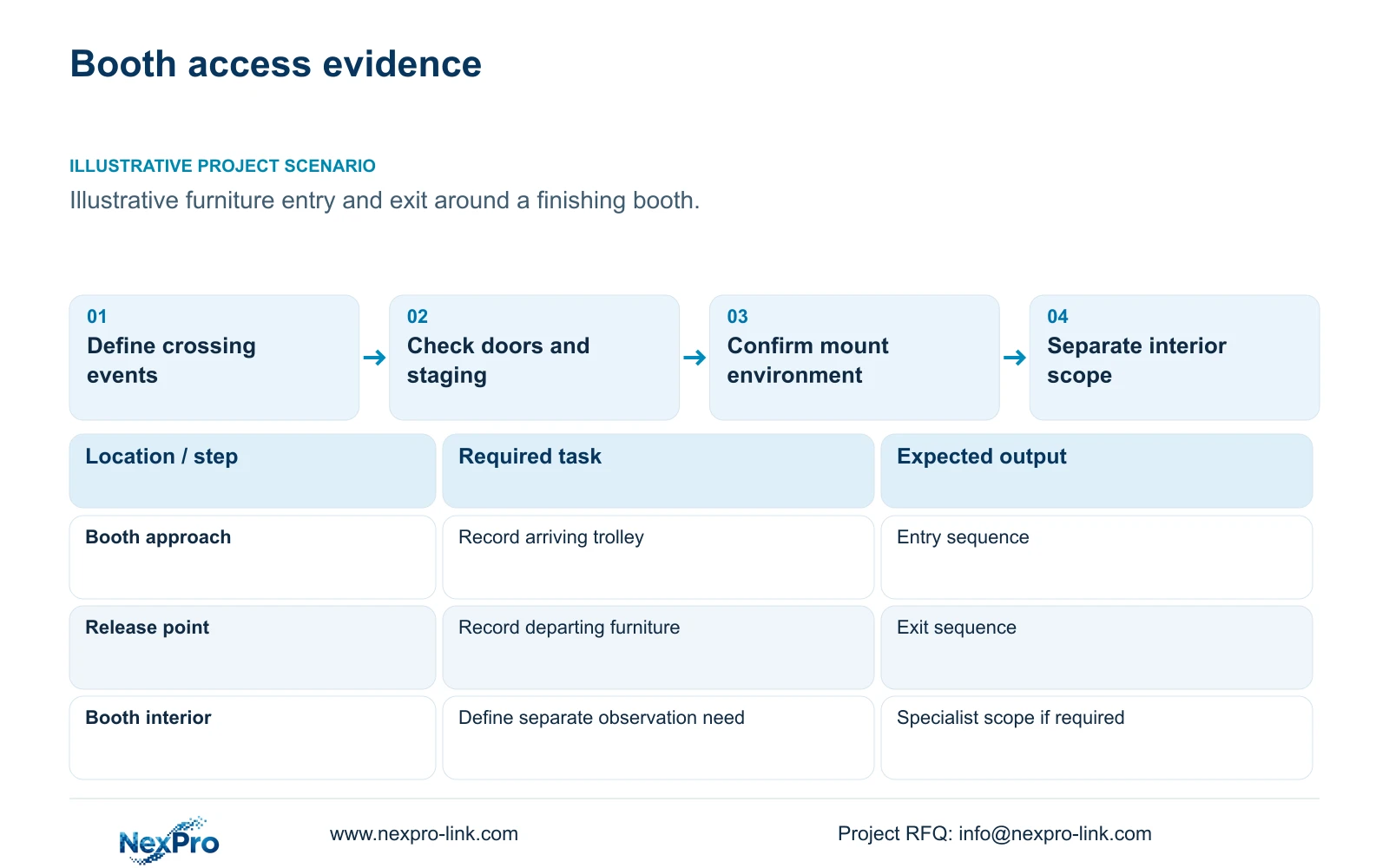
Separate booth access evidence from interior observation
To accept furniture spray-finishing access CCTV, test the required crossing with normal door movement, trolley handling and tall furniture in the waiting area. A clear empty-booth image is insufficient. Keep the mount within its accepted environmental scope and record any concealed stage. If the external view cannot show the agreed entry or exit, change the accepted viewpoint or retain separately qualified interior scope; do not describe the missing stage as equivalent coverage.
Illustrative project scenario: Management needs records of material entry and exit around a finishing booth. For planning, assume furniture arrives on trolleys, waits at an approach area and leaves through an agreed release point. The immediate evidence objective is to reconstruct those movements. Interior coating quality, spray operation and safety monitoring are separate tasks that this ordinary security proposal does not claim to perform.
Ask management what a useful clip must show: the trolley arriving, the item crossing the opening, or its departure toward packing. Confirm whether the same doorway serves both directions and whether waiting furniture hides the transfer. These answers determine the required viewpoints more reliably than specifying one camera per booth.
Section 02
Test the door-and-trolley visibility envelope
Describe conditions at the camera position, including deposits, cleaning products, moisture, local temperature and maintenance access. Obtain the responsible area's classification and relevant ventilation or extraction information. Have the local design team verify current requirements. A general factory designation is too broad to establish whether the approach camera fits its intended position.
Check operation with doors open and closed, representative tall furniture waiting nearby, and the normal trolley route occupied. An external camera may capture the access opening when empty but lose the item as soon as a large cabinet enters the staging area. Record the approved stock envelope and any clear-view requirement in the operating schedule.
Include lens-cleaning access in that assessment. A position exposed to deposits may need relocation or a separately supported protective arrangement. Do not assume a cleaning chemical is compatible because the camera has an ingress rating. Moving the camera closer to obtain detail can change exposure and service requirements, so environmental qualification must follow the final mounting point.
Rehearse arrival, crossing and departure with representative furniture dimensions supplied by the owner. Note whether a waiting cabinet conceals a later trolley or a closing door removes the crossing itself. Retain the approved staging envelope with the view record. If operations cannot keep that envelope, compare another accepted viewpoint before changing the evidence objective. This staged acceptance method does not establish coating quality or booth safety.
| Condition / stage | Required input | Decision and evidence |
|---|---|---|
| Waiting furniture present | Approved height and staging position | Confirm the next trolley crossing remains visible |
| Door moves during transfer | Normal opening/closing sequence | Retain the crossing or record its missing interval |
| Staging envelope cannot be maintained | Operating constraint and alternate sightline | Revise the accepted view or retain specialist scope |
Section 03
Retain specialist scope where the task requires it
Use an ordinary camera only where the accepted location conditions fit its documented scope. If the required view lies within a classified area, obtain a complete applicable specialist configuration and installation scope. Keep its connections and maintenance arrangements with that submittal. An ordinary camera fitted inside an unspecified enclosure is not an established equivalent.
A practical scope split assigns external access cameras to the ordinary CCTV package and interior observation to a specialist work package when that task is required. The owner defines each evidence objective; the responsible area designer establishes location requirements; the local installer confirms implementation. State which interfaces connect the packages and who accepts them.
The supplied BL2812M55 and DM2812M55 references are ordinary security candidates with IP66, -20 to +60°C and 2.8–12mm motorized lenses. Their 5MP-family source retains 2880x1620 and 25fps. These fields can support framing and environmental checks at a suitable approach position, but they do not establish explosion protection, chemical resistance or booth-process inspection capability.
Section 04
Compare location choices against the same access task
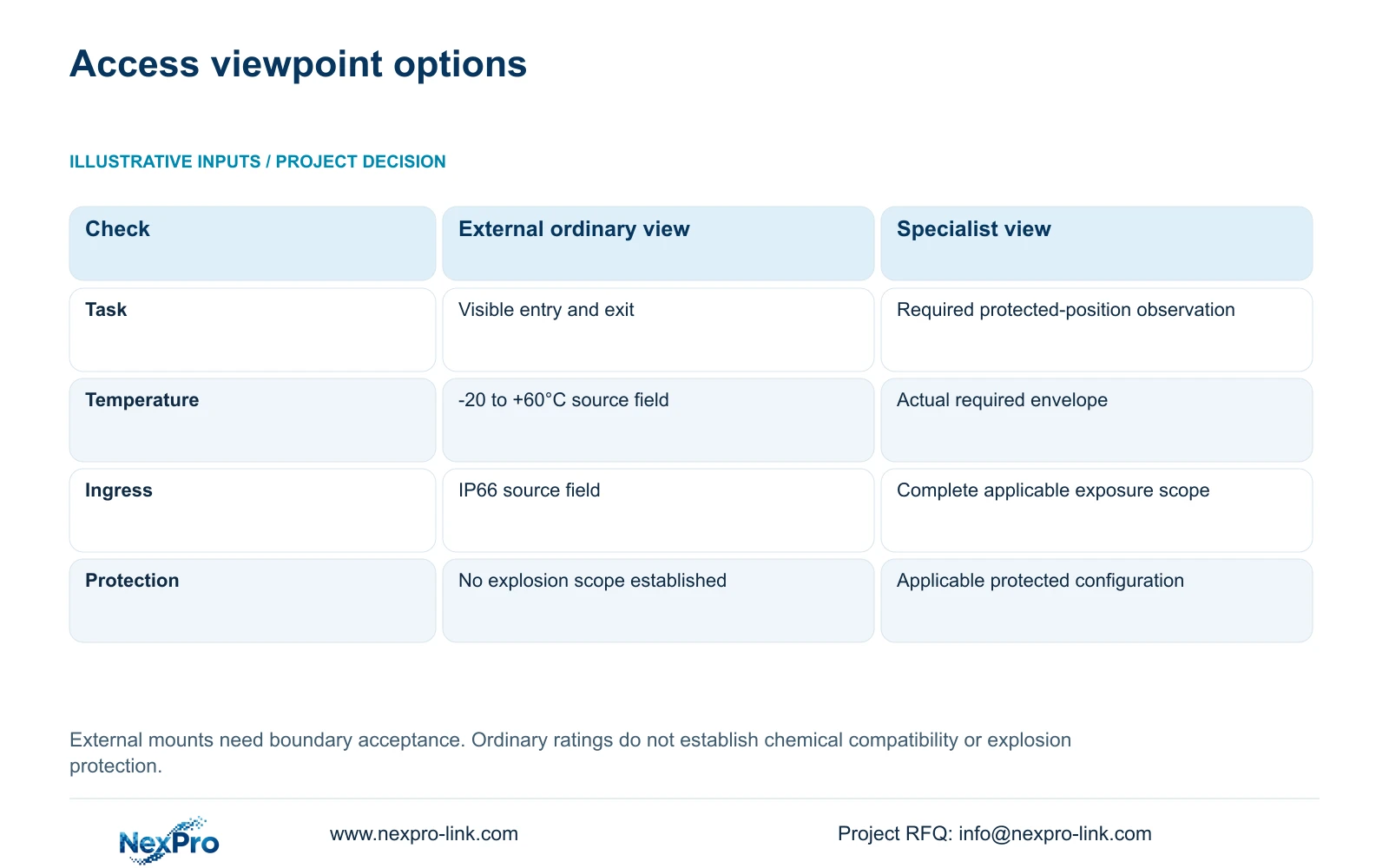
Apply the decision method to each proposed position: location conditions AND complete product scope AND approved installation requirements must fit. The table compares an accepted external ordinary position with a specialist position needed to retain the required view. It does not imply that both options provide identical footage or that every booth requires interior cameras.
The decisive difference is whether the external view captures the accepted event without unsuitable equipment exposure. If it does, an ordinary package may be appropriate. If it misses the crossing or relevant item, explain the limitation and retain a different viewpoint or specialist scope. The buyer should not discover after installation that access meant only distant movement.
Temperature and ingress remain independent checks. The listed -20 to +60°C range does not establish compatibility with every local thermal condition, and IP66 does not prove cleaning or solvent resistance. Keep the recording room suitable and accessible in both options, so specialist front-end requirements do not unnecessarily move ordinary disks and batteries beside the booth.
| Decision | External ordinary viewpoint | Specialist viewpoint |
|---|---|---|
| Evidence task | Entry and exit if opening remains visible | Required view unavailable externally |
| Location acceptance | Confirm mount outside unsuitable boundary | Match actual classified-location scope |
| Temperature | Documented -20 to +60°C candidate field | Required complete operating envelope |
| Deposits and cleaning | Confirm actual exposure and compatibility | Supported protective and cleaning arrangement |
| Recording equipment | Suitable accessible service room | Ordinary infrastructure kept suitably located |
Section 05
Keep access recording independent of display choices
Recommend stable entry and exit views with event references that production and security staff can recognize. Name each view after the booth approach or release point, and use an agreed time basis across cameras and records. Validate playback and export as well as live images. An access recording package should remain useful when no operator is watching.
CASE01 provides an illustrative ordinary-area recording basis: 32 cameras at 4 Mbps average, continuously recorded for 30 days, produce 41.472 TB. The formula is video_TB = cameras × average_Mbps × 10^6 × 86400 × days / 8 / 10^12. Its 64 TB raw disk arrangement supplies 48.64 TB video budget after 0.95 formatting and 0.80 reserve factors. This is not a booth camera count or a specialist-stream assumption.
Choose recorder resources from the actual accepted streams and retention requirement. Recheck when specialist devices or additional viewpoints are introduced. Size local PoE and protected power with actual demand; complete switch AC figures already containing camera power must not receive that camera load again. An ordinary playback monitor may suffice. A display wall adds a separate operator task and does not improve the recorded access view.
Section 06
Make booth boundaries part of the supply release
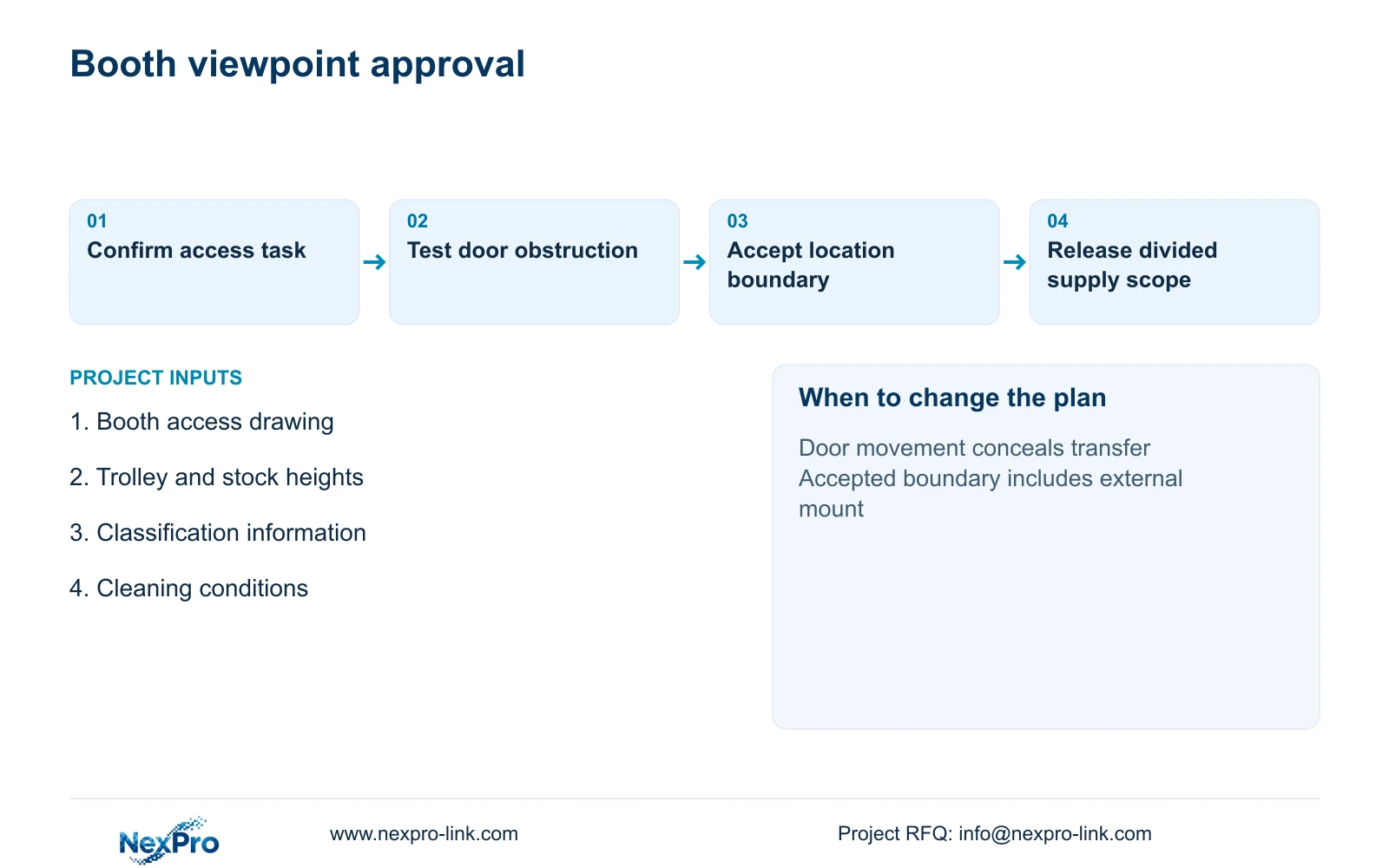
Release the schedule against a drawing revision showing camera positions, door operation, staging envelope and environmental boundaries. Mark ordinary supplied items, retained equipment and specialist items separately. Mounts, connection points and cleaning access should follow the same position IDs so installation teams can see the complete task rather than interpret a loose camera list.
Before accepting a substitute, compare its exact model fields and complete scope with the approved requirement. Preserve required platform integration, protective configuration and local services. A quotation for ordinary exterior access recording cannot be treated as equivalent to one including interior protected observation. Identify that difference openly before discussing price.
NexPro-Link can help translate accepted ordinary-area tasks into model matching, technical documentation and a coordinated equipment quotation through its project and BOQ support. Project labels and packing can follow booth and route IDs. The local team retains environmental and installation approval, while unresolved specialist requirements remain visible instead of being absorbed into an unsupported standard-camera offer.
Section 07
Buyer questions
Can access footage prove that spraying was performed correctly? It can establish the visible entry and exit sequence. It does not prove coating quality, process settings or every interior operation. Define any required process observation independently.
What if booth doors hide the transfer? Test alternative accepted approach or release positions with normal door movement and staged furniture. If no external view meets the task, retain the specialist viewpoint or explicitly reduce the evidence objective with owner approval.
Should a future interior camera be included now? It can be listed as a separately scoped option with unresolved qualification inputs. Do not assign an ordinary model or assume compatible connections before the interior task and complete protective scope are accepted.
Section 08
Define finishing-booth access recording
Send the booth access drawing, material entry/exit task, classified-boundary information, and cleaning/exposure conditions to info@nexpro-link.com to discuss qualified external viewpoints and separately identified specialist scope.
Engineering references
These sources support the general planning principles. Always use the selected product's current datasheet and applicable project standards for final design.