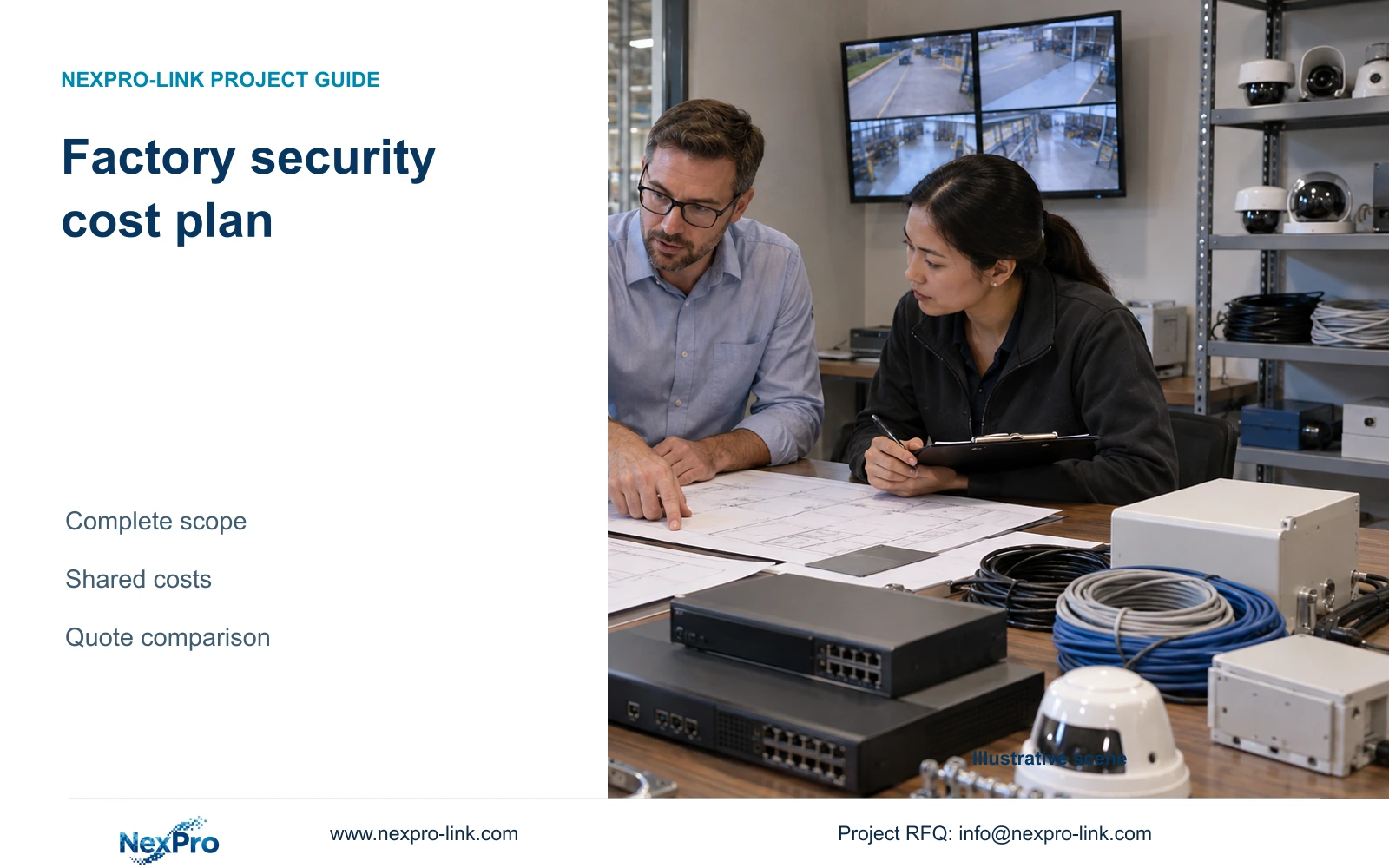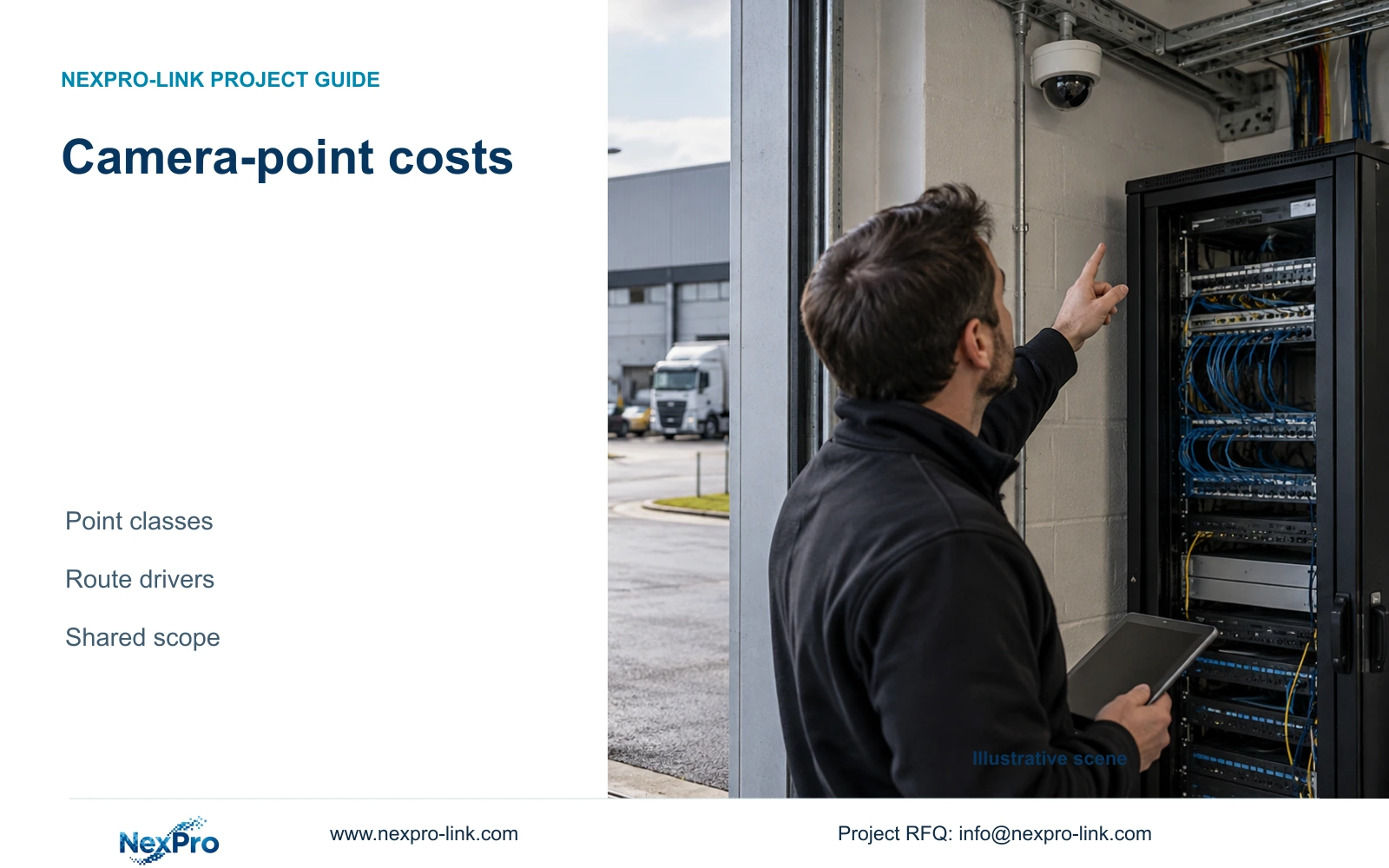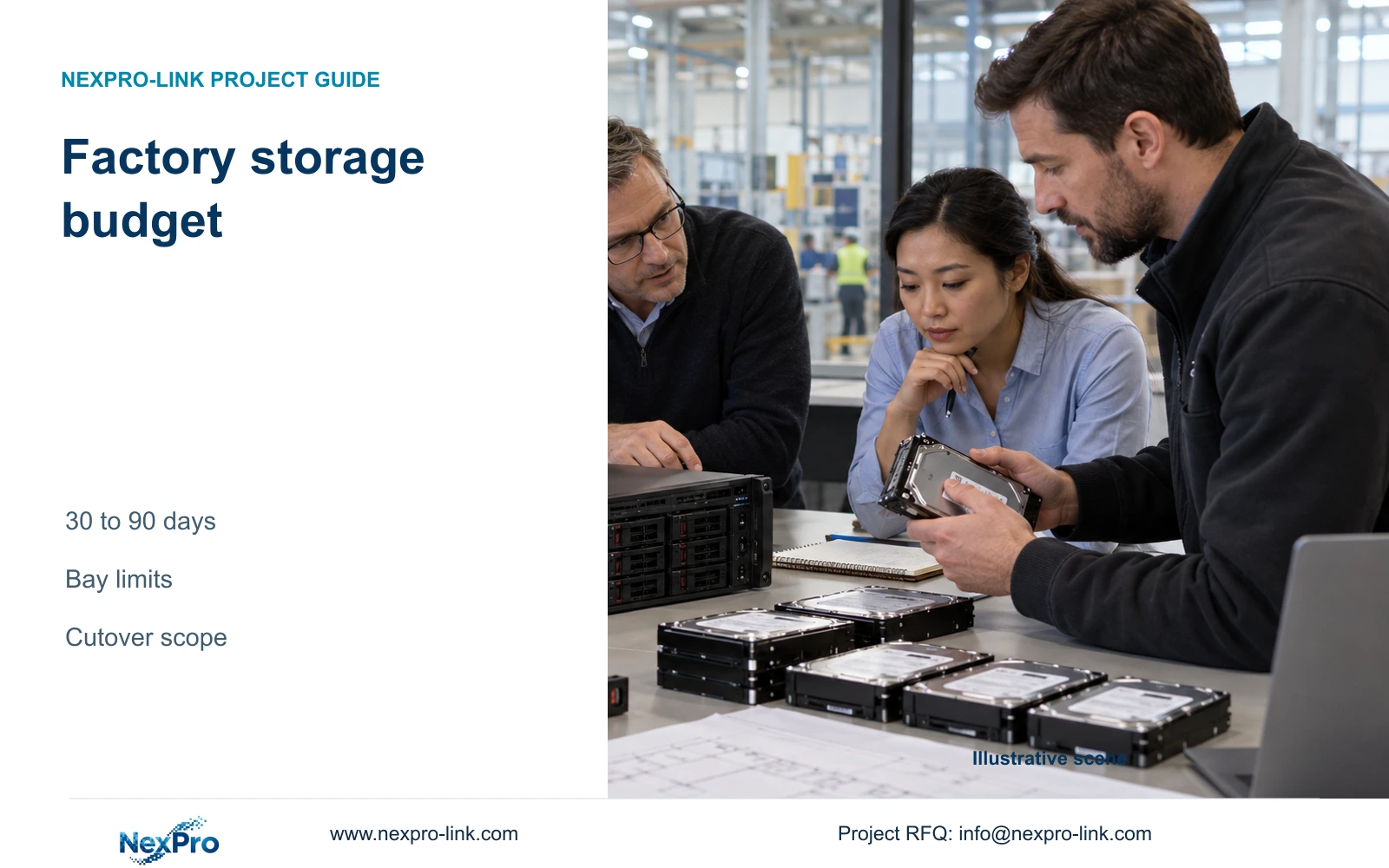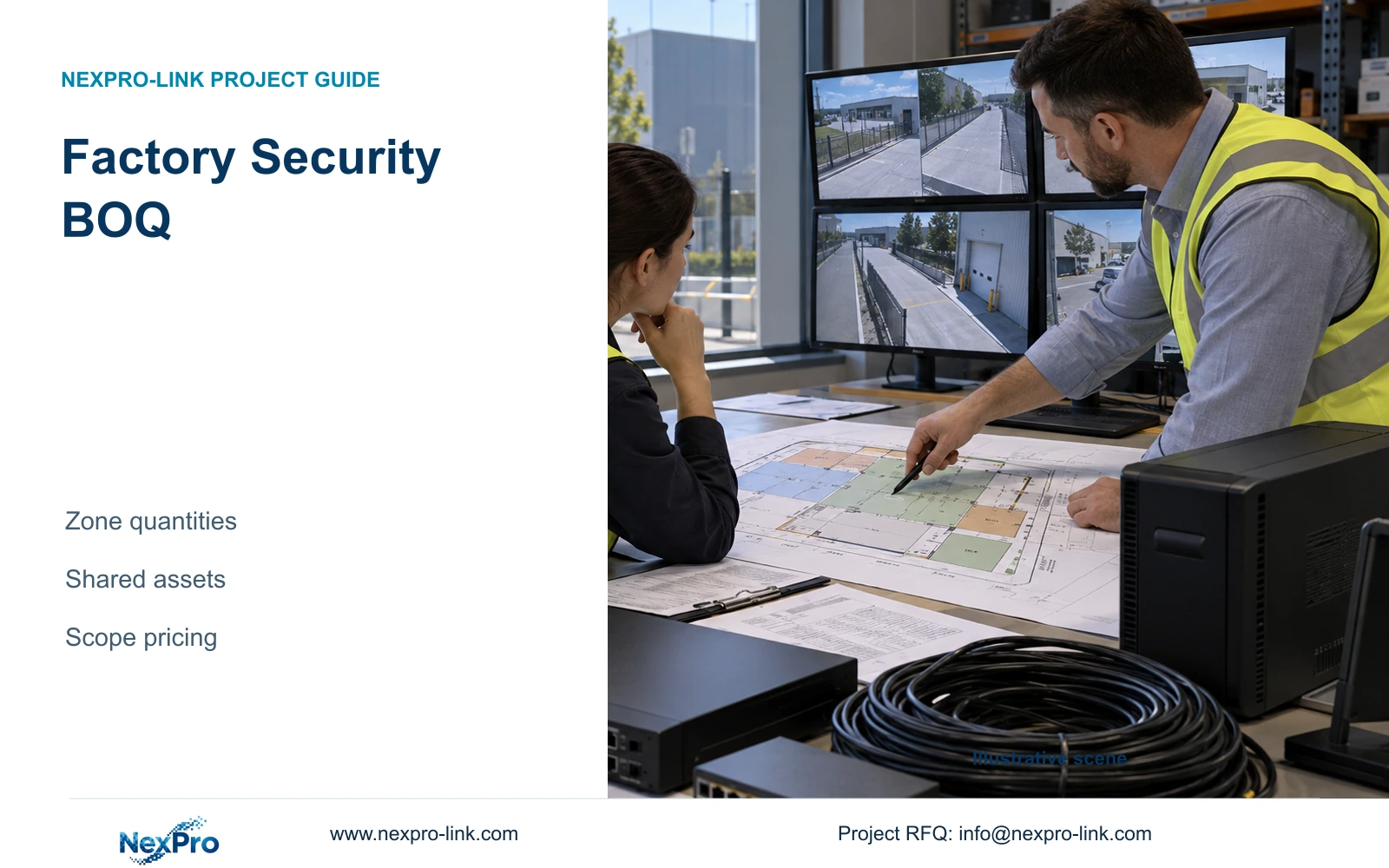
A useful factory security BOQ connects each observation task to measurable equipment and work, while keeping shared recording, power and optional integration visible.
Section 01
Give every zone a measurable operating task
Build a factory security BOQ around zone references, required functions, quantities, units and explicit inclusions. Each camera position should have an observation purpose; each shared system should identify the positions it serves. This lets the quantity surveyor price a working package and trace changes without treating cameras, recording, gates and installation as one unexplained sum. Preserve the buyer's original item numbers and specification clauses alongside any supplier package references.
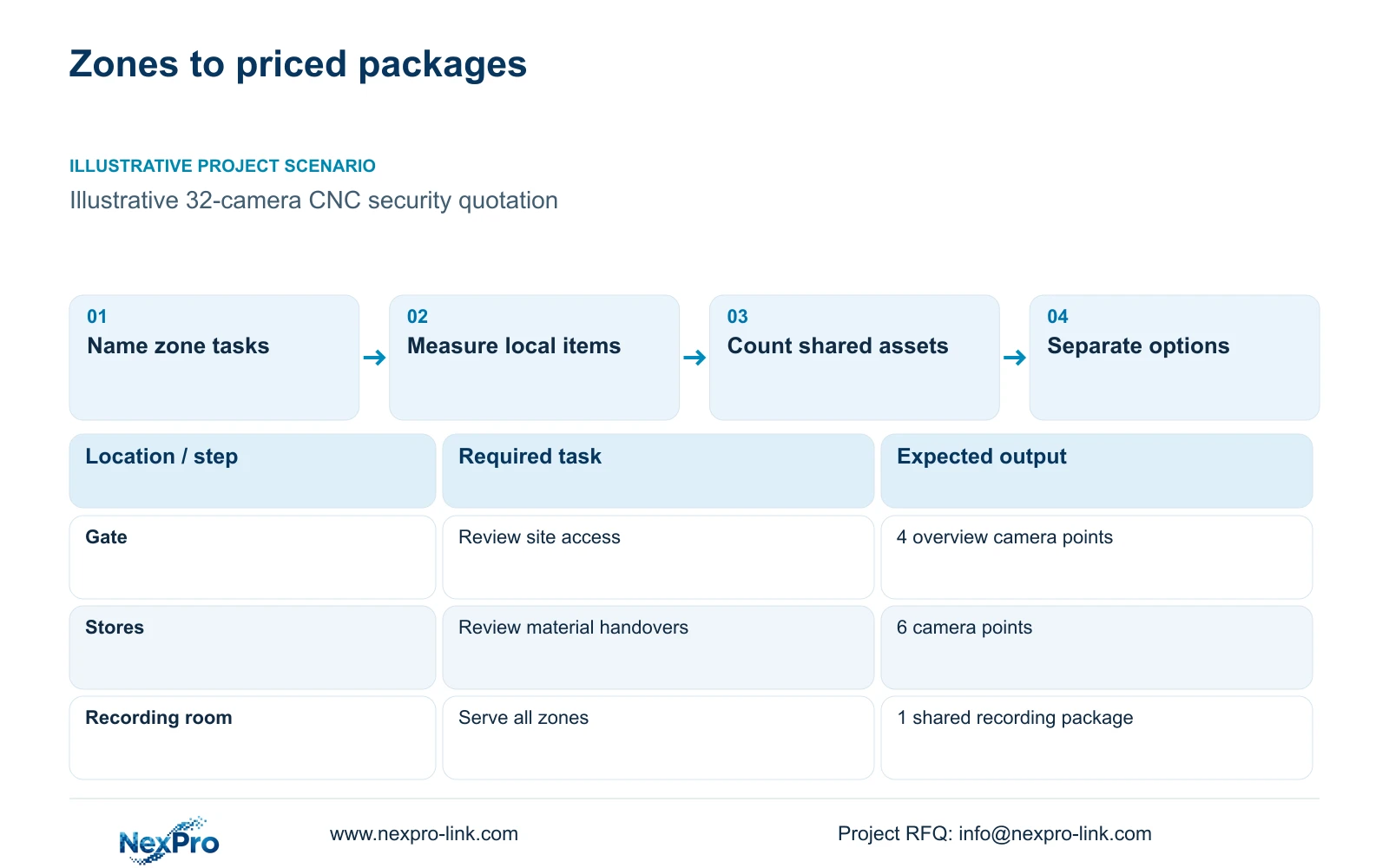
Illustrative project scenario: A contractor needs a quotation structure for cameras, recorders, gates, UPS, displays and cable. The supplied CNC reference assumes 32 ordinary-area cameras: four gate overviews, six material and tool-store views, ten machine-hall transfer views, four common-route views, six dispatch views and two equipment-room approaches. These are planning quantities for authorised access and material-transfer review, not machine inspection or a completed client installation.
Use those six task groups as the first measurement structure. Ask the owner to confirm what must be visible and the engineer to identify mounting and environmental constraints. Gate-overview cameras can be counted now; barrier mechanisms, lane controls and plate-reading equipment require their own schedules. A camera allocation does not establish the number of complete gate systems.
Section 03
Keep optional equipment and specialist responsibilities identifiable
Assign every line a status: supplied, retained, installer-provided or optional. In this new-build reference, all 32 camera links are new. There is no retained-cable credit. The local contractor's cable pulling, containment, termination and testing should have identifiable work lines even when NexPro-Link coordinates the equipment quotation. Naming a responsible party prevents an equipment supplier's exclusion from becoming an unassigned site task.
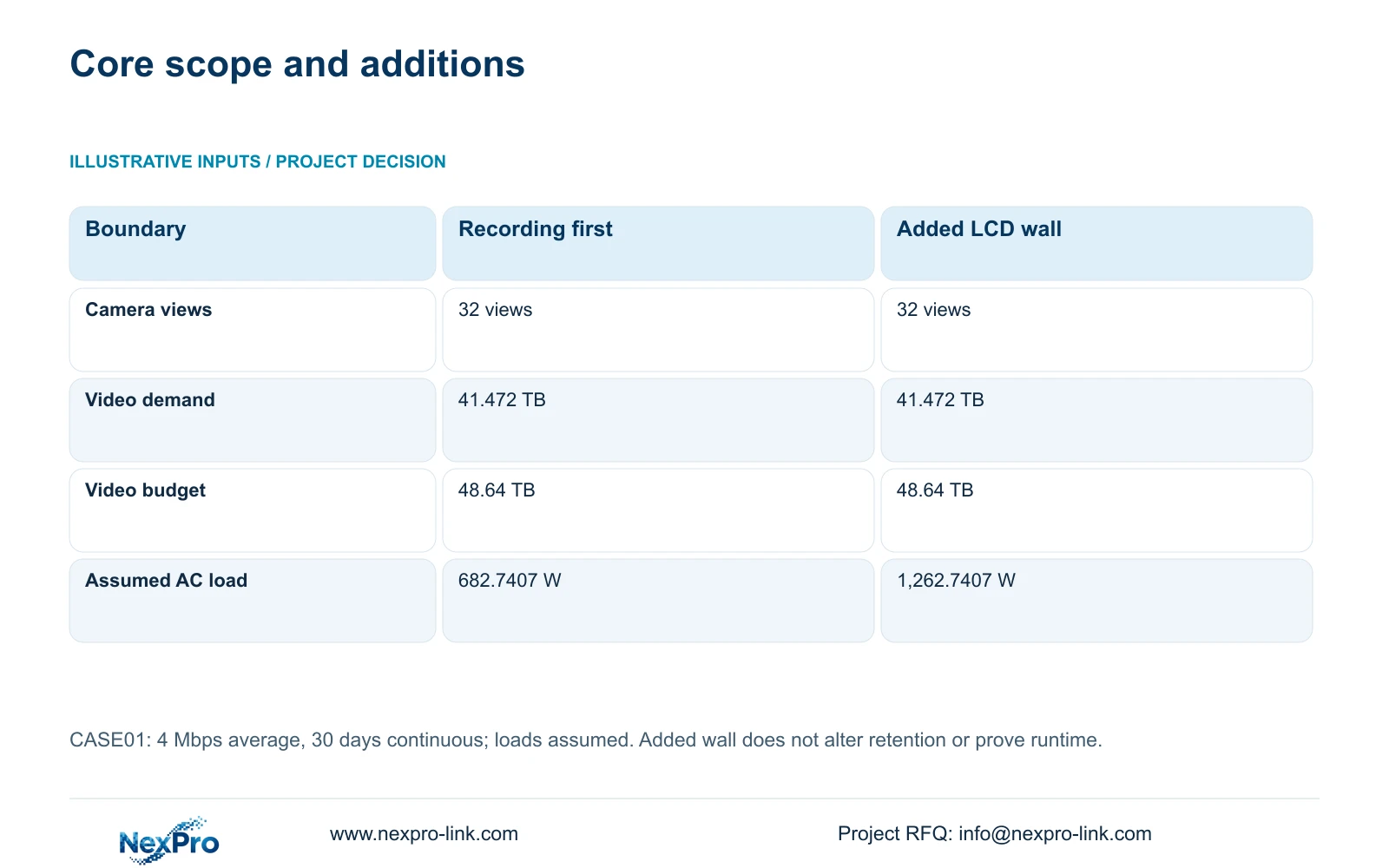
Separate the optional four-panel LCD wall and decoder from the required retrieval display. The wall adds a viewing arrangement, mounting, signal processing and power demand; it does not increase recording retention. Where the project requires specialist environmental protection, create a separate qualified scope with its own approval evidence. This reference has no specialist camera positions, so there is no basis for pricing an invented hazardous-area package.
Gate interfaces deserve the same treatment. State who supplies the barrier, who provides its approved control interface and who demonstrates the requested video workflow. Leave an unresolved quantity visibly unresolved. A blank field should trigger clarification rather than become a zero-price line or an assumed software connection.
Section 04
Compare a complete recording package with justified additions
Use the same observation and recording outcome for both options. Option A is a complete recording-first package with authorised retrieval. Option B retains that package and adds only a defined viewing or integration task. The comparison below converts the supplied scope matrix into choices the cost team can measure without assigning arbitrary scores.
The decisive difference is the added dependency chain. An LCD wall needs qualified decoding, outputs, brackets, power and room coordination. A gate-event interface needs a named integration owner and demonstrated workflow. Neither belongs inside a camera rate without explanation. If either is mandatory, it moves into the required scope rather than remaining an optional enhancement.
Protected-power demand also changes with the selected display boundary. The case assumes 682.7407 W for recording-first operation and 1,262.7407 W with four assumed 120 W LCD panels plus assumed 100 W decoding equipment. These are illustrative load totals, not measured product draw or proven UPS runtime.
| Scope decision | Option A: recording first | Option B: defined additions |
|---|---|---|
| Recording outcome | 32 views; 30-day planning target | Same views and retention |
| Hardware identity | Tagged cameras, recorder and disks | Same plus tagged added interfaces |
| Network and power | Four access groups; one protected node | Added processing and power counted |
| Software and access | Authorised viewing, retrieval and export | Approved extra workflow with named owner |
| Procurement basis | Complete core equipment and site work | Core plus separately measured additions |
Section 05
Choose units that expose the work behind the price
Use each for identifiable equipment, metres for installed cable where the tender permits, and clearly defined sets for assembled packages. The reference's 1,872 m of continuous CAT6 becomes seven 305 m reels under its verified feasible cutting plan. Installed metres and purchased reels describe different quantities; neither should silently replace the other. The seven-reel figure excludes separately approved spare stock.
A camera set can include a camera, selected bracket, junction accessories and agreed patch cords, but list its contents. The case's 64 data modules assume two module-ended terminations per link. A direct camera plug or MPTL design changes that count and the testing method. Similarly, a 48-port patch-panel reference describes cabinet capacity, not 48 installed camera points.
Recommend the recording-first package unless the owner has a defined simultaneous-viewing or integration need. Retain mandatory brand and specialist requirements. Compare alternative suppliers on the same installed task, documentation and support boundary before discussing a saving. An apparently lower equipment rate may simply exclude the work needed to make the point usable.
Section 06
Issue one mapped pricing schedule with controlled exclusions
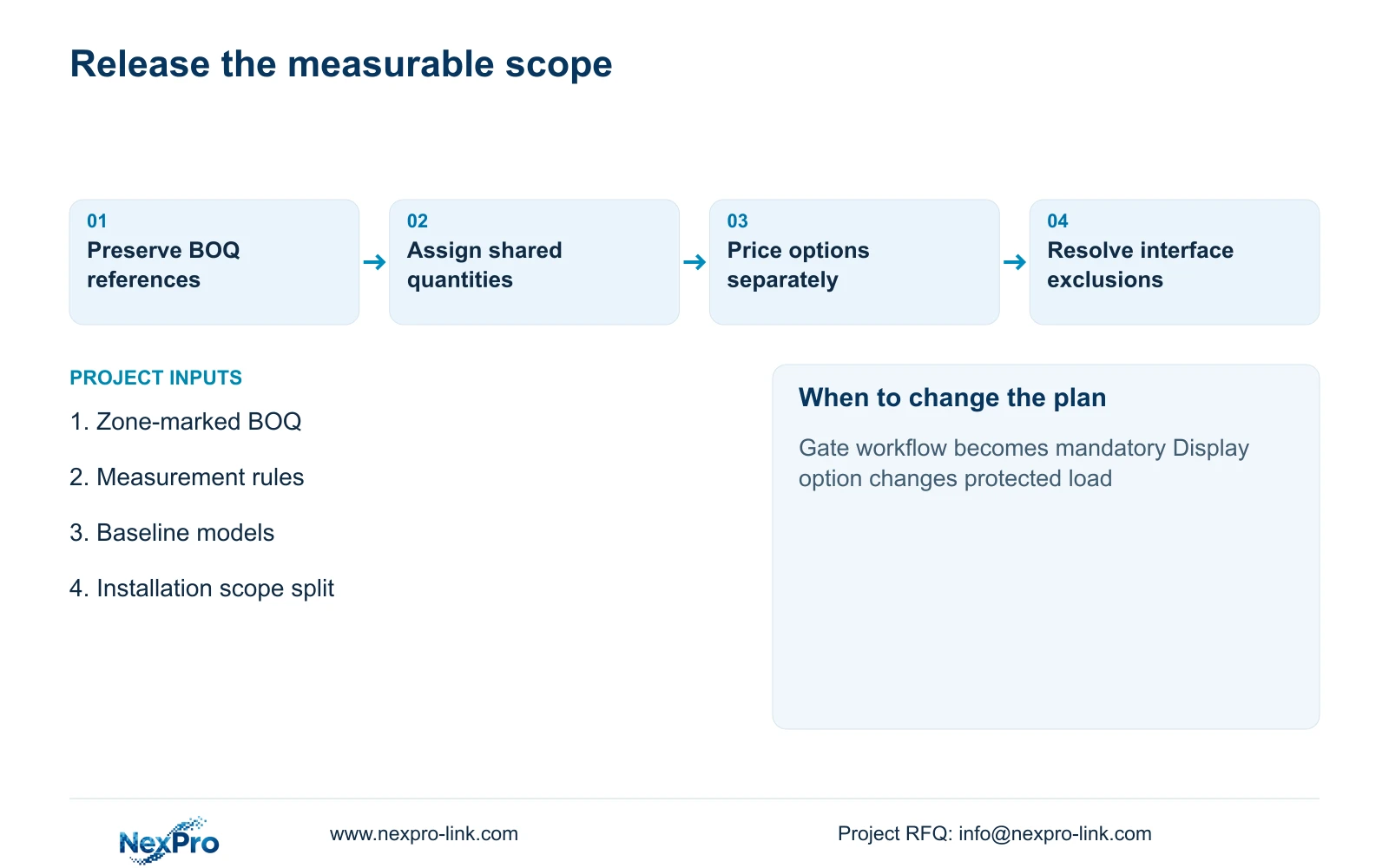
The pricing issue should connect the source BOQ line, zone, equipment reference, quantity, unit, inclusion and responsible party. Add an option register and a short clarification list. For example, record gate control interfaces as awaiting the lane schedule, while camera quantities remain traceable to the six observation groups. This keeps unresolved scope from obscuring already usable information.
NexPro-Link's Factory & Warehouse project-supply and BOQ & Tender Support scopes provide relevant routes for model matching, technical documents and quotation coordination. Equipment preparation and project packing can follow approved zone tags. Local construction, specialist approvals and final project acceptance remain allocated to the parties named in the procurement documents.
Before releasing a purchase instruction, reconcile the accepted option with the recorder, disks, power and site-work lines. Supplier registration, brand approval, equipment submittal and procurement approval are separate decisions. A coherent BOQ supports those decisions by showing exactly what is being offered and what the buyer still needs to resolve.
Section 07
Buyer questions
Can a lump-sum security package still be compared fairly? Yes, if its attachment defines equipment quantities, included site work, shared assets and exclusions. Request that breakdown for evaluation even when the contract retains a lump-sum payment line.
Should spare cable be included in the installed quantity? Show spare reels separately from installed metres and cutting-plan leftovers. This distinguishes material needed for the works from stock the owner elects to retain.
Does one supplier mean one integrated software system? No. Coordinated supply can cover several equipment categories while their control and software interfaces remain separate. Price any required connection against an explicit workflow and responsible integrator.
Section 08
Request a zone-mapped factory security quotation
Send your zone-marked BOQ, tender measurement rules, baseline model schedule and supplied-versus-installed scope split to info@nexpro-link.com for a mapped equipment quotation and focused clarification list.
Engineering references
These sources support the general planning principles. Always use the selected product's current datasheet and applicable project standards for final design.