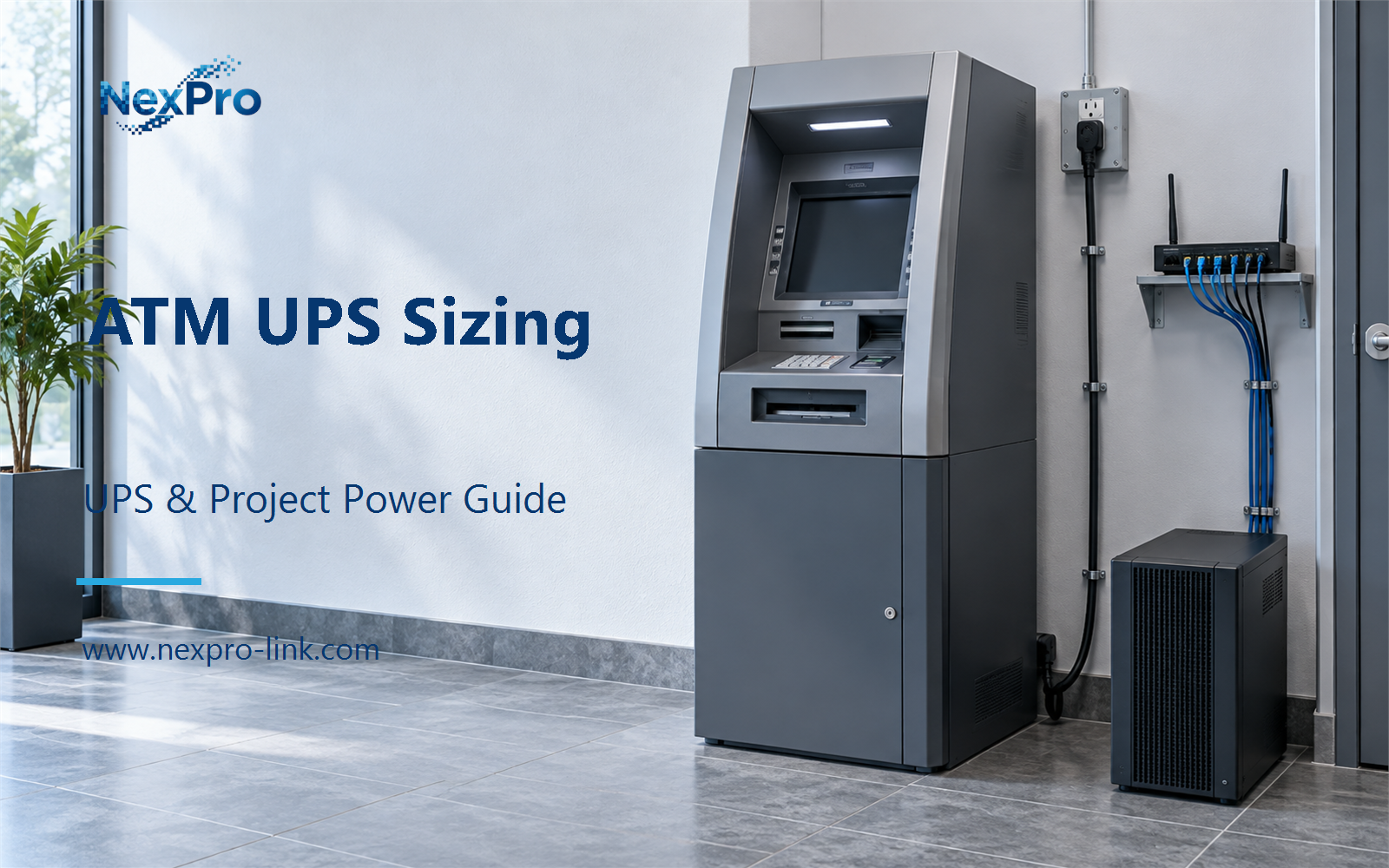
Transactions and lane control are related but different service chains; write the interface and recovery responsibility for each separately.
Section 01
Map a Lane Transaction
Transactions and lane control are related but different service chains; write the interface and recovery responsibility for each separately.
Trace identification, transaction processing, local storage and communication. Include barrier or lane-control equipment only within its approved power scope. A protected payment terminal alone may not preserve the full lane service.
Capture the answer in the lane path: identification / transaction / record / communication before equipment is compared. This gives the project team a concrete service target and exposes missing dependencies early.
| Decision area | Project question | Required output |
|---|---|---|
| Map a Lane Transaction | Which equipment supports a complete toll transaction? | Lane path: identification / transaction / record / communication |
| Separate Control and IT Demand | Should barrier motors share the IT UPS? | Load boundary: IT / controller / motor / safety system |
| Plan Connectivity Loss | Does battery backup enable offline toll processing? | State table: link available / local buffer / allowed action / replay |
Section 02
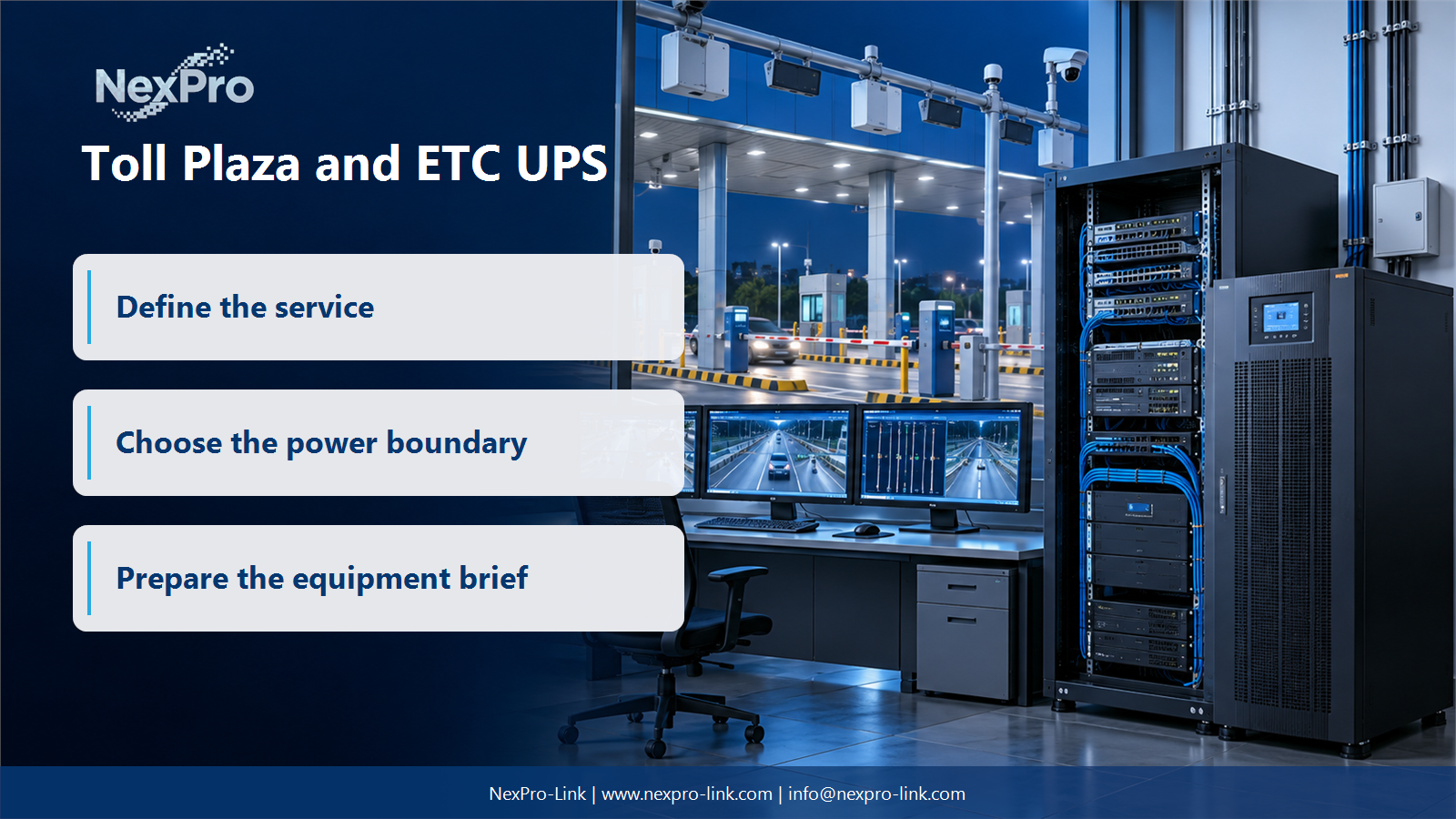
Separate Control and IT Demand
Not automatically. Their load behavior and safety functions require separate consideration. Identify control electronics and motor circuits clearly, using the system supplier's requirements. Do not infer compatibility from the UPS watt rating alone.
Use the load boundary: it / controller / motor / safety system to keep real interfaces and operating states visible. Measured demand, equipment limits and future allowances should remain separate entries.
Section 03
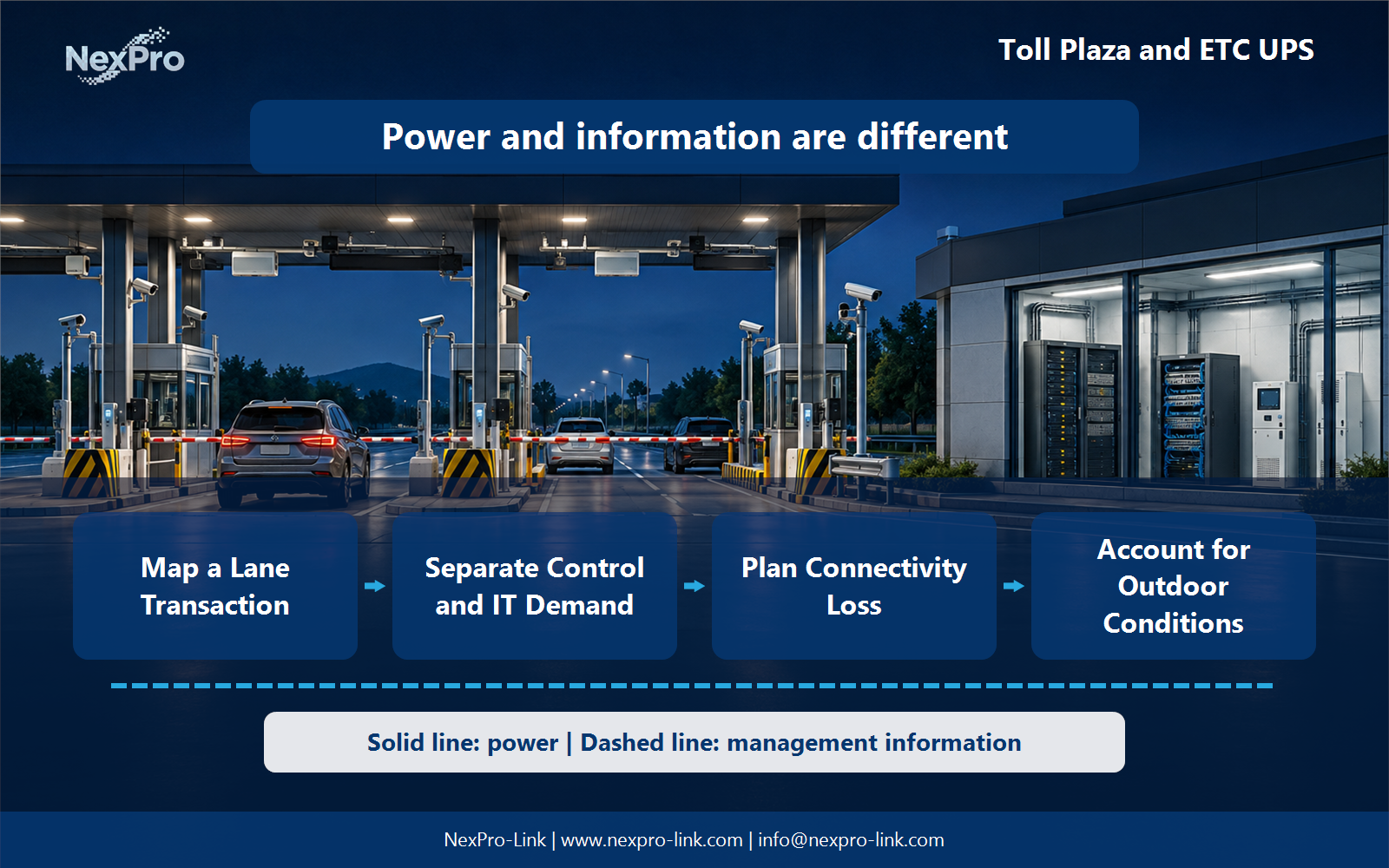
Plan Connectivity Loss
Only when the application supports an approved offline process. Describe buffering, authorization and later reconciliation as software-dependent functions. UPS power does not by itself create transaction integrity or permission to operate a disconnected lane.
Review the state table: link available / local buffer / allowed action / replay with the owners of the connected systems. Power continuity only supports the functions that remain connected and available during the event.
- Confirm the answer to: Does battery backup enable offline toll processing?
- Draw electrical power as a solid path and management information as a separate dashed path.
- Keep external services and specialist approvals outside the UPS equipment claim.
Section 04
Account for Outdoor Conditions
Compare ambient conditions, enclosure space, moisture exposure and service access. The same electrical demand can require a different installed configuration. Describe environmental requirements without inventing a universal outdoor or surge-protection certification.
Document this choice in the location table: room / lane cabinet / ambient / access, including the condition that triggers it and the person responsible for the response.
Section 05
Coordinate Return to Service
Confirm communication, transaction state and the approved lane-control condition before normal operation resumes. Assign reconciliation of uncertain records to the application team. Do not assume that energizing all devices simultaneously produces a correct operational recovery.
Test the sequence represented by the recovery map: power / network / transaction / lane / operator during an approved maintenance window. Record the observations needed to confirm recovery.
Section 06
Build a Lane-Based RFQ
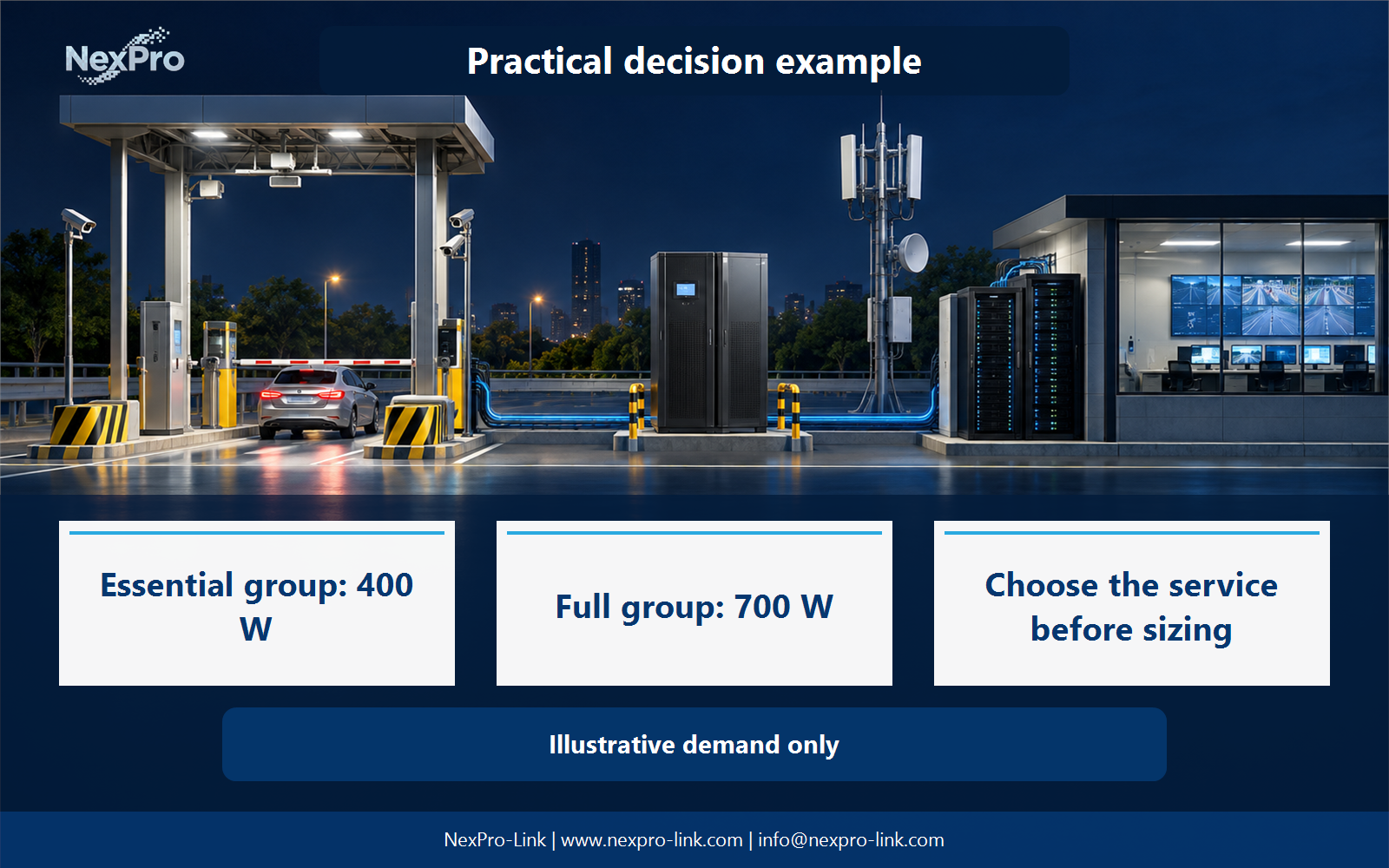
Provide a per-lane equipment table, shared central loads and approved fallback requirements. NexPro-Link can discuss UPS configurations and supply boundaries. Keep toll authority requirements and specialized control acceptance separate from generic IT backup claims.
Send the completed rfq: lane type / shared load / interface / runtime / environment with the project request. It is more useful than a capacity number without interfaces, operating states or a defined service boundary.
Engineering references
These sources support the general planning principles. Always use the selected product's current datasheet and applicable project standards for final design.