Separate controller, communications, and signal supply by the approved system design; a UPS cannot decide the traffic safety state on its own.
Section 01
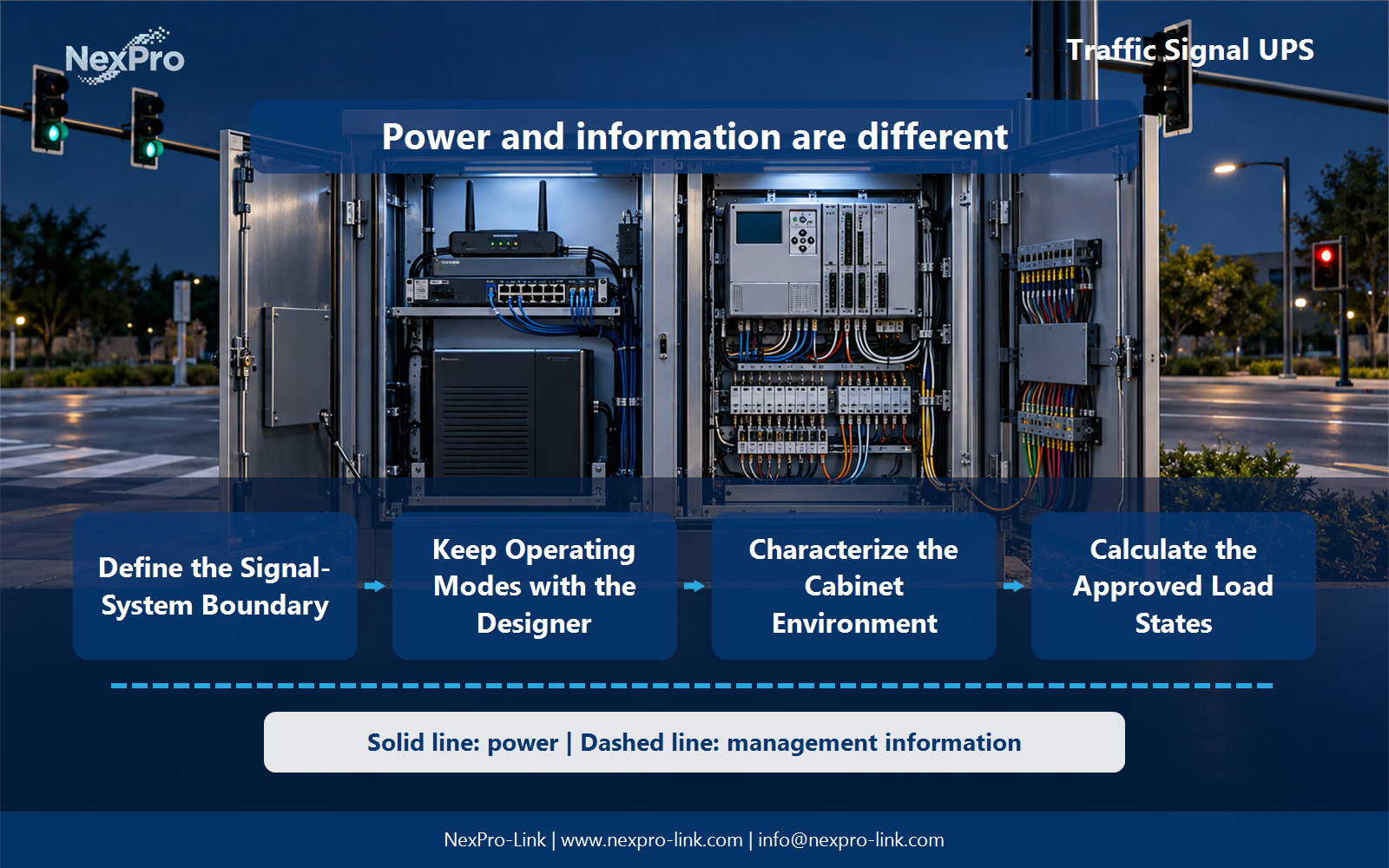
Define the Signal-System Boundary
Separate controller, communications, and signal supply by the approved system design; a UPS cannot decide the traffic safety state on its own.
Use the approved signal-system design to identify controller, communications and any signal-load requirements. These may have different interfaces and backup arrangements. A general IT UPS should not be presented as a universal replacement for dedicated traffic-signal backup equipment.
Capture the answer in the scope: controller / communications / signals / auxiliary before equipment is compared. This gives the project team a concrete service target and exposes missing dependencies early.
| Decision area | Project question | Required output |
|---|---|---|
| Define the Signal-System Boundary | What should the backup system protect? | Scope: controller / communications / signals / auxiliary |
| Keep Operating Modes with the Designer | Can the UPS choose a safe signal mode? | Responsibility map: power / controller logic / traffic operation |
| Characterize the Cabinet Environment | Which site conditions affect equipment choice? | Environment: ambient / enclosure / ventilation / access |
Section 02
Keep Operating Modes with the Designer
The signal controller and authorized traffic-system design determine permitted behavior. The UPS supplies power and supported status information. Do not suggest generic changes to signal logic or treat longer battery runtime as proof of safe intersection operation.
Use the responsibility map: power / controller logic / traffic operation to keep real interfaces and operating states visible. Measured demand, equipment limits and future allowances should remain separate entries.
Section 03
Characterize the Cabinet Environment
Record temperature, enclosure exposure, ventilation and maintenance access. Include the installed location of batteries and electronics. Outdoor operation requires a defined environmental configuration, not merely an indoor UPS placed in an unspecified roadside cabinet.
Review the environment: ambient / enclosure / ventilation / access with the owners of the connected systems. Power continuity only supports the functions that remain connected and available during the event.
- Confirm the answer to: Which site conditions affect equipment choice?
- Draw electrical power as a solid path and management information as a separate dashed path.
- Keep external services and specialist approvals outside the UPS equipment claim.
Section 04
Calculate the Approved Load States
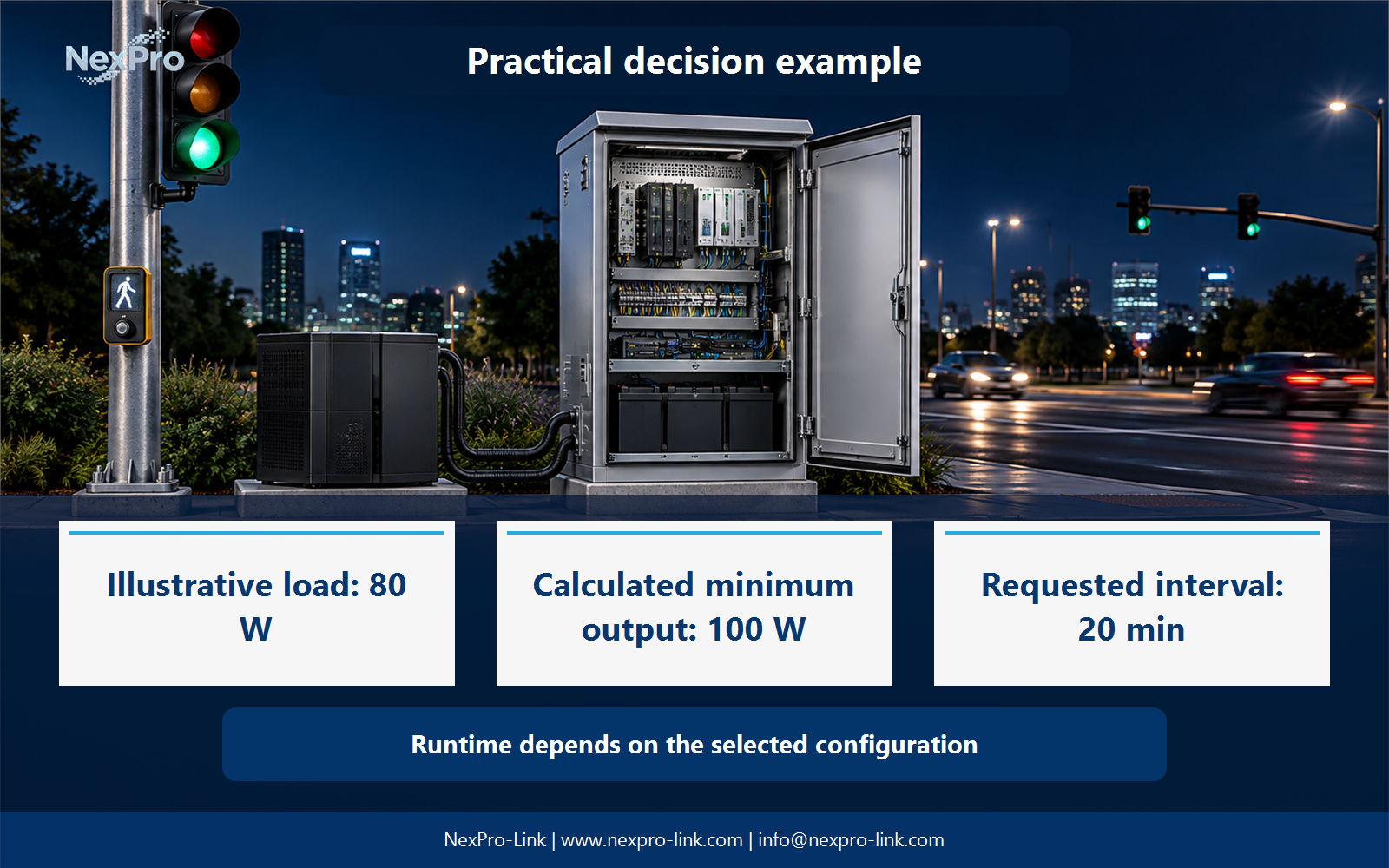
Use the demand of the approved operating state, including communication or monitoring equipment that must remain active. Record alternative modes separately. The calculation should not assume that all traffic installations use the same lamp load or outage duration.
Document this choice in the state budget: normal / approved outage mode / w / interval, including the condition that triggers it and the person responsible for the response.
Section 05
Coordinate Authorized Testing
Testing must follow the responsible authority's procedure and traffic-management arrangements. For a project-specific decision, record authorization, scope, observation and restoration in the test plan. This keeps the equipment inputs and intended service outcome aligned.
Test the sequence represented by the test plan: authorization / scope / observation / restoration during an approved maintenance window. Record the observations needed to confirm recovery.
Section 06
Prepare a Roadside Supply Brief
Provide the specified interfaces, approved operating modes, load states and enclosure requirements. NexPro-Link can discuss relevant supply options. Authority acceptance and specialized traffic-system qualification should remain explicit requirements rather than assumed product capabilities.
Send the completed brief: approved load / interfaces / environment / required documents with the project request. It is more useful than a capacity number without interfaces, operating states or a defined service boundary.
Engineering references
These sources support the general planning principles. Always use the selected product's current datasheet and applicable project standards for final design.