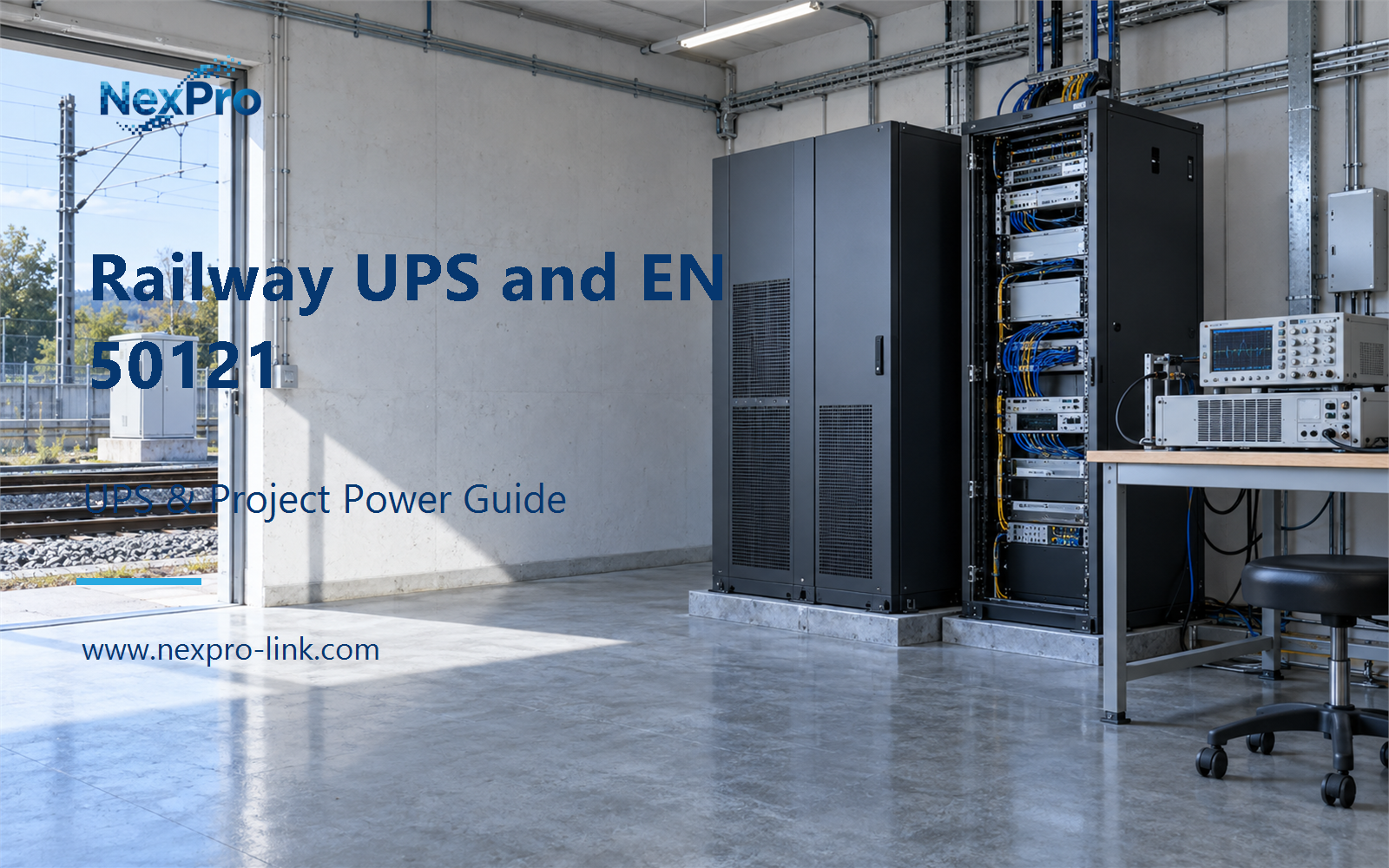
Match the applicable part of EN 50121 and the installation scope; EMC conformity is not complete railway product approval.
Section 01
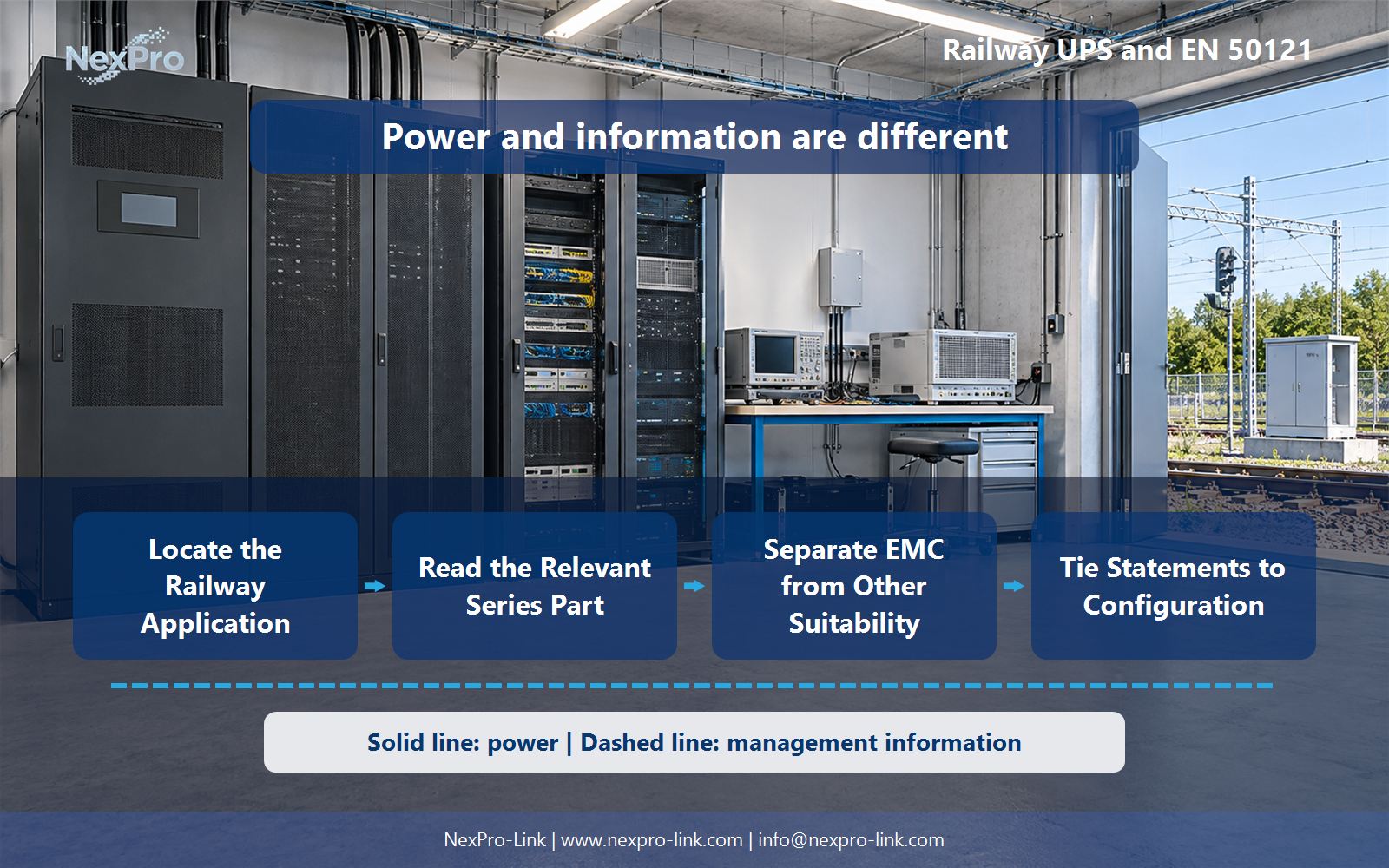
Locate the Railway Application
Match the applicable part of EN 50121 and the installation scope; EMC conformity is not complete railway product approval.
The first question in a railway UPS decision is where the equipment operates and what it supports. Two installations in the same station can need different standard parts. A trackside signalling cabinet that carries signalling and telecommunications apparatus faces one set of emission and immunity limits. A station room rack running ticketing, CCTV and passenger information faces another. A unit onboard a train sits inside a vehicle-level EMC and acceptance plan.
The location table turns that question into a project input.
Recording the location keeps it a specific input for the next decision. A series label applied everywhere answers nothing.
| Decision area | Project question | Required output |
|---|---|---|
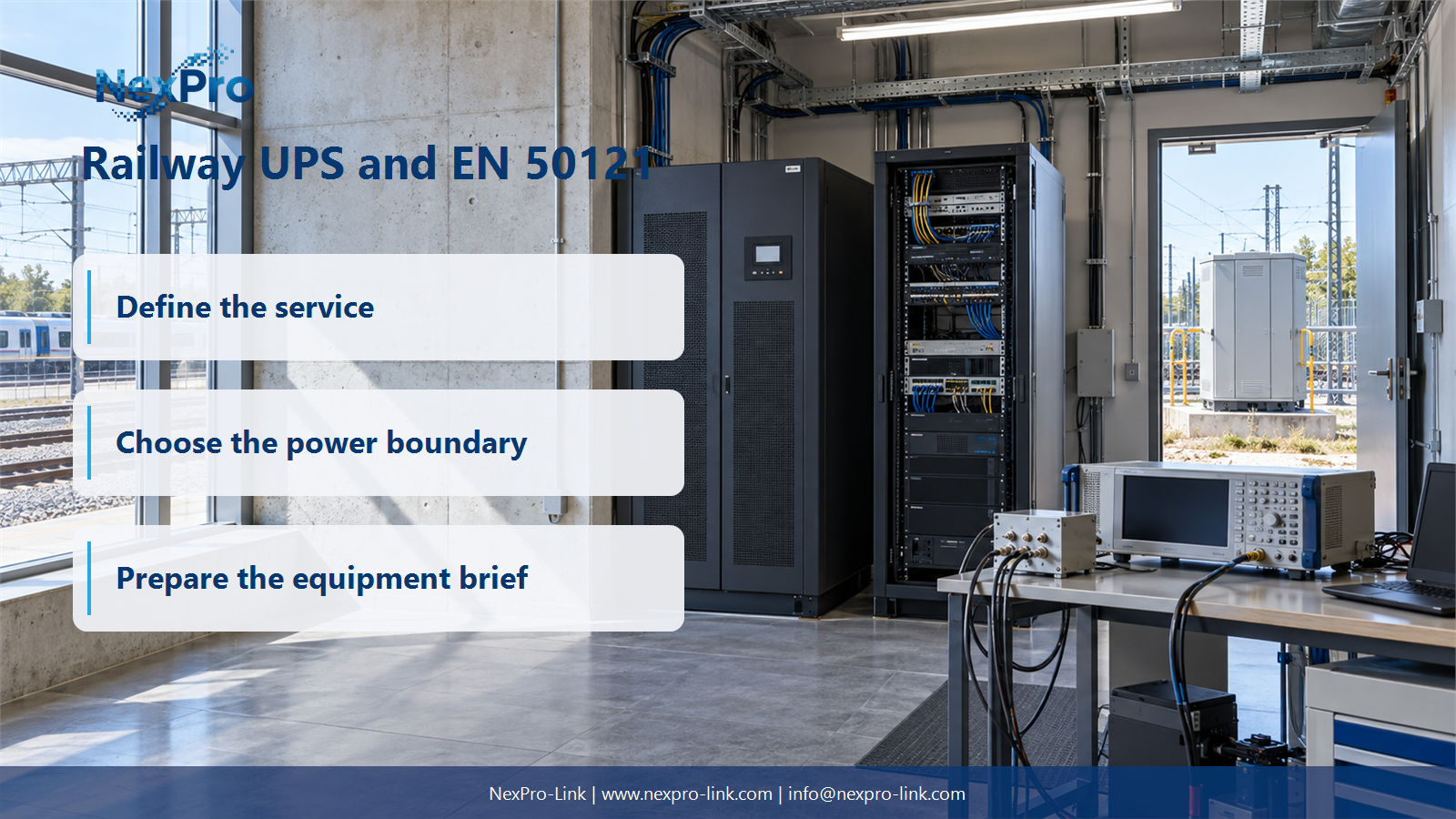
| Locate the Railway Application | Why is onboard versus trackside location important? | Location table: onboard / trackside / station room / function |
| Read the Relevant Series Part | What is the relevance of EN 50121-4? | Part map: cited part / equipment role / scope / boundary |
| Separate EMC from Other Suitability | Does EMC conformity establish all railway suitability? | Requirement table: EMC / electrical / environment / system / scope |
Section 02
Read the Relevant Series Part
EN 50121 divides the railway EMC question into parts. The part cited in a tender has to match the equipment and its location.
EN 50121-4 states emission and immunity requirements for signalling and telecommunications apparatus, including the power supply systems that belong to that apparatus. That scope is specific. A UPS feeding a signalling interface falls under EN 50121-4 when it is part of that signalling and telecommunications configuration. The same part does not describe a complete train or a fixed traction supply installation.
The exact part matters because each part carries different limits and different tests. Citing EN 50121-4 for a station room IT rack, with no project clause that explains why, borrows a scope the part does not carry.
Section 03
Separate EMC from Other Suitability
EMC conformity answers one question: does the equipment meet the stated emission and immunity limits in its defined scope. It does not answer whether the equipment is electrically safe, whether it survives the environment, or whether it works inside the wider railway system. Those categories have their own requirements and their own owners.
A conformity statement about one part of EN 50121 says something specific. Presenting it as complete approval for a UPS family hides the electrical, environmental and system work that still sits with the project.
- Confirm the answer to: Does EMC conformity establish all railway suitability?
- Draw electrical power as a solid path and management information as a separate dashed path.
- Keep external services and specialist approvals outside the UPS equipment claim.
Section 04
Tie Statements to Configuration
A conformity statement belongs to a configuration, not to a family name. The same UPS can behave differently when its battery cabinet, earthing, cable lengths and connected loads change. Those items affect emissions, immunity and the environment the equipment sees.
Recording the UPS, accessory, cabinet and stated condition keeps the equipment inputs and the intended service aligned. When any field changes, the conformity discussion restarts at that field.
Section 05
Create a Precise Rail RFQ
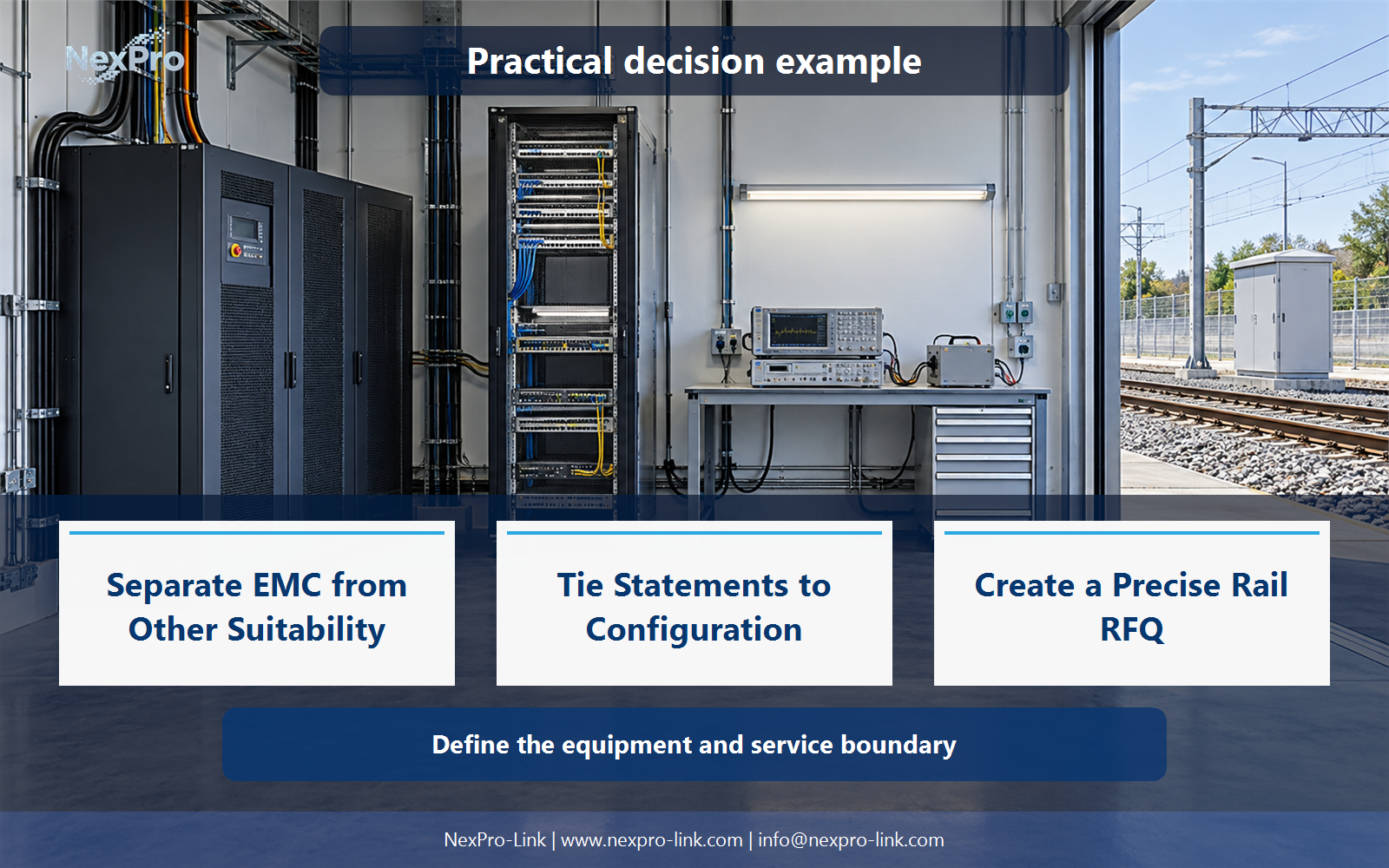
A supplier cannot quote EN 50121 compliance. It can quote a defined equipment boundary. The buyer's brief should state the location, the function, the input and output, the exact clauses and the interfaces.
Safety-critical integration stays with the responsible system team. The RFQ separates the equipment supply from that integration work so the supplier does not guess a universal standard set.
Section 06
Present Product Information Without Overreach
The supplier's response mirrors the request: the equipment boundary, the electrical requirements, the relevant standard parts and the configuration conditions. NexPro-Link can discuss available equipment information against that defined request.
Product selection, the actual scope of any qualification and the railway system's acceptance process stay distinct. NexPro-Link supplies the equipment boundary and the available information. The project confirms the qualification and the acceptance.
Engineering references
These sources support the general planning principles. Always use the selected product's current datasheet and applicable project standards for final design.