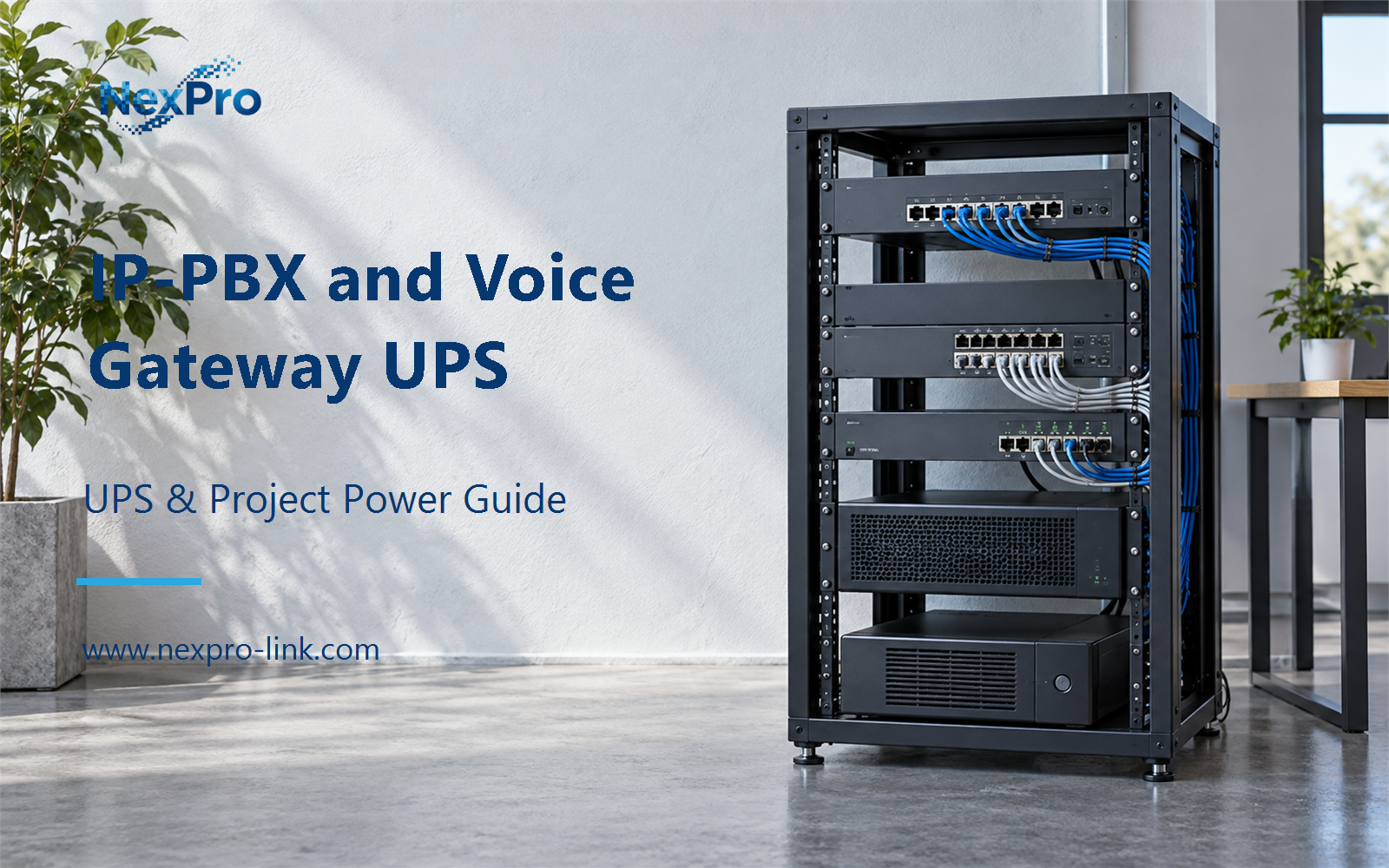
Voice continuity depends on powering the PBX, gateways, network devices and endpoints, not just the central unit. Plan the project from the voice-system diagram, gateways, powered endpoints and outage operating plan.
Section 01
Map the Voice Path
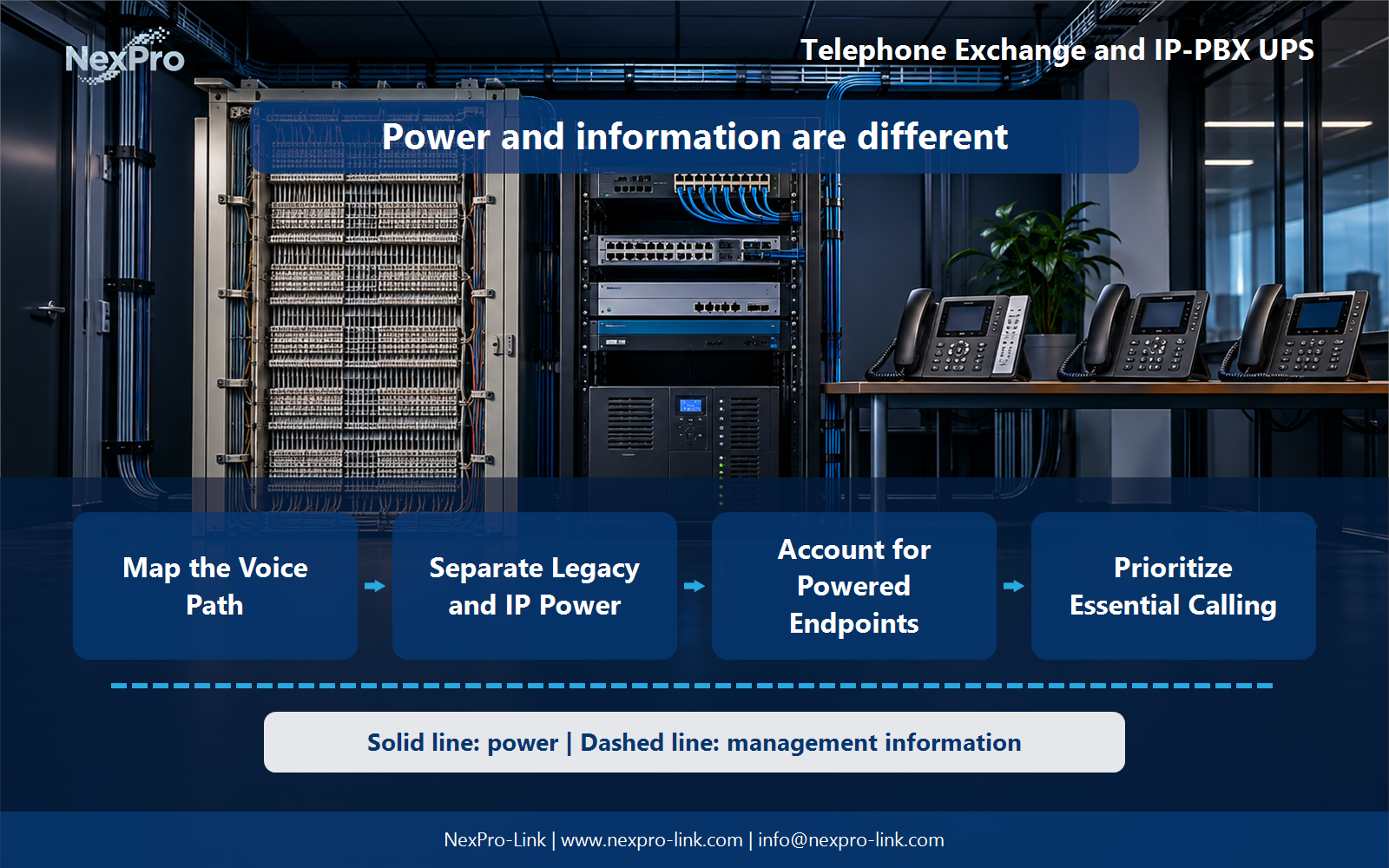
Which devices must stay powered for calls to continue? For Voice-system integrators and enterprise IT, the answer must stay inside the project boundary: Trace the PBX or exchange, gateways, network devices and relevant endpoints. Include any external service dependencies as boundaries rather than guarantees. Keeping the central unit powered does not prove that every extension or outside call remains available. The next step is voice map: endpoint / access / PBX / gateway / carrier, using voice-system diagram, gateways, powered endpoints and outage operating plan.
Capture the answer in the voice map: endpoint / access / pbx / gateway / carrier before equipment is compared. This gives the project team a concrete service target and exposes missing dependencies early.
| Decision area | Project question | Required output |
|---|---|---|
| Map the Voice Path | Which devices must stay powered for calls to continue? | Voice map: endpoint / access / PBX / gateway / carrier |
| Separate Legacy and IP Power | Why distinguish legacy exchange power from IP equipment? | Interface map: legacy unit / IP unit / AC-DC / source |
| Account for Powered Endpoints | Should desk-phone demand be included in the UPS? | PoE schedule: switch / endpoints / input W / priority |
Section 02
Separate Legacy and IP Power
They may use different input supplies and backup arrangements. Document the actual interfaces instead of replacing every source with an AC UPS by default. Mixed systems need a clear handoff between exchange power, network power and auxiliary equipment.
Use the interface map: legacy unit / ip unit / ac-dc / source to keep real interfaces and operating states visible. Measured demand, equipment limits and future allowances should remain separate entries.
Section 03
Account for Powered Endpoints
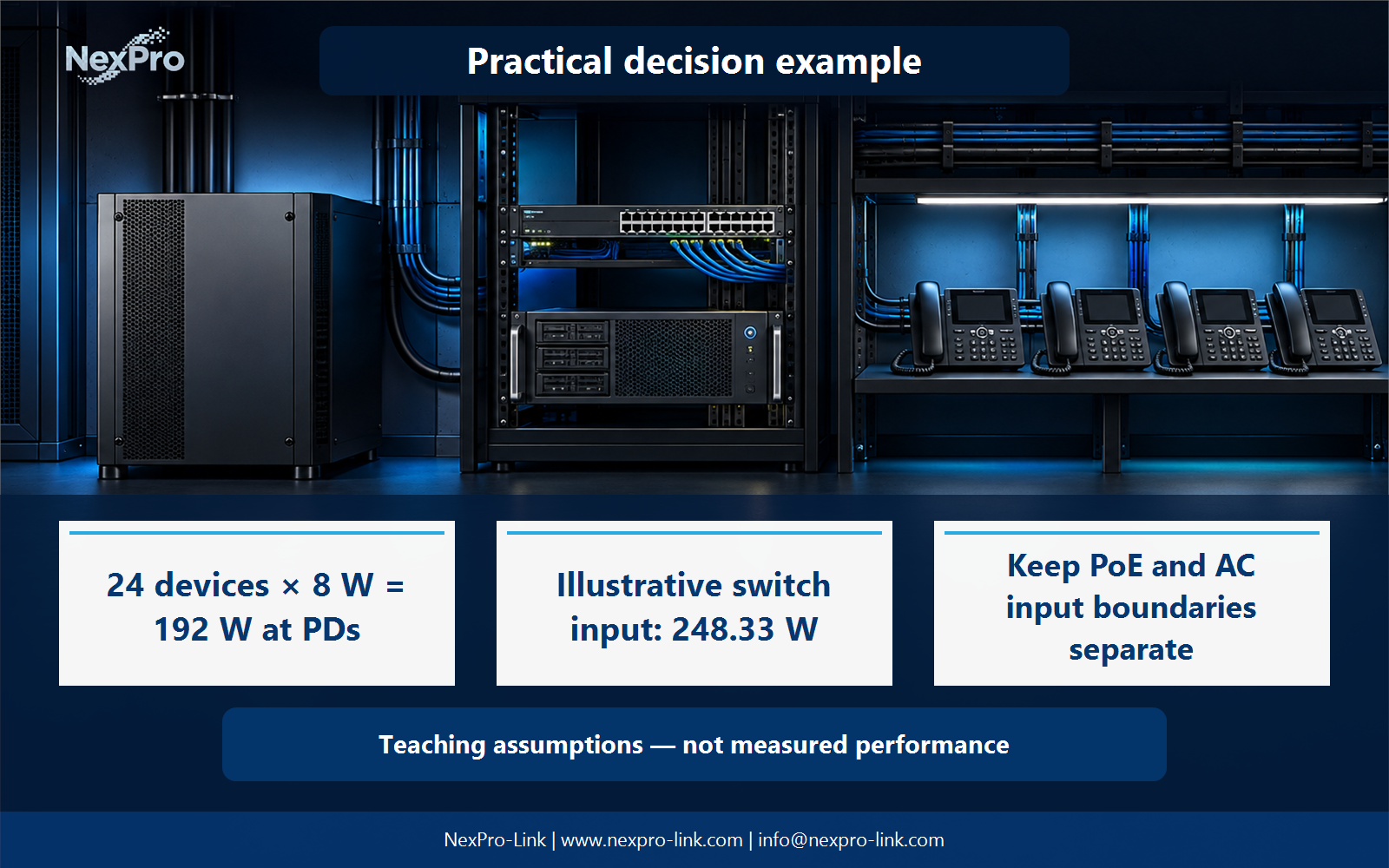
Include it when the protected PoE switches supply those phones during the required service period. Use the selected port loads and switch input budget. Do not count endpoint power a second time if it is already included in measured switch demand.
Review the poe schedule: switch / endpoints / input w / priority with the owners of the connected systems. Power continuity only supports the functions that remain connected and available during the event.
- Confirm the answer to: Should desk-phone demand be included in the UPS?
- Draw electrical power as a solid path and management information as a separate dashed path.
- Keep external services and specialist approvals outside the UPS equipment claim.
Section 04
Prioritize Essential Calling
That is an operational decision. Identify essential desks, reception or response roles and the intended fallback. A reduced-service design should describe which functions remain available, rather than claim uninterrupted voice service for the whole organization.
Document this choice in the priority matrix: extension group / function / duration / fallback, including the condition that triggers it and the person responsible for the response.
Section 05
Plan Orderly Recovery
Restore the required network and gateway services before judging PBX readiness. Confirm registration, internal calling and the agreed external path. Use the actual platform sequence; an illuminated PBX front panel alone is not evidence of restored telephony.
Test the sequence represented by the recovery table: network / gateway / pbx / endpoints / checks during an approved maintenance window. Record the observations needed to confirm recovery.
Section 06
Package the Voice-Power Request
Send the system diagram, endpoint and gateway counts, power interfaces and essential-service target. NexPro-Link can discuss backup equipment for that defined scope. Emergency-calling obligations and specialized exchange interfaces remain separate project requirements.
Send the completed rfq schedule: devices / interfaces / essential calls / backup scope with the project request. It is more useful than a capacity number without interfaces, operating states or a defined service boundary.
Engineering references
These sources support the general planning principles. Always use the selected product's current datasheet and applicable project standards for final design.