A protection DC system and a communications/IT AC UPS are not interchangeable. Plan the project from the station AC/DC supply diagram, support-load list and applicable substation requirements.
Section 01
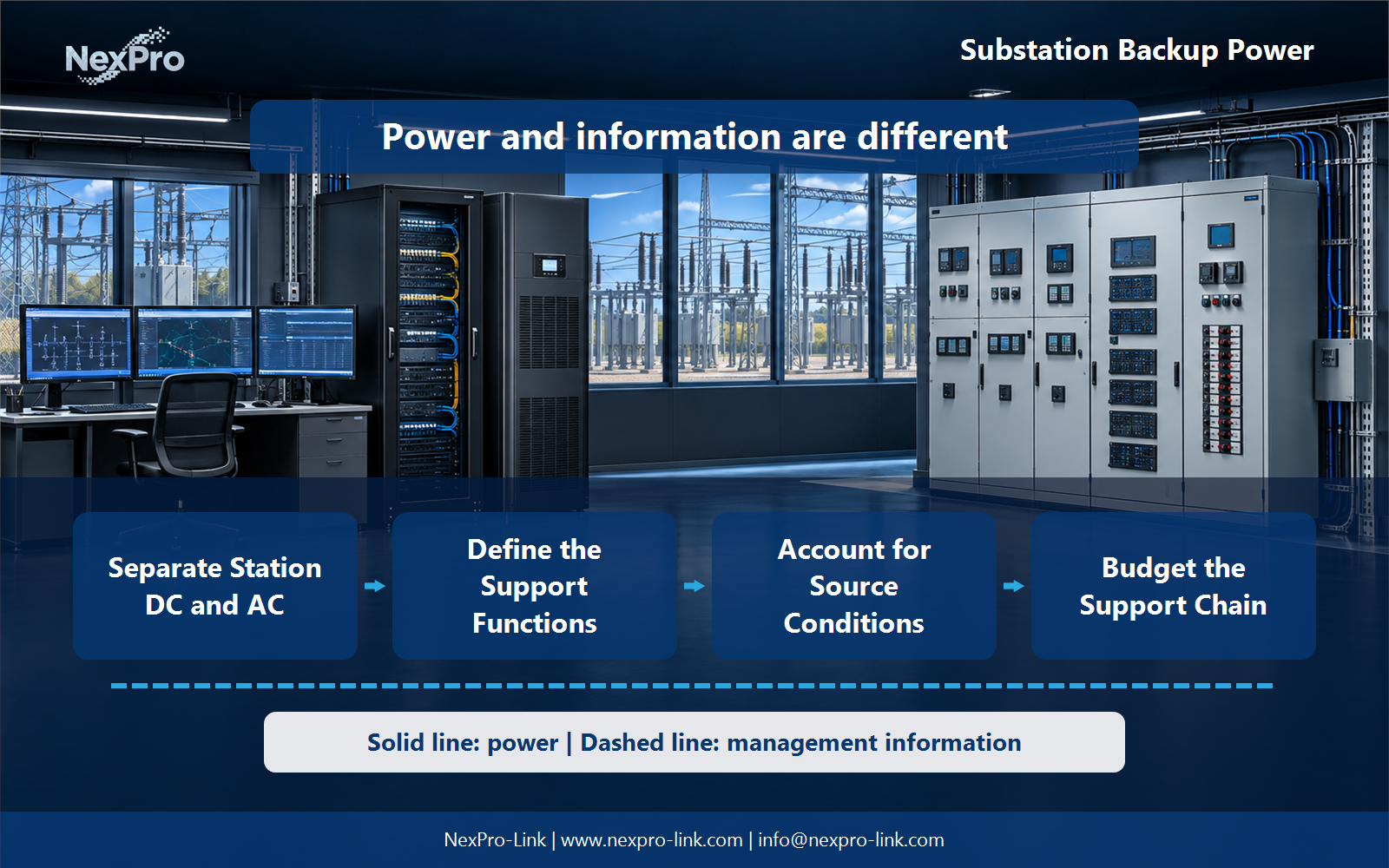
Separate Station DC and AC
For Power automation engineers and substation procurement teams, the first project decision is this: Can an AC UPS replace a station DC battery system? Not as a generic substitution. Protection, control and communication equipment may use different supply arrangements. Identify the actual interfaces and approved system design before discussing UPS equipment. Keep station DC functions distinct from ordinary AC support loads. The practical output is supply map: station DC / AC UPS / protection / support IT, supported by station AC/DC supply diagram, support-load list and applicable substation requirements.
| Decision area | Project question | Required output |
|---|---|---|
| Separate Station DC and AC | Can an AC UPS replace a station DC battery system? | Supply map: station DC / AC UPS / protection / support IT |
| Define the Support Functions | Which functions should the support-power plan include? | Function table: monitoring / communications / IT / excluded control |
| Account for Source Conditions | What should be known about the input source? | Input schedule: source / range / transition / environment |
Section 02
Define the Support Functions
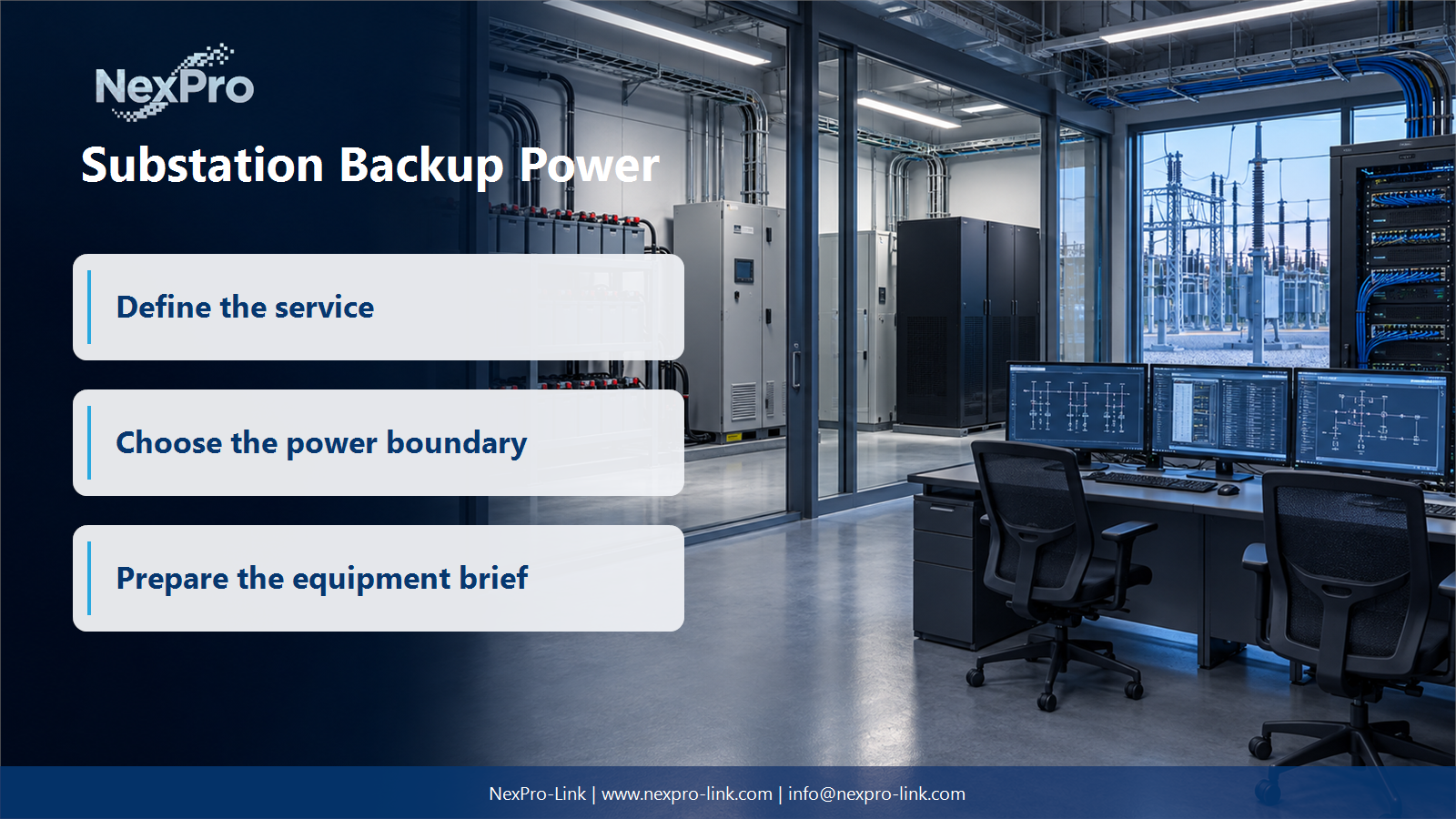
List the designated communications, monitoring and general IT devices, along with any required interfaces. Protection and switching functions remain under their specialized design. The goal is a clear equipment boundary, not a proposal to redesign primary electrical protection.
Use the function table: monitoring / communications / it / excluded control to keep real interfaces and operating states visible. Measured demand, equipment limits and future allowances should remain separate entries.
Section 03
Account for Source Conditions
Record the specified voltage, frequency, source transitions and environmental requirements for the installation. Compare equipment within that context. A wide-input-range claim alone does not establish suitability for all disturbances or all substation applications.
Review the input schedule: source / range / transition / environment with the owners of the connected systems. Power continuity only supports the functions that remain connected and available during the event.
- Confirm the answer to: What should be known about the input source?
- Draw electrical power as a solid path and management information as a separate dashed path.
- Keep external services and specialist approvals outside the UPS equipment claim.
Section 04
Budget the Support Chain
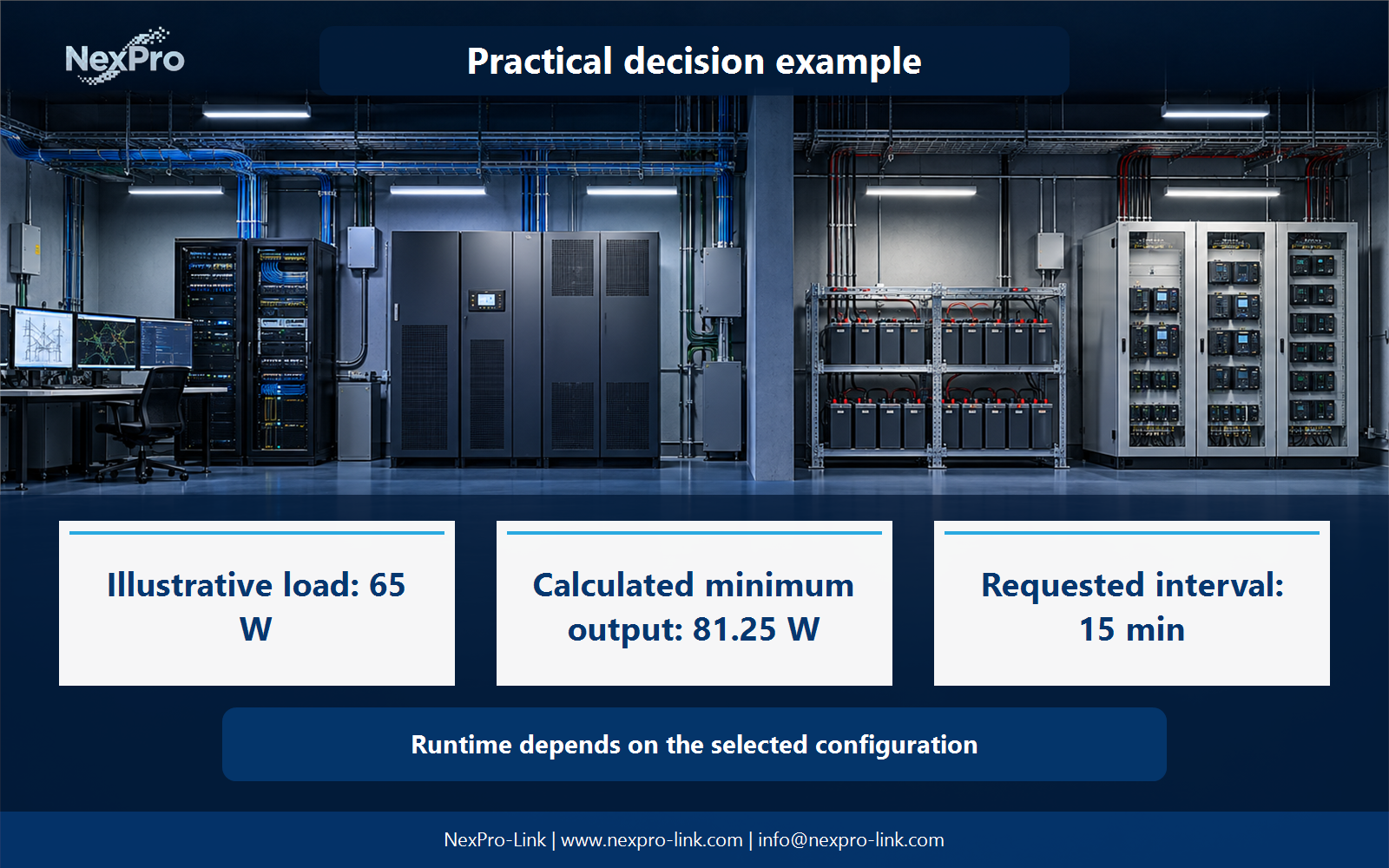
Use the required monitoring and communications objective, including restoration or alternate-source behavior. Calculate the complete supported chain. Do not borrow the station DC autonomy requirement and automatically apply it to every AC device.
Document this choice in the budget: support function / w / interval / source recovery, including the condition that triggers it and the person responsible for the response.
Section 05
Keep Event Records Consistent
Power, communication and application logs may need comparison after an incident. Define the available time source and recording boundaries. UPS logs can contribute observations, but they should not be presented as complete fault records for the entire substation.
Test the sequence represented by the log map: device / event / clock / export / owner during an approved maintenance window. Record the observations needed to confirm recovery.
Section 06
Write the AC Support RFQ
Send the support-load list, supply diagram, required interfaces and installation conditions. NexPro-Link can discuss equipment for the agreed scope. Protection-system compatibility and substation-specific requirements must remain separately identified rather than inferred from a general UPS designation.
Send the completed brief: included ac loads / dc boundary / interfaces / requirements with the project request. It is more useful than a capacity number without interfaces, operating states or a defined service boundary.
Engineering references
These sources support the general planning principles. Always use the selected product's current datasheet and applicable project standards for final design.