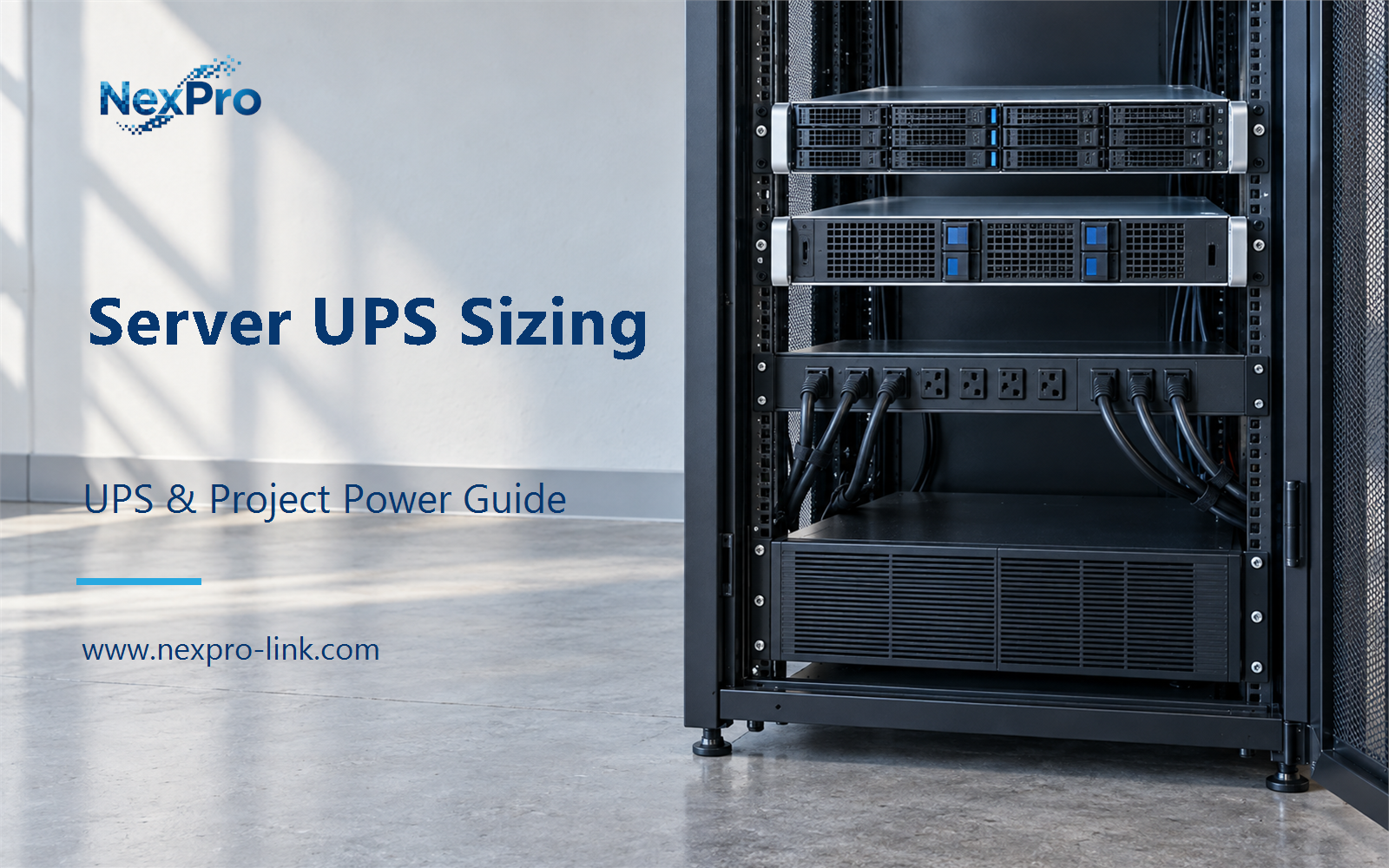
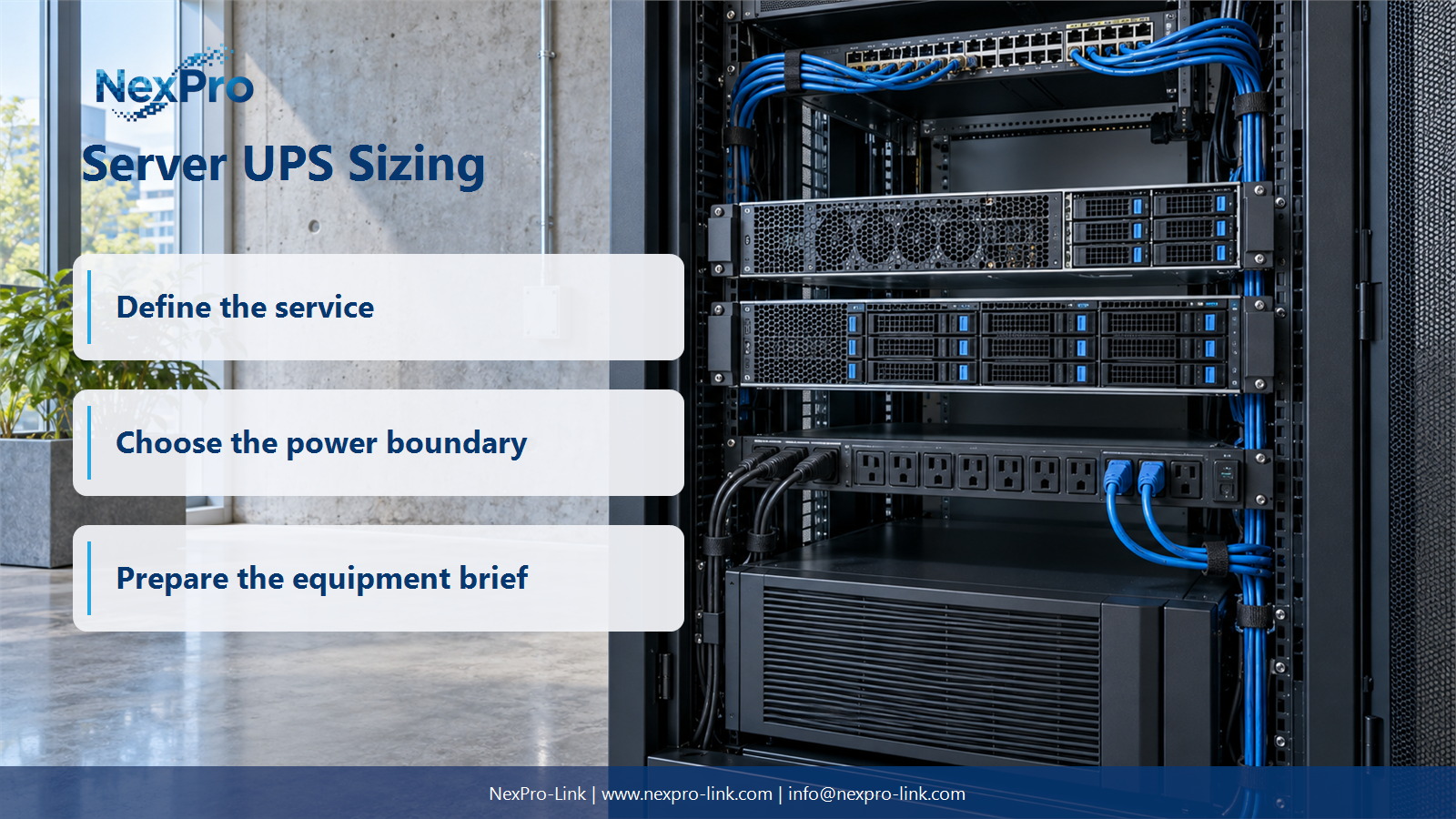
Device-level focus on server configuration, redundant PSUs and load state rather than room-wide topology. Plan the project from the server configuration, measured demand, PSU behavior and shutdown integration.
Section 01
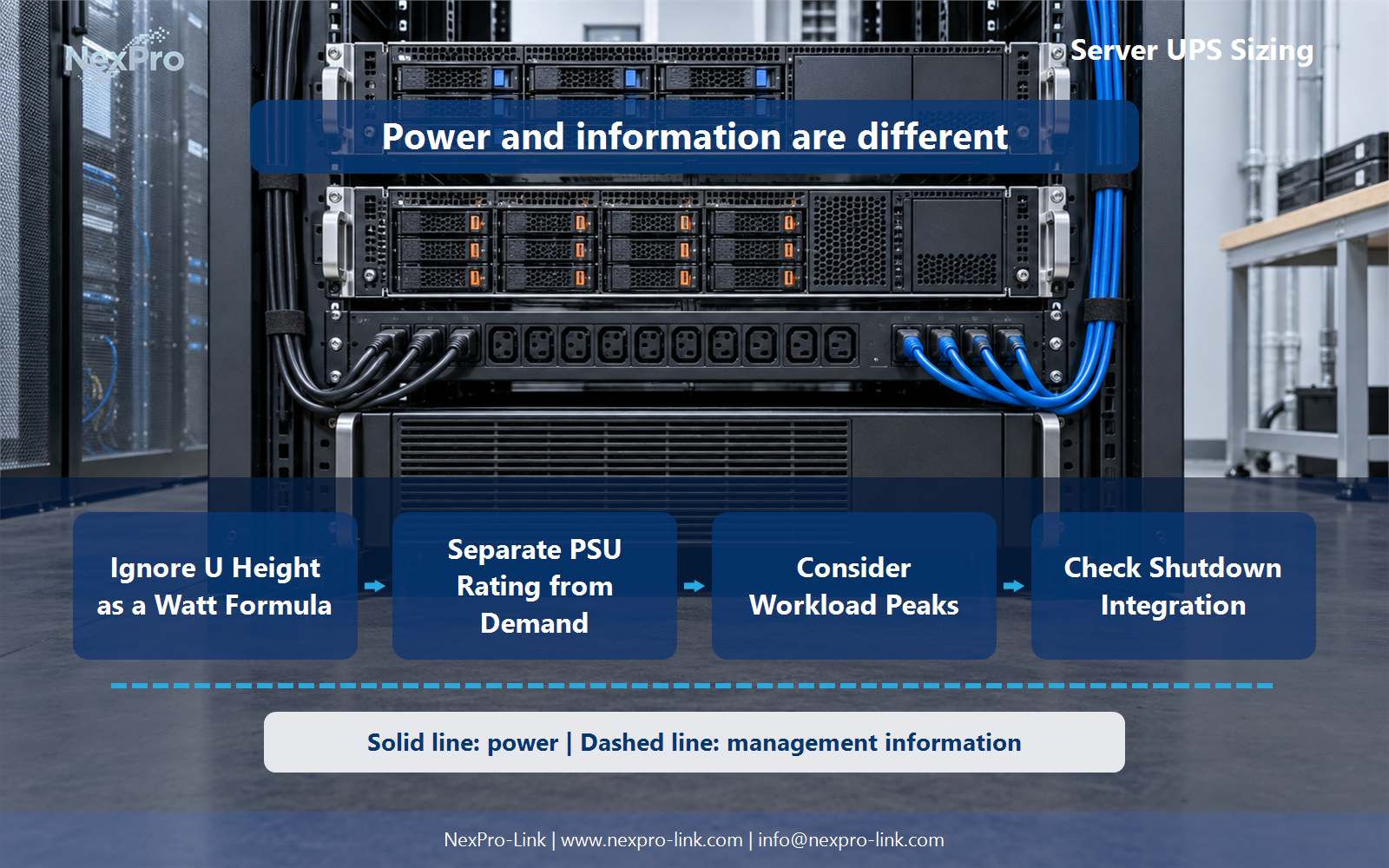
Ignore U Height as a Watt Formula
Can UPS capacity be selected from server U height? For Server procurement and IT operations, the answer must stay inside the project boundary: No. Height describes physical size, while demand depends on installed components and workload. Record the actual server configuration and input figures. Two servers with the same rack height can have very different capacity and runtime requirements. The next step is device record: chassis / CPU-GPU / memory / drives / demand, using server configuration, measured demand, PSU behavior and shutdown integration.
Device-level focus on server configuration, redundant PSUs and load state rather than room-wide topology
| Decision area | Project question | Required output |
|---|---|---|
| Ignore U Height as a Watt Formula | Can UPS capacity be selected from server U height? | Device record: chassis / CPU-GPU / memory / drives / demand |
| Separate PSU Rating from Demand | Should both redundant PSU ratings be added as running load? | PSU table: rating / normal input / failed-feed input / source |
| Consider Workload Peaks | Which workload should be used for sizing? | Profile: idle / expected workload / relevant peak / duration |
Section 02
Separate PSU Rating from Demand
Not automatically. Their ratings represent supported capacity, and operating load sharing varies by equipment and state. Use the documented behavior and relevant input demand. Include the single-feed condition when the design requires a surviving path to support the server.
Section 03
Consider Workload Peaks
Use representative demand and relevant peaks for the specified workload, together with the equipment requirements. An idle reading can be misleading. Do not invent a universal multiplier for every server or treat maximum nameplate values as measured workload data.
- Confirm the answer to: Which workload should be used for sizing?
- Draw electrical power as a solid path and management information as a separate dashed path.
- Keep external services and specialist approvals outside the UPS equipment claim.
Section 04
Check Shutdown Integration
Identify the actual operating system, interface and supported shutdown software. Define which components must remain available for the action. A UPS network port alone does not prove that every server platform can be shut down safely or automatically.
Section 05
Choose the Battery Objective
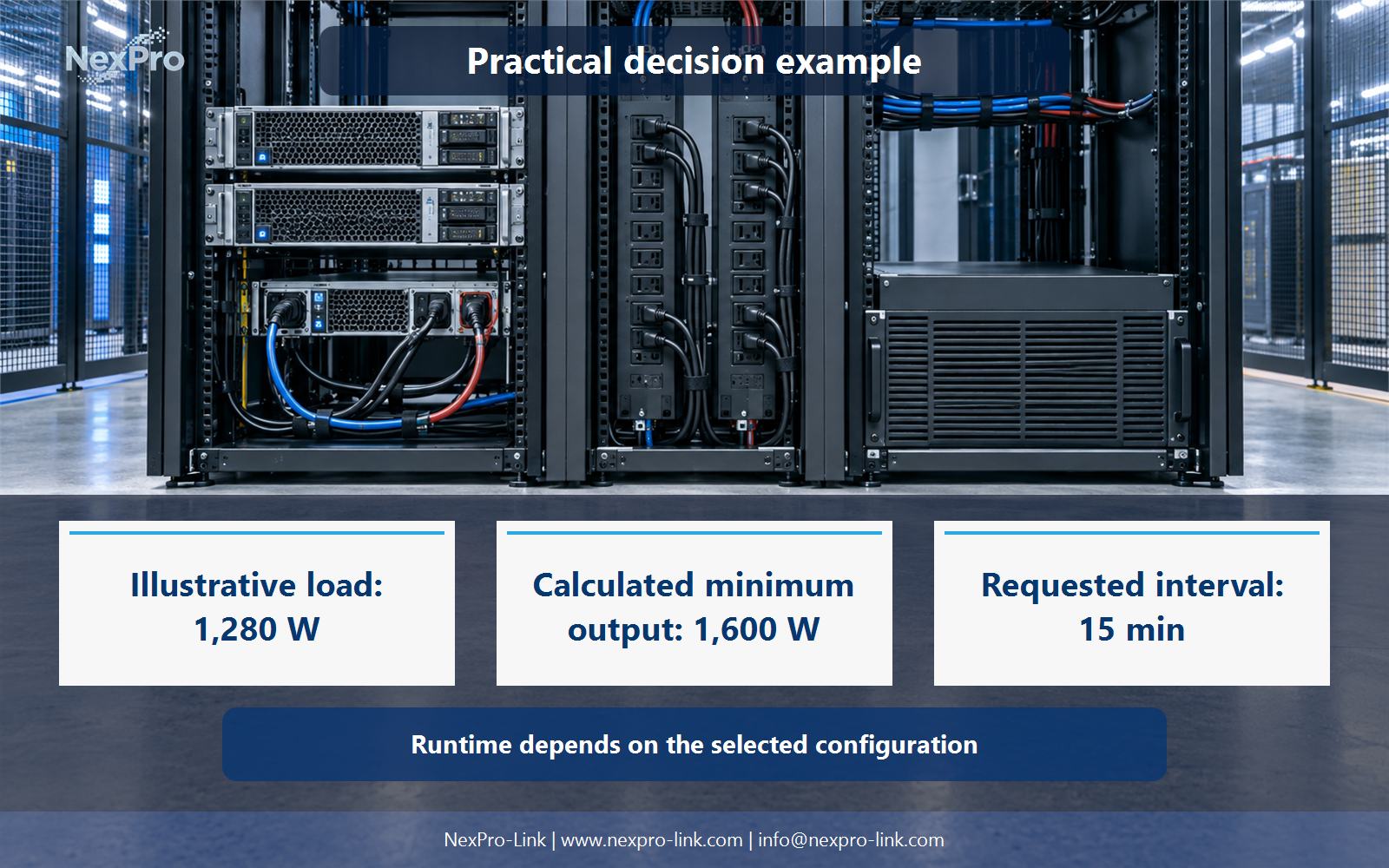
Budget the supported application and host stop or the approved source bridge, including dependencies and reserve. Keep that target separate from a product's nominal rating. The selected battery arrangement must be discussed at the actual load and conditions.
Section 06
Prepare a Server-Specific RFQ
Send the server configuration, input-demand basis, power interfaces and supported shutdown objective. NexPro-Link can discuss matching UPS equipment. Application recovery, PSU failover and runtime should remain tied to the specified configuration rather than generic rack-size labels.
Engineering references
These sources support the general planning principles. Always use the selected product's current datasheet and applicable project standards for final design.