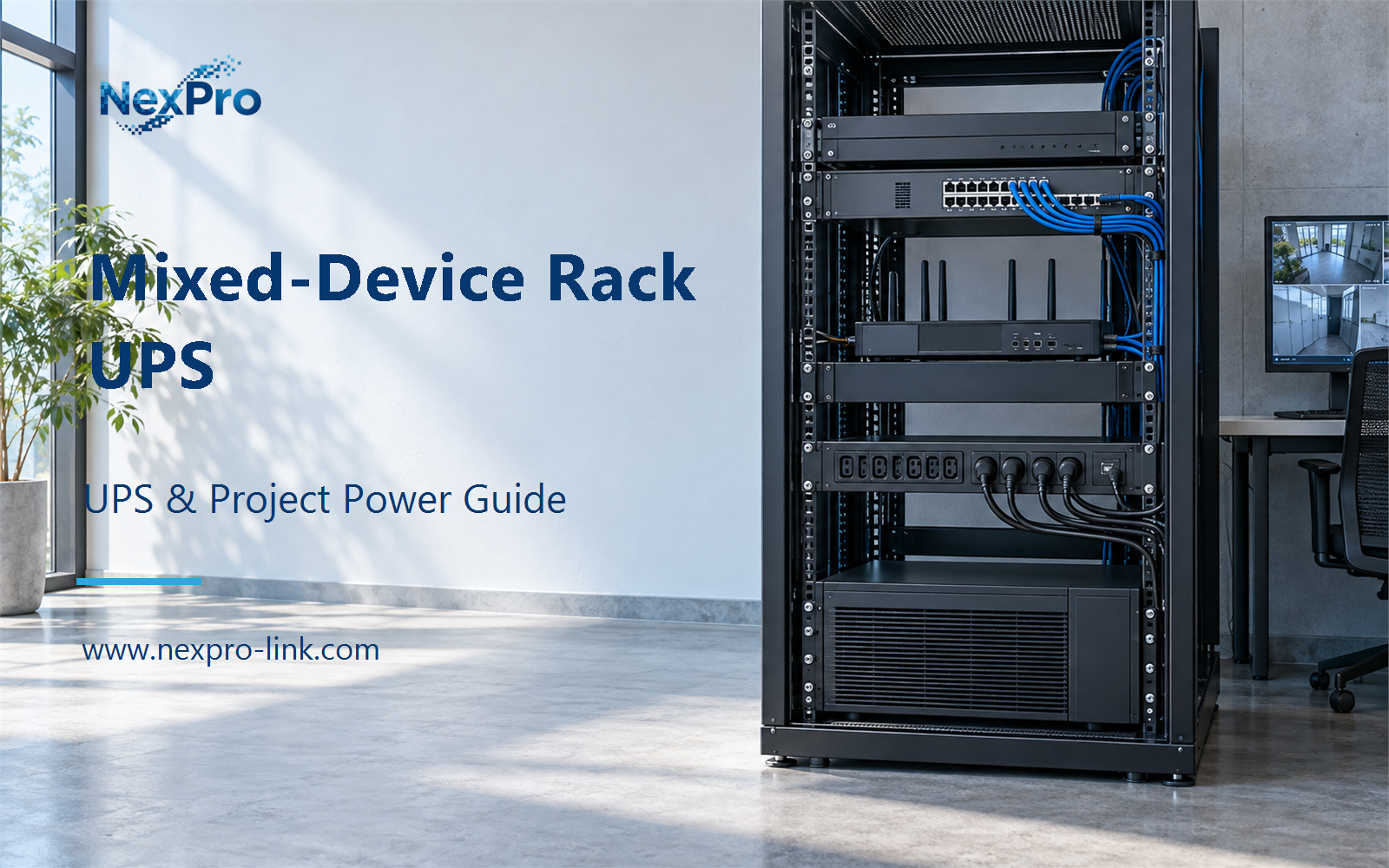
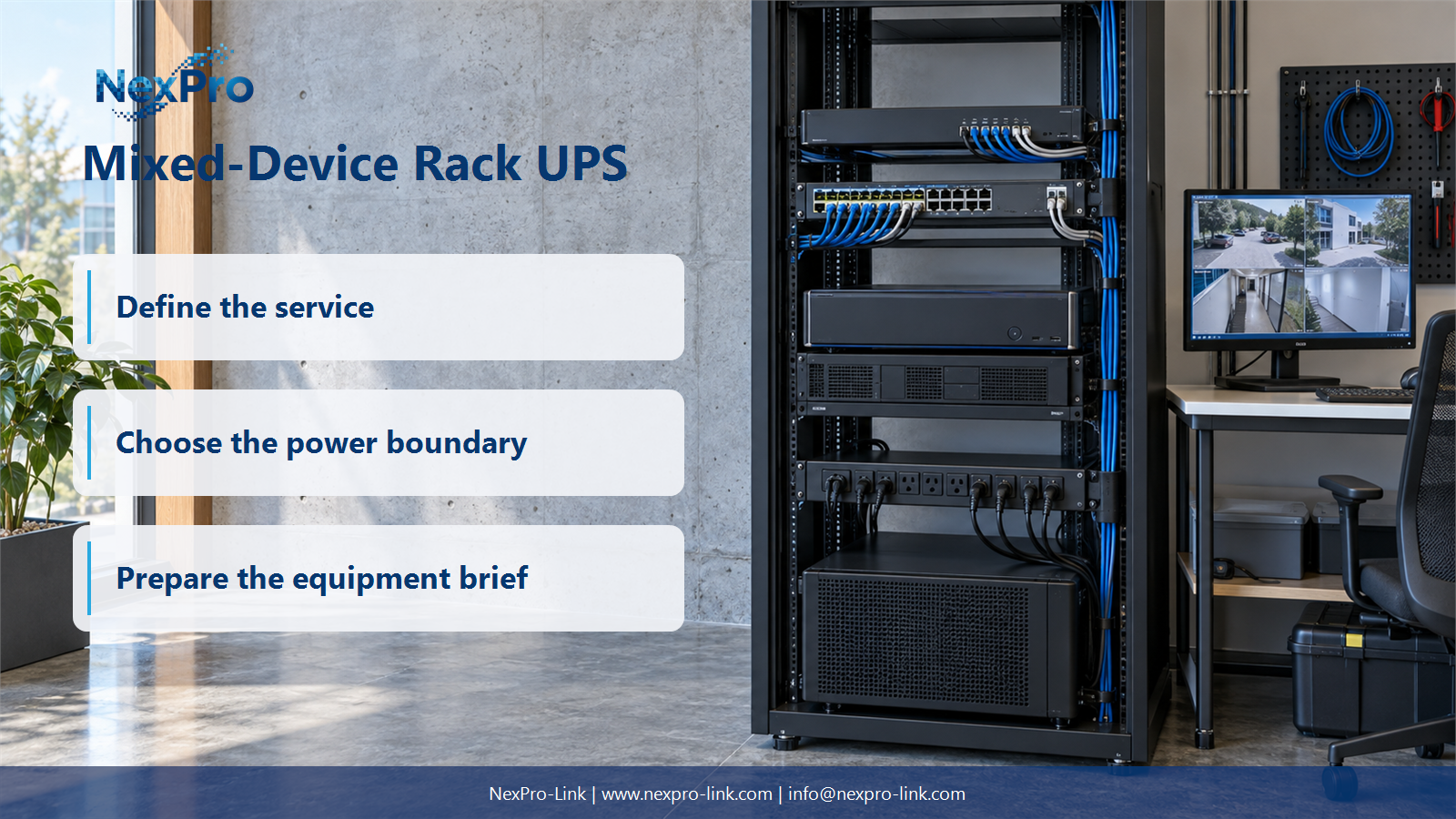
Combine already-sized single devices into a power group, handling outlets, PDUs and repeated power. Plan the project from the rack device schedule, outlet requirements and essential-service grouping.
Section 01
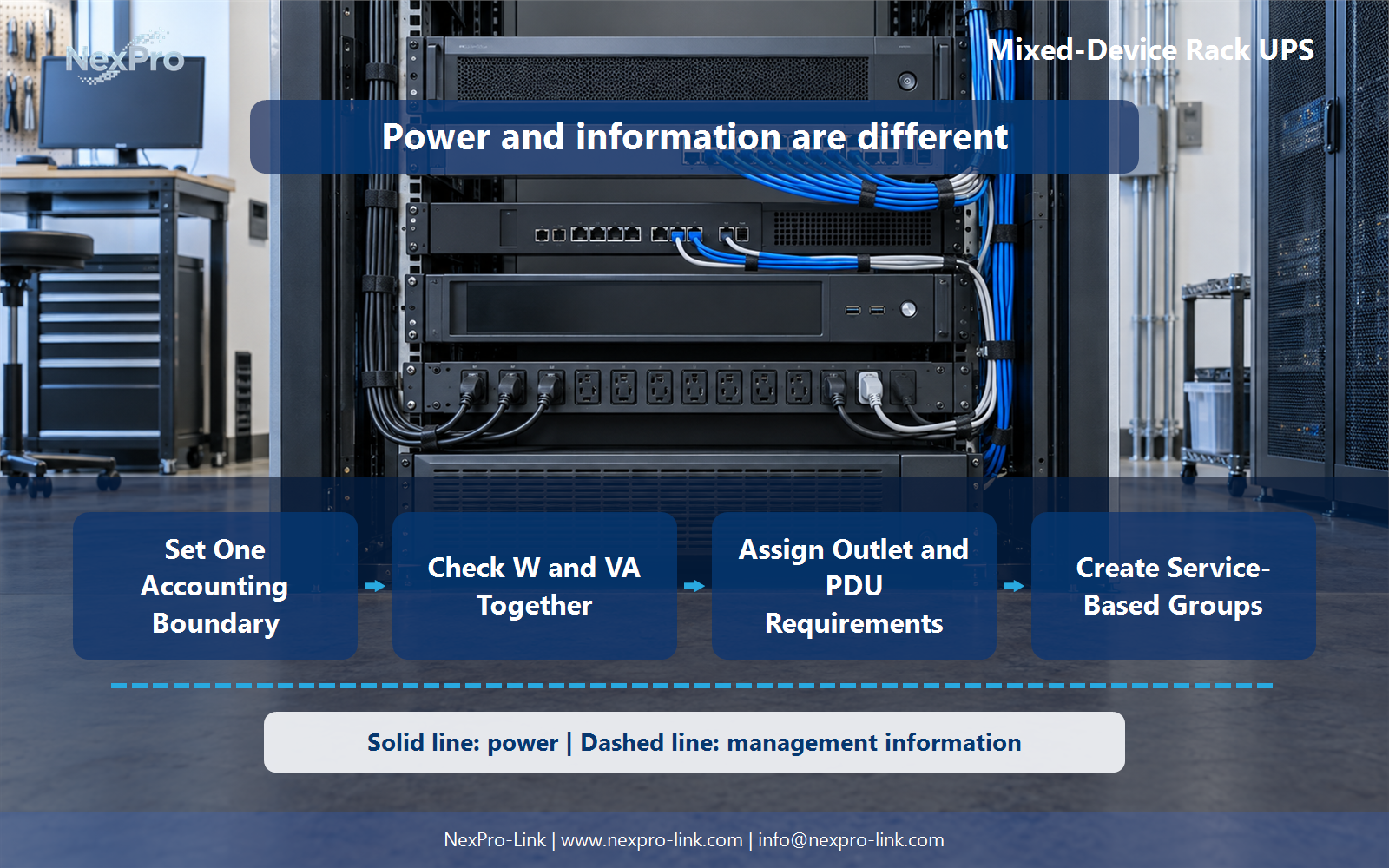
Set One Accounting Boundary
How can a mixed-rack budget avoid inconsistent inputs? For ELV integrators and rack procurement teams, the answer must stay inside the project boundary: Record each included device at a consistent supply boundary and identify embedded loads. A PoE switch measurement may already include cameras, while a local adapter may be separate. Document that relationship before summing the rack demand. The next step is accounting table: device / boundary / included subloads / add separately, using rack device schedule, outlet requirements and essential-service grouping.
Combine already-sized single devices into a power group, handling outlets, PDUs and repeated power.
| Decision area | Project question | Required output |
|---|---|---|
| Set One Accounting Boundary | How can a mixed-rack budget avoid inconsistent inputs? | Accounting table: device / boundary / included subloads / add separately |
| Check W and VA Together | Can the rack be sized from total watts alone? | Budget table: device W / VA basis / totals / limits |
| Assign Outlet and PDU Requirements | Why count outlets separately from capacity? | Connection map: device / connector / outlet / PDU / distribution |
Section 02
Check W and VA Together
Not completely. Check the selected UPS's W and VA limits using compatible input figures. If power factors differ or are estimated, explain the calculation basis. Keep source and configuration assumptions visible rather than hiding them behind a single kVA value.
Section 03
Assign Outlet and PDU Requirements
Adequate total output does not ensure compatible plugs, enough outlets or suitable distribution. Map connections and any required PDU within the approved design. Physical fit and distribution ratings remain separate checks from the UPS's headline capacity.
- Confirm the answer to: Why count outlets separately from capacity?
- Draw electrical power as a solid path and management information as a separate dashed path.
- Keep external services and specialist approvals outside the UPS equipment claim.
Section 04
Create Service-Based Groups
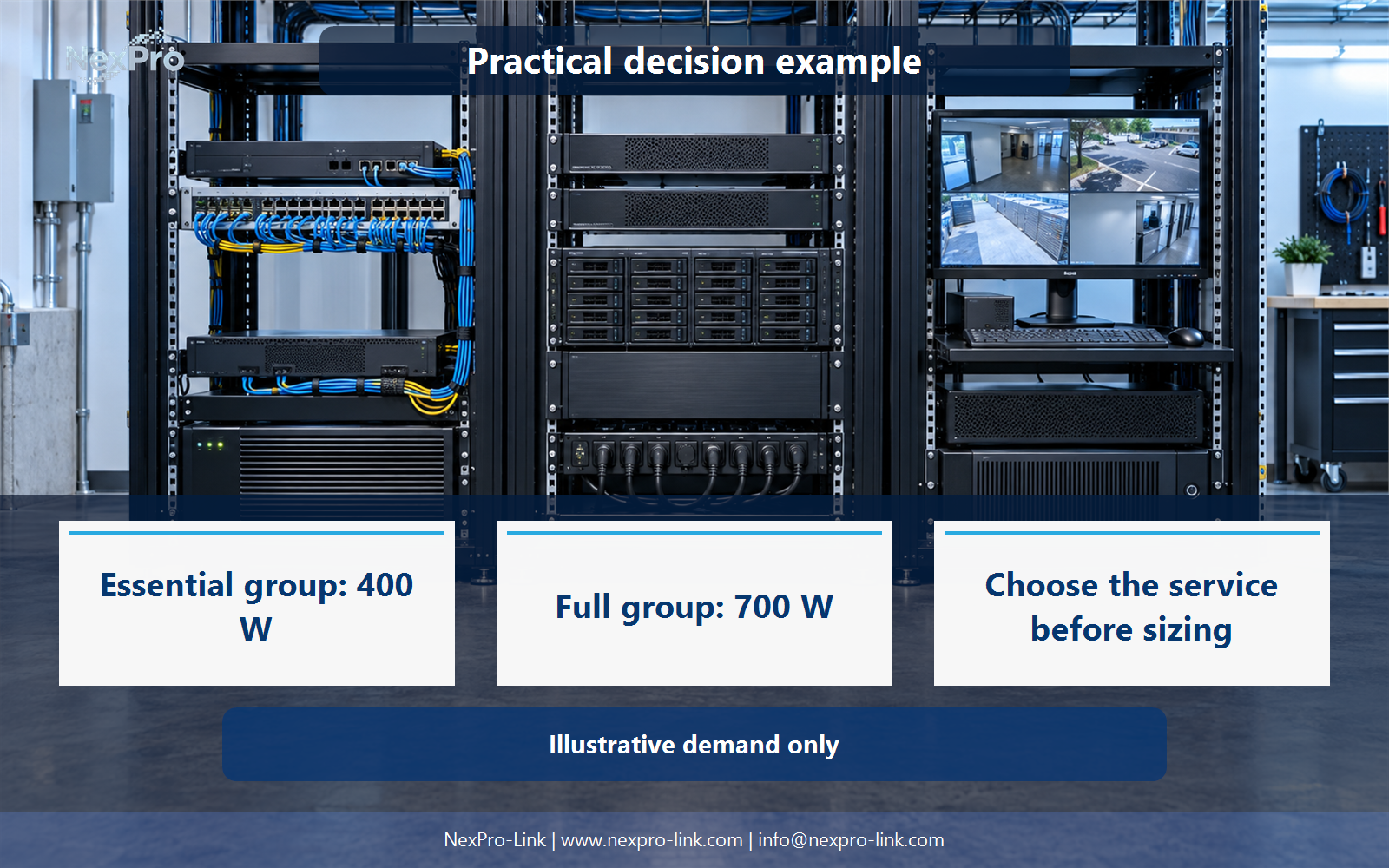
Group devices by the service they support and required outage action, not merely their position in the rack. Keep essential dependencies together. Any load-shedding or switched-outlet behavior must be supported and defined rather than assumed for every UPS model.
Section 05
Include Growth and Recovery
Separate committed additions from reserve for uncertainty, and identify any relevant restart state. A free rack space or spare outlet does not prove spare electrical capacity. Recalculate the group when the equipment or required operating state changes.
Section 06
Prepare a Complete Rack RFQ
Send the device budget, connection map, grouping and runtime objectives, with physical limits. NexPro-Link can discuss a coordinated UPS and rack-power package. Keep capacity, battery duration and application continuity as distinct outputs rather than one generic promise.
Engineering references
These sources support the general planning principles. Always use the selected product's current datasheet and applicable project standards for final design.