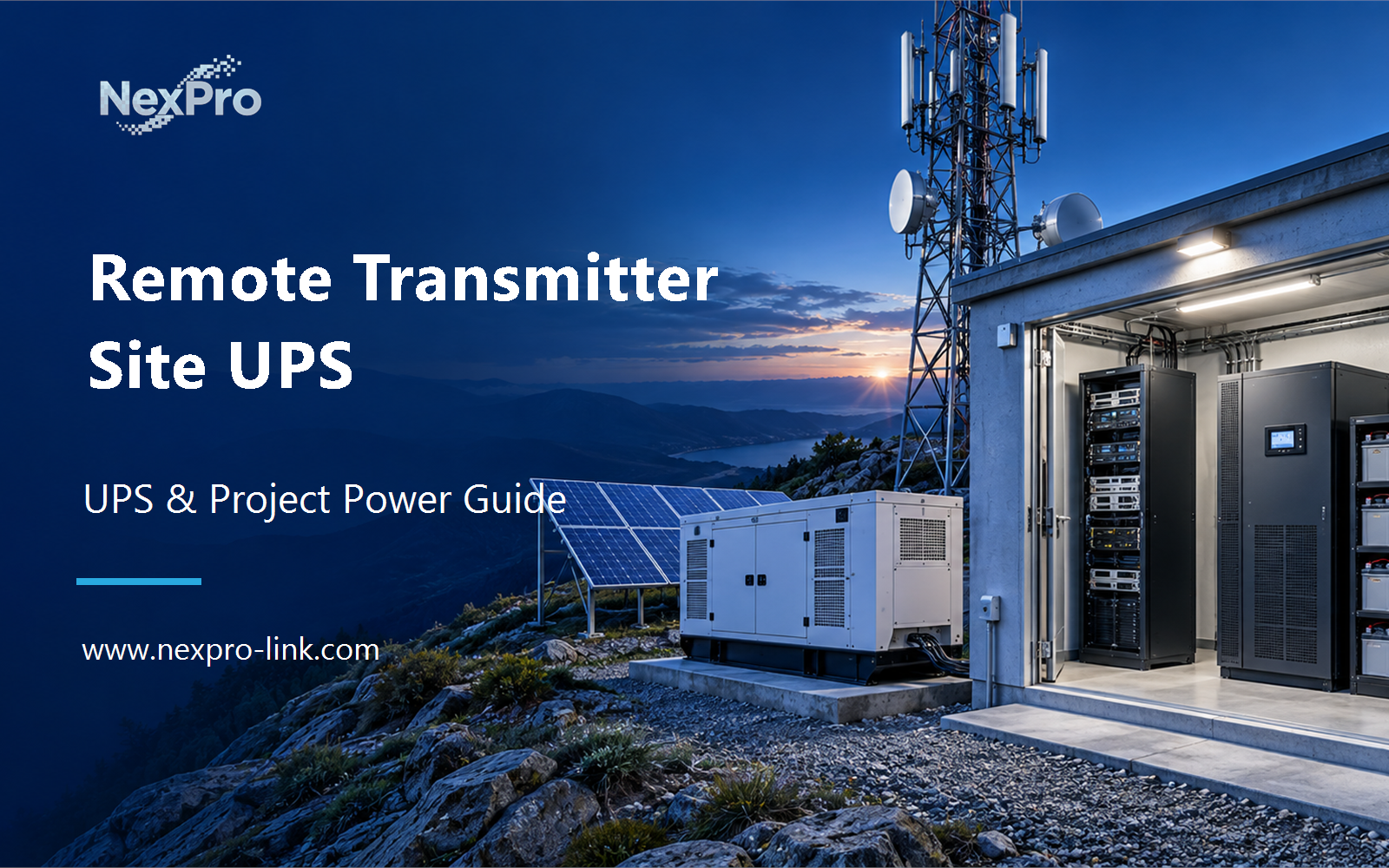
Design multi-source supply, load continuity and remote maintenance as separate concerns, and do not treat the UPS as a solar charge controller.
Section 01
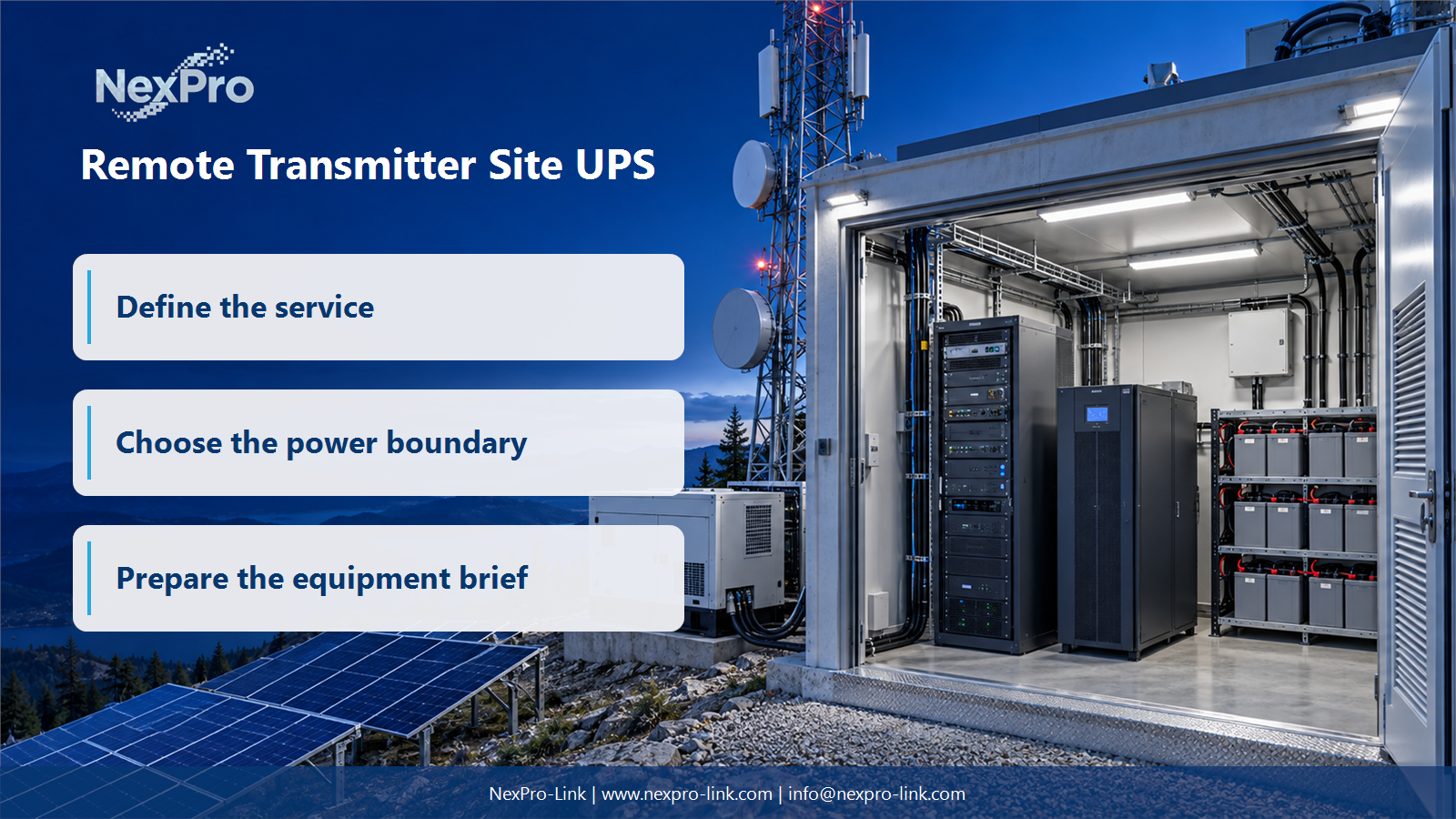
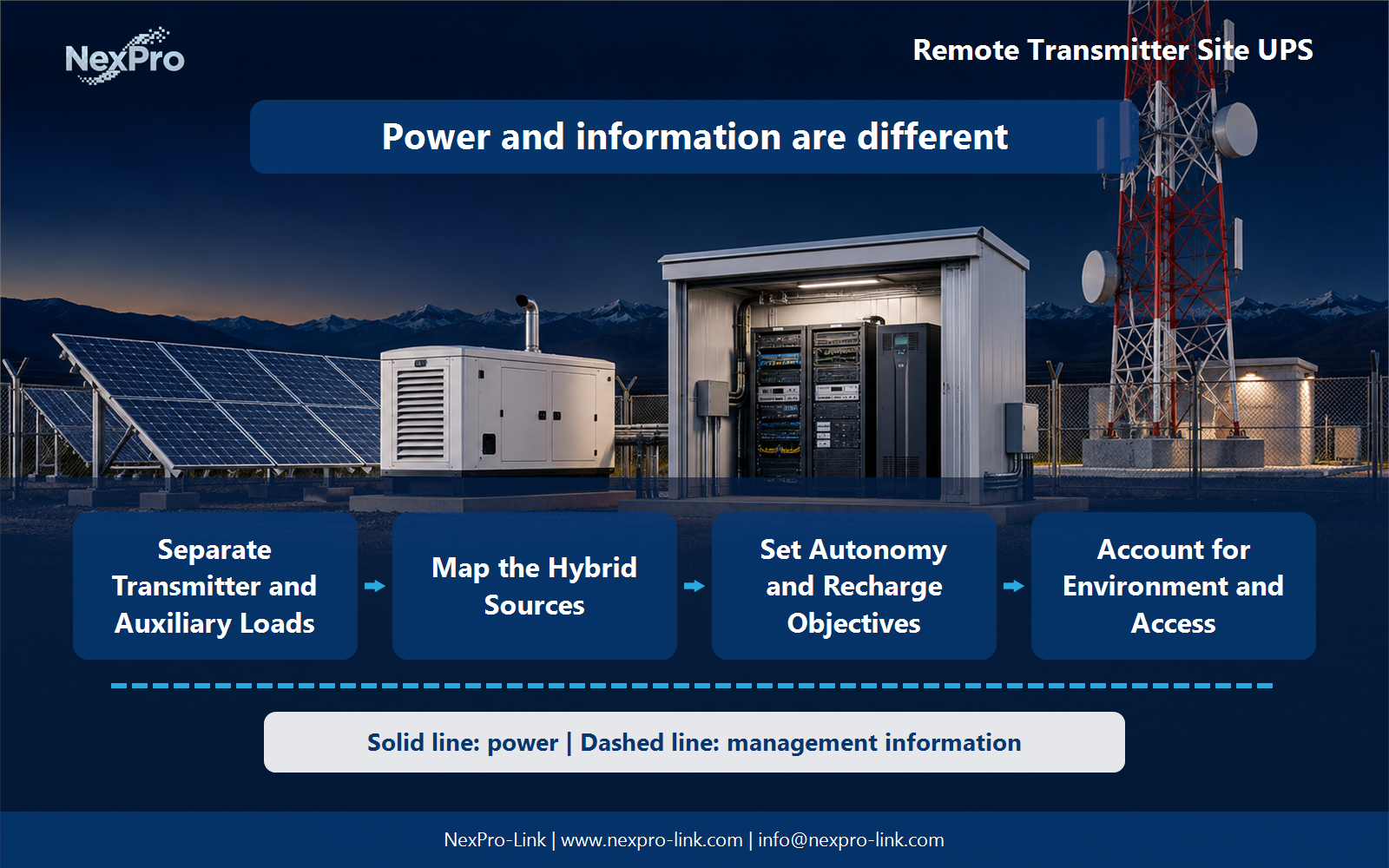
Separate Transmitter and Auxiliary Loads
Design multi-source supply, load continuity and remote maintenance as separate concerns, and do not treat the UPS as a solar charge controller.
Only when the transmitter's actual requirements fall within the engineered scope. Separate transmission equipment from controls, network and monitoring loads. This avoids recommending a compact IT UPS for a high-power or specialized radio-frequency installation.
Capture the answer in the load boundary: transmitter / controls / networking / monitoring before equipment is compared. This gives the project team a concrete service target and exposes missing dependencies early.
| Decision area | Project question | Required output |
|---|---|---|
| Separate Transmitter and Auxiliary Loads | Must a standard UPS carry the transmitter itself? | Load boundary: transmitter / controls / networking / monitoring |
| Map the Hybrid Sources | Does a UPS replace a solar charge controller? | Source map: solar / controller / generator / UPS / load |
| Set Autonomy and Recharge Objectives | What determines the backup interval? | Energy plan: demand / outage interval / recharge / reserve |
Section 02
Map the Hybrid Sources
No. A hybrid site may include distinct generation, conversion, charging and backup functions. Map their interfaces and control responsibilities. For a project-specific decision, record solar, controller, generator, UPS and load in the source map. This keeps the equipment inputs and intended service outcome aligned.
Use the source map: solar / controller / generator / ups / load to keep real interfaces and operating states visible. Measured demand, equipment limits and future allowances should remain separate entries.
Section 03
Set Autonomy and Recharge Objectives
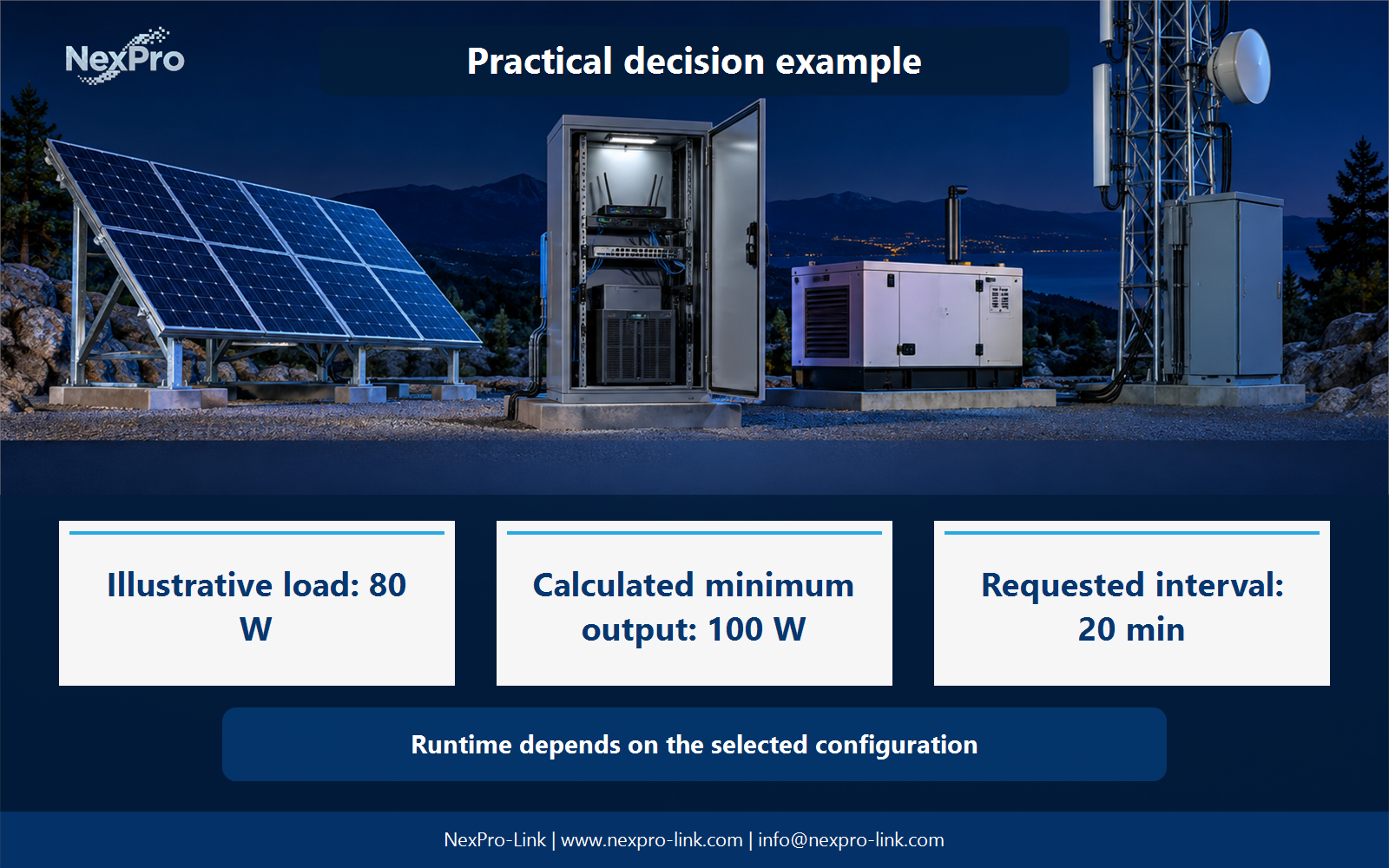
Consider service continuity, expected source interruptions and realistic access or recovery arrangements. Include the period needed to replenish batteries after an event. Do not use a sunny-day generation estimate as a guarantee for every operating condition.
Review the energy plan: demand / outage interval / recharge / reserve with the owners of the connected systems. Power continuity only supports the functions that remain connected and available during the event.
- Confirm the answer to: What determines the backup interval?
- Draw electrical power as a solid path and management information as a separate dashed path.
- Keep external services and specialist approvals outside the UPS equipment claim.
Section 04
Account for Environment and Access
Remote sites can have long travel times and restrictive weather or enclosure conditions. Define replacement access, ventilation and environmental limits. The equipment package should reflect those constraints rather than rely on the word rugged as a substitute for specifications.
Document this choice in the site sheet: ambient / enclosure / access / replacement route, including the condition that triggers it and the person responsible for the response.
Section 05
Design Alarms for Link Loss
Define local protective behavior and a supported fallback notification path. Distinguish power loss from communications loss so the site does not repeatedly restart unnecessarily. Local decisions should remain bounded by the equipment and operational policy.
Test the sequence represented by the state map: source / battery / link / local action during an approved maintenance window. Record the observations needed to confirm recovery.
Section 06
Request a Scoped Remote Package
Send the source arrangement, exact protected loads, environment and intended monitoring. NexPro-Link can discuss relevant UPS equipment and coordination interfaces. Specialized generation, RF loads and solar controls should remain explicitly assigned rather than hidden in a generic UPS package.
Send the completed package table: ups scope / source scope / controls / environment with the project request. It is more useful than a capacity number without interfaces, operating states or a defined service boundary.
Engineering references
These sources support the general planning principles. Always use the selected product's current datasheet and applicable project standards for final design.