Power the tracking database, the integration queue, and the site retry handling, instead of reusing a conveyor-equipment article.
Section 01
Trace a Tracking Update
For Postal IT and logistics data center teams, the first project decision is this: What is the unit of service to protect? Use a complete tracking update from branch submission to durable storage and acknowledgement. Identify the network, queue and database components involved. This exposes the difference between powering a server and preserving a usable parcel-status service. The practical output is update path: branch / gateway / queue / database / reply, supported by tracking-platform architecture, queue dependencies and recovery objectives.
Power the tracking database, the integration queue, and the site retry handling, instead of reusing a conveyor-equipment article.
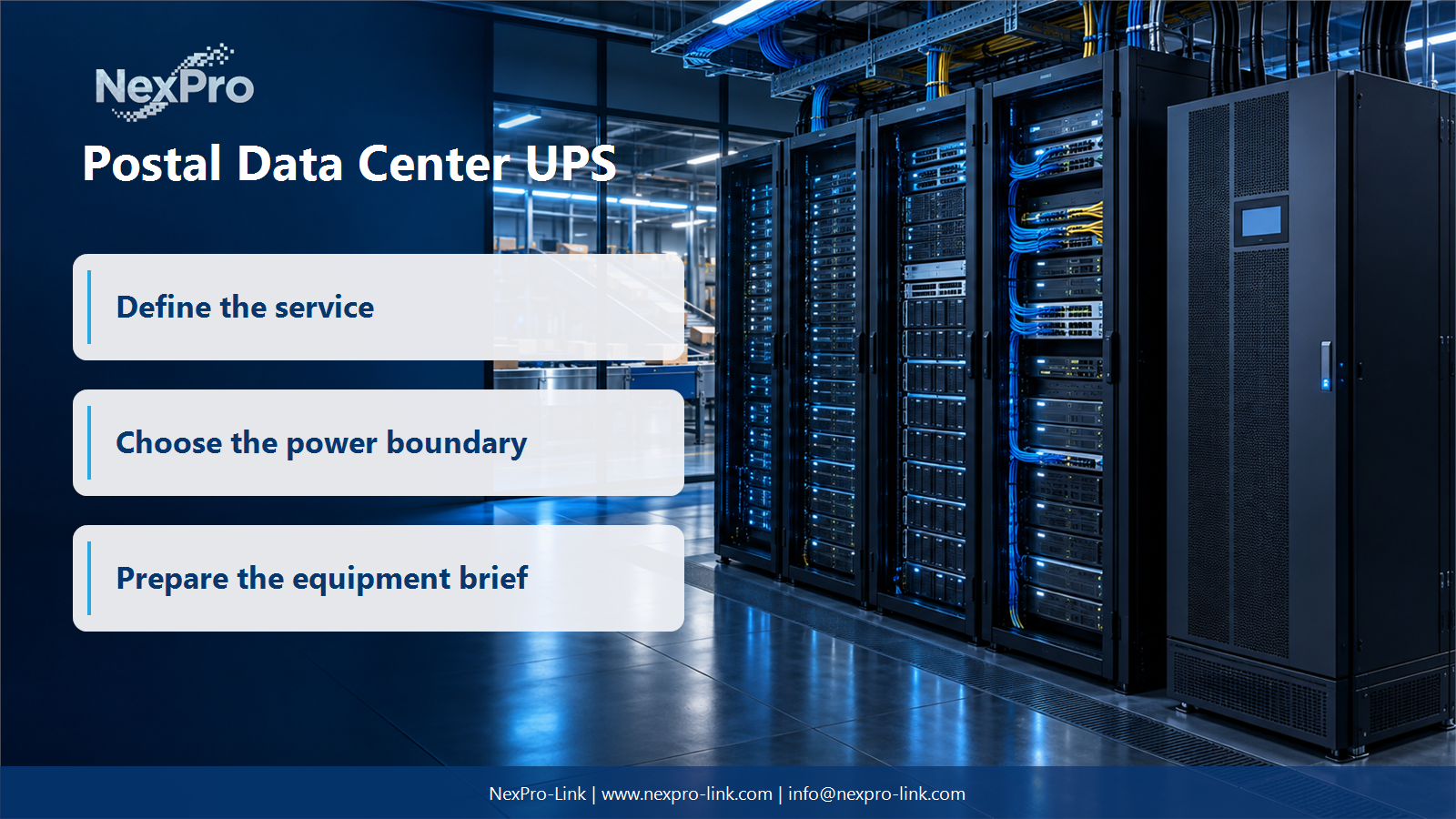
| Decision area | Project question | Required output |
|---|---|---|
| Trace a Tracking Update | What is the unit of service to protect? | Update path: branch / gateway / queue / database / reply |
| Separate Compute and Persistence | Why list storage and queue services separately? | Dependency table: application / queue / storage / shutdown order |
| Plan for Branch Disconnection | Can branches continue recording when the central site is unavailable? | State table: branch online / central offline / buffer / replay |
Section 02
Separate Compute and Persistence
They can determine whether accepted updates survive a shutdown. Map their power and software dependencies instead of protecting only application servers. For a project-specific decision, record application, queue, storage and shutdown order in the dependency table. This keeps the equipment inputs and intended service outcome aligned.
Use the dependency table: application / queue / storage / shutdown order to keep real interfaces and operating states visible. Measured demand, equipment limits and future allowances should remain separate entries.
Section 03
Plan for Branch Disconnection
Only if the application supports an appropriate local buffer and later reconciliation. Describe the supported behavior and its limits. Backup power at the central site does not automatically create offline capability at every branch terminal.
Review the state table: branch online / central offline / buffer / replay with the owners of the connected systems. Power continuity only supports the functions that remain connected and available during the event.
- Confirm the answer to: Can branches continue recording when the central site is unavailable?
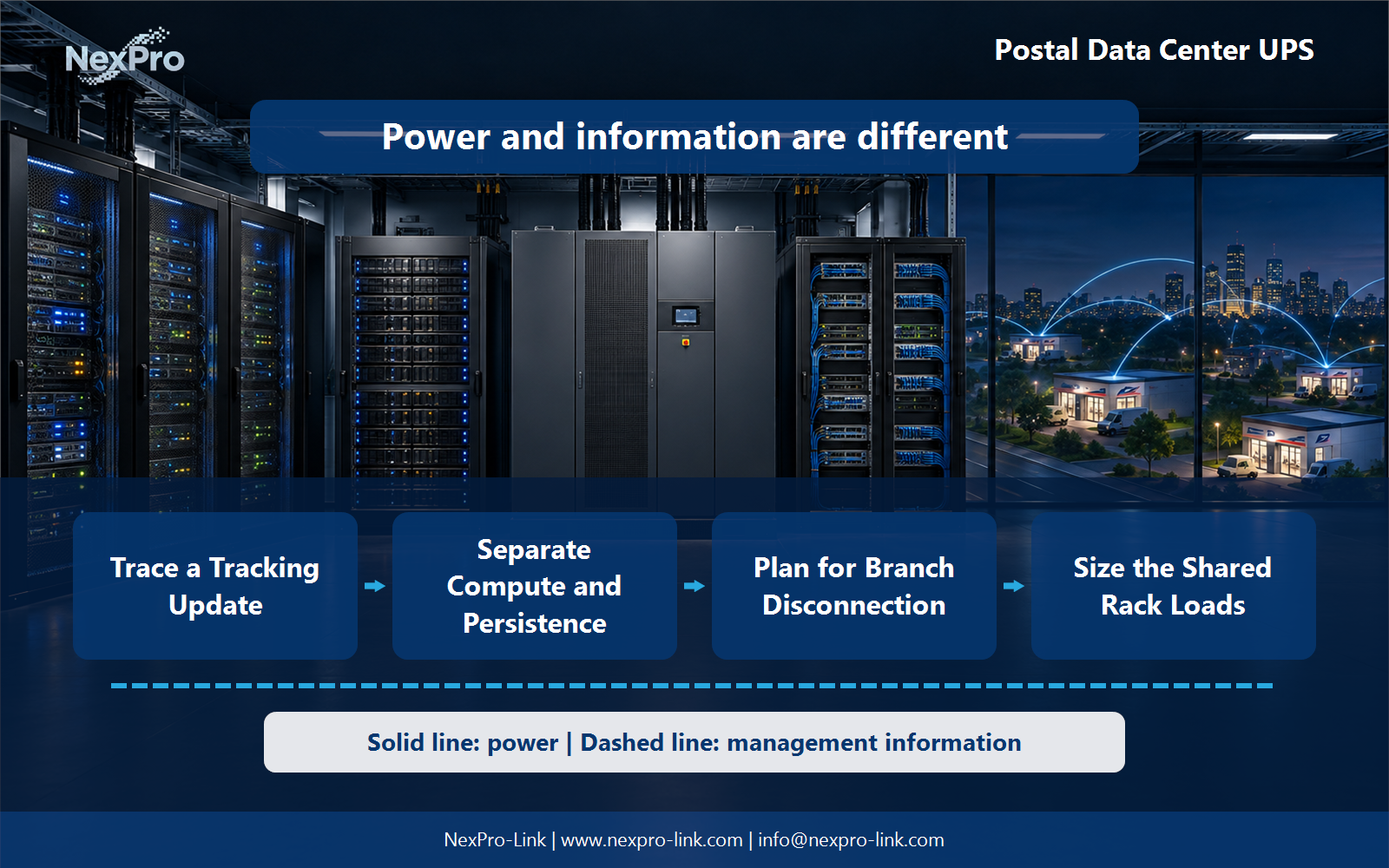
- Draw electrical power as a solid path and management information as a separate dashed path.
- Keep external services and specialist approvals outside the UPS equipment claim.
Section 05
Coordinate Service Restoration
Restore dependencies in the platform's supported order, then check update submission, persistence and retrieval. Reconcile queued or duplicate events using the application rules. UPS normal status does not by itself prove that customer tracking information is current.
Test the sequence represented by the restoration map: network / persistence / app / replay / confirmation during an approved maintenance window. Record the observations needed to confirm recovery.
Section 06
Prepare the Postal IT RFQ
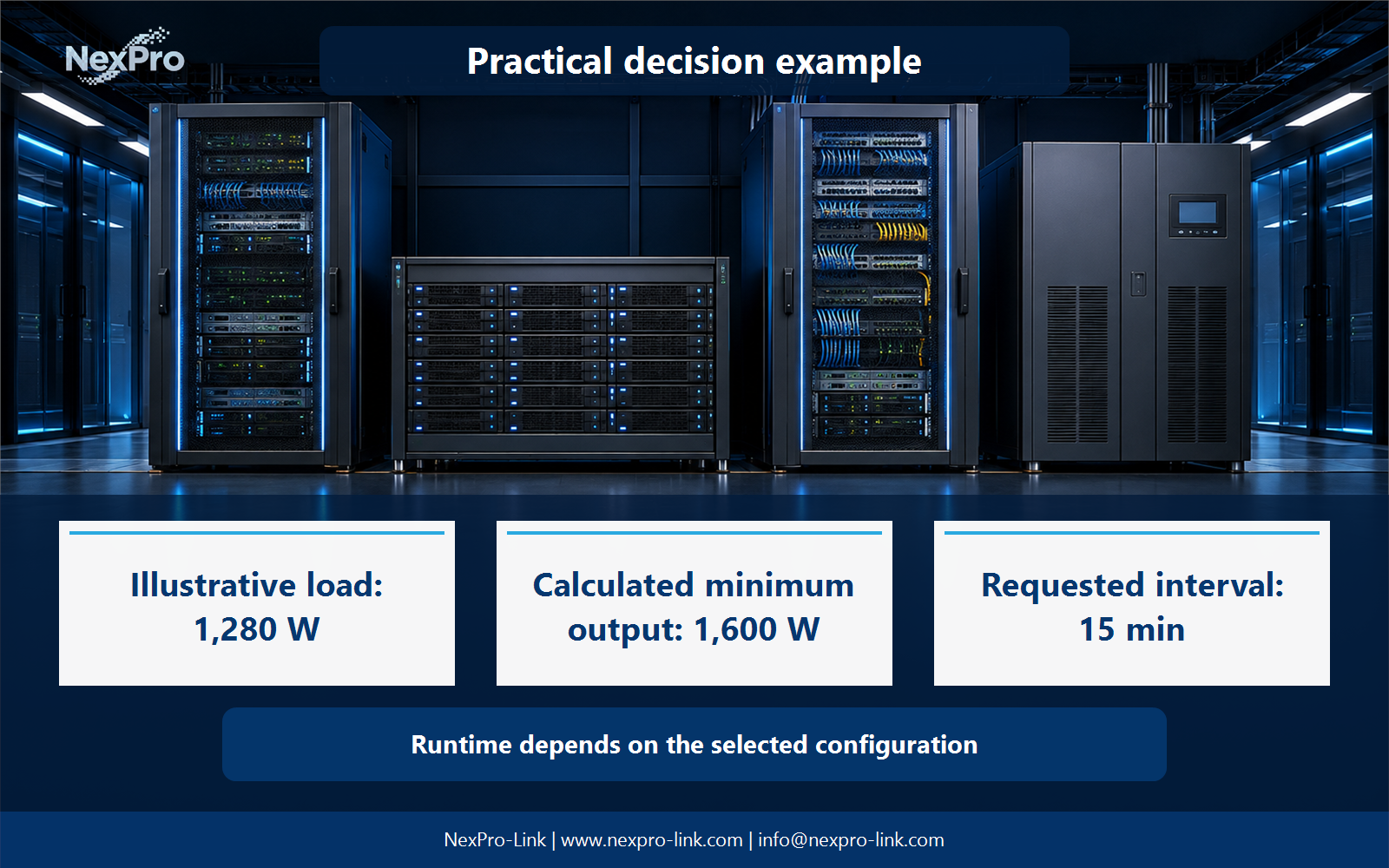
Provide the service diagram, protected racks, feed arrangement and stop or bridge objective. NexPro-Link can discuss UPS and distribution options. Keep the final availability promise linked to the whole platform and its operational plan, not a device label.
Send the completed rfq table: rack loads / service objective / interfaces / operating states with the project request. It is more useful than a capacity number without interfaces, operating states or a defined service boundary.
Engineering references
These sources support the general planning principles. Always use the selected product's current datasheet and applicable project standards for final design.