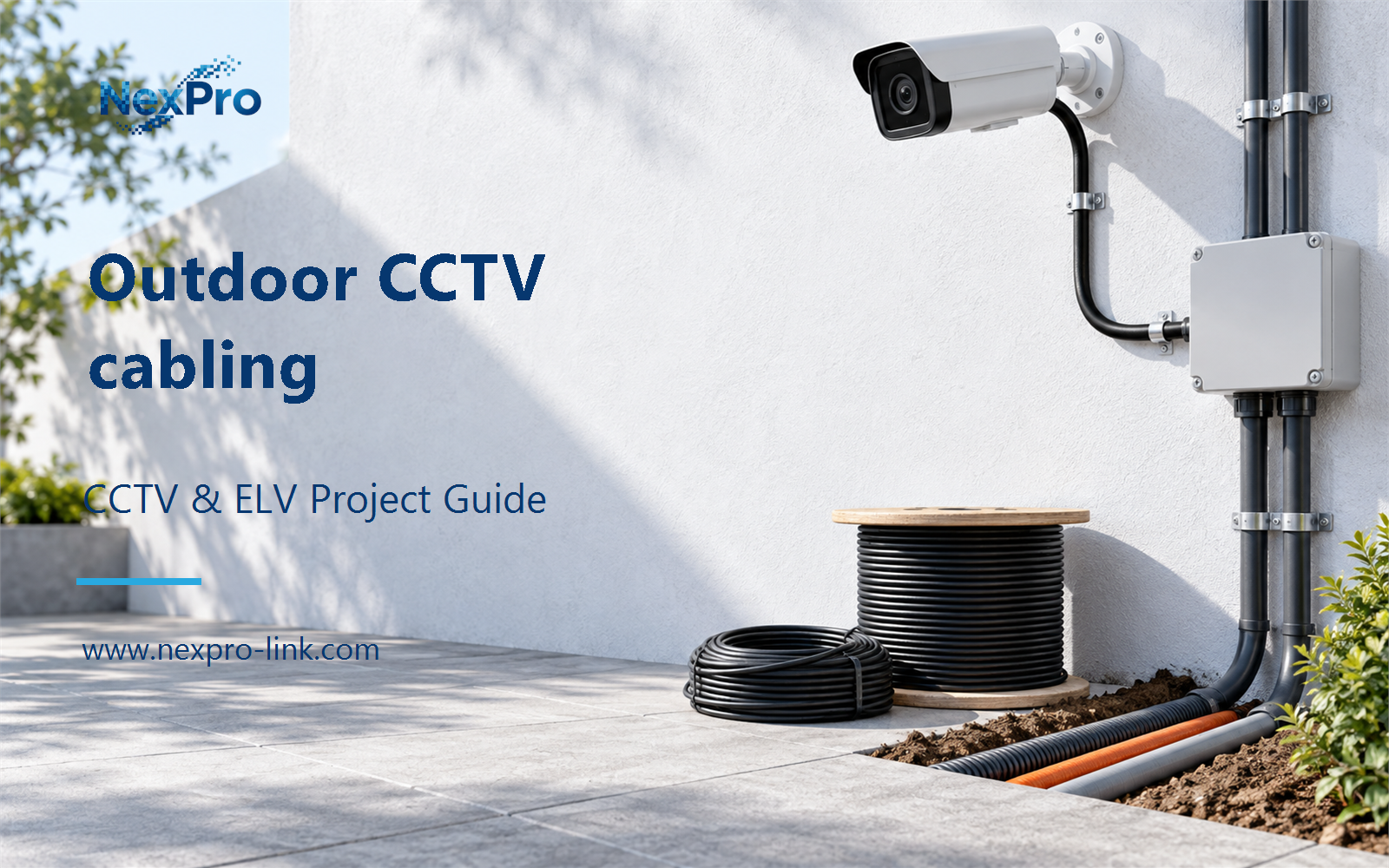
Plan outdoor CCTV cabling with practical guidance on classify the route exposure and treat aerial spans as mechanical systems. NexPro-Link project guide.
Section 01
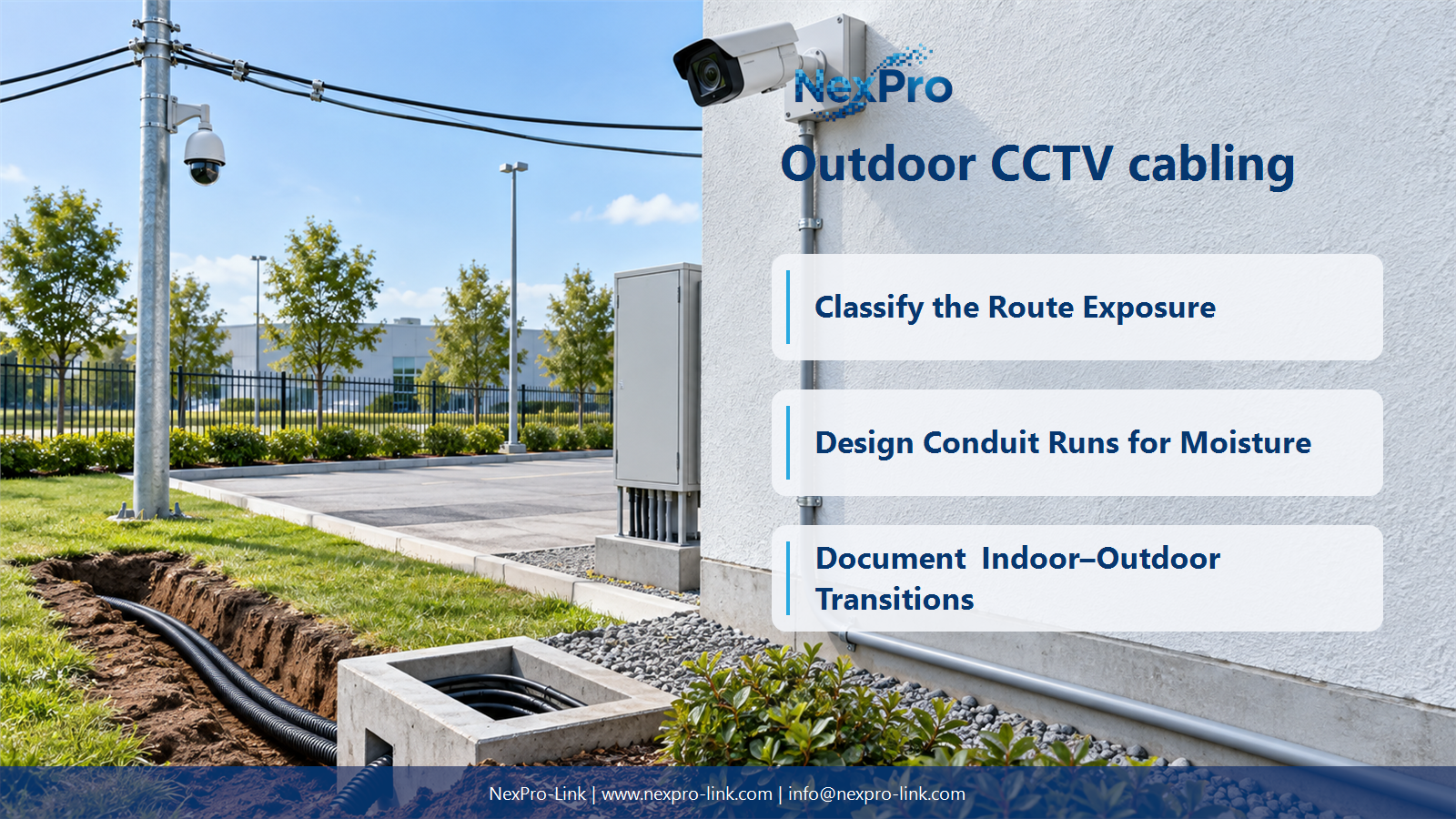
Classify the Route Exposure
Outdoor routes can expose cables to water, sunlight, temperature extremes and mechanical forces not addressed by a basic indoor category label. Describe the actual installation method first. Outdoor suitability does not automatically mean the cable is suitable for direct burial or unsupported aerial spans.
Turn the answer into a working record using Segment, Sun, Water, Temperature, Mechanical exposure.
| Decision area | Buyer question | Required output |
|---|---|---|
| Classify the Route Exposure | What distinguishes outdoor cable selection from indoor selection? | Outdoor routes can expose cables to water, sunlight, temperature extremes and mechanical forces not addressed by a basic indoor category label. |
| Plan Direct-Burial Installations | Can any armored cable be buried directly? | No. |
| Design Conduit Runs for Moisture | Does outdoor conduit keep cable dry? | It should not be assumed to remain dry throughout service. |
Section 02
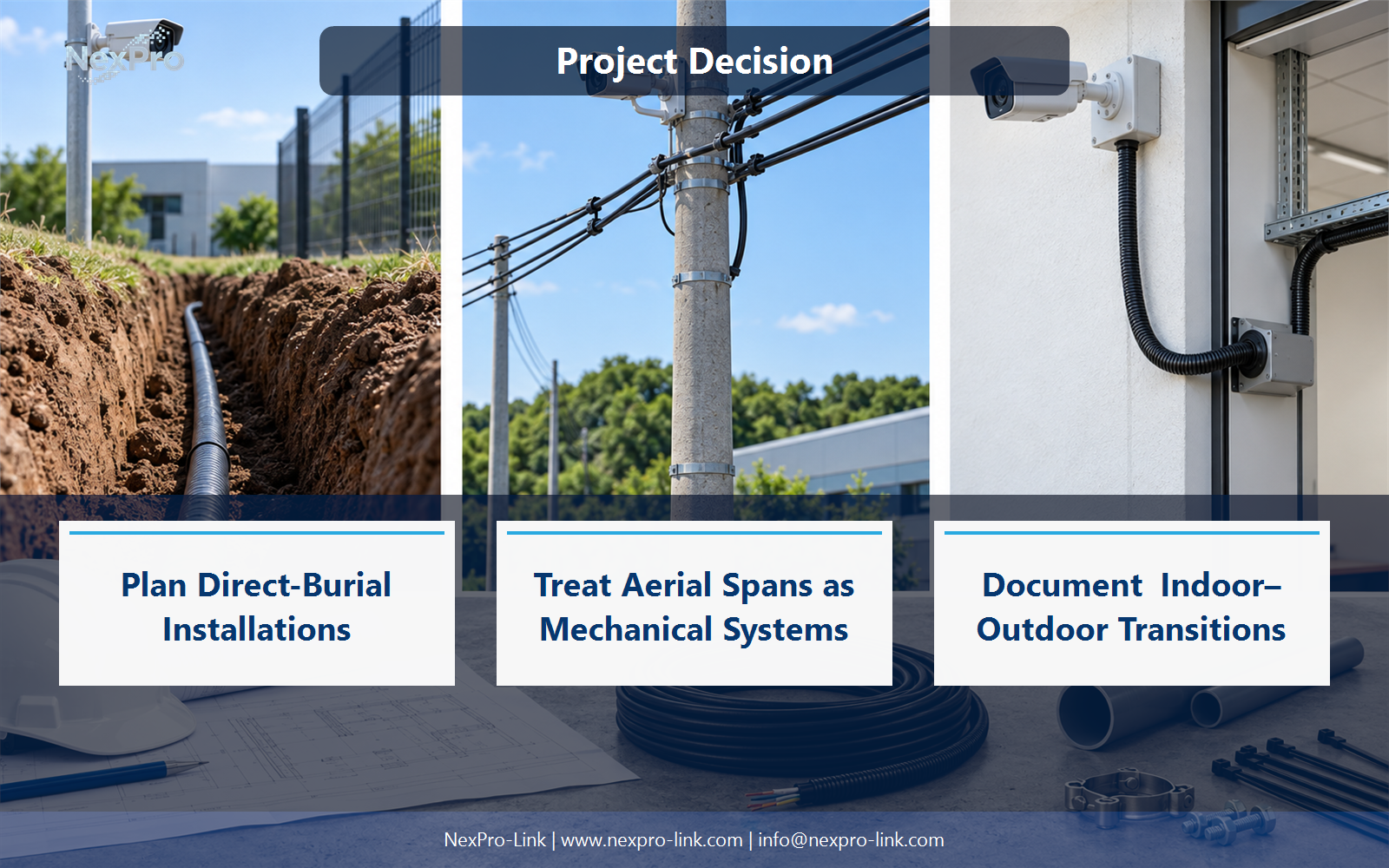
Plan Direct-Burial Installations
No. Armor is one construction feature, while direct-burial suitability depends on the complete cable and installation requirements. Match the product to soil, moisture and mechanical conditions, and follow the site's approved burial and utility-coordination design. Avoid publishing a universal trench depth for every location.
Use Cable application, Ground conditions, Protection, Route owner to compare options on the same basis. Keep product capability, project assumption and operating responsibility in separate columns.
Section 03
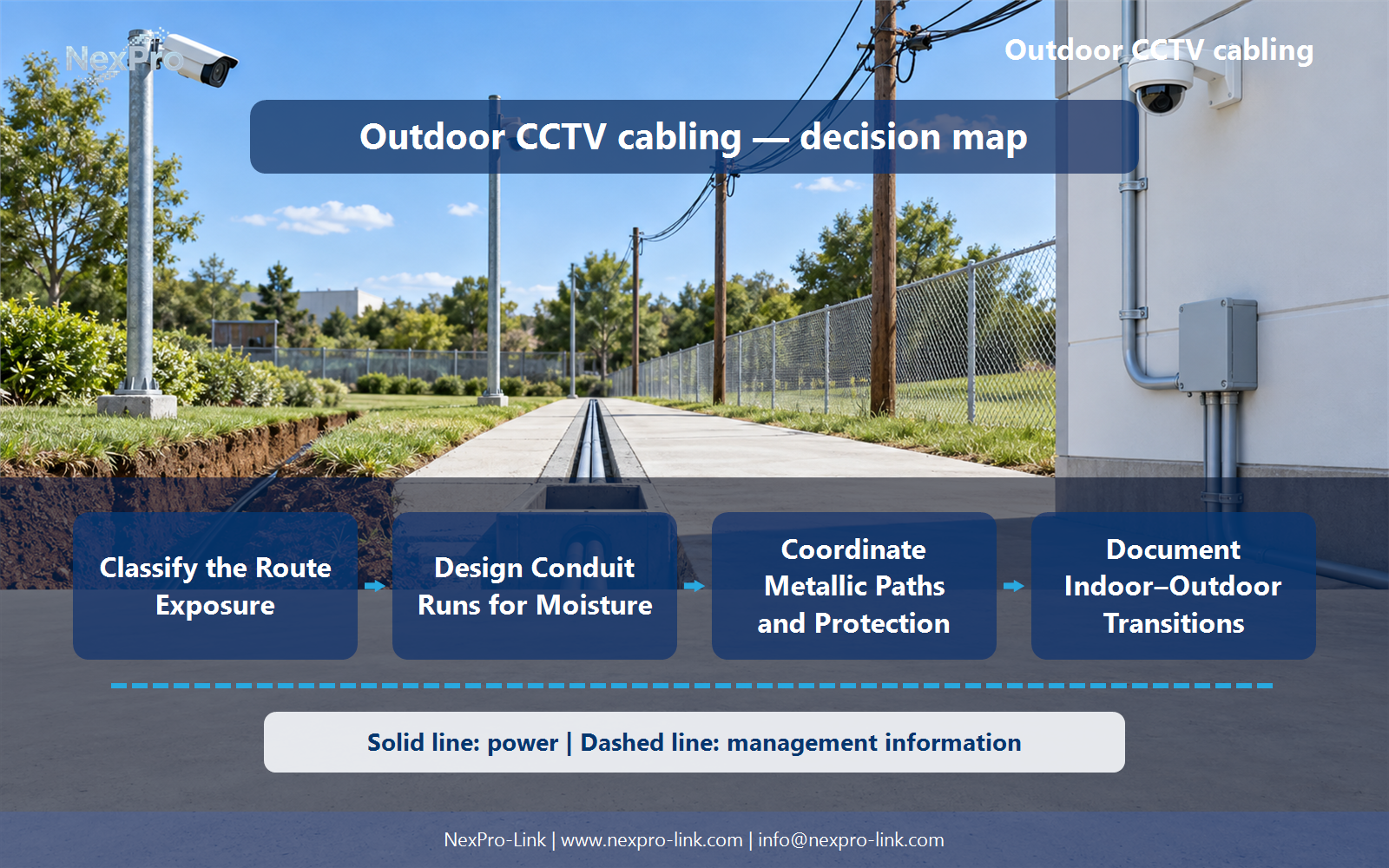
Design Conduit Runs for Moisture
It should not be assumed to remain dry throughout service. Water entry or condensation can occur, so the cable must suit the expected environment. Design entries, transitions and accessible points appropriately rather than relying on conduit alone to make an indoor cable suitable outside.
The project output should make Conduit route, Moisture assumption, Cable rating, Entry traceable from input to acceptance.
- Confirm the answer to: Does outdoor conduit keep cable dry?
- Record the project fields: Conduit route / Moisture assumption / Cable rating / Entry.
- Keep product capability, project assumptions and site responsibility in separate records.
Section 04
Treat Aerial Spans as Mechanical Systems
Use a supported cable and suspension arrangement appropriate to span length, loads and local requirements. Ordinary indoor cable should not be hung as an unsupported span. Coordinate pole or building attachments and maintenance access with the responsible installation team.
Record Span, Cable support, Attachment, Load basis, Access before selecting a product family. That makes later substitutions possible without silently changing the operational requirement.
Section 05
Coordinate Metallic Paths and Protection
An all-dielectric optical path avoids a conductive data link, but metallic armor, local power and connected equipment can still require appropriate bonding or protection. Review the complete installation rather than declaring every fiber cable electrically isolated in all respects.
Review Data medium, Metallic elements, Local power, Protection role with the party that will operate or maintain the system.
Section 06
Document Indoor–Outdoor Transitions
Record route method, cable construction, lengths, entry transitions, terminations and endpoint power. Identify where environmental or fire-related requirements change. These details let procurement distinguish the outdoor trunk from indoor tails and patching instead of ordering one generic cable for the entire project.
Use Segment, Method, Cable, Transition, Termination, Quantity as the handoff between design and procurement.
Engineering references
These sources support the general planning principles. Always use the selected product's current datasheet and applicable project standards for final design.