Plan online vs line interactive UPS CCTV with practical guidance on describe the incoming power problem and compare the same load and runtime. NexPro-Link project guide.
Section 01
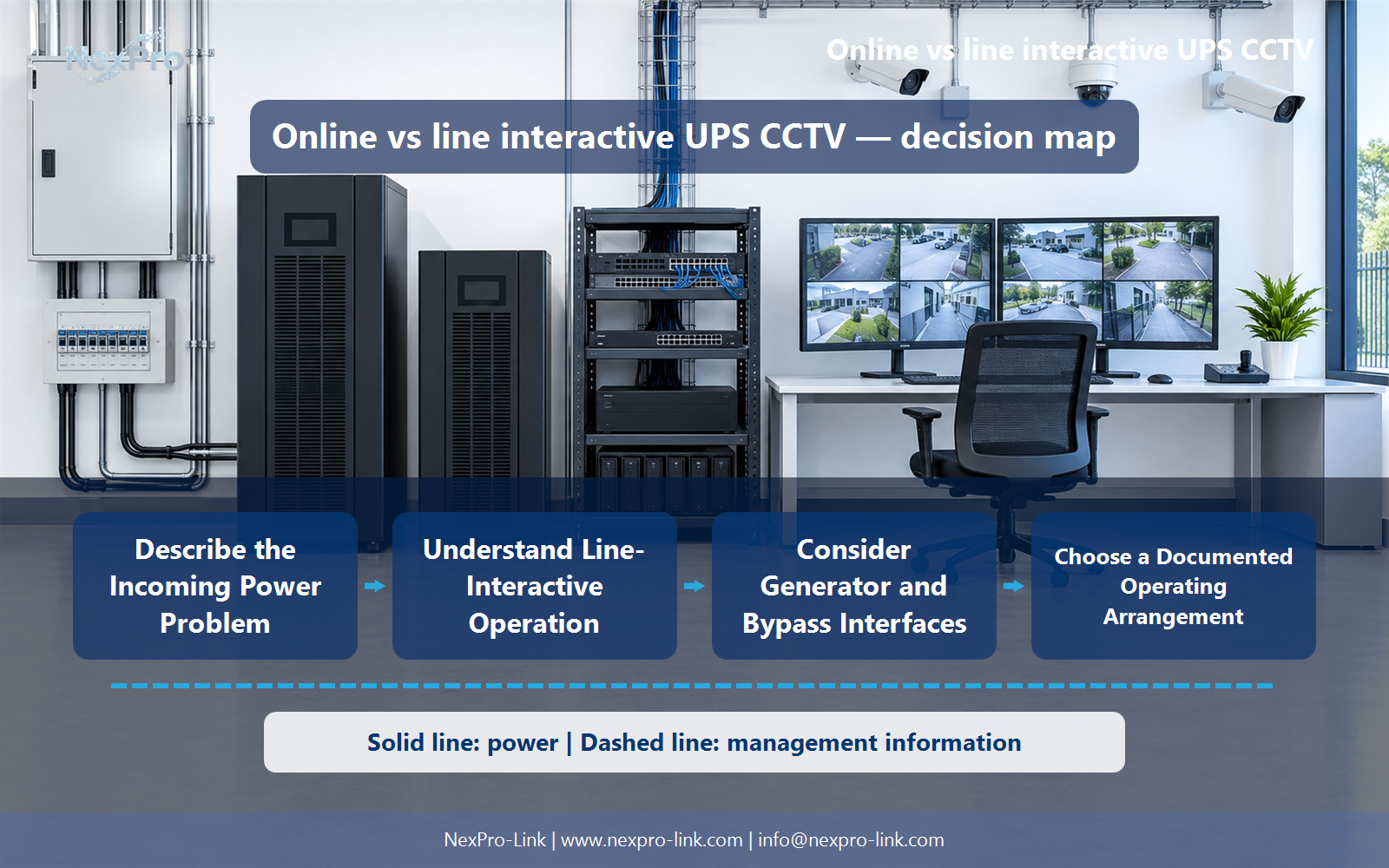
Describe the Incoming Power Problem
Identify outage patterns, voltage conditions, load sensitivity and the required service during disturbances. Different topologies address those conditions differently. A sector name or a request for the best UPS is not enough to define the electrical operating problem.
Turn the answer into a working record using Power condition, Frequency, Load impact, Required response.
| Decision area | Buyer question | Required output |
|---|---|---|
| Describe the Incoming Power Problem | What should be assessed before choosing a UPS topology? | Identify outage patterns, voltage conditions, load sensitivity and the required service during disturbances. |
| Understand Double-Conversion Operation | What is the key idea of an online double-conversion UPS? | In its normal double-conversion mode, power is processed through the UPS conversion path to supply the load. |
| Understand Line-Interactive Operation | What does a line-interactive UPS contribute? | It provides a supported combination of line operation, voltage regulation and battery operation according to its design. |
Section 02
Understand Double-Conversion Operation
In its normal double-conversion mode, power is processed through the UPS conversion path to supply the load. Actual behavior depends on operating mode, bypass and product design. Do not extend a general topology description into an unconditional promise for every fault or bypass event.
Use Mode, Power path, Load supply, Transition condition to compare options on the same basis. Keep product capability, project assumption and operating responsibility in separate columns.
Section 03
Understand Line-Interactive Operation
It provides a supported combination of line operation, voltage regulation and battery operation according to its design. Compare the specified transition and output behavior with the actual load. Do not assume all models with that label have identical waveforms, ratings or operating limits.
The project output should make Regulation, Battery transition, Output, Load compatibility traceable from input to acceptance.
- Confirm the answer to: What does a line-interactive UPS contribute?
- Record the project fields: Regulation / Battery transition / Output / Load compatibility.
- Keep product capability, project assumptions and site responsibility in separate records.
Section 04
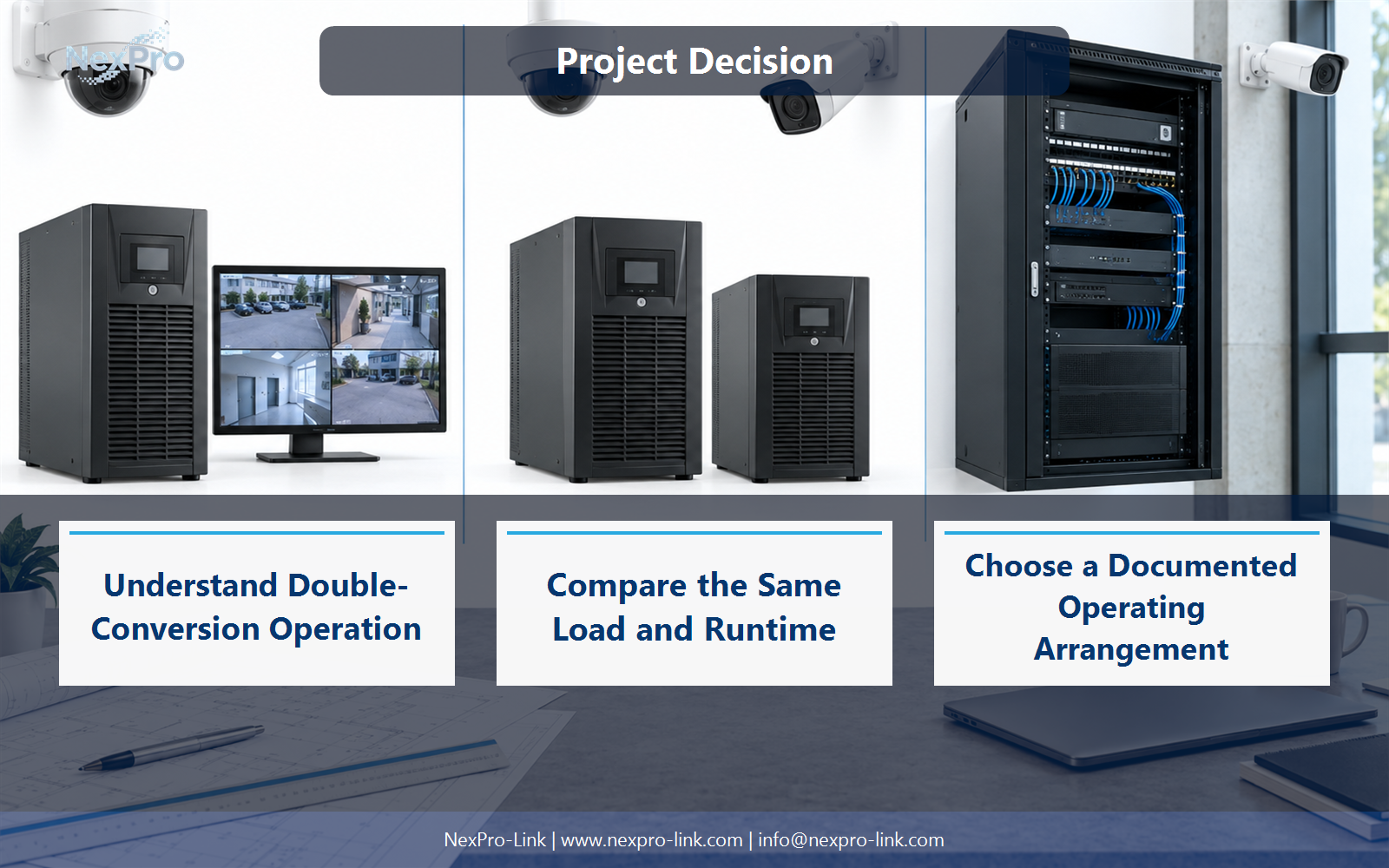
Compare the Same Load and Runtime
Use the same protected load, required duration, input conditions and service scope. Include battery configuration, maintenance and operating behavior. Comparing a large online unit with a smaller line-interactive unit does not isolate the effect of topology.
Record Option, Load, Runtime, Input conditions, Maintenance before selecting a product family. That makes later substitutions possible without silently changing the operational requirement.
Section 05
Consider Generator and Bypass Interfaces
No. Compatibility involves the generator, UPS input behavior, load and operating settings, as well as the site electrical design. Bypass and maintenance arrangements also matter. Coordinate the supported configuration with the responsible electrical professionals rather than assuming one topology solves every interaction.
Review Generator, UPS input, Load step, Bypass, Designer with the party that will operate or maintain the system.
Section 06
Choose a Documented Operating Arrangement
Explain which power conditions the selected configuration addresses and what service remains during relevant failures or maintenance. State remaining dependencies and operating modes. The decision should connect the equipment to the site requirement rather than present a topology as universally superior.
Use Requirement, Chosen mode, Supported behavior, Remaining dependency as the handoff between design and procurement.
Engineering references
These sources support the general planning principles. Always use the selected product's current datasheet and applicable project standards for final design.