Plan LED pixel pitch for CCTV with practical guidance on define physical size and viewing positions and assess viewing comfort and text. NexPro-Link project guide.
Section 01
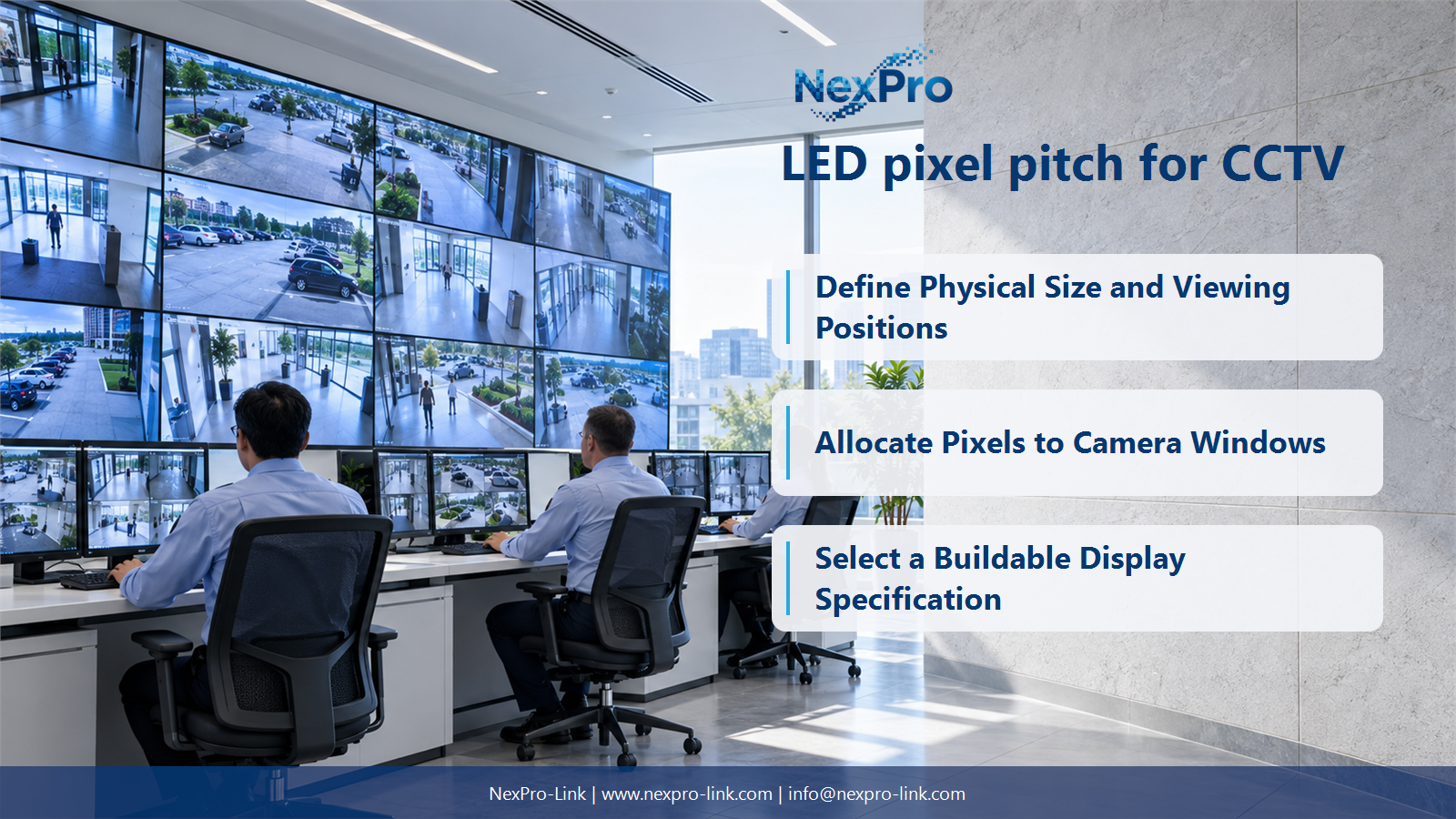
Define Physical Size and Viewing Positions
Establish the wall dimensions, closest and typical viewing positions, operator tasks and content layout. Pixel pitch is a design variable within those conditions. A pitch recommendation without the display size and viewing task cannot explain whether operators will see the required detail.
Turn the answer into a working record using Width, Height, Closest viewer, Typical viewer, Content.
| Decision area | Buyer question | Required output |
|---|---|---|
| Define Physical Size and Viewing Positions | What should come before selecting LED pixel pitch? | Establish the wall dimensions, closest and typical viewing positions, operator tasks and content layout. |
| Translate Pitch into Pixel Dimensions | How is approximate LED wall resolution calculated? | Divide the physical dimension in millimetres by the pixel pitch in millimetres to estimate pixels along that axis. |
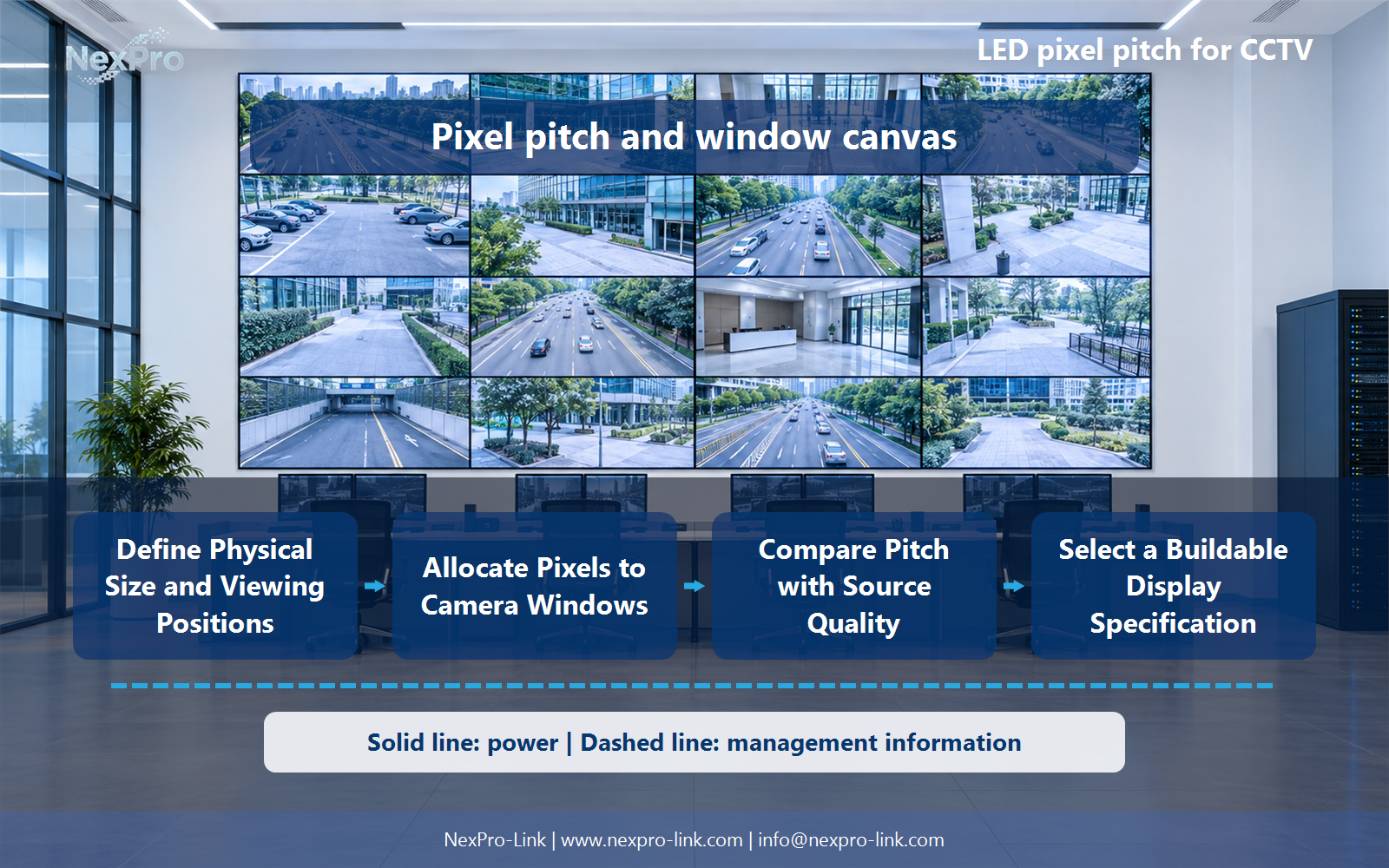
| Allocate Pixels to Camera Windows | Why can a high-resolution wall show limited camera detail? | Each camera window uses only part of the wall's pixel canvas, and borders or interface elements consume additional area. |
Section 02
Translate Pitch into Pixel Dimensions
Divide the physical dimension in millimetres by the pixel pitch in millimetres to estimate pixels along that axis. Actual dimensions follow the selected module and cabinet arrangement. For example, 4,800 mm divided by 1.5 mm gives about 3,200 horizontal pixels, before practical module selection.
Use Wall mm, Pitch mm, Estimated pixels, Module arrangement to compare options on the same basis. Keep product capability, project assumption and operating responsibility in separate columns.
Section 03
Allocate Pixels to Camera Windows
Each camera window uses only part of the wall's pixel canvas, and borders or interface elements consume additional area. A sixteen-window layout can reduce each view substantially. Calculate the active window size and compare it with the detail needed for the operator's task.
The project output should make Layout, Window width, Window height, Source, Task traceable from input to acceptance.
- Confirm the answer to: Why can a high-resolution wall show limited camera detail?
- Record the project fields: Layout / Window width / Window height / Source / Task.
- Keep product capability, project assumptions and site responsibility in separate records.
Section 04
Assess Viewing Comfort and Text
Such rules are rough conventions, not universal readability requirements. Text size, contrast, visual acuity, content and task all matter. Use the proposed viewing conditions and representative content to compare options rather than presenting one simple distance formula as a standard guarantee.
Record Viewing position, Text size, Contrast, Content, Outcome before selecting a product family. That makes later substitutions possible without silently changing the operational requirement.
Section 05
Compare Pitch with Source Quality
It cannot recreate detail that was not captured or preserved in the source stream. A finer pitch may improve display sampling or reduce visible pixel structure, but lens choice, exposure, bitrate and window layout still determine the useful information available to the operator.
Review Source issue, Display effect, Upstream correction with the party that will operate or maintain the system.
Section 06
Select a Buildable Display Specification
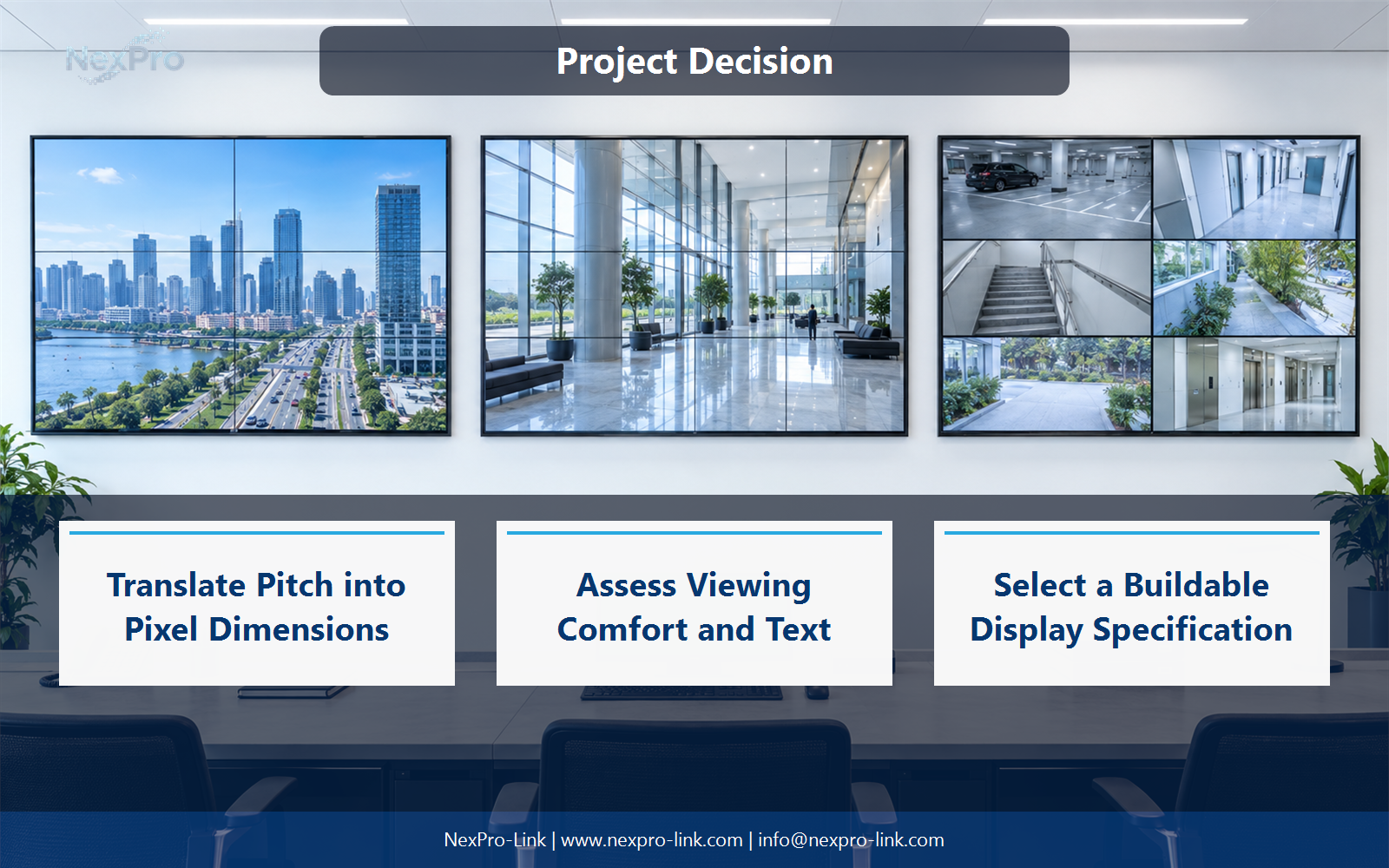
Include target physical dimensions, approximate canvas resolution, layouts, viewing positions and service access, alongside the preferred pitch range. Allow the final module configuration to establish the exact size. A project specification can describe direct-view LED without inventing a NexPro-Link LED SKU.
Use Pitch option, Module layout, Canvas, Viewing, Service as the handoff between design and procurement.
Engineering references
These sources support the general planning principles. Always use the selected product's current datasheet and applicable project standards for final design.