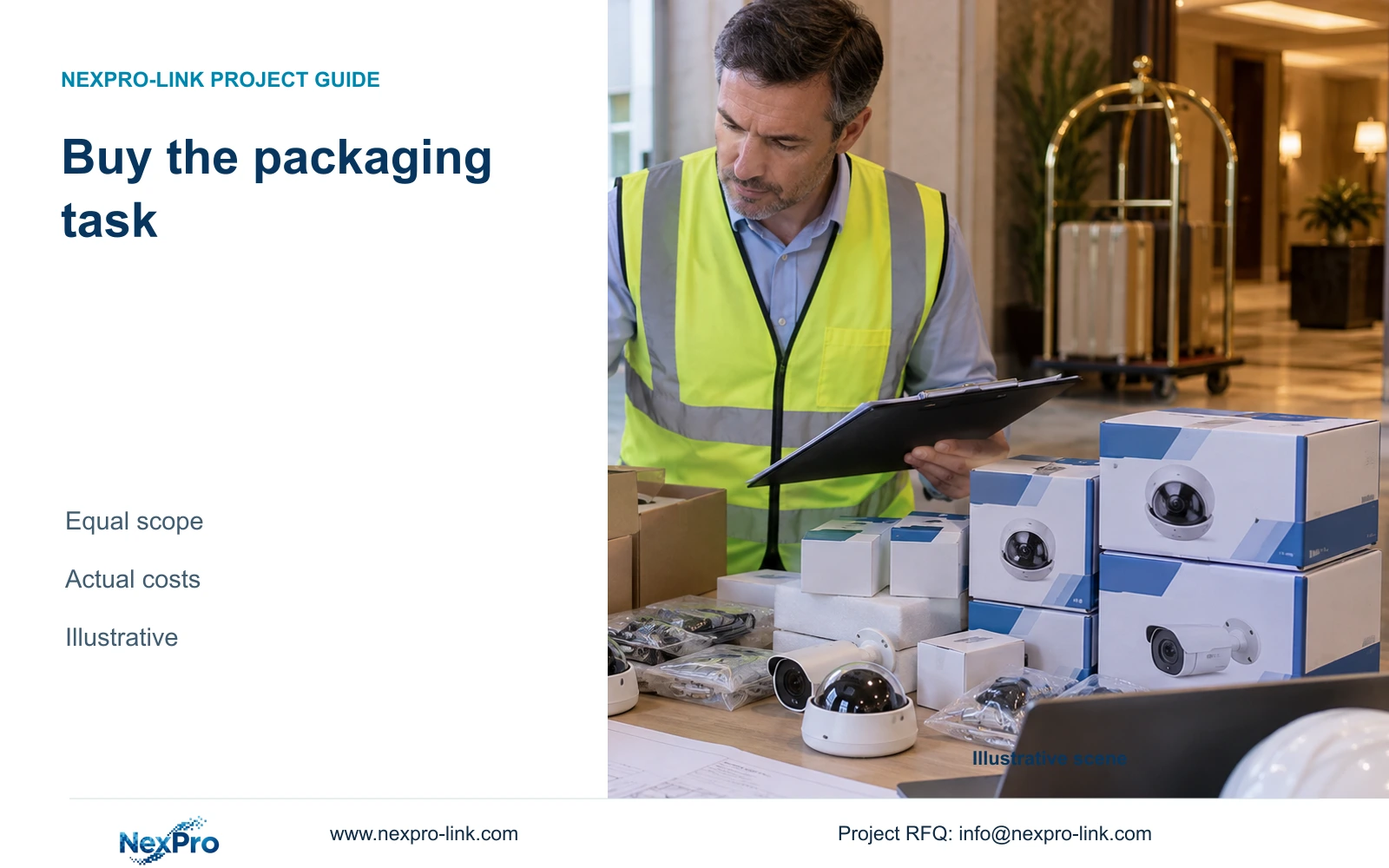
Neutral packaging with project labels can meet a hotel installation brief. Custom color boxes need a defined presentation or repeat-order benefit, evaluated against the same protection and traceability scope.
Section 01
Define the packaging outcome before choosing a format
Choose neutral packaging with controlled project labels when it meets the hotel's protection, receiving and installation requirements. Buy custom color boxes when authorized branded presentation is required or a qualified comparison shows a worthwhile operational benefit. Neither format should be assumed cheaper without matching the complete scope.
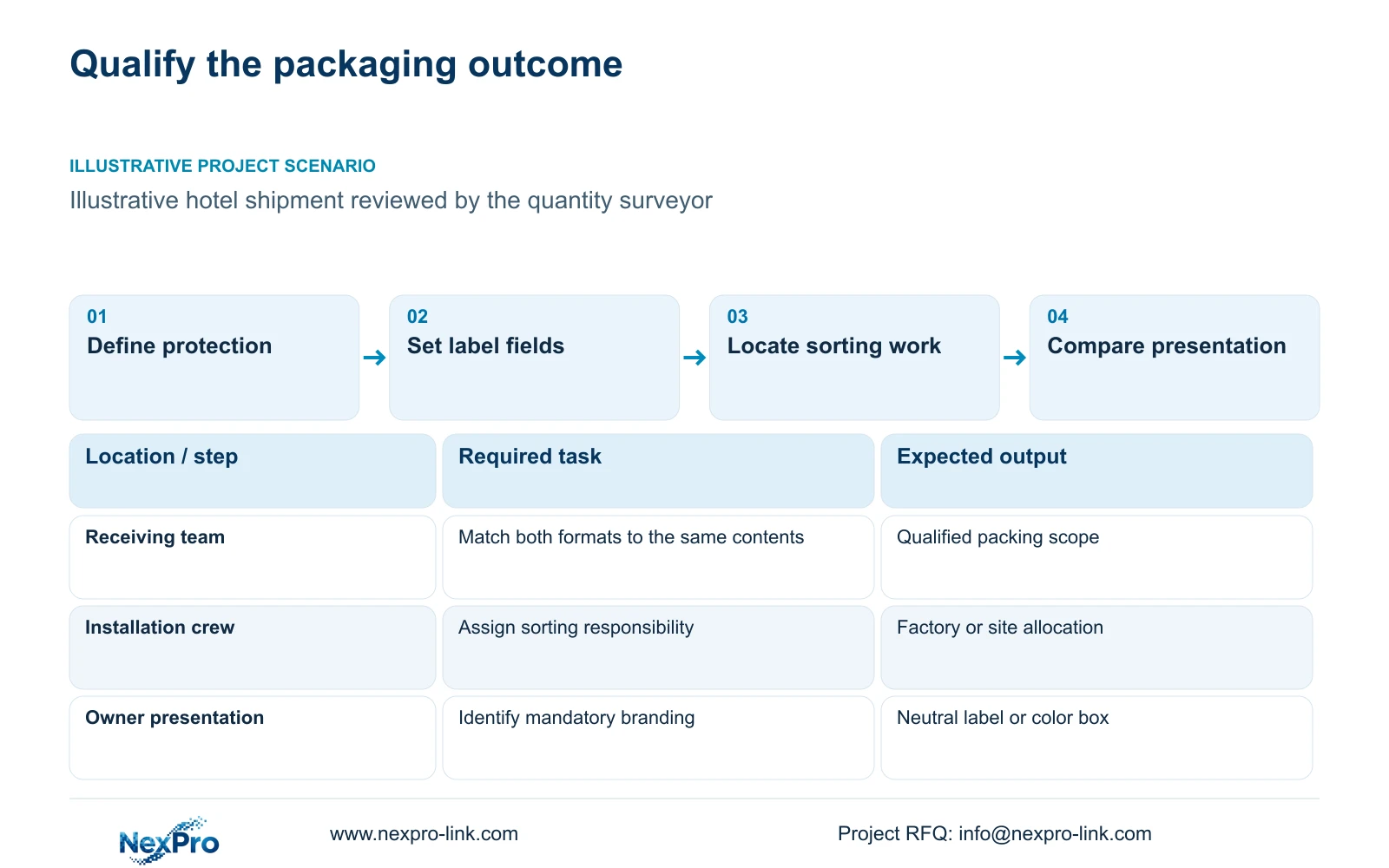
The quantity surveyor needs a packaging brief that separates necessary outcomes from preferences. Define what the receiving team must identify, how accessories remain associated with equipment, and whether cartons will be presented to the owner or move directly to installation. Establish the authorized branding requirement before requesting artwork preparation.
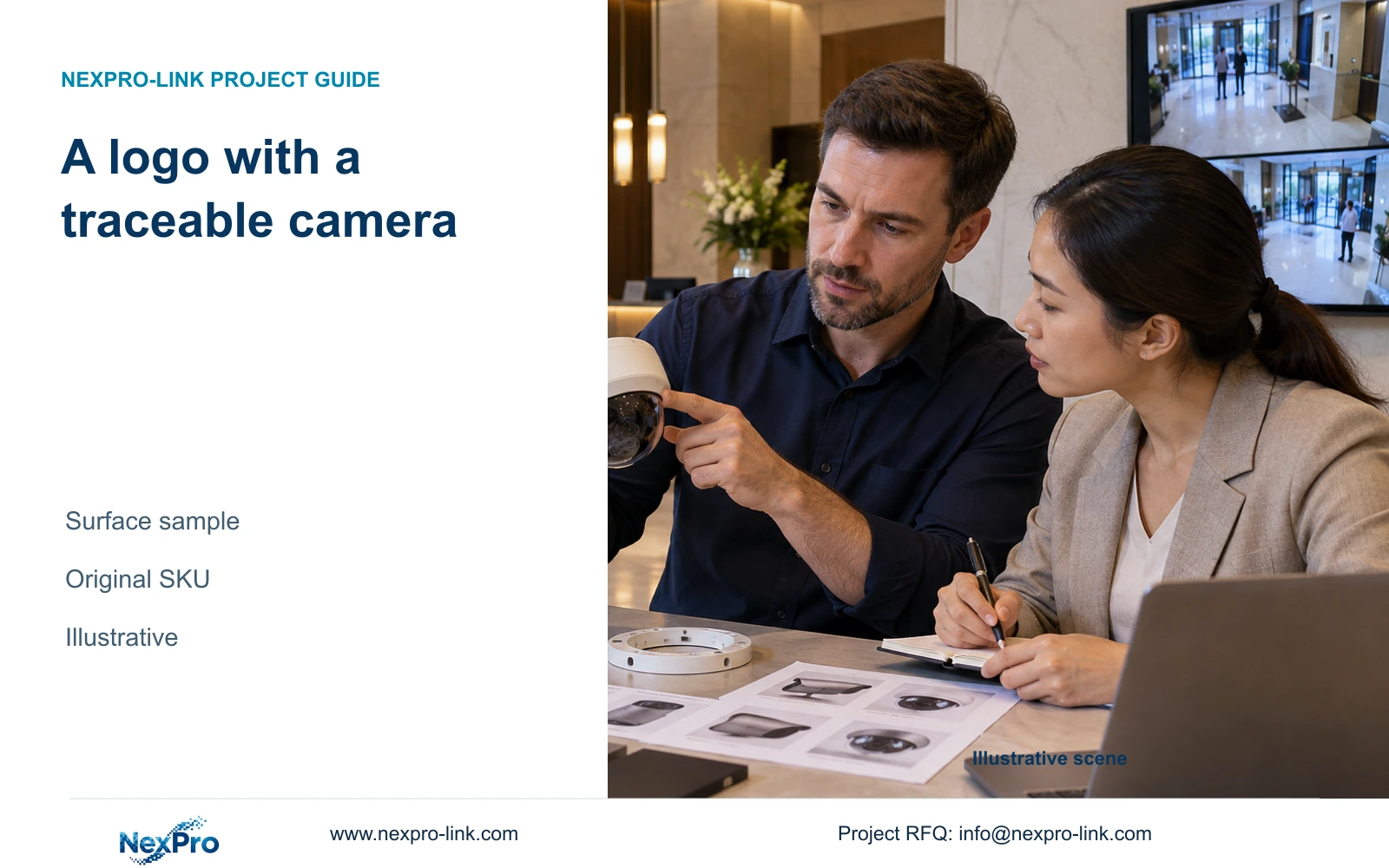
Laser marks, individual-box labels, printed color boxes and outer project cartons are separate options in the OEM scope. A requirement for the contractor's logo on equipment does not automatically require a retail-style box. Conversely, a neutral carton does not remove the need for exact equipment identity, necessary markings and a usable packing list.
| Required task | Given information | Decision still needed |
|---|---|---|
| Protect the shipment | Equipment and destination listed | Agreed protective packing arrangement |
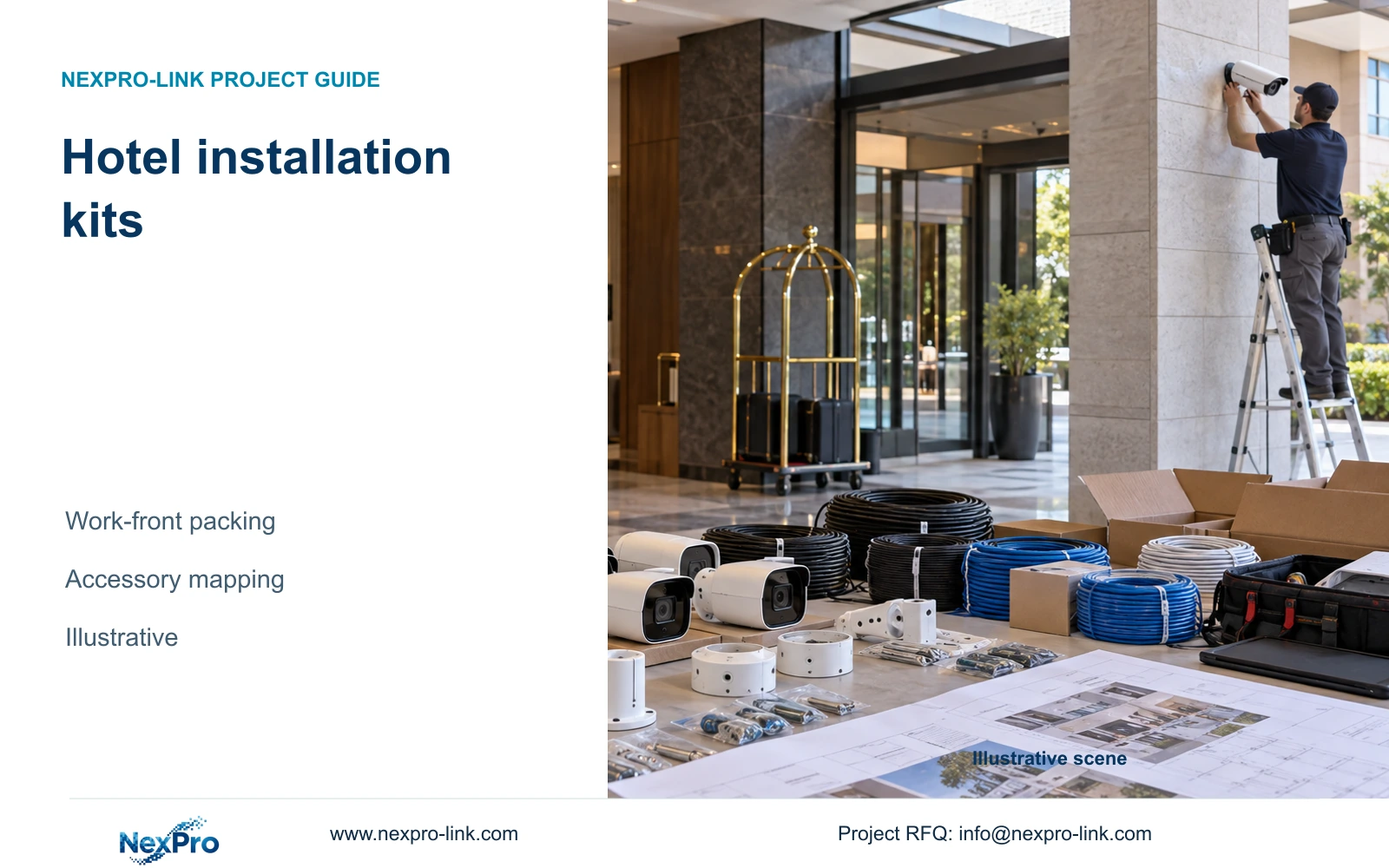
| Allocate installation kits | Work fronts are identified | Sorting and accessory grouping |
| Present customer branding | Authorized logo available | Required surfaces and presentation level |
Section 02
Compare neutral and branded formats on equal scope
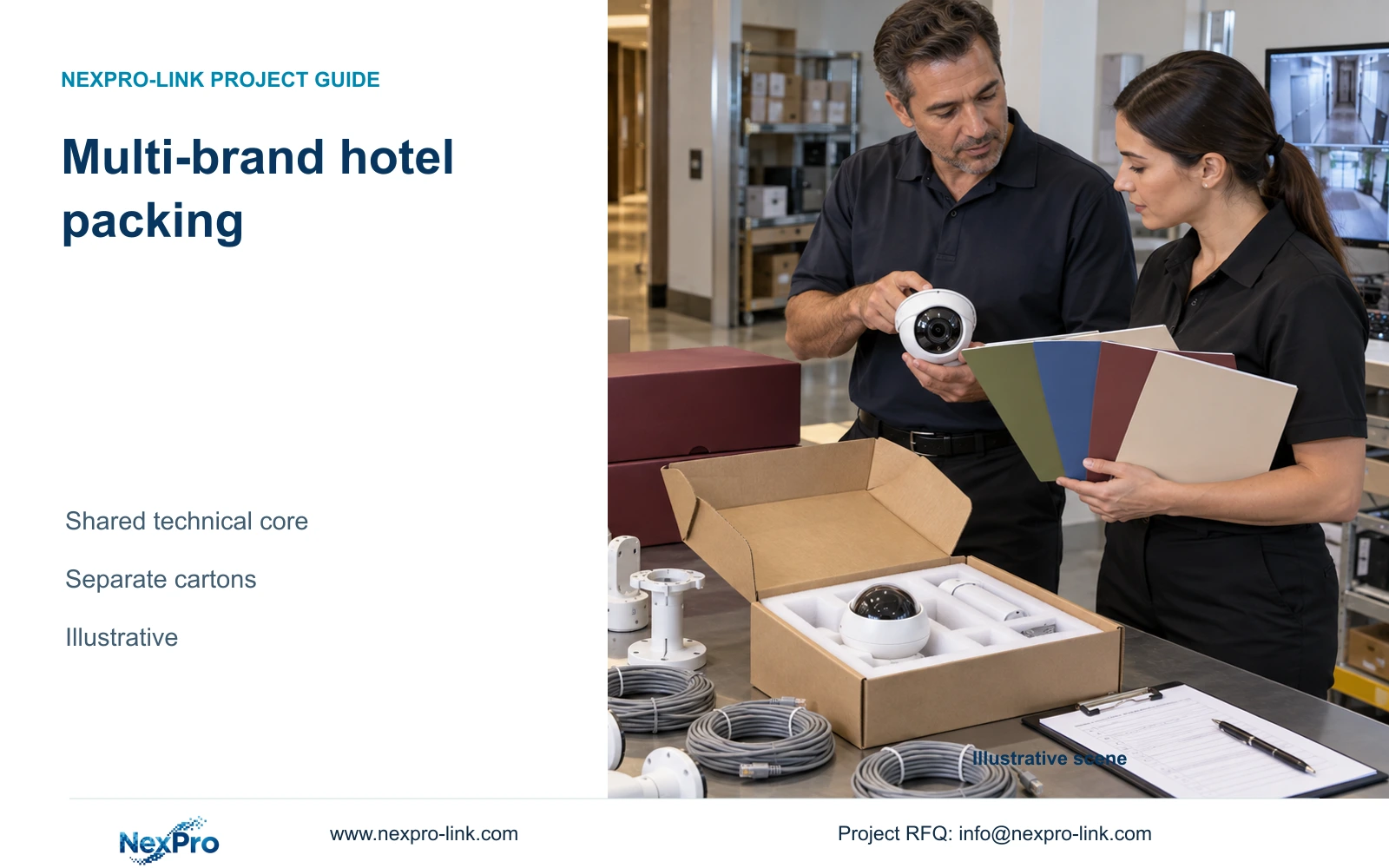
A neutral box can carry a project label with model, carton and installation-zone information. A color box can use the same variable project fields alongside a fixed brand design. Compare the actual proposed packing contents and record structure, because print coverage alone does not show which arrangement will support receiving.
Use the independent boutique-hotel reference to identify practical receiving groups: entrances, lobby, public corridors, service routes and exterior parking approaches. Its 24 camera tasks may require several accessory combinations and a separate equipment-room package. The hotel background supplies context, not a box quantity, current price or demonstrated sorting saving.
Include the service use of retained packaging and records. Main equipment, disks and other accessories have different handling boundaries. Before returning a recorder or storage item, confirm authorization and data handling rather than relying on the box's branding. A color box does not establish additional warranty coverage or a faster replacement service.
| Item | Neutral plus project label | Custom color box | Decision effect |
|---|---|---|---|
| Brand presentation | Defined label area | Fixed printed design | Owner requirement may govern |
| Zone allocation | Variable project field | Variable project field still needed | Either can support work fronts |
| Technical identity | Exact SKU retained | Exact SKU retained | Neither may obscure service records |
| Protective arrangement | Specify actual contents | Specify actual contents | Appearance does not qualify protection |
Section 03
Count initial setup and recurring costs separately
Request separate quotation lines for artwork/setup, packing material, variable labels and the agreed sorting work. Check whether those items are already included in the equipment package before adding them again. Use the same quantity, currency, delivery basis and support boundary for both offers.
For a single shipment, calculate evaluated packing cost as one-time setup plus the sum of quantity × unit packing rate, additional sorting and any documented transport difference. Keep currency, quantity and delivery basis equal. Show costs already included in the equipment or installation quote as included rather than adding them again.
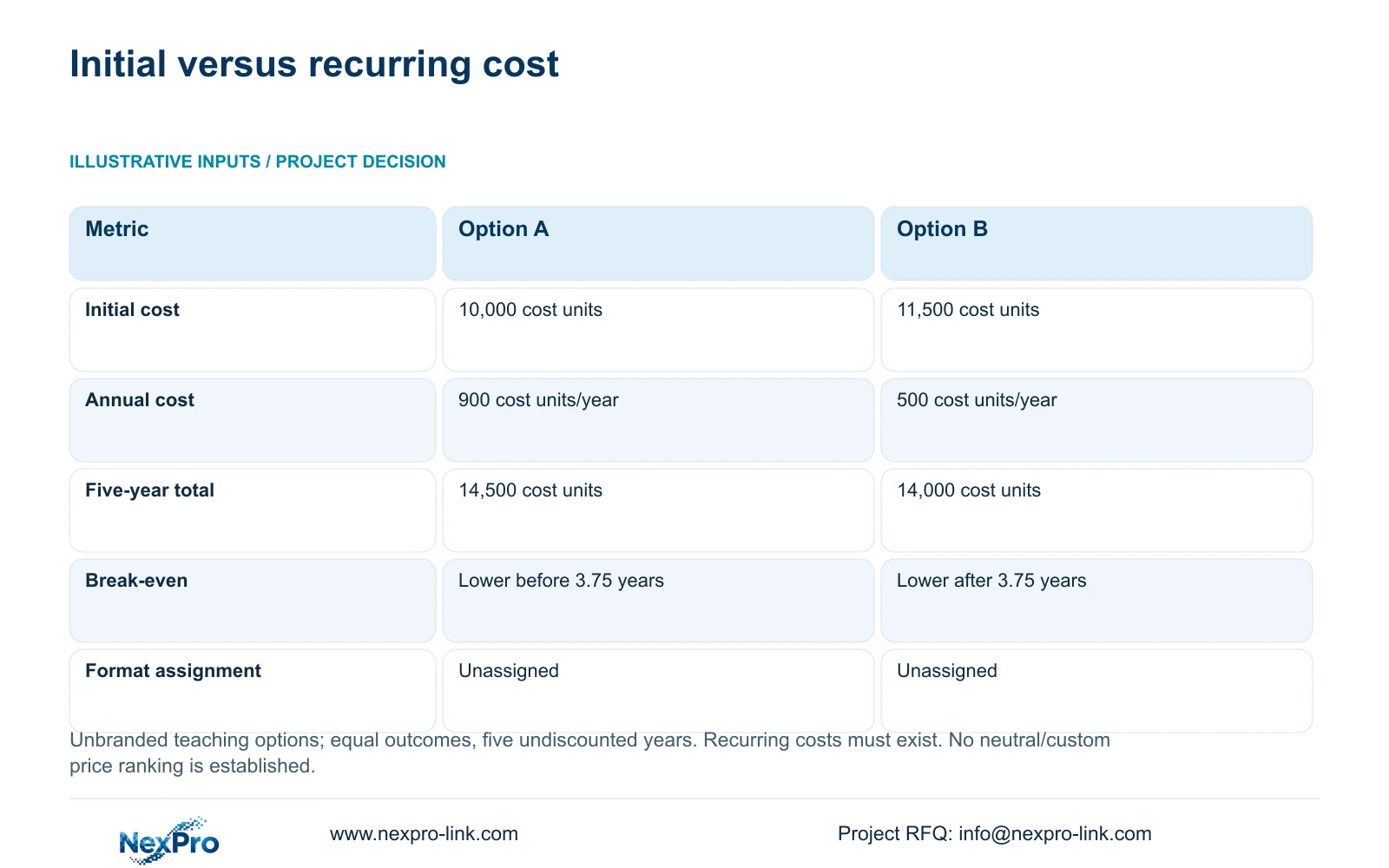
The retained illustration is a separate recurring-cost lesson, not a neutral-versus-color-box quote: A assumes 10,000 cost units initially and 900 per year; B assumes 11,500 and 500 per year. Five-year undiscounted totals are 14,500 and 14,000, with break-even at 1,500 ÷ 400 = 3.75 years. Use it only when genuine recurring scope exists; it cannot rank this one-off packing purchase.
| Cost line | Use in comparison | Confirm before counting |
|---|---|---|
| Artwork and tooling | One-time cost by approved design/variant | Reuse rights and revision charge |
| Boxes, inserts and project labels | Unit rate × supplied quantity | Same protective contents and equipment identity |
| Work-front sorting | Factory or site work actually priced | Exclude work already in installation rate |
| Freight and handling | Same destination and delivery basis | Any real size/weight or custody difference |
| Repeat-release work | Only committed releases and documented recurring tasks | Do not assume annual packaging costs |
Section 04
Include installation sorting work in the comparison
Define where sorting happens and who performs it. Factory grouping can move allocation work before shipment; central site sorting can retain flexibility when installation zones remain unsettled. Either arrangement needs an accurate schedule and someone responsible for reconciling equipment with the kits issued to crews.
Ask for the actual cost or agreed scope of receiving, identifying models, matching accessories and distributing cartons. Do not insert invented minutes saved per box or a percentage reduction in site labor. If sorting is included in an existing installation rate, isolate only the genuine additional or avoided work so it is not counted twice.
For a one-off hotel shipment, compare the actual receiving and kit-issue work with the same required result: protected goods, traceable identity and correct accessories at the work front. Ask who absorbs a mismatch or a late zone-label change. An unsupported annual saving must not turn a more expensive presentation box into a claimed lifecycle saving.
Section 05
Evaluate repeat orders using quantities that are supported
Separate committed purchasing quantities from possible future orders. A repeated brand design may reduce the need for new artwork, but changed housings, dimensions or operator branding can require fresh work. Ask which elements are reusable and which costs recur on each release. The source evidence does not establish automatic free reuse.
Keep the stable design apart from variable installation labels. A common box can follow several deliveries while floor, carton and spare-stock fields change. Permanently printing every project location can create obsolete material if quantities or naming conventions change. Evaluate that exposure using actual material commitments rather than an invented waste rate.
Do not buy additional cameras to make a packaging allocation look lower. Spare equipment should follow a defined restoration task and replenishment arrangement. An older spare still needs functional compatibility checks when deployed, and its packaging does not establish a new warranty period. Include stock handling only where it belongs to the agreed comparison.
| Retained outcome | Extra scope | Worth buying when | Counter-condition |
|---|---|---|---|
| Traceable equipment delivery | Custom printed design | Required brand presentation is stable | Brand or box dimensions may change |
| Correct crew allocation | Factory work-front sorting | Installation groups are defined | Site needs flexible central allocation |
| Repeatable supplies | Reusable design reference | Repeat releases are supported | Future quantity is only speculative |
Section 06
Choose the simplest format that meets the brief
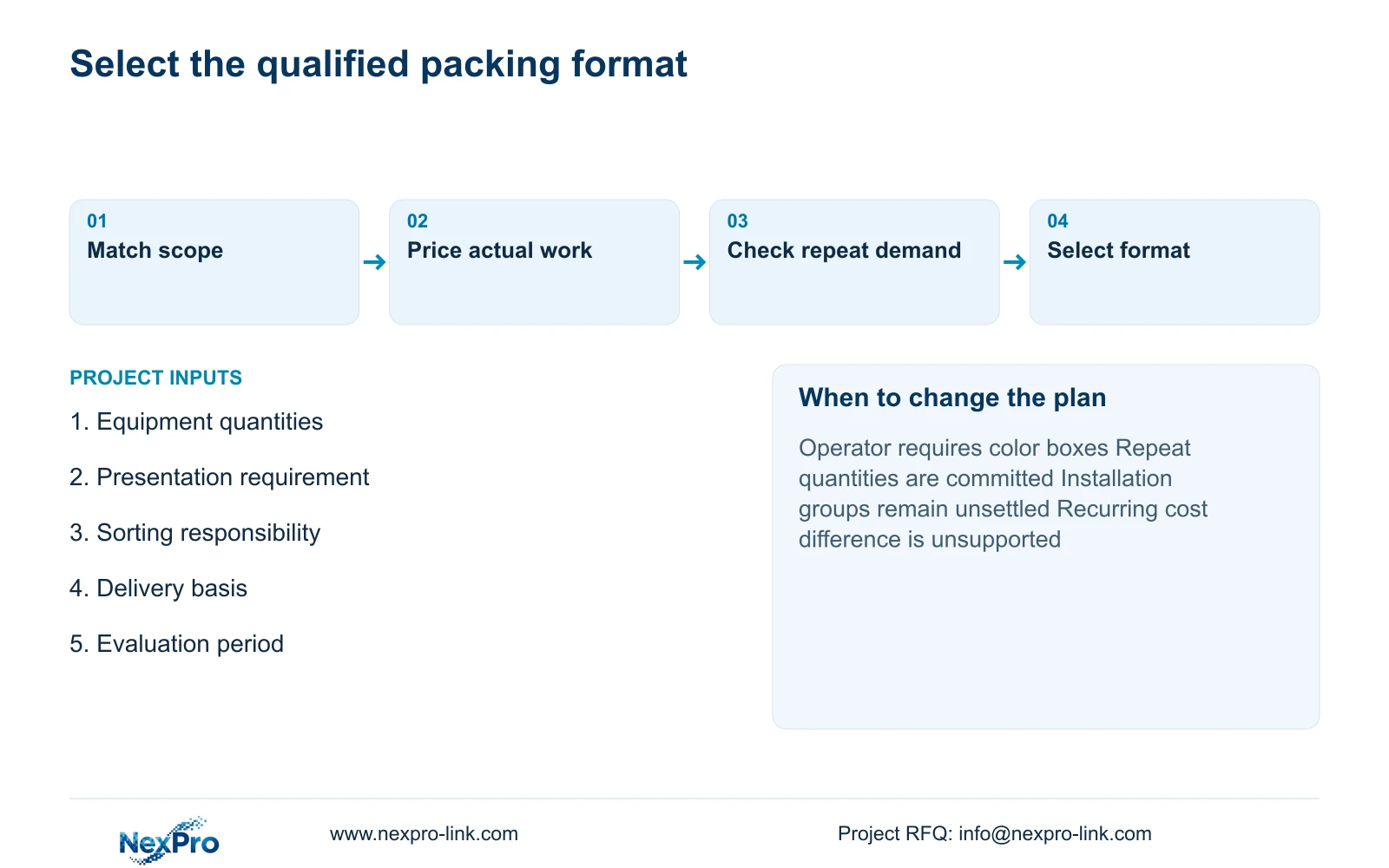
For direct-to-installation hotel equipment, start with neutral protective packaging, readable project labels and matched contents. Select custom color boxes when the operator requires them or a scope-matched quotation demonstrates an acceptable benefit over the relevant period. Change the choice when presentation requirements, installation grouping or committed repeat quantities change.
Apply the same technical and service requirements to both alternatives. The supplied policy record states a usual 24-month limited hardware baseline from receipt for applicable main equipment, subject to written order terms. Batteries, storage, cables and special OEM provisions remain separately scoped; box design does not expand those terms or include local installation.
Send the equipment quantities, packaging requirement, work-front grouping and delivery destination to info@nexpro-link.com. For a commercial comparison, include the currency, delivery basis and evaluation period; supply authorized artwork if branding is required. NexPro-Link can discuss OEM packing and coordinated hotel supply, identifying CCTV manufacturing and supporting-category responsibilities in the proposed scope.
Section 07
Buyer questions
Is a custom color box necessary for a branded hotel order? Only if the agreed branding brief requires it. Equipment marking and project labels can be specified separately, so a branded order can still use neutral boxes.
Can the 3.75-year result decide a one-off packaging purchase? No. It assumes a genuine 400-cost-unit annual difference. For a single shipment, use actual one-time setup, packing and sorting costs instead.
What should quotations include to make the comparison fair? Match equipment quantities, protective packing, accessories, labels, sorting responsibilities and delivery basis. Separate setup from recurring work and identify excluded site services.
Engineering references
These sources support the general planning principles. Always use the selected product's current datasheet and applicable project standards for final design.