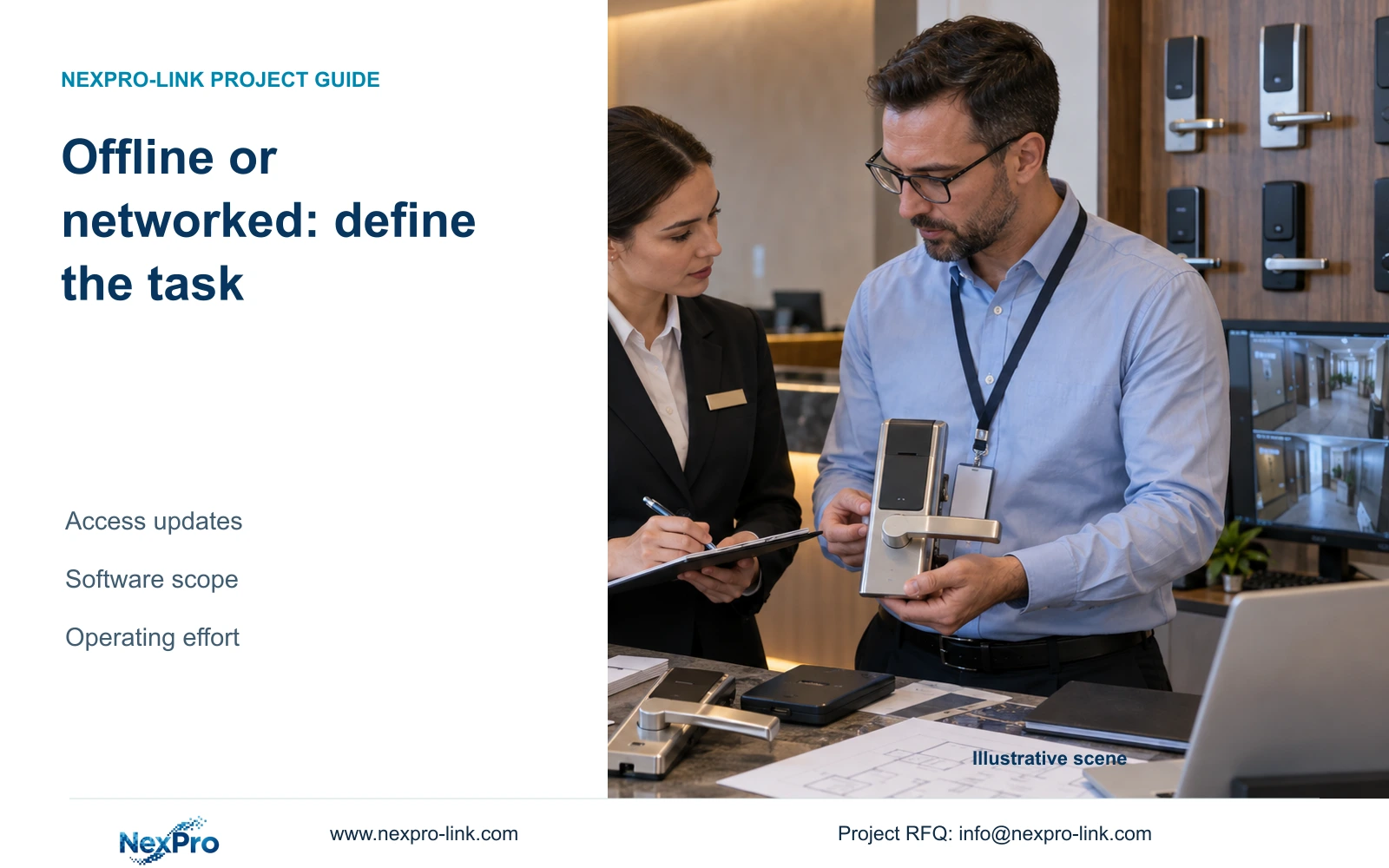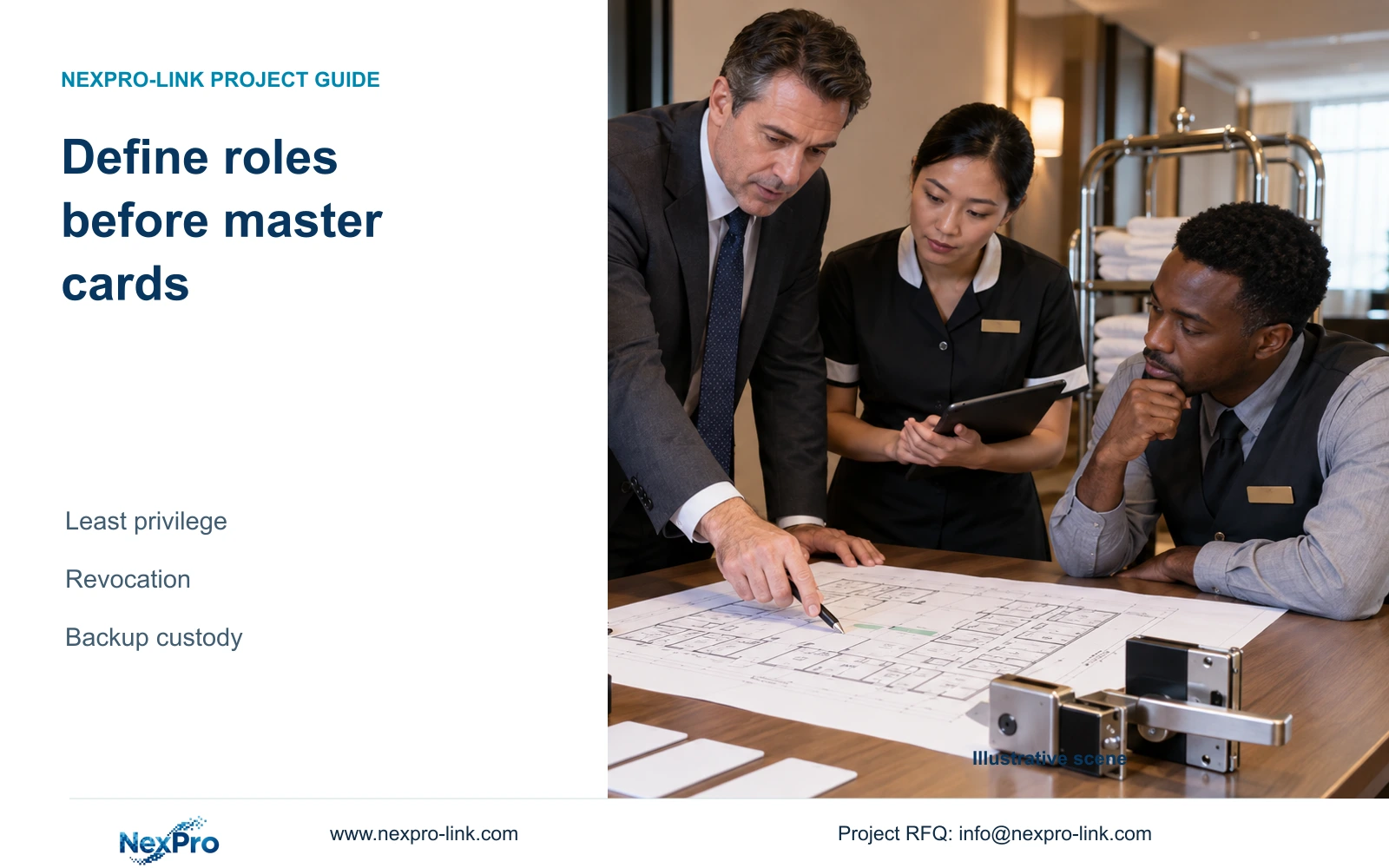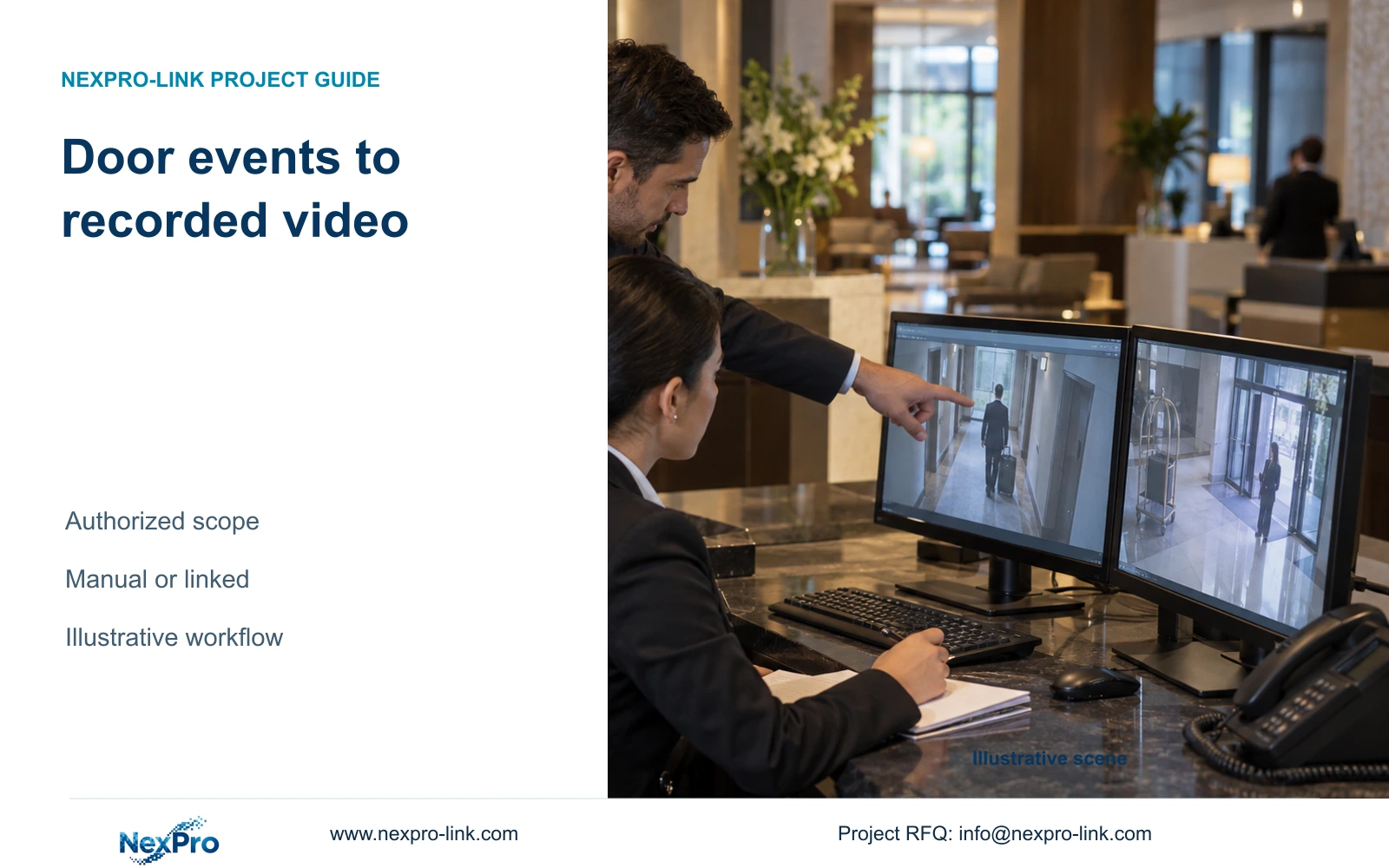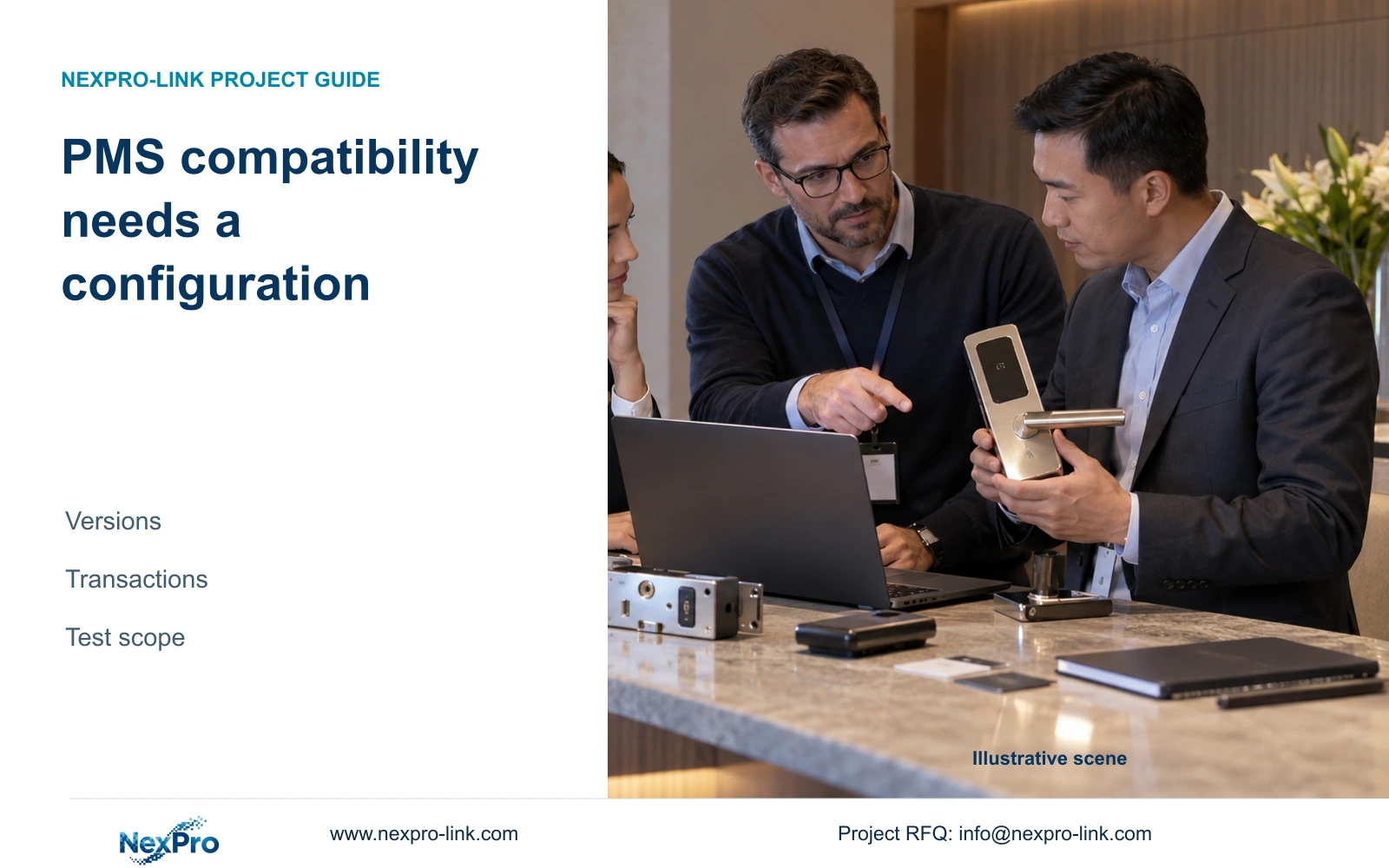
A PMS name is insufficient evidence of lock compatibility. Define the exact system combination, authorized transaction and representative test before including integration in the base offer.
Section 01
Identify the PMS and lock versions
Accept a hotel lock integration proposal only for an identified PMS, lock-system version, encoder and credential protocol with a supported interface. A shared PMS name does not establish compatibility across versions or configurations. Keep unresolved functions outside the confirmed base scope, and use a supported independent workflow only where the hotel permits that fallback.
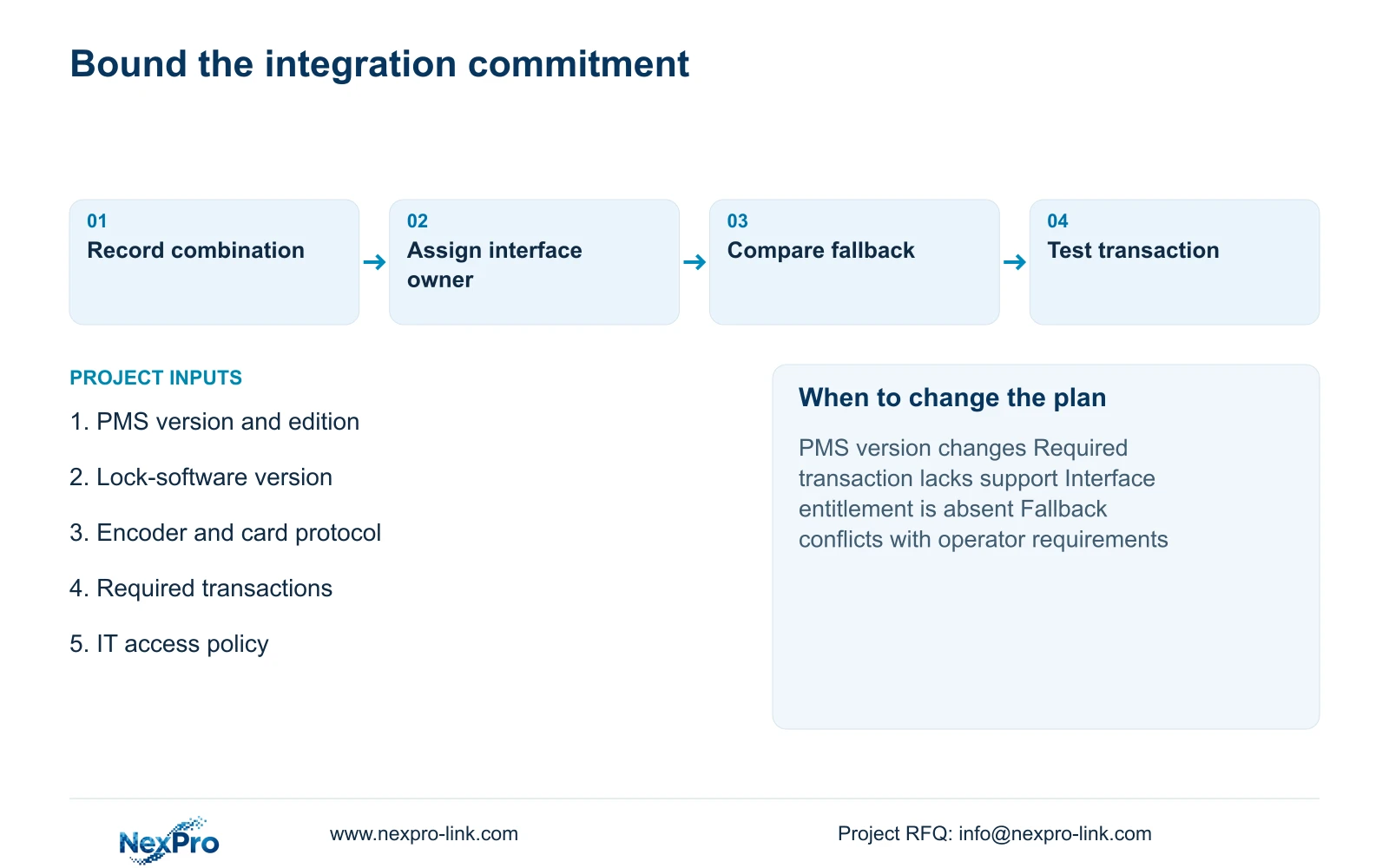
Create a configuration record that identifies the PMS edition and version, deployment arrangement, lock-management software and selected hardware. Distinguish a single-hotel transaction from any requested multi-hotel administration. Record the actual licensing basis where an interface, user or management function requires an entitlement; an unspecified service cannot be priced as automatically included.
NX-HL-DQ is a hotel IC-card lock candidate with mechanical-key support in the supplied hotel source. That description does not establish a PMS integration, encoder combination or card protocol. Use the candidate's actual configuration in the interface review. The wider illustrative CCTV hotel case supplies no additional evidence of PMS compatibility.
| Required task | Given information | Decision still needed |
|---|---|---|
| PMS-assisted credential issuance | PMS name | Exact version, edition and authorized interface |
| Encode the selected credential | Proposed lock family | Encoder, protocol and supported software combination |
| Maintain hotel administration | Operational responsibility | Account ownership, roles and service terms |
Section 02
Define the requested transaction
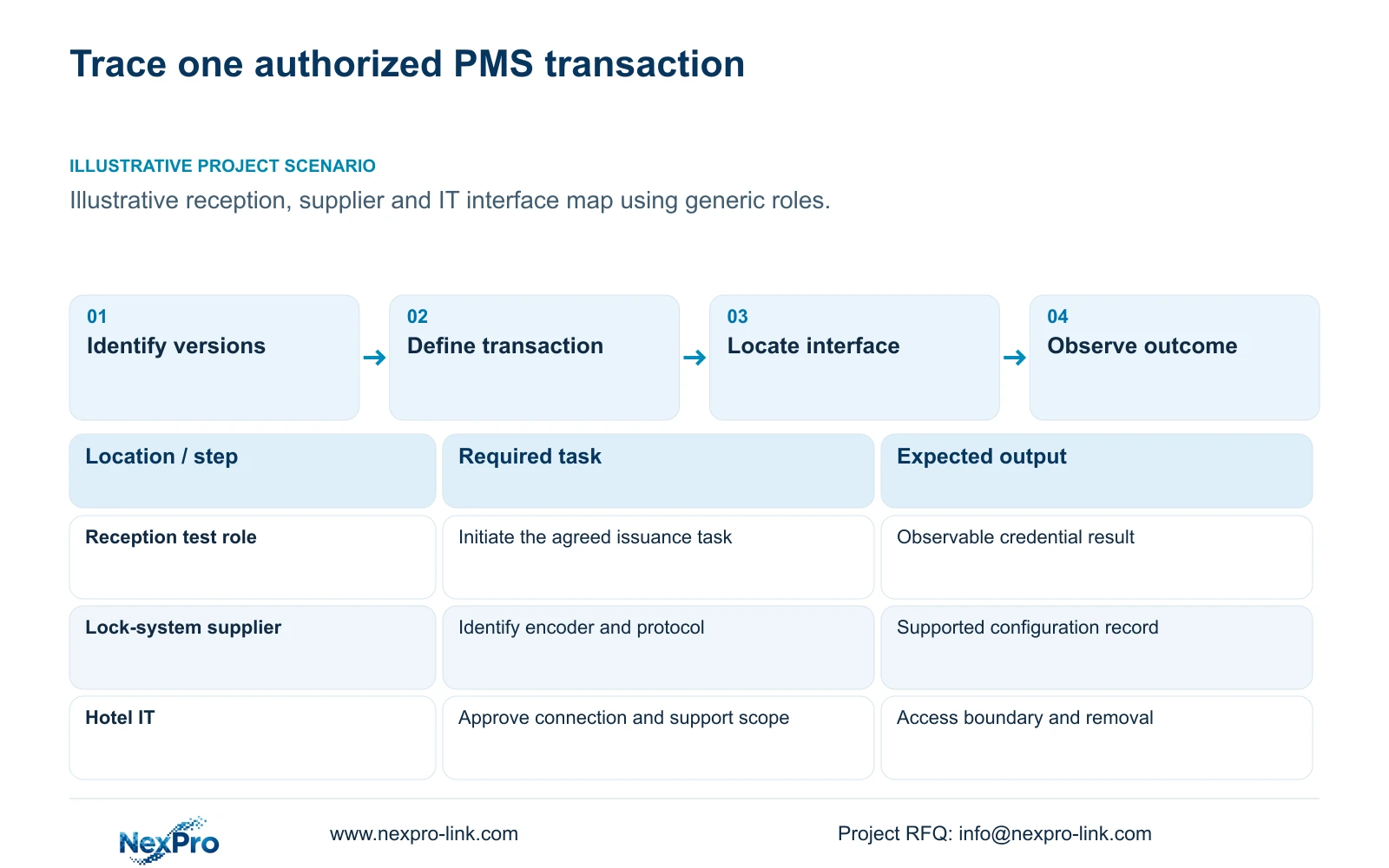
Describe integration as an input and an observable outcome. For example, a proposed check-in workflow may require an authorized reception user to initiate credential issuance for the intended door and permitted period. State which application starts the task, which component encodes the credential and how the operator recognizes completion. This is a requirement example, not a claim that a candidate already performs it.
Treat each additional transaction separately. Replacement issuance, a changed access period or withdrawal of access may use different supported paths. Identify the relevant permissions and expected result without assuming that support for one transaction establishes all others. The quotation should name the transactions included in its configuration and service scope.
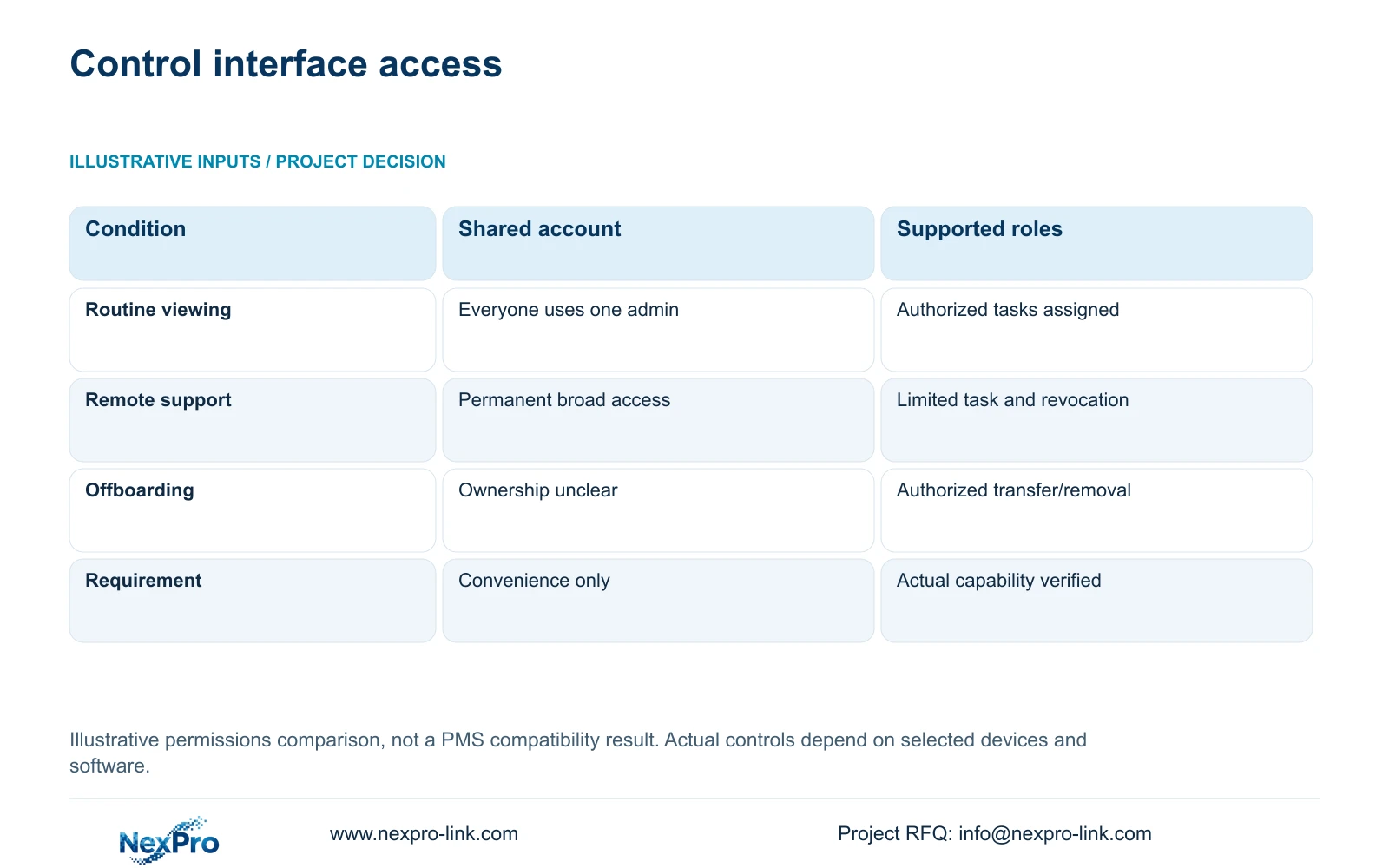
Account ownership, user roles, device binding and network reachability need distinct entries. A person who can reach the management host is not automatically authorized to issue credentials. A proposed role requirement should remain a requirement until the selected software supports it. Avoid solving an interface limitation by giving every operator the same unrestricted account.
Section 03
Locate the supported interface
Map the transaction through the PMS interface, any supported intermediate software, the lock-management component and encoder. Name the party responsible for each boundary. Document the required service entitlement and the approved connection method. Do not infer a universal API, credential format or cloud-account relationship from a catalog description.
Separate interface configuration from routine credential work. The original permissions illustration provides a general access principle, not proof of any PMS feature. For this transaction, specify the actions in the matrix below and demonstrate both permitted and denied behavior under the intended role on the actual editions. If the required separation is unsupported, record the gap rather than masking it with a shared administrator account.
Support access should follow the hotel's IT policy and remain limited to an approved task. Test removal or transfer of access when responsibilities change. Ordinary video-system interoperability does not establish PMS or lock interfaces, and a network diagram cannot establish compliance with every jurisdiction's privacy requirements.
| Action | Role requirement to document | Evidence before acceptance |
|---|---|---|
| Use reservation information | Authorized data fields and purpose | Relevant access works; unrelated access is denied |
| Issue or replace a credential | Approved operator and supported encoder transaction | Issued credential follows the agreed door/time scope |
| Change or withdraw access | Approver, action owner and supported update route | Observed change reaches the relevant doors |
| Configure the interface | Named privileged configuration role | Routine operator cannot make unauthorized settings changes |
| Temporary support | Approved task, route and removal owner | Access removal demonstrated after the task |
Section 04
Compare integrated and independent workflows
Compare the integrated sequence with a supported independent issuance sequence using the same required access outcome. The integrated offer should identify the steps it changes and the dependencies it introduces. The independent option needs an operator procedure that preserves the hotel's authorized task. It is an acceptable fallback only when the operator's requirements allow it.
Examine failure states as well as routine operation. An unavailable WAN connection, failed encoder or unavailable interface service may affect different parts of the sequence. Ask what operators can still do, how they recognize failure and who restores the affected function. Keep the answers configuration-specific; an offline room lock does not establish every front-desk fallback capability.
The permissions matrix favors defined roles and demonstrable access removal in either workflow. Integration should not require unnecessary broad access merely to make the demonstration convenient. Any claimed reduction in operating time requires recorded evidence under comparable tasks. Without that evidence, compare steps, dependencies and responsibility without assigning invented minutes or savings.
| Retained outcome | Extra scope | Worth buying when | Counter-condition |
|---|---|---|---|
| Authorized credential issuance | Supported PMS interface | The transaction is required and supported | Independent issuance is permitted and sufficient |
| Continuity during interface loss | Supported fallback procedure | The hotel needs that exception workflow | Fallback capability remains unconfirmed |
| Controlled technical support | Defined access and removal | The selected system supports the required controls | Shared unrestricted access is required to operate |
Section 05
Assign integration responsibility
Assign responsibility for interface availability, lock configuration, encoder setup and hotel network access. The PMS provider, equipment supplier and local integrator may control different parts of the transaction. Identify who investigates a failed issuance and who can authorize a change. A combined purchase order should preserve these boundaries.
Separate hardware supply from interface licenses, configuration work, testing and training in the evaluated scope. Keep excluded services visible so the buyer can compare complete offers. NexPro-Link can discuss model matching and coordinated equipment documentation, but that scope does not establish authority over a third-party PMS or include every local integration service.
Retain existing equipment when its supported configuration meets the task. Replacing the whole system requires a reason tied to compatibility or operating requirements. If a version change invalidates the reviewed combination, reopen the affected interface and cost scope. The approved hardware list alone cannot authorize an unreviewed software or entitlement substitution.
Section 06
Agree on a representative test
Define a representative transaction using an authorized test credential and the selected PMS, lock-management version and encoder. Record the input, expected result and actual observation. Include the relevant permission boundary and an agreed failure state. Results should remain open until the transaction has been performed; a planned sequence is not evidence of a pass.
A successful test supports the observed combination and conditions. It does not establish every PMS release, door configuration or future update. Keep the configuration record with the handover instructions, and repeat the affected task after changes that alter the interface. Hotel staff need the normal workflow and a clear escalation path for exceptions.
Send info@nexpro-link.com the exact PMS and lock-software versions, proposed encoder and credential protocol, and the transactions required for acceptance. Include the hotel IT access policy and the party responsible for integration. Recommend the supported, tested scope when it meets those requirements; retain a permitted independent workflow or choose another interface when a mandatory transaction remains unsupported.
Section 07
Buyer questions
Can a supplier confirm compatibility from the PMS brand name alone? No. Ask for the reviewed version, edition, encoder, protocol and transaction scope. A confirmation for a different configuration should not be treated as approval for the hotel's selected combination.
Should an unresolved interface be included at zero cost? No. Identify it as an open scope item with its responsible party and required information. Keep confirmed hardware pricing separate from an unquoted license or integration service.
What should trigger another integration test? Repeat the affected transaction when the PMS version, lock software, encoder, credential protocol or access configuration changes. Preserve the previous record so the changed boundary is clear.
Engineering references
These sources support the general planning principles. Always use the selected product's current datasheet and applicable project standards for final design.