A reliable hotel lock RFQ starts with door types and physical interfaces. Use the schedule to establish fit, credential behavior and shared equipment before comparing packages.
Section 01
Classify guest and staff doors
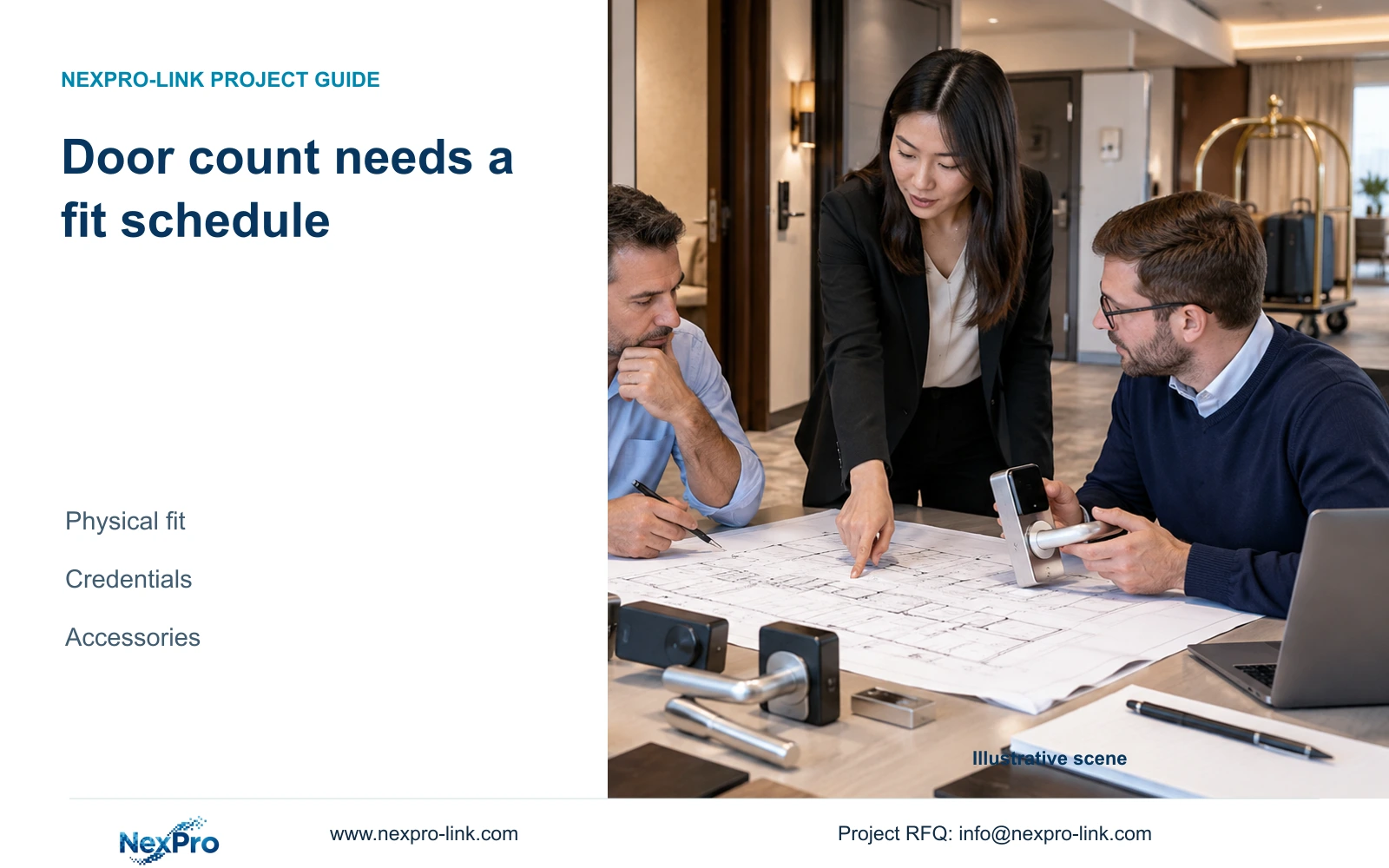
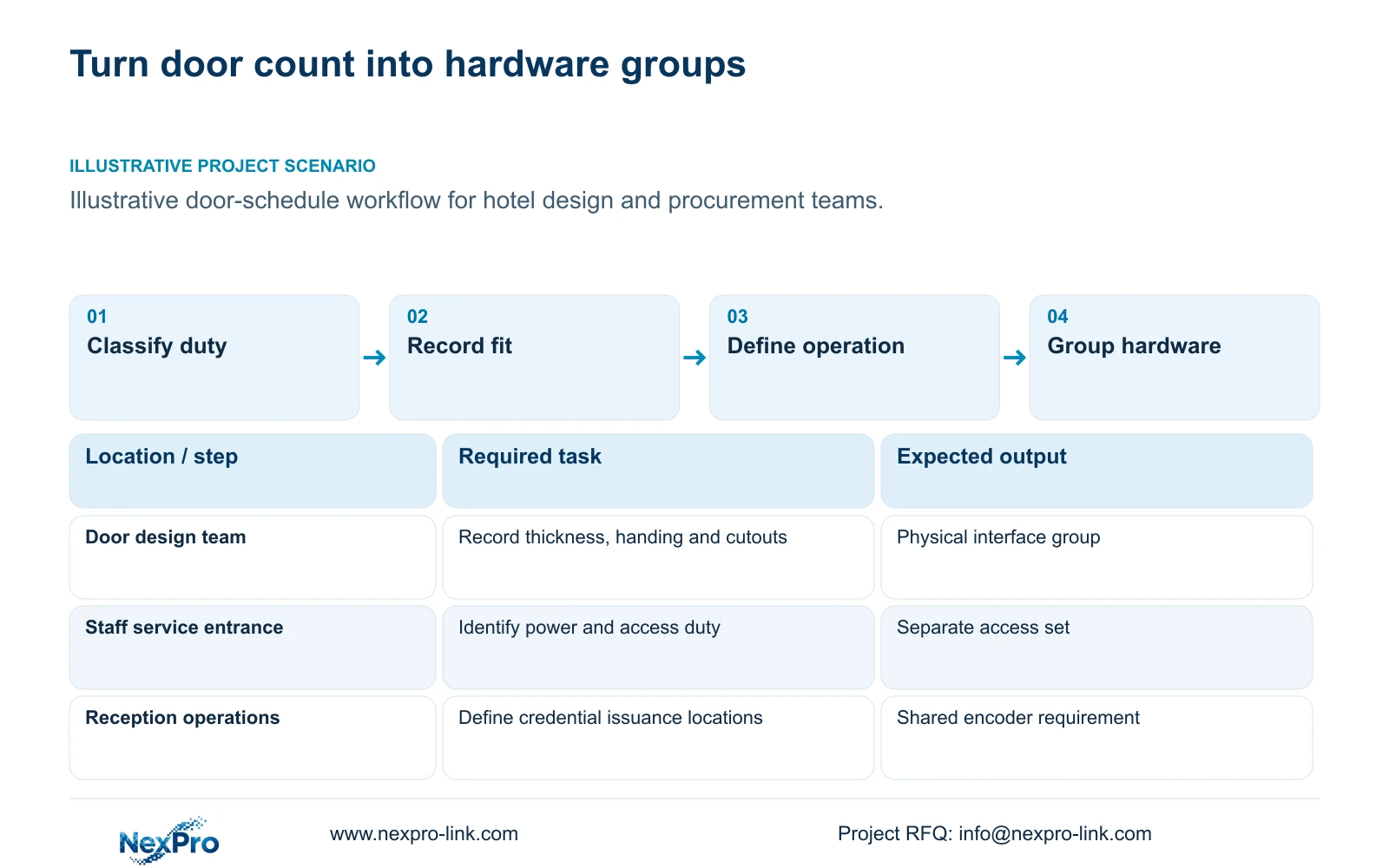
Select hotel locks from a door-type schedule that records physical fit and authorized operation. A known door count is sufficient for a provisional allowance, but it cannot support a final hardware selection when thickness, handing or existing cutouts remain unknown. Resolve those interfaces before ordering branded locks or project packaging.
Group doors by their actual duty. Guest-room entry, staff service access and vehicle entrances are different tasks, even when one purchasing team handles them. Within a group, separate doors whose construction or operating arrangement differs. Give every door a stable reference so revisions reach the hardware list and installation package.
The illustrative city-hotel reference uses a separate public-area camera schedule. Its 100-room background does not establish the number of identical lock sets, staff doors or shared encoders. Keep that CCTV reference outside the lock quantity calculation. A door-based RFQ should identify known information and unresolved selections without filling gaps from room count.
| Required task | Given information | Decision still needed |
|---|---|---|
| Guest-room entry | Door group and location references | Thickness, handing, lock body and credential method |
| Staff service access | Access purpose and user group | Controller, lock power and permitted operation |
| Mechanical backup | Required fallback task | Supported hardware and authorized custody |
Section 02
Record physical door interfaces
Record thickness in millimeters and use a consistent drawing convention for handing. Describe the door construction and existing opening preparation. For replacement work, identify the current lock body and relevant cutouts so the supplier can distinguish a compatible replacement from a change requiring door work. An unmeasured interface should remain visibly unresolved.
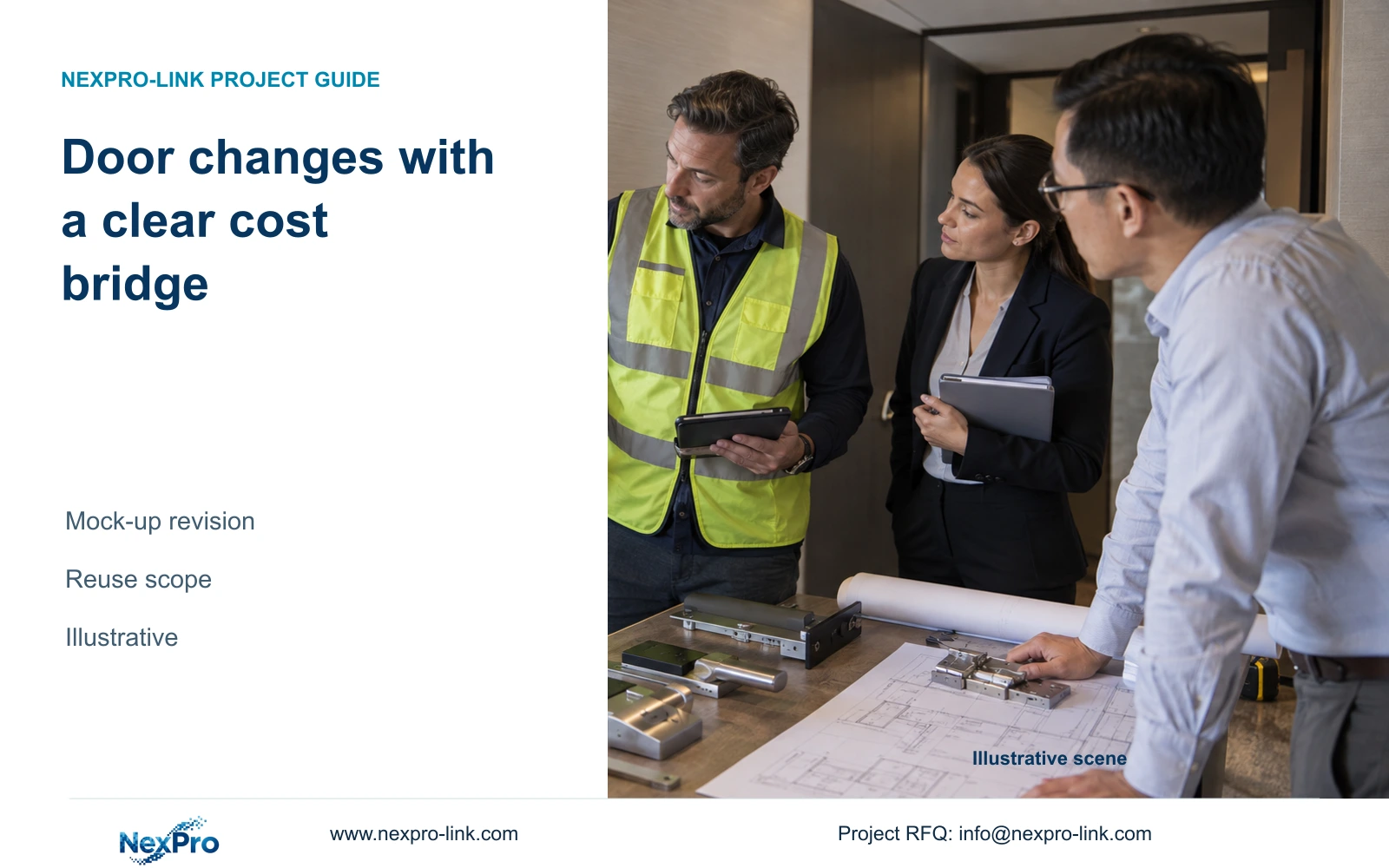
Compare retaining the existing preparation with an option that needs modification. The latter may add local work, access restrictions or a different installation sequence. The lock price alone cannot describe that difference. A representative door drawing or authorized close-up of hardware can help explain the interface without including guests or personal information.
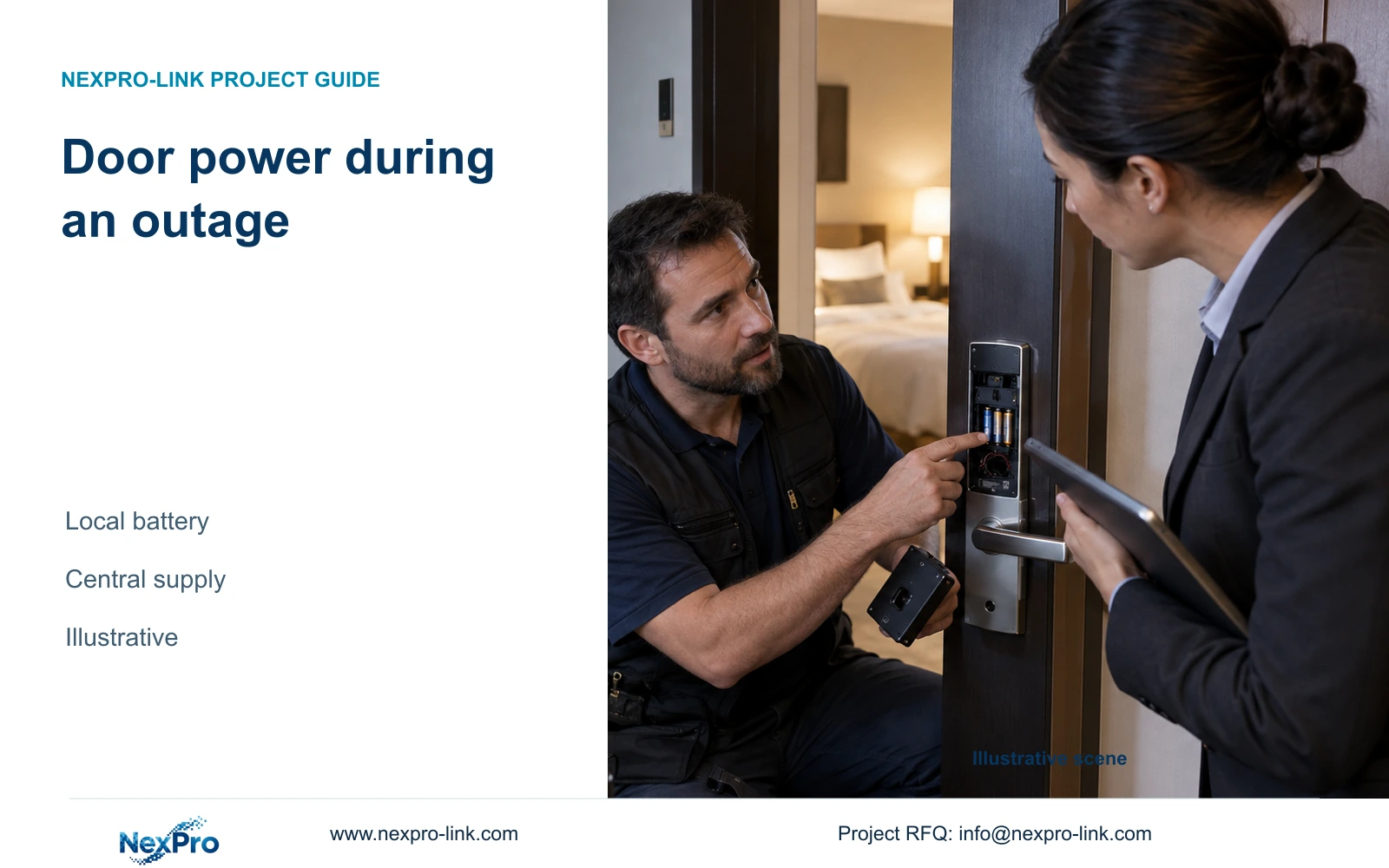
Power arrangement belongs beside physical fit. Battery-operated room hardware, centrally powered staff access and mechanical backup have different installation and maintenance requirements. The responsible local specialist must address egress and safety operation. A physically fitting lock is only one part of a suitable door arrangement.
| Item | Retain existing interface | Change interface | Effect on hotel task |
|---|---|---|---|
| Door preparation | Compatible cutouts documented | Modification required | Changes local installation scope |
| Lock power | Existing arrangement supported | New power arrangement needed | Changes maintenance and outage dependencies |
| Handing | Matches selected hardware | Different handing required | Changes supplied set or configuration |
Section 03
Define credential behavior
Write the operating behavior for each door group alongside its mechanical information. Identify who issues guest credentials, who changes staff access and how withdrawal of access must reach the door. Separate the desired behavior from the functions confirmed for the proposed system. A requirement in the schedule does not establish a product capability.
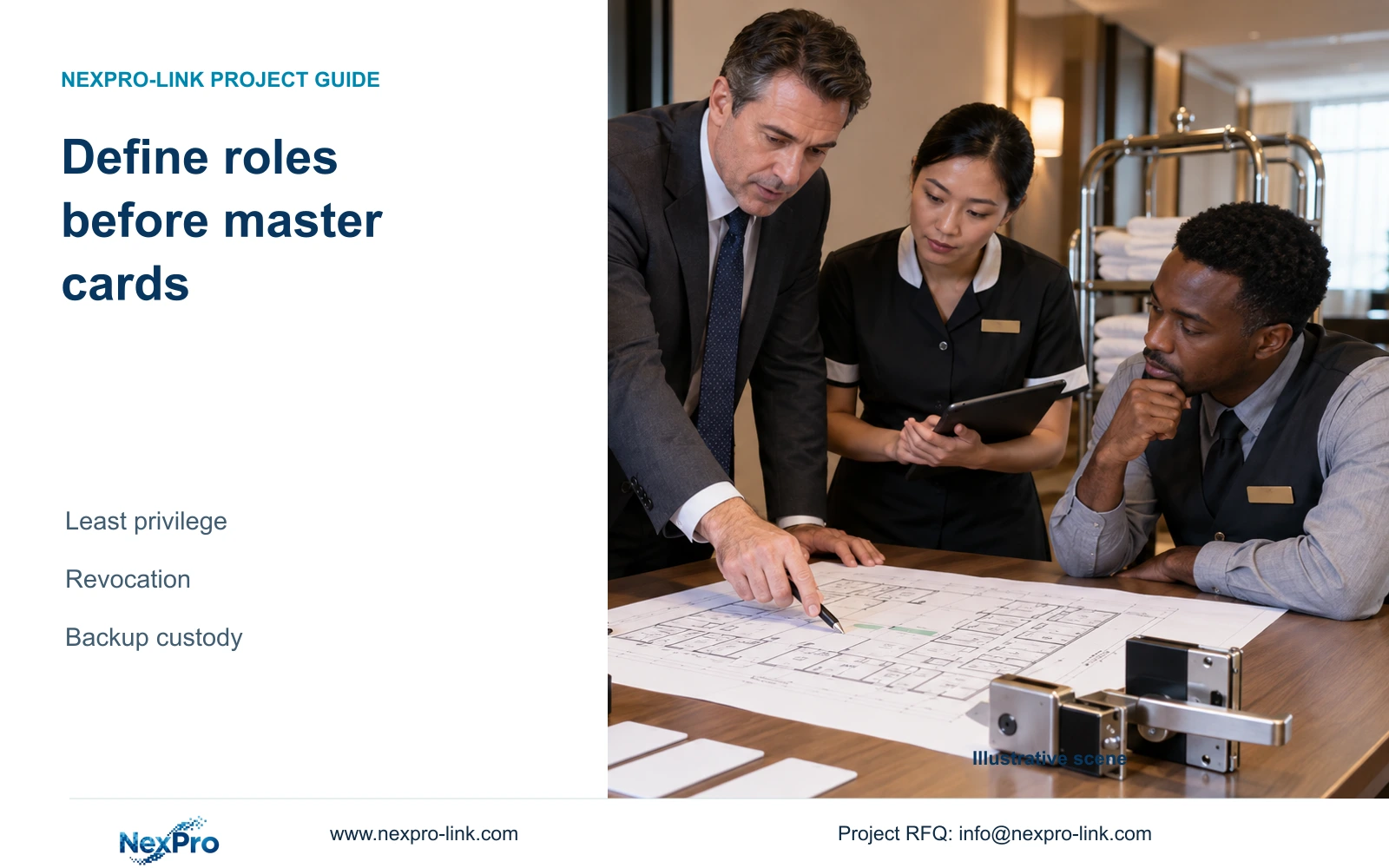
A role-versus-task record should distinguish using a credential from administering it. Reception may need an issuance workflow, while a maintenance employee needs access to specified work areas. Support personnel need an approved technical task and a defined way to remove their access afterward. Do not assume all these responsibilities require one unrestricted account.
For an existing PMS or credential system, supply the actual version and interface identity. The encoder and card protocol must form a supported combination with the chosen lock. Where prompt revocation or a particular audit workflow is mandatory, require evidence of the intended operation before accepting a package whose physical fit alone appears suitable.
Section 04
Compare supported lock options
Compare model candidates against the same door groups and operating requirements. NX-HL-DQ is identified in the hotel project source as an IC-card lock candidate with mechanical-key support. The source does not establish every permitted thickness, lock body, handing, battery arrangement or PMS interface. Keep those fields attached to the actual proposed configuration.
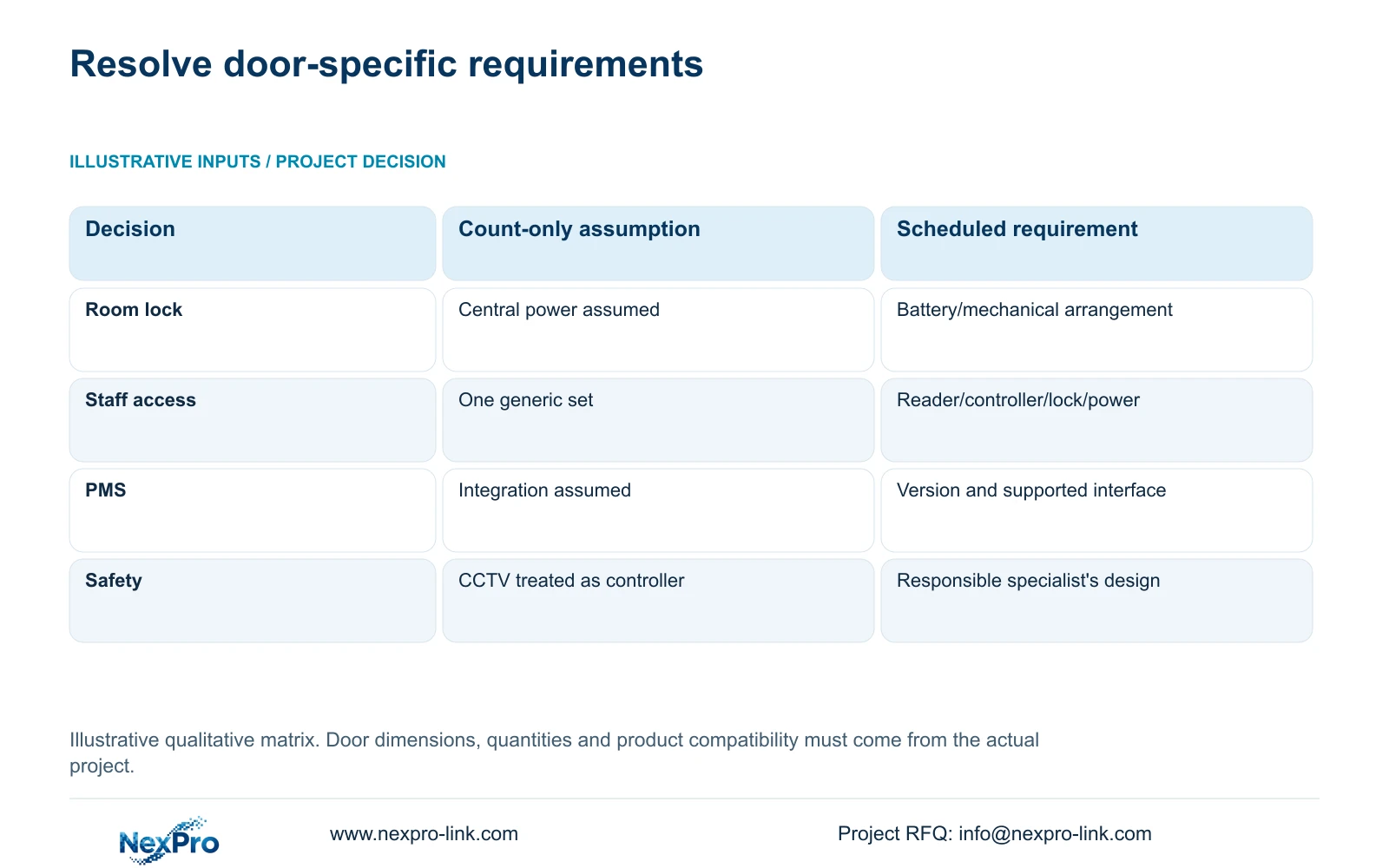
The supplied matrix compares treating all doors alike with using a door-type and task schedule. These are qualitative planning inputs, with no numerical formula or performance units. It directs the buyer toward resolving hardware, power and interfaces separately. The safety row remains a professional responsibility, not a lock-product feature.
Select a common lock family only where the documented door interfaces and required credential behavior support it. Change the selection for a door group when its mechanical preparation, power method or operator platform differs. Branding can remain consistent across those groups without forcing technically different doors into one unsupported configuration.
| Metric / condition | Option A | Option B |
|---|---|---|
| Room lock | Assumed centrally powered | Identify local battery/mechanical arrangements |
| Staff access | Included without interface detail | Reader, controller, lock and power roles mapped |
| PMS | Assumed from shared order | Actual version and supported integration |
| Safety | Ordinary CCTV treated as controller | Responsible local specialist defines safe operation |
Section 05
Count encoders and accessories
Count lock sets by the approved door groups, then identify shared equipment through the operating arrangement. Encoder quantities depend on the supported issuance workflow and the locations that must perform it. They cannot be copied from the number of doors. Specify whether an encoder, software component or setup service is included in the proposed package.
List credentials, matching installation accessories and supported backup items with separate quantity bases. Avoid double counting accessories already included with a lock set. Where an additional issuance station is proposed, compare the operational task it preserves with the added equipment and service scope. Buy it when the hotel needs that supported task at another location.
Spares should match the replacement task and actual configuration. A spare body that does not fit the existing preparation provides little help during a fault. Record compatibility and replenishment responsibility, then distinguish stock availability from warranty handling. Do not invent a universal spare percentage, encoder capacity or battery service interval to complete the BOQ.
Section 06
Prepare a door-based RFQ
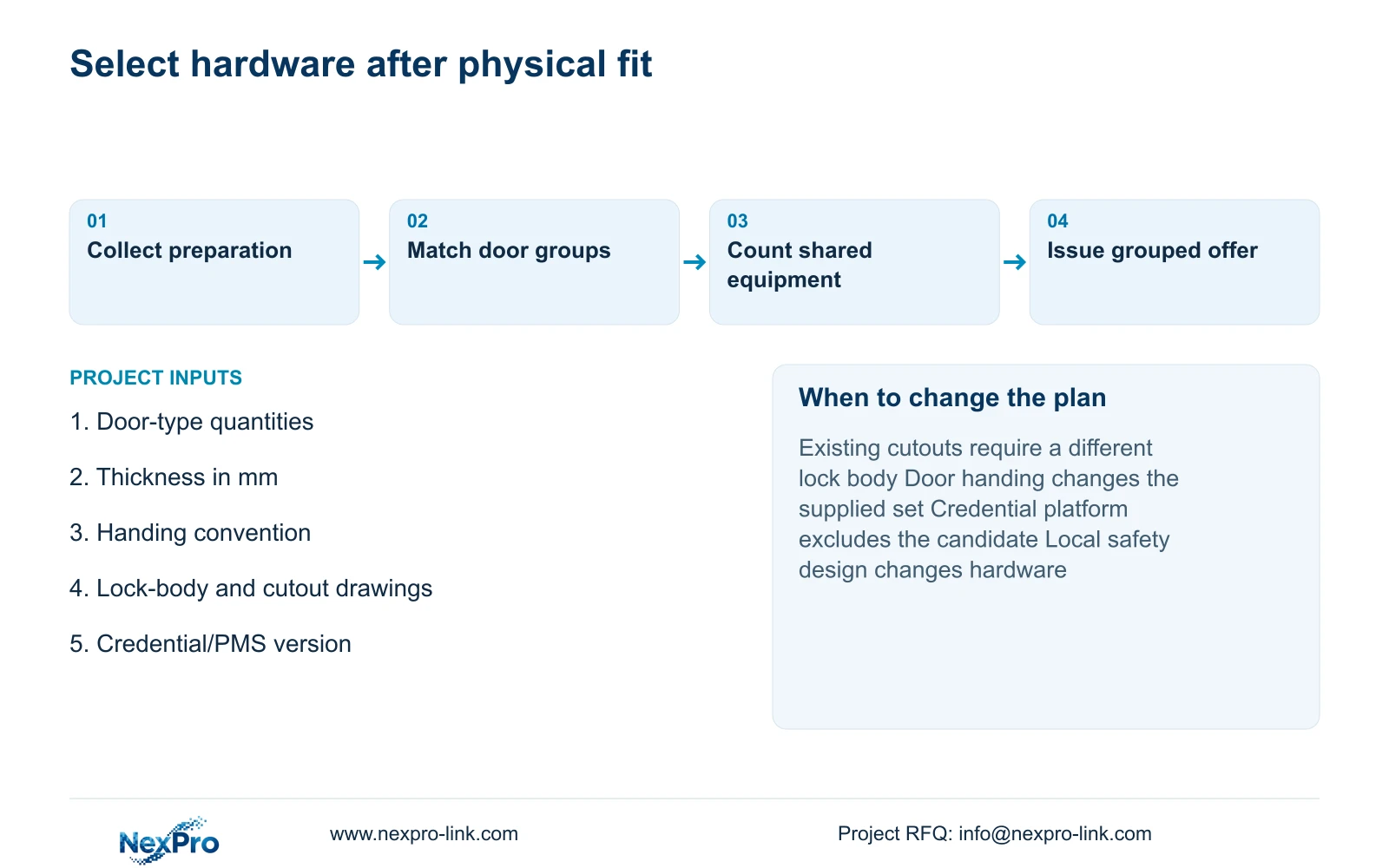
Send a grouped door schedule with quantities, a representative preparation drawing for each differing type, and the required credential workflow. Identify existing hardware that must remain. If measurements are incomplete, request a provisional proposal that states exactly which door groups remain subject to fit confirmation.
NexPro-Link can discuss model matching, BOQ documentation and coordinated hotel equipment supply. Its CCTV manufacturing core and supporting-category coordination should remain distinct in the offer. Authorized labels and project packing can follow the final door references while preserving model identity. Packaging does not resolve mechanical incompatibility or confer third-party software rights.
Email info@nexpro-link.com with door thickness and handing records, lock-body or cutout details, and the PMS or access-system version. Add the destination and required delivery stage. Recommend a confirmed-fit package when these interfaces are settled; revise the hardware or separate specialist scope when a door type, mandatory platform or safety requirement changes. State local installation responsibility in the proposal.
Section 07
Buyer questions
Can we request pricing before every door is measured? Yes, as a provisional offer. Group the known door types and identify missing dimensions explicitly. Do not treat that allowance as authorization to supply an identical set for every door.
Does a mechanical-key option confirm an emergency access procedure? It confirms only the described hardware support. The hotel still needs an authorized custody and use procedure, while the responsible specialist determines the relevant safety operation.
What should be retained when a door specification changes? Keep the previous door reference, quantity and hardware selection visible. Issue a revised schedule that separates hardware changes from added local work, then use the agreed revision for procurement.
Engineering references
These sources support the general planning principles. Always use the selected product's current datasheet and applicable project standards for final design.