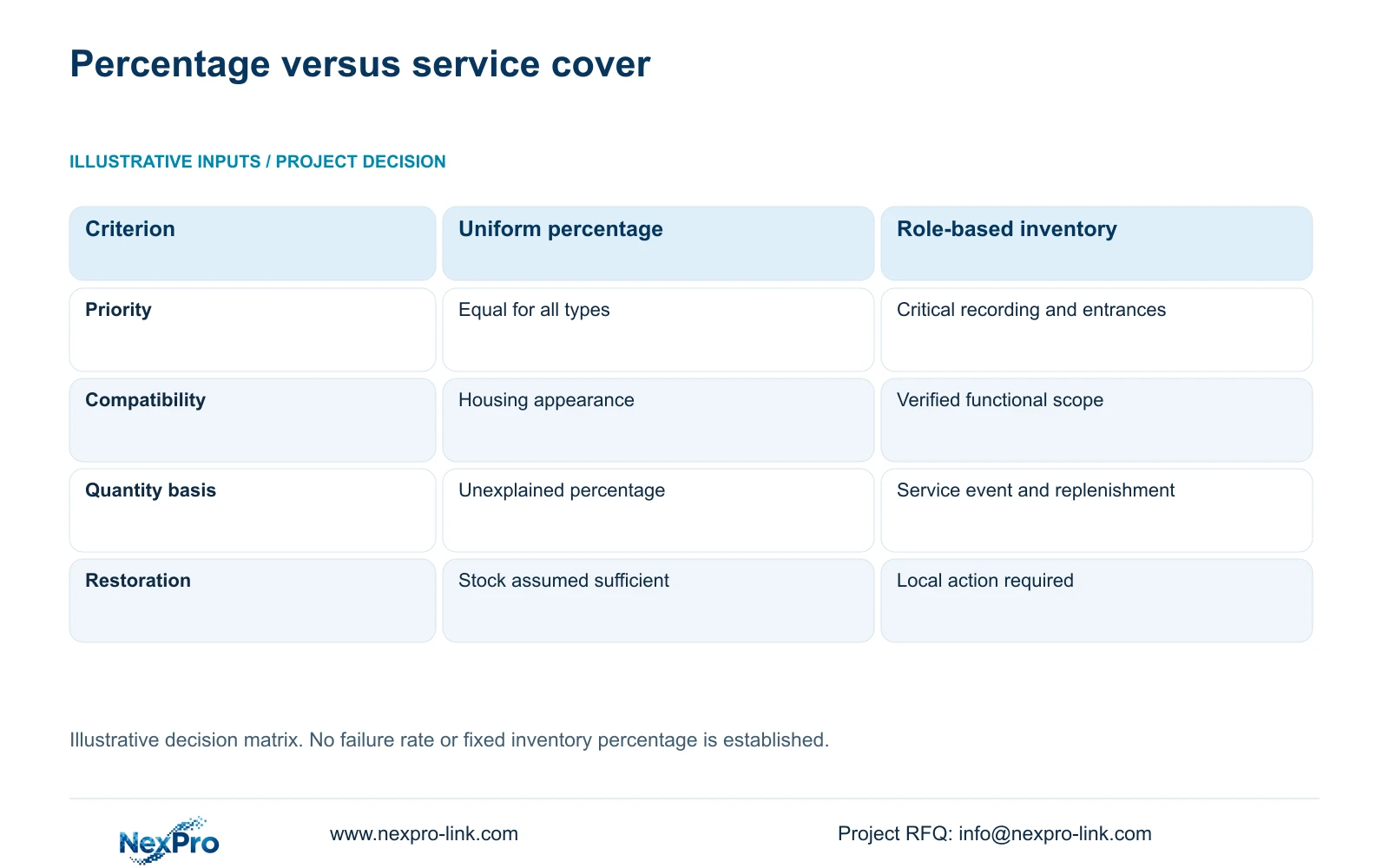
A uniform spare percentage can miss the hotel's most important recording dependencies. Build inventory around service events and verified replacement roles.
Section 01
Choose which operating tasks need immediate cover
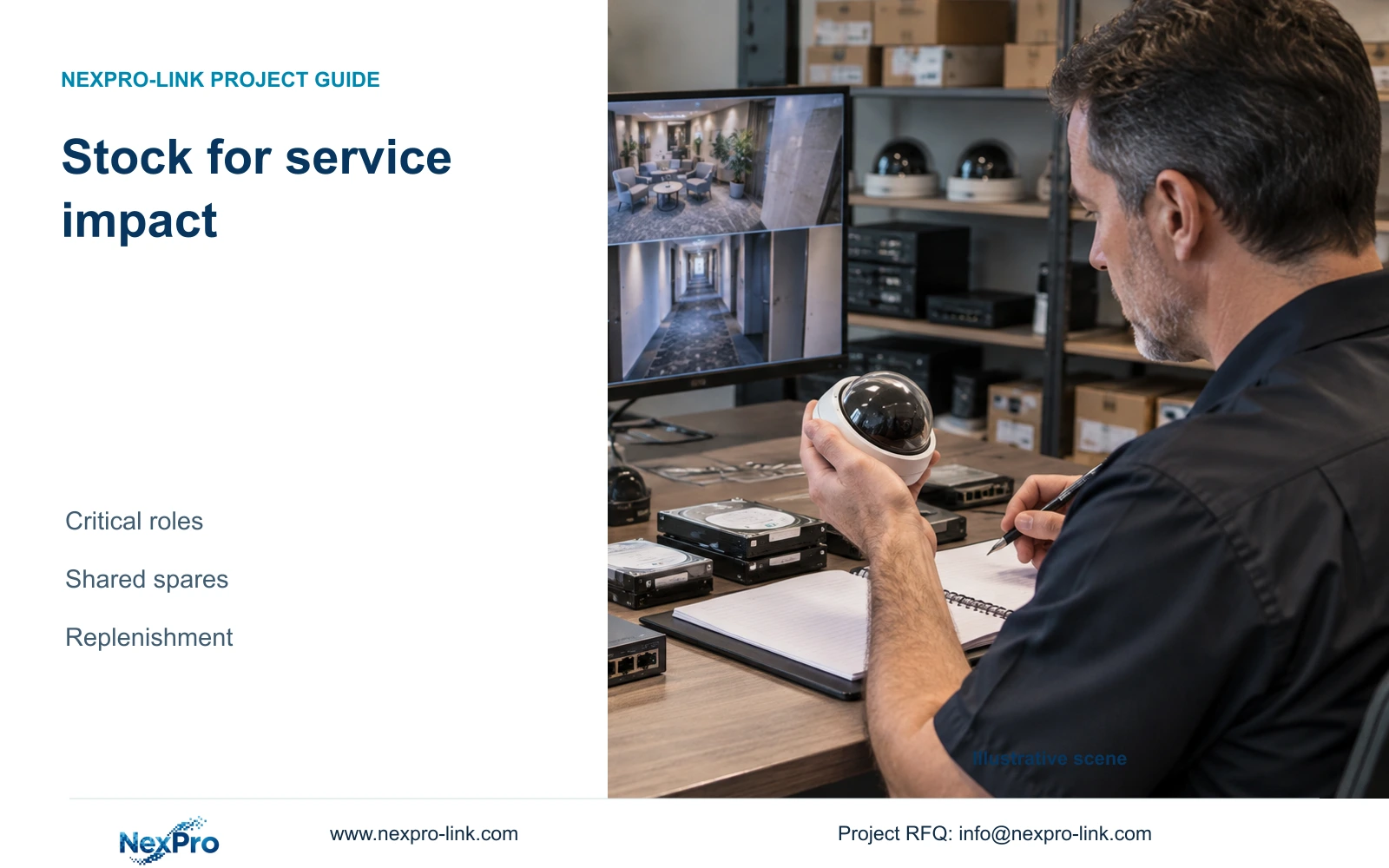
Use a role-based spare inventory when critical hotel recording must be restored before replenishment can arrive. A blanket 10% allowance for every equipment type does not show which interruption it covers. Set quantities from the protected task, genuine interchangeability and the permitted restoration delay. Increase stock only when a defined service scenario or real operating evidence justifies it.
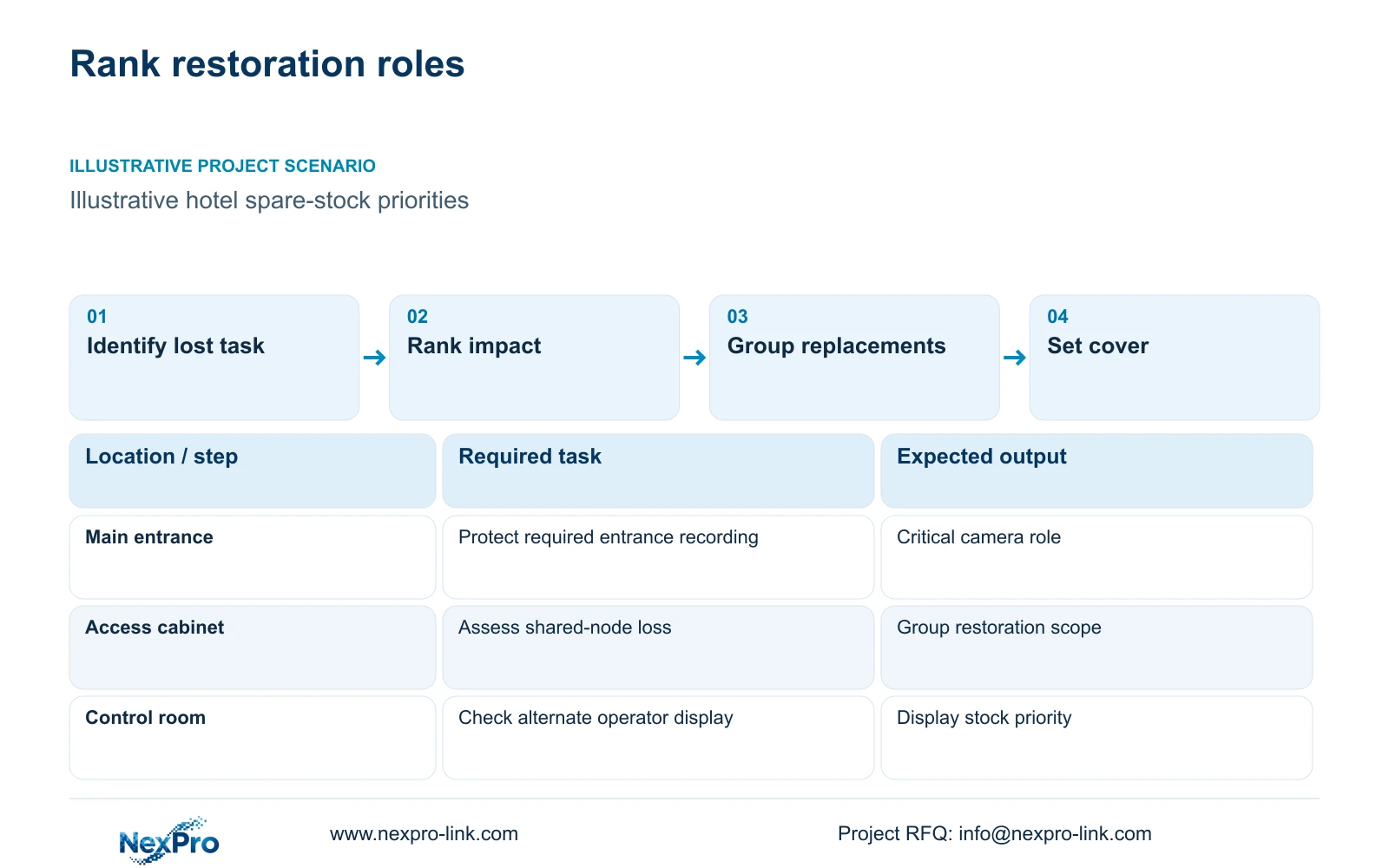
Start with the consequence of losing each role. An entrance camera may remove a required view, while a recorder or access switch can interrupt several views together. An optional control-room display has a different consequence if recording continues and an authorized workstation remains available. Rank these outcomes against the hotel's approved operating requirements.
The illustrative CASE01 reference contains public entrances, reception, public routes and shared recording equipment. It helps explain the dependency difference, but its 32-camera layout is not a spare-stock formula or evidence of failures. The inventory decision needs the actual hotel schedule and service expectations, regardless of guest-room count.
| Required task | Given information | Decision still needed |
|---|---|---|
| Retain entrance recording | Critical public view and installed camera role | Permitted interruption and compatible spare family |
| Retain shared recording | Recorder and access-node dependencies | Supported restoration arrangement and local capability |
Section 02
Group equipment by verified replacement role
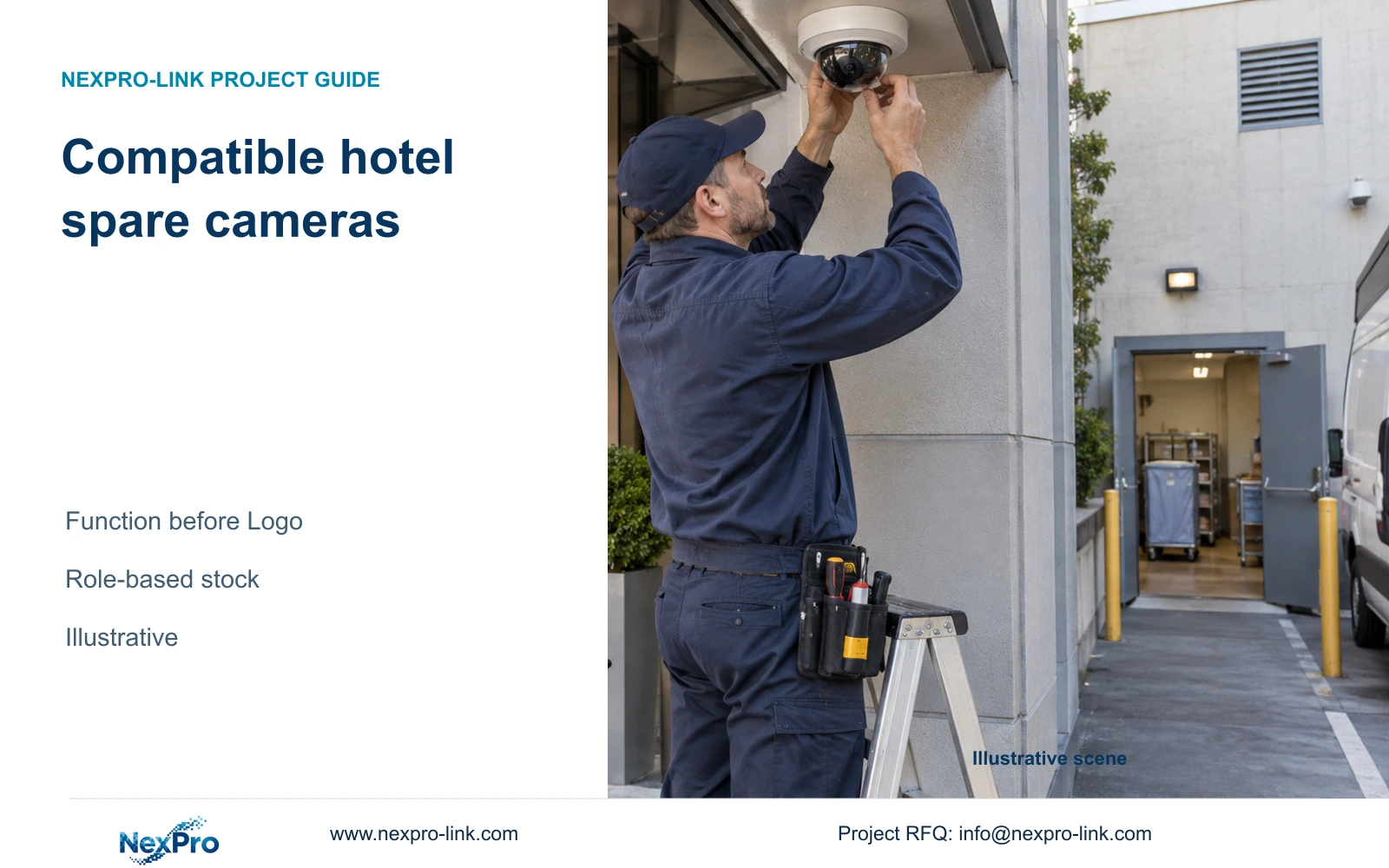
Group interchangeable roles before selecting stock quantities. A camera spare must meet the required view, environmental conditions and mounting arrangement, as well as power and recording interfaces. Similar housings or equal megapixel labels do not establish substitution. A different lens can change the target width even when the replacement connects successfully.
For shared equipment, compare the complete task. A replacement switch needs the relevant port behavior and sufficient usable PoE output for its assigned devices. The supplied NexPro SW-POE1618G record has conflicting access-port speed descriptions and no stated total PoE wattage. It therefore remains a quotation candidate, not a verified spare for an unknown load.
Keep recorder, storage and client behavior within the replacement matrix. Spare hardware that restores live viewing but cannot support the required recording mode has not restored the same role. Record version dependencies and identify who can configure the replacement. This allows several positions to share a spare only where the approved functions genuinely overlap.
| Item | Option A | Option B | Effect on the hotel task |
|---|---|---|---|
| Camera group | Same housing | Required lens, mounting, power and recording role | Preserves the intended public view |
| Access node | Same port count | Verified port behavior and usable power budget | Restores the assigned camera group |
Section 03
Define the service events the inventory should cover
Write an explicit service event for each proposed stock item. An entrance camera replacement and a shared access-node replacement require different equipment and local work. State the function affected, the compatible role needed and the replenishment route. Treat the event as a planning assumption until an actual incident provides evidence.
Evaluate each proposed event against stock that is actually usable and compatible. Available cover excludes units already installed as replacements, reserved elsewhere or not ready for use. Compare that remainder with the stated concurrent-event demand; no failure probability, consumption rate or fixed spare percentage is supplied.
Specify whether events are sequential or overlapping. A shared spare can serve different compatible positions over time, but it is unavailable for another event while installed or awaiting replenishment. Keep that limitation visible. If the hotel requires cover for overlapping interruptions, the relevant stock and local installation scope must be reviewed against that condition.
| Scenario field | Record for the hotel | Decision consequence |
|---|---|---|
| Affected task and model role | Entrance detail, recorder or shared network node | Stock must restore this role, not merely match appearance |
| Compatible usable stock | Verified units minus allocated or unavailable units | Do not count a installed replacement twice |
| Overlapping demand | Named simultaneous events and compatible units required | Expose the uncovered task if demand exceeds available cover |
| Local work and accessories | Authorized personnel, configuration and required fittings | A boxed spare alone does not establish restoration |
| Replenishment boundary | Confirmed route and outstanding lead-time information | Retain the exposure until replenishment is evidenced |
Section 04
Compare local stock with expedited replenishment
Compare supply routes against the permitted interruption and the same restored function. Local stock provides an available device, but still needs access, configuration and a responsible technician. Expedited overseas supply introduces transport and receipt dependencies. Neither route should receive an assumed delivery or installation time without an actual scoped commitment.
Evaluate the complete cost boundary. Include the equipment, agreed shipping and local installation work, with configuration support stated separately. Batteries, disks and accessories may have different warranty and transport treatment from main equipment. An apparently inexpensive spare package can leave these restoration costs outside the evaluated allowance.
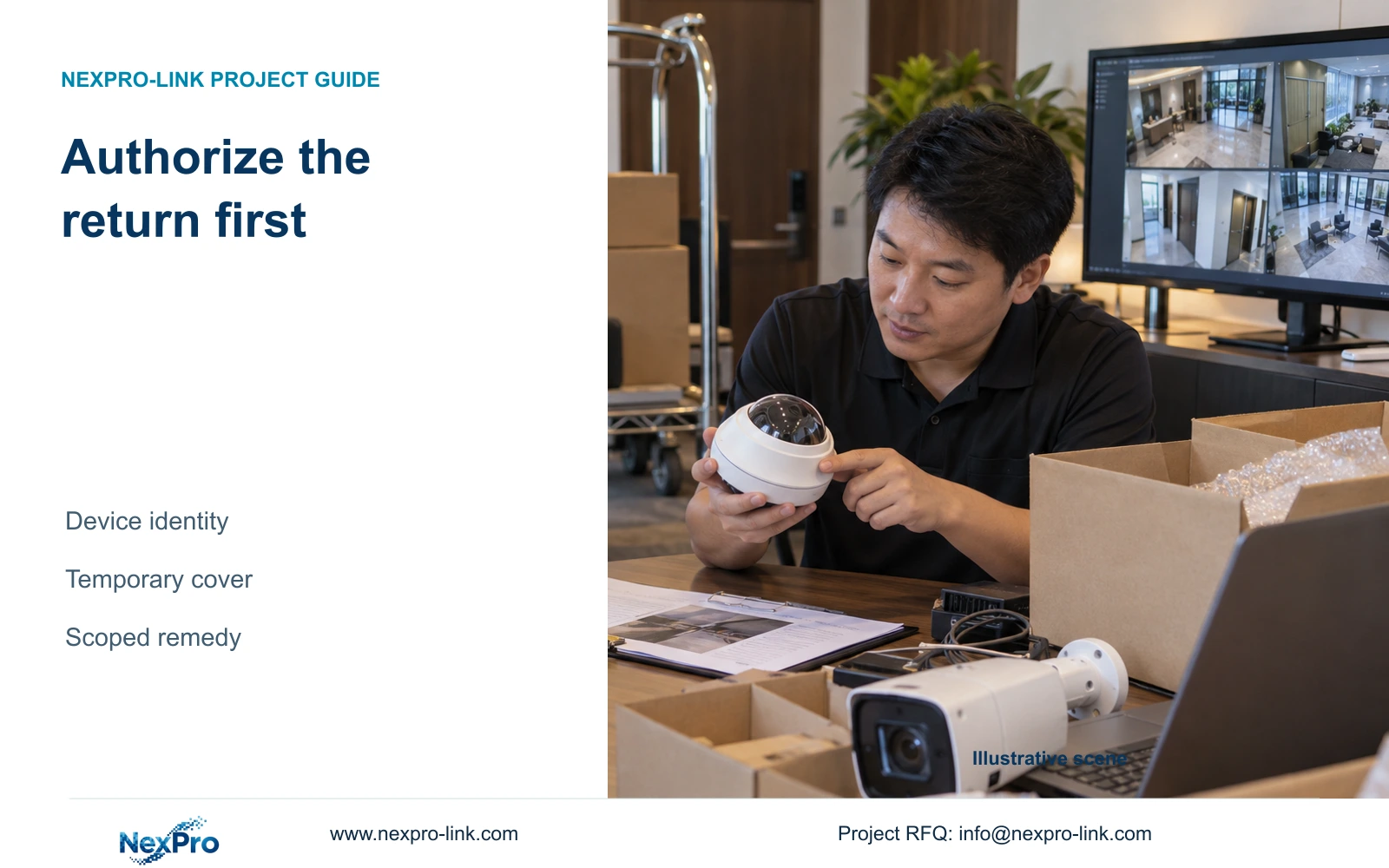
The supplied policy record states a receipt-based 24-month limited hardware warranty baseline for applicable main equipment, subject to controlling written terms. That coverage does not establish immediate replacement availability. Before returning a failed item, confirm identity, symptom and authorization; do not send credentials or guest recordings with equipment by default. Spare availability and warranty remedy should remain separate purchase decisions.
Section 05
Calculate coverage against the stated restoration scenario
Count available compatible units against the equipment required by the service event. Include any spare already installed elsewhere or unavailable for another reason. This is scenario coverage, not a probability calculation. The output should state which task can be restored, what local action remains and which overlapping event would exceed the arrangement.
Check dependencies before marking a scenario covered. A camera spare does not resolve a failed network node, and a spare recorder does not establish continued access to historical footage. Where replacement changes storage, confirm the supported arrangement and preservation task separately. Keep essential recording independent of an optional display purchase.
Choose the smallest supported stock arrangement that meets the approved interruption target. Add a shared-node or recorder restoration option when its failure affects critical tasks and the available supply route is too slow for that target. Reduce unnecessary duplicated stock when verified interchangeability permits pooling and replenishment still meets the agreed scenario.
| Retained outcome | Extra scope | When worth buying | Counter-condition |
|---|---|---|---|
| Critical public view | Compatible camera spare and configuration | Supply delay exceeds permitted interruption | Approved alternative view meets the task |
| Shared camera group | Supported access-node spare and local work | Several critical views share the failed dependency | Existing supported recovery meets the target |
| Optional display | Display replacement stock | Display loss blocks a required operator task | Authorized alternate workstation remains suitable |
Section 06
Revise inventory using actual service records
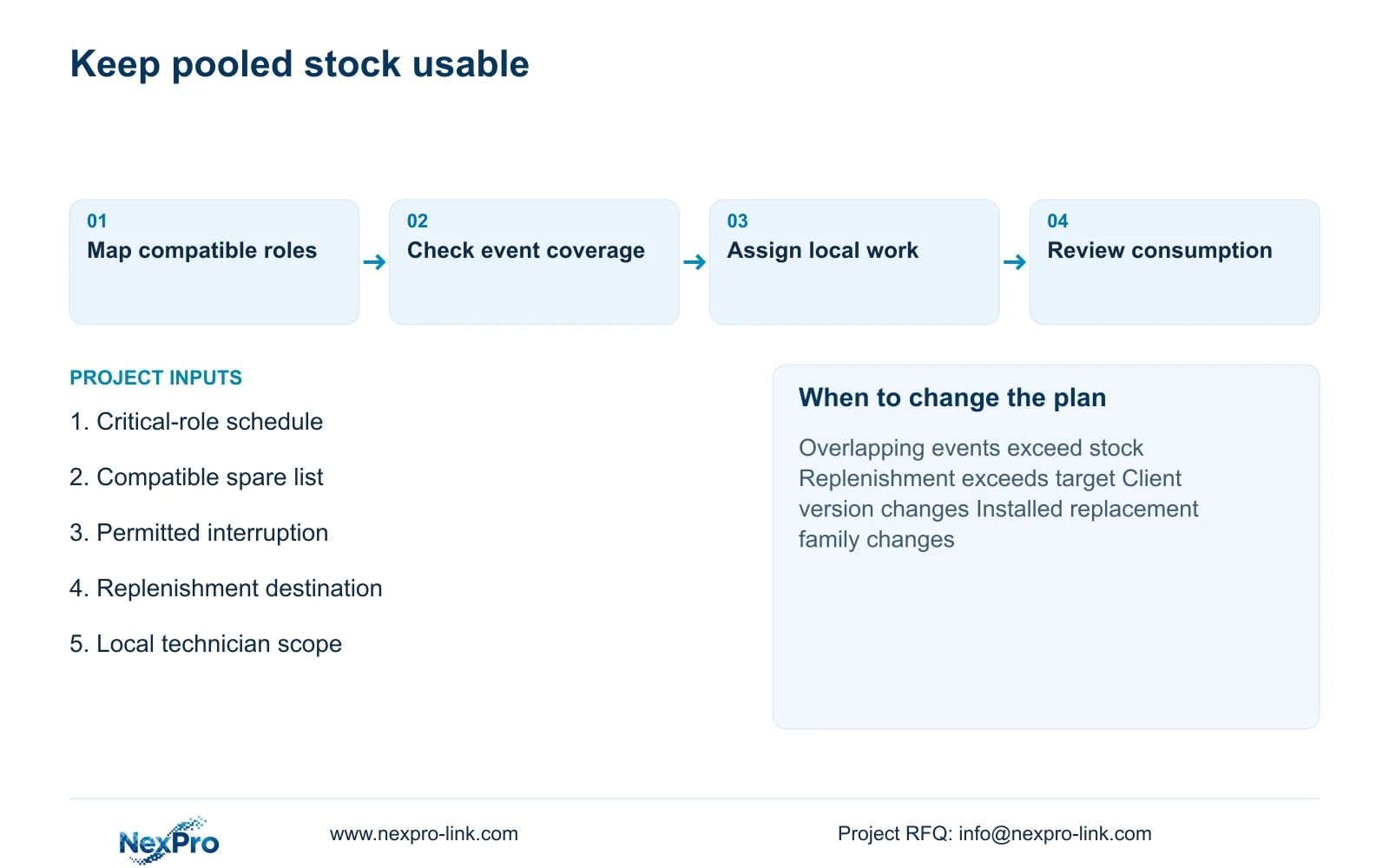
After each real event, record the failed role, replacement used and the work required to restore it. Distinguish diagnosed hardware failure from a power, cable or configuration problem. Keep replenishment observations alongside the restored-task result. Several incidents involving different causes should not be combined into an unsupported product failure rate.
Review compatibility when the hotel changes camera models, recorder versions or client workflows. A spare retained from the original order may no longer cover its former role. Update the stock identity and supported substitution record, and retain the applicable order and receipt information. Do not equate shelf availability with readiness for installation.
Continue role-based stock where it meets actual restoration needs. Expand it if recurring consumption or overlapping events exhaust cover before replenishment; reconsider it if installed roles or local support change. Send info@nexpro-link.com the critical-role schedule, existing spare list, required interruption limits and destination with relevant order and receipt details. NexPro-Link can discuss model matching and a coordinated BOQ response, with local work and supply responsibilities stated separately.
Section 07
Buyer questions
Should every camera model have its own spare? Only where its required role cannot be covered by an approved shared replacement. Keep dedicated stock for distinct functions when pooling would lose necessary lens, environmental, power or client behavior.
Can warranty cover replace a spare-parts budget? Warranty handling and operational stock serve different needs. A remedy may be available while the hotel still needs equipment and local work to meet an interruption target. Budget those responsibilities explicitly.
What is enough information for a first spare-stock proposal? Provide the installed model groups, critical tasks, available spares and permitted interruption, plus the destination and local replacement capability. State whether alternatives are allowed. Do not include guest footage or credentials.
Engineering references
These sources support the general planning principles. Always use the selected product's current datasheet and applicable project standards for final design.