Before shipping faulty hotel CCTV equipment overseas, confirm the device, diagnostic record and authorized remedy, then agree logistics and temporary coverage.
Section 01
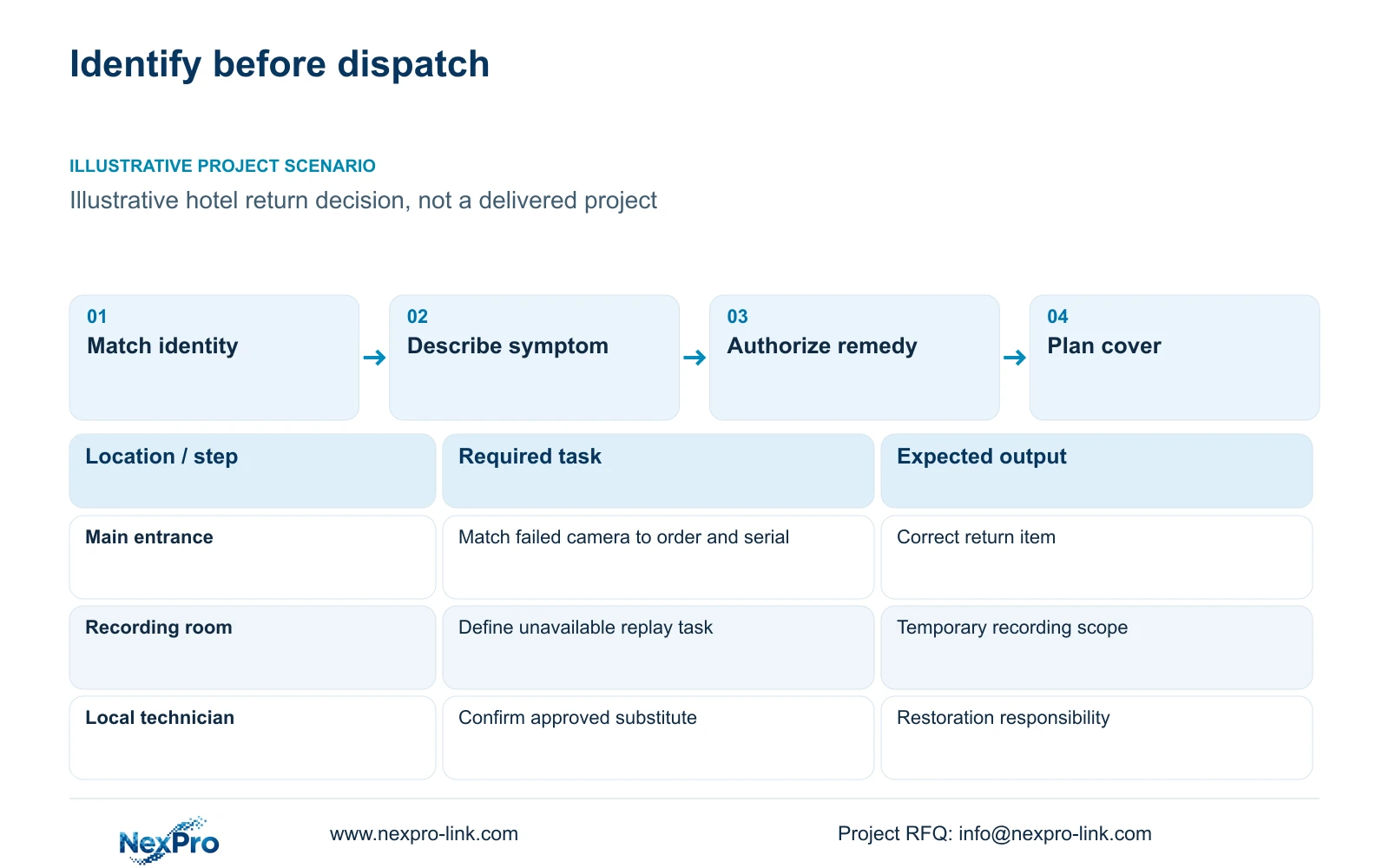
Confirm the device and order before arranging a return
Arrange a cross-border return only after the supplier has identified the equipment, reviewed a reproducible symptom and authorized the remedy. If a critical entrance view or recording function cannot wait for that process, arrange an approved temporary replacement separately. Shipping first can send the wrong component overseas, leave the hotel without necessary coverage and create another shipment when the original problem remains.
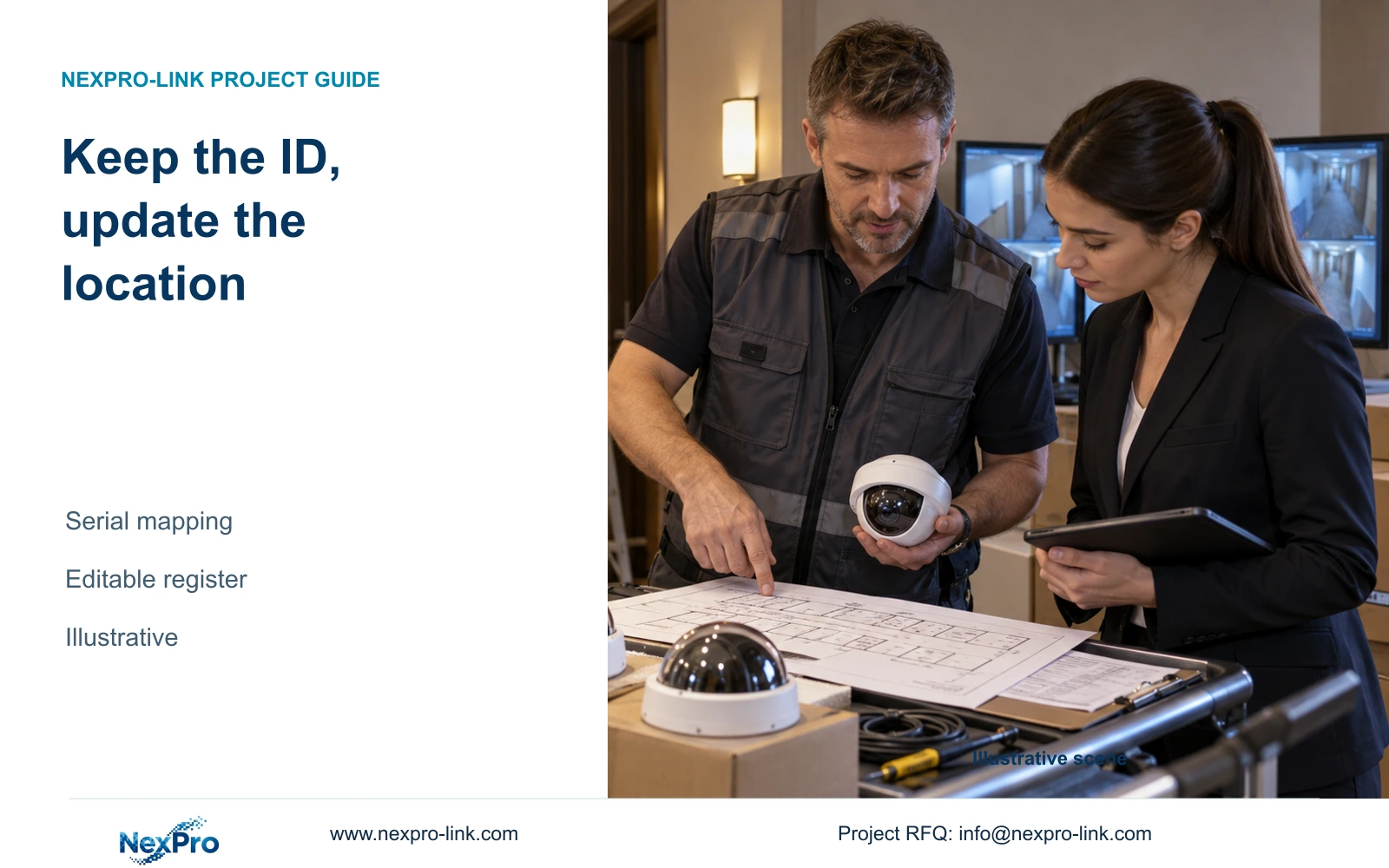
Create a service record that connects the exact model and serial number to the order reference, receipt date and installed role. Keep the hotel asset identifier alongside the manufacturer's identity. A project label such as 'reception camera' describes the location but does not establish which hardware or order terms apply. OEM labels should preserve enough information to trace the supplied unit.
Record the affected service before counting replacement devices. A failed public-route camera affects a particular view; an unavailable recorder can affect several required recordings. Identify the local person who can inspect or replace the equipment and the replenishment destination. These details determine whether the return can proceed while the hotel remains operational.
| Required task | Given information | Decision still needed |
|---|---|---|
| Restore entrance recording | Camera model, serial and asset location | Confirm affected component and compatible substitute |
| Restore incident retrieval | Recorder identity and order reference | Agree diagnostic scope and treatment of stored footage |
Section 02
Describe a symptom that support can reproduce
Describe what fails during an authorized operating task. 'Camera faulty' gives little diagnostic direction. A useful report distinguishes an absent live view, interrupted recording, unreadable playback or an image problem under a particular lighting condition. Include the relevant model, firmware reference, connection path and circumstances, without claiming a cause that has not been established.
Keep the original observation separate from actions already attempted. Record whether a local technician checked the approved power and network path, and whether the symptom changed. An equipment substitution is informative only when its compatibility and operating conditions are known. Moving a device to a different scene or client can change several inputs at once.
A short diagnostic history helps prevent repeated work after the unit arrives. Supply sanitized device information and the support correspondence reference. Do not place passwords, personal access credentials or guest footage in an initial inquiry. If further diagnostic material is necessary, the hotel should approve its scope and transfer route before anyone sends it.
| Item | Vague report | Task-based report | Effect on the hotel task |
|---|---|---|---|
| Image | Picture looks wrong | Describe recorded detail at the affected public entrance | Separates scene adjustment from suspected hardware failure |
| Recording | System is offline | Identify unavailable streams and failed replay task | Defines the service that temporary cover must restore |
Section 03
Agree the authorized remedy and its cost boundaries
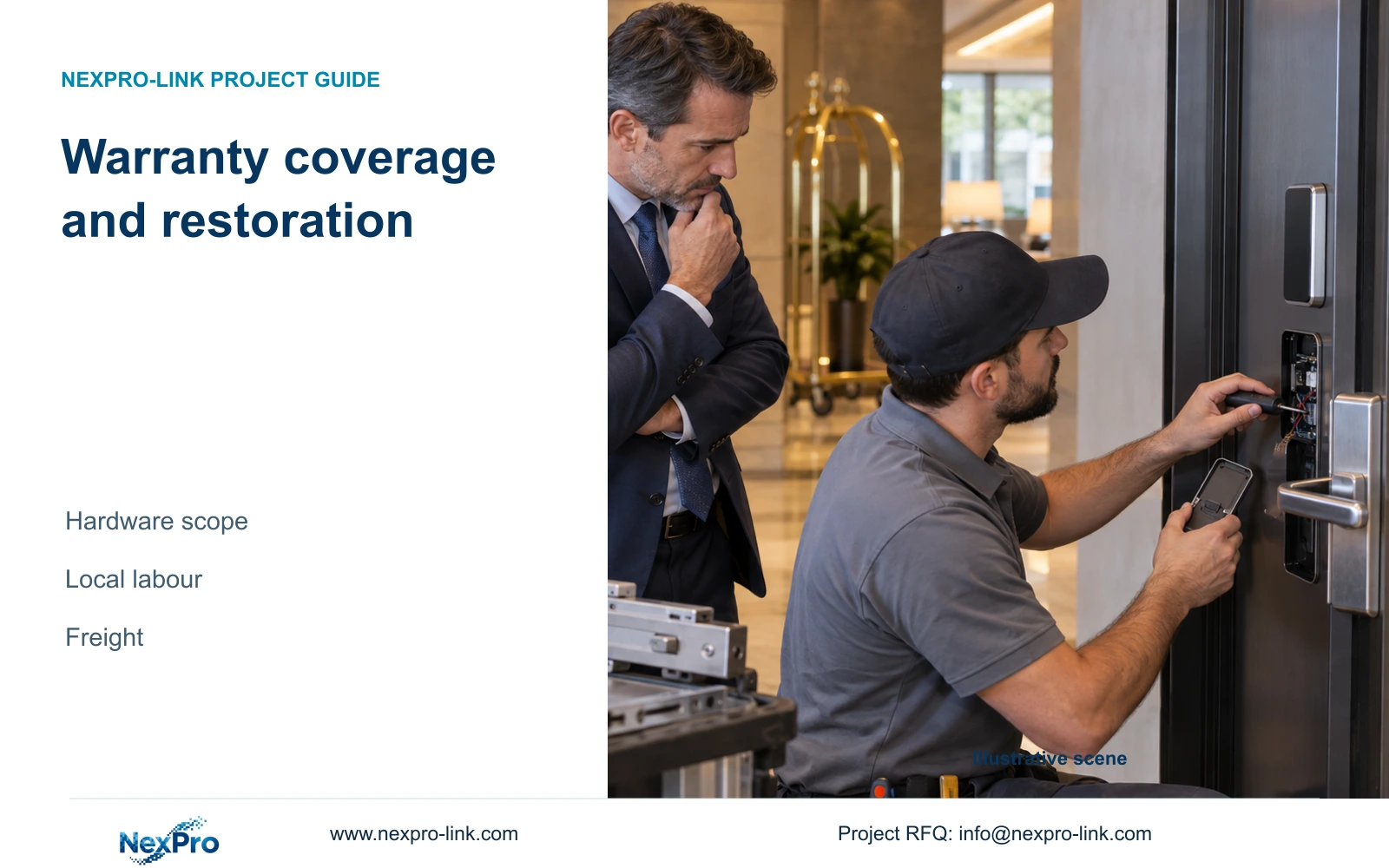
Use the controlling order and applicable policy to establish the available remedy. The supplied NexPro-Link policy record, checked on October 7, 2026, states a 24-month limited hardware warranty baseline for applicable main equipment from customer receipt. Different written order terms control where applicable. Batteries, disks, cable and special OEM scope require their own treatment.
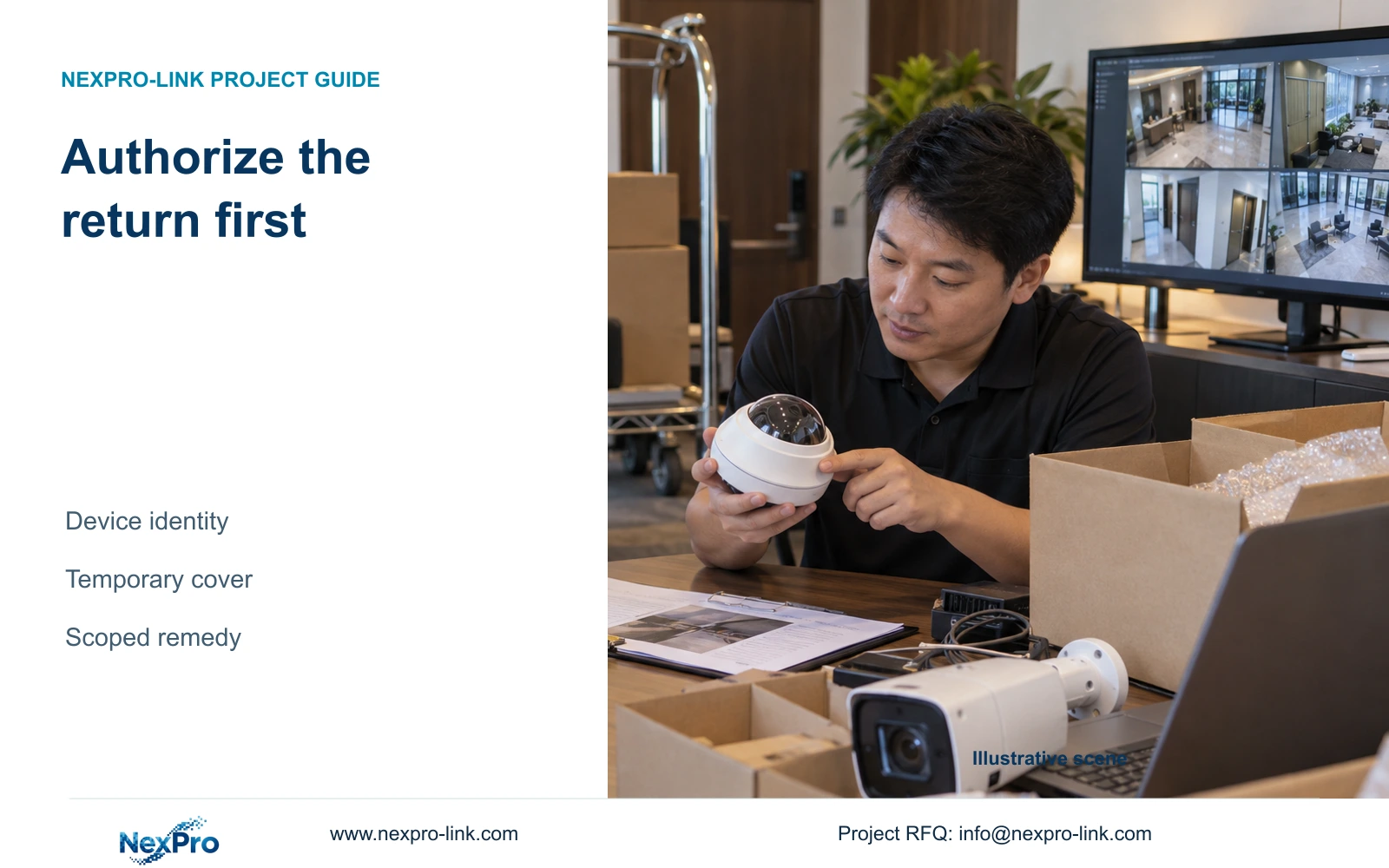
Ask for an authorized return path before booking transport. Agree which item should travel, the receiving destination, required identification and packaging scope. Clarify responsibility for local removal, return freight and any faster shipping option. Continuing technical support does not establish unlimited free repair or included local attendance, and this article offers no uniform turnaround commitment.
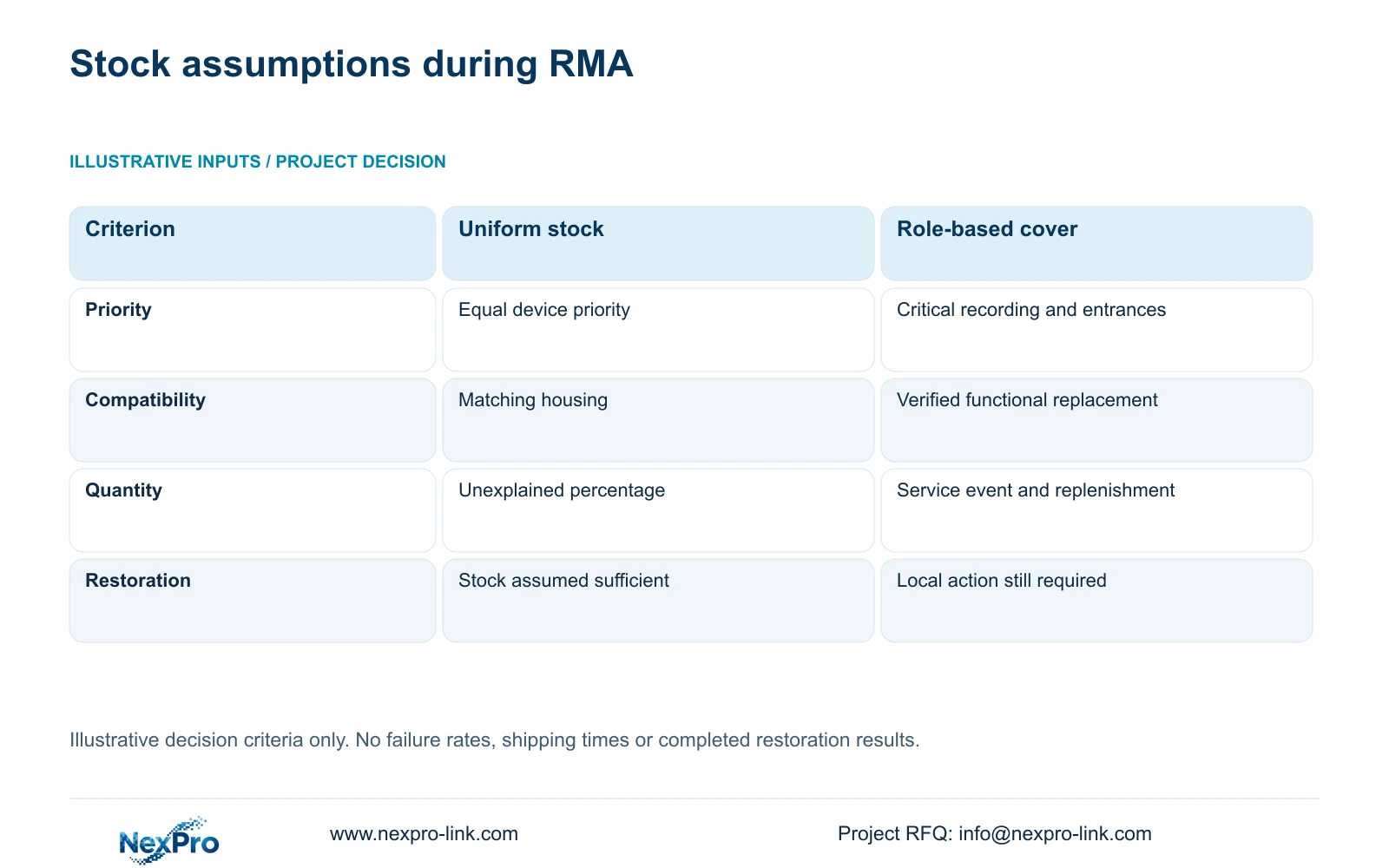
The planning input for the following comparison is the hotel's restoration task, compatible replacement roles and replenishment route. It is a qualitative decision method with no failure-rate formula or measured performance figures. Use it to decide whether an approved local substitute is needed during remedy handling; the existence of warranty coverage alone does not answer that operating question.
Section 04
Compare return handling with approved replacement options
Compare repair return, an available local spare and a supported substitute against the same required outcome. Include configuration work and the person responsible for restoration. A visually similar camera can have a different lens, mounting arrangement or client behavior. A recorder replacement also needs an explicit recording and storage scope; old disks cannot be assumed readable in another unit.
Compare the routes in the table using the confirmed return authorization, compatible stock and local work. A spare is useful only if it restores the required task on the actual configuration. Leave restoration time and cost unresolved when shipping, installation or device compatibility has not been confirmed.
Before dispatch, agree how credentials and stored recordings will be handled. Do not send a recorder or disk containing guest footage merely because the enclosure is approved for return. Any removal, preservation or transfer of records should follow the hotel's authorized process and the agreed service instructions.
| Route | Evidence needed before selection | Continuity and unresolved responsibility |
|---|---|---|
| Return for assessment | Written RMA, device identity, symptom record and data-handling instructions | Who covers the task while assessment and transport remain open? |
| Use an available spare | Compatible function, configuration, mounting and usable stock | Name installer and repeat-check owner; do not assume availability |
| Propose a substitute | Exact replacement scope and permitted change | Approve interfaces, accessories and affected recording requirements |
| Keep equipment pending evidence | Unsafe or unconfirmed removal/restoration step | Record interrupted task and escalation; do not dispatch speculatively |
Section 05
Protect essential service during the return
Define temporary cover by the function that remains necessary while equipment is away. In the illustrative CASE01 hotel, entrance views and shared recording have different failure consequences. That case is a planning reference, not a delivered project. Its system quantities do not determine this article's spare inventory or an RMA turnaround period.
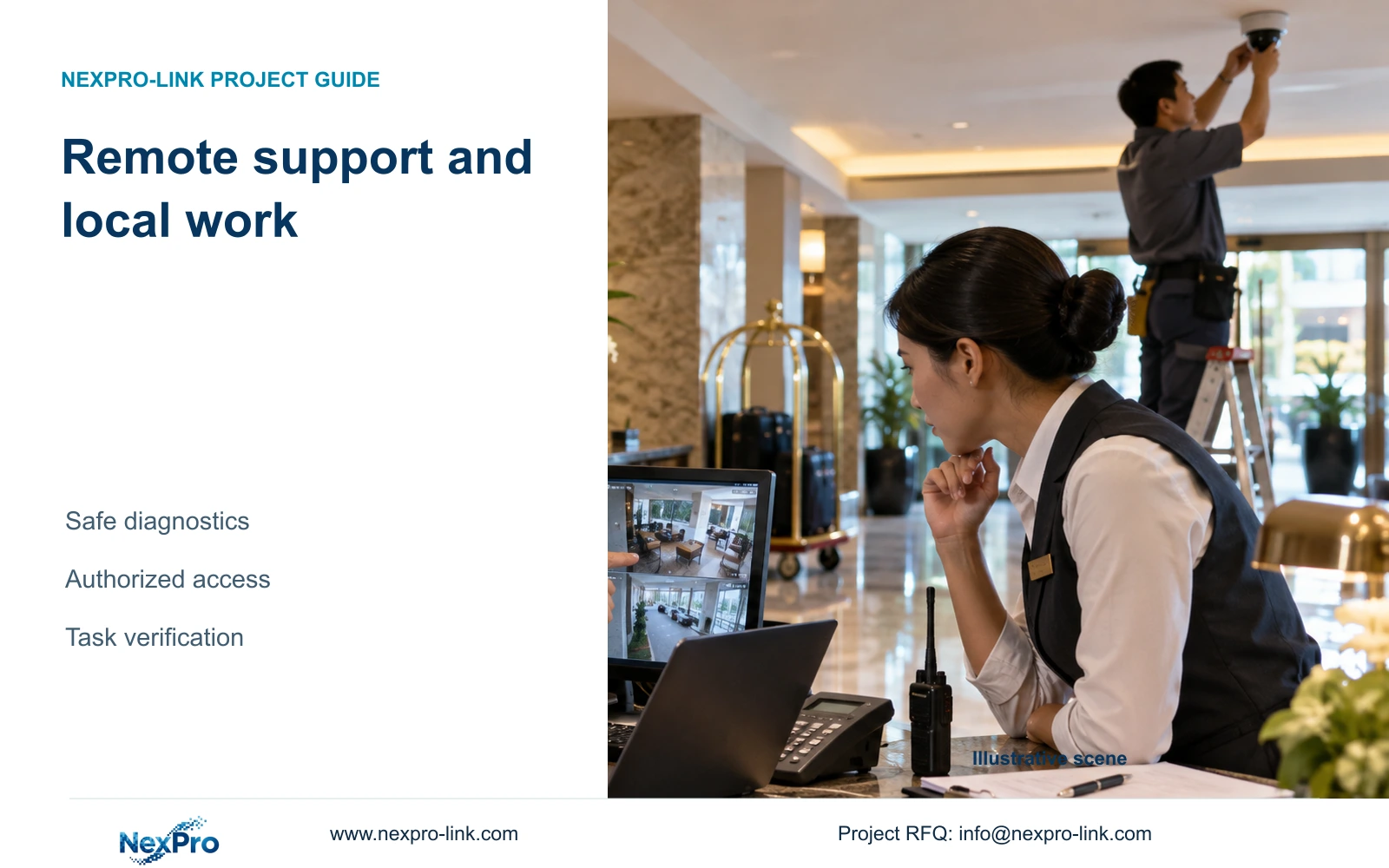
Have the responsible local technician confirm the substitute's power, mounting and recording behavior before removing the original device. An unused spare may need configuration review after the operating system has changed. Check the required replay and client workflow as well as the live image. Temporary installation should preserve the approved public-zone view without adding unnecessary private capture.
Compare the extra supply and local work against the permitted interruption. Buy temporary cover when overseas replenishment cannot meet the agreed restoration target and a compatible replacement can be installed. If the hotel accepts the interruption or has an approved alternative recording arrangement, additional stock may provide little immediate benefit.
| Retained outcome | Extra scope | When worth buying | Counter-condition |
|---|---|---|---|
| Required entrance view | Compatible camera and local configuration | Return route exceeds permitted interruption | Approved alternate view meets the task |
| Required recording | Supported recorder arrangement and commissioning | Shared recording cannot remain unavailable | Alternative recording already meets the approved scope |
Section 06
Close the asset record after restoration
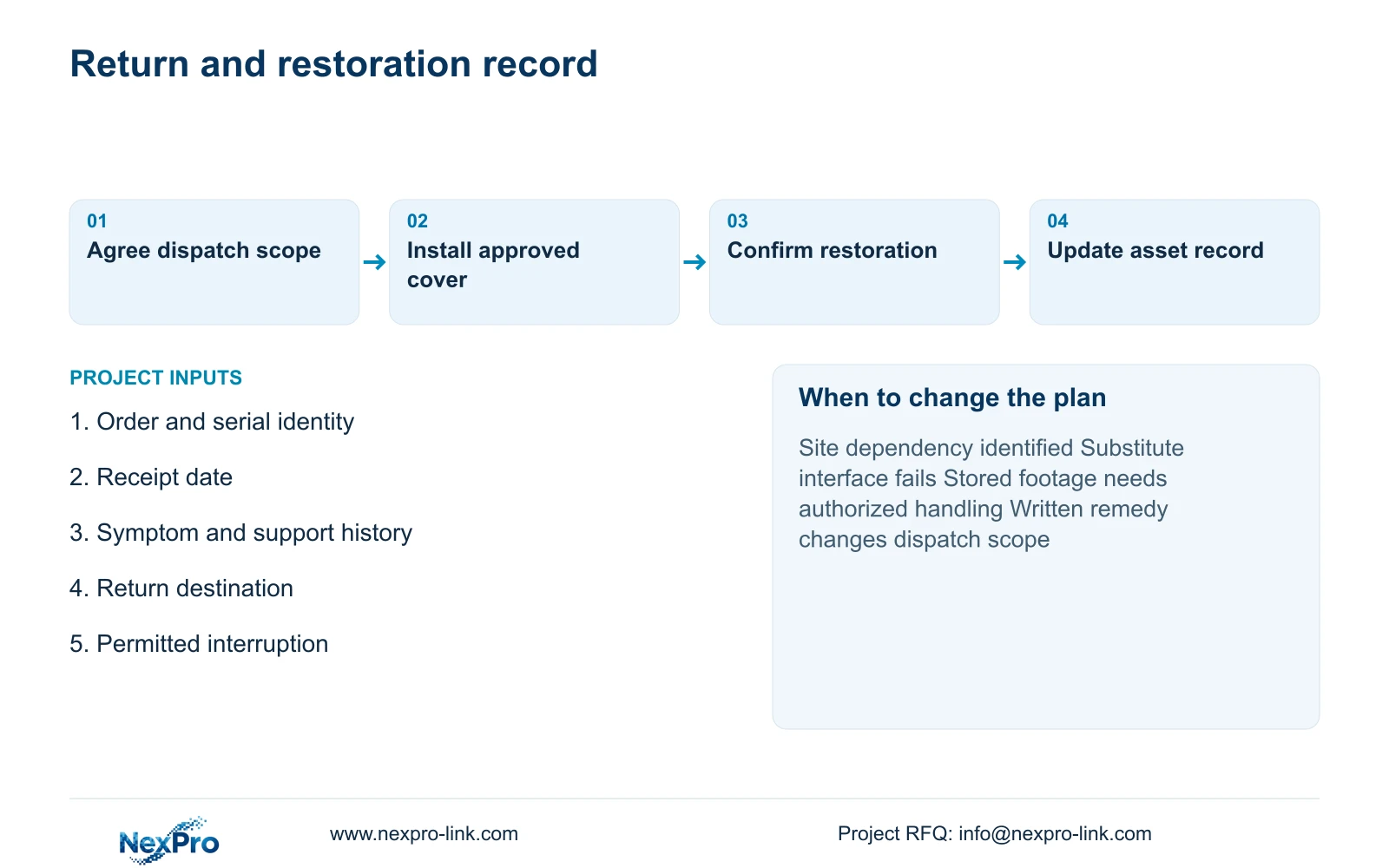
Connect the returned unit, temporary device and final installed equipment within the asset record. Preserve serial identities, support references and the observed restoration result. Record whether the final action was repair or replacement, and retain the applicable written warranty treatment. Do not automatically restart the term when replacement equipment arrives.
Close the service event after the required operating task has been checked. Dispatch confirmation, delivery receipt and a working live image are separate milestones. For a recording fault, closure should include the agreed replay or export observation. Keep any remaining limitation visible to the hotel team rather than hiding it under a closed administrative ticket.
Prefer authorized diagnosis followed by a scoped return, with role-based temporary cover where interruption is unacceptable. Change the route if diagnosis identifies a site dependency, the proposed replacement fails a required interface or the written remedy requires another arrangement. Send info@nexpro-link.com the order reference, model and serial, receipt date, symptom history and destination with the required local restoration task. NexPro-Link can discuss model matching and coordinated supply; local installation responsibilities belong in the agreed scope.
Section 07
Buyer questions
Can an unused spare replace the returned camera immediately? Only after its functional role and configuration are checked. Stock age or matching appearance does not establish compatibility with a changed recorder or client. Include the local commissioning task in the temporary-cover arrangement.
Does a hotel opening delay extend the warranty? The supplied policy baseline starts at receipt for applicable main equipment. Opening later does not change that event unless the controlling written terms provide a different arrangement.
Can the first inquiry omit the complete hotel drawings? Yes. Begin with the affected device identity, order and symptom record, plus the restoration need and destination. Supply relevant interface or location details if they affect diagnosis; unrelated confidential project documents are unnecessary.
Engineering references
These sources support the general planning principles. Always use the selected product's current datasheet and applicable project standards for final design.