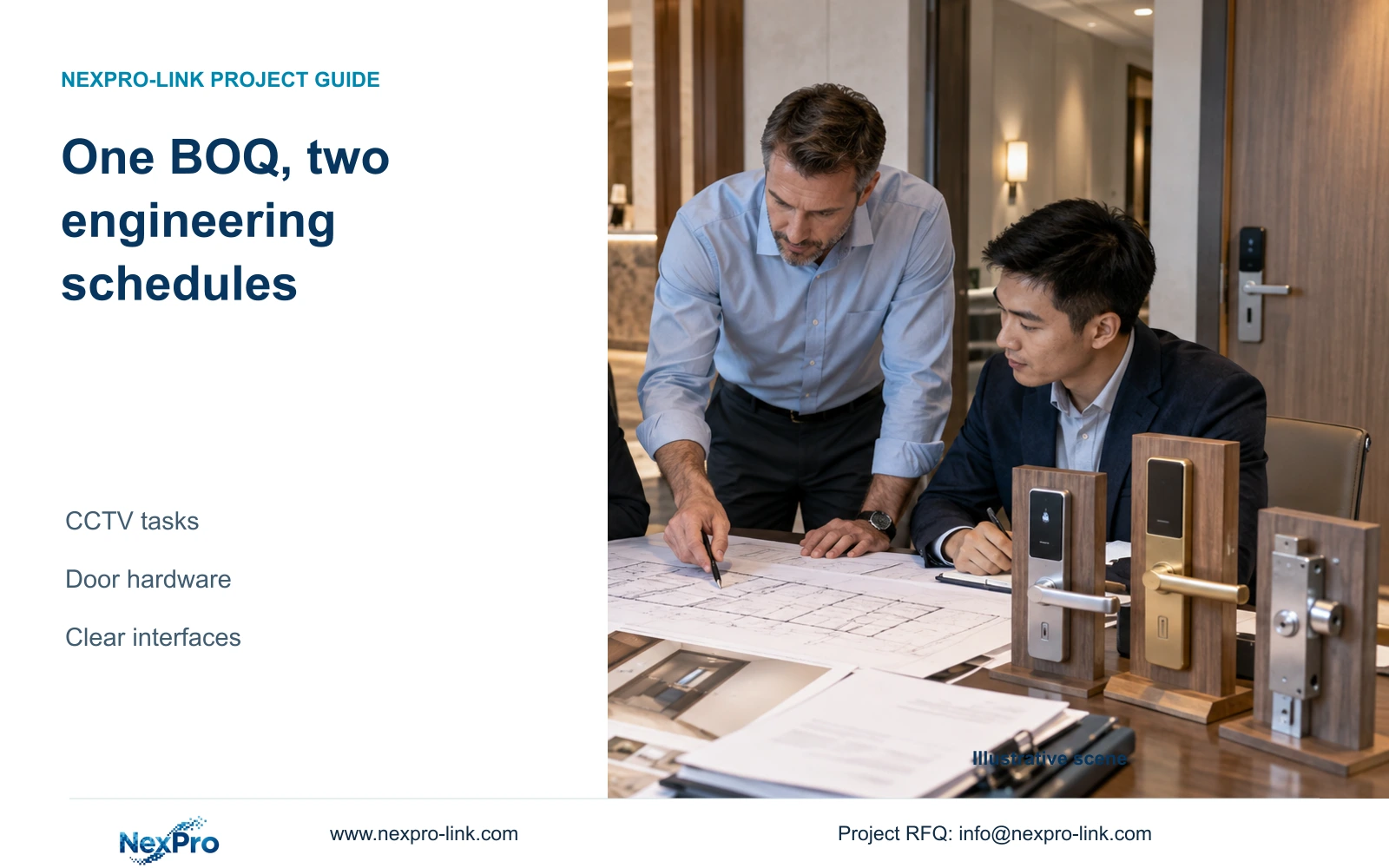
Buy CCTV and room locks through one coordinated proposal when it improves delivery, while keeping camera tasks, door hardware and interface responsibilities separately defined.
Section 01
Separate camera and door schedules
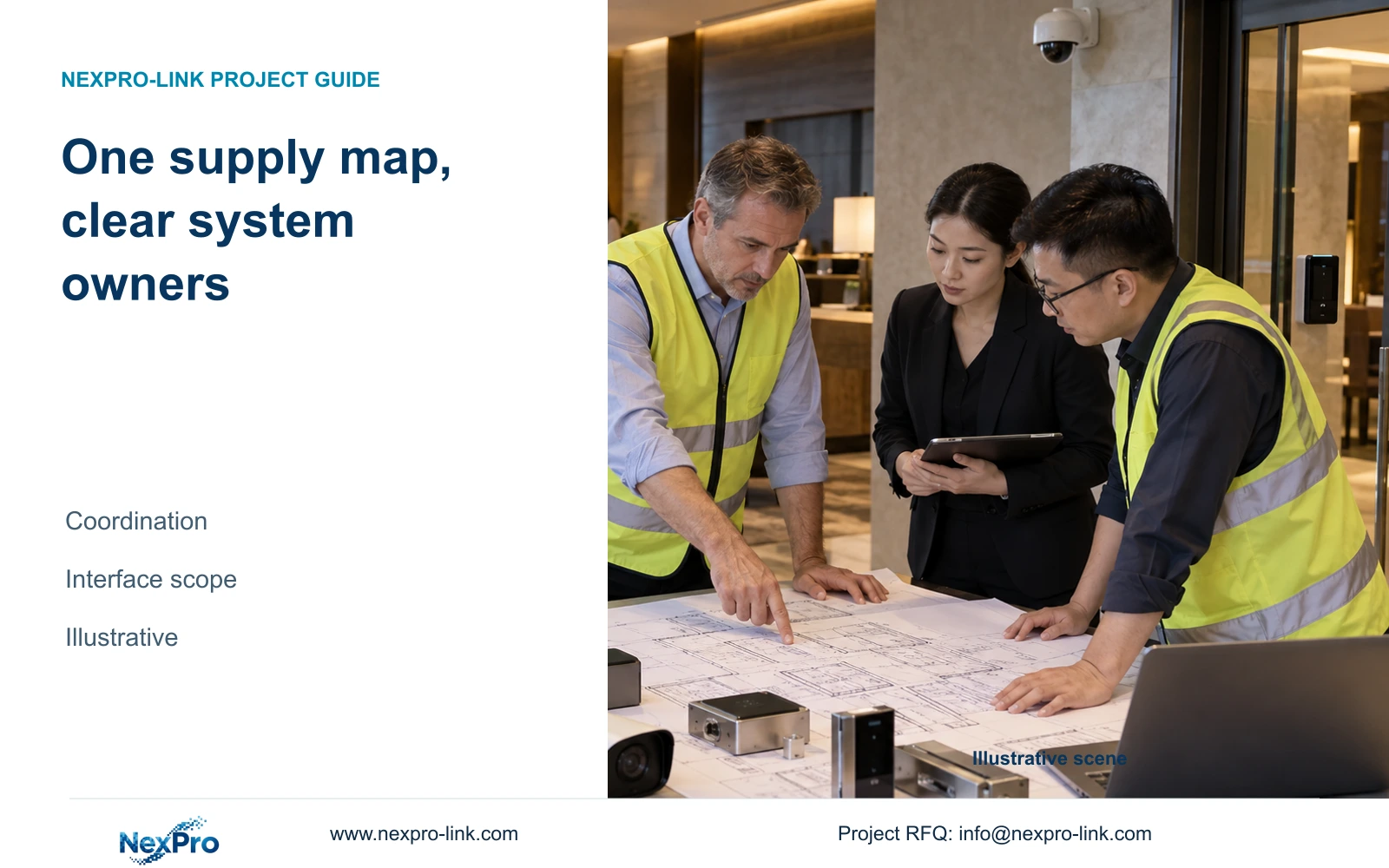
Use separate camera and door schedules, then combine their approved requirements into one BOQ. Consolidated purchasing is appropriate when the supplier can identify each subsystem's equipment, interfaces and delivery scope. A room count cannot determine camera coverage or the complete lock package. Change to separate procurement where a mandatory lock platform, specialist installation contract or unresolved interface prevents a clearly bounded combined offer.
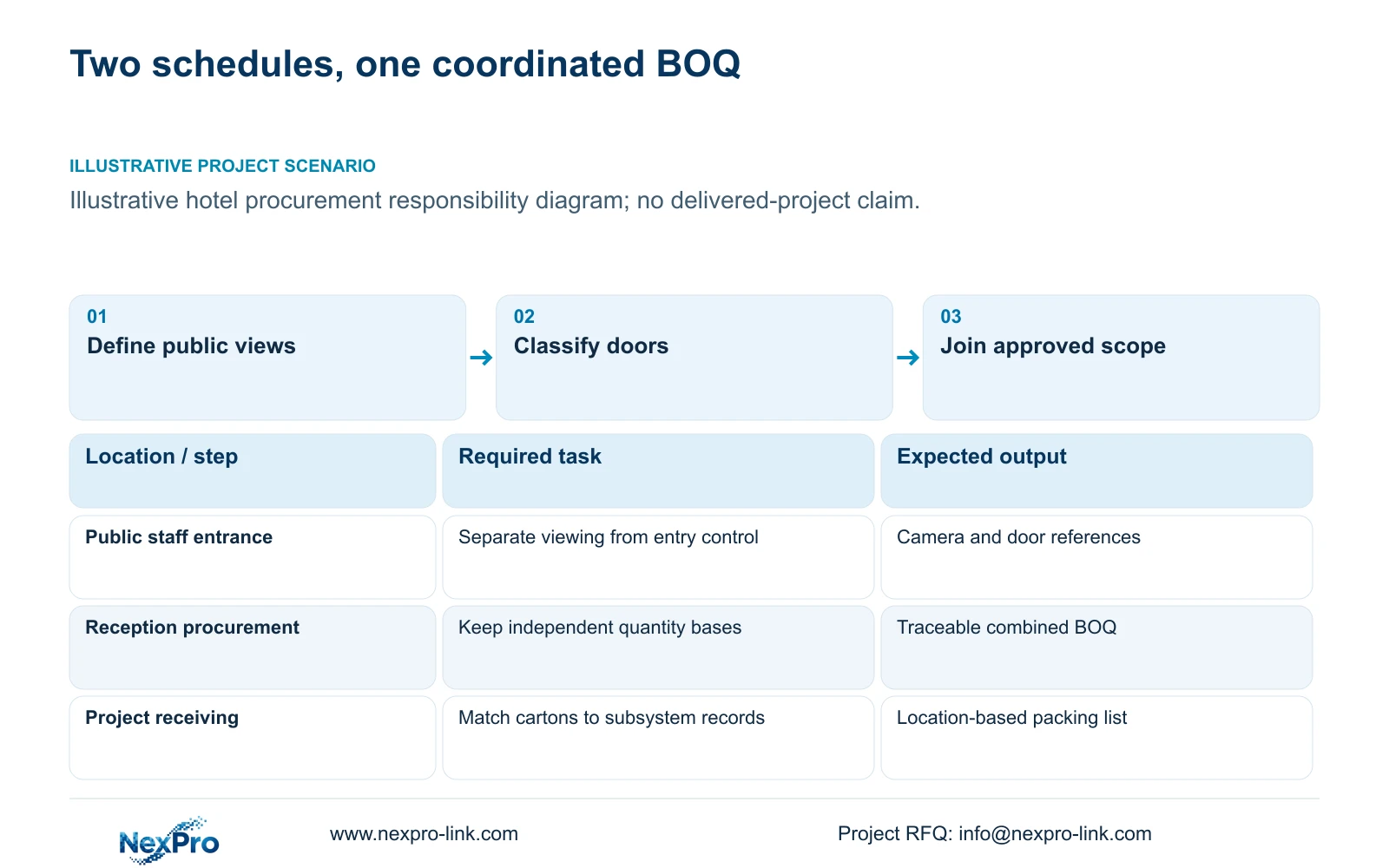
The camera schedule should describe public-area observation tasks, positions and recording requirements. The door schedule should identify each door's purpose, construction, handing, lock body and permitted operation. A shared location reference can connect a staff entrance to its camera view without treating the camera as the device that authorizes entry.
The supplied illustrative city-hotel reference has 100 rooms and 32 camera positions derived from public-zone tasks. Its room count supplies background, not a camera or lock quantity formula. Guest-room interiors, bathrooms and changing spaces remain outside this surveillance scope. Door quantities must come from the actual door schedule.
| Required task | Given information | Decision still needed |
|---|---|---|
| Observe a public staff entrance | Entrance location and operating purpose | Camera position, view and recording requirement |
| Control access through a staff door | Door identity and authorized users | Lock, controller, power and safe operation |
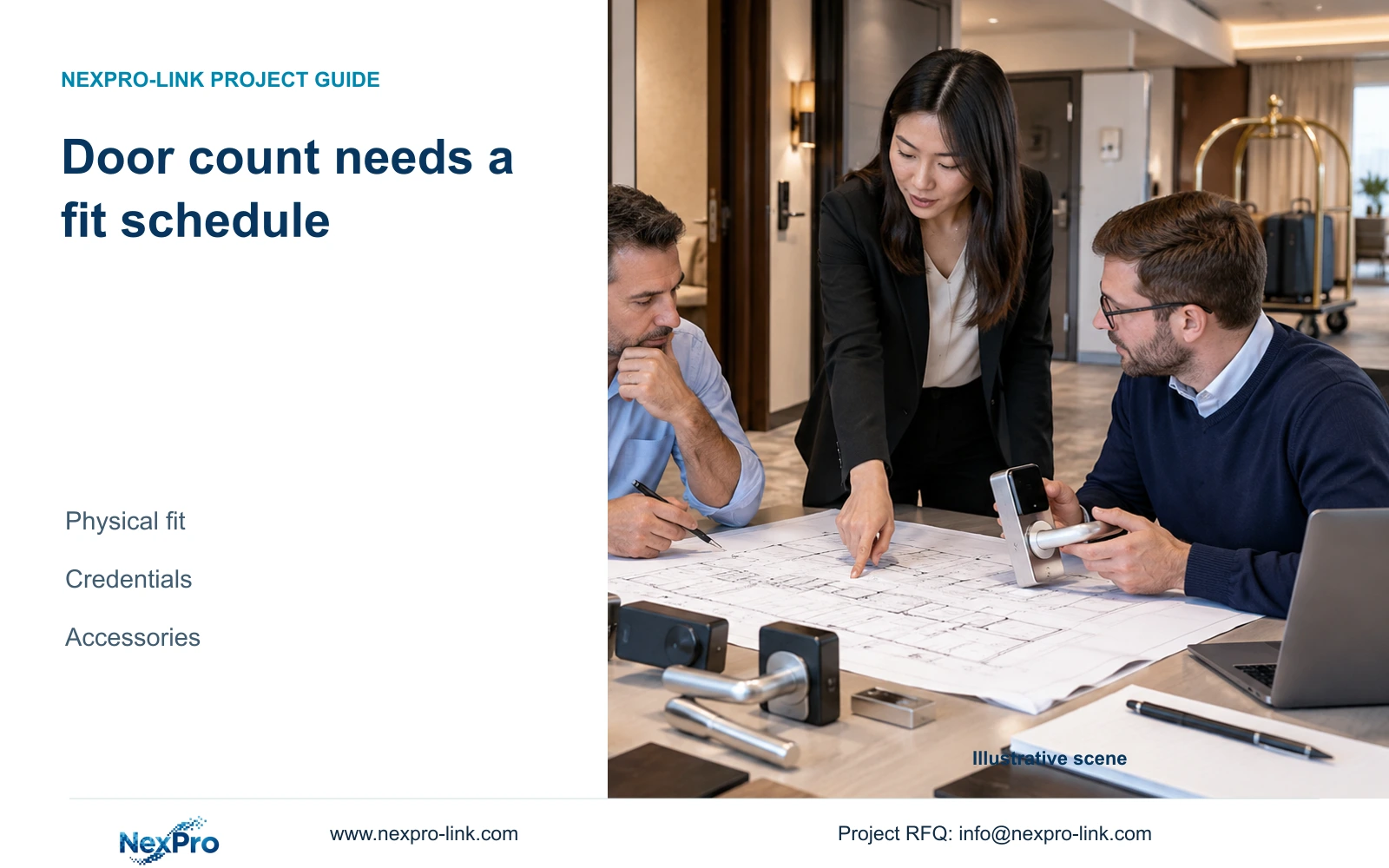
| Provide guest-room entry | Room-door group | Physical fit, credential workflow and backup access |
Section 02
Define lock and credential roles
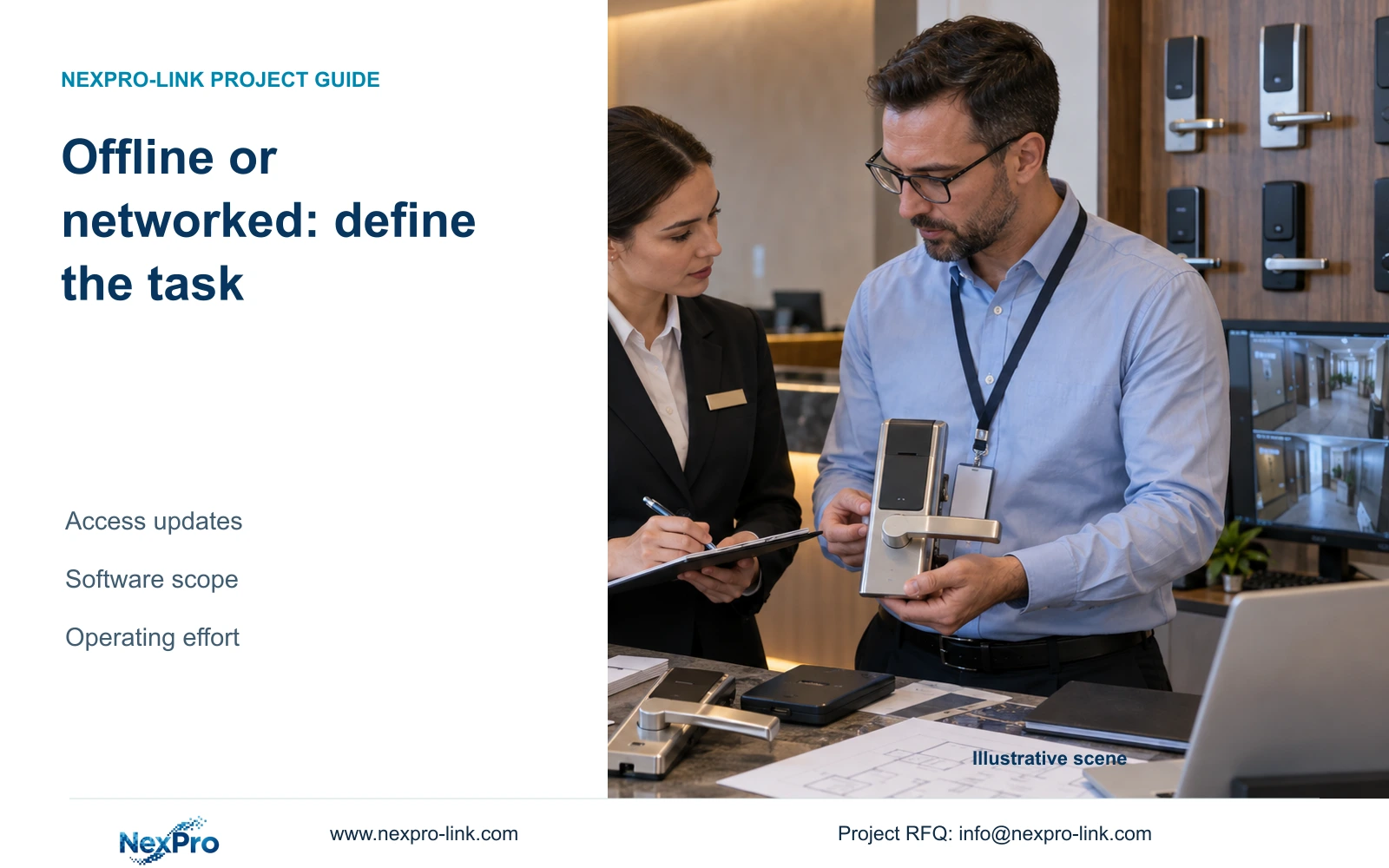
Assign each lock to an operating task before selecting its credential equipment. Guest entry, staff access and mechanical backup need distinct records. The card is one part of the arrangement; issuing authority, supported permissions and the method used to update access also affect the purchase. Equipment quantities follow those decisions.
NX-HL-DQ is a hotel IC-card lock candidate in the hotel project source, which describes mechanical-key support. That evidence does not establish its suitability for every door thickness, lock body or opening direction. Battery details and PMS interfaces require the actual configuration. Mechanical backup also needs an agreed custody process, since possession of a key and permission to use it are separate matters.
Keep power boundaries visible. A locally battery-operated room lock has a different maintenance requirement from a centrally powered access door. Its battery cannot be treated as a load on the CCTV cabinet UPS. Where a staff-door system requires a reader, controller and powered lock, identify the supported combination and its local supply before assigning backup power.
Section 03
Map only confirmed interfaces
Describe requested integration through its actual endpoints: the PMS version, lock-management software, encoder, credential protocol and supported interface. A combined invoice provides no evidence that these endpoints exchange the required transaction. Record an interface as unresolved until the relevant configuration and responsibility are identified.
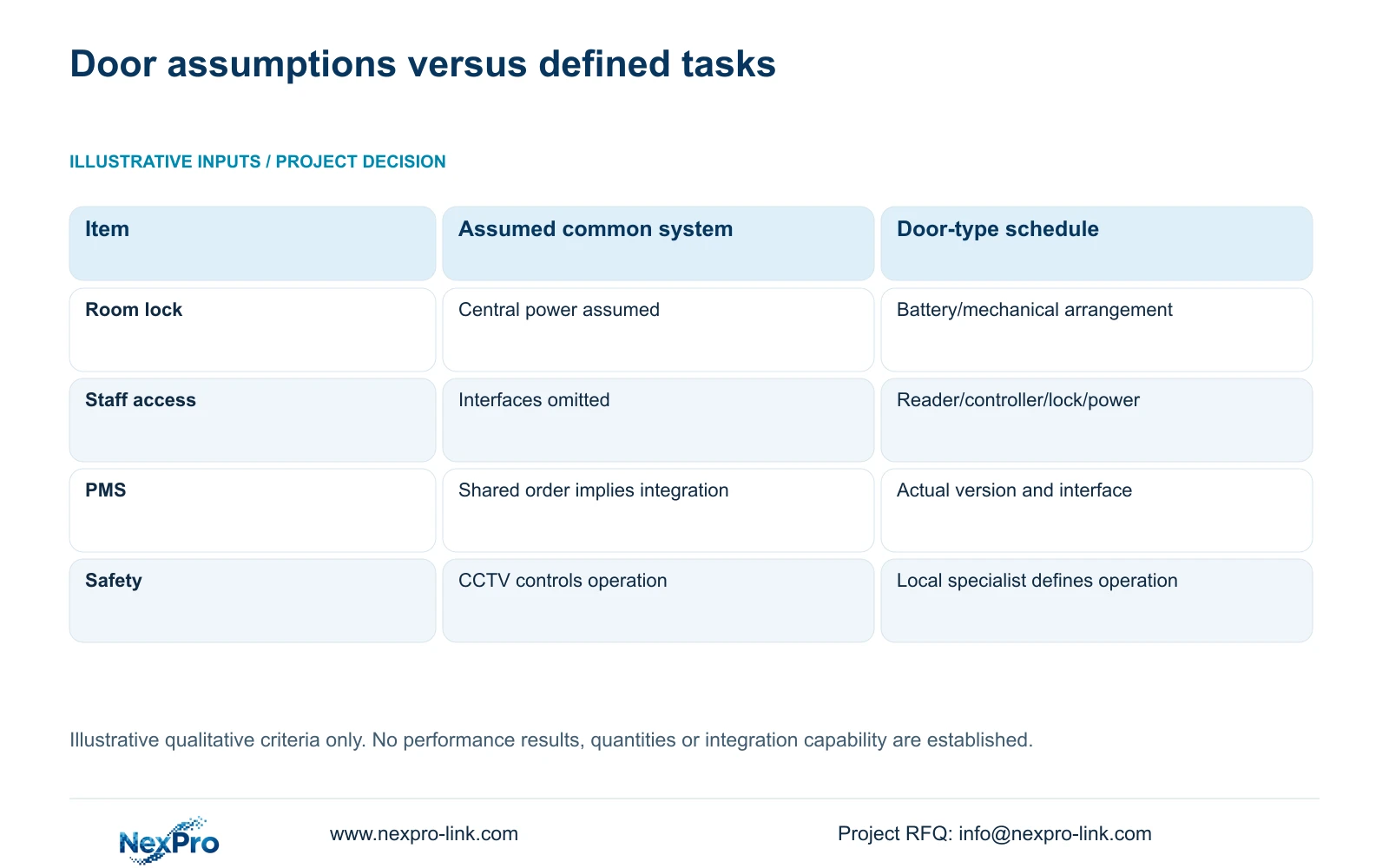
The comparison below uses illustrative decision inputs. It contains no prices, performance measurements or calculated units. Its method is to compare an assumed common arrangement with a door-type and task schedule. The resulting recommendation is to retain separate engineering definitions even when purchasing is consolidated.
Video observation can provide incident context without authorizing a door to open. Emergency egress and safety release require the responsible local specialist's design. Neither an ordinary CCTV control function nor a generic UPS arrangement establishes safe door operation. Preserve that responsibility boundary in the BOQ and technical submission.
| Metric / condition | Option A | Option B |
|---|---|---|
| Room lock | Assumed centrally powered | Identify local battery/mechanical arrangements |
| Staff access | Included without interface detail | Reader, controller, lock and power roles mapped |
| PMS | Assumed from shared order | Actual version and supported integration |
| Safety | Ordinary CCTV treated as controller | Responsible local specialist defines safe operation |
Section 04
Compare consolidated and separate procurement
Evaluate both purchasing routes against the same approved schedules. The consolidated offer should retain individual quantities, model references and exclusions. Compare equipment supply, configuration, transport and local work on equivalent terms. An apparently complete package can still omit encoder setup or a door accessory required by the installation.
A coordinated offer can organize model matching, BOQ documentation and delivery around one project record. NexPro-Link's scope combines its CCTV manufacturing core with coordination of supporting categories. This does not mean every supplied device is manufactured by the same company, uses the same software or includes local installation.
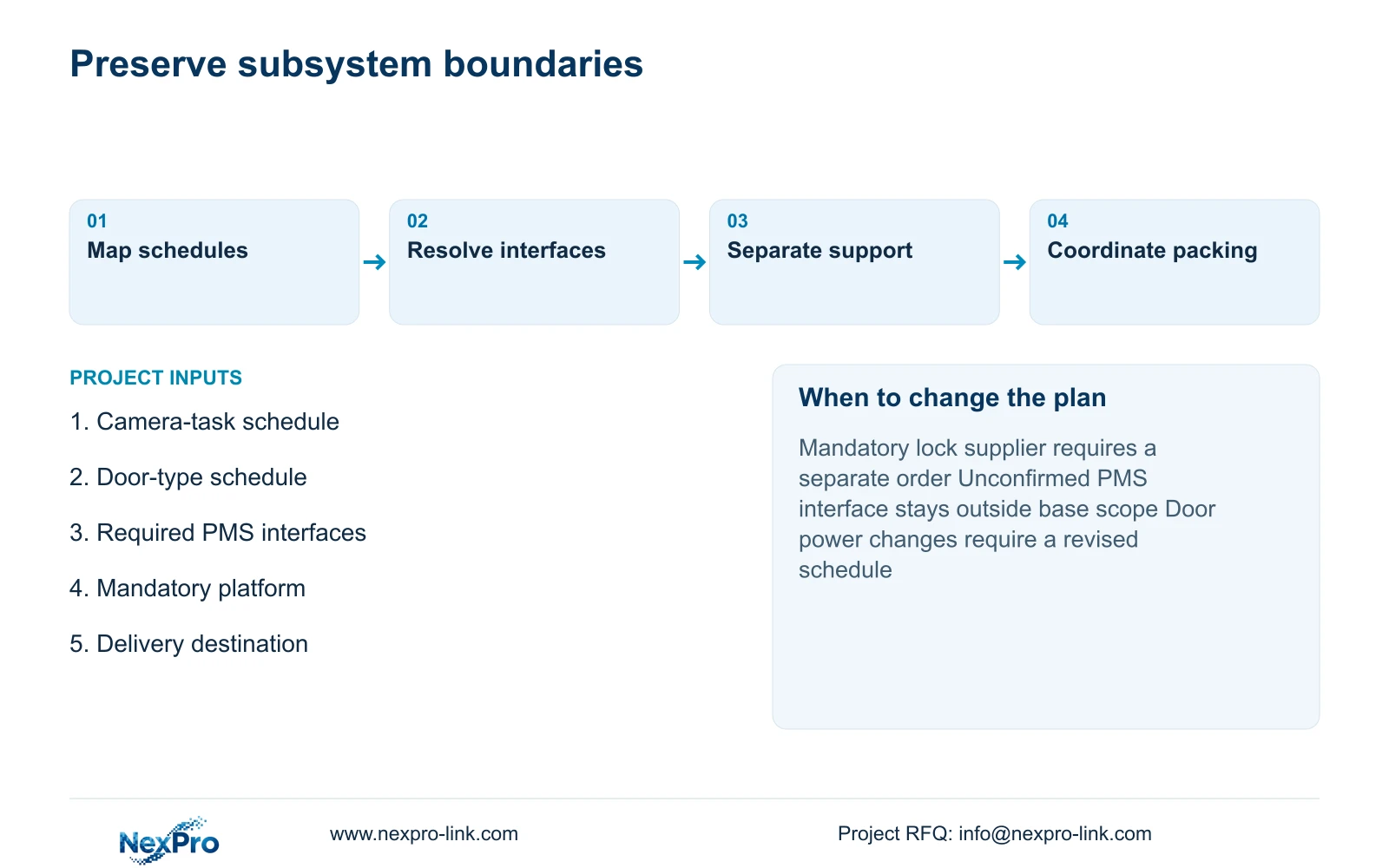
Separate purchasing remains suitable when the hotel operator requires a particular access platform or when an existing specialist owns the lock interface. CCTV can still share project labels and delivery references with that package. Retain consolidation when commercial coordination helps and subsystem responsibility remains clear; split the order when consolidation would obscure an unsupported interface or mandatory supplier boundary.
Section 05
Include accessories and spares
List door-specific accessories separately from shared equipment. Lock bodies, matching installation parts, encoders and credentials require their own quantity basis. Identify which items come with the selected lock package so that the BOQ neither omits them nor charges for them twice. CCTV accessories should remain attached to the corresponding camera and network scope.
Choose spare stock around the restoration task and replenishment route. A spare with a matching appearance may have different power, mechanical or software requirements. Record the supported replacement scope and review stock after configuration changes. Extra inventory still requires an authorized person to diagnose the fault and restore operation.
Warranty handling and spare availability are separate purchasing decisions. The supplied current policy gives applicable main equipment a 24-month limited hardware baseline from receipt, subject to controlling written terms. Batteries, storage, cable and OEM scope need their own terms. Identify local labor, return transport and data handling before arranging an RMA; do not send credentials or guest recordings with an initial fault inquiry.
Section 06
Request one coordinated proposal
Request a proposal whose line items trace back to the camera and door schedules. It should distinguish confirmed models, unresolved interfaces and optional changes. Keep the lock-system acceptance task separate from camera recording and retrieval, even if both appear in the same commercial document. Each handover needs a named responsible organization.
Project labels and packing can use a common location scheme while retaining actual model and serial identities. Authorized OEM branding may help receiving and distribution, but it cannot establish rights to rename third-party software. Resolve the technical configuration before commissioning packaging that could conceal a late hardware change.
Send the camera-task schedule, door-type schedule and required PMS or access interfaces to info@nexpro-link.com. Include the delivery destination and any mandatory platform requirement. Through the hotel project and BOQ support routes, NexPro-Link can discuss a coordinated response with explicit supply and local-work boundaries. A missing interface should remain an identified open item, not become an assumed feature in the base price.
Section 07
Buyer questions
Can one room count price both CCTV and locks? It can provide early project context, but a useful quotation needs separate quantity bases. Price cameras from public observation tasks and locks from door types. Mark provisional quantities so later revisions can be traced.
Can we retain our operator's existing lock supplier? Yes. Ask for a coordinated CCTV offer that preserves the existing lock supplier's interface and service responsibility. Common delivery records do not require a common access platform.
What must a combined proposal say about support? It should identify who handles equipment faults, credential configuration, interface problems and local installation. Remote technical assistance should not be presented as an unrestricted onsite service commitment.
Engineering references
These sources support the general planning principles. Always use the selected product's current datasheet and applicable project standards for final design.