Online cameras can still produce unusable recordings. A hotel maintenance plan should verify retrieval, image detail and the dependencies that keep recording available.
Section 01
Define the recording tasks maintenance must preserve
Choose task-based maintenance when the hotel needs usable recordings, dependable retrieval and an agreed outage state. Online status and a clean lens cannot establish those outcomes. Set inspection intervals from the environment and operating requirements, then change the scope or frequency when observations show deterioration, altered dependencies or a revised hotel task.
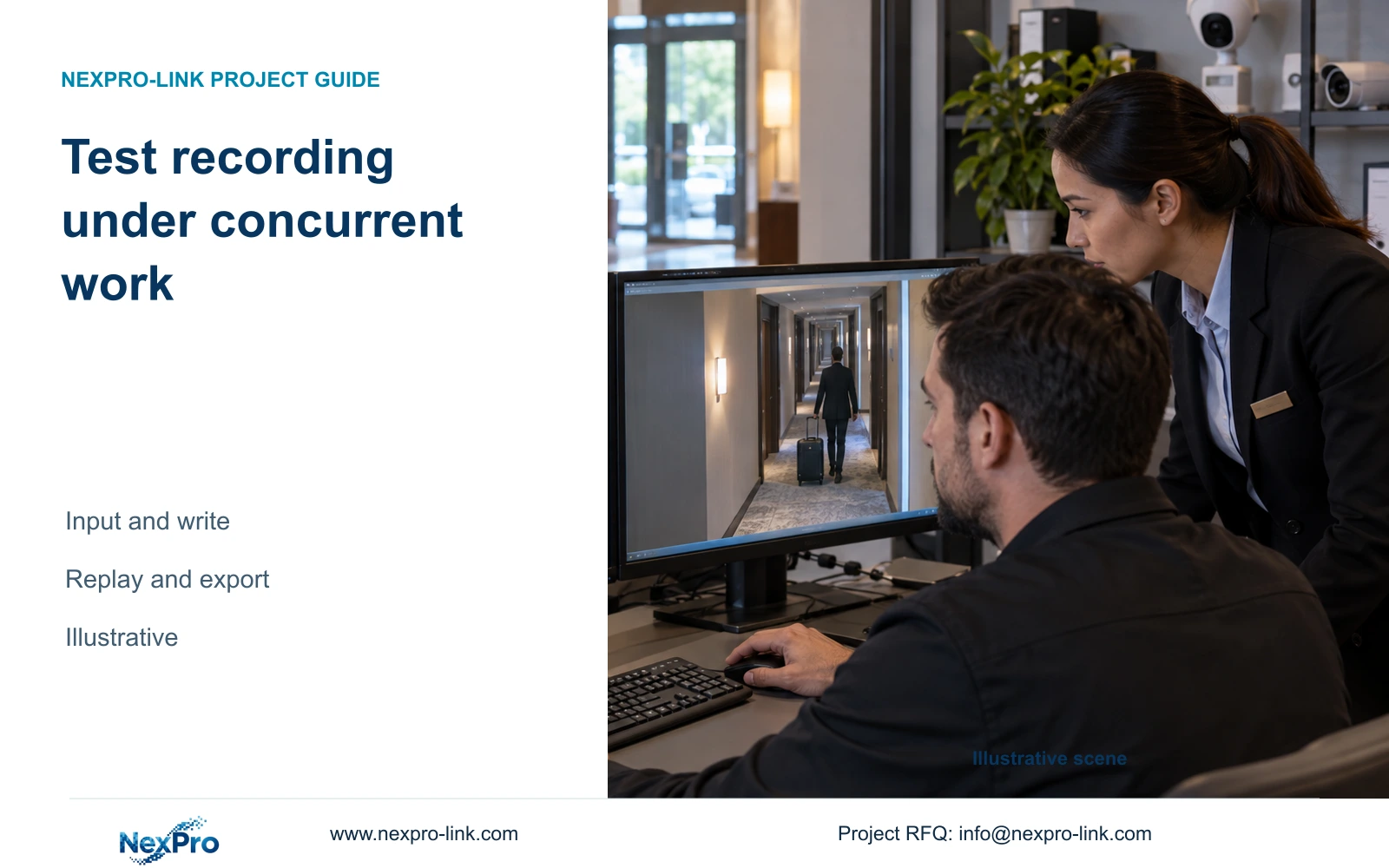
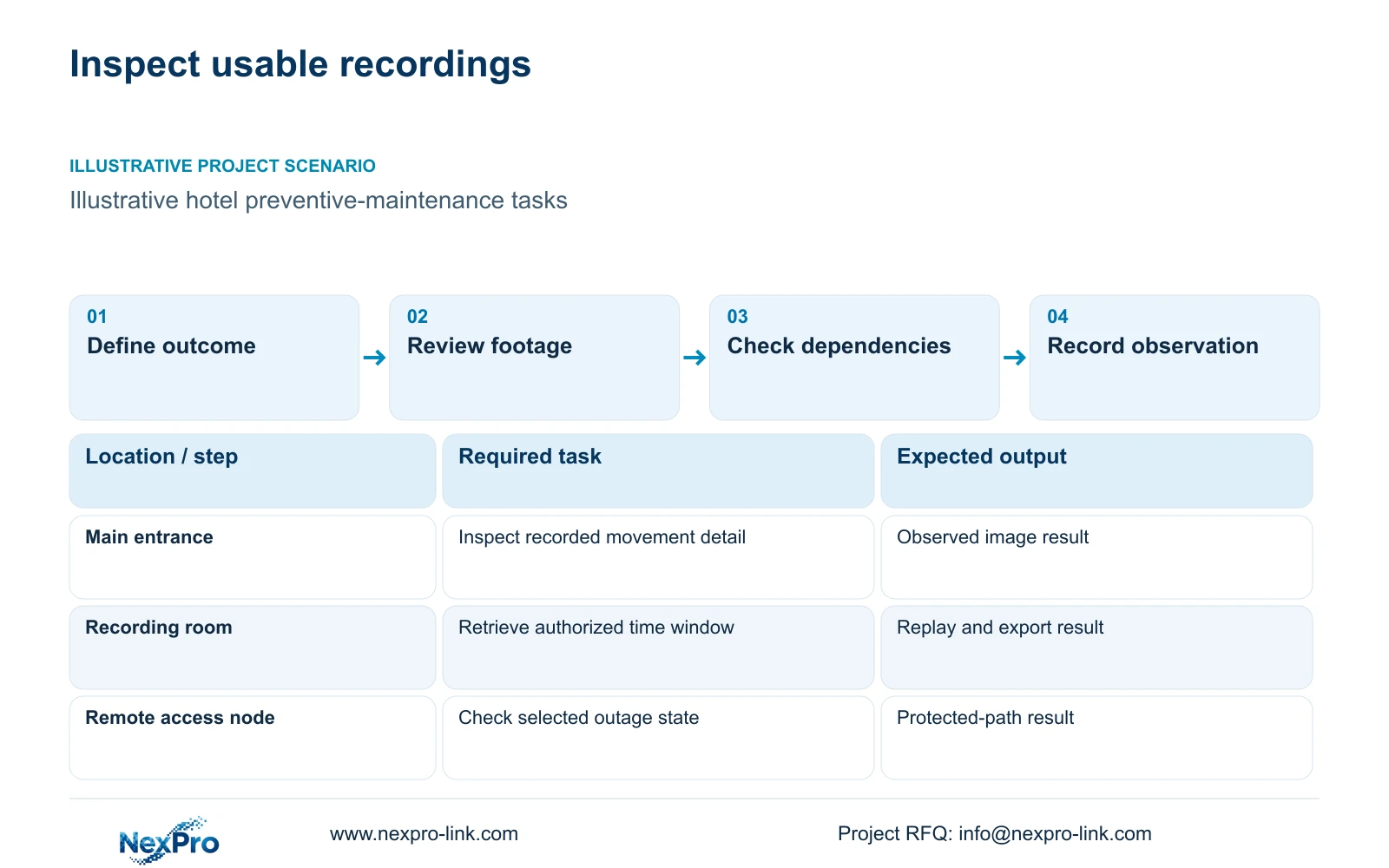
Translate the approved design into observable actions. At a public entrance, review the recorded movement and detail needed for the assigned task. In the control room, retrieve an authorized time window and check its usable export. For the protected system, identify which cameras and network nodes must remain operational during the selected outage condition.
Assign each action to a responsible role and retain the installed model, firmware and relevant configuration. The maintenance record should distinguish what was inspected from what remains unobserved. Factory checks and site acceptance cover different conditions; a factory result does not establish performance under hotel lighting, cabling or network conditions.
| Required task | Given information | Decision still needed |
|---|---|---|
| Retrieve entrance footage | Approved camera role and recording policy | Representative replay conditions and responsible operator |
| Continue required recording | Selected outage target | Actual protected power and network boundary |
Section 02
Inspect the recorded image under relevant conditions
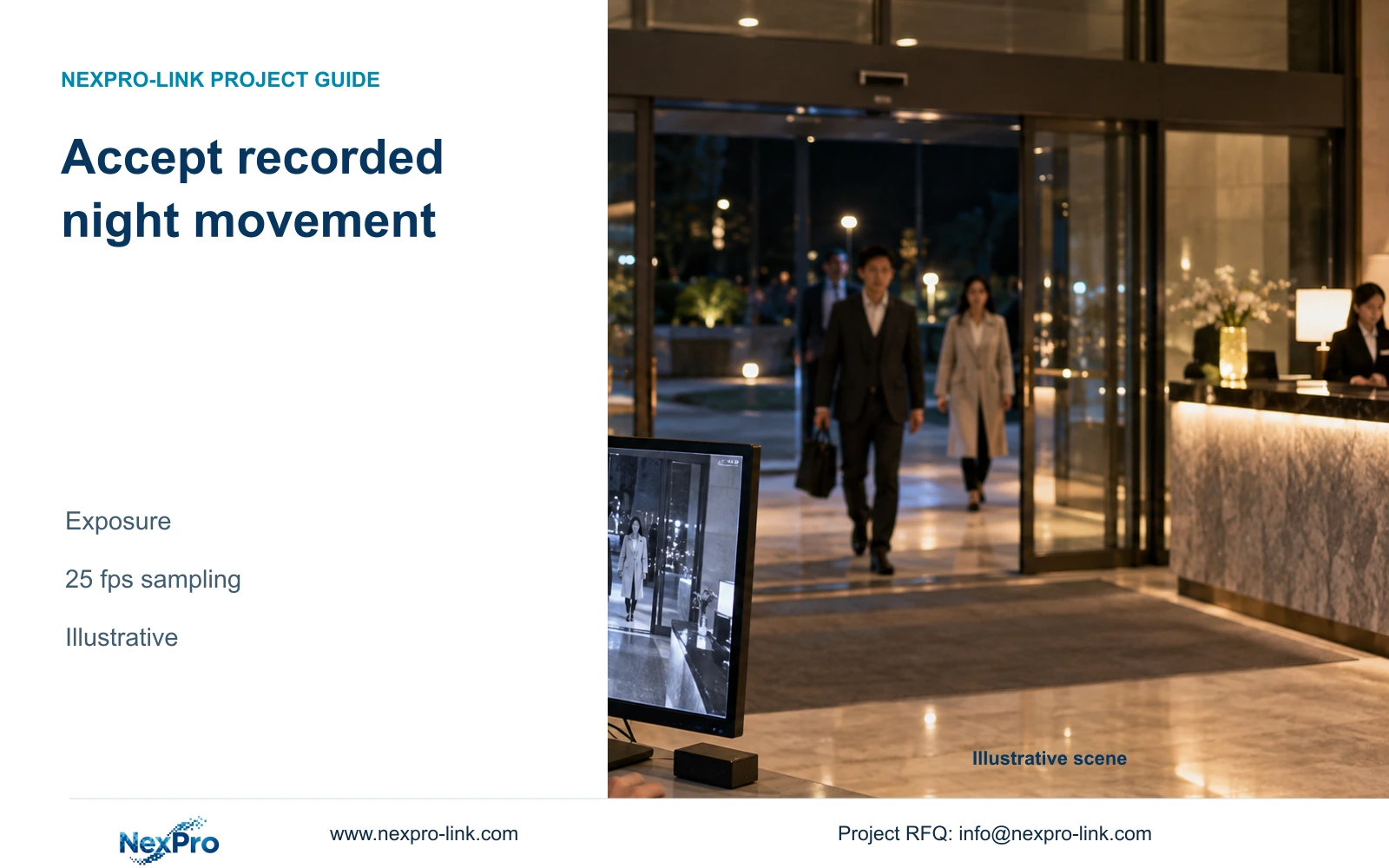
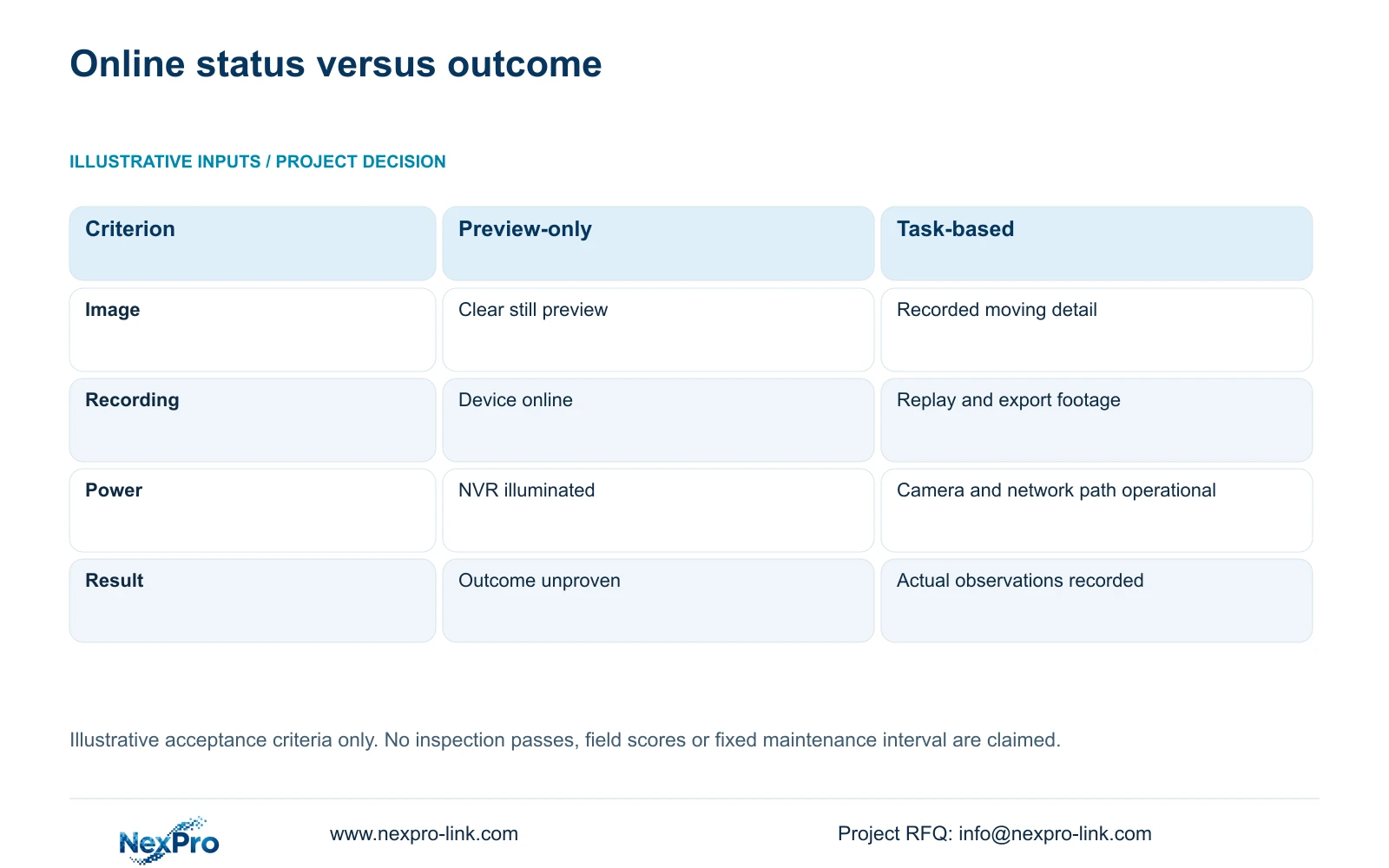
Review recorded footage from the intended target position. A still preview can look clear while movement detail is inadequate for the task. Use an authorized repeatable observation with the relevant lighting and route, recording its conditions. Cleaning is useful where contamination affects the view, but the recorded result determines whether that action restored the required detail.
Check whether the original view still exists. Furniture, signs or changed lighting can alter reception and entrance tasks without making a camera offline. Inspect for unnecessary private capture as well as lost public-zone coverage. Adjustments should retain the approved purpose; wider coverage is not automatically a suitable correction.
Compare observations under consistent conditions before changing resolution or exposure. A sharper static image does not establish improved movement recording. If a scene-specific problem remains after maintenance, identify the lens, position or lighting decision that requires engineering review. Do not attribute every degraded image to failed hardware or report a planned test as completed.
| Item | Preview check | Recorded-task check | Effect on the hotel task |
|---|---|---|---|
| Entrance movement | Clear static image | Required moving detail at the agreed point | Tests the actual recording purpose |
| Reception view | Camera online | Approved scene remains visible without unnecessary capture | Detects layout changes and view drift |
Section 03
Review retention capacity and time consistency
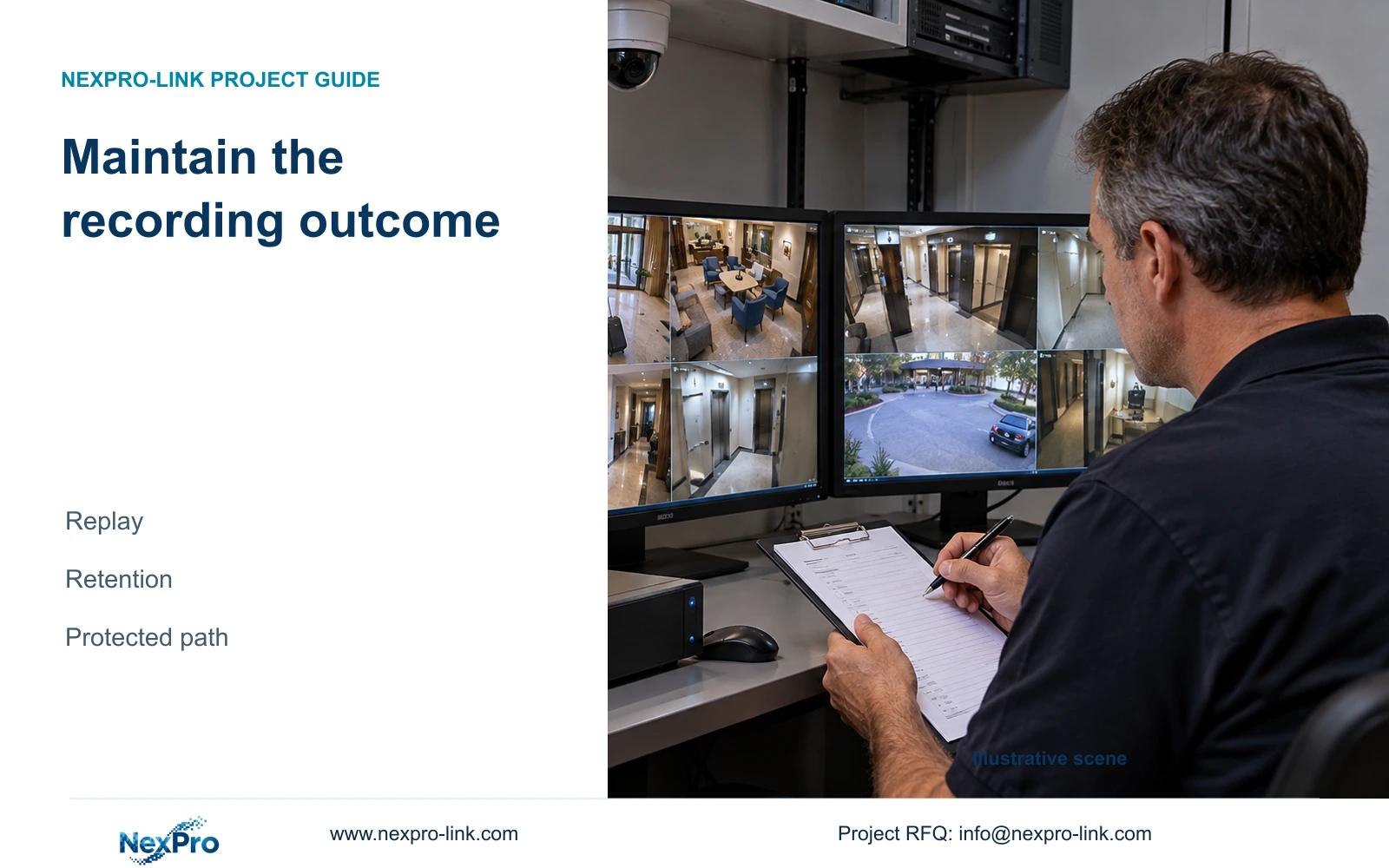
Inspect the recording history the hotel can actually retrieve. Check the relevant oldest available footage and look for gaps within the approved policy. Keep that observation separate from a calculated capacity forecast. Recording days depend on stream behavior and the usable disk arrangement; camera count and raw disk labels alone do not establish retention.
Record raw capacity, any array effect, filesystem usable capacity and the space budget reserved for video. A stated 20% free-space target means dividing the planned video payload by 0.80, not multiplying it by 1.20. A dedicated hot spare cannot also count as recording capacity. Measure relevant stream behavior before assuming an encoding label will preserve the original retention.
Check time consistency across the required camera, recorder and retrieval workflow. An operator needs the intended event window to correspond to usable footage. Document observed discrepancies and their scope rather than treating a displayed clock as sufficient evidence. The qualitative acceptance matrix below uses observable tasks; it provides no measured score, failure rate or guaranteed retention result.
Section 04
Check the complete power path and authorized access
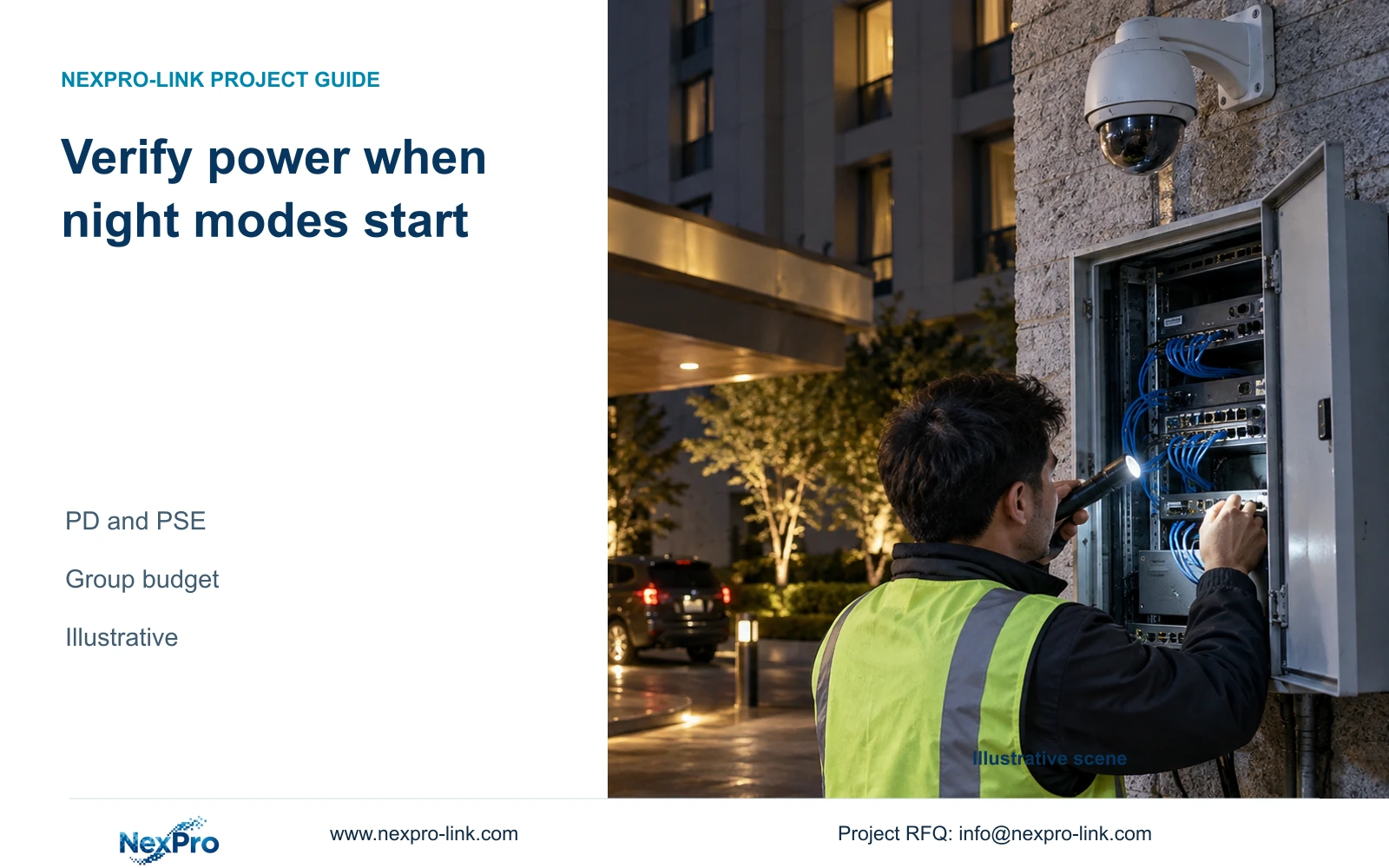
Map data dependencies separately from protected power. The recorder can remain illuminated while a remote access switch or required camera loses supply. A fiber backbone carries data without automatically powering the remote node. Inspect the actual protection zones and ask the responsible electrical professional to supervise any agreed outage or switching exercise.
The retained figure illustrates preview-only versus task-based checks; it reports no completed maintenance. Use the inspection record below to connect the actual protected path, access permissions and observed anomaly to a responsible corrective action. Do not classify an optional display as a recording dependency unless the required operating task actually depends on it.
Review access with the hotel IT and security roles. Confirm that authorized users can perform required viewing, retrieval and export, and that support access follows the approved scope. Test only functions the selected equipment and software support. An unrestricted shared administrator account should not become the maintenance shortcut for every user or support party.
| Check | Evidence to retain | Action or hold boundary |
|---|---|---|
| Protected capture path | Actual camera, network and recorder power map | Electrical professional reviews an unobserved or unsafe dependency |
| Recording and retention | Relevant interval, recorded scene and usable capacity | Preserve records and investigate gaps before changing retention |
| Authorized retrieval | Role, version and permitted task observed | Escalate unsupported export or missing permission |
| Changed baseline | Configuration difference and repeated task | Do not close on a clear live preview alone |
| Follow-up | Owner, next condition-based check and outstanding input | Unobserved results stay blank; no invented fixed interval |
Section 05
Compare observations with the approved baseline
Retain the original accepted task, relevant settings and observation conditions as the comparison baseline. Record what changed during each inspection. A different lighting condition, firmware version or stream profile can explain a difference that a simple pass/fail field conceals. Keep the sample scope clear so a limited inspection does not appear to cover every device.
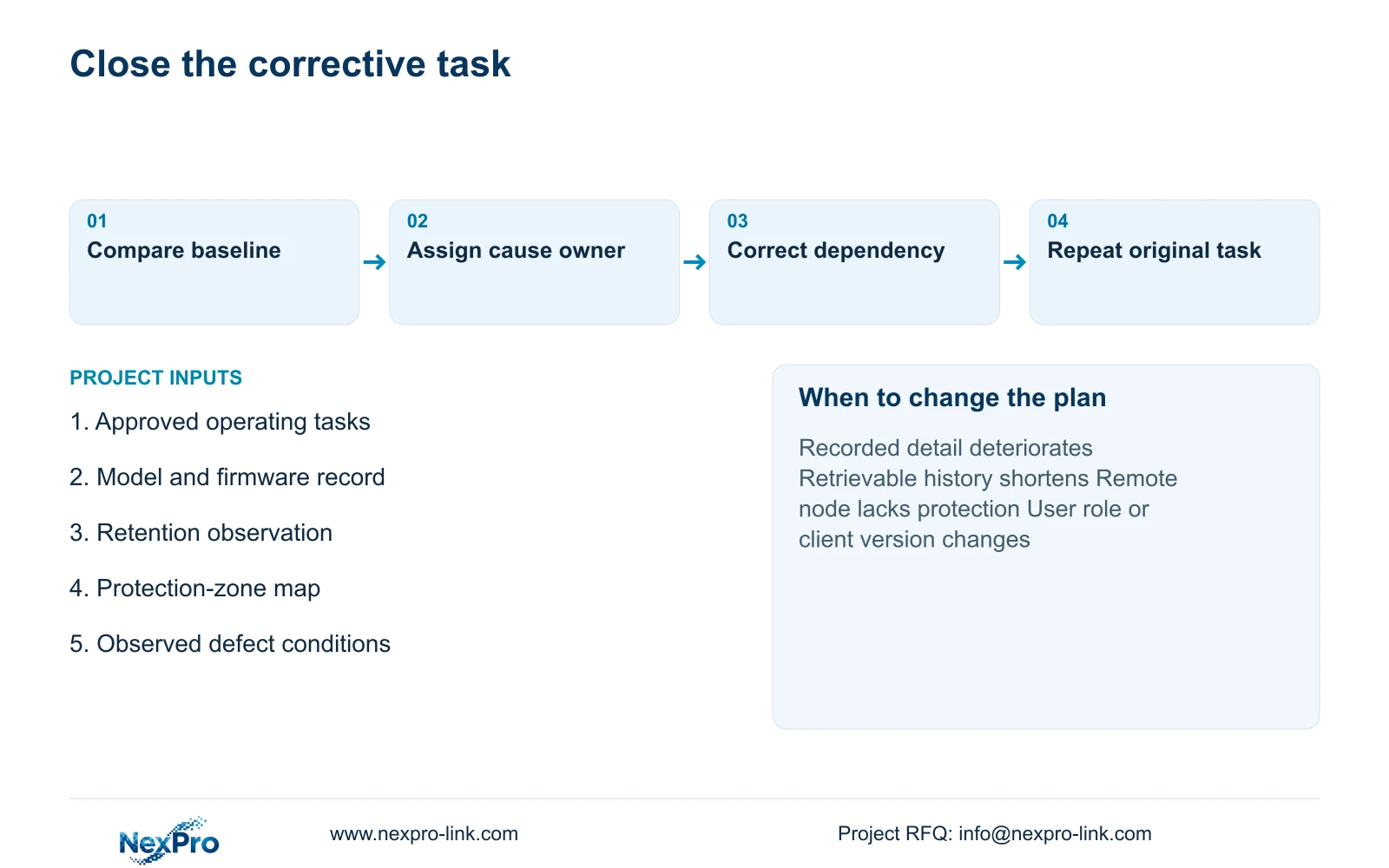
Use recurring observations to direct work. Shorter retrievable history calls for review of stream behavior and usable storage. Repeated loss at a shared node calls for dependency investigation. Changes in the public view call for a scene review. These patterns can support a corrective decision without establishing a population failure rate or equipment lifetime.
Compare added maintenance or equipment scope against the preserved task. More storage is useful when the supported arrangement cannot meet the approved retention at the required profile. A display upgrade does not correct missing recordings. Record unresolved causes and repeat the affected task after correction before closing it.
| Retained outcome | Extra scope | When worth buying | Counter-condition |
|---|---|---|---|
| Usable entrance detail | Scene adjustment or suitable replacement | Recorded task remains inadequate | Cleaning or approved adjustment restores it |
| Approved retention | Supported storage change | Actual usable budget is insufficient | Configuration correction restores the target |
| Outage recording | Remote-node protection | Required node lies outside protection | Existing protection already meets the task |
Section 06
Assign corrective work by service impact
Prioritize missing required recording and failed retrieval according to the hotel's operating needs. Assign the equipment supplier, local installer or hotel IT team the action within its actual responsibility. The corrective record should name the unresolved task and the conditions for retest. Administrative closure alone does not establish restoration.
Separate scheduled local maintenance from warranty handling. The supplied October 7, 2026 policy record states a 24-month limited hardware baseline from receipt for applicable main equipment, subject to controlling written terms. Batteries, disks, cable and OEM scope can differ. Continuing technical support does not mean all inspections, local labor or return transport are included.
Use recorded-task checks as the maintenance baseline, with shorter or broader checks when the environment, incident history or configuration changes. Where the operator specifies additional tasks, retain them in the plan. Send info@nexpro-link.com the affected task, installed models and versions, current retention observation and relevant power or network boundary. Include local-service needs so a technical response or replacement proposal can identify what the supplier coordinates and what the site team must execute.
Section 07
Buyer questions
Is a monthly inspection required for every hotel? No universal interval is established here. Select frequency from the operating requirements and environment, then revise it when recorded observations or system changes show that the existing schedule misses necessary corrective work.
Can a sample inspection prove all cameras are satisfactory? It supports only the observed sample and conditions. Identify uninspected roles and dependencies, and expand the scope when their consequences require it. Do not convert a limited result into a zero-defect claim.
Should maintenance exports include all guest activity? Use the authorized camera scope and time window needed for the check. The hotel should control recipients and transfer arrangements. An initial supplier inquiry can use sanitized task and configuration information without guest recordings.
Engineering references
These sources support the general planning principles. Always use the selected product's current datasheet and applicable project standards for final design.