Electrical protection, surge protection and cybersecurity address different failure paths and should be coordinated rather than ranked by fear.
Section 01
Classify physical and digital threats separately
For Enterprise security leads, the first project decision is this: Does electrical protection reduce the need for cyber controls? No. Electrical disturbances and malicious activity follow different paths. Compare their potential impact on availability, integrity and recovery without claiming equal frequency or cost. For a project-specific decision, record event, affected layer, preventive control and recovery control in the threat map. This keeps the equipment inputs and intended service outcome aligned. The practical output is threat map: event / affected layer / preventive control / recovery control, supported by critical rack layout, known power events and existing protection arrangement.
Electrical protection, surge protection and cybersecurity address different failure paths and should be coordinated rather than ranked by fear.
A transient at the distribution board, a two-minute outage and ransomware reaching an administrator account do not share a failure path. Put them in separate rows with an affected layer, preventive control and recovery control. This keeps an electrical purchase from being presented as a cybersecurity answer.
The layers still meet at operations. A power event can interrupt logging, and a compromised management account can change UPS settings or issue a control command. Coordinated design means the boundaries are visible and the handoffs are owned.
| Event | Affected layer | Primary control |
|---|---|---|
| Incoming transient | Power input and connected supplies | Coordinated surge protection and bonding |
| Short mains loss | UPS and critical load | Stored energy and shutdown policy |
| Credential attack | Management and application access | Segmentation, least privilege and recovery-tested backup |
Section 02
Give the UPS and surge protection distinct roles
A UPS supports continuity when input leaves its operating window. A surge protective device is installed at the appropriate point in the distribution path to divert transient energy within its design and installation limits. One device should not be used as shorthand for the whole protection system.
Show the service entrance, distribution board, feeder, rack UPS and final loads as a coordinated path. Record who specifies the SPD, who installs the protective conductors, and which equipment and interfaces are included in the UPS supply package.
- Incoming protection belongs in the electrical distribution design.
- The UPS supplies the critical load during defined input events.
- Rack distribution and local installation remain explicit project lines.
Section 03
Keep bonding inside the project boundary
Protective performance depends on the surrounding installation. The SPD reference, rack frame, UPS protective conductor and building earth need a defined and inspected path. A product schedule that omits these interfaces leaves a gap between supply and installed behavior.
Assign the work to qualified electrical personnel and keep the integrator's equipment interfaces visible. This article does not replace the site electrical design. It gives buyers a way to ask who owns each connection before equipment arrives.
| Interface | Purpose | Typical owner |
|---|---|---|
| SPD to main earth bar | Reference transient protection to the site bonding network | Electrical contractor |
| Rack frame to building earth | Protective bonding of the enclosure | Electrical contractor |
| UPS output protective conductor | Keep UPS, distribution and load earthing consistent | Electrical contractor with integrator review |
Section 04
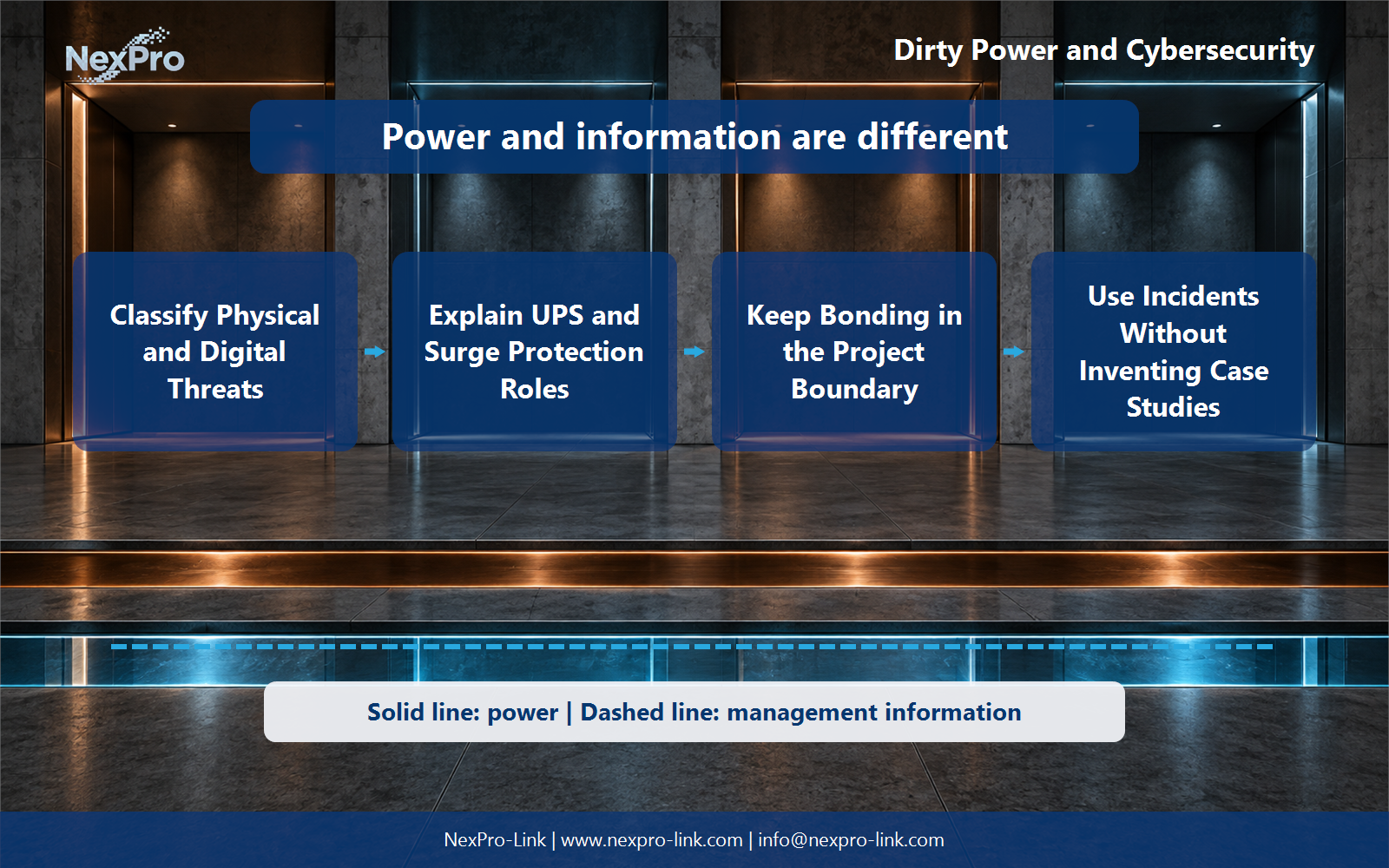
Use incident evidence before naming a cause
A switch that fails after a transfer may have suffered an earlier transient, a failed power supply or an unrelated hardware fault. Repeated login failures after the same event may be a separate credential problem. Put observations, possible mechanisms, missing evidence and immediate remedies in different columns.
Align UPS logs, power-quality records and security logs by timestamp. Restore service safely, preserve the evidence that remains, and label the final diagnosis only when the responsible specialists can support it.
Section 05
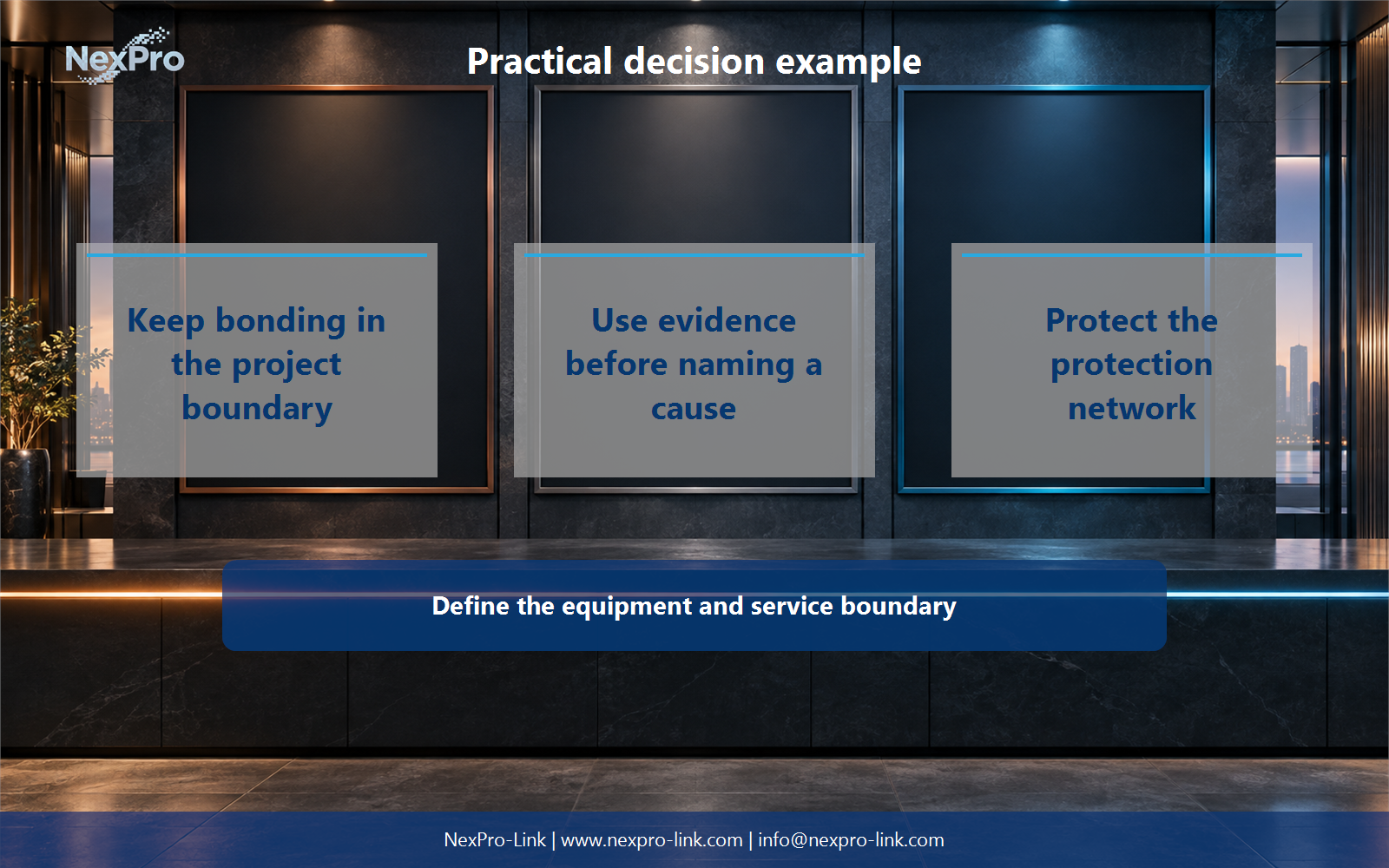
Protect the protection network
A network card adds useful status, alert and shutdown functions, and it also adds credentials, firmware and reachable services. Place it on a managed network, change default credentials, restrict administration and separate read-only monitoring from shutdown authority.
The equipment request should cover the critical load, known power events, existing distribution, required management interfaces and local electrical scope. Keep cybersecurity policy, network configuration and field installation as named responsibilities rather than hiding them inside the UPS line item.
Section 06
FAQ: dirty power and cybersecurity layers
Does electrical protection reduce the need for cyber controls? No. The threats follow different paths and need different preventive and recovery controls.
Can a UPS be the whole surge-protection design? No. UPS operation, SPD coordination, bonding and installation each have a defined role.
Can the UPS create a network exposure? Its management interface can. Limit reachability and permissions, and maintain it like other managed infrastructure.
What should be sent for a coordinated request? The load list, supply events, distribution diagram, management requirements and a clear statement of local work.
Engineering references
These sources support the general planning principles. Always use the selected product's current datasheet and applicable project standards for final design.