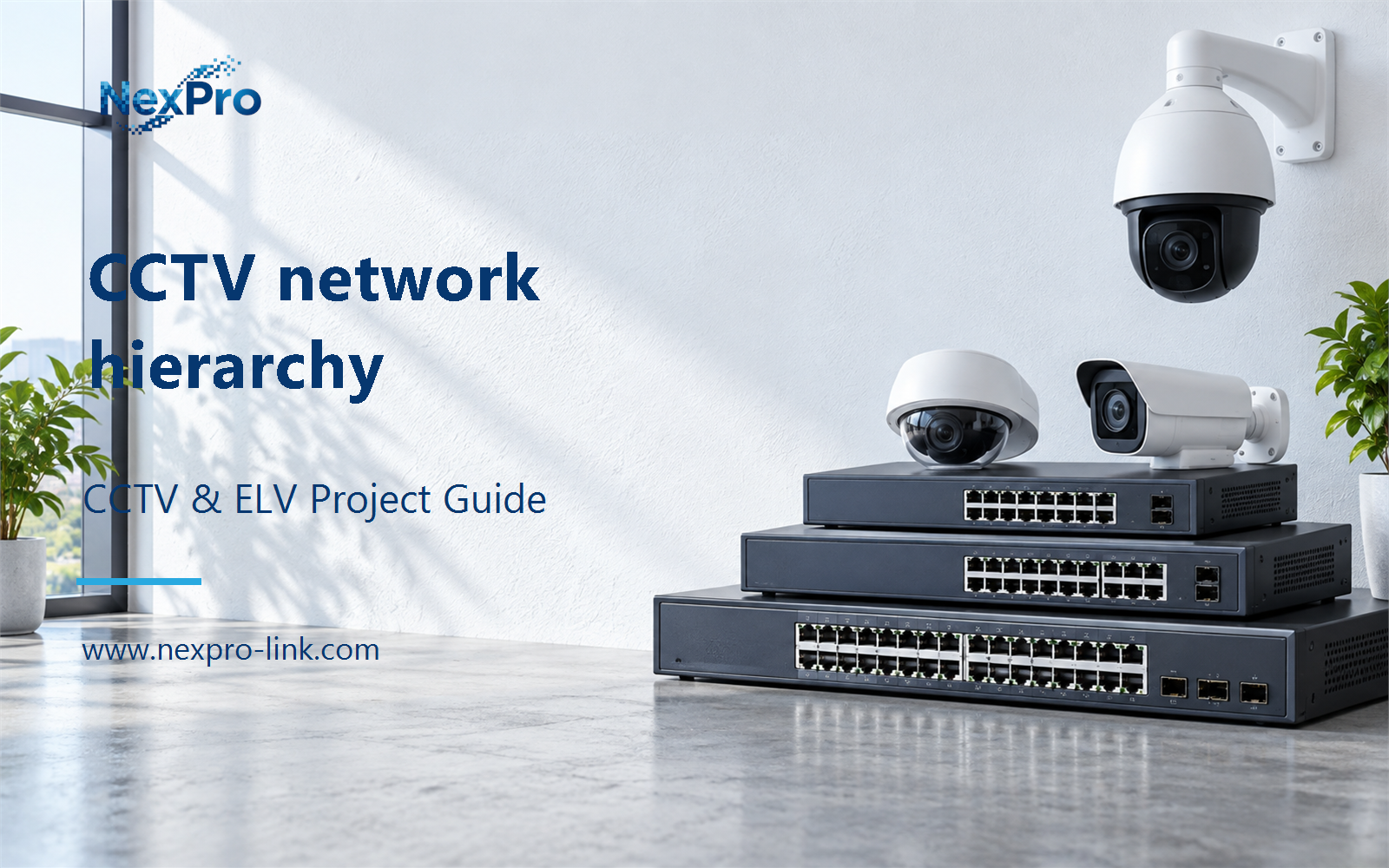
Plan CCTV network hierarchy with practical guidance on assign functions before devices and connect recording and shared services. NexPro-Link project guide.
Section 01
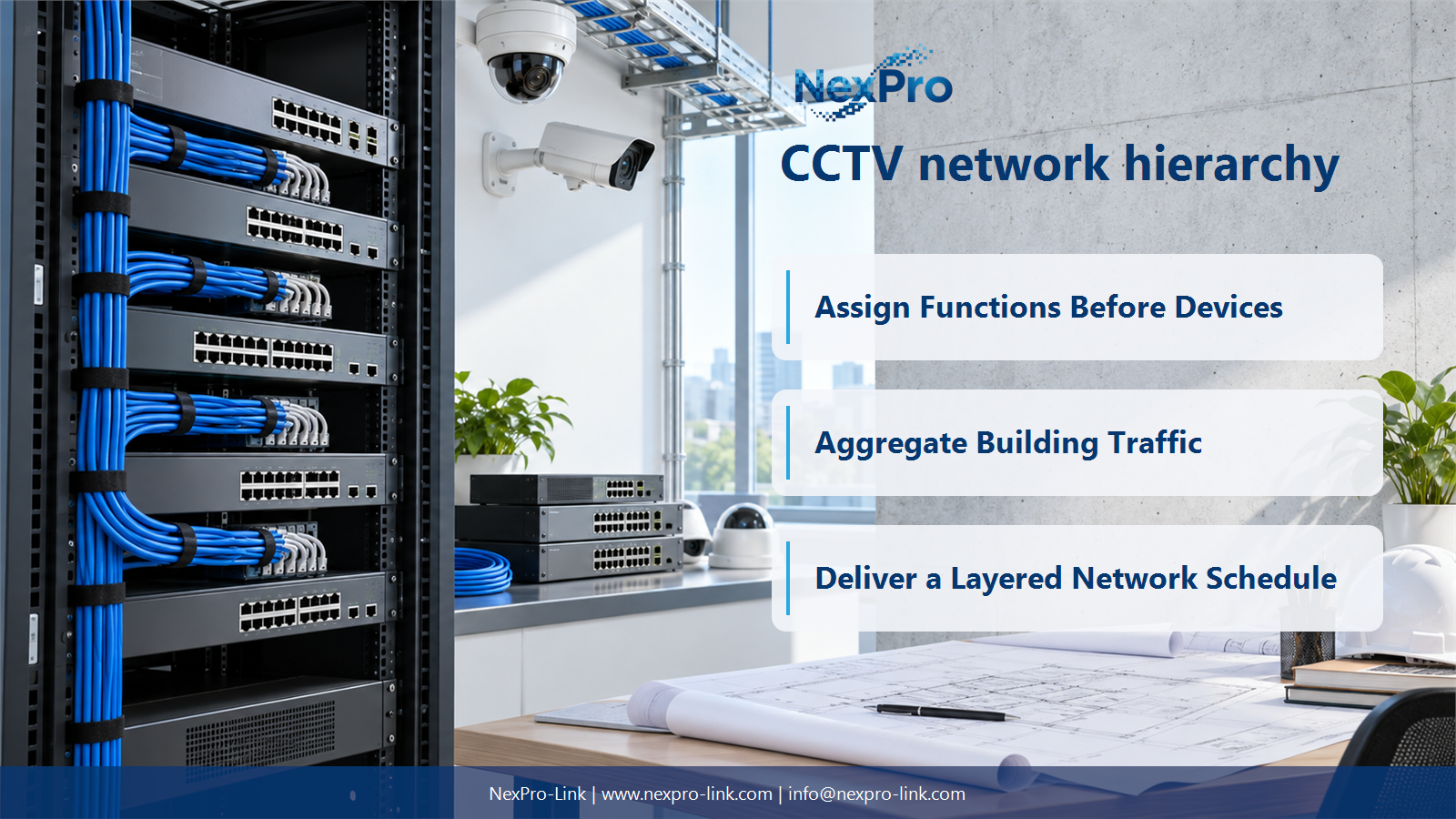
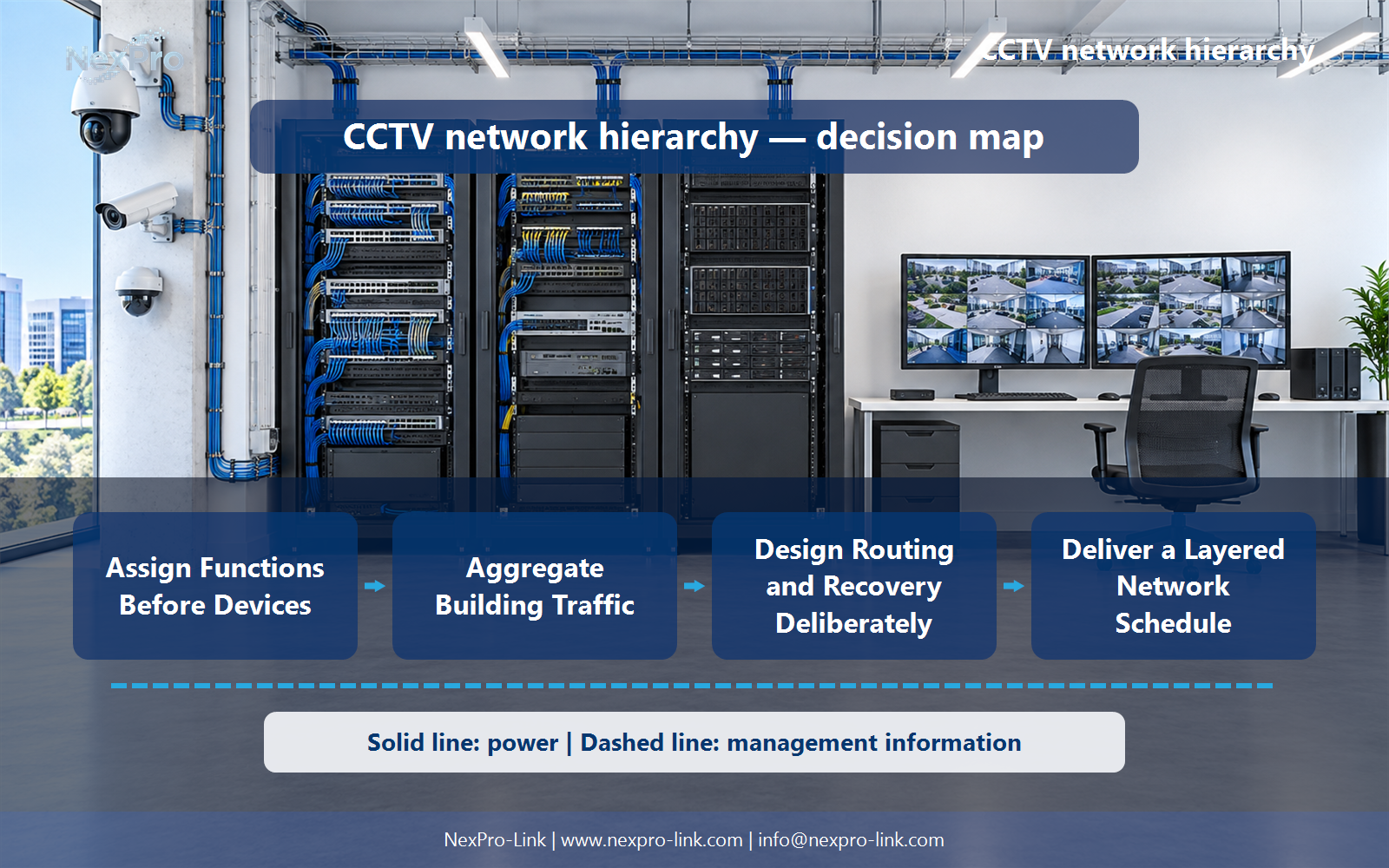
Assign Functions Before Devices
No. Access, distribution and core describe functions that may be combined in a smaller supported design. Separate them when scale, routing, fault isolation or operations justify it. Adding more boxes without a clear function increases complexity and shared dependencies rather than automatically improving the system.
Turn the answer into a working record using Function, Required role, Combined or separate, Reason.
| Decision area | Buyer question | Required output |
|---|---|---|
| Assign Functions Before Devices | Does every CCTV project need three network layers? | No. |
| Place PoE at the Access Edge | What belongs at the CCTV access layer? | It connects cameras and supplies power where the selected devices use PoE. |
| Aggregate Building Traffic | What does the distribution layer do? | It collects access traffic and may provide routing, policy or resilient uplinks according to the design. |
Section 02
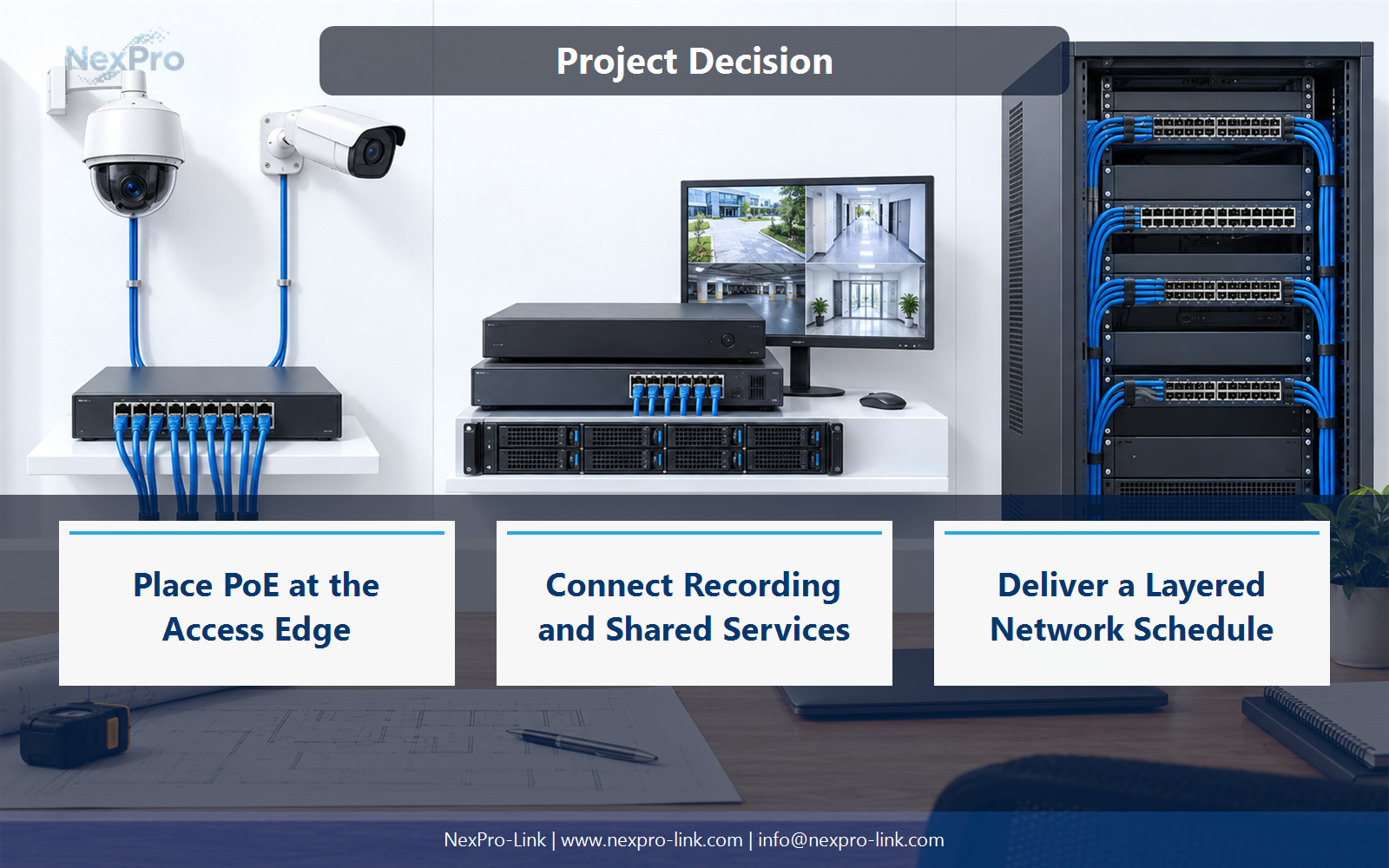
Place PoE at the Access Edge
It connects cameras and supplies power where the selected devices use PoE. Group endpoints around practical cable routes and field conditions. Access-switch port and power limits must be calculated locally, even when the main recording workload is handled elsewhere.
Use Zone, Camera ports, PoE load, Cable routes to compare options on the same basis. Keep product capability, project assumption and operating responsibility in separate columns.
Section 03
Aggregate Building Traffic
It collects access traffic and may provide routing, policy or resilient uplinks according to the design. Calculate the combined flows that cross each distribution link. Building-level failure impact and maintenance access are often more useful design criteria than the number of switches alone.
The project output should make Building, Access nodes, Aggregate flow, Uplink, Policy traceable from input to acceptance.
- Confirm the answer to: What does the distribution layer do?
- Record the project fields: Building / Access nodes / Aggregate flow / Uplink / Policy.
- Keep product capability, project assumptions and site responsibility in separate records.
Section 05
Design Routing and Recovery Deliberately
Routing capability alone does not define security. Configure the required access rules, management restrictions and recovery behavior using the supported design. Redundant links also need an appropriate control mechanism and surviving capacity; neither routing nor duplicate ports automatically supplies those policies.
Review Route, Access rule, Recovery path, Owner with the party that will operate or maintain the system.
Section 06
Deliver a Layered Network Schedule
Provide port assignments, link media, addresses, service flows and power zones alongside the topology. Identify the functions each device must support without inventing a core-switch model from an access-switch naming pattern. The schedule should make configuration and maintenance responsibilities visible.
Use Layer, Device role, Ports, Media, Required features, Power as the handoff between design and procurement.
Engineering references
These sources support the general planning principles. Always use the selected product's current datasheet and applicable project standards for final design.