An AC UPS can supply watts, but a cable-network node is selected by its input interface before its watt rating. Many nodes run through a dedicated network power supply rather than a utility-fed AC circuit, so a UPS.
Section 01
Identify the Node Power Interface
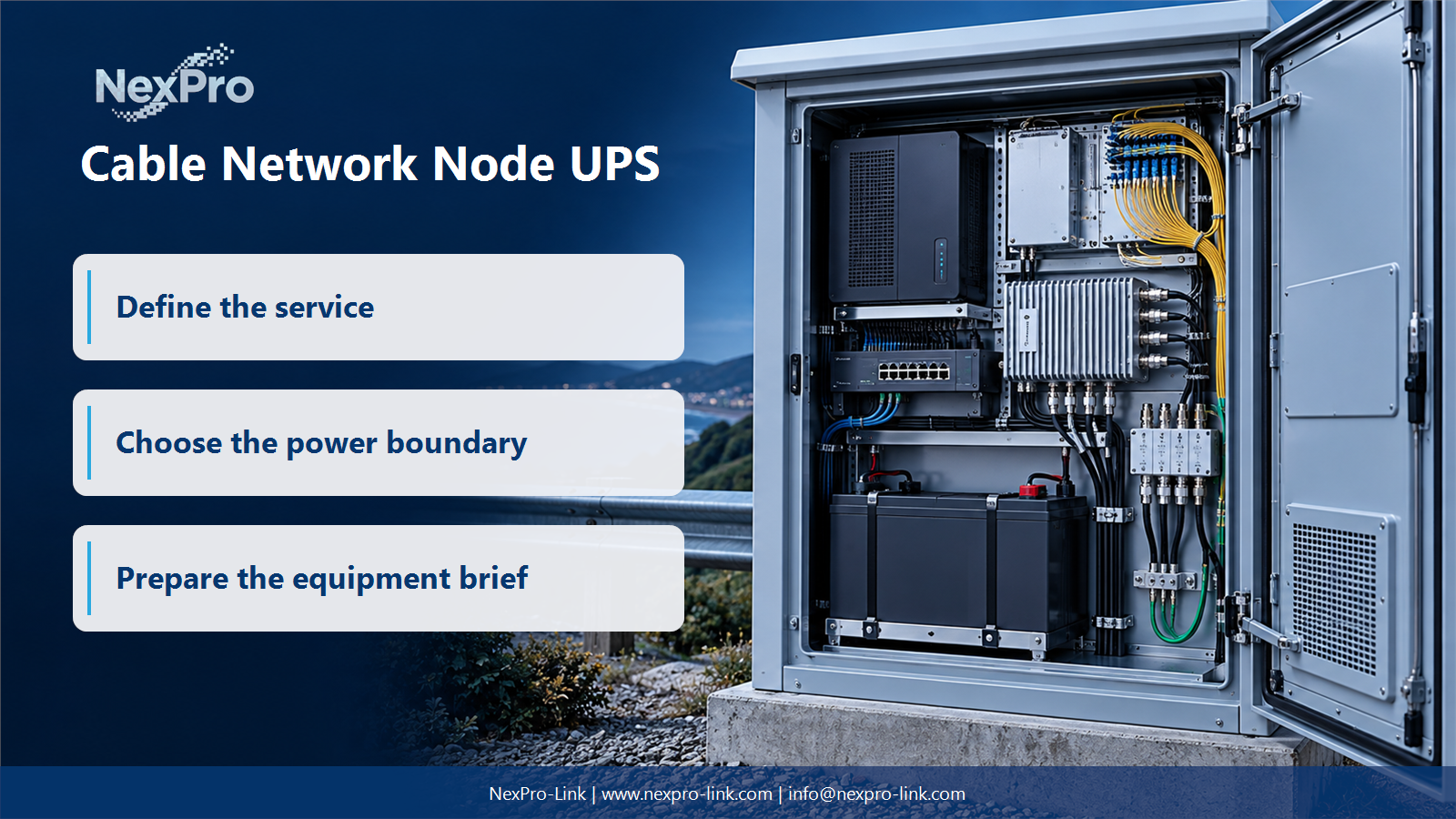
An AC UPS can supply watts, but a cable-network node is selected by its input interface before its watt rating. Many nodes run through a dedicated network power supply rather than a utility-fed AC circuit, so a UPS that looks large enough on paper may not belong in the power path at all. Match the interface first, then the rating.
No. Begin with the node's documented input interface and any dedicated network power equipment. A specialized supply arrangement cannot be replaced merely because the UPS has enough nominal watts. Keep the equipment and distribution boundaries explicit.
Capture the answer in the interface table: node / required input / converter / distribution before equipment is compared. This gives the project team a concrete service target and exposes missing dependencies early.
| Decision area | Project question | Required output |
|---|---|---|
| Identify the Node Power Interface | Can any AC UPS power a cable-network node? | Interface table: node / required input / converter / distribution |
| Define the Supported Service | What should stay operational during a source outage? | Service map: node / upstream / management / protected scope |
| Budget Demand and Recharge | Which operating states should be calculated? | Budget: normal / peak / conversion / recharge |
Section 02
Define the Supported Service
Identify the node functions, local network devices and monitoring needed for the agreed service. Trace upstream dependencies as limits. Local battery power cannot guarantee service if the upstream network or another required supply has failed.
Use the service map: node / upstream / management / protected scope to keep real interfaces and operating states visible. Measured demand, equipment limits and future allowances should remain separate entries.
Section 03
Budget Demand and Recharge
Include normal service, relevant peaks and restoration with battery charging. State whether the demand is measured at the load or source side. This prevents conversion and charging requirements from disappearing behind a single nominal node-wattage value.
Review the budget: normal / peak / conversion / recharge with the owners of the connected systems. Power continuity only supports the functions that remain connected and available during the event.
- Confirm the answer to: Which operating states should be calculated?
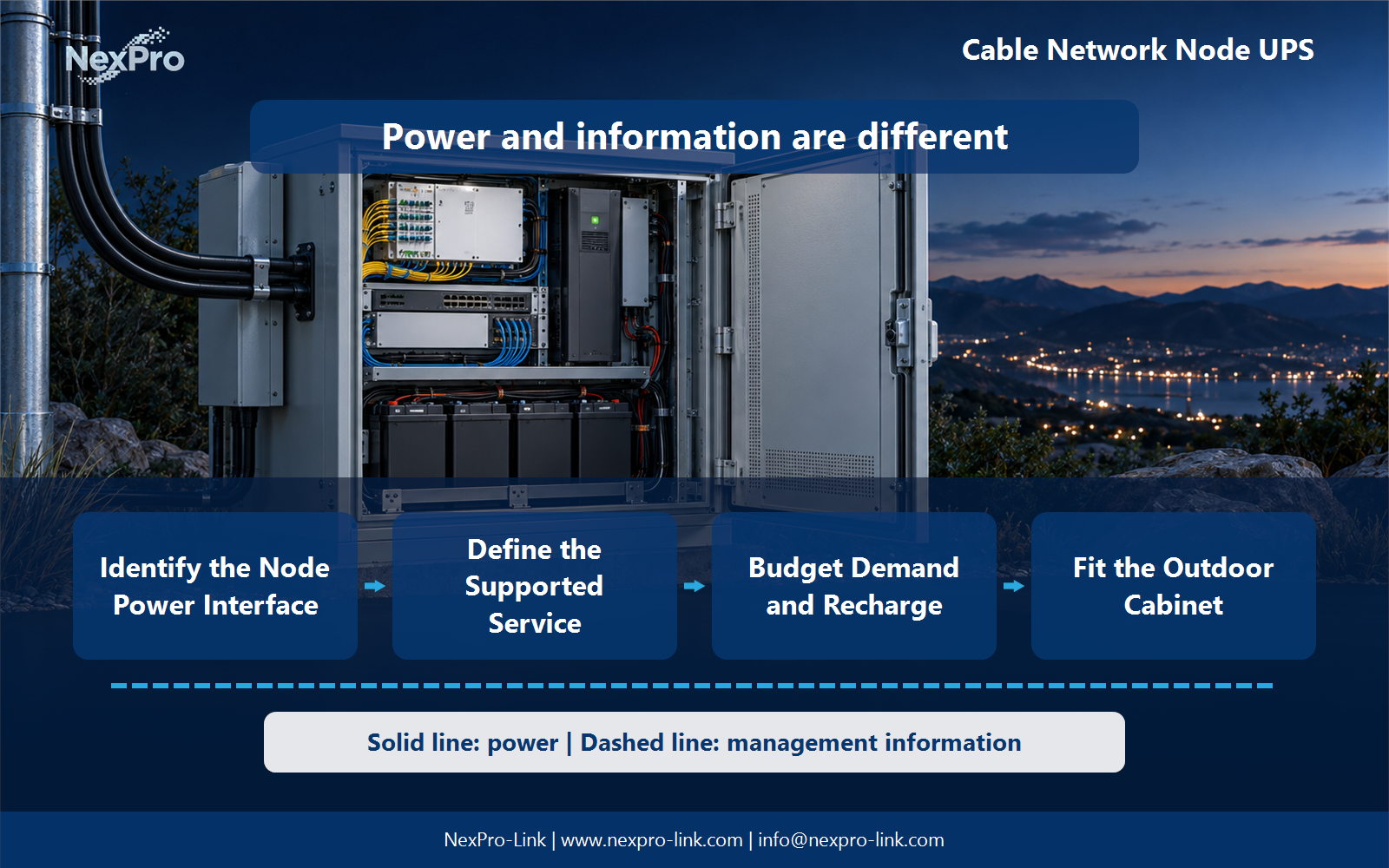
- Draw electrical power as a solid path and management information as a separate dashed path.
- Keep external services and specialist approvals outside the UPS equipment claim.
Section 04
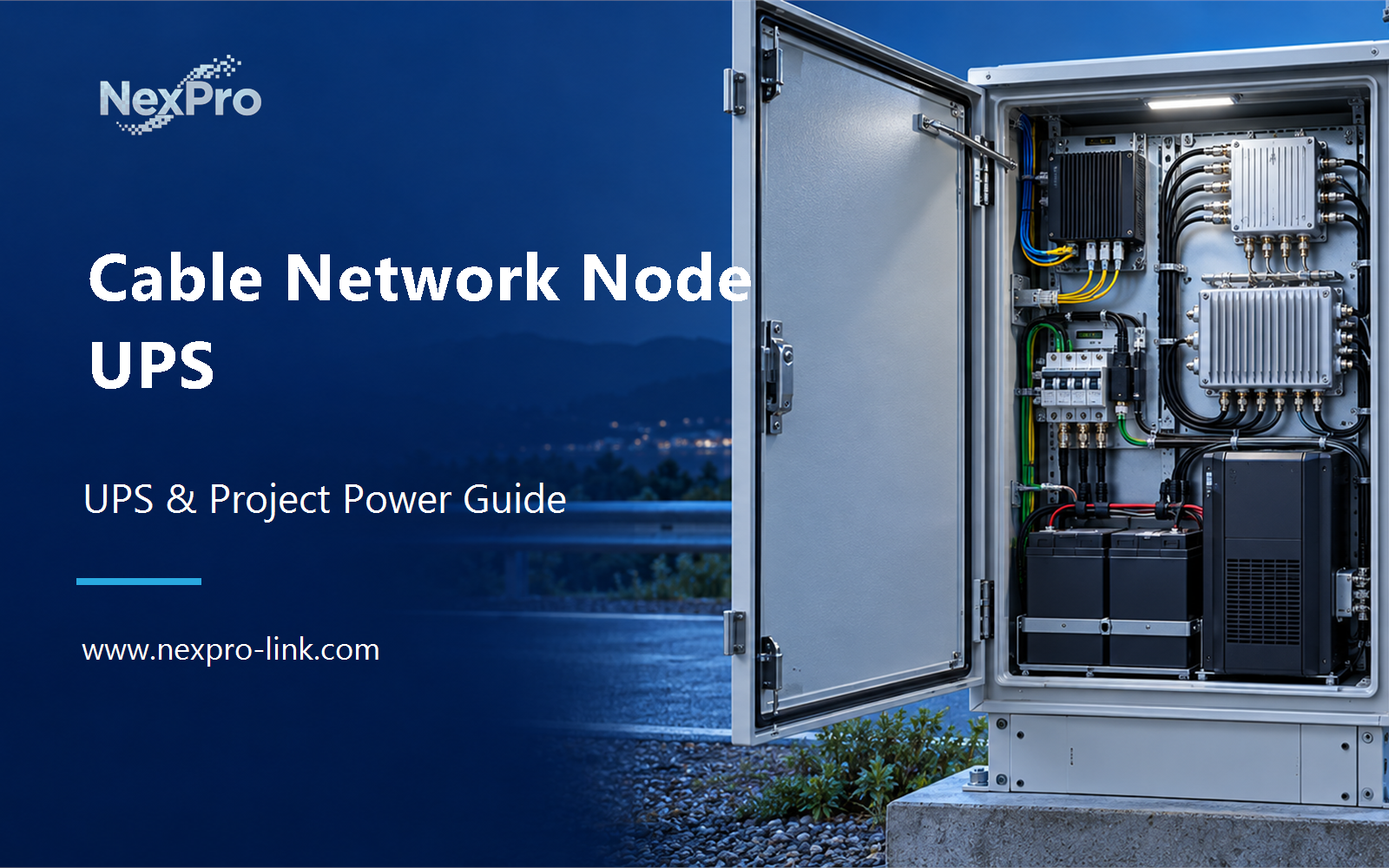
Fit the Outdoor Cabinet
Use available depth, ventilation, environmental limits and service access as well as rack or wall-mount dimensions. Define where batteries are located. Compact size alone does not establish that equipment can operate in the site's outdoor conditions.
Document this choice in the fit sheet: dimensions / ambient / ventilation / battery access, including the condition that triggers it and the person responsible for the response.
Section 05
Control Remote Restart
Only as part of a supported and authorized recovery policy. Define when power is stable, how retries are limited and how service readiness is checked. Repeated automatic cycling can prolong an outage rather than fix it.
Test the sequence represented by the restart policy: trigger / delay / retry limit / confirmation during an approved maintenance window. Record the observations needed to confirm recovery.
Section 06
Specify a Repeatable Node Package
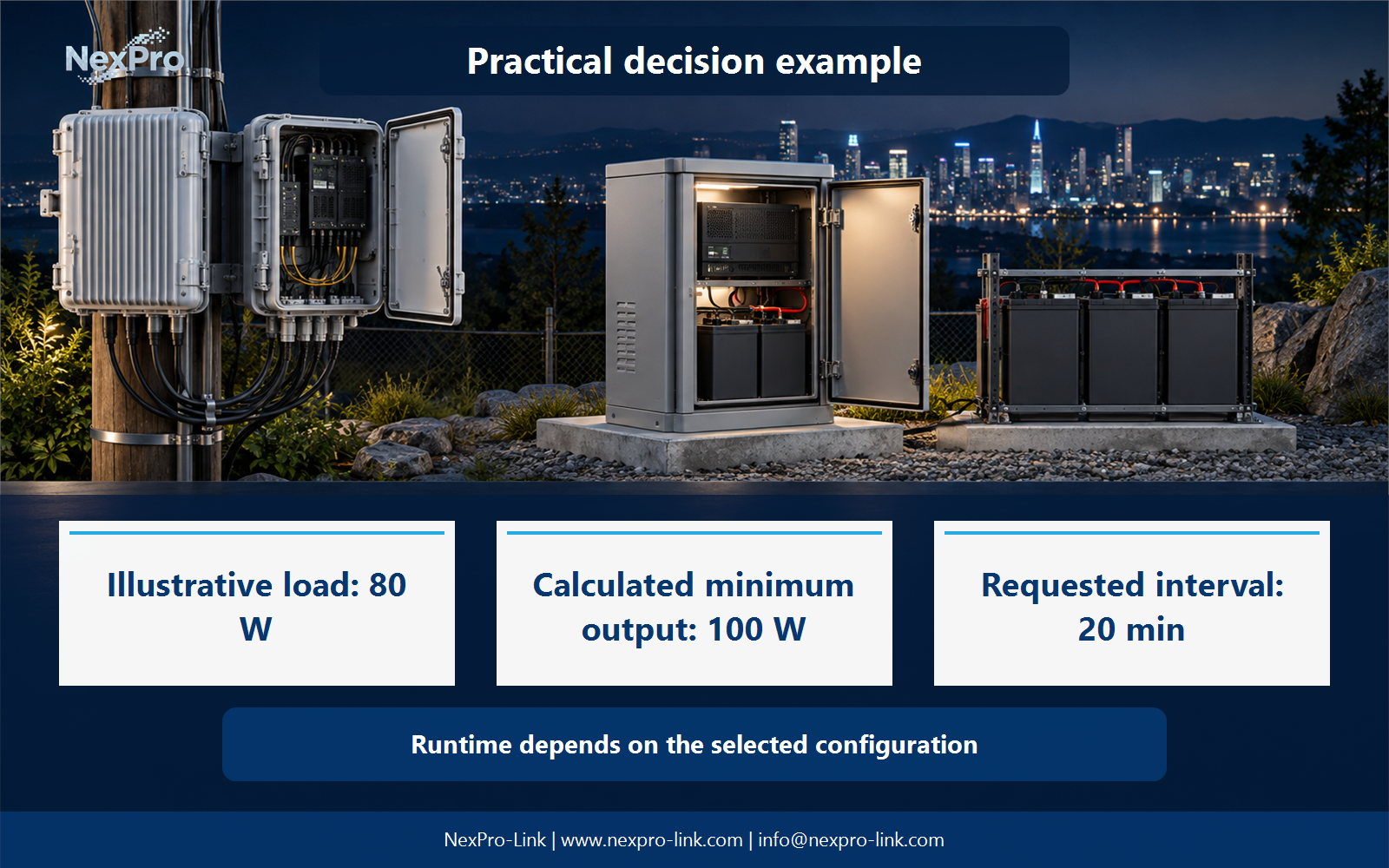
Provide the node input requirements, site variants and recovery policy, along with demand and runtime objectives. NexPro-Link can discuss compatible backup options for the defined scope. Do not represent a general UPS as an approved specialized cable-network supply without applicable information.
Send the completed package matrix: base node / supply interface / environment / option with the project request. It is more useful than a capacity number without interfaces, operating states or a defined service boundary.
Engineering references
These sources support the general planning principles. Always use the selected product's current datasheet and applicable project standards for final design.