Calculate energy savings from the input difference at the same output load, and keep UPS losses separate from whole-facility PUE.
Section 01
Define the Metering Boundary
Calculate energy savings from the input difference at the same output load, and keep UPS losses separate from whole-facility PUE.
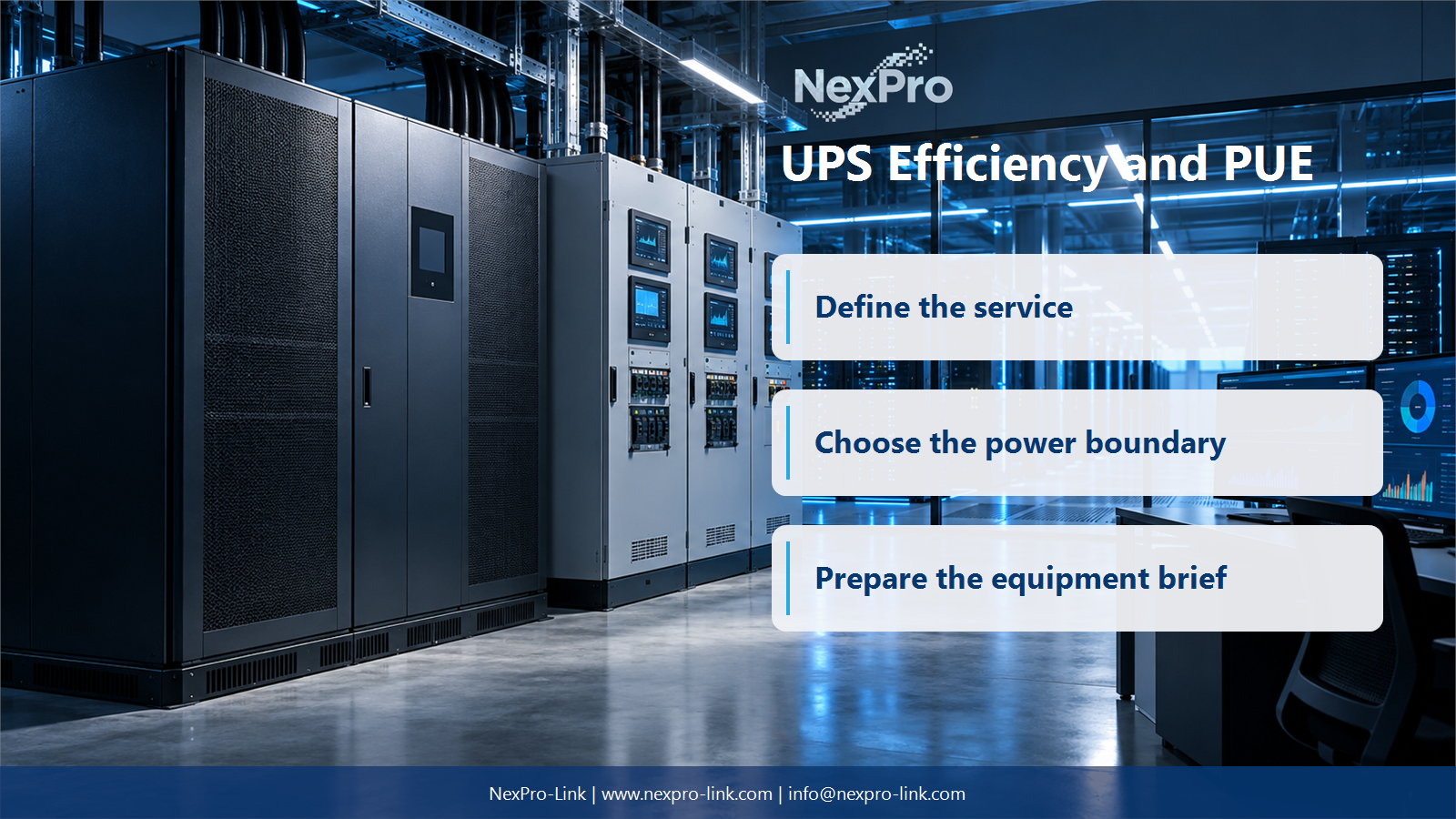
No. UPS efficiency concerns useful output relative to input at its defined boundary; PUE concerns a wider facility-to-IT energy relationship. Keep those boundaries explicit so a reduction in UPS loss is not presented as an identical percentage improvement in whole-facility performance.
The working question is simple: Is UPS efficiency the same as data-center PUE? Record the answer as a service requirement before comparing UPS ratings or battery options.
| Decision area | Project question | Required output |
|---|---|---|
| Define the Metering Boundary | Is UPS efficiency the same as data-center PUE? | Approved service objective |
| Use the Actual Load Fraction | Which efficiency figure belongs in the calculation? | Defined load and dependency boundary |
| Calculate Losses Transparently | How do two efficiency values translate into energy use? | Reviewed power-path decision |
Section 02
Use the Actual Load Fraction
Use the value relevant to the chosen operating mode and expected load fraction. A peak specification can misrepresent a lightly loaded system. For variable load, calculate periods separately or use a justified weighted profile rather than one convenient headline number.
Keep the load list, operating state and supporting dependencies in the same schedule. This makes omissions visible before runtime or capacity is discussed.
- Confirm the answer to: Which efficiency figure belongs in the calculation?
- Separate measured demand, nameplate limits and committed growth.
- Identify the owner of each external service or approval.
Section 03
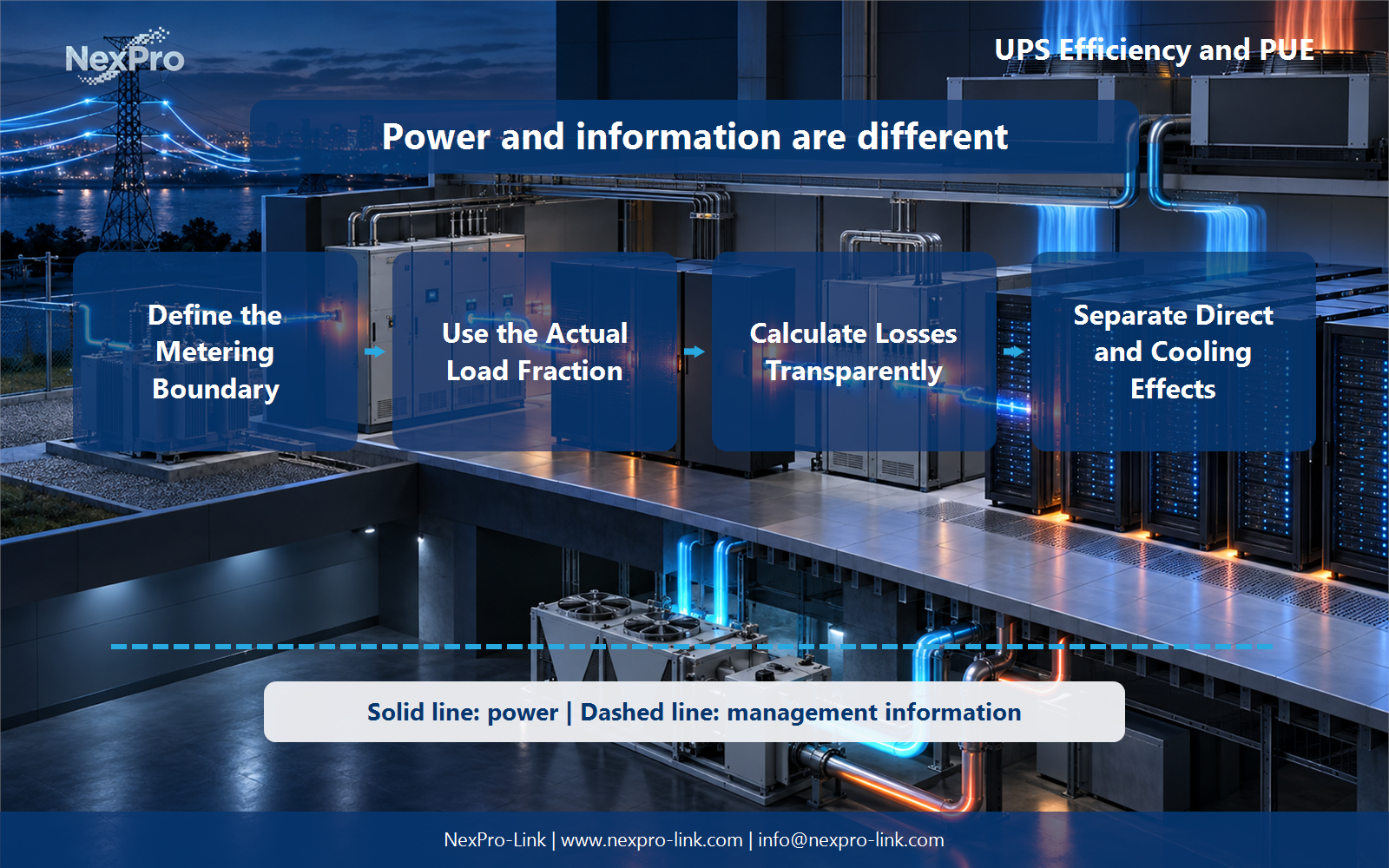
Calculate Losses Transparently and Separate Direct and Cooling Effects
At a fixed useful output, input power equals output divided by efficiency. The difference between the two inputs gives the loss reduction for that load. Multiply by hours and tariff using explicit assumptions; the result is arithmetic, not a guaranteed site saving.
It may, depending on the cooling system and metering boundary. Show direct electrical savings first, then treat any cooling effect as a separate model with its own assumptions. Avoid automatically applying a multiplier or counting the same loss twice.
Draw power delivery as a solid path and management information as a separate dashed path. That distinction prevents an alarm or software command from being mistaken for an electrical protection function.
Section 04
Compare Savings with Investment
No. Payback depends on useful output load, hours, electricity price, incremental purchase cost and other operating costs. Compare efficiencies at equivalent load and operating mode, then calculate a range of cost scenarios. The same percentage improvement can have very different financial value at different sites.
Assign the action, acknowledgement, timeout and escalation owner before commissioning. The useful battery interval is the time needed for this approved sequence plus reserve, not an arbitrary marketing duration.
Section 05
Prepare a Like-for-Like Energy RFQ
Request output rating, operating modes and relevant efficiency data for the required load profile, with batteries and service scope separately defined. NexPro-Link can discuss configurations on that common basis rather than claim a universal energy-cost advantage before the site inputs are known.
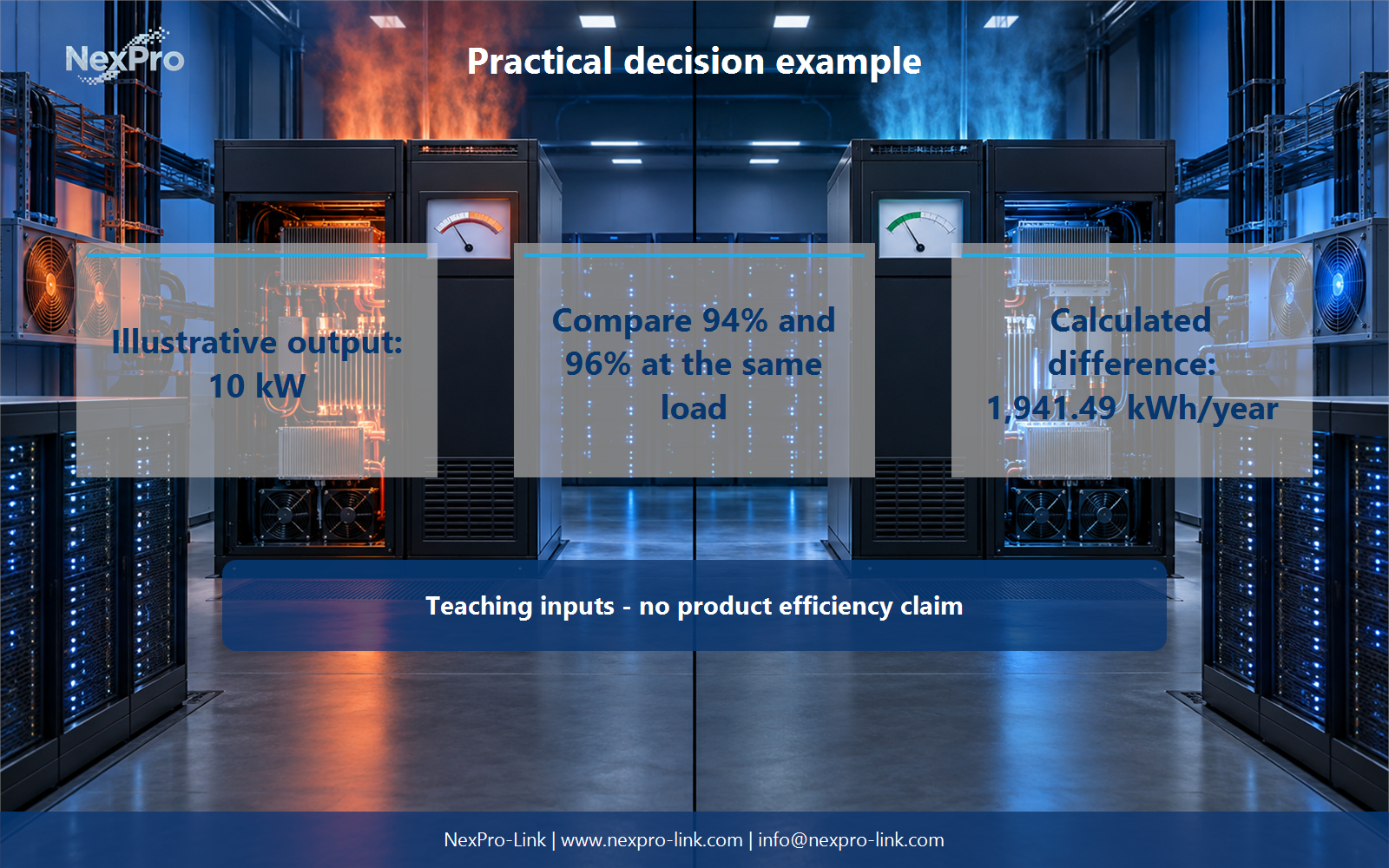
For the article's practical example, the stated teaching inputs are: Illustrative output: 10 kW. Compare 94% and 96% at the same load. Calculated difference: 1,941.49 kWh/year. Teaching inputs - no product efficiency claim. Treat these figures as planning assumptions, then replace them with measured or manufacturer-supported project data.
Engineering references
These sources support the general planning principles. Always use the selected product's current datasheet and applicable project standards for final design.