A metal stockyard uses overhead cranes and changing stacks, with vehicle loading beside a covered warehouse. Evaluate the normal and permitted maximum stack arrangements.
Section 01
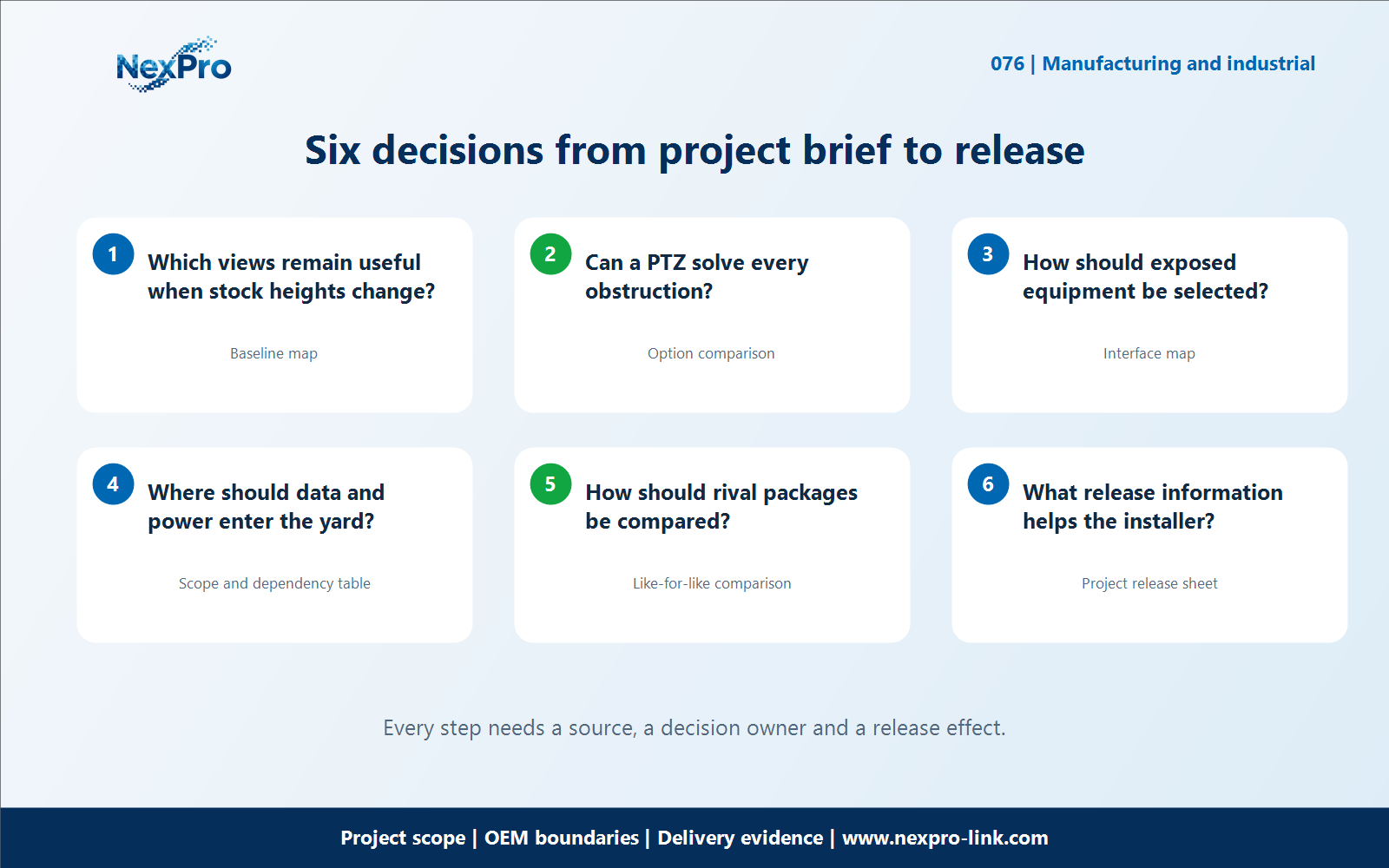
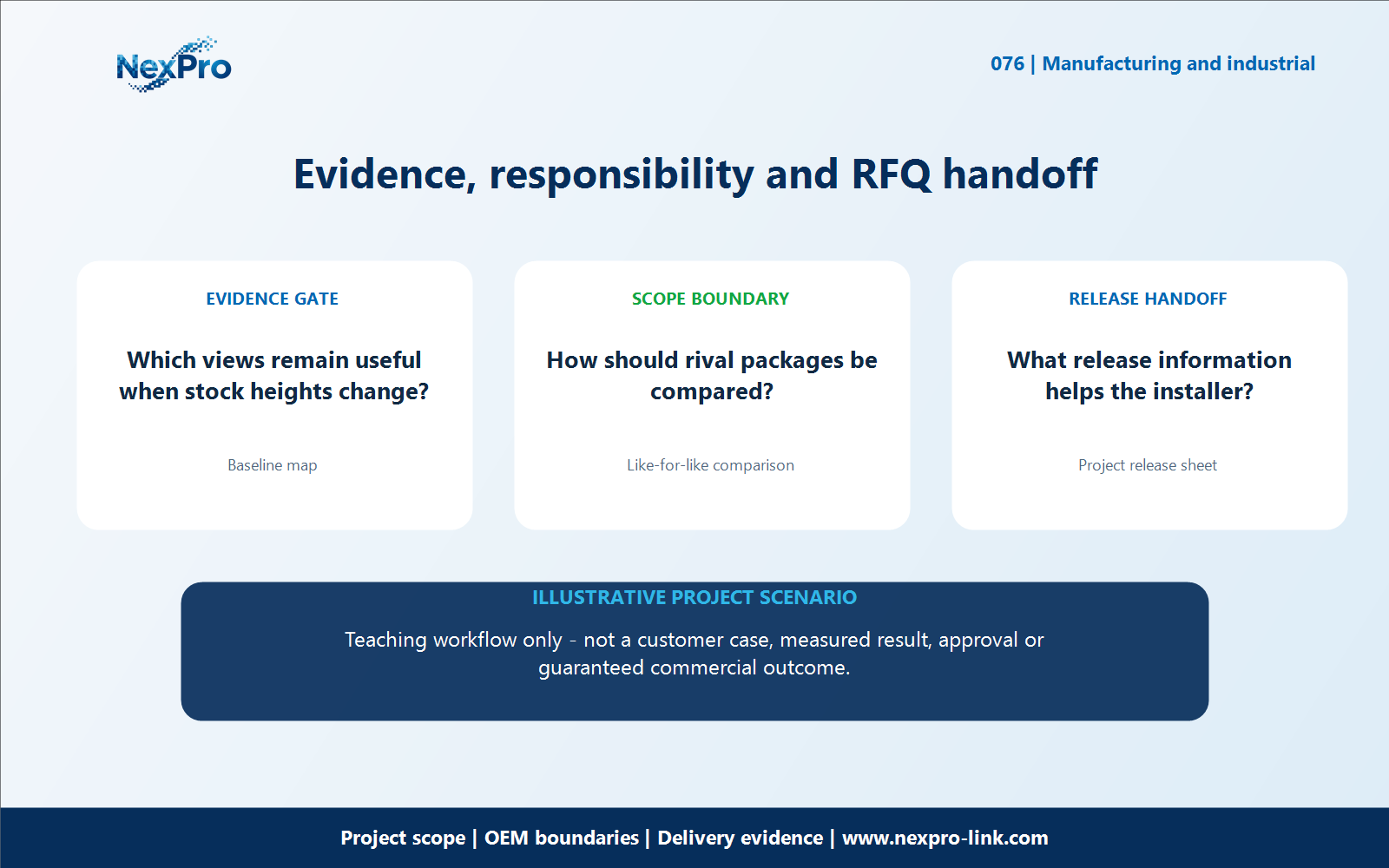
Which views remain useful when stock heights change?
A metal stockyard uses overhead cranes and changing stacks, with vehicle loading beside a covered warehouse. Evaluate the normal and permitted maximum stack arrangements. A clear empty-yard image is not a coverage result for the operating site. Identify the routes and handover points that must remain visible as inventory changes.
For the "Which views remain useful when stock heights change" decision, use the baseline map fields Area or item, Required task, Current assumption, Decision owner. Apply it to steel stockyard CCTV occlusion so the buyer, supplier and local integrator can see which input is confirmed, who owns it and which evidence remains open.
Evaluate which views remain useful when stock heights change against the stated site task and the surrounding equipment, documentation, packing and handover dependencies for steel stockyard CCTV occlusion. For which views remain useful when stock heights change in steel stockyard CCTV occlusion, record the confirmed condition, chosen option and remaining evidence separately; an open value is not a price, test, approval or customer-result claim.
Carry the which views remain useful when stock heights change decision into the RFQ, BOQ, configuration or release record for steel stockyard CCTV occlusion. For which views remain useful when stock heights change in steel stockyard CCTV occlusion, name the equipment, artwork, network, installation and acceptance owner; site-specific work remains with the buyer or integrator unless the signed scope says otherwise.
Section 02
Can a PTZ solve every obstruction?
Can a PTZ solve every obstruction? A PTZ can change its direction but cannot see through a stack or crane structure. Keep persistent critical views where the brief requires them. Security observation should remain separate from any engineered crane-safety or collision-prevention system. For Steel Stockyard CCTV: Plan Around Cranes, Stacks and Changing Sightlines, keep this decision tied to the same project brief rather than opening a separate generic specification exercise.
For the "Can a PTZ solve every obstruction" decision, use the option comparison fields Position or option, Suitable condition, Trade-off, Next choice. Apply it to steel stockyard CCTV occlusion so the buyer, supplier and local integrator can see which input is confirmed, who owns it and which evidence remains open.
Evaluate can a ptz solve every obstruction against the stated site task and the surrounding equipment, documentation, packing and handover dependencies for steel stockyard CCTV occlusion. For can a ptz solve every obstruction in steel stockyard CCTV occlusion, record the confirmed condition, chosen option and remaining evidence separately; an open value is not a price, test, approval or customer-result claim.
Carry the can a ptz solve every obstruction decision into the RFQ, BOQ, configuration or release record for steel stockyard CCTV occlusion. For can a ptz solve every obstruction in steel stockyard CCTV occlusion, name the equipment, artwork, network, installation and acceptance owner; site-specific work remains with the buyer or integrator unless the signed scope says otherwise.
Section 03
How should exposed equipment be selected?
How should exposed equipment be selected? Select camera and mounting arrangements for dust, weather, vibration and service access. The enclosure rating is only part of that decision. Place equipment where maintenance can be performed using the site's approved access and work procedures. For Steel Stockyard CCTV: Plan Around Cranes, Stacks and Changing Sightlines, keep this decision tied to the same project brief rather than opening a separate generic specification exercise.
For the "How should exposed equipment be selected" decision, use the interface map fields Device or record, Input, Output, Responsible party. Apply it to steel stockyard CCTV occlusion so the buyer, supplier and local integrator can see which input is confirmed, who owns it and which evidence remains open.
Evaluate how should exposed equipment be selected against the stated site task and the surrounding equipment, documentation, packing and handover dependencies for steel stockyard CCTV occlusion. For how should exposed equipment be selected in steel stockyard CCTV occlusion, record the confirmed condition, chosen option and remaining evidence separately; an open value is not a price, test, approval or customer-result claim.
Carry the how should exposed equipment be selected decision into the RFQ, BOQ, configuration or release record for steel stockyard CCTV occlusion. For how should exposed equipment be selected in steel stockyard CCTV occlusion, name the equipment, artwork, network, installation and acceptance owner; site-specific work remains with the buyer or integrator unless the signed scope says otherwise.
| Project question | Project-oriented treatment | Keep equal when comparing offers |
|---|---|---|
| Which views remain useful when stock heights change? | Evaluate the normal and permitted maximum stack arrangements. | Factory zone and environmental requirement |
| Can a PTZ solve every obstruction? | A PTZ can change its direction but cannot see through a stack or crane structure. | Required event-review task |
| How should exposed equipment be selected? | Select camera and mounting arrangements for dust, weather, vibration and service access. | Network and operational boundary |
| Where should data and power enter the yard? | Trace each remote cluster's data and power path separately. | Complete supply and local-work scope |
Section 04
Where should data and power enter the yard?
Where should data and power enter the yard? Trace each remote cluster's data and power path separately. A fiber backbone can connect a yard cabinet, but the cabinet and PoE devices still need a suitable local power plan. Keep this infrastructure visible in the equipment budget. For Steel Stockyard CCTV: Plan Around Cranes, Stacks and Changing Sightlines, keep this decision tied to the same project brief rather than opening a separate generic specification exercise.
For the "Where should data and power enter the yard" decision, use the scope and dependency table fields Item, Included, Dependency, Separate option. Apply it to steel stockyard CCTV occlusion so the buyer, supplier and local integrator can see which input is confirmed, who owns it and which evidence remains open.
Evaluate where should data and power enter the yard against the stated site task and the surrounding equipment, documentation, packing and handover dependencies for steel stockyard CCTV occlusion. For where should data and power enter the yard in steel stockyard CCTV occlusion, record the confirmed condition, chosen option and remaining evidence separately; an open value is not a price, test, approval or customer-result claim.
Carry the where should data and power enter the yard decision into the RFQ, BOQ, configuration or release record for steel stockyard CCTV occlusion. For where should data and power enter the yard in steel stockyard CCTV occlusion, name the equipment, artwork, network, installation and acceptance owner; site-specific work remains with the buyer or integrator unless the signed scope says otherwise.
Section 05
How should rival packages be compared?
How should rival packages be compared? Compare the proposed systems under the same stack geometry, lighting and target tasks. Megapixels and zoom ratio alone do not settle usable coverage. Include installation access and maintenance provisions in the project-level value discussion. For Steel Stockyard CCTV: Plan Around Cranes, Stacks and Changing Sightlines, keep this decision tied to the same project brief rather than opening a separate generic specification exercise.
For the "How should rival packages be compared" decision, use the like-for-like comparison fields Requirement, Baseline, Proposed treatment, Remaining difference. Apply it to steel stockyard CCTV occlusion so the buyer, supplier and local integrator can see which input is confirmed, who owns it and which evidence remains open.
Evaluate how should rival packages be compared against the stated site task and the surrounding equipment, documentation, packing and handover dependencies for steel stockyard CCTV occlusion. For how should rival packages be compared in steel stockyard CCTV occlusion, record the confirmed condition, chosen option and remaining evidence separately; an open value is not a price, test, approval or customer-result claim.
Carry the how should rival packages be compared decision into the RFQ, BOQ, configuration or release record for steel stockyard CCTV occlusion. For how should rival packages be compared in steel stockyard CCTV occlusion, name the equipment, artwork, network, installation and acceptance owner; site-specific work remains with the buyer or integrator unless the signed scope says otherwise.
Section 06
What release information helps the installer?
What release information helps the installer? Ship a position-linked list of cameras, mounts and supplied accessories. Reference the approved installation plan rather than inventing mounting heights in the carton instructions. The equipment package should support the site design, not replace its structural decisions. For Steel Stockyard CCTV: Plan Around Cranes, Stacks and Changing Sightlines, keep this decision tied to the same project brief rather than opening a separate generic specification exercise.
For the "What release information helps the installer" decision, use the project release sheet fields Configuration, Artwork, Quantity, Location, Release stage. Apply it to steel stockyard CCTV occlusion so the buyer, supplier and local integrator can see which input is confirmed, who owns it and which evidence remains open.
Evaluate what release information helps the installer against the stated site task and the surrounding equipment, documentation, packing and handover dependencies for steel stockyard CCTV occlusion. For what release information helps the installer in steel stockyard CCTV occlusion, record the confirmed condition, chosen option and remaining evidence separately; an open value is not a price, test, approval or customer-result claim.
Carry the what release information helps the installer decision into the RFQ, BOQ, configuration or release record for steel stockyard CCTV occlusion. For what release information helps the installer in steel stockyard CCTV occlusion, name the equipment, artwork, network, installation and acceptance owner; site-specific work remains with the buyer or integrator unless the signed scope says otherwise.
Engineering references
These sources support the general planning principles. Always use the selected product's current datasheet and applicable project standards for final design.