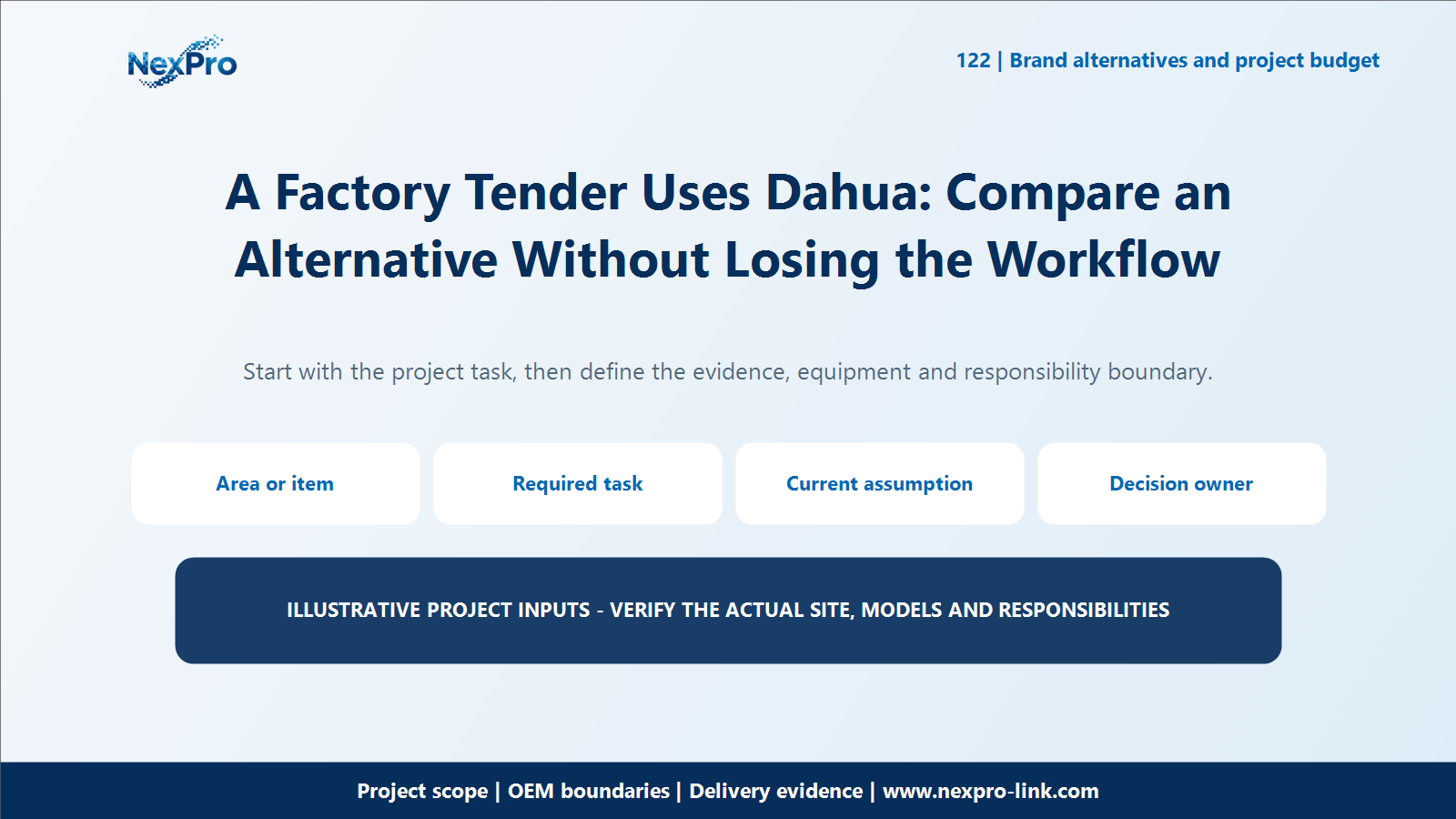
A manufacturer asks its contractor to compare a Dahua-based tender package with an independently priced CCTV alternative for a new plant. Start with what factory operators must actually do: view, retrieve, export and administer video.
Section 01
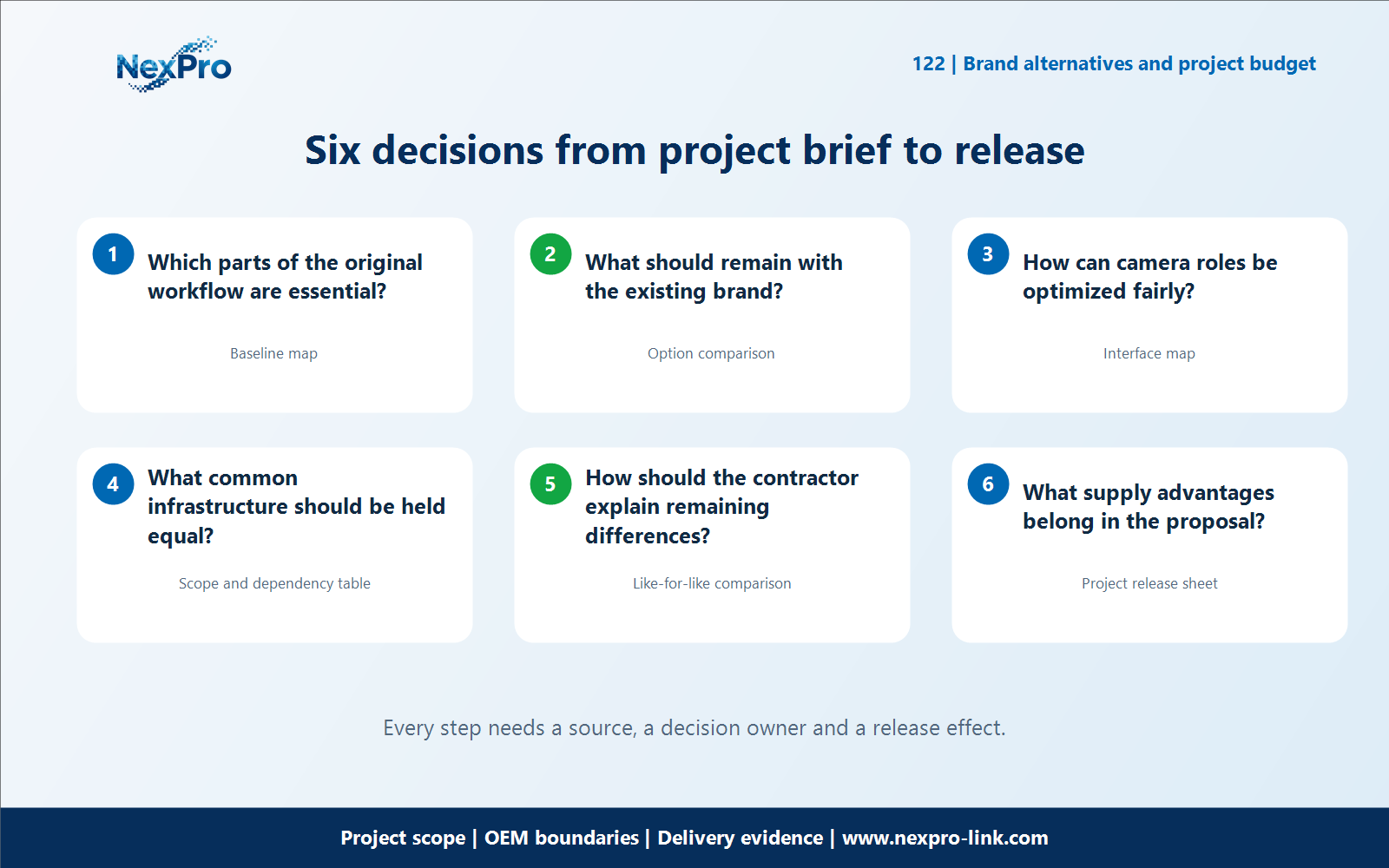
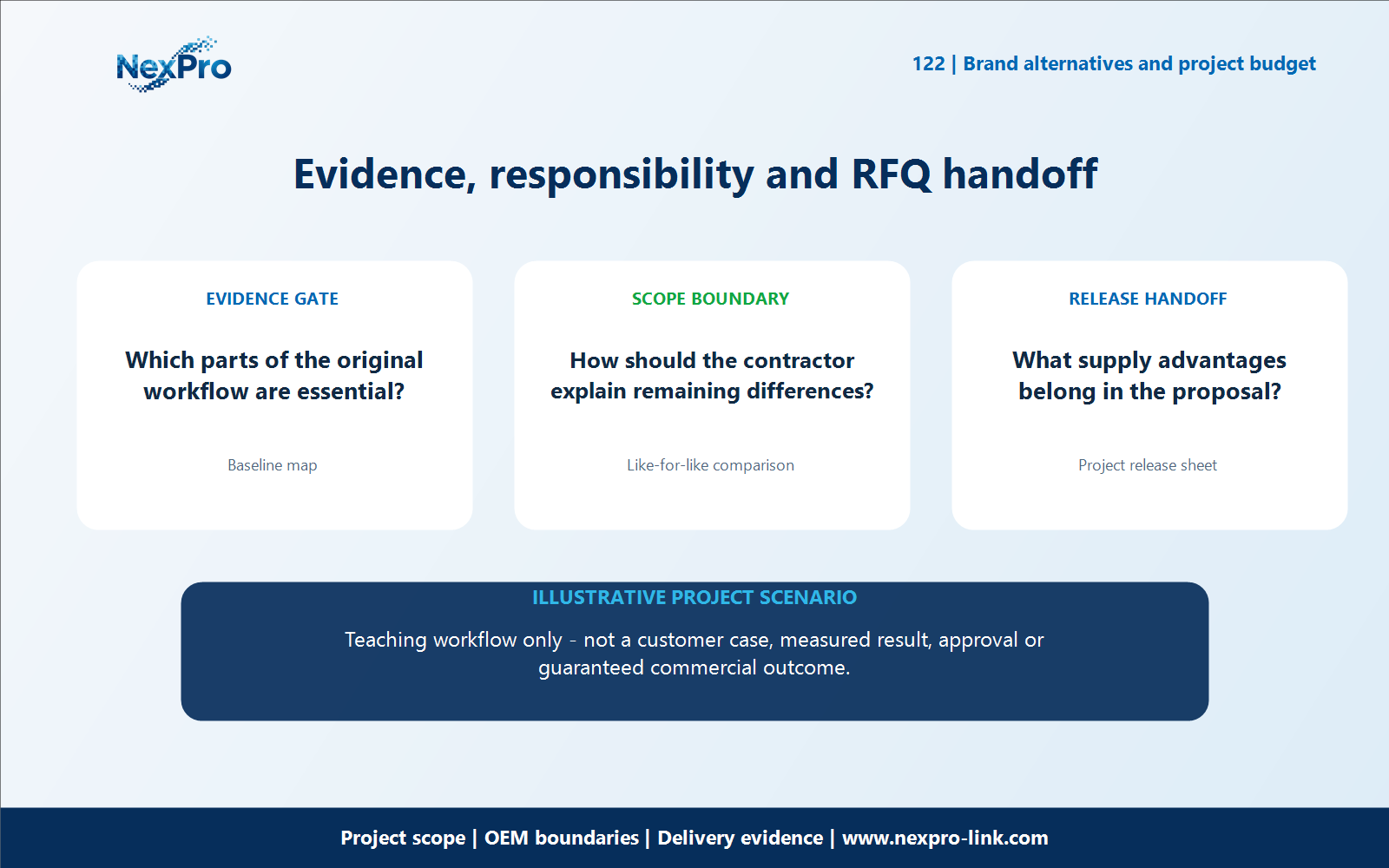
Which parts of the original workflow are essential?
A manufacturer asks its contractor to compare a Dahua-based tender package with an independently priced CCTV alternative for a new plant. Start with what factory operators must actually do: view, retrieve, export and administer video. Identify any required integration with existing systems. An alternative package should be evaluated against those tasks, not only against the model names listed in the tender.
For the "Which parts of the original workflow are essential" decision, use the baseline map fields Area or item, Required task, Current assumption, Decision owner. Apply it to factory dahua alternative tender so the buyer, supplier and local integrator can see which input is confirmed, who owns it and which evidence remains open.
Evaluate which parts of the original workflow are essential against the stated site task and the surrounding equipment, documentation, packing and handover dependencies for factory dahua alternative tender. For which parts of the original workflow are essential in factory dahua alternative tender, record the confirmed condition, chosen option and remaining evidence separately; an open value is not a price, test, approval or customer-result claim.
Carry the which parts of the original workflow are essential decision into the RFQ, BOQ, configuration or release record for factory dahua alternative tender. For which parts of the original workflow are essential in factory dahua alternative tender, name the equipment, artwork, network, installation and acceptance owner; site-specific work remains with the buyer or integrator unless the signed scope says otherwise.
Section 02
What should remain with the existing brand?
What should remain with the existing brand? Retain elements required by a mandatory platform or supported specialist integration unless the buyer accepts a change. A new independent area may allow a different package. The decision should be explicit, and even retained-brand compatibility should be checked for the actual selected devices. For A Factory Tender Uses Dahua: Compare an Alternative Without Losing the Workflow, keep this decision tied to the same project brief rather than opening a separate generic specification exercise.
For the "What should remain with the existing brand" decision, use the option comparison fields Position or option, Suitable condition, Trade-off, Next choice. Apply it to factory dahua alternative tender so the buyer, supplier and local integrator can see which input is confirmed, who owns it and which evidence remains open.
Evaluate what should remain with the existing brand against the stated site task and the surrounding equipment, documentation, packing and handover dependencies for factory dahua alternative tender. For what should remain with the existing brand in factory dahua alternative tender, record the confirmed condition, chosen option and remaining evidence separately; an open value is not a price, test, approval or customer-result claim.
Carry the what should remain with the existing brand decision into the RFQ, BOQ, configuration or release record for factory dahua alternative tender. For what should remain with the existing brand in factory dahua alternative tender, name the equipment, artwork, network, installation and acceptance owner; site-specific work remains with the buyer or integrator unless the signed scope says otherwise.
Section 03
How can camera roles be optimized fairly?
How can camera roles be optimized fairly? Use the same area-based camera roles for every proposal. Allow each supplier to choose suitable models within the accepted requirements. A fair comparison does not optimize the NexPro-Link schedule while leaving an unnecessarily high-tier configuration as the only competing baseline. For A Factory Tender Uses Dahua: Compare an Alternative Without Losing the Workflow, keep this decision tied to the same project brief rather than opening a separate generic specification exercise.
For the "How can camera roles be optimized fairly" decision, use the interface map fields Device or record, Input, Output, Responsible party. Apply it to factory dahua alternative tender so the buyer, supplier and local integrator can see which input is confirmed, who owns it and which evidence remains open.
Evaluate how can camera roles be optimized fairly against the stated site task and the surrounding equipment, documentation, packing and handover dependencies for factory dahua alternative tender. For how can camera roles be optimized fairly in factory dahua alternative tender, record the confirmed condition, chosen option and remaining evidence separately; an open value is not a price, test, approval or customer-result claim.
Carry the how can camera roles be optimized fairly decision into the RFQ, BOQ, configuration or release record for factory dahua alternative tender. For how can camera roles be optimized fairly in factory dahua alternative tender, name the equipment, artwork, network, installation and acceptance owner; site-specific work remains with the buyer or integrator unless the signed scope says otherwise.
| Project question | Project-oriented treatment | Keep equal when comparing offers |
|---|---|---|
| Which parts of the original workflow are essential? | Start with what factory operators must actually do: view, retrieve, export and administer video. | Unchanged required project outcome |
| What should remain with the existing brand? | Retain elements required by a mandatory platform or supported specialist integration unless the buyer accepts a change. | Exact equipment and interface scope |
| How can camera roles be optimized fairly? | Use the same area-based camera roles for every proposal. | Comparable quotation date and delivery basis |
| What common infrastructure should be held equal? | Keep the backbone, retention target and protected-power outcome consistent. | Separately priced branding and support |
Section 04
What common infrastructure should be held equal?
What common infrastructure should be held equal? Keep the backbone, retention target and protected-power outcome consistent. Include the same required display and network functions. Distinguish equipment differences from scope differences so the buyer can see whether any price gap is genuine or created by an omission. For A Factory Tender Uses Dahua: Compare an Alternative Without Losing the Workflow, keep this decision tied to the same project brief rather than opening a separate generic specification exercise.
For the "What common infrastructure should be held equal" decision, use the scope and dependency table fields Item, Included, Dependency, Separate option. Apply it to factory dahua alternative tender so the buyer, supplier and local integrator can see which input is confirmed, who owns it and which evidence remains open.
Evaluate what common infrastructure should be held equal against the stated site task and the surrounding equipment, documentation, packing and handover dependencies for factory dahua alternative tender. For what common infrastructure should be held equal in factory dahua alternative tender, record the confirmed condition, chosen option and remaining evidence separately; an open value is not a price, test, approval or customer-result claim.
Carry the what common infrastructure should be held equal decision into the RFQ, BOQ, configuration or release record for factory dahua alternative tender. For what common infrastructure should be held equal in factory dahua alternative tender, name the equipment, artwork, network, installation and acceptance owner; site-specific work remains with the buyer or integrator unless the signed scope says otherwise.
Section 05
How should the contractor explain remaining differences?
How should the contractor explain remaining differences? Describe each remaining difference in terms of its operational impact and proposed treatment. An undocumented function is not proof that a competitor lacks it, nor is it proof that the alternative supports it. Keep the decision tied to the project requirement. For A Factory Tender Uses Dahua: Compare an Alternative Without Losing the Workflow, keep this decision tied to the same project brief rather than opening a separate generic specification exercise.
For the "How should the contractor explain remaining differences" decision, use the like-for-like comparison fields Requirement, Baseline, Proposed treatment, Remaining difference. Apply it to factory dahua alternative tender so the buyer, supplier and local integrator can see which input is confirmed, who owns it and which evidence remains open.
Evaluate how should the contractor explain remaining differences against the stated site task and the surrounding equipment, documentation, packing and handover dependencies for factory dahua alternative tender. For how should the contractor explain remaining differences in factory dahua alternative tender, record the confirmed condition, chosen option and remaining evidence separately; an open value is not a price, test, approval or customer-result claim.
Carry the how should the contractor explain remaining differences decision into the RFQ, BOQ, configuration or release record for factory dahua alternative tender. For how should the contractor explain remaining differences in factory dahua alternative tender, name the equipment, artwork, network, installation and acceptance owner; site-specific work remains with the buyer or integrator unless the signed scope says otherwise.
Section 06
What supply advantages belong in the proposal?
What supply advantages belong in the proposal? Present the agreed factory preparation, project packing and branding options alongside the technical package. Explain how repeat orders will refer to the same configuration. These are practical supply advantages to discuss, without inventing shipment history, delivery guarantees or competitor limitations. For A Factory Tender Uses Dahua: Compare an Alternative Without Losing the Workflow, keep this decision tied to the same project brief rather than opening a separate generic specification exercise.
For the "What supply advantages belong in the proposal" decision, use the project release sheet fields Configuration, Artwork, Quantity, Location, Release stage. Apply it to factory dahua alternative tender so the buyer, supplier and local integrator can see which input is confirmed, who owns it and which evidence remains open.
Evaluate what supply advantages belong in the proposal against the stated site task and the surrounding equipment, documentation, packing and handover dependencies for factory dahua alternative tender. For what supply advantages belong in the proposal in factory dahua alternative tender, record the confirmed condition, chosen option and remaining evidence separately; an open value is not a price, test, approval or customer-result claim.
Carry the what supply advantages belong in the proposal decision into the RFQ, BOQ, configuration or release record for factory dahua alternative tender. For what supply advantages belong in the proposal in factory dahua alternative tender, name the equipment, artwork, network, installation and acceptance owner; site-specific work remains with the buyer or integrator unless the signed scope says otherwise.
Engineering references
These sources support the general planning principles. Always use the selected product's current datasheet and applicable project standards for final design.