A main contractor receives five CCTV proposals with different camera mixes, storage assumptions and service inclusions. Build the comparison from the project requirements, not from the most detailed supplier quotation.
Section 01
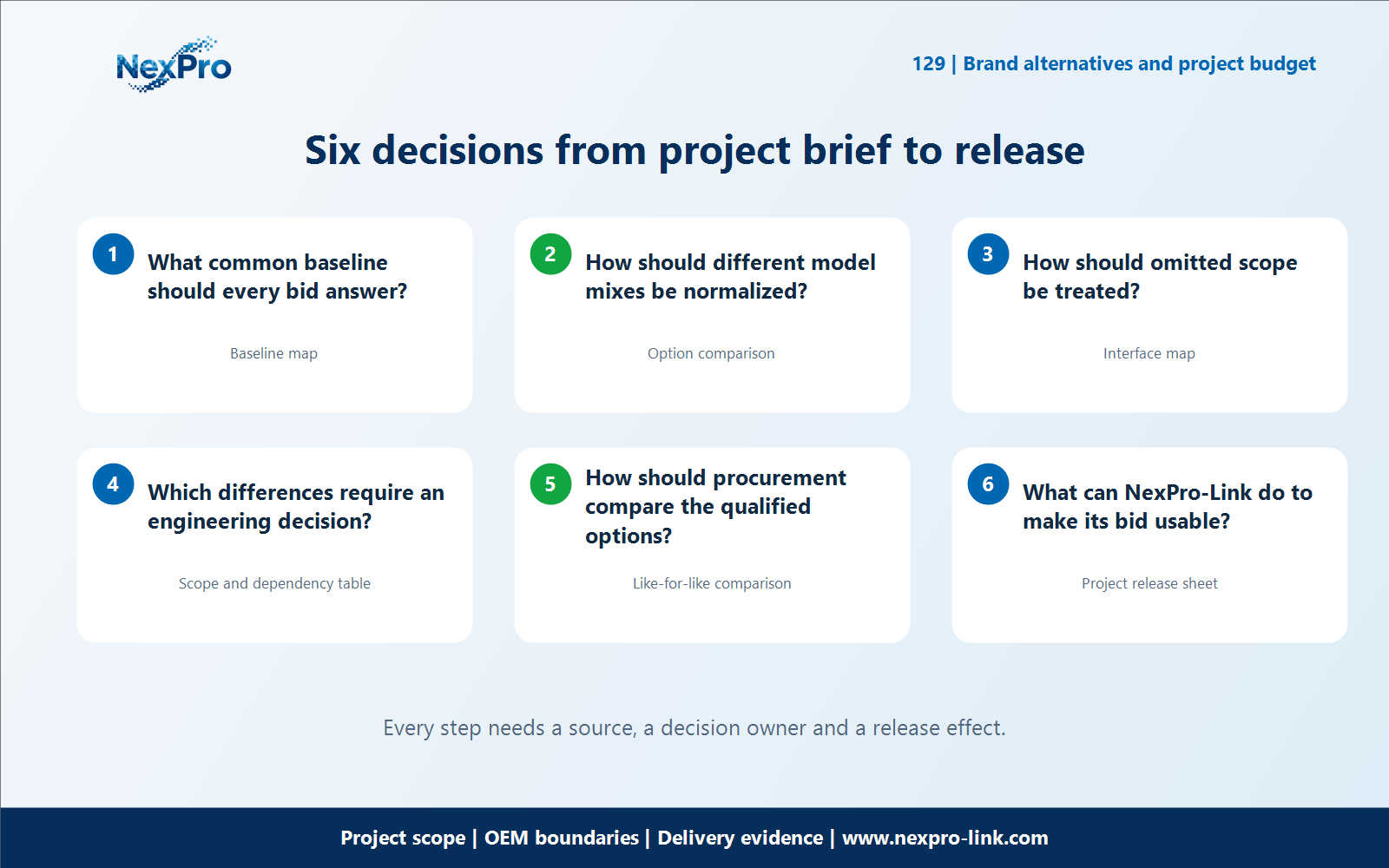
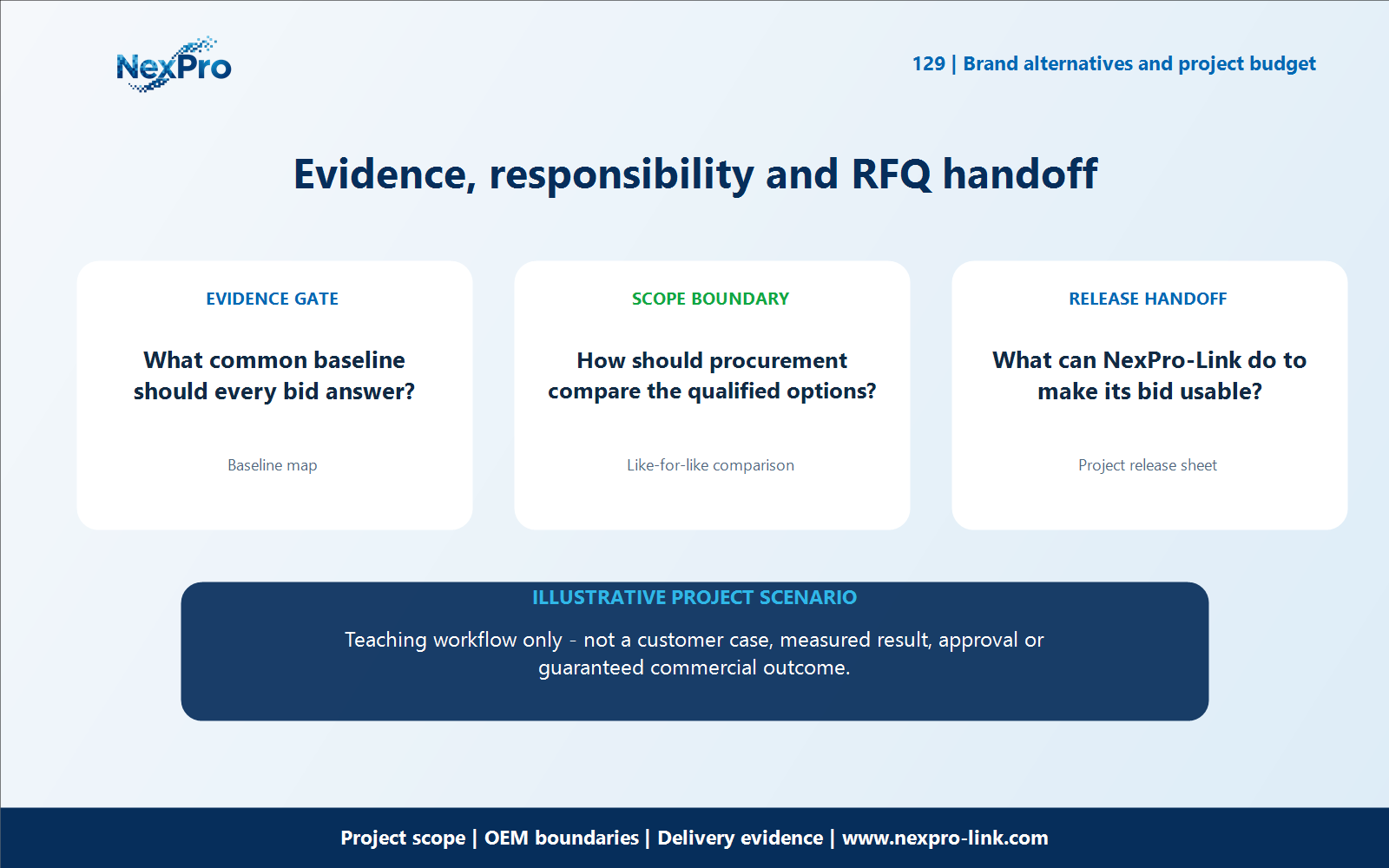
What common baseline should every bid answer?
A main contractor receives five CCTV proposals with different camera mixes, storage assumptions and service inclusions. Build the comparison from the project requirements, not from the most detailed supplier quotation. Define the viewing, recording and delivery outcome every bid must address. This keeps the baseline independent of any one bidder's preferred product configuration.
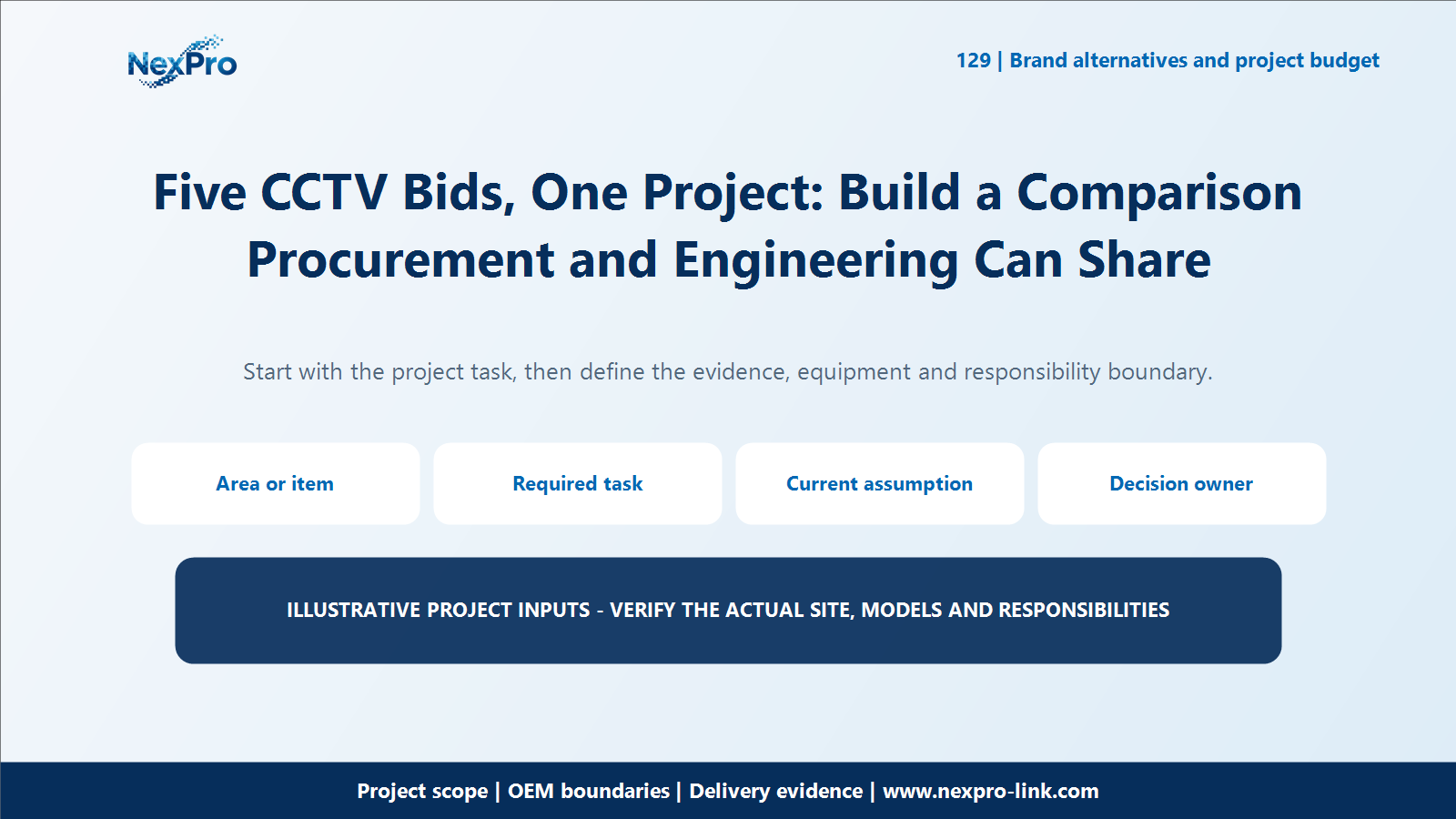
For the "What common baseline should every bid answer" decision, use the baseline map fields Area or item, Required task, Current assumption, Decision owner. Apply it to five CCTV bids scope normalization so the buyer, supplier and local integrator can see which input is confirmed, who owns it and which evidence remains open.
Evaluate what common baseline should every bid answer against the stated site task and the surrounding equipment, documentation, packing and handover dependencies for five CCTV bids scope normalization. For what common baseline should every bid answer in five CCTV bids scope normalization, record the confirmed condition, chosen option and remaining evidence separately; an open value is not a price, test, approval or customer-result claim.
Carry the what common baseline should every bid answer decision into the RFQ, BOQ, configuration or release record for five CCTV bids scope normalization. For what common baseline should every bid answer in five CCTV bids scope normalization, name the equipment, artwork, network, installation and acceptance owner; site-specific work remains with the buyer or integrator unless the signed scope says otherwise.
Section 02
How should different model mixes be normalized?
How should different model mixes be normalized? Compare devices by the roles they perform and the tasks they must meet. Different mixes may be legitimate design choices. Ask for the reason behind quantity or capability differences before declaring proposals unequal or forcing them into one arbitrary product tier. For Five CCTV Bids, One Project: Build a Comparison Procurement and Engineering Can Share, keep this decision tied to the same project brief rather than opening a separate generic specification exercise.
For the "How should different model mixes be normalized" decision, use the option comparison fields Position or option, Suitable condition, Trade-off, Next choice. Apply it to five CCTV bids scope normalization so the buyer, supplier and local integrator can see which input is confirmed, who owns it and which evidence remains open.
Evaluate how should different model mixes be normalized against the stated site task and the surrounding equipment, documentation, packing and handover dependencies for five CCTV bids scope normalization. For how should different model mixes be normalized in five CCTV bids scope normalization, record the confirmed condition, chosen option and remaining evidence separately; an open value is not a price, test, approval or customer-result claim.
Carry the how should different model mixes be normalized decision into the RFQ, BOQ, configuration or release record for five CCTV bids scope normalization. For how should different model mixes be normalized in five CCTV bids scope normalization, name the equipment, artwork, network, installation and acceptance owner; site-specific work remains with the buyer or integrator unless the signed scope says otherwise.
Section 03
How should omitted scope be treated?
How should omitted scope be treated? Identify omissions and ask whether the item is excluded, owner-provided or still to be priced. Do not fill the gap with an invented zero or assumed market price. A comparable total needs an explicit treatment of the missing scope. For Five CCTV Bids, One Project: Build a Comparison Procurement and Engineering Can Share, keep this decision tied to the same project brief rather than opening a separate generic specification exercise.
For the "How should omitted scope be treated" decision, use the interface map fields Device or record, Input, Output, Responsible party. Apply it to five CCTV bids scope normalization so the buyer, supplier and local integrator can see which input is confirmed, who owns it and which evidence remains open.
Evaluate how should omitted scope be treated against the stated site task and the surrounding equipment, documentation, packing and handover dependencies for five CCTV bids scope normalization. For how should omitted scope be treated in five CCTV bids scope normalization, record the confirmed condition, chosen option and remaining evidence separately; an open value is not a price, test, approval or customer-result claim.
Carry the how should omitted scope be treated decision into the RFQ, BOQ, configuration or release record for five CCTV bids scope normalization. For how should omitted scope be treated in five CCTV bids scope normalization, name the equipment, artwork, network, installation and acceptance owner; site-specific work remains with the buyer or integrator unless the signed scope says otherwise.
| Project question | Project-oriented treatment | Keep equal when comparing offers |
|---|---|---|
| What common baseline should every bid answer? | Build the comparison from the project requirements, not from the most detailed supplier quotation. | Unchanged required project outcome |
| How should different model mixes be normalized? | Compare devices by the roles they perform and the tasks they must meet. | Exact equipment and interface scope |
| How should omitted scope be treated? | Identify omissions and ask whether the item is excluded, owner-provided or still to be priced. | Comparable quotation date and delivery basis |
| Which differences require an engineering decision? | Refer differences that affect the required task to the responsible engineer or buyer. | Separately priced branding and support |
Section 04
Which differences require an engineering decision?
Which differences require an engineering decision? Refer differences that affect the required task to the responsible engineer or buyer. Keep mandatory requirements separate from optional preferences. A commercial scoring exercise should not silently compensate for a function the project actually requires and the proposed package does not provide. For Five CCTV Bids, One Project: Build a Comparison Procurement and Engineering Can Share, keep this decision tied to the same project brief rather than opening a separate generic specification exercise.
For the "Which differences require an engineering decision" decision, use the scope and dependency table fields Item, Included, Dependency, Separate option. Apply it to five CCTV bids scope normalization so the buyer, supplier and local integrator can see which input is confirmed, who owns it and which evidence remains open.
Evaluate which differences require an engineering decision against the stated site task and the surrounding equipment, documentation, packing and handover dependencies for five CCTV bids scope normalization. For which differences require an engineering decision in five CCTV bids scope normalization, record the confirmed condition, chosen option and remaining evidence separately; an open value is not a price, test, approval or customer-result claim.
Carry the which differences require an engineering decision decision into the RFQ, BOQ, configuration or release record for five CCTV bids scope normalization. For which differences require an engineering decision in five CCTV bids scope normalization, name the equipment, artwork, network, installation and acceptance owner; site-specific work remains with the buyer or integrator unless the signed scope says otherwise.
Section 05
How should procurement compare the qualified options?
How should procurement compare the qualified options? Compare prices only after the accepted scope is clear, using the same quantity and delivery basis. Keep payment, service and change conditions visible as separate commercial considerations. The resulting comparison should explain the decision rather than manufacture a predetermined supplier ranking. For Five CCTV Bids, One Project: Build a Comparison Procurement and Engineering Can Share, keep this decision tied to the same project brief rather than opening a separate generic specification exercise.
For the "How should procurement compare the qualified options" decision, use the like-for-like comparison fields Requirement, Baseline, Proposed treatment, Remaining difference. Apply it to five CCTV bids scope normalization so the buyer, supplier and local integrator can see which input is confirmed, who owns it and which evidence remains open.
Evaluate how should procurement compare the qualified options against the stated site task and the surrounding equipment, documentation, packing and handover dependencies for five CCTV bids scope normalization. For how should procurement compare the qualified options in five CCTV bids scope normalization, record the confirmed condition, chosen option and remaining evidence separately; an open value is not a price, test, approval or customer-result claim.
Carry the how should procurement compare the qualified options decision into the RFQ, BOQ, configuration or release record for five CCTV bids scope normalization. For how should procurement compare the qualified options in five CCTV bids scope normalization, name the equipment, artwork, network, installation and acceptance owner; site-specific work remains with the buyer or integrator unless the signed scope says otherwise.
Section 06
What can NexPro-Link do to make its bid usable?
What can NexPro-Link do to make its bid usable? Present a model-mapped equipment schedule with concise assumptions, accessories and delivery options. Include branding and packaging as defined items. A well-organized bid lets the contractor assess the proposal efficiently without having to reconstruct the system from disconnected product brochures. For Five CCTV Bids, One Project: Build a Comparison Procurement and Engineering Can Share, keep this decision tied to the same project brief rather than opening a separate generic specification exercise.
For the "What can NexPro-Link do to make its bid usable" decision, use the project release sheet fields Configuration, Artwork, Quantity, Location, Release stage. Apply it to five CCTV bids scope normalization so the buyer, supplier and local integrator can see which input is confirmed, who owns it and which evidence remains open.
Evaluate what can nexpro-link do to make its bid usable against the stated site task and the surrounding equipment, documentation, packing and handover dependencies for five CCTV bids scope normalization. For what can nexpro-link do to make its bid usable in five CCTV bids scope normalization, record the confirmed condition, chosen option and remaining evidence separately; an open value is not a price, test, approval or customer-result claim.
Carry the what can nexpro-link do to make its bid usable decision into the RFQ, BOQ, configuration or release record for five CCTV bids scope normalization. For what can nexpro-link do to make its bid usable in five CCTV bids scope normalization, name the equipment, artwork, network, installation and acceptance owner; site-specific work remains with the buyer or integrator unless the signed scope says otherwise.
Engineering references
These sources support the general planning principles. Always use the selected product's current datasheet and applicable project standards for final design.