
A contractor revises the camera layout and private-label packing requirements after an initial project quotation has been issued. Identify whether each revision changes quantity, configuration, accessories, software or delivery work.
Section 01
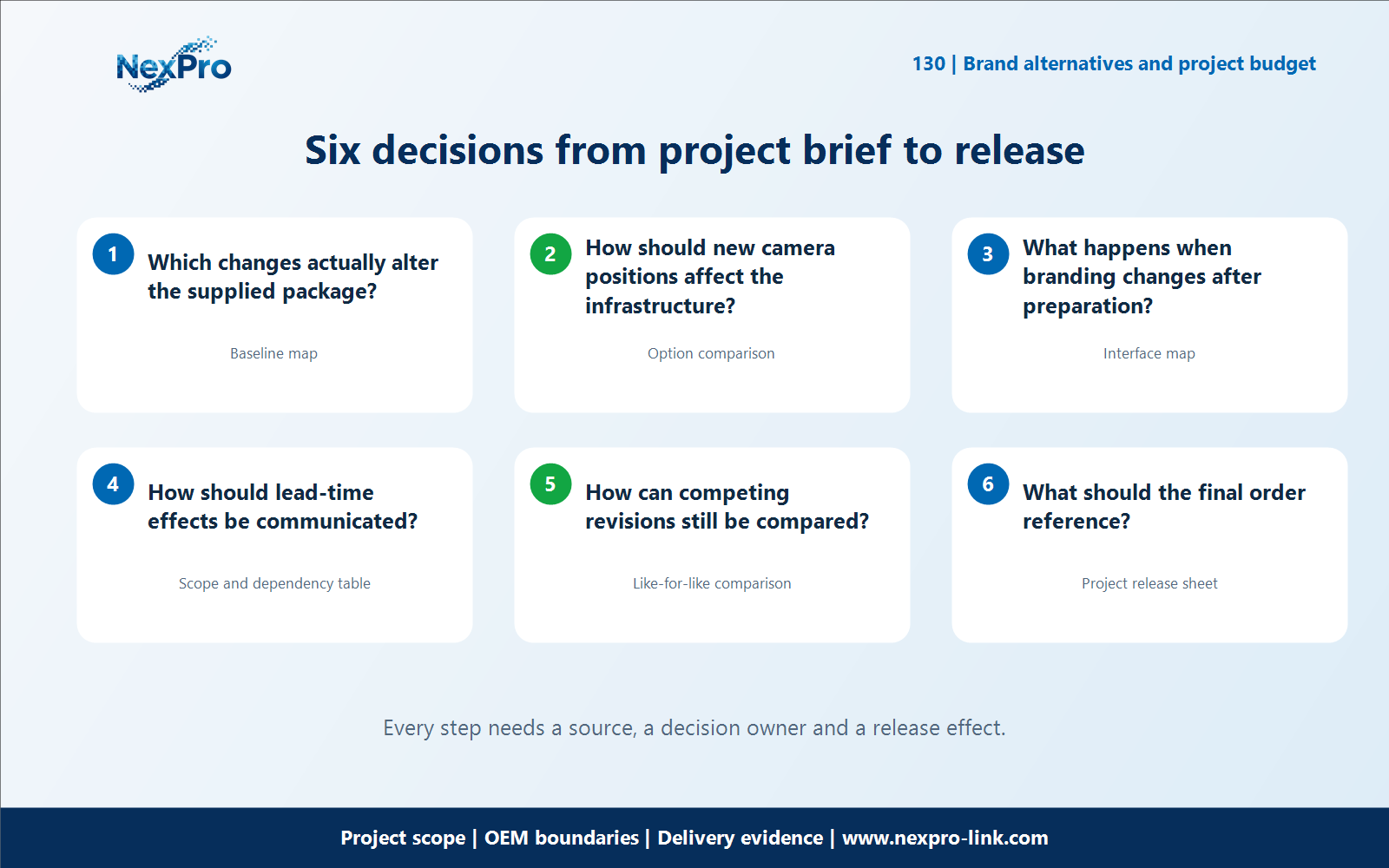
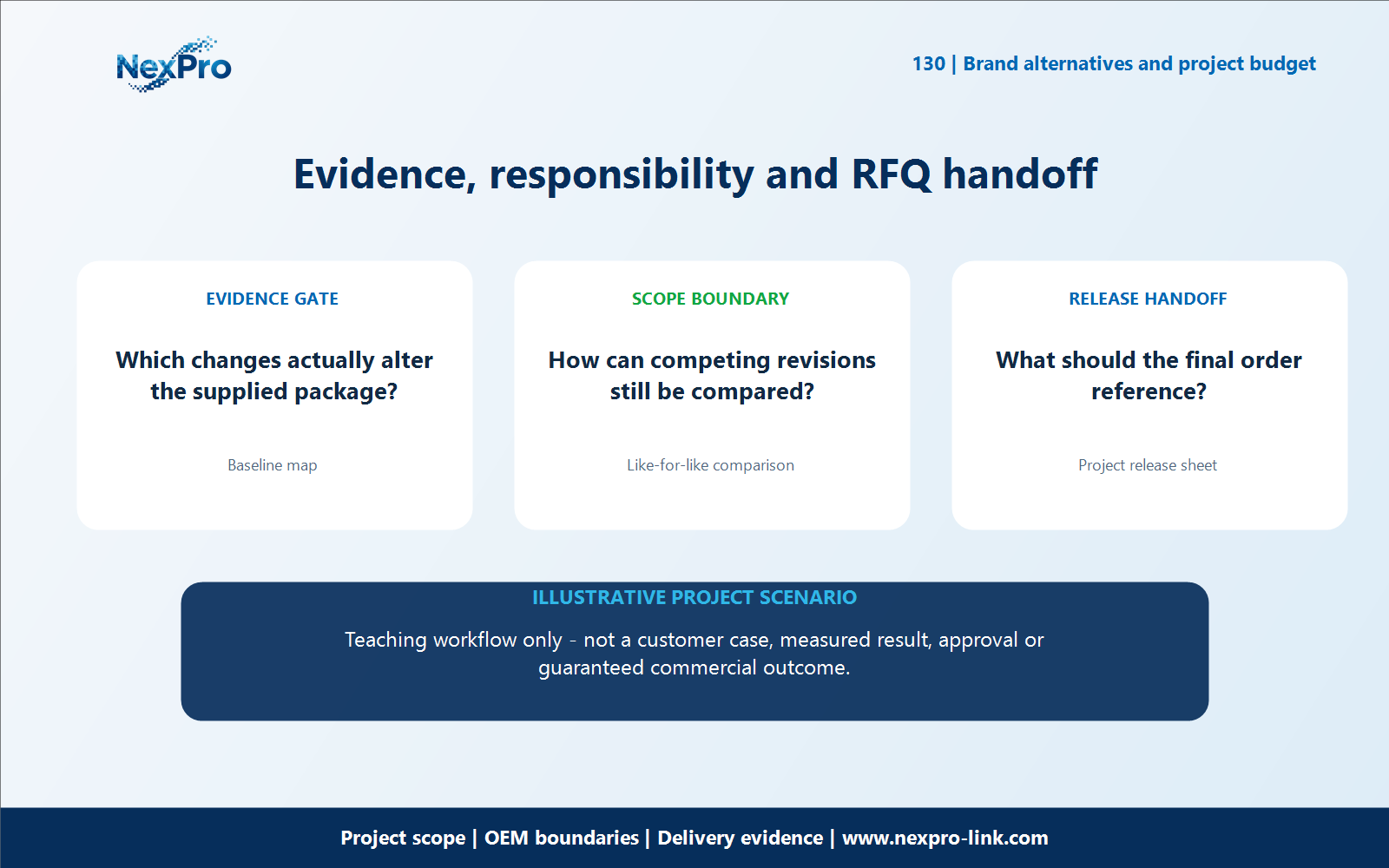
Which changes actually alter the supplied package?
A contractor revises the camera layout and private-label packing requirements after an initial project quotation has been issued. Identify whether each revision changes quantity, configuration, accessories, software or delivery work. Some document edits do not change the equipment. A useful change review separates those cases before the supplier is asked to issue a revised total.
For the "Which changes actually alter the supplied package" decision, use the baseline map fields Area or item, Required task, Current assumption, Decision owner. Apply it to CCTV design change budget control so the buyer, supplier and local integrator can see which input is confirmed, who owns it and which evidence remains open.
Evaluate which changes actually alter the supplied package against the stated site task and the surrounding equipment, documentation, packing and handover dependencies for CCTV design change budget control. For which changes actually alter the supplied package in CCTV design change budget control, record the confirmed condition, chosen option and remaining evidence separately; an open value is not a price, test, approval or customer-result claim.
Carry the which changes actually alter the supplied package decision into the RFQ, BOQ, configuration or release record for CCTV design change budget control. For which changes actually alter the supplied package in CCTV design change budget control, name the equipment, artwork, network, installation and acceptance owner; site-specific work remains with the buyer or integrator unless the signed scope says otherwise.
Section 02
How should new camera positions affect the infrastructure?
How should new camera positions affect the infrastructure? Check how the changed positions affect recording, PoE and network resources. Adding a camera may require more than its unit price, while an available supported capacity may absorb another change. The revised package should explain the actual dependency rather than applying one blanket surcharge. For CCTV Budget Changes After Tender: Separate Quantity, Specification and Packaging Effects, keep this decision tied to the same project brief rather than opening a separate generic specification exercise.
For the "How should new camera positions affect the infrastructure" decision, use the option comparison fields Position or option, Suitable condition, Trade-off, Next choice. Apply it to CCTV design change budget control so the buyer, supplier and local integrator can see which input is confirmed, who owns it and which evidence remains open.
Evaluate how should new camera positions affect the infrastructure against the stated site task and the surrounding equipment, documentation, packing and handover dependencies for CCTV design change budget control. For how should new camera positions affect the infrastructure in CCTV design change budget control, record the confirmed condition, chosen option and remaining evidence separately; an open value is not a price, test, approval or customer-result claim.
Carry the how should new camera positions affect the infrastructure decision into the RFQ, BOQ, configuration or release record for CCTV design change budget control. For how should new camera positions affect the infrastructure in CCTV design change budget control, name the equipment, artwork, network, installation and acceptance owner; site-specific work remains with the buyer or integrator unless the signed scope says otherwise.
Section 03
What happens when branding changes after preparation?
What happens when branding changes after preparation? Separate changes to approved artwork from work already performed on boxes or devices. Identify what can still be reused. Any additional cost should relate to the actual remaining work and agreed terms, not to a generic penalty invented for all branding revisions. For CCTV Budget Changes After Tender: Separate Quantity, Specification and Packaging Effects, keep this decision tied to the same project brief rather than opening a separate generic specification exercise.
For the "What happens when branding changes after preparation" decision, use the interface map fields Device or record, Input, Output, Responsible party. Apply it to CCTV design change budget control so the buyer, supplier and local integrator can see which input is confirmed, who owns it and which evidence remains open.
Evaluate what happens when branding changes after preparation against the stated site task and the surrounding equipment, documentation, packing and handover dependencies for CCTV design change budget control. For what happens when branding changes after preparation in CCTV design change budget control, record the confirmed condition, chosen option and remaining evidence separately; an open value is not a price, test, approval or customer-result claim.
Carry the what happens when branding changes after preparation decision into the RFQ, BOQ, configuration or release record for CCTV design change budget control. For what happens when branding changes after preparation in CCTV design change budget control, name the equipment, artwork, network, installation and acceptance owner; site-specific work remains with the buyer or integrator unless the signed scope says otherwise.
| Project question | Project-oriented treatment | Keep equal when comparing offers |
|---|---|---|
| Which changes actually alter the supplied package? | Identify whether each revision changes quantity, configuration, accessories, software or delivery work. | Unchanged required project outcome |
| How should new camera positions affect the infrastructure? | Check how the changed positions affect recording, PoE and network resources. | Exact equipment and interface scope |
| What happens when branding changes after preparation? | Separate changes to approved artwork from work already performed on boxes or devices. | Comparable quotation date and delivery basis |
| How should lead-time effects be communicated? | Describe which items and releases are affected by the revision. | Separately priced branding and support |
Section 04
How should lead-time effects be communicated?
How should lead-time effects be communicated? Describe which items and releases are affected by the revision. Unchanged equipment may follow a different path from a newly customized item. Give timing based on the reviewed configuration and production status, rather than promising every change can be absorbed without impact. For CCTV Budget Changes After Tender: Separate Quantity, Specification and Packaging Effects, keep this decision tied to the same project brief rather than opening a separate generic specification exercise.
For the "How should lead-time effects be communicated" decision, use the scope and dependency table fields Item, Included, Dependency, Separate option. Apply it to CCTV design change budget control so the buyer, supplier and local integrator can see which input is confirmed, who owns it and which evidence remains open.
Evaluate how should lead-time effects be communicated against the stated site task and the surrounding equipment, documentation, packing and handover dependencies for CCTV design change budget control. For how should lead-time effects be communicated in CCTV design change budget control, record the confirmed condition, chosen option and remaining evidence separately; an open value is not a price, test, approval or customer-result claim.
Carry the how should lead-time effects be communicated decision into the RFQ, BOQ, configuration or release record for CCTV design change budget control. For how should lead-time effects be communicated in CCTV design change budget control, name the equipment, artwork, network, installation and acceptance owner; site-specific work remains with the buyer or integrator unless the signed scope says otherwise.
Section 05
How can competing revisions still be compared?
How can competing revisions still be compared? Issue the same revised requirement to all suppliers being compared. Record the revision and included delivery scope next to each price. An old quotation for a smaller or different package should not be treated as evidence that one brand is inherently less expensive. For CCTV Budget Changes After Tender: Separate Quantity, Specification and Packaging Effects, keep this decision tied to the same project brief rather than opening a separate generic specification exercise.
For the "How can competing revisions still be compared" decision, use the like-for-like comparison fields Requirement, Baseline, Proposed treatment, Remaining difference. Apply it to CCTV design change budget control so the buyer, supplier and local integrator can see which input is confirmed, who owns it and which evidence remains open.
Evaluate how can competing revisions still be compared against the stated site task and the surrounding equipment, documentation, packing and handover dependencies for CCTV design change budget control. For how can competing revisions still be compared in CCTV design change budget control, record the confirmed condition, chosen option and remaining evidence separately; an open value is not a price, test, approval or customer-result claim.
Carry the how can competing revisions still be compared decision into the RFQ, BOQ, configuration or release record for CCTV design change budget control. For how can competing revisions still be compared in CCTV design change budget control, name the equipment, artwork, network, installation and acceptance owner; site-specific work remains with the buyer or integrator unless the signed scope says otherwise.
Section 06
What should the final order reference?
What should the final order reference? Reference the final equipment schedule, applicable artwork and release plan in the order. Keep superseded versions identifiable but out of the active production instructions. This gives NexPro-Link and the contractor a shared basis for preparing the revised package. For CCTV Budget Changes After Tender: Separate Quantity, Specification and Packaging Effects, keep this decision tied to the same project brief rather than opening a separate generic specification exercise.
For the "What should the final order reference" decision, use the project release sheet fields Configuration, Artwork, Quantity, Location, Release stage. Apply it to CCTV design change budget control so the buyer, supplier and local integrator can see which input is confirmed, who owns it and which evidence remains open.
Evaluate what should the final order reference against the stated site task and the surrounding equipment, documentation, packing and handover dependencies for CCTV design change budget control. For what should the final order reference in CCTV design change budget control, record the confirmed condition, chosen option and remaining evidence separately; an open value is not a price, test, approval or customer-result claim.
Carry the what should the final order reference decision into the RFQ, BOQ, configuration or release record for CCTV design change budget control. For what should the final order reference in CCTV design change budget control, name the equipment, artwork, network, installation and acceptance owner; site-specific work remains with the buyer or integrator unless the signed scope says otherwise.
Engineering references
These sources support the general planning principles. Always use the selected product's current datasheet and applicable project standards for final design.