
A contractor requests different brackets and a new logo after camera production has started but before final packing. Identify the affected order lines and the current production stage before requesting a change.
Section 01
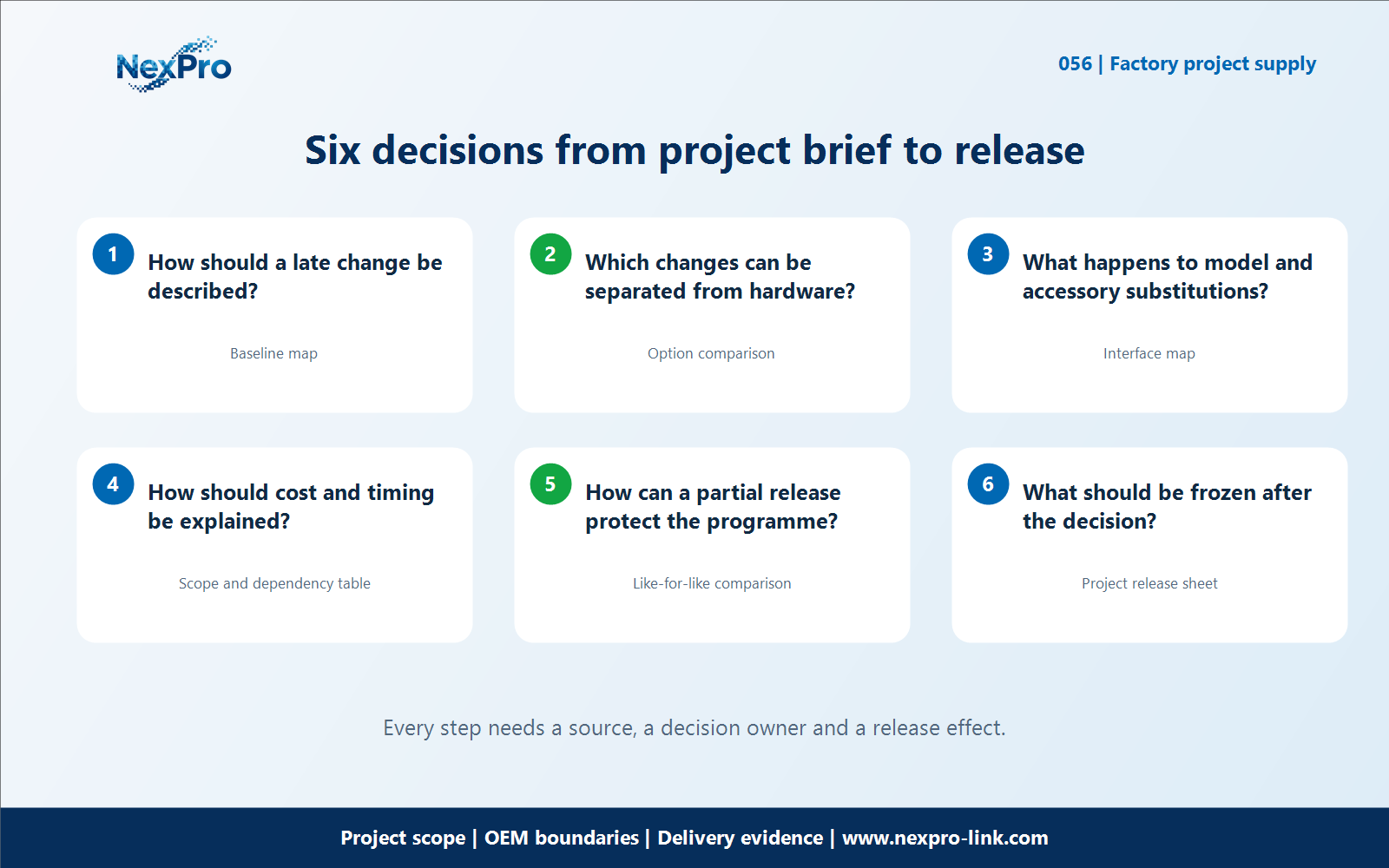
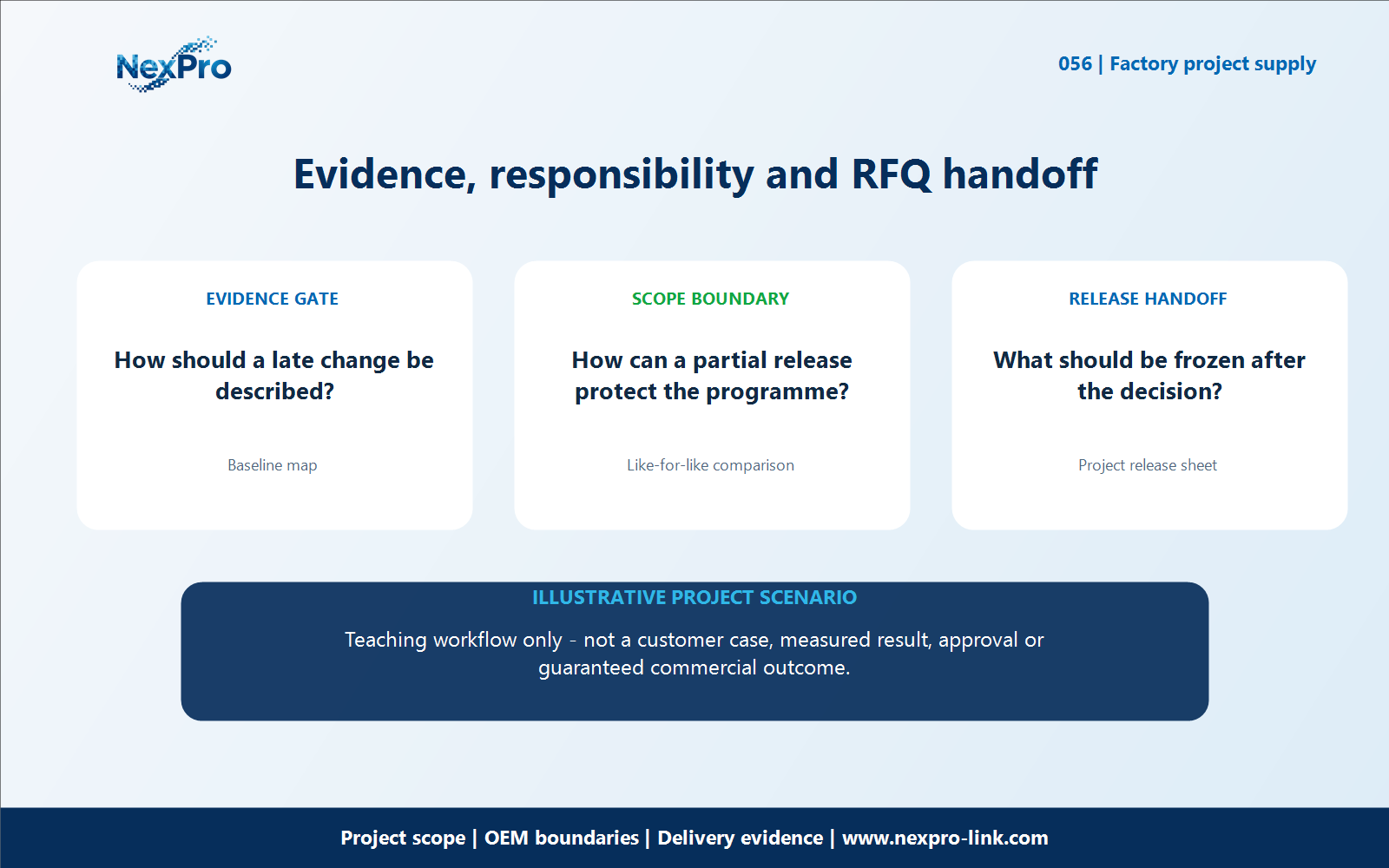
How should a late change be described?
A contractor requests different brackets and a new logo after camera production has started but before final packing. Identify the affected order lines and the current production stage before requesting a change. A precise description lets the supplier distinguish unfinished work from items that need rework. Include the required outcome, not only a general request to update the order.
For the "How should a late change be described" decision, use the baseline map fields Area or item, Required task, Current assumption, Decision owner. Apply it to CCTV project changes before shipment so the buyer, supplier and local integrator can see which input is confirmed, who owns it and which evidence remains open.
Evaluate how should a late change be described against the stated site task and the surrounding equipment, documentation, packing and handover dependencies for CCTV project changes before shipment. For how should a late change be described in CCTV project changes before shipment, record the confirmed condition, chosen option and remaining evidence separately; an open value is not a price, test, approval or customer-result claim.
Carry the how should a late change be described decision into the RFQ, BOQ, configuration or release record for CCTV project changes before shipment. For how should a late change be described in CCTV project changes before shipment, name the equipment, artwork, network, installation and acceptance owner; site-specific work remains with the buyer or integrator unless the signed scope says otherwise.
Section 02
Which changes can be separated from hardware?
Which changes can be separated from hardware? Packaging artwork, paper inserts and equipment markings sit at different points in production. A carton change may be isolated from the hardware, while a permanent marking change can require a different treatment. Evaluate each work item independently. For CCTV Changes Before Shipment: Using Factory Coordination to Avoid Rework, keep this decision tied to the same project brief rather than opening a separate generic specification exercise.
For the "Which changes can be separated from hardware" decision, use the option comparison fields Position or option, Suitable condition, Trade-off, Next choice. Apply it to CCTV project changes before shipment so the buyer, supplier and local integrator can see which input is confirmed, who owns it and which evidence remains open.
Evaluate which changes can be separated from hardware against the stated site task and the surrounding equipment, documentation, packing and handover dependencies for CCTV project changes before shipment. For which changes can be separated from hardware in CCTV project changes before shipment, record the confirmed condition, chosen option and remaining evidence separately; an open value is not a price, test, approval or customer-result claim.
Carry the which changes can be separated from hardware decision into the RFQ, BOQ, configuration or release record for CCTV project changes before shipment. For which changes can be separated from hardware in CCTV project changes before shipment, name the equipment, artwork, network, installation and acceptance owner; site-specific work remains with the buyer or integrator unless the signed scope says otherwise.
Section 03
What happens to model and accessory substitutions?
What happens to model and accessory substitutions? Check how a proposed substitution affects fit, operation and the rest of the package. A bracket change can alter installation, while a recorder change can alter channels or workflows. Availability alone is not a complete basis for accepting a substitute. For CCTV Changes Before Shipment: Using Factory Coordination to Avoid Rework, keep this decision tied to the same project brief rather than opening a separate generic specification exercise.
For the "What happens to model and accessory substitutions" decision, use the interface map fields Device or record, Input, Output, Responsible party. Apply it to CCTV project changes before shipment so the buyer, supplier and local integrator can see which input is confirmed, who owns it and which evidence remains open.
Evaluate what happens to model and accessory substitutions against the stated site task and the surrounding equipment, documentation, packing and handover dependencies for CCTV project changes before shipment. For what happens to model and accessory substitutions in CCTV project changes before shipment, record the confirmed condition, chosen option and remaining evidence separately; an open value is not a price, test, approval or customer-result claim.
Carry the what happens to model and accessory substitutions decision into the RFQ, BOQ, configuration or release record for CCTV project changes before shipment. For what happens to model and accessory substitutions in CCTV project changes before shipment, name the equipment, artwork, network, installation and acceptance owner; site-specific work remains with the buyer or integrator unless the signed scope says otherwise.
| Project question | Project-oriented treatment | Keep equal when comparing offers |
|---|---|---|
| How should a late change be described? | Identify the affected order lines and the current production stage before requesting a change. | Exact configuration and accessory scope |
| Which changes can be separated from hardware? | Packaging artwork, paper inserts and equipment markings sit at different points in production. | Preparation versus on-site work |
| What happens to model and accessory substitutions? | Check how a proposed substitution affects fit, operation and the rest of the package. | Branding process and artwork scope |
| How should cost and timing be explained? | Break the impact into reusable work, additional work and shipment consequences. | Delivery and support responsibilities |
Section 04
How should cost and timing be explained?
How should cost and timing be explained? Break the impact into reusable work, additional work and shipment consequences. Quote the revised scope and milestones rather than a vague rush premium. This makes the decision easier to compare with keeping the original specification or deferring the change. For CCTV Changes Before Shipment: Using Factory Coordination to Avoid Rework, keep this decision tied to the same project brief rather than opening a separate generic specification exercise.
For the "How should cost and timing be explained" decision, use the scope and dependency table fields Item, Included, Dependency, Separate option. Apply it to CCTV project changes before shipment so the buyer, supplier and local integrator can see which input is confirmed, who owns it and which evidence remains open.
Evaluate how should cost and timing be explained against the stated site task and the surrounding equipment, documentation, packing and handover dependencies for CCTV project changes before shipment. For how should cost and timing be explained in CCTV project changes before shipment, record the confirmed condition, chosen option and remaining evidence separately; an open value is not a price, test, approval or customer-result claim.
Carry the how should cost and timing be explained decision into the RFQ, BOQ, configuration or release record for CCTV project changes before shipment. For how should cost and timing be explained in CCTV project changes before shipment, name the equipment, artwork, network, installation and acceptance owner; site-specific work remains with the buyer or integrator unless the signed scope says otherwise.
Section 05
How can a partial release protect the programme?
How can a partial release protect the programme? A partial release can be useful when the unaffected equipment forms a usable installation stage. Check its dependencies first. Shipping cameras without the required brackets or recording path may move boxes earlier without advancing the project. For CCTV Changes Before Shipment: Using Factory Coordination to Avoid Rework, keep this decision tied to the same project brief rather than opening a separate generic specification exercise.
For the "How can a partial release protect the programme" decision, use the like-for-like comparison fields Requirement, Baseline, Proposed treatment, Remaining difference. Apply it to CCTV project changes before shipment so the buyer, supplier and local integrator can see which input is confirmed, who owns it and which evidence remains open.
Evaluate how can a partial release protect the programme against the stated site task and the surrounding equipment, documentation, packing and handover dependencies for CCTV project changes before shipment. For how can a partial release protect the programme in CCTV project changes before shipment, record the confirmed condition, chosen option and remaining evidence separately; an open value is not a price, test, approval or customer-result claim.
Carry the how can a partial release protect the programme decision into the RFQ, BOQ, configuration or release record for CCTV project changes before shipment. For how can a partial release protect the programme in CCTV project changes before shipment, name the equipment, artwork, network, installation and acceptance owner; site-specific work remains with the buyer or integrator unless the signed scope says otherwise.
Section 06
What should be frozen after the decision?
What should be frozen after the decision? Issue one revised release reference covering configuration, artwork and quantities. Retain the superseded version for traceability but remove it from active production instructions. The benefit is a clear change boundary, not a promise that every late change is inexpensive. For CCTV Changes Before Shipment: Using Factory Coordination to Avoid Rework, keep this decision tied to the same project brief rather than opening a separate generic specification exercise.
For the "What should be frozen after the decision" decision, use the project release sheet fields Configuration, Artwork, Quantity, Location, Release stage. Apply it to CCTV project changes before shipment so the buyer, supplier and local integrator can see which input is confirmed, who owns it and which evidence remains open.
Evaluate what should be frozen after the decision against the stated site task and the surrounding equipment, documentation, packing and handover dependencies for CCTV project changes before shipment. For what should be frozen after the decision in CCTV project changes before shipment, record the confirmed condition, chosen option and remaining evidence separately; an open value is not a price, test, approval or customer-result claim.
Carry the what should be frozen after the decision decision into the RFQ, BOQ, configuration or release record for CCTV project changes before shipment. For what should be frozen after the decision in CCTV project changes before shipment, name the equipment, artwork, network, installation and acceptance owner; site-specific work remains with the buyer or integrator unless the signed scope says otherwise.
Engineering references
These sources support the general planning principles. Always use the selected product's current datasheet and applicable project standards for final design.