
A property developer receives visually identical cameras for two towers, a car park and a spare-parts cabinet. Keep model identity, serial number and installation location in separate fields.
Section 01
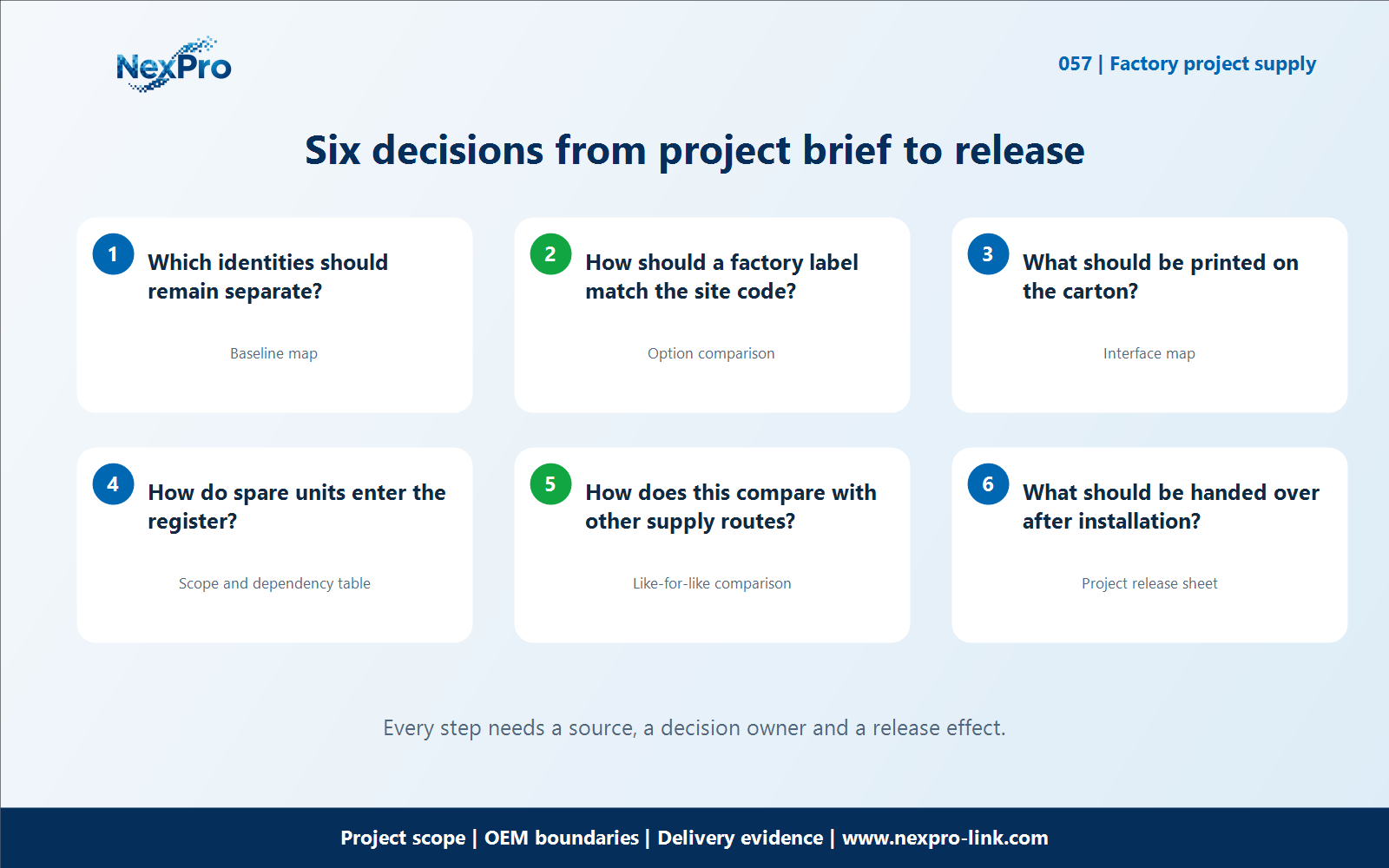
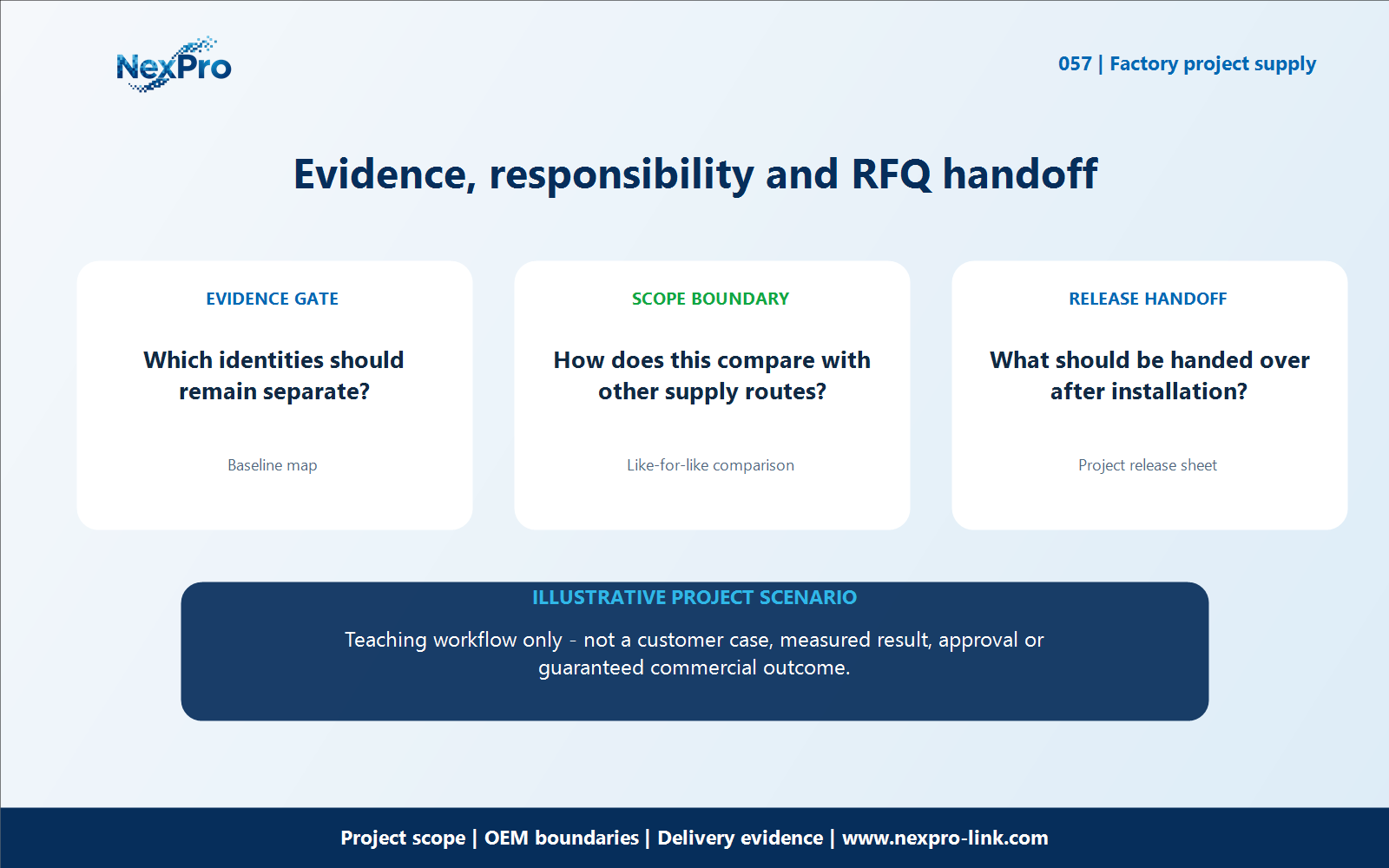
Which identities should remain separate?
A property developer receives visually identical cameras for two towers, a car park and a spare-parts cabinet. Keep model identity, serial number and installation location in separate fields. A camera can move to a new location without becoming a different product. Separating these identities protects both project records and later warranty or replacement discussions.
For the "Which identities should remain separate" decision, use the baseline map fields Area or item, Required task, Current assumption, Decision owner. Apply it to camera serial to project location so the buyer, supplier and local integrator can see which input is confirmed, who owns it and which evidence remains open.
Evaluate which identities should remain separate against the stated site task and the surrounding equipment, documentation, packing and handover dependencies for camera serial to project location. For which identities should remain separate in camera serial to project location, record the confirmed condition, chosen option and remaining evidence separately; an open value is not a price, test, approval or customer-result claim.
Carry the which identities should remain separate decision into the RFQ, BOQ, configuration or release record for camera serial to project location. For which identities should remain separate in camera serial to project location, name the equipment, artwork, network, installation and acceptance owner; site-specific work remains with the buyer or integrator unless the signed scope says otherwise.
Section 02
How should a factory label match the site code?
How should a factory label match the site code? Use the buyer's location code as an additional project reference, not as a replacement for the manufacturer identity. Keep the visible information limited to what installation and maintenance need. Access credentials and sensitive security details should remain outside the label. For From Camera Serial Number to Project Location: Factory Labels That Stay Useful, keep this decision tied to the same project brief rather than opening a separate generic specification exercise.
For the "How should a factory label match the site code" decision, use the option comparison fields Position or option, Suitable condition, Trade-off, Next choice. Apply it to camera serial to project location so the buyer, supplier and local integrator can see which input is confirmed, who owns it and which evidence remains open.
Evaluate how should a factory label match the site code against the stated site task and the surrounding equipment, documentation, packing and handover dependencies for camera serial to project location. For how should a factory label match the site code in camera serial to project location, record the confirmed condition, chosen option and remaining evidence separately; an open value is not a price, test, approval or customer-result claim.
Carry the how should a factory label match the site code decision into the RFQ, BOQ, configuration or release record for camera serial to project location. For how should a factory label match the site code in camera serial to project location, name the equipment, artwork, network, installation and acceptance owner; site-specific work remains with the buyer or integrator unless the signed scope says otherwise.
Section 03
What should be printed on the carton?
What should be printed on the carton? A carton label should identify the project release and its linked packing-list entry. When a carton contains multiple models, describe that grouping clearly instead of using one model name as shorthand for all the contents. For From Camera Serial Number to Project Location: Factory Labels That Stay Useful, keep this decision tied to the same project brief rather than opening a separate generic specification exercise.
For the "What should be printed on the carton" decision, use the interface map fields Device or record, Input, Output, Responsible party. Apply it to camera serial to project location so the buyer, supplier and local integrator can see which input is confirmed, who owns it and which evidence remains open.
Evaluate what should be printed on the carton against the stated site task and the surrounding equipment, documentation, packing and handover dependencies for camera serial to project location. For what should be printed on the carton in camera serial to project location, record the confirmed condition, chosen option and remaining evidence separately; an open value is not a price, test, approval or customer-result claim.
Carry the what should be printed on the carton decision into the RFQ, BOQ, configuration or release record for camera serial to project location. For what should be printed on the carton in camera serial to project location, name the equipment, artwork, network, installation and acceptance owner; site-specific work remains with the buyer or integrator unless the signed scope says otherwise.
| Project question | Project-oriented treatment | Keep equal when comparing offers |
|---|---|---|
| Which identities should remain separate? | Keep model identity, serial number and installation location in separate fields. | Exact configuration and accessory scope |
| How should a factory label match the site code? | Use the buyer's location code as an additional project reference, not as a replacement for the manufacturer identity. | Preparation versus on-site work |
| What should be printed on the carton? | A carton label should identify the project release and its linked packing-list entry. | Branding process and artwork scope |
| How do spare units enter the register? | Register spare units as inventory with their actual storage location. | Delivery and support responsibilities |
Section 04
How do spare units enter the register?
How do spare units enter the register? Register spare units as inventory with their actual storage location. Do not assign a false installed position merely to complete a schedule. When a spare replaces a field camera, update the location relationship and preserve the removed unit's history. For From Camera Serial Number to Project Location: Factory Labels That Stay Useful, keep this decision tied to the same project brief rather than opening a separate generic specification exercise.
For the "How do spare units enter the register" decision, use the scope and dependency table fields Item, Included, Dependency, Separate option. Apply it to camera serial to project location so the buyer, supplier and local integrator can see which input is confirmed, who owns it and which evidence remains open.
Evaluate how do spare units enter the register against the stated site task and the surrounding equipment, documentation, packing and handover dependencies for camera serial to project location. For how do spare units enter the register in camera serial to project location, record the confirmed condition, chosen option and remaining evidence separately; an open value is not a price, test, approval or customer-result claim.
Carry the how do spare units enter the register decision into the RFQ, BOQ, configuration or release record for camera serial to project location. For how do spare units enter the register in camera serial to project location, name the equipment, artwork, network, installation and acceptance owner; site-specific work remains with the buyer or integrator unless the signed scope says otherwise.
Section 05
How does this compare with other supply routes?
How does this compare with other supply routes? Request the same identification fields from each supplier and evaluate how much manual mapping remains for the installer. This compares a practical delivery service rather than assuming that any particular brand or distribution route lacks asset-management support. For From Camera Serial Number to Project Location: Factory Labels That Stay Useful, keep this decision tied to the same project brief rather than opening a separate generic specification exercise.
For the "How does this compare with other supply routes" decision, use the like-for-like comparison fields Requirement, Baseline, Proposed treatment, Remaining difference. Apply it to camera serial to project location so the buyer, supplier and local integrator can see which input is confirmed, who owns it and which evidence remains open.
Evaluate how does this compare with other supply routes against the stated site task and the surrounding equipment, documentation, packing and handover dependencies for camera serial to project location. For how does this compare with other supply routes in camera serial to project location, record the confirmed condition, chosen option and remaining evidence separately; an open value is not a price, test, approval or customer-result claim.
Carry the how does this compare with other supply routes decision into the RFQ, BOQ, configuration or release record for camera serial to project location. For how does this compare with other supply routes in camera serial to project location, name the equipment, artwork, network, installation and acceptance owner; site-specific work remains with the buyer or integrator unless the signed scope says otherwise.
Section 06
What should be handed over after installation?
What should be handed over after installation? Hand over the installed and spare-unit mapping after site changes are complete. Include the current status of removed or returned units. The result supports targeted maintenance and repeat ordering instead of leaving the owner with a carton list that no longer matches the site. For From Camera Serial Number to Project Location: Factory Labels That Stay Useful, keep this decision tied to the same project brief rather than opening a separate generic specification exercise.
For the "What should be handed over after installation" decision, use the project release sheet fields Configuration, Artwork, Quantity, Location, Release stage. Apply it to camera serial to project location so the buyer, supplier and local integrator can see which input is confirmed, who owns it and which evidence remains open.
Evaluate what should be handed over after installation against the stated site task and the surrounding equipment, documentation, packing and handover dependencies for camera serial to project location. For what should be handed over after installation in camera serial to project location, record the confirmed condition, chosen option and remaining evidence separately; an open value is not a price, test, approval or customer-result claim.
Carry the what should be handed over after installation decision into the RFQ, BOQ, configuration or release record for camera serial to project location. For what should be handed over after installation in camera serial to project location, name the equipment, artwork, network, installation and acceptance owner; site-specific work remains with the buyer or integrator unless the signed scope says otherwise.
Engineering references
These sources support the general planning principles. Always use the selected product's current datasheet and applicable project standards for final design.