A commercial project needs indoor cameras, motorized entrance cameras and a small number of specialist outdoor units. Group positions by the job the image must perform and the conditions around the camera.
Section 01
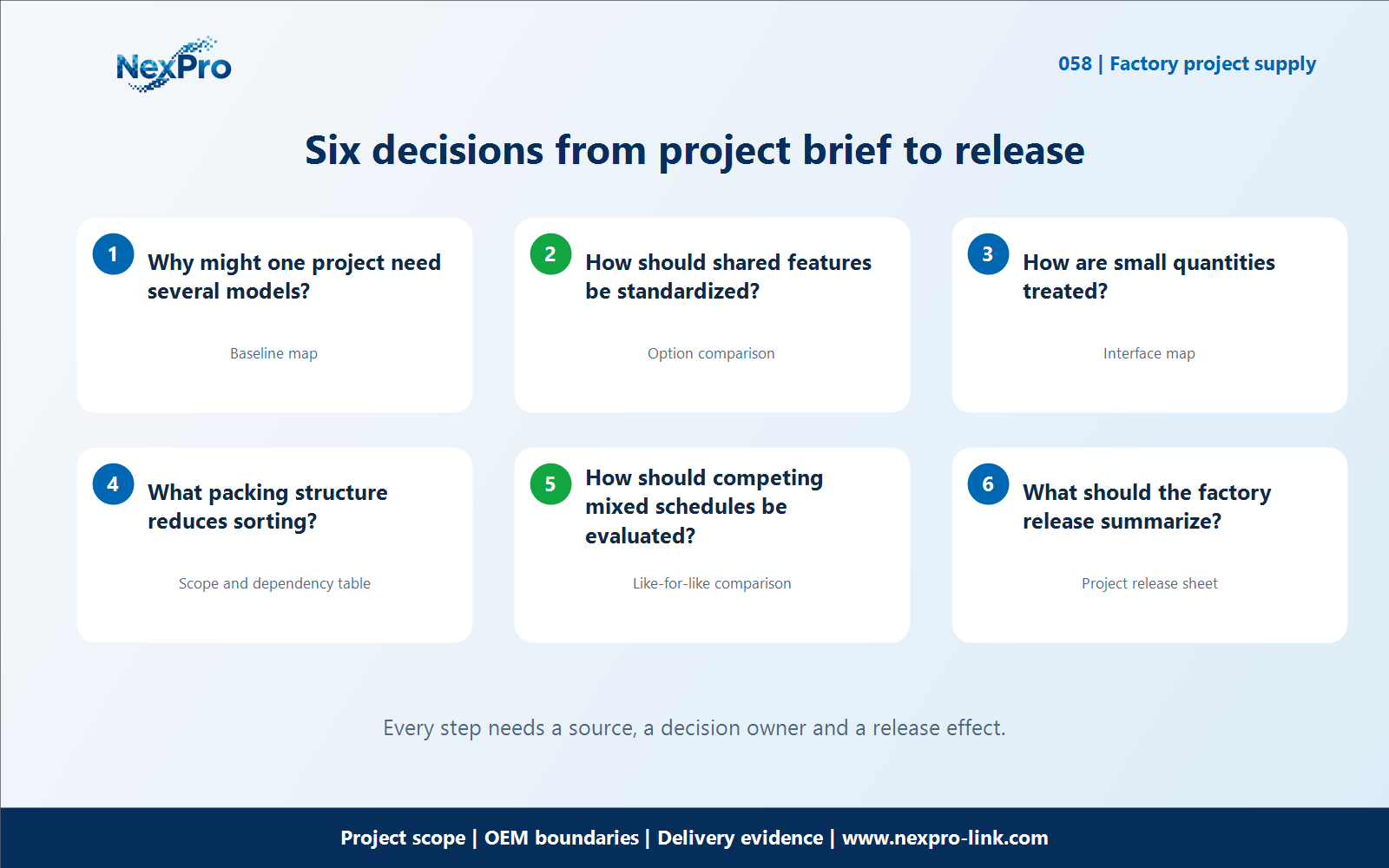
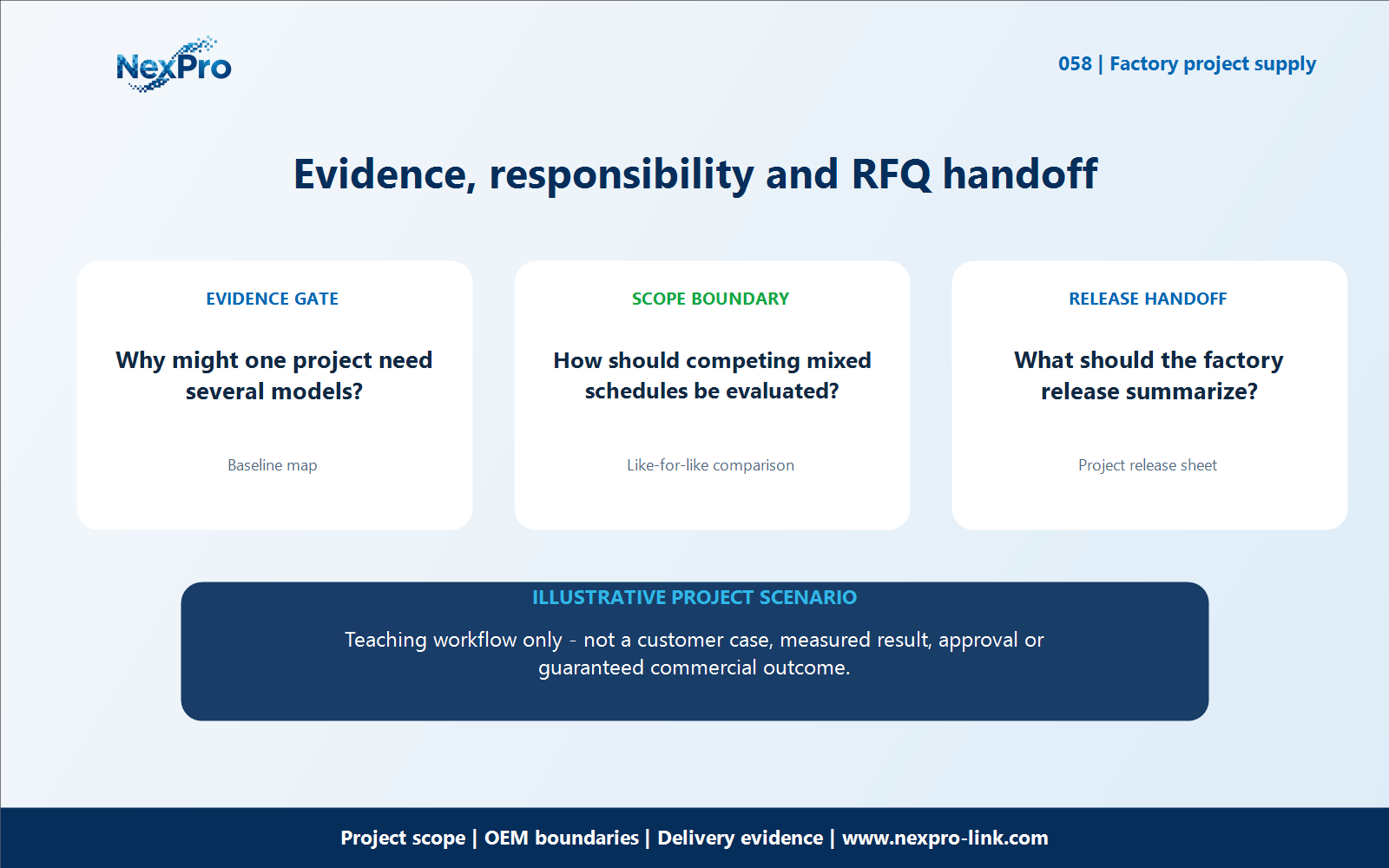
Why might one project need several models?
A commercial project needs indoor cameras, motorized entrance cameras and a small number of specialist outdoor units. Group positions by the job the image must perform and the conditions around the camera. Uniform hardware simplifies some tasks, but it can also overspecify easy views or underspecify difficult ones. A mixed schedule should explain those differences clearly.
For the "Why might one project need several models" decision, use the baseline map fields Area or item, Required task, Current assumption, Decision owner. Apply it to mixed camera project production so the buyer, supplier and local integrator can see which input is confirmed, who owns it and which evidence remains open.
Evaluate why might one project need several models against the stated site task and the surrounding equipment, documentation, packing and handover dependencies for mixed camera project production. For why might one project need several models in mixed camera project production, record the confirmed condition, chosen option and remaining evidence separately; an open value is not a price, test, approval or customer-result claim.
Carry the why might one project need several models decision into the RFQ, BOQ, configuration or release record for mixed camera project production. For why might one project need several models in mixed camera project production, name the equipment, artwork, network, installation and acceptance owner; site-specific work remains with the buyer or integrator unless the signed scope says otherwise.
Section 03
How are small quantities treated?
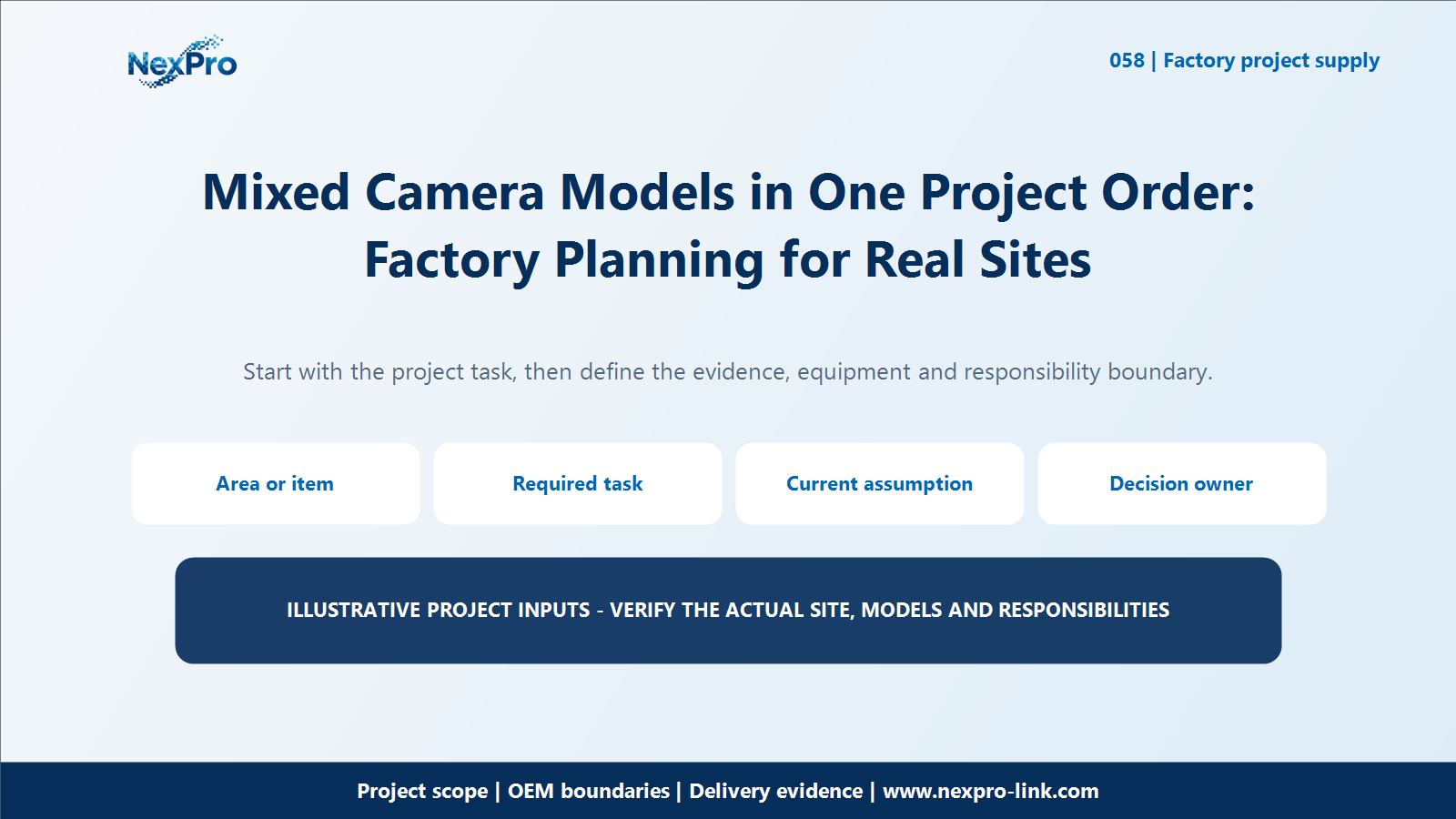
How are small quantities treated? Separate the main volume from low-quantity special positions when requesting a quotation. Setup work, marking and packaging can affect these lines differently. Confirm the selected configuration and quantity rather than applying one minimum-order rule to the entire project. For Mixed Camera Models in One Project Order: Factory Planning for Real Sites, keep this decision tied to the same project brief rather than opening a separate generic specification exercise.
For the "How are small quantities treated" decision, use the interface map fields Device or record, Input, Output, Responsible party. Apply it to mixed camera project production so the buyer, supplier and local integrator can see which input is confirmed, who owns it and which evidence remains open.
Evaluate how are small quantities treated against the stated site task and the surrounding equipment, documentation, packing and handover dependencies for mixed camera project production. For how are small quantities treated in mixed camera project production, record the confirmed condition, chosen option and remaining evidence separately; an open value is not a price, test, approval or customer-result claim.
Carry the how are small quantities treated decision into the RFQ, BOQ, configuration or release record for mixed camera project production. For how are small quantities treated in mixed camera project production, name the equipment, artwork, network, installation and acceptance owner; site-specific work remains with the buyer or integrator unless the signed scope says otherwise.
| Project question | Project-oriented treatment | Keep equal when comparing offers |
|---|---|---|
| Why might one project need several models? | Group positions by the job the image must perform and the conditions around the camera. | Exact configuration and accessory scope |
| How should shared features be standardized? | Standardize compatible settings and documentation where that helps operation. | Preparation versus on-site work |
| How are small quantities treated? | Separate the main volume from low-quantity special positions when requesting a quotation. | Branding process and artwork scope |
| What packing structure reduces sorting? | Choose between model-grouped cartons and location-specific kits according to how the site will receive equipment. | Delivery and support responsibilities |
Section 04
What packing structure reduces sorting?
What packing structure reduces sorting? Choose between model-grouped cartons and location-specific kits according to how the site will receive equipment. Location kits can reduce sorting for crews, while model grouping may suit a central store. The packing plan should follow the actual installation process. For Mixed Camera Models in One Project Order: Factory Planning for Real Sites, keep this decision tied to the same project brief rather than opening a separate generic specification exercise.
For the "What packing structure reduces sorting" decision, use the scope and dependency table fields Item, Included, Dependency, Separate option. Apply it to mixed camera project production so the buyer, supplier and local integrator can see which input is confirmed, who owns it and which evidence remains open.
Evaluate what packing structure reduces sorting against the stated site task and the surrounding equipment, documentation, packing and handover dependencies for mixed camera project production. For what packing structure reduces sorting in mixed camera project production, record the confirmed condition, chosen option and remaining evidence separately; an open value is not a price, test, approval or customer-result claim.
Carry the what packing structure reduces sorting decision into the RFQ, BOQ, configuration or release record for mixed camera project production. For what packing structure reduces sorting in mixed camera project production, name the equipment, artwork, network, installation and acceptance owner; site-specific work remains with the buyer or integrator unless the signed scope says otherwise.
Section 05
How should competing mixed schedules be evaluated?
How should competing mixed schedules be evaluated? Compare each position's required outcome before comparing the total. Suppliers may use different model mixes to meet the same brief. Keep coverage, recording and support requirements equal so a cheaper package is not simply leaving difficult positions unresolved. For Mixed Camera Models in One Project Order: Factory Planning for Real Sites, keep this decision tied to the same project brief rather than opening a separate generic specification exercise.
For the "How should competing mixed schedules be evaluated" decision, use the like-for-like comparison fields Requirement, Baseline, Proposed treatment, Remaining difference. Apply it to mixed camera project production so the buyer, supplier and local integrator can see which input is confirmed, who owns it and which evidence remains open.
Evaluate how should competing mixed schedules be evaluated against the stated site task and the surrounding equipment, documentation, packing and handover dependencies for mixed camera project production. For how should competing mixed schedules be evaluated in mixed camera project production, record the confirmed condition, chosen option and remaining evidence separately; an open value is not a price, test, approval or customer-result claim.
Carry the how should competing mixed schedules be evaluated decision into the RFQ, BOQ, configuration or release record for mixed camera project production. For how should competing mixed schedules be evaluated in mixed camera project production, name the equipment, artwork, network, installation and acceptance owner; site-specific work remains with the buyer or integrator unless the signed scope says otherwise.
Section 06
What should the factory release summarize?
What should the factory release summarize? Release a schedule listing model variants, accessories and packing groups, with a link to the position plan. That record makes the mixed package reproducible. A vague kit name is not sufficient for a future extension or replacement order. For Mixed Camera Models in One Project Order: Factory Planning for Real Sites, keep this decision tied to the same project brief rather than opening a separate generic specification exercise.
For the "What should the factory release summarize" decision, use the project release sheet fields Configuration, Artwork, Quantity, Location, Release stage. Apply it to mixed camera project production so the buyer, supplier and local integrator can see which input is confirmed, who owns it and which evidence remains open.
Evaluate what should the factory release summarize against the stated site task and the surrounding equipment, documentation, packing and handover dependencies for mixed camera project production. For what should the factory release summarize in mixed camera project production, record the confirmed condition, chosen option and remaining evidence separately; an open value is not a price, test, approval or customer-result claim.
Carry the what should the factory release summarize decision into the RFQ, BOQ, configuration or release record for mixed camera project production. For what should the factory release summarize in mixed camera project production, name the equipment, artwork, network, installation and acceptance owner; site-specific work remains with the buyer or integrator unless the signed scope says otherwise.
Engineering references
These sources support the general planning principles. Always use the selected product's current datasheet and applicable project standards for final design.