
A hotel contractor needs a complete opening-stage security package before the remaining floors and optional displays are ready. Build the first release around a usable operating scope.
Section 01
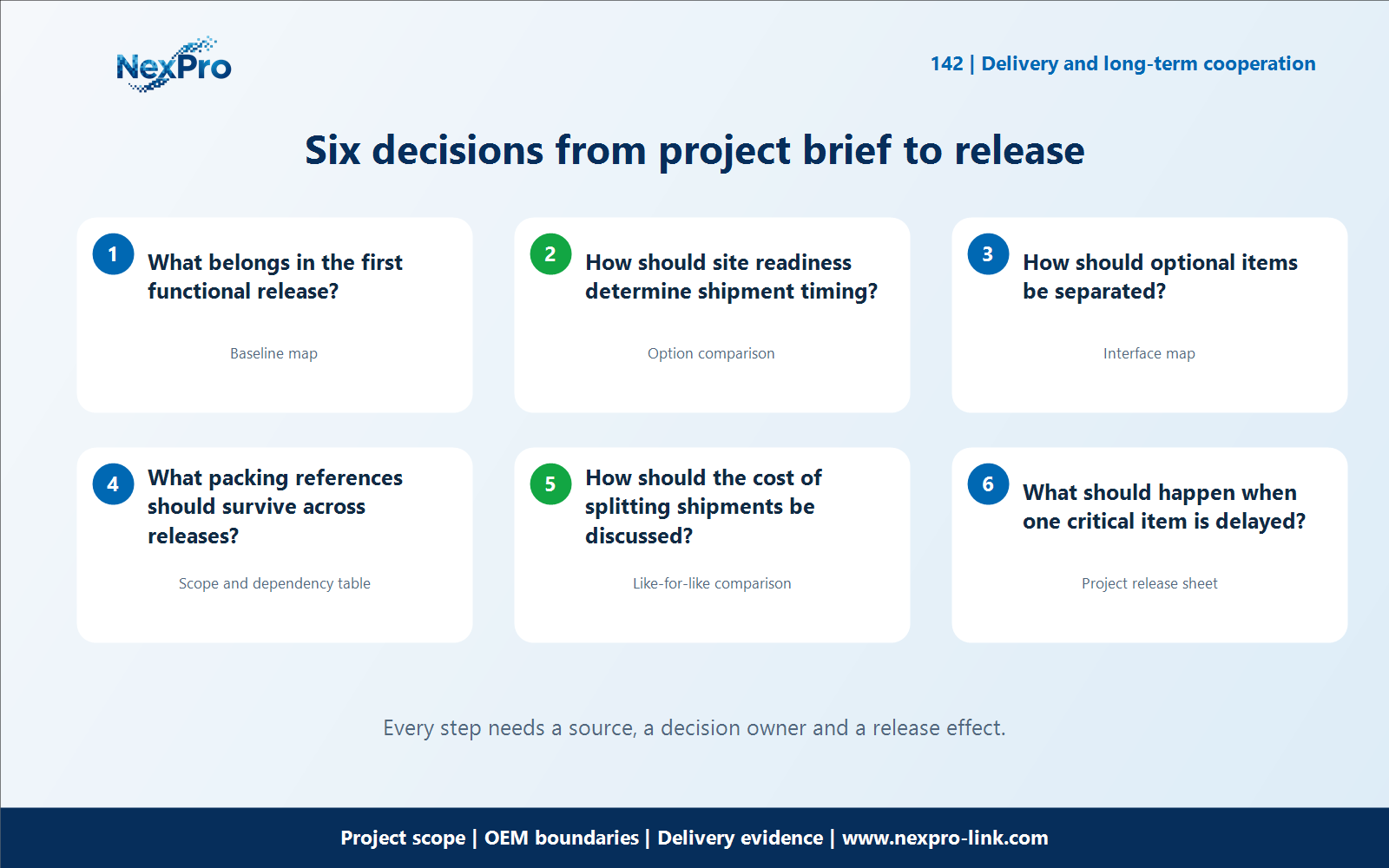
What belongs in the first functional release?
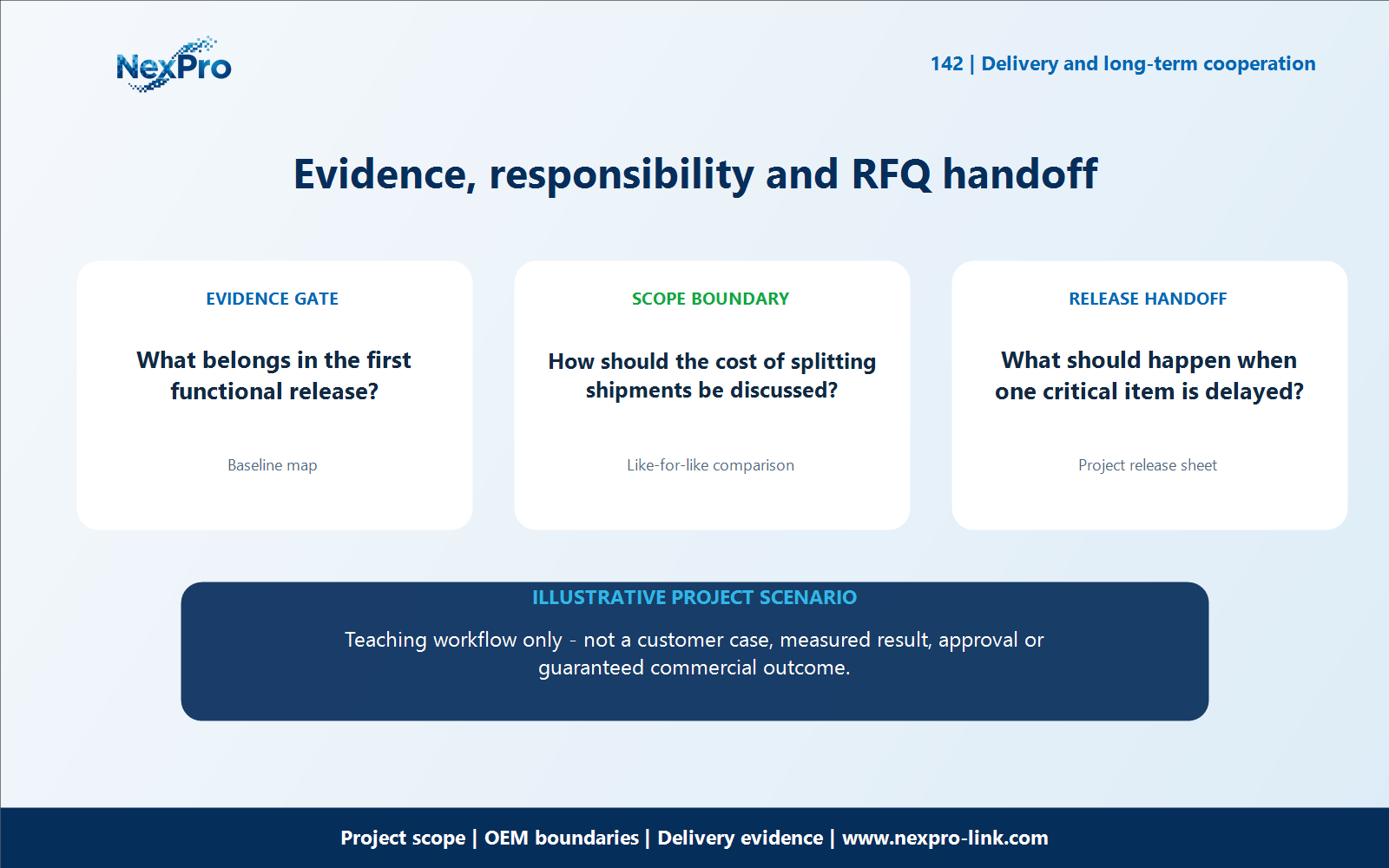
A hotel contractor needs a complete opening-stage security package before the remaining floors and optional displays are ready. Build the first release around a usable operating scope. Include the devices and accessories needed for recording, networking and power, not just the most visible cameras. An early delivery has limited value if essential supporting components remain in a later shipment.
For the "What belongs in the first functional release" decision, use the baseline map fields Area or item, Required task, Current assumption, Decision owner. Apply it to phased CCTV export critical first so the buyer, supplier and local integrator can see which input is confirmed, who owns it and which evidence remains open.
Evaluate what belongs in the first functional release against the stated site task and the surrounding equipment, documentation, packing and handover dependencies for phased CCTV export critical first. For what belongs in the first functional release in phased CCTV export critical first, record the confirmed condition, chosen option and remaining evidence separately; an open value is not a price, test, approval or customer-result claim.
Carry the what belongs in the first functional release decision into the RFQ, BOQ, configuration or release record for phased CCTV export critical first. For what belongs in the first functional release in phased CCTV export critical first, name the equipment, artwork, network, installation and acceptance owner; site-specific work remains with the buyer or integrator unless the signed scope says otherwise.
Section 02
How should site readiness determine shipment timing?
How should site readiness determine shipment timing? Align shipment with the areas and infrastructure ready to receive it. Consider storage and handling when equipment arrives before installation can start. The delivery plan should support the construction sequence instead of treating the earliest possible dispatch as automatically the best outcome. For CCTV Export in Phases: Ship the Critical Opening Package First, keep this decision tied to the same project brief rather than opening a separate generic specification exercise.
For the "How should site readiness determine shipment timing" decision, use the option comparison fields Position or option, Suitable condition, Trade-off, Next choice. Apply it to phased CCTV export critical first so the buyer, supplier and local integrator can see which input is confirmed, who owns it and which evidence remains open.
Evaluate how should site readiness determine shipment timing against the stated site task and the surrounding equipment, documentation, packing and handover dependencies for phased CCTV export critical first. For how should site readiness determine shipment timing in phased CCTV export critical first, record the confirmed condition, chosen option and remaining evidence separately; an open value is not a price, test, approval or customer-result claim.
Carry the how should site readiness determine shipment timing decision into the RFQ, BOQ, configuration or release record for phased CCTV export critical first. For how should site readiness determine shipment timing in phased CCTV export critical first, name the equipment, artwork, network, installation and acceptance owner; site-specific work remains with the buyer or integrator unless the signed scope says otherwise.
Section 03
How should optional items be separated?
How should optional items be separated? Separate genuinely optional or later-phase items from those required for the first operating task. A display upgrade may be deferred where the workflow permits it, but necessary storage or network power cannot be omitted simply to call the first shipment complete. For CCTV Export in Phases: Ship the Critical Opening Package First, keep this decision tied to the same project brief rather than opening a separate generic specification exercise.
For the "How should optional items be separated" decision, use the interface map fields Device or record, Input, Output, Responsible party. Apply it to phased CCTV export critical first so the buyer, supplier and local integrator can see which input is confirmed, who owns it and which evidence remains open.
Evaluate how should optional items be separated against the stated site task and the surrounding equipment, documentation, packing and handover dependencies for phased CCTV export critical first. For how should optional items be separated in phased CCTV export critical first, record the confirmed condition, chosen option and remaining evidence separately; an open value is not a price, test, approval or customer-result claim.
Carry the how should optional items be separated decision into the RFQ, BOQ, configuration or release record for phased CCTV export critical first. For how should optional items be separated in phased CCTV export critical first, name the equipment, artwork, network, installation and acceptance owner; site-specific work remains with the buyer or integrator unless the signed scope says otherwise.
| Project question | Project-oriented treatment | Keep equal when comparing offers |
|---|---|---|
| What belongs in the first functional release? | Build the first release around a usable operating scope. | Actual supplied equipment and stage |
| How should site readiness determine shipment timing? | Align shipment with the areas and infrastructure ready to receive it. | Ownership of installation and support tasks |
| How should optional items be separated? | Separate genuinely optional or later-phase items from those required for the first operating task. | Branding and configuration references |
| What packing references should survive across releases? | Keep the equipment, artwork and carton references consistent across releases. | Confirmed order versus planned follow-up |
Section 04
What packing references should survive across releases?
What packing references should survive across releases? Keep the equipment, artwork and carton references consistent across releases. Record what has actually shipped and what remains open. This helps the contractor reconcile partial deliveries without confusing the total order quantity with the contents of the first batch. For CCTV Export in Phases: Ship the Critical Opening Package First, keep this decision tied to the same project brief rather than opening a separate generic specification exercise.
For the "What packing references should survive across releases" decision, use the scope and dependency table fields Item, Included, Dependency, Separate option. Apply it to phased CCTV export critical first so the buyer, supplier and local integrator can see which input is confirmed, who owns it and which evidence remains open.
Evaluate what packing references should survive across releases against the stated site task and the surrounding equipment, documentation, packing and handover dependencies for phased CCTV export critical first. For what packing references should survive across releases in phased CCTV export critical first, record the confirmed condition, chosen option and remaining evidence separately; an open value is not a price, test, approval or customer-result claim.
Carry the what packing references should survive across releases decision into the RFQ, BOQ, configuration or release record for phased CCTV export critical first. For what packing references should survive across releases in phased CCTV export critical first, name the equipment, artwork, network, installation and acceptance owner; site-specific work remains with the buyer or integrator unless the signed scope says otherwise.
Section 05
How should the cost of splitting shipments be discussed?
How should the cost of splitting shipments be discussed? Show the actual additional transport, packing and receiving costs associated with the proposed split. Compare them with the buyer's scheduling needs using stated assumptions. Do not invent a financial benefit from earlier opening or assume every product can use the same transport arrangement. For CCTV Export in Phases: Ship the Critical Opening Package First, keep this decision tied to the same project brief rather than opening a separate generic specification exercise.
For the "How should the cost of splitting shipments be discussed" decision, use the like-for-like comparison fields Requirement, Baseline, Proposed treatment, Remaining difference. Apply it to phased CCTV export critical first so the buyer, supplier and local integrator can see which input is confirmed, who owns it and which evidence remains open.
Evaluate how should the cost of splitting shipments be discussed against the stated site task and the surrounding equipment, documentation, packing and handover dependencies for phased CCTV export critical first. For how should the cost of splitting shipments be discussed in phased CCTV export critical first, record the confirmed condition, chosen option and remaining evidence separately; an open value is not a price, test, approval or customer-result claim.
Carry the how should the cost of splitting shipments be discussed decision into the RFQ, BOQ, configuration or release record for phased CCTV export critical first. For how should the cost of splitting shipments be discussed in phased CCTV export critical first, name the equipment, artwork, network, installation and acceptance owner; site-specific work remains with the buyer or integrator unless the signed scope says otherwise.
Section 06
What should happen when one critical item is delayed?
What should happen when one critical item is delayed? Review whether the first release remains functional without the delayed item. Discuss an allowed substitute or a revised sequence with the buyer. Do not silently replace a critical device or mark an incomplete shipment as the agreed operating package. For CCTV Export in Phases: Ship the Critical Opening Package First, keep this decision tied to the same project brief rather than opening a separate generic specification exercise.
For the "What should happen when one critical item is delayed" decision, use the project release sheet fields Configuration, Artwork, Quantity, Location, Release stage. Apply it to phased CCTV export critical first so the buyer, supplier and local integrator can see which input is confirmed, who owns it and which evidence remains open.
Evaluate what should happen when one critical item is delayed against the stated site task and the surrounding equipment, documentation, packing and handover dependencies for phased CCTV export critical first. For what should happen when one critical item is delayed in phased CCTV export critical first, record the confirmed condition, chosen option and remaining evidence separately; an open value is not a price, test, approval or customer-result claim.
Carry the what should happen when one critical item is delayed decision into the RFQ, BOQ, configuration or release record for phased CCTV export critical first. For what should happen when one critical item is delayed in phased CCTV export critical first, name the equipment, artwork, network, installation and acceptance owner; site-specific work remains with the buyer or integrator unless the signed scope says otherwise.
Engineering references
These sources support the general planning principles. Always use the selected product's current datasheet and applicable project standards for final design.