A hotel opens its lobby and two floors while upper floors and a conference wing remain under construction. Define the areas entering operation and the temporary construction boundaries.
Section 01
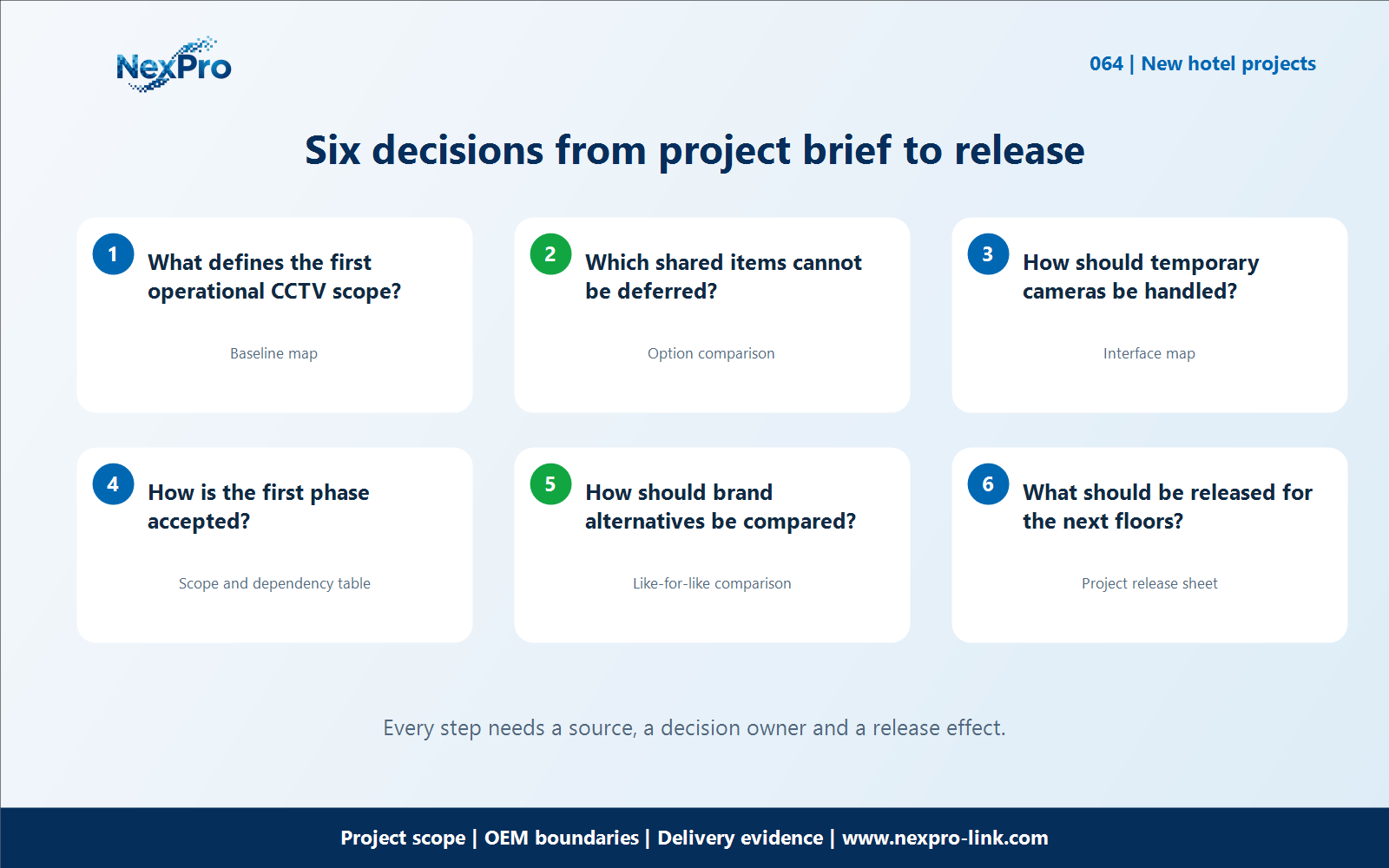
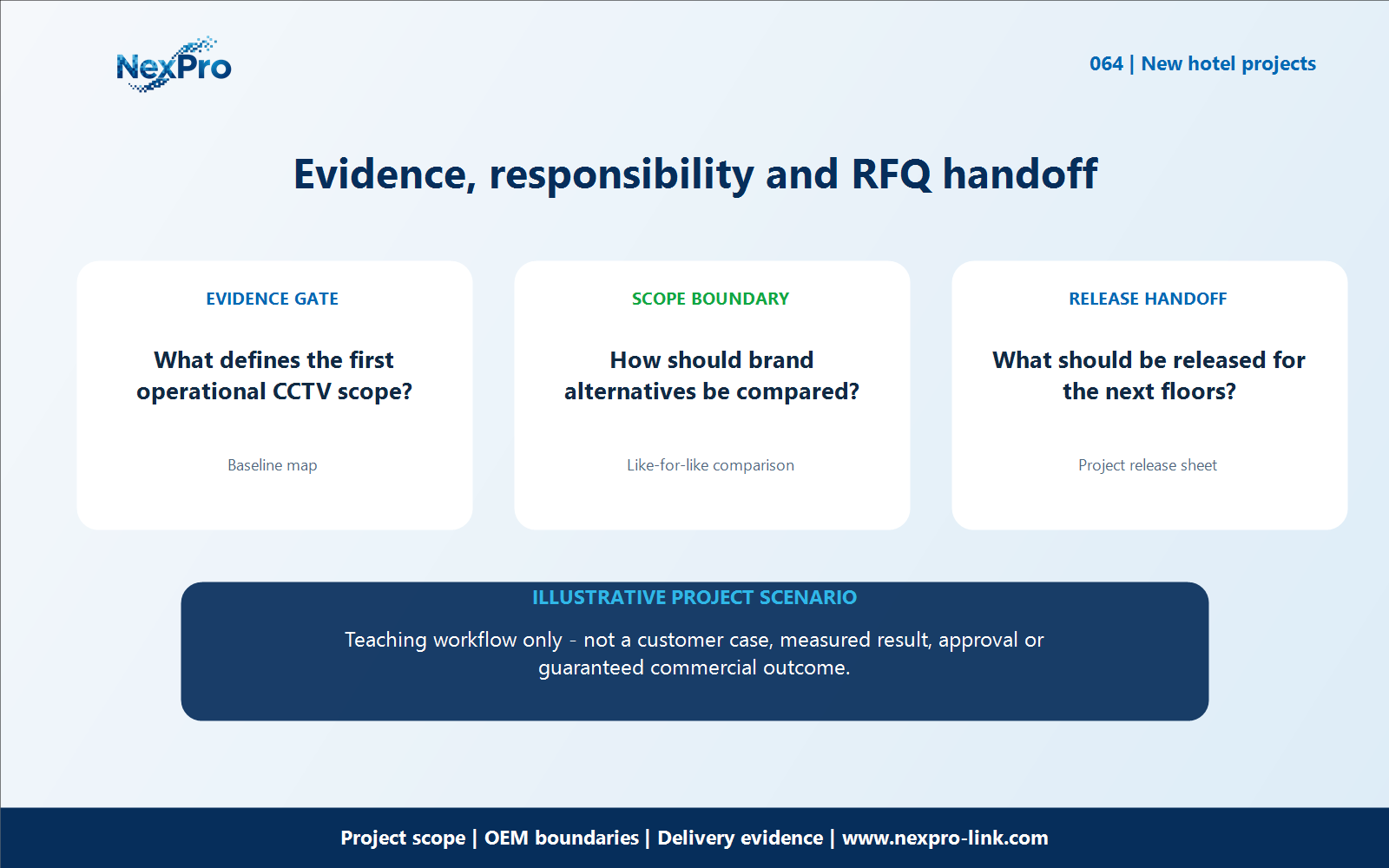
What defines the first operational CCTV scope?
A hotel opens its lobby and two floors while upper floors and a conference wing remain under construction. Define the areas entering operation and the temporary construction boundaries. The first-stage system should cover those approved tasks reliably. Do not label the whole property commissioned simply because some cameras are live while other areas remain unfinished.
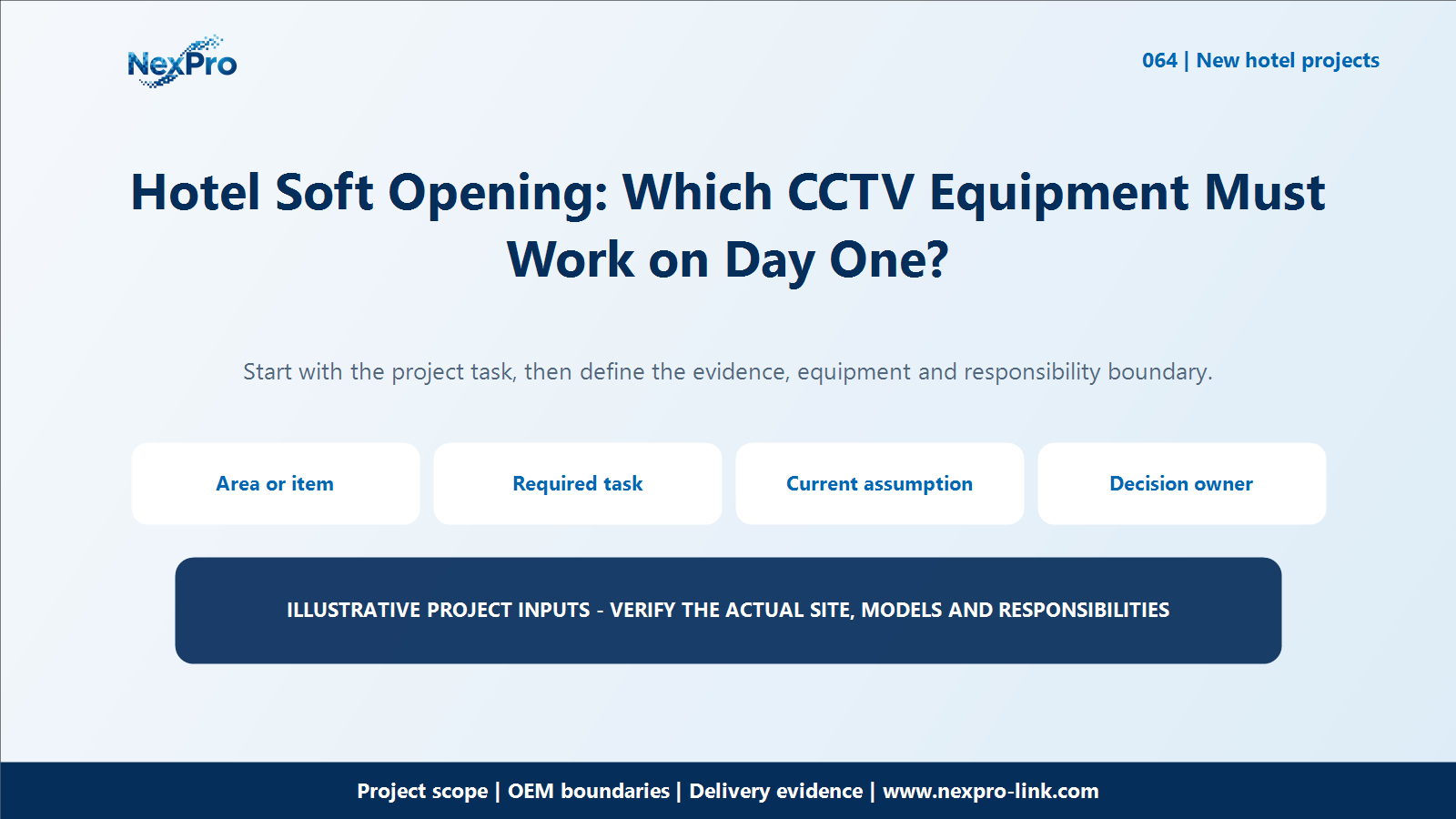
For the "What defines the first operational CCTV scope" decision, use the baseline map fields Area or item, Required task, Current assumption, Decision owner. Apply it to hotel soft opening CCTV release so the buyer, supplier and local integrator can see which input is confirmed, who owns it and which evidence remains open.
Evaluate what defines the first operational cctv scope against the stated site task and the surrounding equipment, documentation, packing and handover dependencies for hotel soft opening CCTV release. For what defines the first operational cctv scope in hotel soft opening CCTV release, record the confirmed condition, chosen option and remaining evidence separately; an open value is not a price, test, approval or customer-result claim.
Carry the what defines the first operational cctv scope decision into the RFQ, BOQ, configuration or release record for hotel soft opening CCTV release. For what defines the first operational cctv scope in hotel soft opening CCTV release, name the equipment, artwork, network, installation and acceptance owner; site-specific work remains with the buyer or integrator unless the signed scope says otherwise.
Section 03
How should temporary cameras be handled?
How should temporary cameras be handled? Identify temporary cameras and their planned removal or relocation. Preserve their device identity when they move, and update the access and location records. This prevents temporary construction views from quietly becoming unreviewed permanent monitoring positions. For Hotel Soft Opening: Which CCTV Equipment Must Work on Day One?, keep this decision tied to the same project brief rather than opening a separate generic specification exercise.
For the "How should temporary cameras be handled" decision, use the interface map fields Device or record, Input, Output, Responsible party. Apply it to hotel soft opening CCTV release so the buyer, supplier and local integrator can see which input is confirmed, who owns it and which evidence remains open.
Evaluate how should temporary cameras be handled against the stated site task and the surrounding equipment, documentation, packing and handover dependencies for hotel soft opening CCTV release. For how should temporary cameras be handled in hotel soft opening CCTV release, record the confirmed condition, chosen option and remaining evidence separately; an open value is not a price, test, approval or customer-result claim.
Carry the how should temporary cameras be handled decision into the RFQ, BOQ, configuration or release record for hotel soft opening CCTV release. For how should temporary cameras be handled in hotel soft opening CCTV release, name the equipment, artwork, network, installation and acceptance owner; site-specific work remains with the buyer or integrator unless the signed scope says otherwise.
| Project question | Project-oriented treatment | Keep equal when comparing offers |
|---|---|---|
| What defines the first operational CCTV scope? | Define the areas entering operation and the temporary construction boundaries. | Approved hotel zones and opening phase |
| Which shared items cannot be deferred? | Include every shared component needed by the first release: recording, usable storage, network path and protected power where required. | Required image and recording task |
| How should temporary cameras be handled? | Identify temporary cameras and their planned removal or relocation. | Operator and platform interfaces |
| How is the first phase accepted? | Test the agreed tasks for the operating phase, including retrieval and relevant power scenarios. | Branding, site allocation and delivery scope |
Section 04
How is the first phase accepted?
How is the first phase accepted? Test the agreed tasks for the operating phase, including retrieval and relevant power scenarios. Record the configuration used. A short acceptance session can demonstrate workflows, but retention duration also depends on storage capacity and sustained recording settings. For Hotel Soft Opening: Which CCTV Equipment Must Work on Day One?, keep this decision tied to the same project brief rather than opening a separate generic specification exercise.
For the "How is the first phase accepted" decision, use the scope and dependency table fields Item, Included, Dependency, Separate option. Apply it to hotel soft opening CCTV release so the buyer, supplier and local integrator can see which input is confirmed, who owns it and which evidence remains open.
Evaluate how is the first phase accepted against the stated site task and the surrounding equipment, documentation, packing and handover dependencies for hotel soft opening CCTV release. For how is the first phase accepted in hotel soft opening CCTV release, record the confirmed condition, chosen option and remaining evidence separately; an open value is not a price, test, approval or customer-result claim.
Carry the how is the first phase accepted decision into the RFQ, BOQ, configuration or release record for hotel soft opening CCTV release. For how is the first phase accepted in hotel soft opening CCTV release, name the equipment, artwork, network, installation and acceptance owner; site-specific work remains with the buyer or integrator unless the signed scope says otherwise.
Section 05
How should brand alternatives be compared?
How should brand alternatives be compared? Compare a complete day-one package from each supplier against the same opening boundary. Separate later-phase costs and mandatory operator requirements. This reveals whether an alternative advances readiness or simply postpones essential equipment and work. For Hotel Soft Opening: Which CCTV Equipment Must Work on Day One?, keep this decision tied to the same project brief rather than opening a separate generic specification exercise.
For the "How should brand alternatives be compared" decision, use the like-for-like comparison fields Requirement, Baseline, Proposed treatment, Remaining difference. Apply it to hotel soft opening CCTV release so the buyer, supplier and local integrator can see which input is confirmed, who owns it and which evidence remains open.
Evaluate how should brand alternatives be compared against the stated site task and the surrounding equipment, documentation, packing and handover dependencies for hotel soft opening CCTV release. For how should brand alternatives be compared in hotel soft opening CCTV release, record the confirmed condition, chosen option and remaining evidence separately; an open value is not a price, test, approval or customer-result claim.
Carry the how should brand alternatives be compared decision into the RFQ, BOQ, configuration or release record for hotel soft opening CCTV release. For how should brand alternatives be compared in hotel soft opening CCTV release, name the equipment, artwork, network, installation and acceptance owner; site-specific work remains with the buyer or integrator unless the signed scope says otherwise.
Section 06
What should be released for the next floors?
What should be released for the next floors? Use the approved baseline for repeat positions, then recalculate the additional load and recording demand. Pack the new floor releases separately from spare stock. A familiar configuration helps, but it does not remove the need to account for expansion. For Hotel Soft Opening: Which CCTV Equipment Must Work on Day One?, keep this decision tied to the same project brief rather than opening a separate generic specification exercise.
For the "What should be released for the next floors" decision, use the project release sheet fields Configuration, Artwork, Quantity, Location, Release stage. Apply it to hotel soft opening CCTV release so the buyer, supplier and local integrator can see which input is confirmed, who owns it and which evidence remains open.
Evaluate what should be released for the next floors against the stated site task and the surrounding equipment, documentation, packing and handover dependencies for hotel soft opening CCTV release. For what should be released for the next floors in hotel soft opening CCTV release, record the confirmed condition, chosen option and remaining evidence separately; an open value is not a price, test, approval or customer-result claim.
Carry the what should be released for the next floors decision into the RFQ, BOQ, configuration or release record for hotel soft opening CCTV release. For what should be released for the next floors in hotel soft opening CCTV release, name the equipment, artwork, network, installation and acceptance owner; site-specific work remains with the buyer or integrator unless the signed scope says otherwise.
Engineering references
These sources support the general planning principles. Always use the selected product's current datasheet and applicable project standards for final design.