A contractor wants cameras, recording equipment and selected power and rack products supplied under one coordinated project packing plan. A coordinated shipment brings several agreed equipment categories into one delivery plan.
Section 01
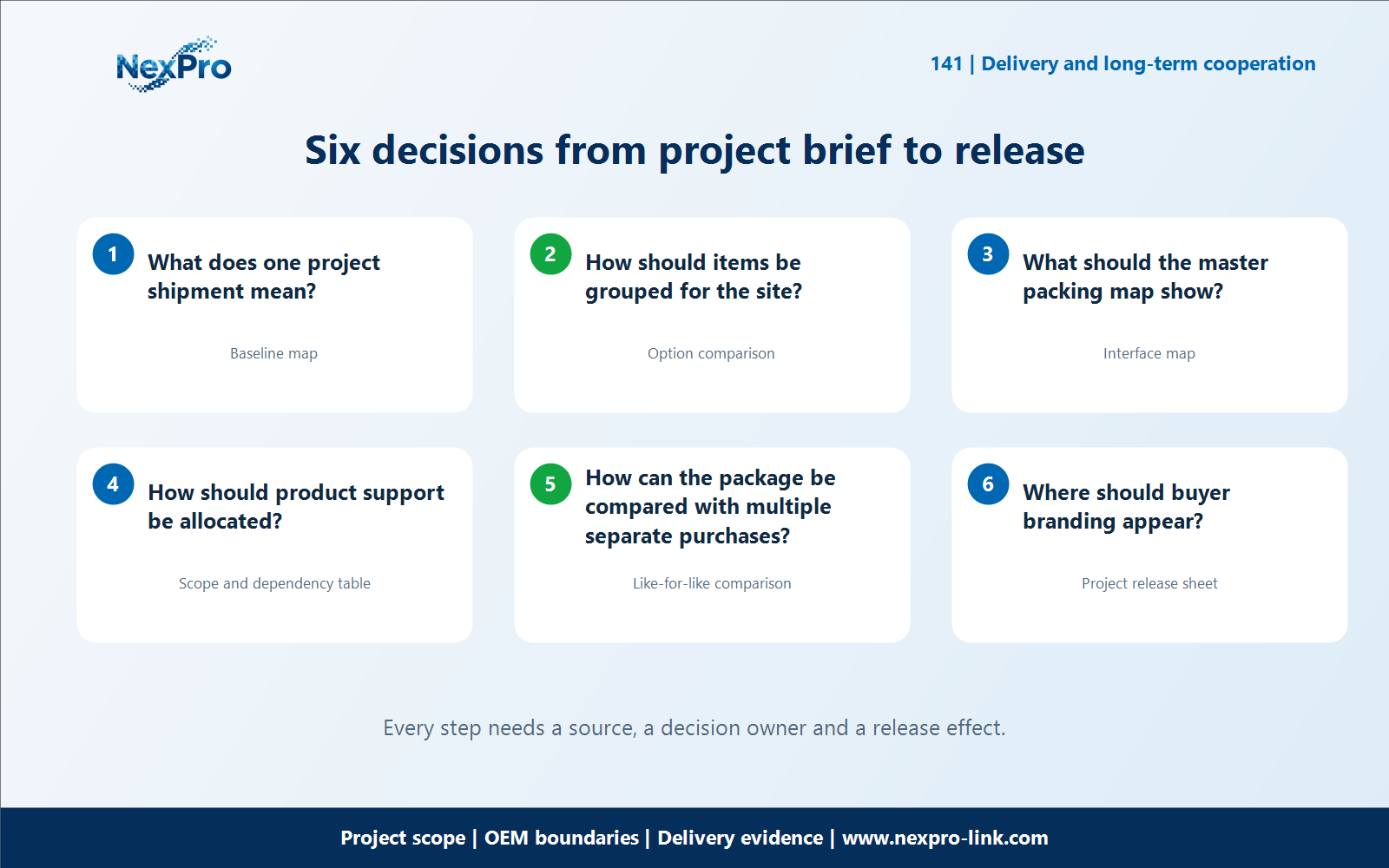
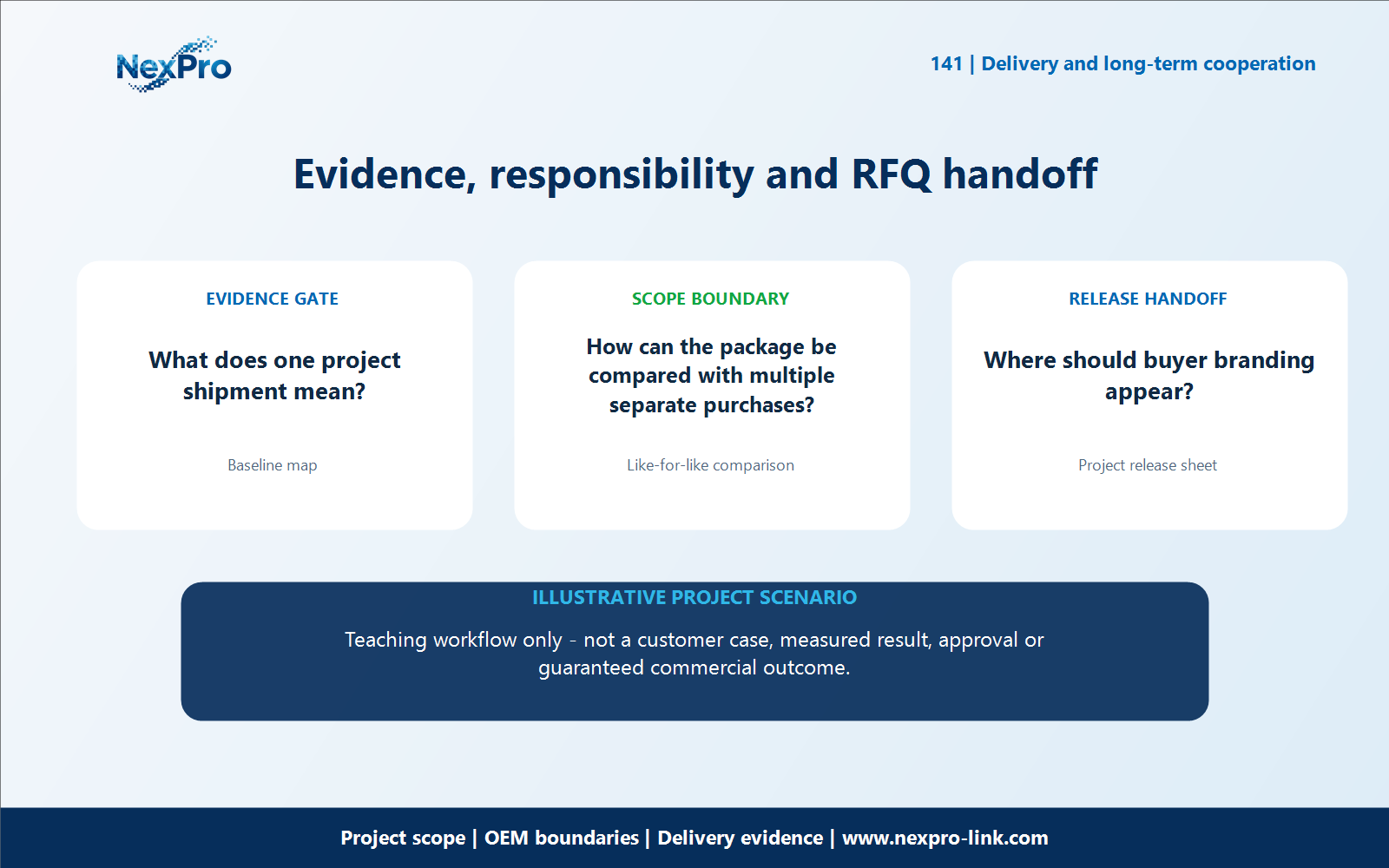
What does one project shipment mean?
A contractor wants cameras, recording equipment and selected power and rack products supplied under one coordinated project packing plan. A coordinated shipment brings several agreed equipment categories into one delivery plan. It does not mean every category comes from the same manufacturing process. Keep the product identities and responsibilities visible while giving the contractor a usable overall packing and receiving structure.
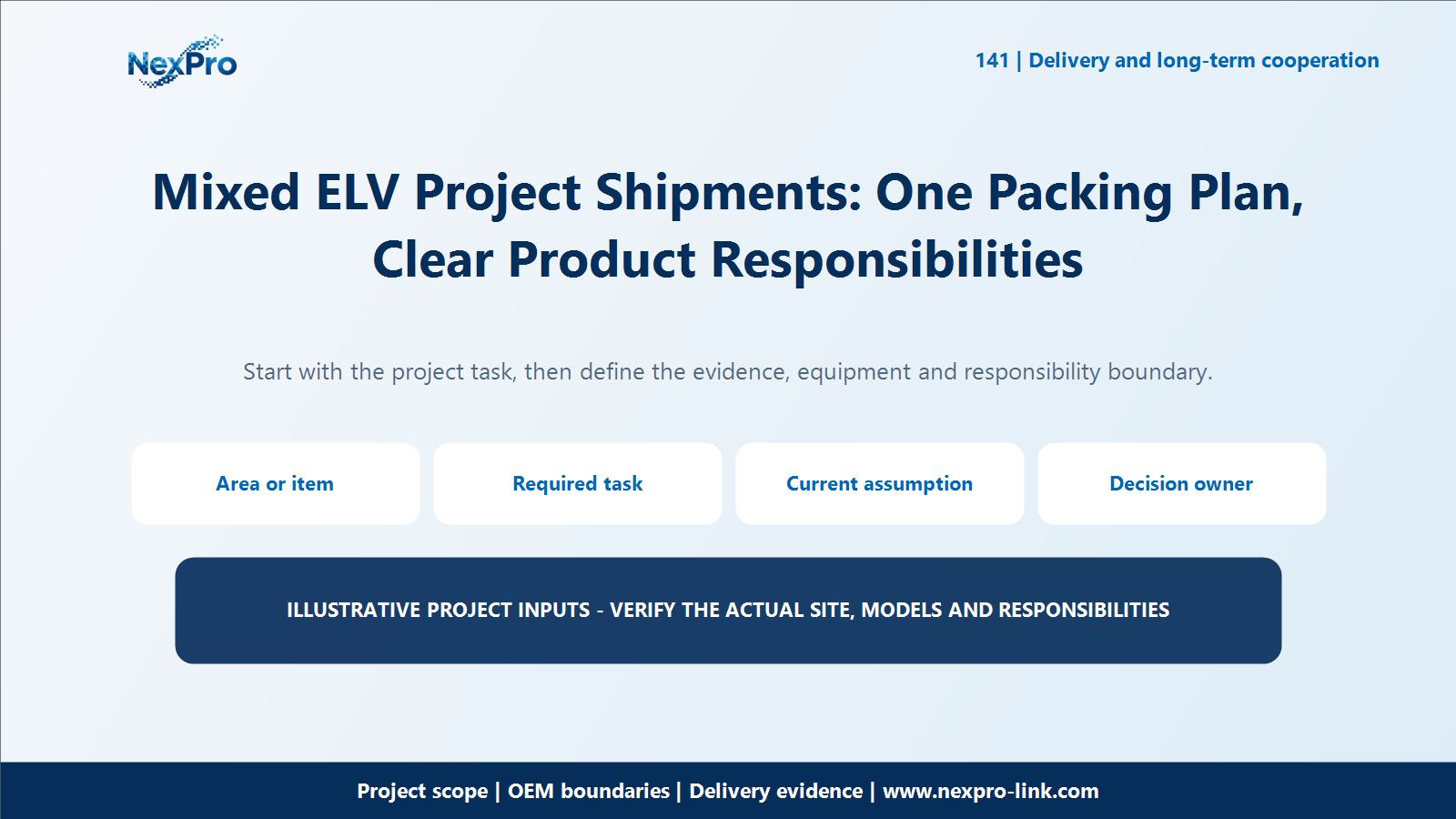
For the "What does one project shipment mean" decision, use the baseline map fields Area or item, Required task, Current assumption, Decision owner. Apply it to mixed elv project packing so the buyer, supplier and local integrator can see which input is confirmed, who owns it and which evidence remains open.
Evaluate what does one project shipment mean against the stated site task and the surrounding equipment, documentation, packing and handover dependencies for mixed elv project packing. For what does one project shipment mean in mixed elv project packing, record the confirmed condition, chosen option and remaining evidence separately; an open value is not a price, test, approval or customer-result claim.
Carry the what does one project shipment mean decision into the RFQ, BOQ, configuration or release record for mixed elv project packing. For what does one project shipment mean in mixed elv project packing, name the equipment, artwork, network, installation and acceptance owner; site-specific work remains with the buyer or integrator unless the signed scope says otherwise.
Section 02
How should items be grouped for the site?
How should items be grouped for the site? Group items according to the installation plan and their actual packing requirements. Site allocation and product protection both matter. A single project reference can connect different carton or pallet groups without forcing unlike equipment into an unsuitable common package. For Mixed ELV Project Shipments: One Packing Plan, Clear Product Responsibilities, keep this decision tied to the same project brief rather than opening a separate generic specification exercise.
For the "How should items be grouped for the site" decision, use the option comparison fields Position or option, Suitable condition, Trade-off, Next choice. Apply it to mixed elv project packing so the buyer, supplier and local integrator can see which input is confirmed, who owns it and which evidence remains open.
Evaluate how should items be grouped for the site against the stated site task and the surrounding equipment, documentation, packing and handover dependencies for mixed elv project packing. For how should items be grouped for the site in mixed elv project packing, record the confirmed condition, chosen option and remaining evidence separately; an open value is not a price, test, approval or customer-result claim.
Carry the how should items be grouped for the site decision into the RFQ, BOQ, configuration or release record for mixed elv project packing. For how should items be grouped for the site in mixed elv project packing, name the equipment, artwork, network, installation and acceptance owner; site-specific work remains with the buyer or integrator unless the signed scope says otherwise.
Section 03
What should the master packing map show?
What should the master packing map show? Map the carton or pallet references to contents, quantities and the relevant BOQ lines. Show the destination area and release stage clearly. Items planned for later shipment should remain distinguishable from those actually included in the current delivery. For Mixed ELV Project Shipments: One Packing Plan, Clear Product Responsibilities, keep this decision tied to the same project brief rather than opening a separate generic specification exercise.
For the "What should the master packing map show" decision, use the interface map fields Device or record, Input, Output, Responsible party. Apply it to mixed elv project packing so the buyer, supplier and local integrator can see which input is confirmed, who owns it and which evidence remains open.
Evaluate what should the master packing map show against the stated site task and the surrounding equipment, documentation, packing and handover dependencies for mixed elv project packing. For what should the master packing map show in mixed elv project packing, record the confirmed condition, chosen option and remaining evidence separately; an open value is not a price, test, approval or customer-result claim.
Carry the what should the master packing map show decision into the RFQ, BOQ, configuration or release record for mixed elv project packing. For what should the master packing map show in mixed elv project packing, name the equipment, artwork, network, installation and acceptance owner; site-specific work remains with the buyer or integrator unless the signed scope says otherwise.
| Project question | Project-oriented treatment | Keep equal when comparing offers |
|---|---|---|
| What does one project shipment mean? | A coordinated shipment brings several agreed equipment categories into one delivery plan. | Actual supplied equipment and stage |
| How should items be grouped for the site? | Group items according to the installation plan and their actual packing requirements. | Ownership of installation and support tasks |
| What should the master packing map show? | Map the carton or pallet references to contents, quantities and the relevant BOQ lines. | Branding and configuration references |
| How should product support be allocated? | Identify the support and integration responsibility for each category. | Confirmed order versus planned follow-up |
Section 04
How should product support be allocated?
How should product support be allocated? Identify the support and integration responsibility for each category. A common project contact can coordinate communication, while technical and warranty conditions may still differ by product. The delivery documents should make that distinction easy to understand. For Mixed ELV Project Shipments: One Packing Plan, Clear Product Responsibilities, keep this decision tied to the same project brief rather than opening a separate generic specification exercise.
For the "How should product support be allocated" decision, use the scope and dependency table fields Item, Included, Dependency, Separate option. Apply it to mixed elv project packing so the buyer, supplier and local integrator can see which input is confirmed, who owns it and which evidence remains open.
Evaluate how should product support be allocated against the stated site task and the surrounding equipment, documentation, packing and handover dependencies for mixed elv project packing. For how should product support be allocated in mixed elv project packing, record the confirmed condition, chosen option and remaining evidence separately; an open value is not a price, test, approval or customer-result claim.
Carry the how should product support be allocated decision into the RFQ, BOQ, configuration or release record for mixed elv project packing. For how should product support be allocated in mixed elv project packing, name the equipment, artwork, network, installation and acceptance owner; site-specific work remains with the buyer or integrator unless the signed scope says otherwise.
Section 05
How can the package be compared with multiple separate purchases?
How can the package be compared with multiple separate purchases? Compare the actual delivery and coordination work alongside equipment costs. Consolidation may help the contractor organize the project, but its value depends on the selected products and schedule. Do not assume one shipment always costs less than well-planned separate deliveries. For Mixed ELV Project Shipments: One Packing Plan, Clear Product Responsibilities, keep this decision tied to the same project brief rather than opening a separate generic specification exercise.
For the "How can the package be compared with multiple separate purchases" decision, use the like-for-like comparison fields Requirement, Baseline, Proposed treatment, Remaining difference. Apply it to mixed elv project packing so the buyer, supplier and local integrator can see which input is confirmed, who owns it and which evidence remains open.
Evaluate how can the package be compared with multiple separate purchases against the stated site task and the surrounding equipment, documentation, packing and handover dependencies for mixed elv project packing. For how can the package be compared with multiple separate purchases in mixed elv project packing, record the confirmed condition, chosen option and remaining evidence separately; an open value is not a price, test, approval or customer-result claim.
Carry the how can the package be compared with multiple separate purchases decision into the RFQ, BOQ, configuration or release record for mixed elv project packing. For how can the package be compared with multiple separate purchases in mixed elv project packing, name the equipment, artwork, network, installation and acceptance owner; site-specific work remains with the buyer or integrator unless the signed scope says otherwise.
Section 06
Where should buyer branding appear?
Where should buyer branding appear? Apply buyer branding only to the agreed customizable surfaces and documents. Keep model and required product information intact across categories. A consistent project presentation should make the package easier to use without concealing the different technical identities within it. For Mixed ELV Project Shipments: One Packing Plan, Clear Product Responsibilities, keep this decision tied to the same project brief rather than opening a separate generic specification exercise.
For the "Where should buyer branding appear" decision, use the project release sheet fields Configuration, Artwork, Quantity, Location, Release stage. Apply it to mixed elv project packing so the buyer, supplier and local integrator can see which input is confirmed, who owns it and which evidence remains open.
Evaluate where should buyer branding appear against the stated site task and the surrounding equipment, documentation, packing and handover dependencies for mixed elv project packing. For where should buyer branding appear in mixed elv project packing, record the confirmed condition, chosen option and remaining evidence separately; an open value is not a price, test, approval or customer-result claim.
Carry the where should buyer branding appear decision into the RFQ, BOQ, configuration or release record for mixed elv project packing. For where should buyer branding appear in mixed elv project packing, name the equipment, artwork, network, installation and acceptance owner; site-specific work remains with the buyer or integrator unless the signed scope says otherwise.
Engineering references
These sources support the general planning principles. Always use the selected product's current datasheet and applicable project standards for final design.