A project order combines bullet cameras, dome-style devices and several mounting accessories in a branded delivery program. Start from the actual device and accessory envelope, including protrusions and attached leads.
Section 01
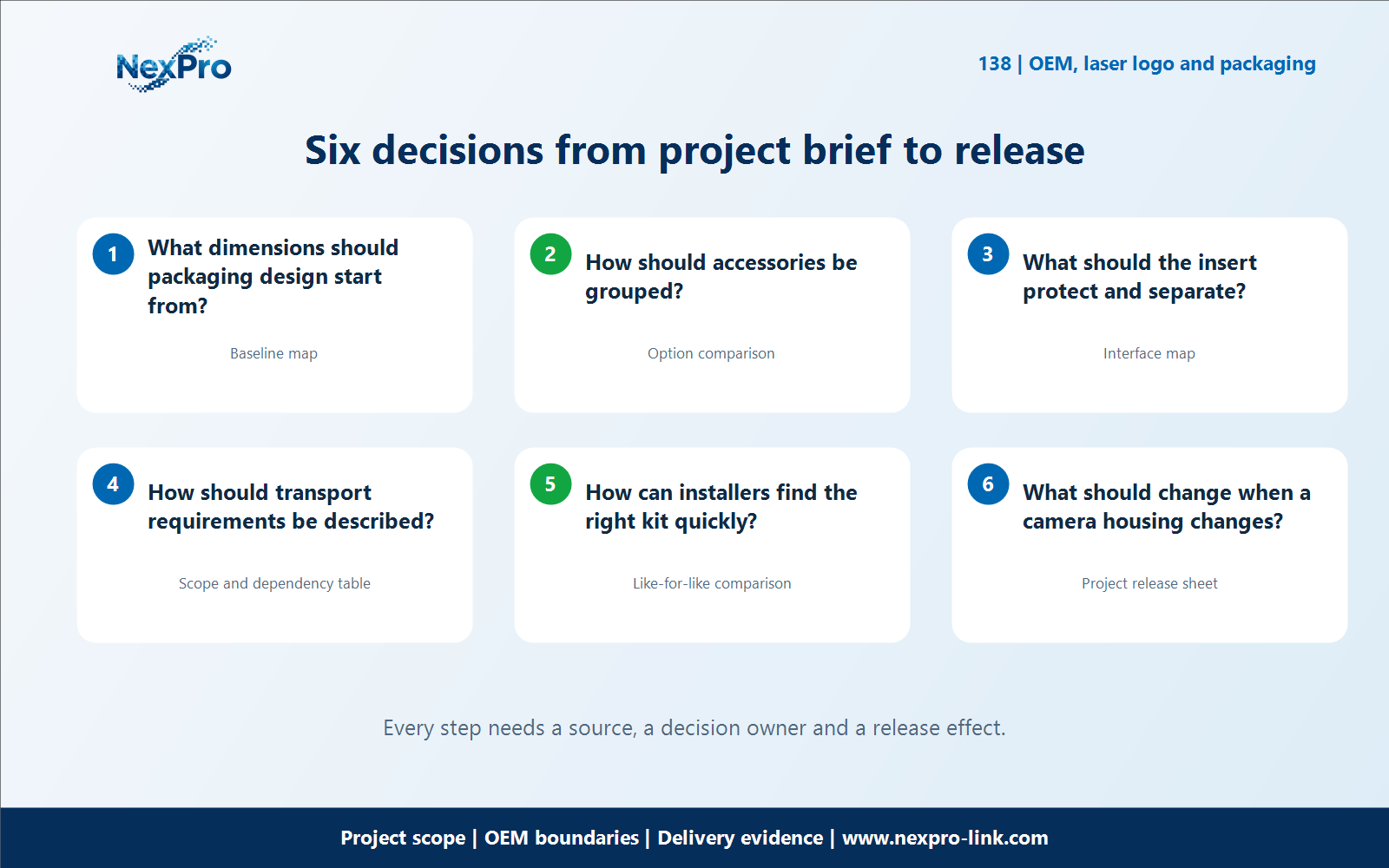
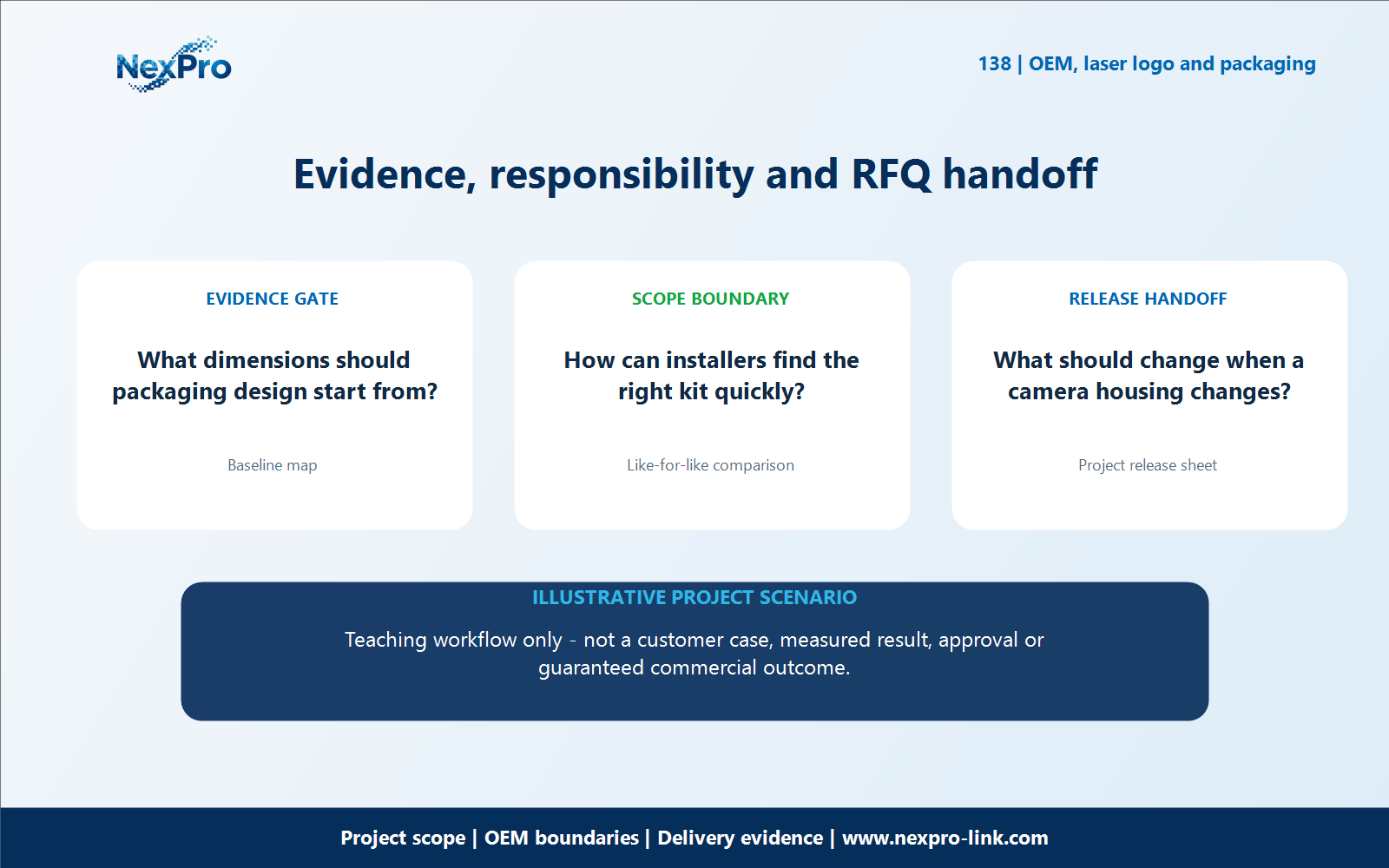
What dimensions should packaging design start from?
A project order combines bullet cameras, dome-style devices and several mounting accessories in a branded delivery program. Start from the actual device and accessory envelope, including protrusions and attached leads. Packaging should support the real contents rather than a simplified product outline. This helps avoid a visually attractive box that does not fit the delivered equipment safely or conveniently.
For the "What dimensions should packaging design start from" decision, use the baseline map fields Area or item, Required task, Current assumption, Decision owner. Apply it to CCTV kit inserts accessory packing so the buyer, supplier and local integrator can see which input is confirmed, who owns it and which evidence remains open.
Evaluate what dimensions should packaging design start from against the stated site task and the surrounding equipment, documentation, packing and handover dependencies for CCTV kit inserts accessory packing. For what dimensions should packaging design start from in CCTV kit inserts accessory packing, record the confirmed condition, chosen option and remaining evidence separately; an open value is not a price, test, approval or customer-result claim.
Carry the what dimensions should packaging design start from decision into the RFQ, BOQ, configuration or release record for CCTV kit inserts accessory packing. For what dimensions should packaging design start from in CCTV kit inserts accessory packing, name the equipment, artwork, network, installation and acceptance owner; site-specific work remains with the buyer or integrator unless the signed scope says otherwise.
Section 02
How should accessories be grouped?
How should accessories be grouped? Group accessories by the equipment variant and intended installation role. Make quantities identifiable and keep them consistent with the packing list. Where an accessory changes, reflect that change in the kit reference rather than silently substituting a similar-looking part. For CCTV Kit Packaging: Protect the Product and Put Every Accessory in the Right Place, keep this decision tied to the same project brief rather than opening a separate generic specification exercise.
For the "How should accessories be grouped" decision, use the option comparison fields Position or option, Suitable condition, Trade-off, Next choice. Apply it to CCTV kit inserts accessory packing so the buyer, supplier and local integrator can see which input is confirmed, who owns it and which evidence remains open.
Evaluate how should accessories be grouped against the stated site task and the surrounding equipment, documentation, packing and handover dependencies for CCTV kit inserts accessory packing. For how should accessories be grouped in CCTV kit inserts accessory packing, record the confirmed condition, chosen option and remaining evidence separately; an open value is not a price, test, approval or customer-result claim.
Carry the how should accessories be grouped decision into the RFQ, BOQ, configuration or release record for CCTV kit inserts accessory packing. For how should accessories be grouped in CCTV kit inserts accessory packing, name the equipment, artwork, network, installation and acceptance owner; site-specific work remains with the buyer or integrator unless the signed scope says otherwise.
Section 03
What should the insert protect and separate?
What should the insert protect and separate? The insert should support the device and separate parts that could move against it during handling. Consider the sensitive and finished surfaces of the actual product. Material and construction choices belong to the specific package design, not to a universal template applied to every camera. For CCTV Kit Packaging: Protect the Product and Put Every Accessory in the Right Place, keep this decision tied to the same project brief rather than opening a separate generic specification exercise.
For the "What should the insert protect and separate" decision, use the interface map fields Device or record, Input, Output, Responsible party. Apply it to CCTV kit inserts accessory packing so the buyer, supplier and local integrator can see which input is confirmed, who owns it and which evidence remains open.
Evaluate what should the insert protect and separate against the stated site task and the surrounding equipment, documentation, packing and handover dependencies for CCTV kit inserts accessory packing. For what should the insert protect and separate in CCTV kit inserts accessory packing, record the confirmed condition, chosen option and remaining evidence separately; an open value is not a price, test, approval or customer-result claim.
Carry the what should the insert protect and separate decision into the RFQ, BOQ, configuration or release record for CCTV kit inserts accessory packing. For what should the insert protect and separate in CCTV kit inserts accessory packing, name the equipment, artwork, network, installation and acceptance owner; site-specific work remains with the buyer or integrator unless the signed scope says otherwise.
| Project question | Project-oriented treatment | Keep equal when comparing offers |
|---|---|---|
| What dimensions should packaging design start from? | Start from the actual device and accessory envelope, including protrusions and attached leads. | Same selected hardware configuration |
| How should accessories be grouped? | Group accessories by the equipment variant and intended installation role. | Authorized artwork and actual treatment |
| What should the insert protect and separate? | The insert should support the device and separate parts that could move against it during handling. | Packaging contents and quantities |
| How should transport requirements be described? | Describe the intended shipping arrangement and any required packaging tests explicitly. | Technical identity and repeat-order reference |
Section 04
How should transport requirements be described?
How should transport requirements be described? Describe the intended shipping arrangement and any required packaging tests explicitly. An insert drawing or sample box does not itself prove transport performance. Keep the package requirement tied to the actual contents, outer carton and handling conditions being agreed for the order. For CCTV Kit Packaging: Protect the Product and Put Every Accessory in the Right Place, keep this decision tied to the same project brief rather than opening a separate generic specification exercise.
For the "How should transport requirements be described" decision, use the scope and dependency table fields Item, Included, Dependency, Separate option. Apply it to CCTV kit inserts accessory packing so the buyer, supplier and local integrator can see which input is confirmed, who owns it and which evidence remains open.
Evaluate how should transport requirements be described against the stated site task and the surrounding equipment, documentation, packing and handover dependencies for CCTV kit inserts accessory packing. For how should transport requirements be described in CCTV kit inserts accessory packing, record the confirmed condition, chosen option and remaining evidence separately; an open value is not a price, test, approval or customer-result claim.
Carry the how should transport requirements be described decision into the RFQ, BOQ, configuration or release record for CCTV kit inserts accessory packing. For how should transport requirements be described in CCTV kit inserts accessory packing, name the equipment, artwork, network, installation and acceptance owner; site-specific work remains with the buyer or integrator unless the signed scope says otherwise.
Section 05
How can installers find the right kit quickly?
How can installers find the right kit quickly? Use consistent device, area and kit references on the box and accessory labels. The receiving team should be able to allocate the package without opening every component. Clear identification makes branded packing useful for project delivery rather than purely decorative. For CCTV Kit Packaging: Protect the Product and Put Every Accessory in the Right Place, keep this decision tied to the same project brief rather than opening a separate generic specification exercise.
For the "How can installers find the right kit quickly" decision, use the like-for-like comparison fields Requirement, Baseline, Proposed treatment, Remaining difference. Apply it to CCTV kit inserts accessory packing so the buyer, supplier and local integrator can see which input is confirmed, who owns it and which evidence remains open.
Evaluate how can installers find the right kit quickly against the stated site task and the surrounding equipment, documentation, packing and handover dependencies for CCTV kit inserts accessory packing. For how can installers find the right kit quickly in CCTV kit inserts accessory packing, record the confirmed condition, chosen option and remaining evidence separately; an open value is not a price, test, approval or customer-result claim.
Carry the how can installers find the right kit quickly decision into the RFQ, BOQ, configuration or release record for CCTV kit inserts accessory packing. For how can installers find the right kit quickly in CCTV kit inserts accessory packing, name the equipment, artwork, network, installation and acceptance owner; site-specific work remains with the buyer or integrator unless the signed scope says otherwise.
Section 06
What should change when a camera housing changes?
What should change when a camera housing changes? Review the insert, accessory arrangement and outer package when the selected housing changes. Keep structural and graphic revisions separately identifiable. Reusing brand artwork can be convenient, but it should not cause an older package structure to be used for equipment it no longer fits. For CCTV Kit Packaging: Protect the Product and Put Every Accessory in the Right Place, keep this decision tied to the same project brief rather than opening a separate generic specification exercise.
For the "What should change when a camera housing changes" decision, use the project release sheet fields Configuration, Artwork, Quantity, Location, Release stage. Apply it to CCTV kit inserts accessory packing so the buyer, supplier and local integrator can see which input is confirmed, who owns it and which evidence remains open.
Evaluate what should change when a camera housing changes against the stated site task and the surrounding equipment, documentation, packing and handover dependencies for CCTV kit inserts accessory packing. For what should change when a camera housing changes in CCTV kit inserts accessory packing, record the confirmed condition, chosen option and remaining evidence separately; an open value is not a price, test, approval or customer-result claim.
Carry the what should change when a camera housing changes decision into the RFQ, BOQ, configuration or release record for CCTV kit inserts accessory packing. For what should change when a camera housing changes in CCTV kit inserts accessory packing, name the equipment, artwork, network, installation and acceptance owner; site-specific work remains with the buyer or integrator unless the signed scope says otherwise.
Engineering references
These sources support the general planning principles. Always use the selected product's current datasheet and applicable project standards for final design.