A distributor updates its brand artwork while repeat CCTV orders and previously printed packaging are still in the supply schedule. Identify the active files for device marking, boxes, cartons and inserts separately.
Section 01
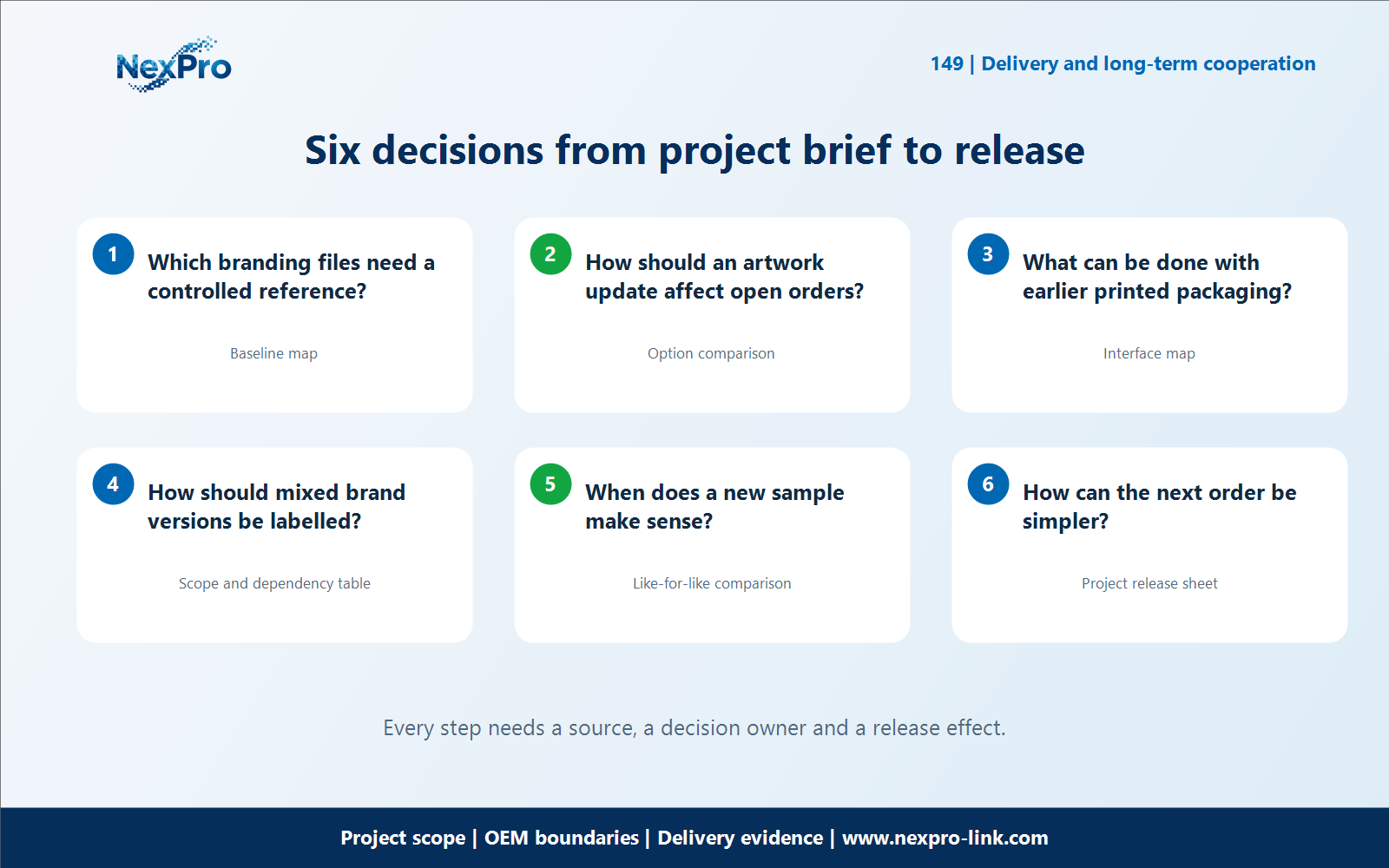
Which branding files need a controlled reference?
A distributor updates its brand artwork while repeat CCTV orders and previously printed packaging are still in the supply schedule. Identify the active files for device marking, boxes, cartons and inserts separately. One file called latest is not a reliable order reference. Clear versions let the buyer and factory discuss exactly which part of the presentation has changed.
For the "Which branding files need a controlled reference" decision, use the baseline map fields Area or item, Required task, Current assumption, Decision owner. Apply it to repeat OEM packaging version control so the buyer, supplier and local integrator can see which input is confirmed, who owns it and which evidence remains open.
Evaluate which branding files need a controlled reference against the stated site task and the surrounding equipment, documentation, packing and handover dependencies for repeat OEM packaging version control. For which branding files need a controlled reference in repeat OEM packaging version control, record the confirmed condition, chosen option and remaining evidence separately; an open value is not a price, test, approval or customer-result claim.
Carry the which branding files need a controlled reference decision into the RFQ, BOQ, configuration or release record for repeat OEM packaging version control. For which branding files need a controlled reference in repeat OEM packaging version control, name the equipment, artwork, network, installation and acceptance owner; site-specific work remains with the buyer or integrator unless the signed scope says otherwise.
Section 02
How should an artwork update affect open orders?
How should an artwork update affect open orders? Review each open order against its actual preparation status. An artwork update should not silently change units already marked or packed. Agree which orders retain the existing version and which will use the new presentation before work continues. For Repeat OEM CCTV Orders: Keep Artwork Changes from Becoming Delivery Mistakes, keep this decision tied to the same project brief rather than opening a separate generic specification exercise.
For the "How should an artwork update affect open orders" decision, use the option comparison fields Position or option, Suitable condition, Trade-off, Next choice. Apply it to repeat OEM packaging version control so the buyer, supplier and local integrator can see which input is confirmed, who owns it and which evidence remains open.
Evaluate how should an artwork update affect open orders against the stated site task and the surrounding equipment, documentation, packing and handover dependencies for repeat OEM packaging version control. For how should an artwork update affect open orders in repeat OEM packaging version control, record the confirmed condition, chosen option and remaining evidence separately; an open value is not a price, test, approval or customer-result claim.
Carry the how should an artwork update affect open orders decision into the RFQ, BOQ, configuration or release record for repeat OEM packaging version control. For how should an artwork update affect open orders in repeat OEM packaging version control, name the equipment, artwork, network, installation and acceptance owner; site-specific work remains with the buyer or integrator unless the signed scope says otherwise.
Section 03
What can be done with earlier printed packaging?
What can be done with earlier printed packaging? Discuss the available options with the buyer, including authorized continued use or a reviewed modification. The appropriate treatment depends on the package and order. Keep any additional work and appearance difference explicit rather than assuming all old printed material can be reused unchanged. For Repeat OEM CCTV Orders: Keep Artwork Changes from Becoming Delivery Mistakes, keep this decision tied to the same project brief rather than opening a separate generic specification exercise.
For the "What can be done with earlier printed packaging" decision, use the interface map fields Device or record, Input, Output, Responsible party. Apply it to repeat OEM packaging version control so the buyer, supplier and local integrator can see which input is confirmed, who owns it and which evidence remains open.
Evaluate what can be done with earlier printed packaging against the stated site task and the surrounding equipment, documentation, packing and handover dependencies for repeat OEM packaging version control. For what can be done with earlier printed packaging in repeat OEM packaging version control, record the confirmed condition, chosen option and remaining evidence separately; an open value is not a price, test, approval or customer-result claim.
Carry the what can be done with earlier printed packaging decision into the RFQ, BOQ, configuration or release record for repeat OEM packaging version control. For what can be done with earlier printed packaging in repeat OEM packaging version control, name the equipment, artwork, network, installation and acceptance owner; site-specific work remains with the buyer or integrator unless the signed scope says otherwise.
| Project question | Project-oriented treatment | Keep equal when comparing offers |
|---|---|---|
| Which branding files need a controlled reference? | Identify the active files for device marking, boxes, cartons and inserts separately. | Actual supplied equipment and stage |
| How should an artwork update affect open orders? | Review each open order against its actual preparation status. | Ownership of installation and support tasks |
| What can be done with earlier printed packaging? | Discuss the available options with the buyer, including authorized continued use or a reviewed modification. | Branding and configuration references |
| How should mixed brand versions be labelled? | State whether mixed presentation versions are accepted for the destination project and identify them where needed. | Confirmed order versus planned follow-up |
Section 04
How should mixed brand versions be labelled?
How should mixed brand versions be labelled? State whether mixed presentation versions are accepted for the destination project and identify them where needed. Technical equivalence does not automatically make an appearance mix acceptable. The packing records should show what the buyer will actually receive. For Repeat OEM CCTV Orders: Keep Artwork Changes from Becoming Delivery Mistakes, keep this decision tied to the same project brief rather than opening a separate generic specification exercise.
For the "How should mixed brand versions be labelled" decision, use the scope and dependency table fields Item, Included, Dependency, Separate option. Apply it to repeat OEM packaging version control so the buyer, supplier and local integrator can see which input is confirmed, who owns it and which evidence remains open.
Evaluate how should mixed brand versions be labelled against the stated site task and the surrounding equipment, documentation, packing and handover dependencies for repeat OEM packaging version control. For how should mixed brand versions be labelled in repeat OEM packaging version control, record the confirmed condition, chosen option and remaining evidence separately; an open value is not a price, test, approval or customer-result claim.
Carry the how should mixed brand versions be labelled decision into the RFQ, BOQ, configuration or release record for repeat OEM packaging version control. For how should mixed brand versions be labelled in repeat OEM packaging version control, name the equipment, artwork, network, installation and acceptance owner; site-specific work remains with the buyer or integrator unless the signed scope says otherwise.
Section 05
When does a new sample make sense?
When does a new sample make sense? Use a physical sample when the changed treatment or package fit needs to be seen on the product. Other edits may be settled with a clear revised mockup. Choose the review method from the nature of the change rather than repeating unnecessary sample work for every small text correction. For Repeat OEM CCTV Orders: Keep Artwork Changes from Becoming Delivery Mistakes, keep this decision tied to the same project brief rather than opening a separate generic specification exercise.
For the "When does a new sample make sense" decision, use the like-for-like comparison fields Requirement, Baseline, Proposed treatment, Remaining difference. Apply it to repeat OEM packaging version control so the buyer, supplier and local integrator can see which input is confirmed, who owns it and which evidence remains open.
Evaluate when does a new sample make sense against the stated site task and the surrounding equipment, documentation, packing and handover dependencies for repeat OEM packaging version control. For when does a new sample make sense in repeat OEM packaging version control, record the confirmed condition, chosen option and remaining evidence separately; an open value is not a price, test, approval or customer-result claim.
Carry the when does a new sample make sense decision into the RFQ, BOQ, configuration or release record for repeat OEM packaging version control. For when does a new sample make sense in repeat OEM packaging version control, name the equipment, artwork, network, installation and acceptance owner; site-specific work remains with the buyer or integrator unless the signed scope says otherwise.
Section 06
How can the next order be simpler?
How can the next order be simpler? Reference the equipment configuration, artwork version and project-label rules directly in the next order. Preserve the decisions about earlier stock and open releases. This makes repeat supply easier because both parties can identify the active presentation without reconstructing a long message history. For Repeat OEM CCTV Orders: Keep Artwork Changes from Becoming Delivery Mistakes, keep this decision tied to the same project brief rather than opening a separate generic specification exercise.
For the "How can the next order be simpler" decision, use the project release sheet fields Configuration, Artwork, Quantity, Location, Release stage. Apply it to repeat OEM packaging version control so the buyer, supplier and local integrator can see which input is confirmed, who owns it and which evidence remains open.
Evaluate how can the next order be simpler against the stated site task and the surrounding equipment, documentation, packing and handover dependencies for repeat OEM packaging version control. For how can the next order be simpler in repeat OEM packaging version control, record the confirmed condition, chosen option and remaining evidence separately; an open value is not a price, test, approval or customer-result claim.
Carry the how can the next order be simpler decision into the RFQ, BOQ, configuration or release record for repeat OEM packaging version control. For how can the next order be simpler in repeat OEM packaging version control, name the equipment, artwork, network, installation and acceptance owner; site-specific work remains with the buyer or integrator unless the signed scope says otherwise.
Engineering references
These sources support the general planning principles. Always use the selected product's current datasheet and applicable project standards for final design.