A regional supplier manages private-label CCTV orders for several authorized contractor brands using some common hardware configurations. Common approved hardware configurations may support production planning across orders.
Section 01
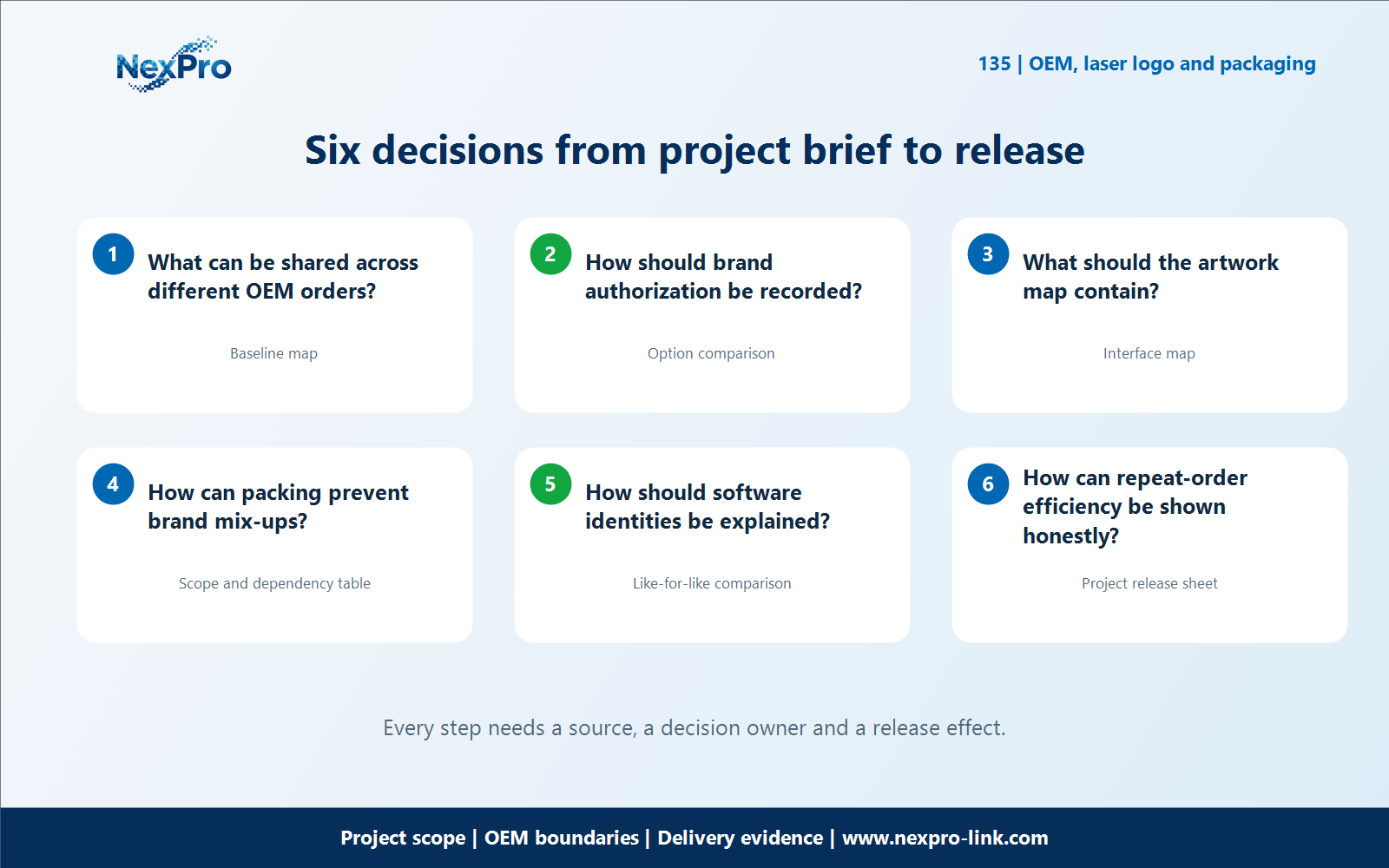
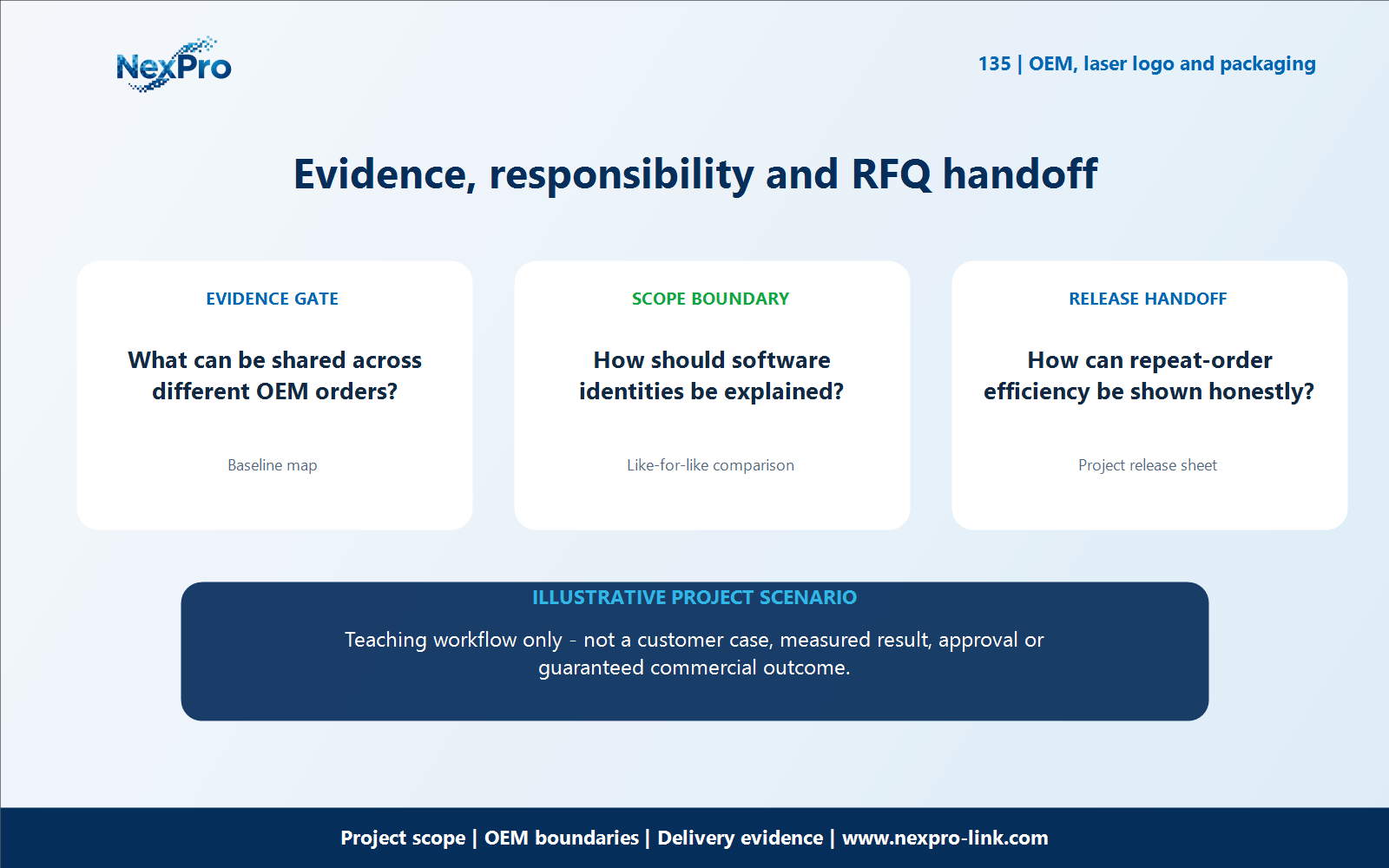
What can be shared across different OEM orders?
A regional supplier manages private-label CCTV orders for several authorized contractor brands using some common hardware configurations. Common approved hardware configurations may support production planning across orders. Branding, commercial records and access information should remain specific to each buyer. Shared manufacturing preparation is not a reason to mix customer identities or assume every order has the same software requirements.
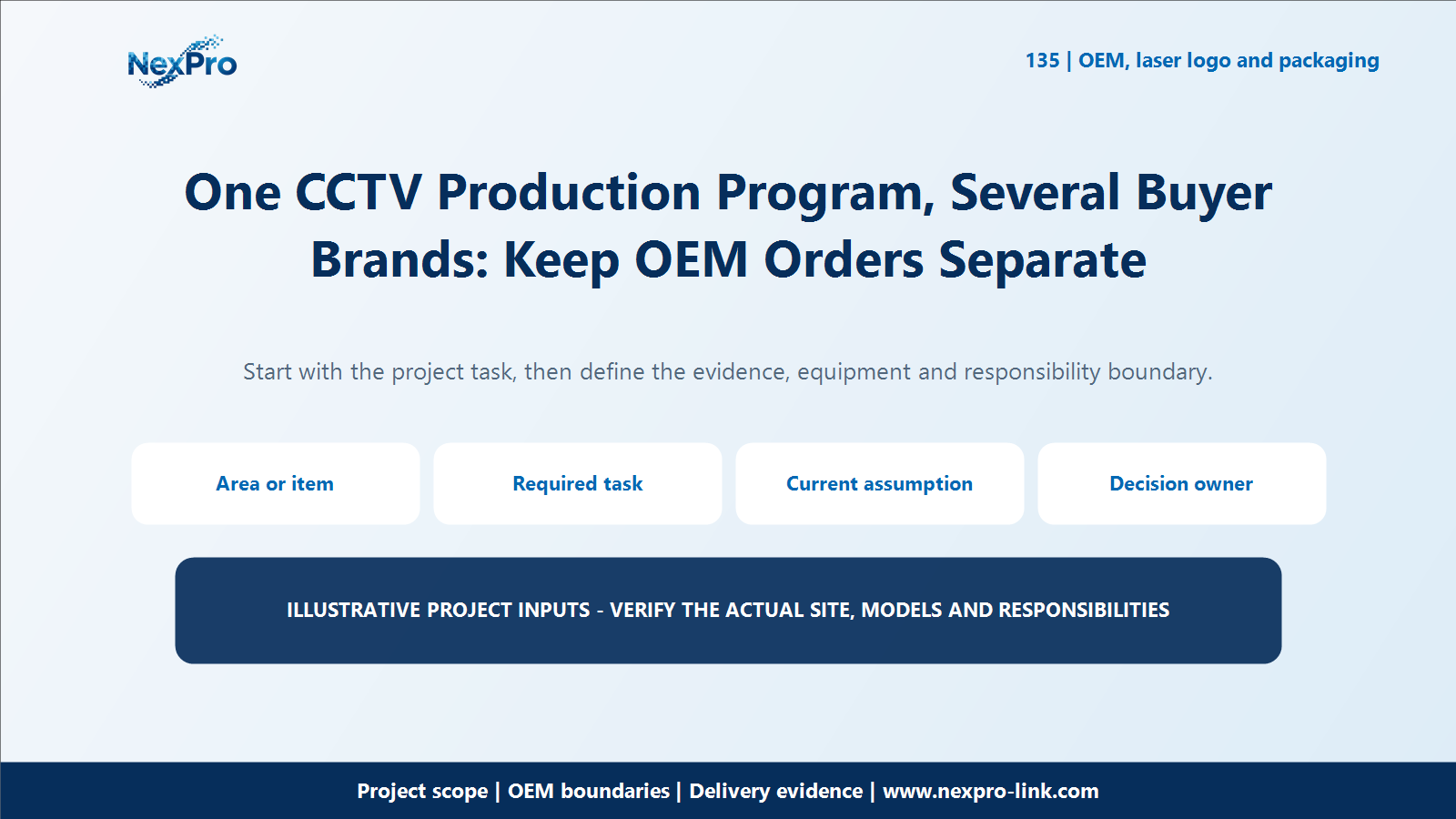
For the "What can be shared across different OEM orders" decision, use the baseline map fields Area or item, Required task, Current assumption, Decision owner. Apply it to multiple private label CCTV brands so the buyer, supplier and local integrator can see which input is confirmed, who owns it and which evidence remains open.
Evaluate what can be shared across different oem orders against the stated site task and the surrounding equipment, documentation, packing and handover dependencies for multiple private label CCTV brands. For what can be shared across different oem orders in multiple private label CCTV brands, record the confirmed condition, chosen option and remaining evidence separately; an open value is not a price, test, approval or customer-result claim.
Carry the what can be shared across different oem orders decision into the RFQ, BOQ, configuration or release record for multiple private label CCTV brands. For what can be shared across different oem orders in multiple private label CCTV brands, name the equipment, artwork, network, installation and acceptance owner; site-specific work remains with the buyer or integrator unless the signed scope says otherwise.
Section 02
How should brand authorization be recorded?
How should brand authorization be recorded? Identify who supplies and is entitled to use each brand asset. Use only authorized artwork and retain the order reference attached to it. A private-label service should not create imitation competitor products or suggest an official relationship that the buyer has not established. For One CCTV Production Program, Several Buyer Brands: Keep OEM Orders Separate, keep this decision tied to the same project brief rather than opening a separate generic specification exercise.
For the "How should brand authorization be recorded" decision, use the option comparison fields Position or option, Suitable condition, Trade-off, Next choice. Apply it to multiple private label CCTV brands so the buyer, supplier and local integrator can see which input is confirmed, who owns it and which evidence remains open.
Evaluate how should brand authorization be recorded against the stated site task and the surrounding equipment, documentation, packing and handover dependencies for multiple private label CCTV brands. For how should brand authorization be recorded in multiple private label CCTV brands, record the confirmed condition, chosen option and remaining evidence separately; an open value is not a price, test, approval or customer-result claim.
Carry the how should brand authorization be recorded decision into the RFQ, BOQ, configuration or release record for multiple private label CCTV brands. For how should brand authorization be recorded in multiple private label CCTV brands, name the equipment, artwork, network, installation and acceptance owner; site-specific work remains with the buyer or integrator unless the signed scope says otherwise.
Section 03
What should the artwork map contain?
What should the artwork map contain? Map the buyer brand to the model, housing treatment, artwork version and packaging file. Clear references matter when similar hardware receives different markings. The factory and buyer should be able to identify the intended presentation without inferring it from a loosely named image file. For One CCTV Production Program, Several Buyer Brands: Keep OEM Orders Separate, keep this decision tied to the same project brief rather than opening a separate generic specification exercise.
For the "What should the artwork map contain" decision, use the interface map fields Device or record, Input, Output, Responsible party. Apply it to multiple private label CCTV brands so the buyer, supplier and local integrator can see which input is confirmed, who owns it and which evidence remains open.
Evaluate what should the artwork map contain against the stated site task and the surrounding equipment, documentation, packing and handover dependencies for multiple private label CCTV brands. For what should the artwork map contain in multiple private label CCTV brands, record the confirmed condition, chosen option and remaining evidence separately; an open value is not a price, test, approval or customer-result claim.
Carry the what should the artwork map contain decision into the RFQ, BOQ, configuration or release record for multiple private label CCTV brands. For what should the artwork map contain in multiple private label CCTV brands, name the equipment, artwork, network, installation and acceptance owner; site-specific work remains with the buyer or integrator unless the signed scope says otherwise.
| Project question | Project-oriented treatment | Keep equal when comparing offers |
|---|---|---|
| What can be shared across different OEM orders? | Common approved hardware configurations may support production planning across orders. | Same selected hardware configuration |
| How should brand authorization be recorded? | Identify who supplies and is entitled to use each brand asset. | Authorized artwork and actual treatment |
| What should the artwork map contain? | Map the buyer brand to the model, housing treatment, artwork version and packaging file. | Packaging contents and quantities |
| How can packing prevent brand mix-ups? | Group finished products and packing records by order and brand. | Technical identity and repeat-order reference |
Section 04
How can packing prevent brand mix-ups?
How can packing prevent brand mix-ups? Group finished products and packing records by order and brand. Keep box, insert and carton identities aligned with the allocation. Where accessories or languages differ, preserve those distinctions even if the main camera hardware is the same. For One CCTV Production Program, Several Buyer Brands: Keep OEM Orders Separate, keep this decision tied to the same project brief rather than opening a separate generic specification exercise.
For the "How can packing prevent brand mix-ups" decision, use the scope and dependency table fields Item, Included, Dependency, Separate option. Apply it to multiple private label CCTV brands so the buyer, supplier and local integrator can see which input is confirmed, who owns it and which evidence remains open.
Evaluate how can packing prevent brand mix-ups against the stated site task and the surrounding equipment, documentation, packing and handover dependencies for multiple private label CCTV brands. For how can packing prevent brand mix-ups in multiple private label CCTV brands, record the confirmed condition, chosen option and remaining evidence separately; an open value is not a price, test, approval or customer-result claim.
Carry the how can packing prevent brand mix-ups decision into the RFQ, BOQ, configuration or release record for multiple private label CCTV brands. For how can packing prevent brand mix-ups in multiple private label CCTV brands, name the equipment, artwork, network, installation and acceptance owner; site-specific work remains with the buyer or integrator unless the signed scope says otherwise.
Section 05
How should software identities be explained?
How should software identities be explained? Explain the software identity separately from the hardware brand. A camera carrying a buyer logo may still use a third-party client under that client's own name and terms. Handle account ownership and support as order-specific tasks rather than assuming the logo determines them. For One CCTV Production Program, Several Buyer Brands: Keep OEM Orders Separate, keep this decision tied to the same project brief rather than opening a separate generic specification exercise.
For the "How should software identities be explained" decision, use the like-for-like comparison fields Requirement, Baseline, Proposed treatment, Remaining difference. Apply it to multiple private label CCTV brands so the buyer, supplier and local integrator can see which input is confirmed, who owns it and which evidence remains open.
Evaluate how should software identities be explained against the stated site task and the surrounding equipment, documentation, packing and handover dependencies for multiple private label CCTV brands. For how should software identities be explained in multiple private label CCTV brands, record the confirmed condition, chosen option and remaining evidence separately; an open value is not a price, test, approval or customer-result claim.
Carry the how should software identities be explained decision into the RFQ, BOQ, configuration or release record for multiple private label CCTV brands. For how should software identities be explained in multiple private label CCTV brands, name the equipment, artwork, network, installation and acceptance owner; site-specific work remains with the buyer or integrator unless the signed scope says otherwise.
Section 06
How can repeat-order efficiency be shown honestly?
How can repeat-order efficiency be shown honestly? Use the maintained configuration and artwork map to shorten repeated specification discussions. Show the buyer which previous decisions can be reused and which have changed. This is a practical coordination benefit without needing unsupported claims about production speed, failure rates or fixed cost reductions. For One CCTV Production Program, Several Buyer Brands: Keep OEM Orders Separate, keep this decision tied to the same project brief rather than opening a separate generic specification exercise.
For the "How can repeat-order efficiency be shown honestly" decision, use the project release sheet fields Configuration, Artwork, Quantity, Location, Release stage. Apply it to multiple private label CCTV brands so the buyer, supplier and local integrator can see which input is confirmed, who owns it and which evidence remains open.
Evaluate how can repeat-order efficiency be shown honestly against the stated site task and the surrounding equipment, documentation, packing and handover dependencies for multiple private label CCTV brands. For how can repeat-order efficiency be shown honestly in multiple private label CCTV brands, record the confirmed condition, chosen option and remaining evidence separately; an open value is not a price, test, approval or customer-result claim.
Carry the how can repeat-order efficiency be shown honestly decision into the RFQ, BOQ, configuration or release record for multiple private label CCTV brands. For how can repeat-order efficiency be shown honestly in multiple private label CCTV brands, name the equipment, artwork, network, installation and acceptance owner; site-specific work remains with the buyer or integrator unless the signed scope says otherwise.
Engineering references
These sources support the general planning principles. Always use the selected product's current datasheet and applicable project standards for final design.