
A contractor wants each supplied camera to carry recognizable branding and an asset reference linked to the project handover records. Separate brand identity, device identity and project asset reference.
Section 01
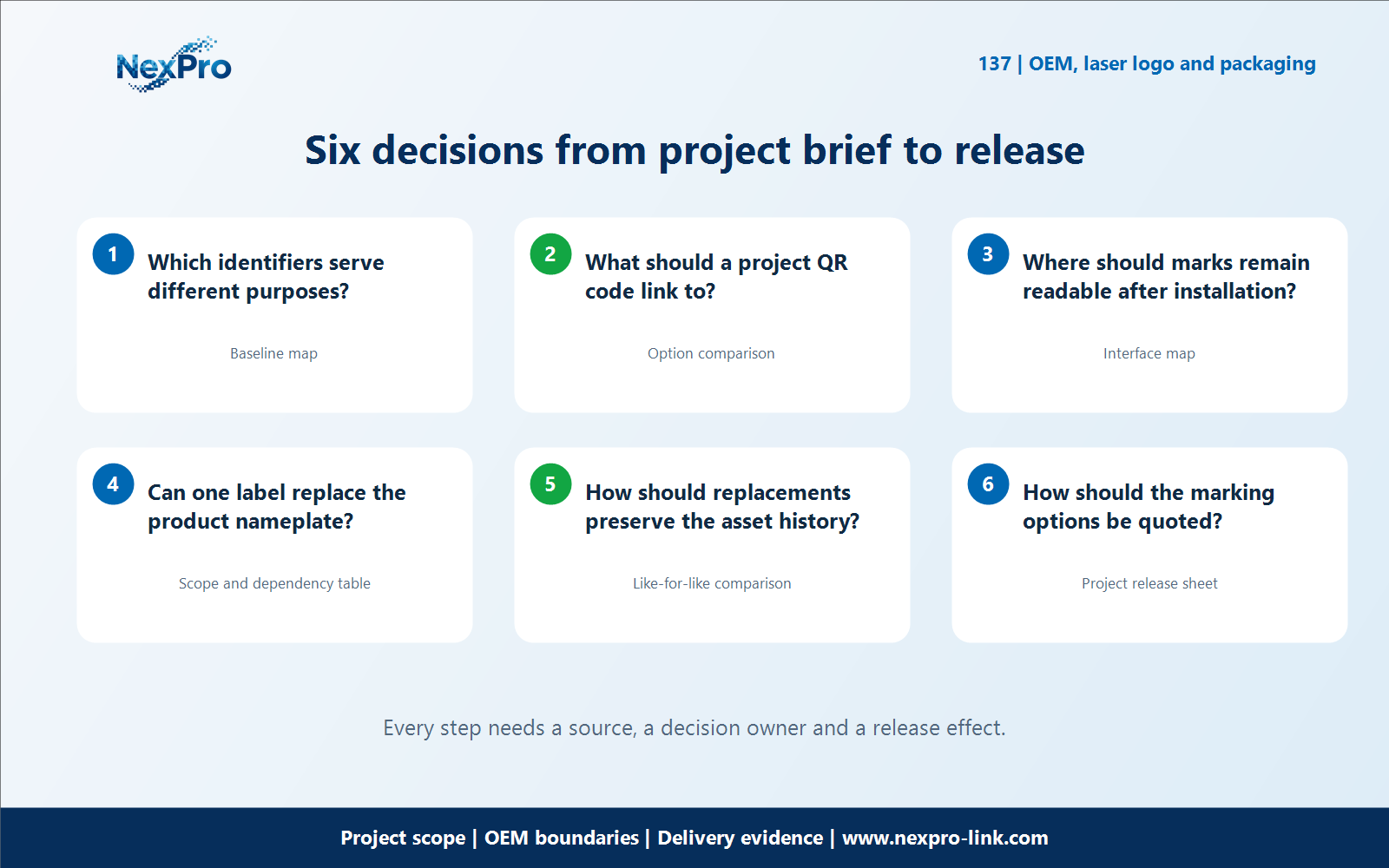
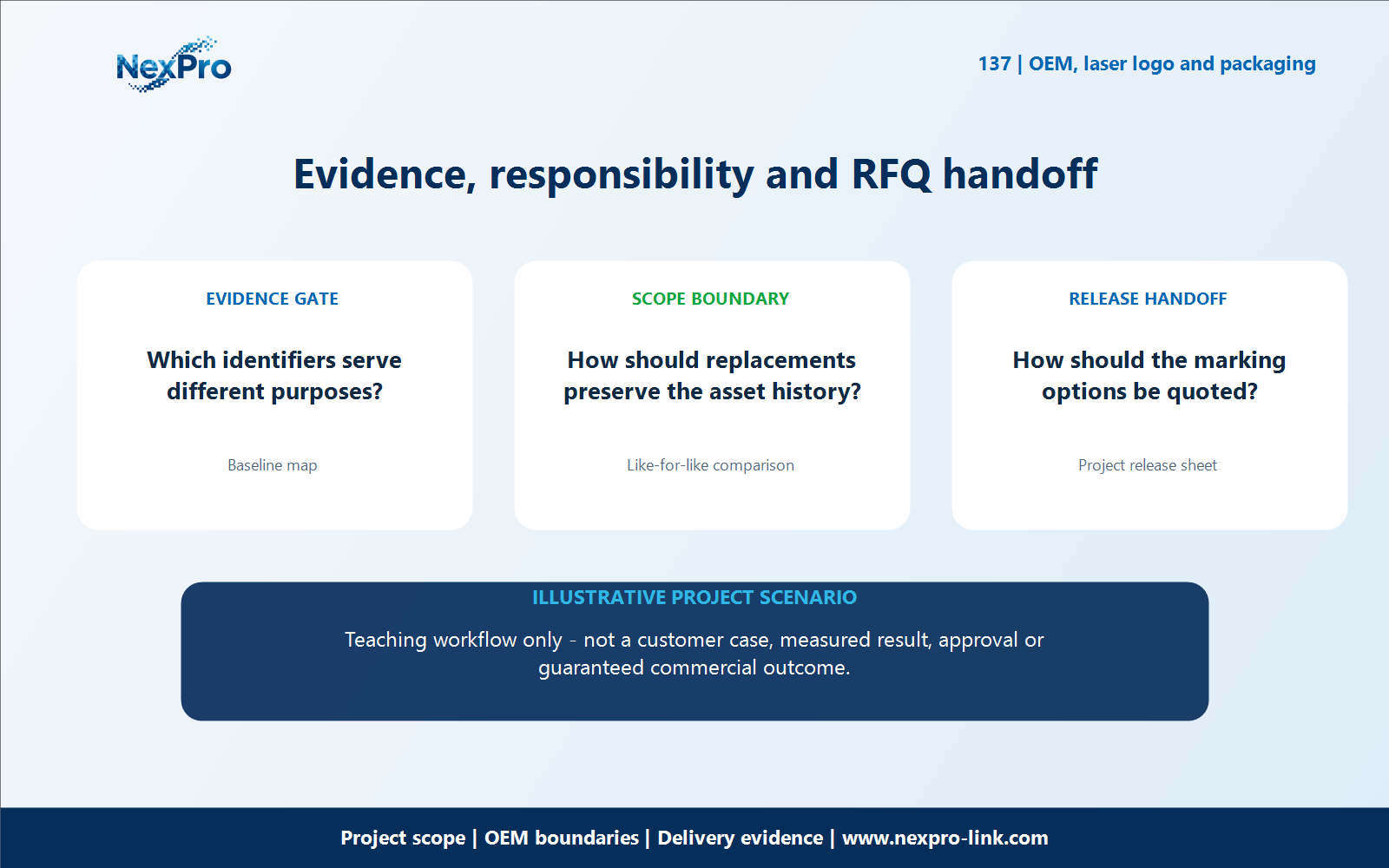
Which identifiers serve different purposes?
A contractor wants each supplied camera to carry recognizable branding and an asset reference linked to the project handover records. Separate brand identity, device identity and project asset reference. A logo identifies presentation, while serial and asset records support different maintenance tasks. A QR code is a way to carry or link information; it does not automatically make those identities interchangeable.
For the "Which identifiers serve different purposes" decision, use the baseline map fields Area or item, Required task, Current assumption, Decision owner. Apply it to laser QR serial CCTV asset marking so the buyer, supplier and local integrator can see which input is confirmed, who owns it and which evidence remains open.
Evaluate which identifiers serve different purposes against the stated site task and the surrounding equipment, documentation, packing and handover dependencies for laser QR serial CCTV asset marking. For which identifiers serve different purposes in laser QR serial CCTV asset marking, record the confirmed condition, chosen option and remaining evidence separately; an open value is not a price, test, approval or customer-result claim.
Carry the which identifiers serve different purposes decision into the RFQ, BOQ, configuration or release record for laser QR serial CCTV asset marking. For which identifiers serve different purposes in laser QR serial CCTV asset marking, name the equipment, artwork, network, installation and acceptance owner; site-specific work remains with the buyer or integrator unless the signed scope says otherwise.
Section 02
What should a project QR code link to?
What should a project QR code link to? Use a project-approved destination such as a support page or controlled asset record. Do not embed credentials or expose unrestricted access to the recorder. The code should help authorized staff find information, while the destination handles the appropriate access controls. For CCTV Asset Marking: Laser Logos, Serial Labels and Project QR Codes, keep this decision tied to the same project brief rather than opening a separate generic specification exercise.
For the "What should a project QR code link to" decision, use the option comparison fields Position or option, Suitable condition, Trade-off, Next choice. Apply it to laser QR serial CCTV asset marking so the buyer, supplier and local integrator can see which input is confirmed, who owns it and which evidence remains open.
Evaluate what should a project qr code link to against the stated site task and the surrounding equipment, documentation, packing and handover dependencies for laser QR serial CCTV asset marking. For what should a project qr code link to in laser QR serial CCTV asset marking, record the confirmed condition, chosen option and remaining evidence separately; an open value is not a price, test, approval or customer-result claim.
Carry the what should a project qr code link to decision into the RFQ, BOQ, configuration or release record for laser QR serial CCTV asset marking. For what should a project qr code link to in laser QR serial CCTV asset marking, name the equipment, artwork, network, installation and acceptance owner; site-specific work remains with the buyer or integrator unless the signed scope says otherwise.
Section 03
Where should marks remain readable after installation?
Where should marks remain readable after installation? Review the installed orientation and maintenance access before choosing a marking location. A readable bench label may become hidden behind a bracket. Use the actual device and installation context to decide what belongs on the housing and what should also appear in the records. For CCTV Asset Marking: Laser Logos, Serial Labels and Project QR Codes, keep this decision tied to the same project brief rather than opening a separate generic specification exercise.
For the "Where should marks remain readable after installation" decision, use the interface map fields Device or record, Input, Output, Responsible party. Apply it to laser QR serial CCTV asset marking so the buyer, supplier and local integrator can see which input is confirmed, who owns it and which evidence remains open.
Evaluate where should marks remain readable after installation against the stated site task and the surrounding equipment, documentation, packing and handover dependencies for laser QR serial CCTV asset marking. For where should marks remain readable after installation in laser QR serial CCTV asset marking, record the confirmed condition, chosen option and remaining evidence separately; an open value is not a price, test, approval or customer-result claim.
Carry the where should marks remain readable after installation decision into the RFQ, BOQ, configuration or release record for laser QR serial CCTV asset marking. For where should marks remain readable after installation in laser QR serial CCTV asset marking, name the equipment, artwork, network, installation and acceptance owner; site-specific work remains with the buyer or integrator unless the signed scope says otherwise.
| Project question | Project-oriented treatment | Keep equal when comparing offers |
|---|---|---|
| Which identifiers serve different purposes? | Separate brand identity, device identity and project asset reference. | Same selected hardware configuration |
| What should a project QR code link to? | Use a project-approved destination such as a support page or controlled asset record. | Authorized artwork and actual treatment |
| Where should marks remain readable after installation? | Review the installed orientation and maintenance access before choosing a marking location. | Packaging contents and quantities |
| Can one label replace the product nameplate? | A project label should complement the technical identity rather than erase it. | Technical identity and repeat-order reference |
Section 04
Can one label replace the product nameplate?
Can one label replace the product nameplate? A project label should complement the technical identity rather than erase it. Keep the model and required product information available for service. Where the buyer uses an internal naming scheme, provide a cross-reference so technicians can still identify the correct equipment and configuration. For CCTV Asset Marking: Laser Logos, Serial Labels and Project QR Codes, keep this decision tied to the same project brief rather than opening a separate generic specification exercise.
For the "Can one label replace the product nameplate" decision, use the scope and dependency table fields Item, Included, Dependency, Separate option. Apply it to laser QR serial CCTV asset marking so the buyer, supplier and local integrator can see which input is confirmed, who owns it and which evidence remains open.
Evaluate can one label replace the product nameplate against the stated site task and the surrounding equipment, documentation, packing and handover dependencies for laser QR serial CCTV asset marking. For can one label replace the product nameplate in laser QR serial CCTV asset marking, record the confirmed condition, chosen option and remaining evidence separately; an open value is not a price, test, approval or customer-result claim.
Carry the can one label replace the product nameplate decision into the RFQ, BOQ, configuration or release record for laser QR serial CCTV asset marking. For can one label replace the product nameplate in laser QR serial CCTV asset marking, name the equipment, artwork, network, installation and acceptance owner; site-specific work remains with the buyer or integrator unless the signed scope says otherwise.
Section 05
How should replacements preserve the asset history?
How should replacements preserve the asset history? Link the replacement device's real identity to the existing asset location and replacement record. Do not duplicate an old serial to make the new item appear unchanged. Accurate history helps the operator distinguish a location reference from the specific unit installed there today. For CCTV Asset Marking: Laser Logos, Serial Labels and Project QR Codes, keep this decision tied to the same project brief rather than opening a separate generic specification exercise.
For the "How should replacements preserve the asset history" decision, use the like-for-like comparison fields Requirement, Baseline, Proposed treatment, Remaining difference. Apply it to laser QR serial CCTV asset marking so the buyer, supplier and local integrator can see which input is confirmed, who owns it and which evidence remains open.
Evaluate how should replacements preserve the asset history against the stated site task and the surrounding equipment, documentation, packing and handover dependencies for laser QR serial CCTV asset marking. For how should replacements preserve the asset history in laser QR serial CCTV asset marking, record the confirmed condition, chosen option and remaining evidence separately; an open value is not a price, test, approval or customer-result claim.
Carry the how should replacements preserve the asset history decision into the RFQ, BOQ, configuration or release record for laser QR serial CCTV asset marking. For how should replacements preserve the asset history in laser QR serial CCTV asset marking, name the equipment, artwork, network, installation and acceptance owner; site-specific work remains with the buyer or integrator unless the signed scope says otherwise.
Section 06
How should the marking options be quoted?
How should the marking options be quoted? Quote the logo treatment, variable identifiers and packaging labels as defined items. State who provides and validates the asset data before preparation. This gives the buyer a clear customization cost and avoids assuming that every marking method includes unlimited variable-data work. For CCTV Asset Marking: Laser Logos, Serial Labels and Project QR Codes, keep this decision tied to the same project brief rather than opening a separate generic specification exercise.
For the "How should the marking options be quoted" decision, use the project release sheet fields Configuration, Artwork, Quantity, Location, Release stage. Apply it to laser QR serial CCTV asset marking so the buyer, supplier and local integrator can see which input is confirmed, who owns it and which evidence remains open.
Evaluate how should the marking options be quoted against the stated site task and the surrounding equipment, documentation, packing and handover dependencies for laser QR serial CCTV asset marking. For how should the marking options be quoted in laser QR serial CCTV asset marking, record the confirmed condition, chosen option and remaining evidence separately; an open value is not a price, test, approval or customer-result claim.
Carry the how should the marking options be quoted decision into the RFQ, BOQ, configuration or release record for laser QR serial CCTV asset marking. For how should the marking options be quoted in laser QR serial CCTV asset marking, name the equipment, artwork, network, installation and acceptance owner; site-specific work remains with the buyer or integrator unless the signed scope says otherwise.
Engineering references
These sources support the general planning principles. Always use the selected product's current datasheet and applicable project standards for final design.