Seafood-factory camera selection cannot be settled by ingress protection alone. Cold-door transitions, salt exposure and loading obstructions need separate qualification while the network stays maintainable.
Section 01
Classify cold, corrosion and ingress conditions separately
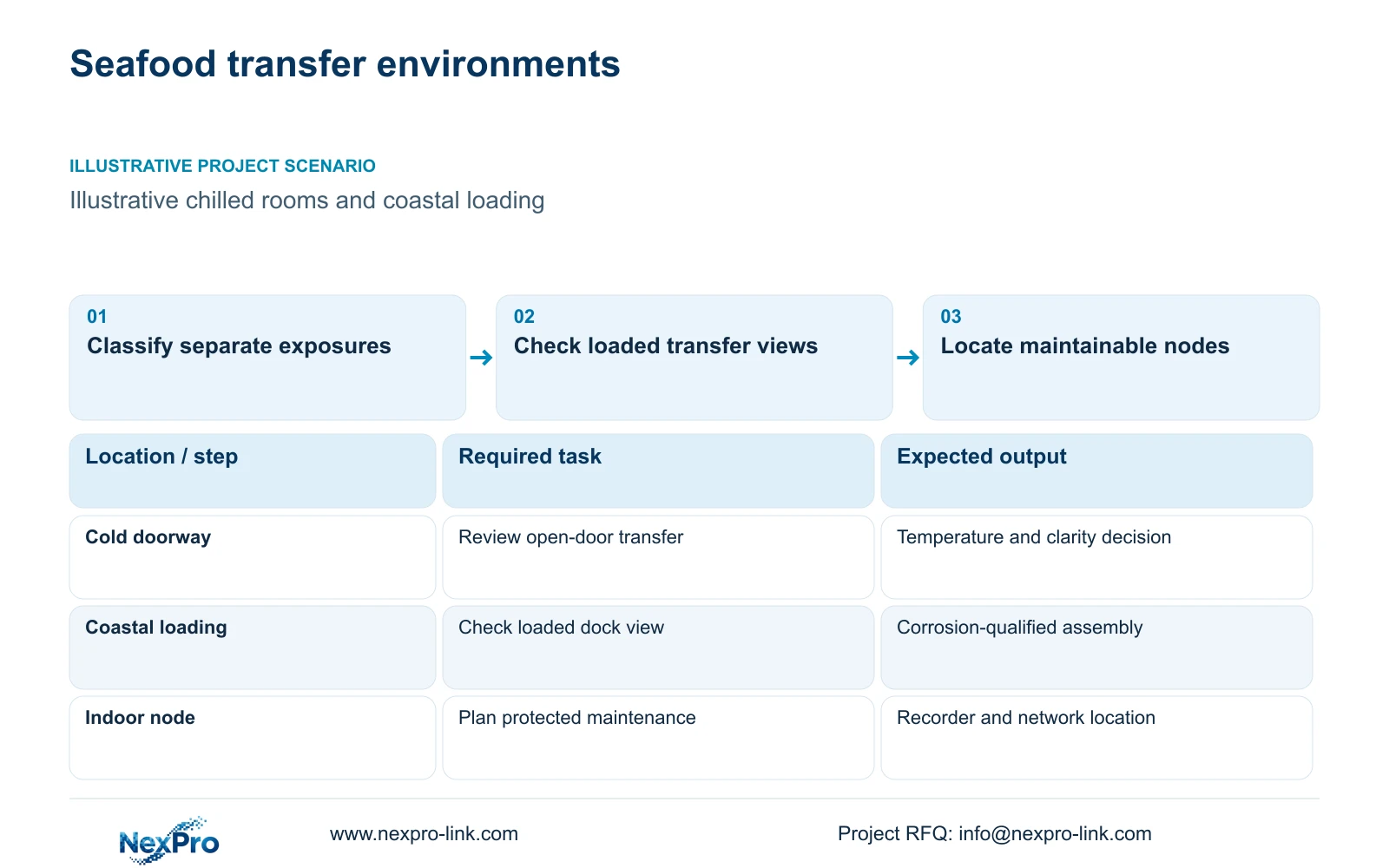
Seafood factory CCTV should treat temperature suitability, corrosion exposure and ingress protection as separate selection questions. Use ordinary cameras only where all local conditions and installation requirements fit. A matching temperature field cannot resolve salt exposure, while an ingress rating cannot establish chemical or washdown compatibility.
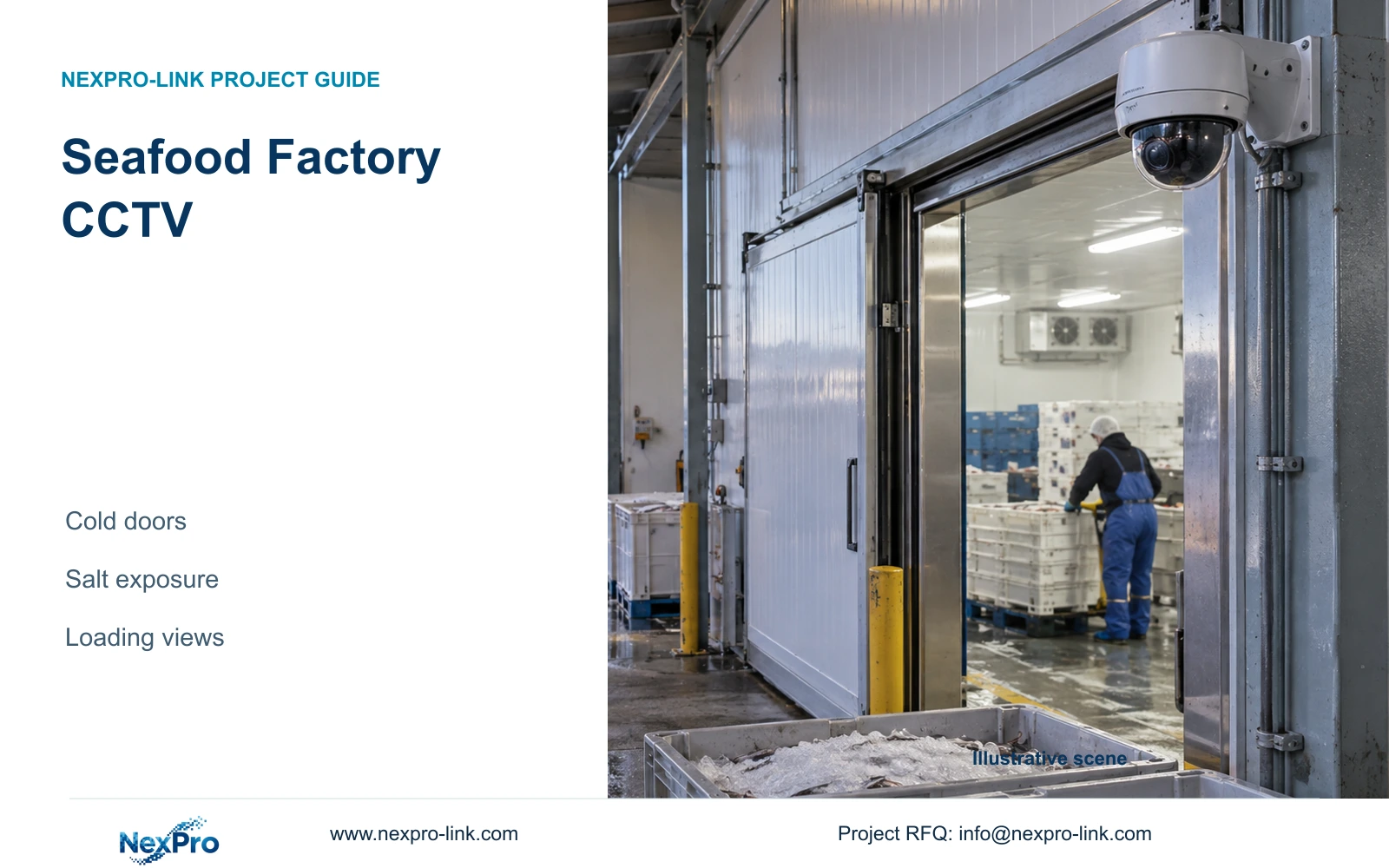
Illustrative project scenario: The seafood site combines chilled rooms with exposed coastal loading areas. Assume the required footage follows permitted product movement through a cold doorway and into loading, while access views cover suitable general areas. These are planning assumptions; no cold-room temperature, corrosion test result or completed site installation has been supplied.
Create a point schedule that records the conditions at the camera body, mount and connection. Distinguish the chilled room, transition doorway, sheltered loading position and exposed coastal position. Review cleaning conditions alongside normal operation, because an otherwise sheltered camera may become exposed during sanitation or servicing.
Section 02
Protect the transfer view through doors and loading activity
A useful cold-door view should show the transfer when the door is open and a pallet occupies the threshold. Begin with a suitable warmer-side position, then check whether the door leaf, pallet height or route angle blocks the action. A sheltered mount is helpful only if it preserves the required movement context.
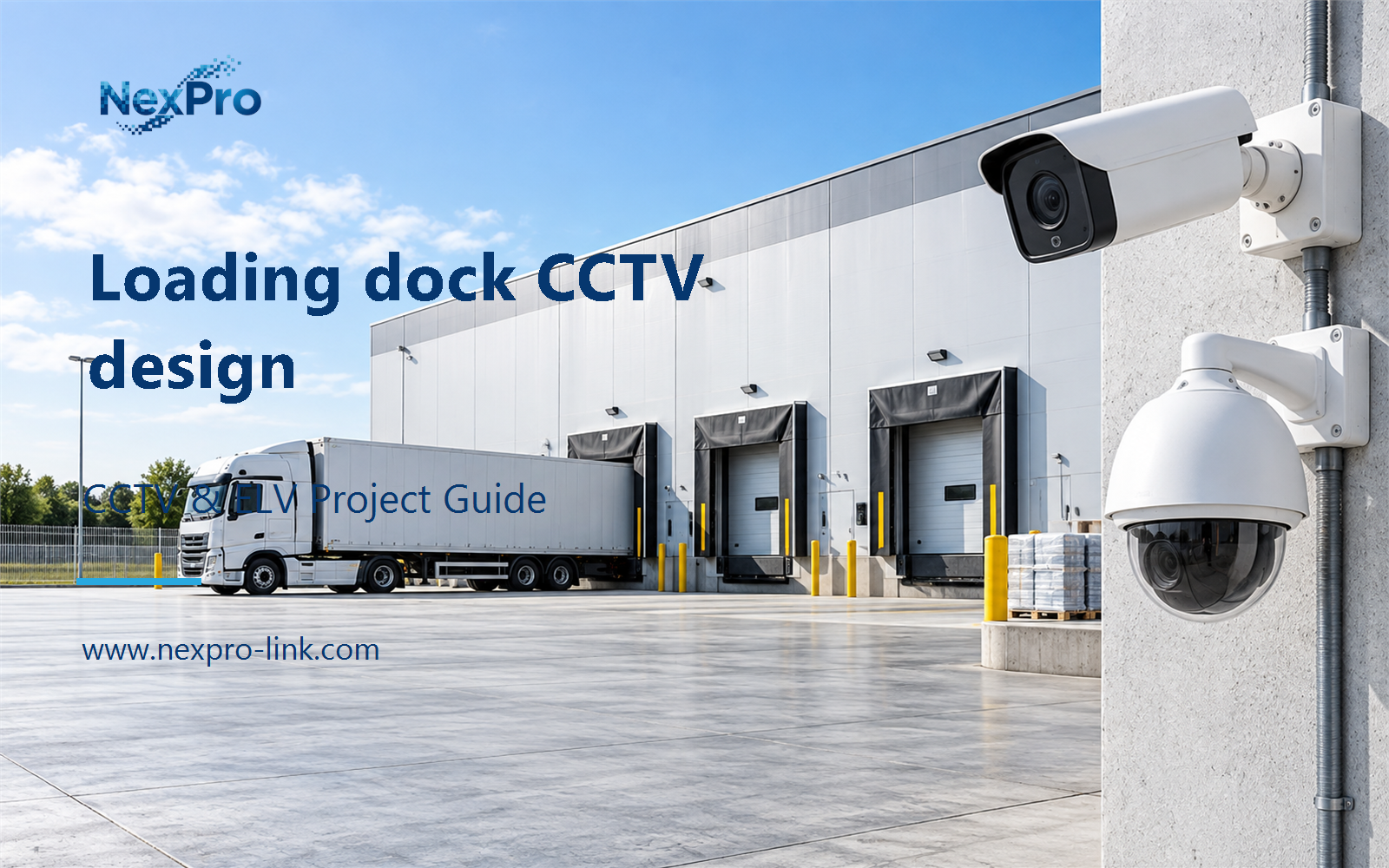
At loading, test the view with a vehicle present and representative loads staged nearby. A clear empty dock gives little information about trailer obstruction. Decide whether one view can capture the handover and departure or whether a complementary view is needed. Keep camera naming aligned with the dock and dispatch records.
Condensation or deposited material on the optical surface can make the footage unusable even when the camera remains operational. Agree a representative inspection and maintenance method with the facility. If the view cannot remain serviceable from an ordinary suitable position, request a separately qualified solution rather than assuming an undocumented coating or heater.
Section 03
Choose service positions before finalising cable routes
Keep recorders, access switches and batteries in suitable maintainable rooms wherever possible. The camera's environmental field does not apply to every rack device. Assign the local contractor responsibility for cabinet placement, cable routes and boundary penetrations, while the supplier states equipment interfaces and the facility approves access restrictions.
CASE03 provides an illustrative food-factory arrangement with two independent 24-camera nodes. Its value here is the distinction between local recording, data links and local power protection. A coastal camera may connect back to an indoor node, but every exposed connection and route still requires its own specified construction.
Recalculate routes after moving the service node. The reference case's 41 to 76 m continuous copper lengths and ten 305 m reels are tied to its hypothetical layout, not this seafood site. Separate inter-building backbone design from local camera cabling and confirm the approved termination method instead of treating a patch panel as a complete cable specification.
Section 04
Apply the full qualification rule to each environment
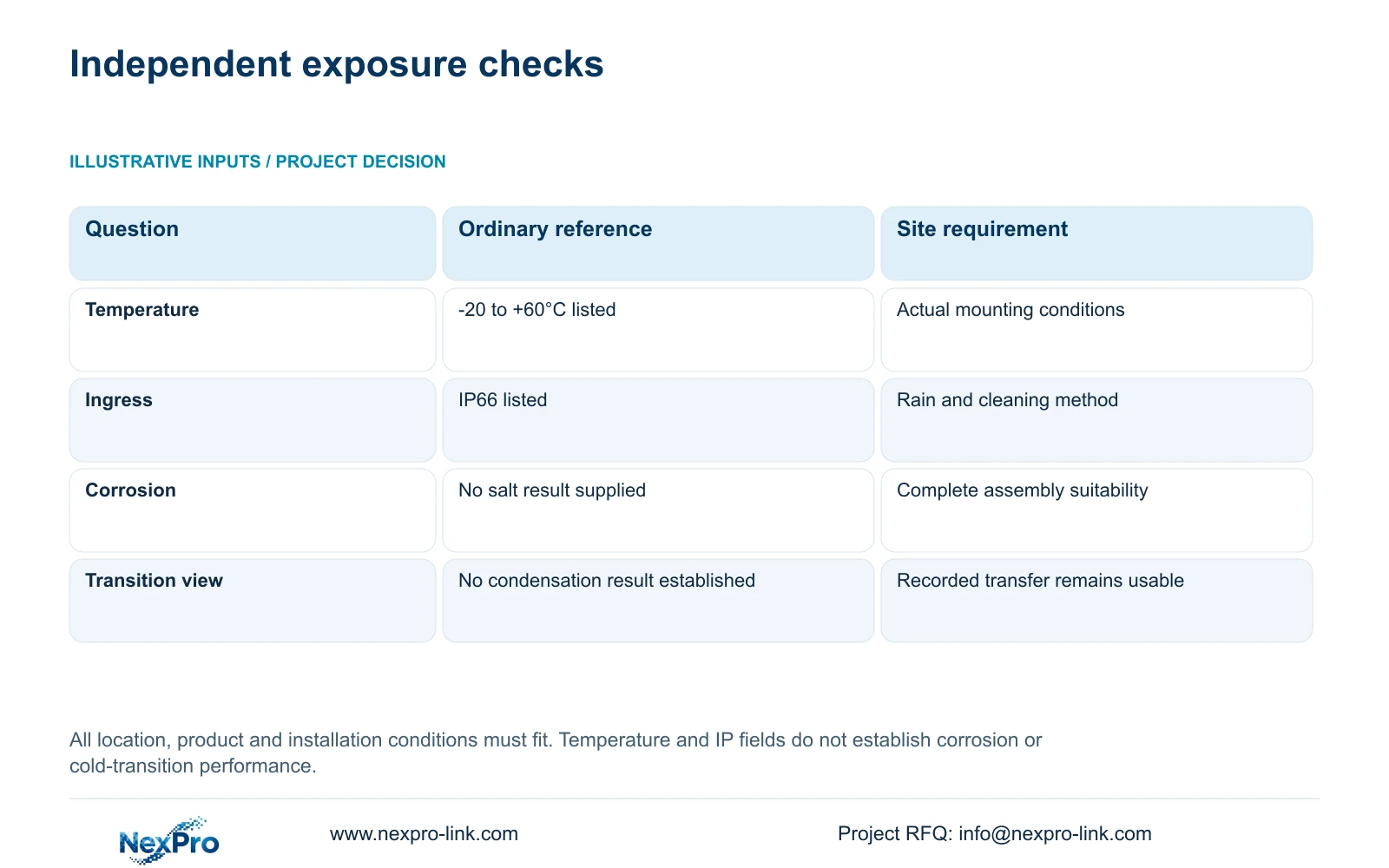
The ordinary BL2812M and DM2812M 5MP references list IP66 and -20 to +60°C. They also retain the listed 2880×1620 output, 25fps and 2.8–12mm motorized lens range. These source fields can support a normal-area camera candidate, but they provide no supplied salt-corrosion result or specialist cold-transition performance.
Use location conditions AND complete product scope AND approved installation requirements as the qualification rule. The matrix below identifies what is still needed at each seafood location. Its decisive distinction is exposure-specific evidence, rather than a more impressive single rating or an assumed plant-wide camera family.
Where the actual temperature falls outside the documented range, an ordinary reference does not qualify. Where salt or cleaning exposure remains unresolved, temperature fit alone is insufficient. A specialist assembly must cover the camera, support and connections, with any classified-area requirements handled separately by the responsible specialists.
| Location | Ordinary candidate basis | Additional decision |
|---|---|---|
| General access corridor | Check IP66 and -20 to +60°C | Approve actual cleaning exposure |
| Cold doorway | Check actual temperature at mount | Demonstrate clear transfer during transition |
| Sheltered loading position | Check rain and cleaning conditions | Assess local salt exposure independently |
| Exposed coastal loading | Ingress field alone is insufficient | Require corrosion suitability for full assembly |
| Indoor service node | Select suitable rack equipment | Keep maintenance outside exposed locations |
Section 05
Compare relocation with specialist equipment fairly
Recommend suitable ordinary equipment in general areas and a documented exception schedule for cold-transition and salt-exposed positions. First assess whether relocation preserves the task. Use specialist equipment where the observation genuinely needs an exposed location or where a relocated view loses important transfer detail.
Compare the full consequences. Relocation may change lens setting, target angle, cabling and mounting work. A specialist front end may introduce different power or maintenance requirements. Include those lines in both supplier offers rather than comparing a bare ordinary camera against a complete exposed assembly.
Preserve the same recording, playback and export objectives across options. Exact specialist streams and required events need qualification with the selected recorder or client. A general compatibility label does not establish every workflow. A suitable operator display can support review; a wall should be priced only if simultaneous monitoring is an accepted operational requirement.
Section 06
Release an exposure-specific supply schedule
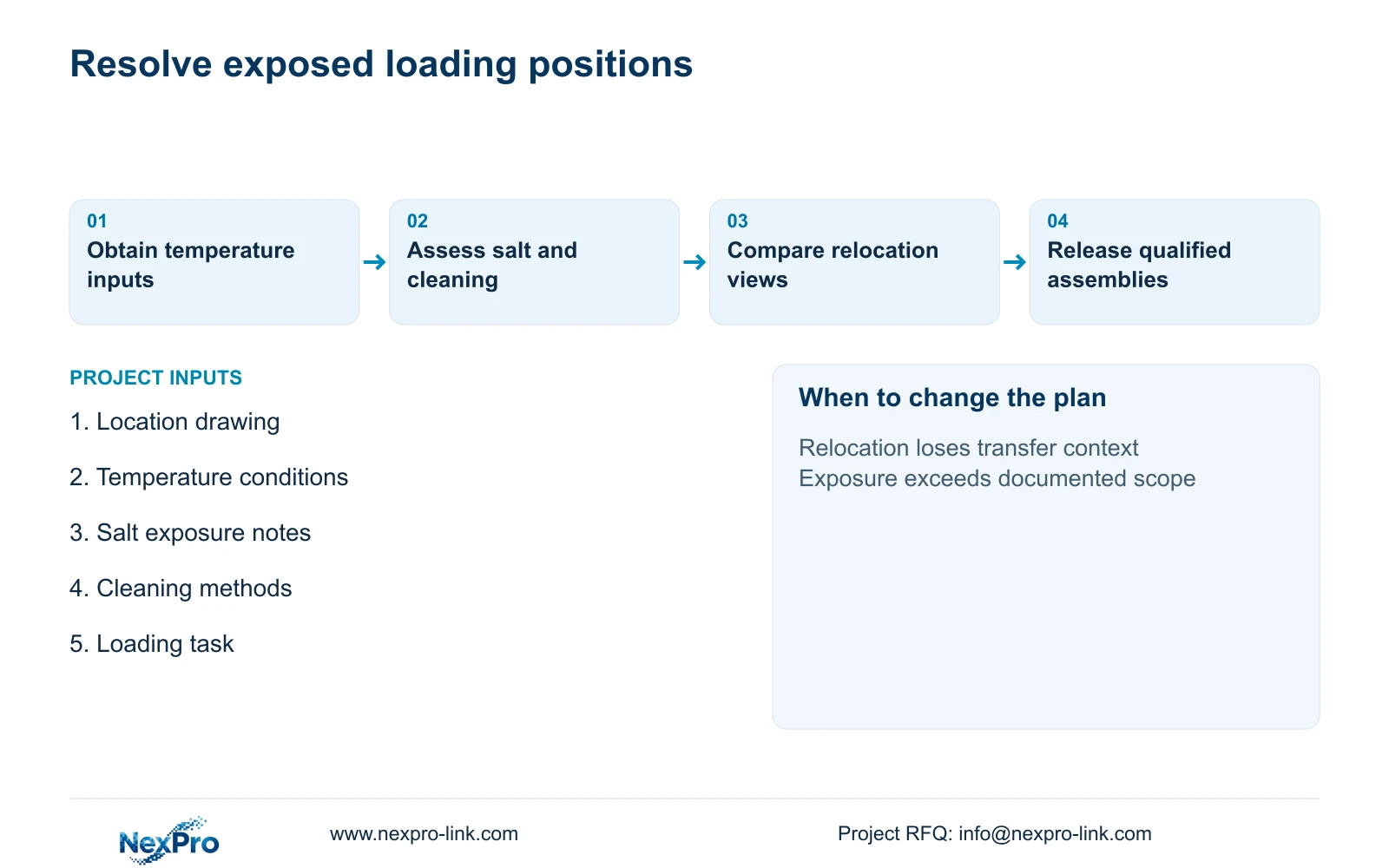
Each BOQ position should identify its temperature input, corrosion exposure, cleaning method and required transfer action. State the camera candidate or unresolved specialist role, mounting and connection responsibilities, service access and recording node. This allows the buyer to price qualified normal positions without presenting the exposed positions as already approved.
NexPro-Link's Factory & Warehouse supply scope and BOQ support can help coordinate normal-area equipment, technical deviations and project packing. Use cold-door and dock names on location labels so delivery records support the installer's schedule. Specialist qualification and local installation remain separate project responsibilities.
Before release, inspect a proposed cold-door view and a loaded dock view under representative conditions. Retain the result with the location schedule. A changed cleaning method, service route or loading layout should trigger reassessment of the relevant assembly and view, while any changed recording setting should be reflected in storage and network assumptions.
Section 07
Buyer questions
Does a -20°C lower operating limit make a camera suitable for every cold doorway? No. Actual conditions must remain within the documented range, and condensation, cleaning, connections and view clarity still need assessment. No specialist transition performance is established by the temperature limit alone.
Can a canopy remove the need for corrosion qualification? It may reduce some direct exposure, but it does not establish that salt exposure is absent. Assess the local environment and the complete mounted assembly rather than assigning suitability from the canopy alone.
How should an ordinary-area alternative be priced? Keep the accepted transfer task unchanged and include revised mounts, routes, lens requirements and maintenance access. If the alternative loses required loading context, price the extra view needed to restore it.
Section 08
Qualify cold-door and loading locations
Send the camera-location drawing, actual temperature conditions, salt and cleaning exposure notes, and required loading actions to info@nexpro-link.com. NexPro-Link can discuss normal-area candidates and the specialist scope that must remain separate.
Engineering references
These sources support the general planning principles. Always use the selected product's current datasheet and applicable project standards for final design.