Plan PTZ optical zoom selection with practical guidance on read the focal range behind the zoom ratio and test tracking and preset workflows. NexPro-Link project guide.
Section 01
Read the Focal Range Behind the Zoom Ratio
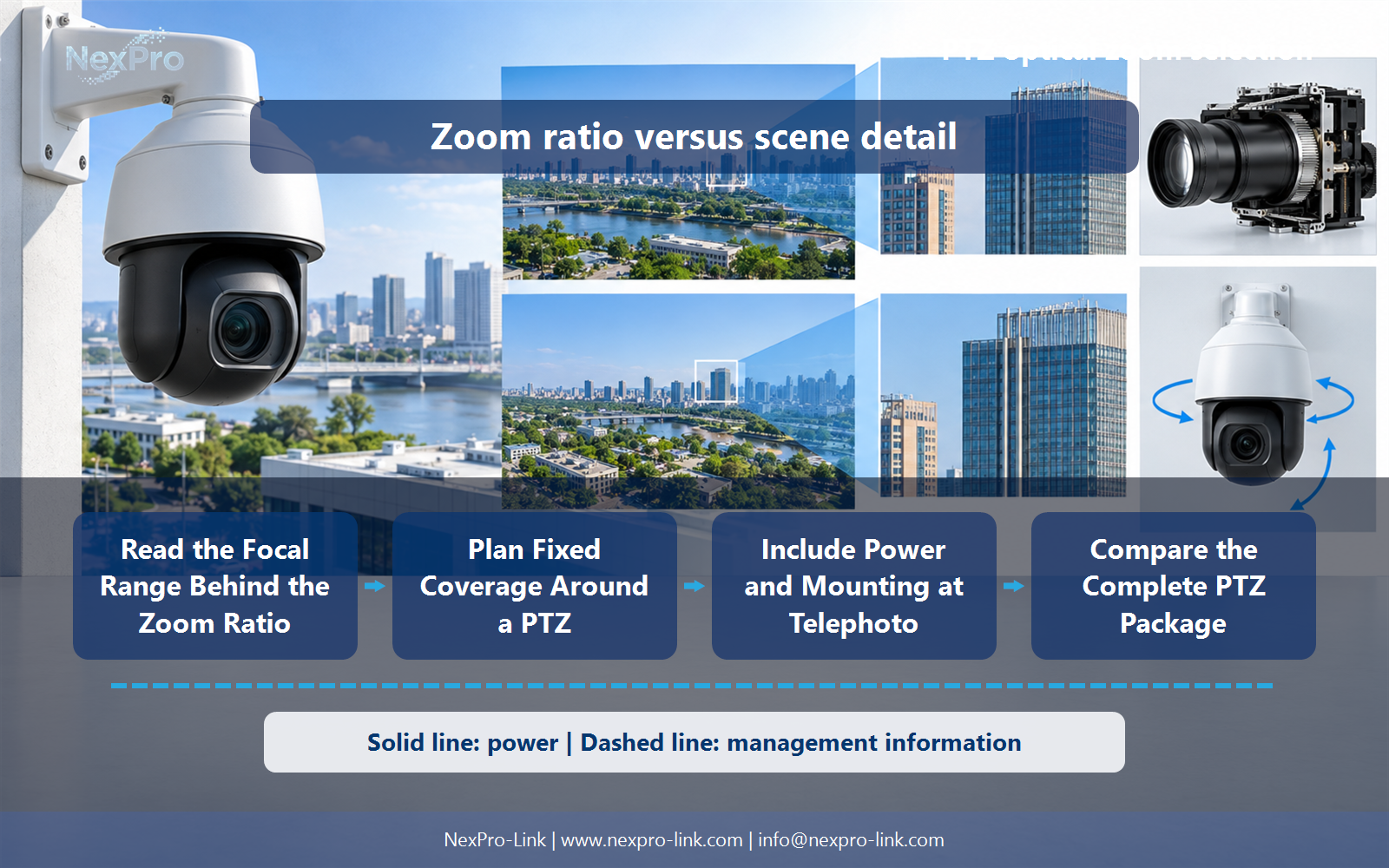
Not necessarily. The zoom ratio compares the longest and shortest focal lengths, while the resulting field of view also depends on the imaging geometry. Compare actual focal ranges, target size and image detail at the intended distance. A larger ratio alone does not establish identification distance or performance in difficult light.
Turn the answer into a working record using Zoom option, Wide focal length, Tele focal length, Target width.
| Decision area | Buyer question | Required output |
|---|---|---|
| Read the Focal Range Behind the Zoom Ratio | Does 45x zoom see farther than 25x in every case? | Not necessarily. |
| Separate Optical and Digital Enlargement | Does digital zoom create additional recorded detail? | Digital enlargement magnifies information already present in the image; it does not recreate detail that was never captured. |
| Plan Fixed Coverage Around a PTZ | Can one PTZ replace several fixed cameras? | Only when the resulting periods without coverage are acceptable for the operational task. |

Section 02
Separate Optical and Digital Enlargement
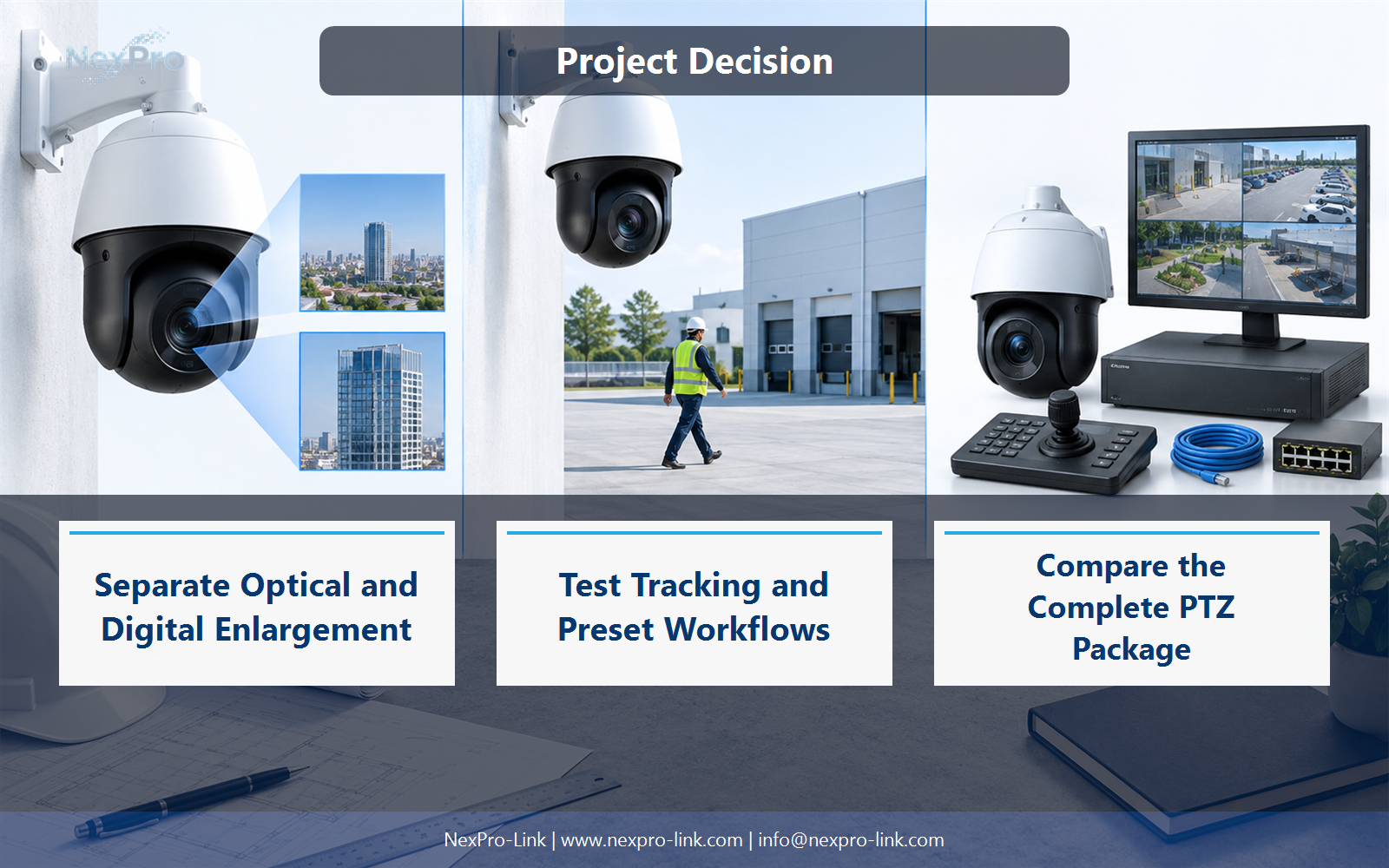
Digital enlargement magnifies information already present in the image; it does not recreate detail that was never captured. Optical zoom changes the framing before the image is recorded. Compare the recorded target detail at the required focal setting, and treat operator enlargement as a viewing aid rather than a substitute for suitable capture geometry.
Use Function, Capture change, Recorded detail, Operator use to compare options on the same basis. Keep product capability, project assumption and operating responsibility in separate columns.
Section 03
Plan Fixed Coverage Around a PTZ
Only when the resulting periods without coverage are acceptable for the operational task. A PTZ looking at one target is not simultaneously recording every direction at the same detail. Use fixed views for continuous evidence where needed and reserve PTZ functions for inspection, tracking or operator response.
The project output should make Area, Continuous view, PTZ task, Unobserved interval traceable from input to acceptance.
- Confirm the answer to: Can one PTZ replace several fixed cameras?
- Record the project fields: Area / Continuous view / PTZ task / Unobserved interval.
- Keep product capability, project assumptions and site responsibility in separate records.
Section 04
Test Tracking and Preset Workflows
Check which targets the selected model supports, how tracking starts and stops, and how the operator regains control. Include occlusion, competing targets and the return-to-home behavior in the trial. Tracking is an aid to a response workflow, not a guarantee that every event remains centred and identifiable.
Record Trigger, Tracking target, Interruption, Return behavior before selecting a product family. That makes later substitutions possible without silently changing the operational requirement.
Section 05
Include Power and Mounting at Telephoto
Movement, illumination and environmental accessories can change peak power requirements, while long focal lengths make vibration and mounting movement more noticeable. Match the specified power method and support structure to the chosen unit. Do not assume an ordinary camera PoE port can power a PTZ simply because both use an Ethernet connection.
Review Operating mode, Peak demand, Supply type, Mounting constraint with the party that will operate or maintain the system.
Section 06
Compare the Complete PTZ Package
Include the focal range, supported imaging modes, illumination, environmental limits, power interface, control method and integration requirements. Compare the same target task across options. NexPro-Link's published PTL10 model naming can anchor a real product discussion, while zoom classes without a matching model remain specification options rather than invented SKUs.
Use Model or option, Focal range, Control, Power, Target task as the handoff between design and procurement.
Engineering references
These sources support the general planning principles. Always use the selected product's current datasheet and applicable project standards for final design.