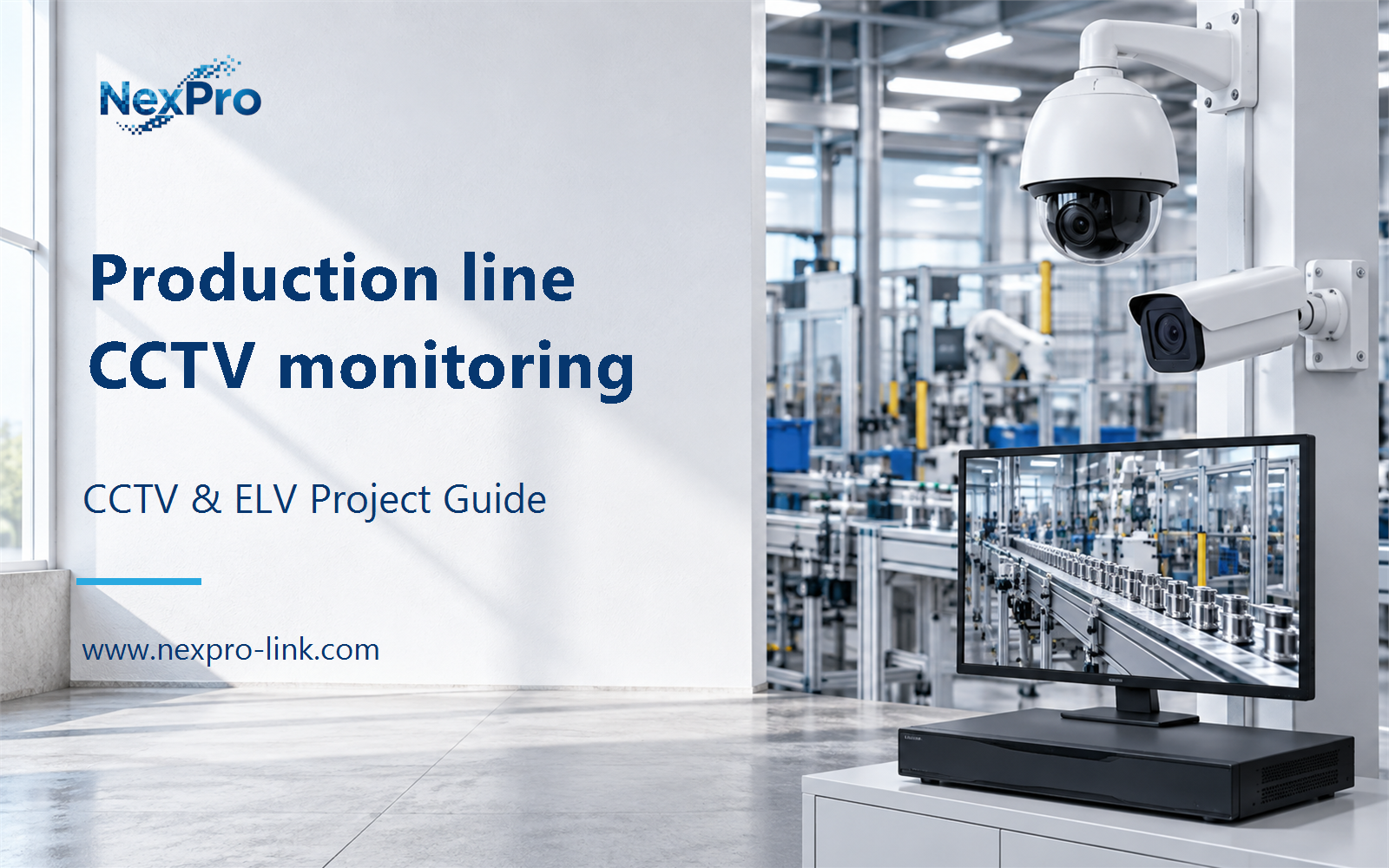
Plan production line CCTV monitoring with practical guidance on define the observation task and size local recording and network. NexPro-Link project guide.
Section 01
Define the Observation Task
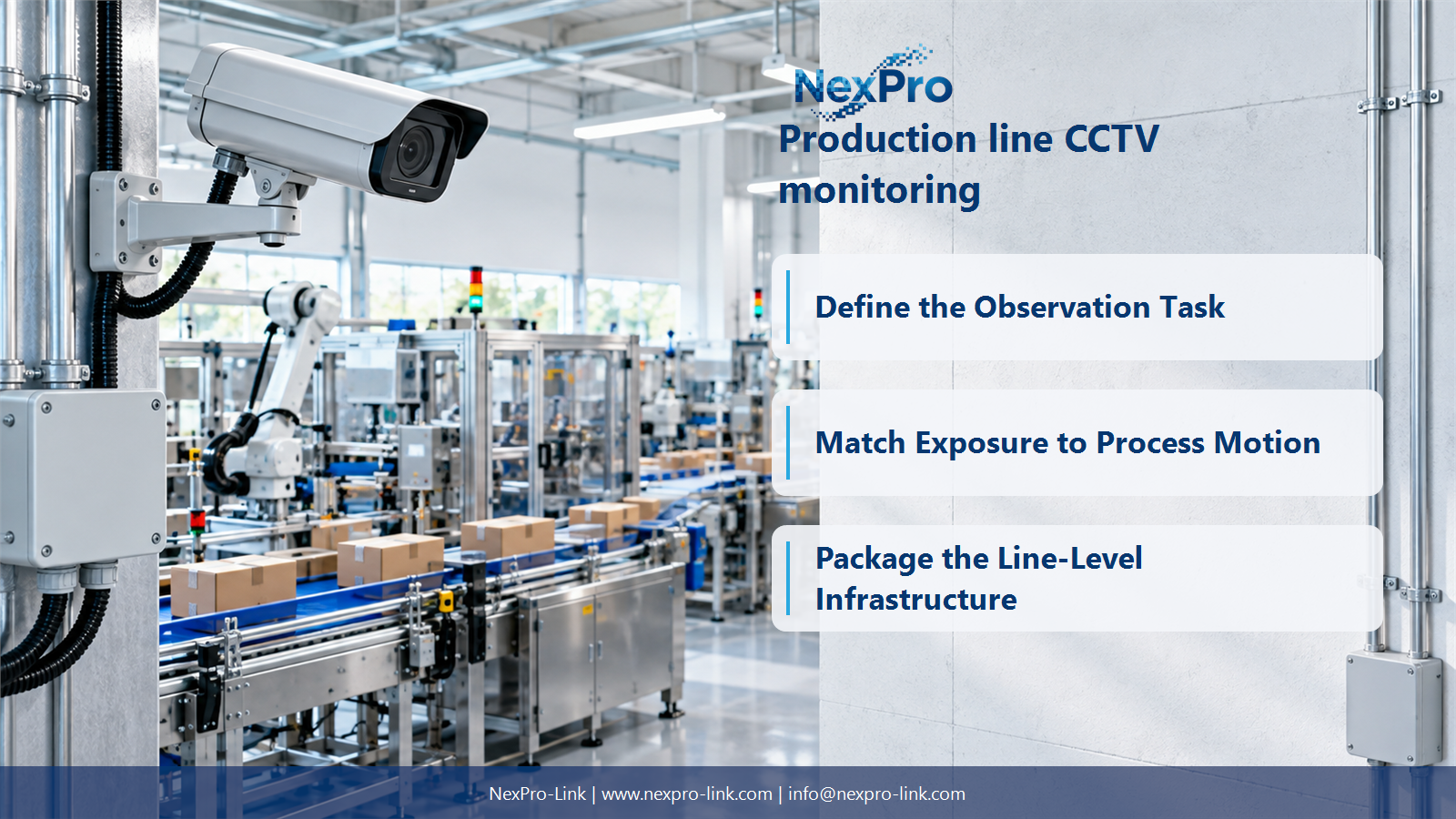
It can provide visual context, process observation and incident review when the camera arrangement captures the required activity. That is different from calibrated machine-vision inspection or a safety-rated control function. Define the intended use without implying that ordinary surveillance video certifies product quality or prevents every unsafe action.
Turn the answer into a working record using Process, Observation, Required detail, Not a control function.
| Decision area | Buyer question | Required output |
|---|---|---|
| Define the Observation Task | What can CCTV contribute to production-line monitoring? | It can provide visual context, process observation and incident review when the camera arrangement captures the required activity. |
| Frame the Workstation Detail | How should cameras be positioned around a production station? | Frame the action or item that needs review while accounting for workers, guards and moving equipment that may obscure it. |
| Match Exposure to Process Motion | Is higher resolution enough for a fast conveyor? | No. |
Section 02
Frame the Workstation Detail
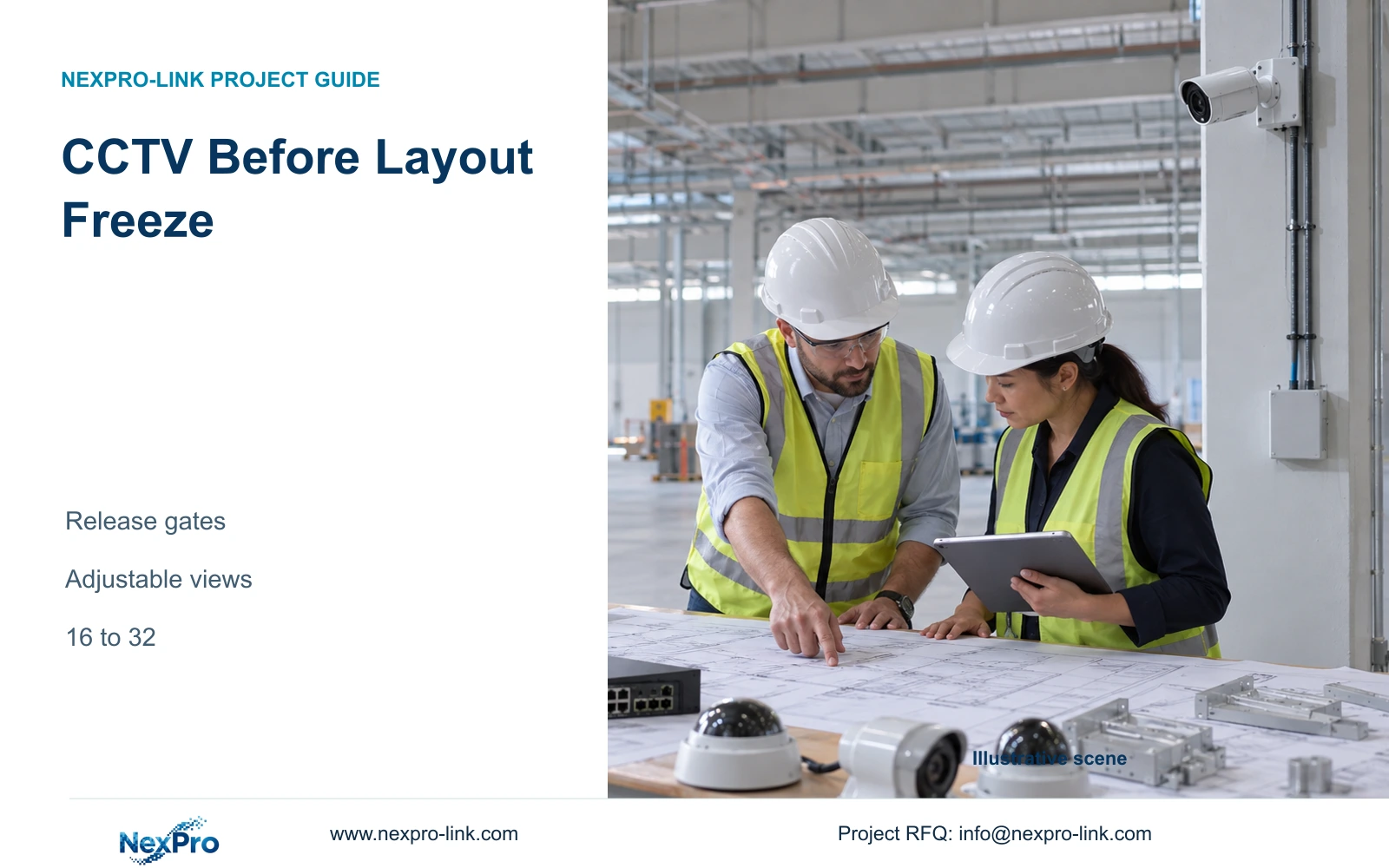
Frame the action or item that needs review while accounting for workers, guards and moving equipment that may obscure it. A wide overview may not show the required hand or package detail. Keep mounting and cabling outside interfering or unsafe positions under the site's installation design.
Use Station, Target area, Obstruction, View, Mount to compare options on the same basis. Keep product capability, project assumption and operating responsibility in separate columns.
Section 03
Match Exposure to Process Motion
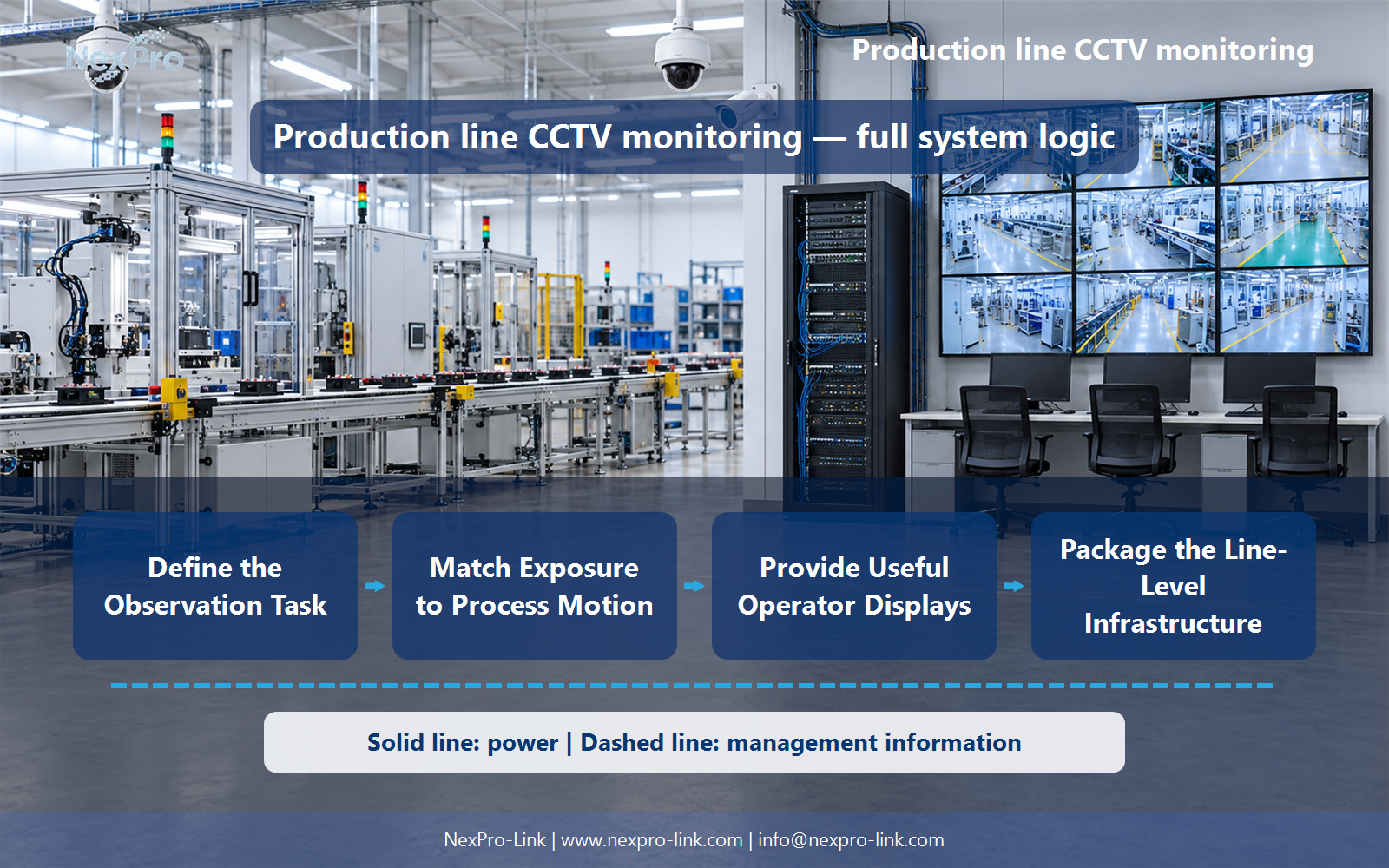
No. Motion blur, exposure timing, lighting and temporal sampling affect whether a moving item is useful on replay. Higher pixel count cannot recover a blurred or missed action. Use representative process speed when choosing settings and distinguish observation from automated inspection requirements.
The project output should make Process speed, Exposure, FPS, Lighting, Review task traceable from input to acceptance.
- Confirm the answer to: Is higher resolution enough for a fast conveyor?
- Record the project fields: Process speed / Exposure / FPS / Lighting / Review task.
- Keep product capability, project assumptions and site responsibility in separate records.
Section 04
Size Local Recording and Network
Select a bitrate and recording mode that preserve the required process detail, then calculate the network and retention demand. Maximum settings can consume resources without improving the relevant view. Keep important context around stoppages and investigate whether event triggers would miss unrecognized process issues.
Record Station group, Mbps, Hours, Retention, Storage before selecting a product family. That makes later substitutions possible without silently changing the operational requirement.
Section 05
Provide Useful Operator Displays
Show the views and status relevant to the operator's task, with readable labels and a way to retrieve incidents where appropriate. A large LED wall is not mandatory for a small line. Define whether the display is operational assistance or security review and assign access accordingly.
Review User, Layout, View labels, Playback need, Access with the party that will operate or maintain the system.
Section 06
Package the Line-Level Infrastructure
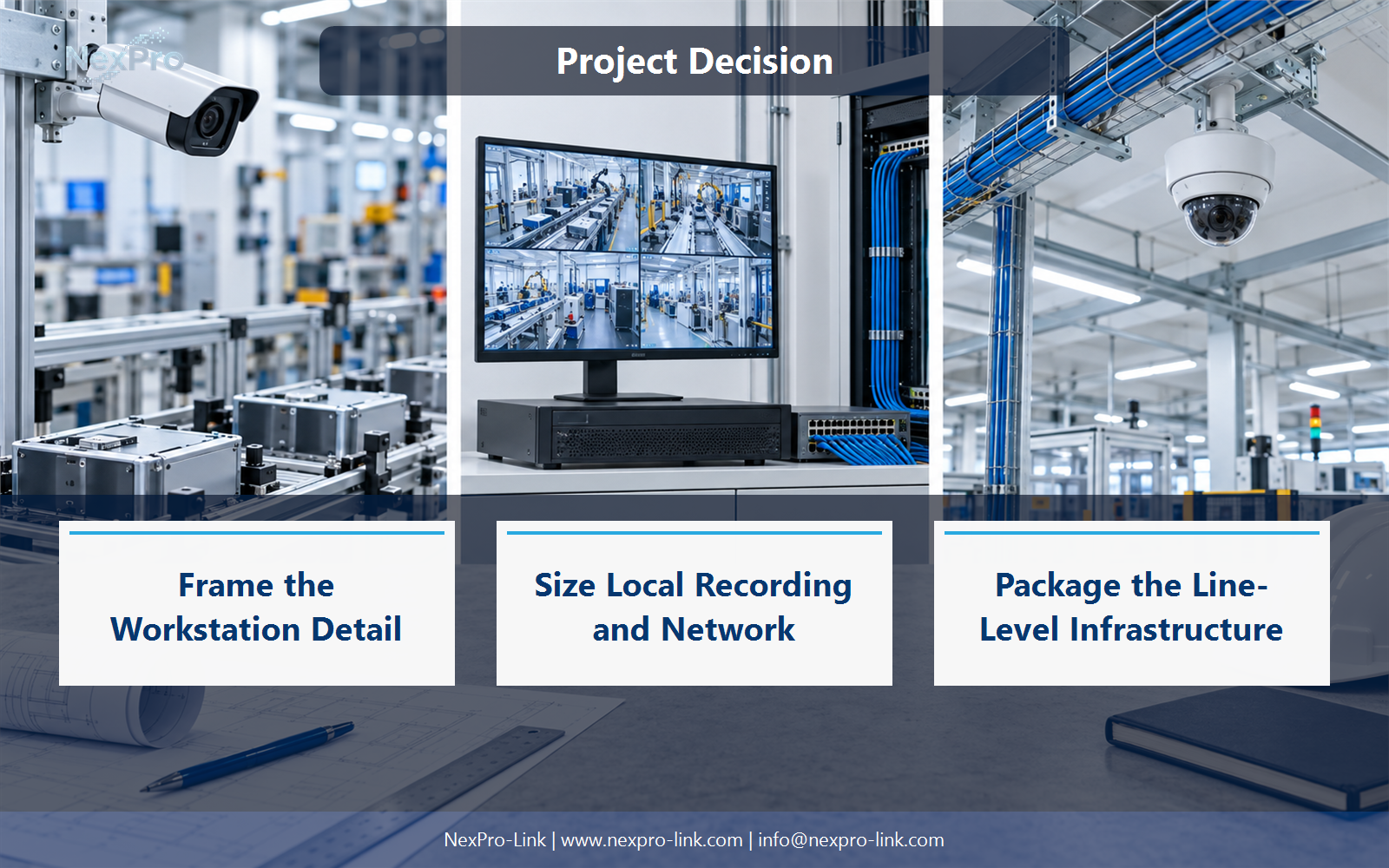
Include suitable mounts, local network and PoE, recorder allocation, storage, display and the power path needed during interruptions. Coordinate CAT6 routes with machinery and other services. NexPro-Link equipment support should not be described as approval of a machine's safety or quality-control system.
Use Station, Camera, Switch, Recorder, Display, Power, Cable as the handoff between design and procurement.
Engineering references
These sources support the general planning principles. Always use the selected product's current datasheet and applicable project standards for final design.