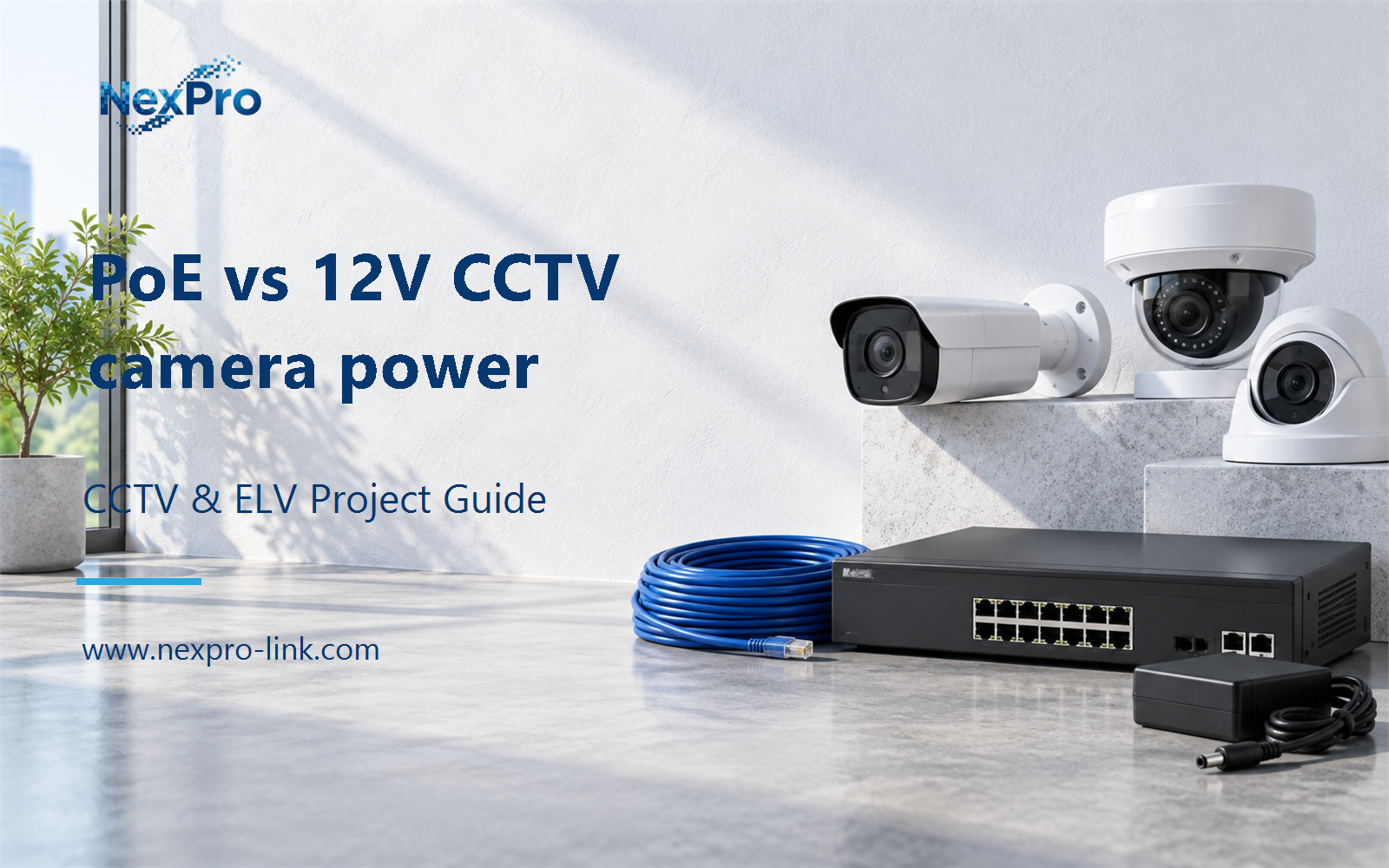
Plan PoE vs 12V CCTV camera power with practical guidance on confirm the camera's electrical interface and use local dc for a defined reason. NexPro-Link project guide.
Section 01
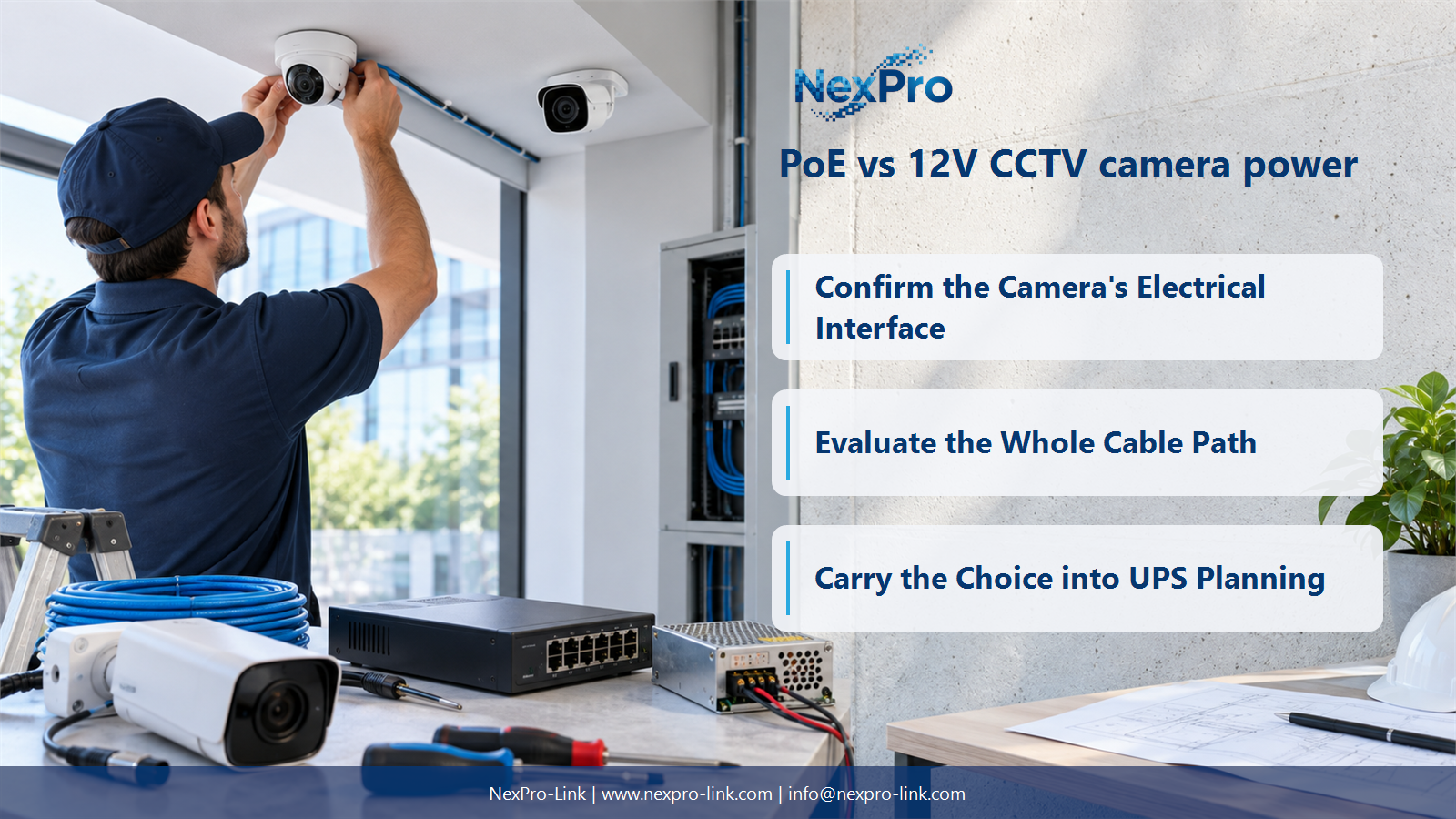
Confirm the Camera's Electrical Interface
No. An IP connection describes network communication, not the available power interface. Read the selected camera's input method, voltage and power requirements. A camera with local DC input may still need a separate network cable, and a product described as PoE must be matched to the appropriate power implementation rather than an assumed universal port.
Turn the answer into a working record using Model, Input method, Voltage, Peak load, Connector.
| Decision area | Buyer question | Required output |
|---|---|---|
| Confirm the Camera's Electrical Interface | Can every IP camera be powered by PoE? | No. |
| Check Port Capability and Total Budget | Why can a PoE camera fail on a switch with free ports? | The individual port may not support the required power or the switch's total allocation may already be used. |
| Evaluate the Whole Cable Path | What makes long-distance camera power difficult? | Voltage drop, power allocation and data-link limits all matter, and they are not solved by simply adding a longer cable. |
Section 02
Check Port Capability and Total Budget
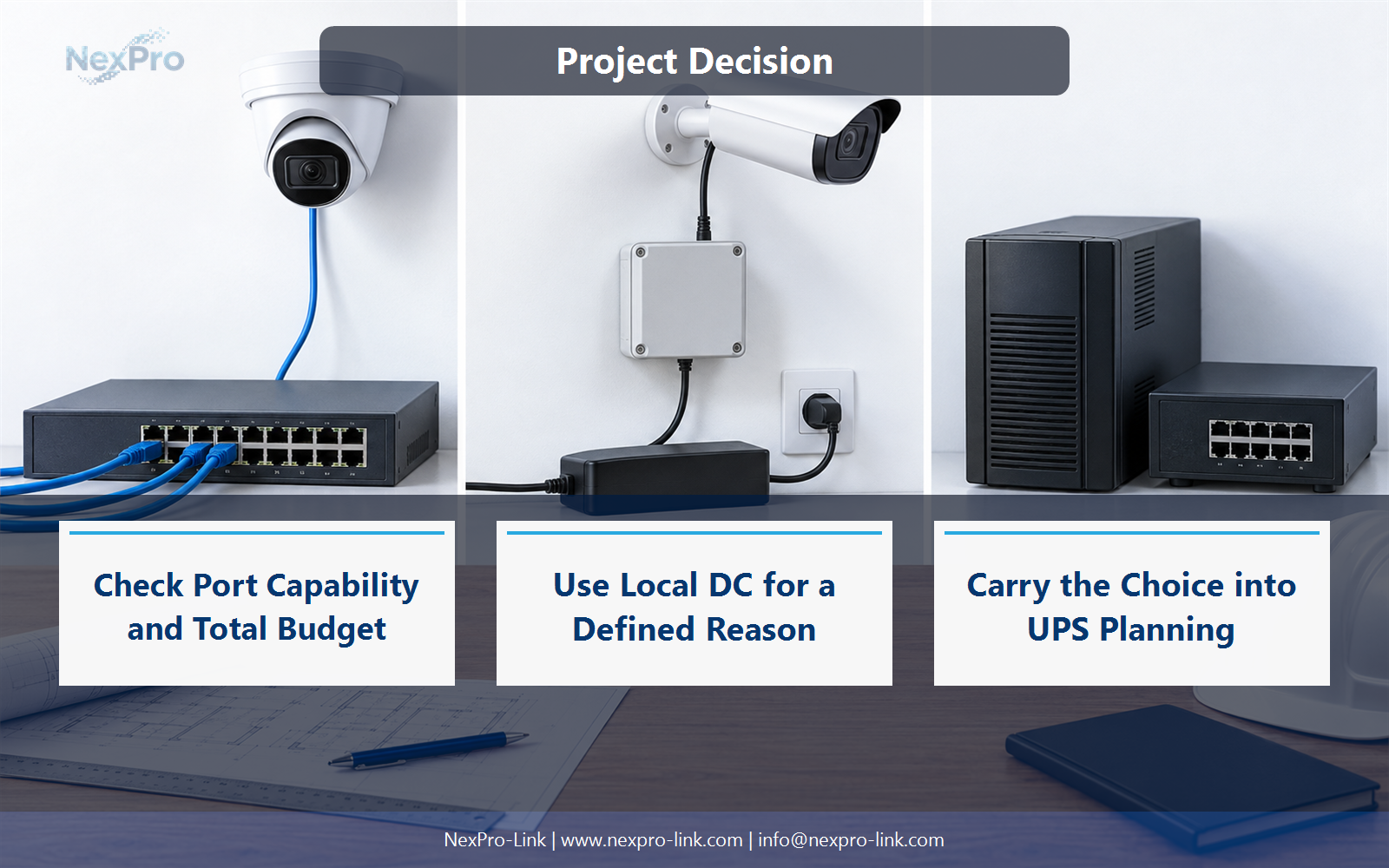
The individual port may not support the required power or the switch's total allocation may already be used. Check both limits, including the camera's highest operating mode and relevant delivery losses. Available data ports do not automatically mean available powered capacity.
Use Port, Supported type, Assigned device, Demand, Remaining budget to compare options on the same basis. Keep product capability, project assumption and operating responsibility in separate columns.
Section 03
Evaluate the Whole Cable Path
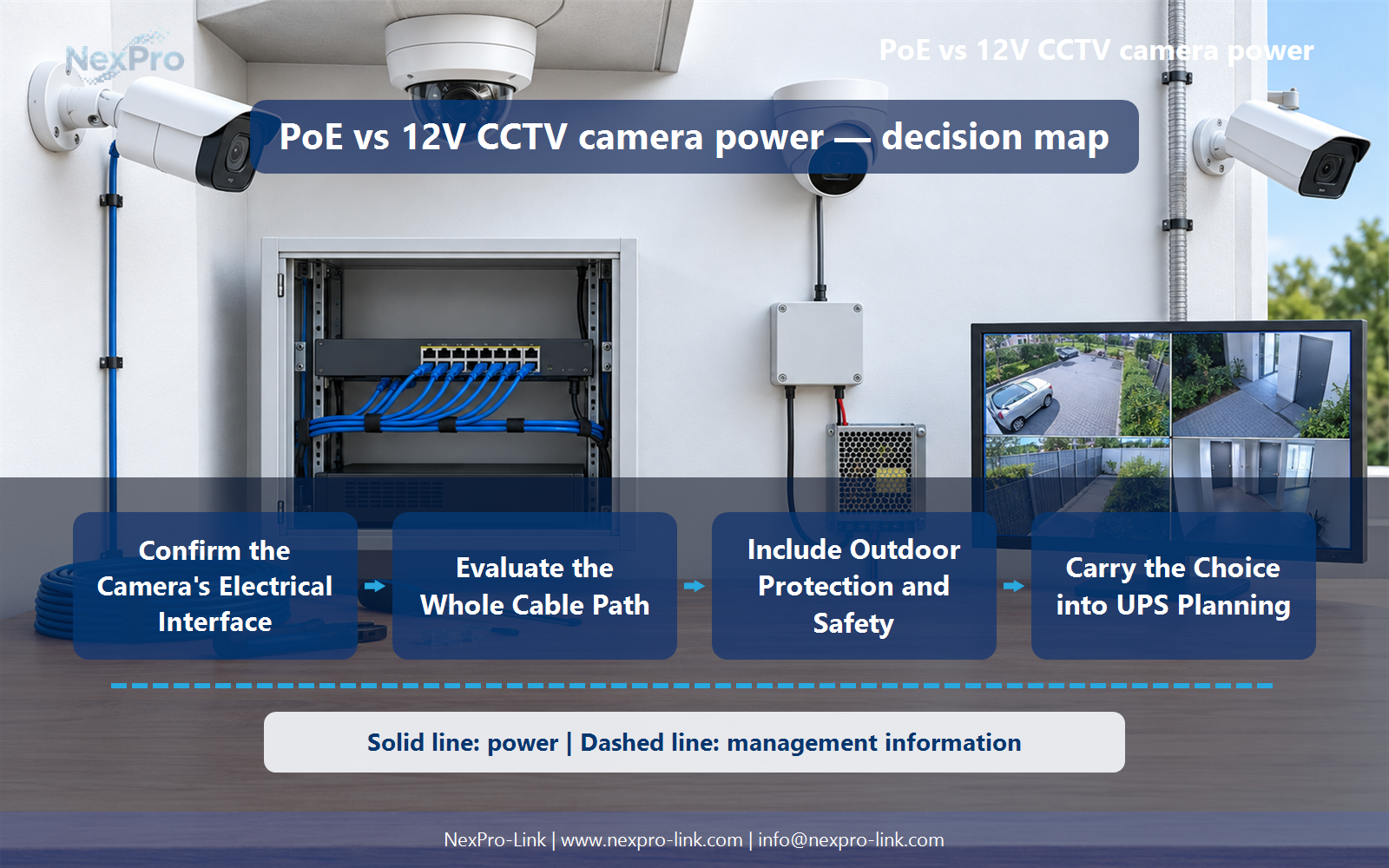
Voltage drop, power allocation and data-link limits all matter, and they are not solved by simply adding a longer cable. Consider supported extension methods, local powered equipment or fiber with power at the remote location. Check the complete path, including every active extender and its own power dependency.
The project output should make Segment, Data medium, Power source, Loss basis, Dependency traceable from input to acceptance.
- Confirm the answer to: What makes long-distance camera power difficult?
- Record the project fields: Segment / Data medium / Power source / Loss basis / Dependency.
- Keep product capability, project assumptions and site responsibility in separate records.
Section 04
Use Local DC for a Defined Reason
It can be appropriate when the selected camera requires it or when a supported local supply better fits the site. Specify the correct voltage, polarity, capacity and environmental protection, and identify who maintains the supply. Local power creates a separate outage and service dependency that should be included in the design.
Record Reason, Supply type, Environment, Backup, Maintenance owner before selecting a product family. That makes later substitutions possible without silently changing the operational requirement.
Section 05
Include Outdoor Protection and Safety
No. Outdoor conductors and exposed equipment still need a site-appropriate protection and bonding design. Select components for the actual network and power arrangement and coordinate them with the responsible electrical designer. Do not treat a plug-in protector as a replacement for the overall installation or promise protection from every lightning event.
Review Exposure, Cable route, Protection role, Site responsibility with the party that will operate or maintain the system.
Section 06
Carry the Choice into UPS Planning
A PoE camera can remain powered when its switch and the required network path are backed up, within the supported load and runtime. A locally powered camera needs its own protected supply path. Count camera power once: either within measured switch input or as a component of an explicit switch-load estimate, not both.
Use Device, Power path, Included load, UPS zone, Runtime need as the handoff between design and procurement.
Engineering references
These sources support the general planning principles. Always use the selected product's current datasheet and applicable project standards for final design.