Plan multi tenant CCTV responsibilities with practical guidance on assign purpose and ownership by area and allocate power and physical space. NexPro-Link project guide.
Section 01
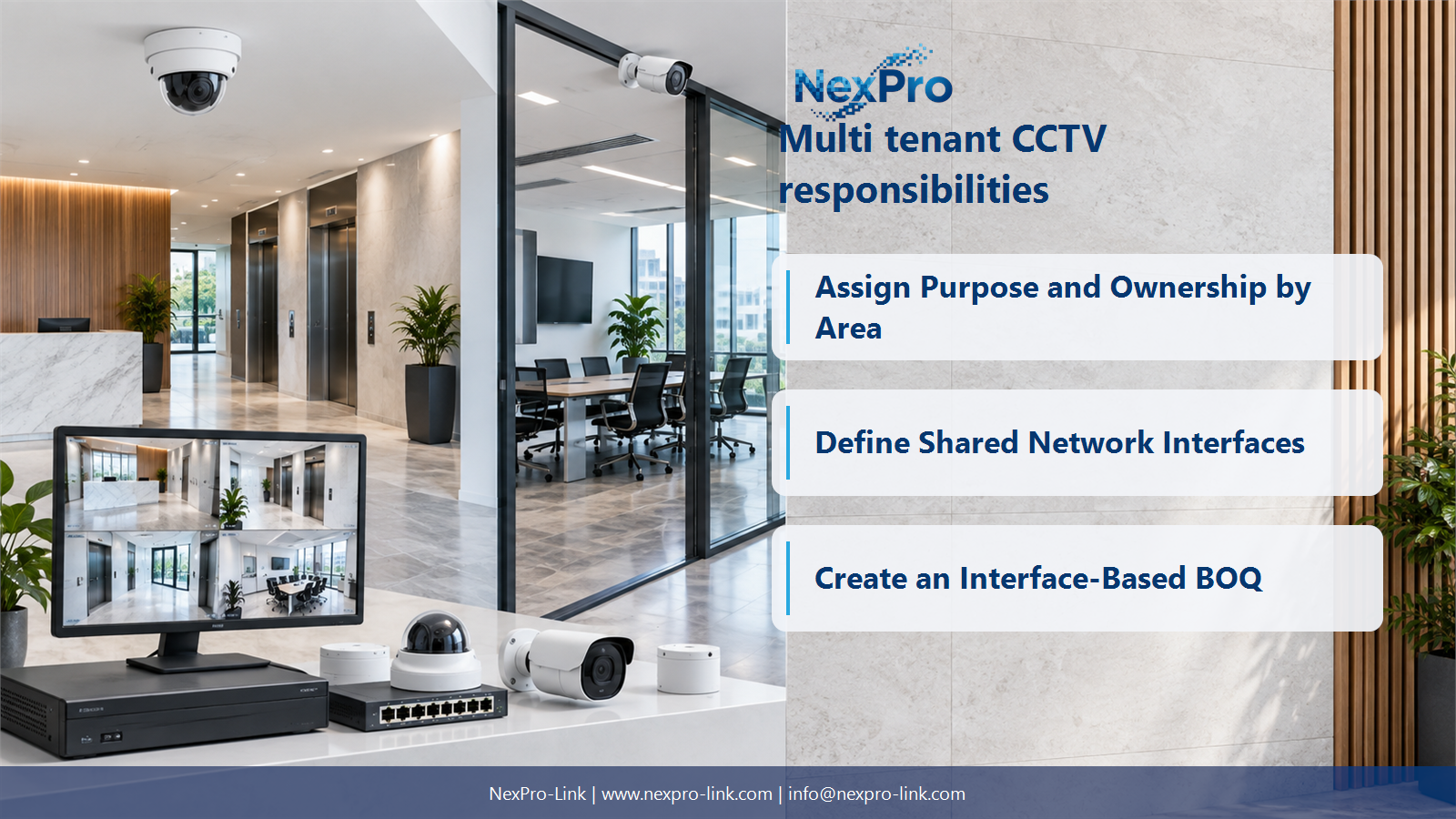
Assign Purpose and Ownership by Area
Assign responsibility according to the site's actual ownership, agreements and applicable requirements. Common-area management and tenant operations may serve different purposes. The technical design should make those boundaries visible rather than assuming the organization providing the backbone owns all video.
Turn the answer into a working record using Area, Purpose, Equipment owner, Data decision owner.
| Decision area | Buyer question | Required output |
|---|---|---|
| Assign Purpose and Ownership by Area | Who should own common-area and tenant CCTV decisions? | Assign responsibility according to the site's actual ownership, agreements and applicable requirements. |
| Separate Recording and Access Domains | Can tenants share one recording platform? | It may be possible with a supported arrangement and explicit permissions, but shared hardware does not establish appropriate access separation. |
| Define Shared Network Interfaces | Does a shared fiber backbone require shared camera VLANs? | No. |
Section 02
Separate Recording and Access Domains
It may be possible with a supported arrangement and explicit permissions, but shared hardware does not establish appropriate access separation. Define who can view, replay, export and administer each group. Separate recorders are one option, not the only possible governance model.
Use Tenant, Recording service, Live, Playback, Admin to compare options on the same basis. Keep product capability, project assumption and operating responsibility in separate columns.
Section 03
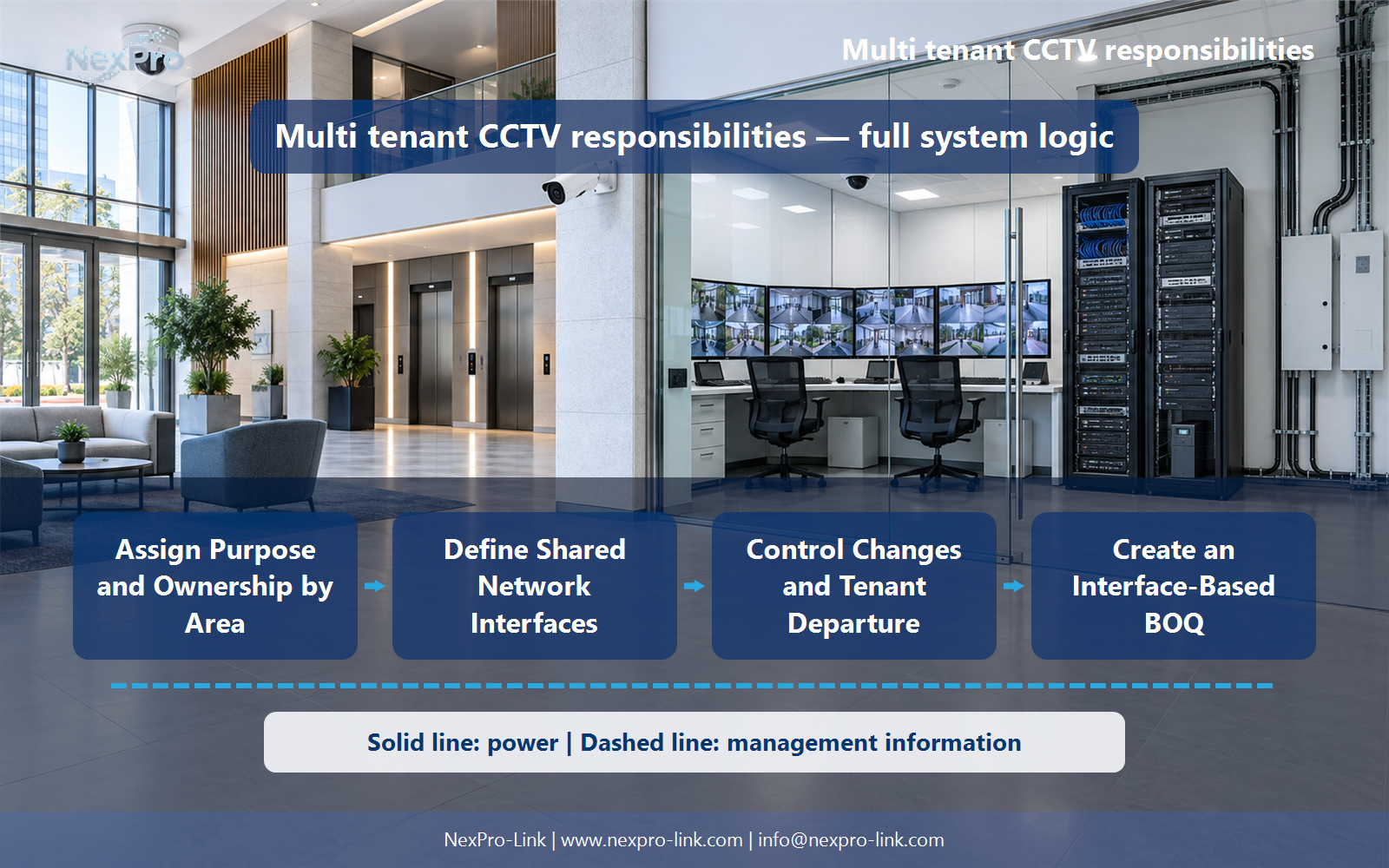
Define Shared Network Interfaces
No. Physical transport and logical access design are separate. Use the supported network architecture to carry the necessary services with appropriate separation and controls. Document ownership of trunks, routing and changes so one tenant's work does not disrupt another system.
The project output should make Backbone, VLAN or service, Routing owner, Change process traceable from input to acceptance.
- Confirm the answer to: Does a shared fiber backbone require shared camera VLANs?
- Record the project fields: Backbone / VLAN or service / Routing owner / Change process.
- Keep product capability, project assumptions and site responsibility in separate records.
Section 04
Allocate Power and Physical Space
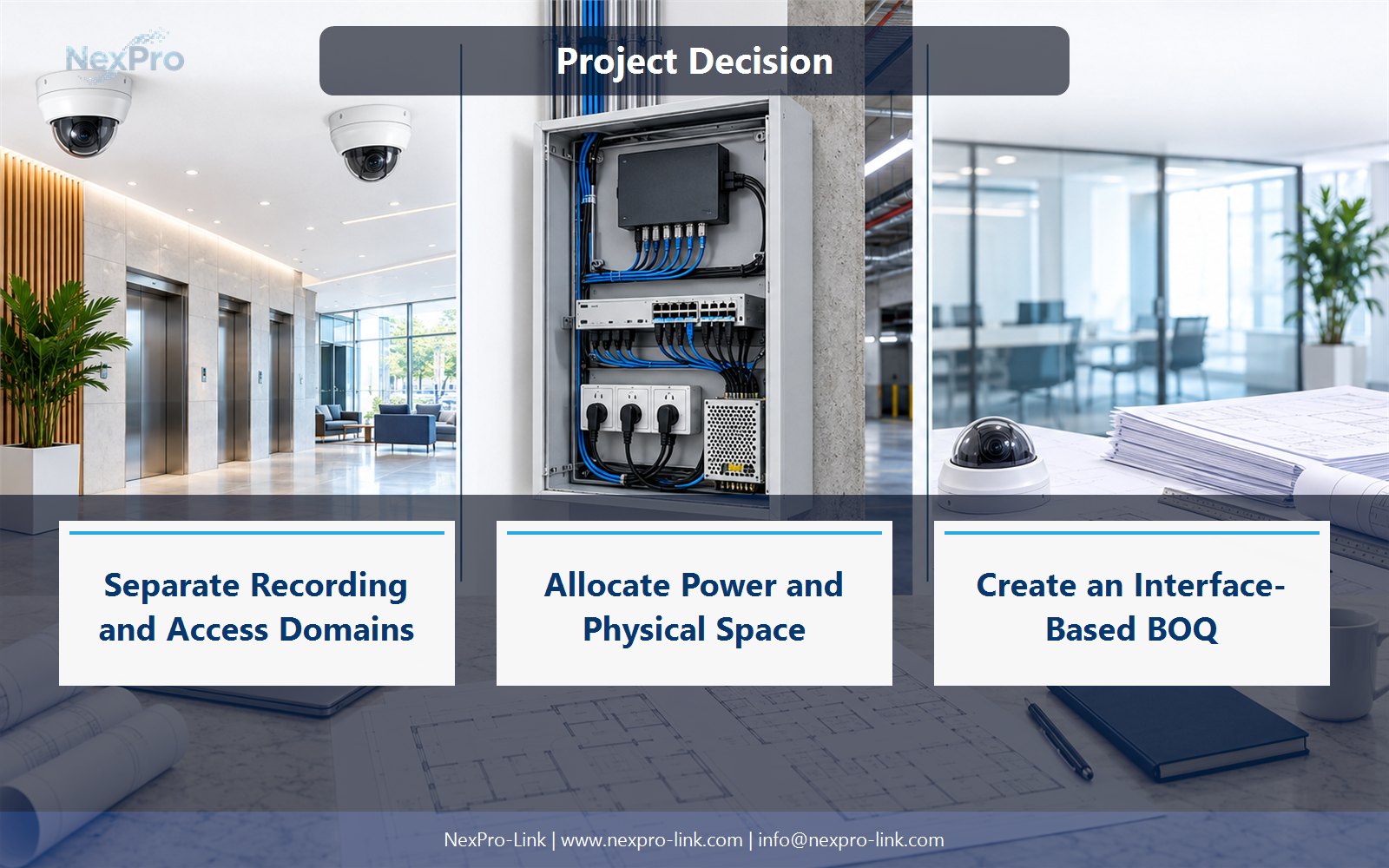
The project agreement should identify the protected circuits, loads and maintenance owner. A tenant device installed in a common rack may not automatically receive the building's backup service. Record power and space allocation alongside the network interface.
Record Rack space, Device, Circuit, Backup, Service owner before selecting a product family. That makes later substitutions possible without silently changing the operational requirement.
Section 05
Control Changes and Tenant Departure
Follow the agreed process for access removal, footage handling, equipment ownership and physical disconnection. Update shared infrastructure records without exposing other tenants' systems. The design should anticipate these changes instead of treating the initial installation as a permanent occupancy arrangement.
Review Change, Access action, Data handling, Equipment, Records with the party that will operate or maintain the system.
Section 06
Create an Interface-Based BOQ
Separate common equipment, tenant equipment and shared services with named interfaces and quantities. Include recording, storage, displays, power and cable responsibilities for each scope. NexPro-Link can support equipment coordination while ownership and access authorization remain defined by the parties.
Use Scope, Item, Owner, Supplier, Installer, Interface as the handoff between design and procurement.
Engineering references
These sources support the general planning principles. Always use the selected product's current datasheet and applicable project standards for final design.