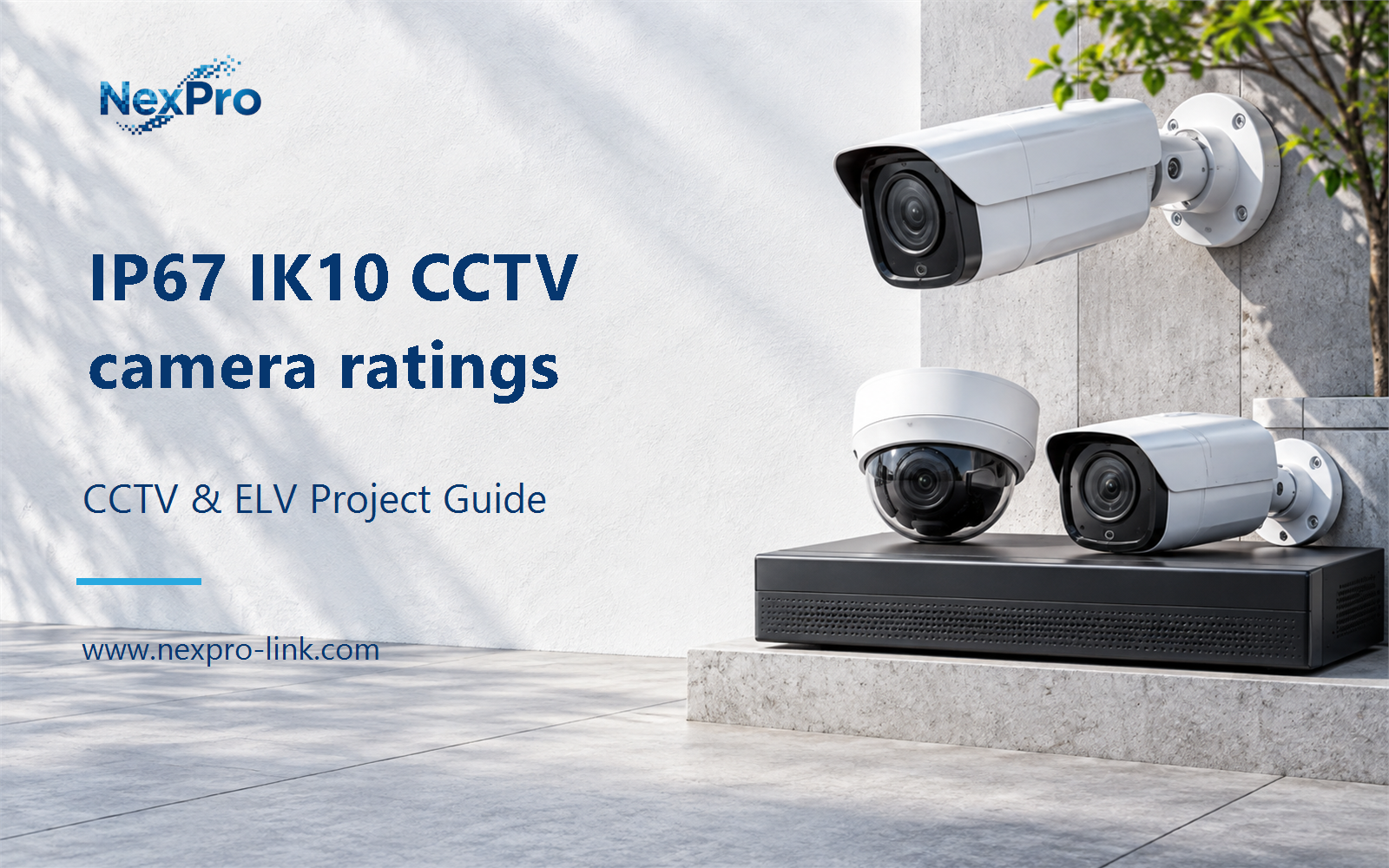
Plan IP67 IK10 CCTV camera ratings with practical guidance on read ingress and impact as separate axes and assess corrosion and materials. NexPro-Link project guide.
Section 01
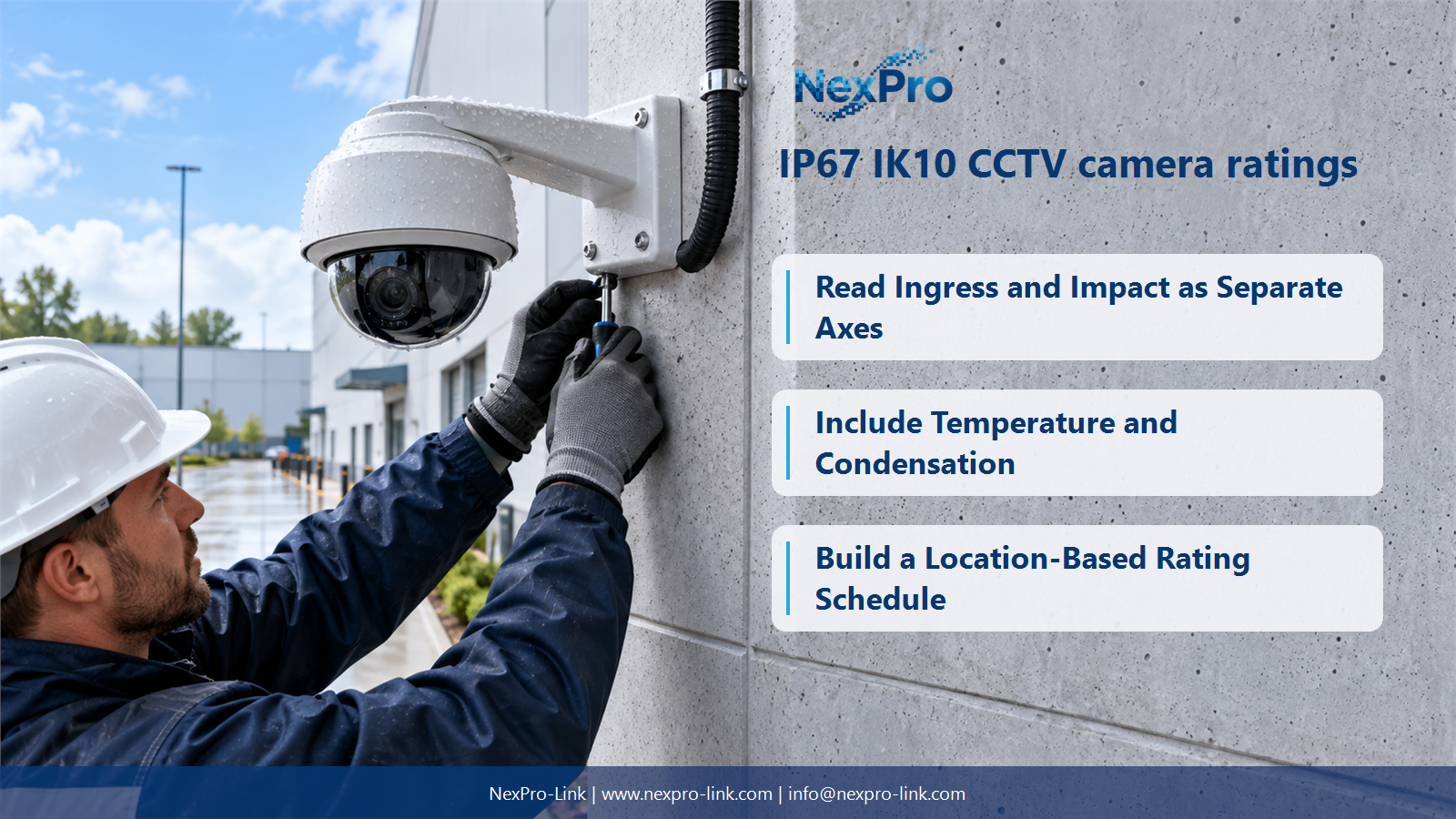
Read Ingress and Impact as Separate Axes
No. Ingress protection and impact resistance describe different forms of exposure. Specify each when the installation requires it and keep the claimed scope attached to the actual product. A camera can have strong environmental sealing without a stated impact classification, so the two labels should not be treated as interchangeable.
Turn the answer into a working record using Exposure type, Relevant rating family, Installation question.
| Decision area | Buyer question | Required output |
|---|---|---|
| Read Ingress and Impact as Separate Axes | Does IP67 mean a camera is vandal-resistant? | No. |
| Avoid Simple Ranking of Water Tests | Is a higher IP number always better for every water exposure? | Do not assume a single ranking covers every water condition. |
| Include Temperature and Condensation | Can an IP-rated camera operate at any temperature? | No. |
Section 02
Avoid Simple Ranking of Water Tests
Do not assume a single ranking covers every water condition. The water-protection code relates to specified test conditions, and immersion-related claims do not automatically establish suitability for every jet or cleaning process. Match the stated rating and installation instructions to rain, washdown or other actual exposure.
Use Water exposure, Product claim, Cleaning method, Design response to compare options on the same basis. Keep product capability, project assumption and operating responsibility in separate columns.
Section 03
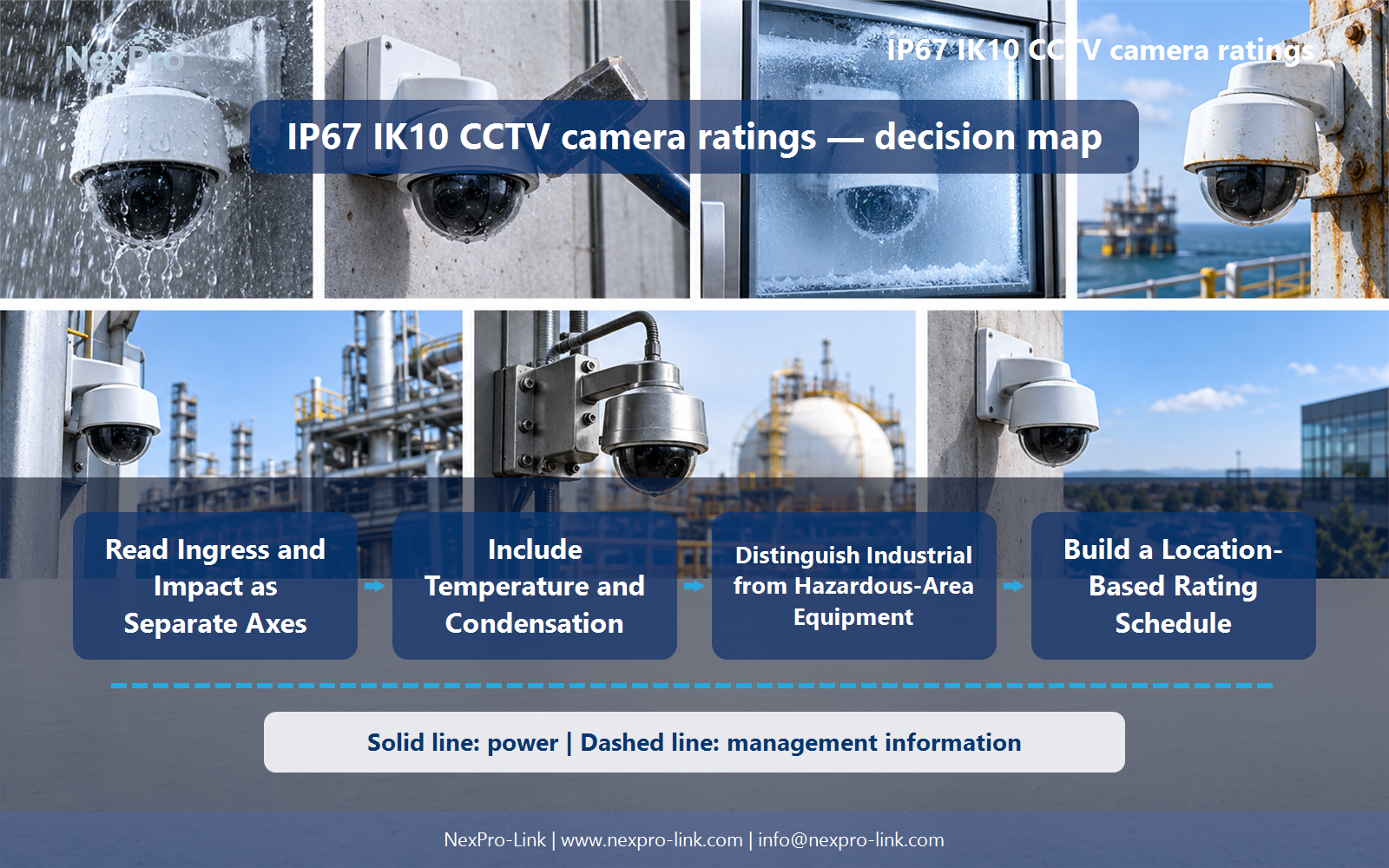
Include Temperature and Condensation
No. Operating temperature, startup temperature and moisture behavior are separate considerations. A sealed housing can still face condensation or thermal stress under certain site conditions. Compare the product's stated operating range with actual exposure, including cold startup, solar heating and transitions between conditioned and unconditioned spaces.
The project output should make Ambient, Startup, Solar exposure, Condensation, Stated range traceable from input to acceptance.
- Confirm the answer to: Can an IP-rated camera operate at any temperature?
- Record the project fields: Ambient / Startup / Solar exposure / Condensation / Stated range.
- Keep product capability, project assumptions and site responsibility in separate records.
Section 04
Assess Corrosion and Materials
No. Salt exposure, cleaning chemicals and incompatible mounting materials can create problems not captured by an ingress code alone. Consider housing material, finish, fasteners, cable entries and the maintenance environment. Ask for the relevant product configuration rather than treating outdoor as a universal suitability statement.
Record Material, Exposure, Interface, Maintenance, Selection point before selecting a product family. That makes later substitutions possible without silently changing the operational requirement.
Section 05
Distinguish Industrial from Hazardous-Area Equipment
No. Dust and water protection do not establish suitability for an explosive atmosphere. Hazardous-area selection requires a complete equipment arrangement appropriate to the classified location and its protection concept. An ordinary camera inside a separately described enclosure must not be presented as a certified assembly without that scope being established.
Review Environment, Ingress need, Hazard classification, Equipment scope with the party that will operate or maintain the system.
Section 06
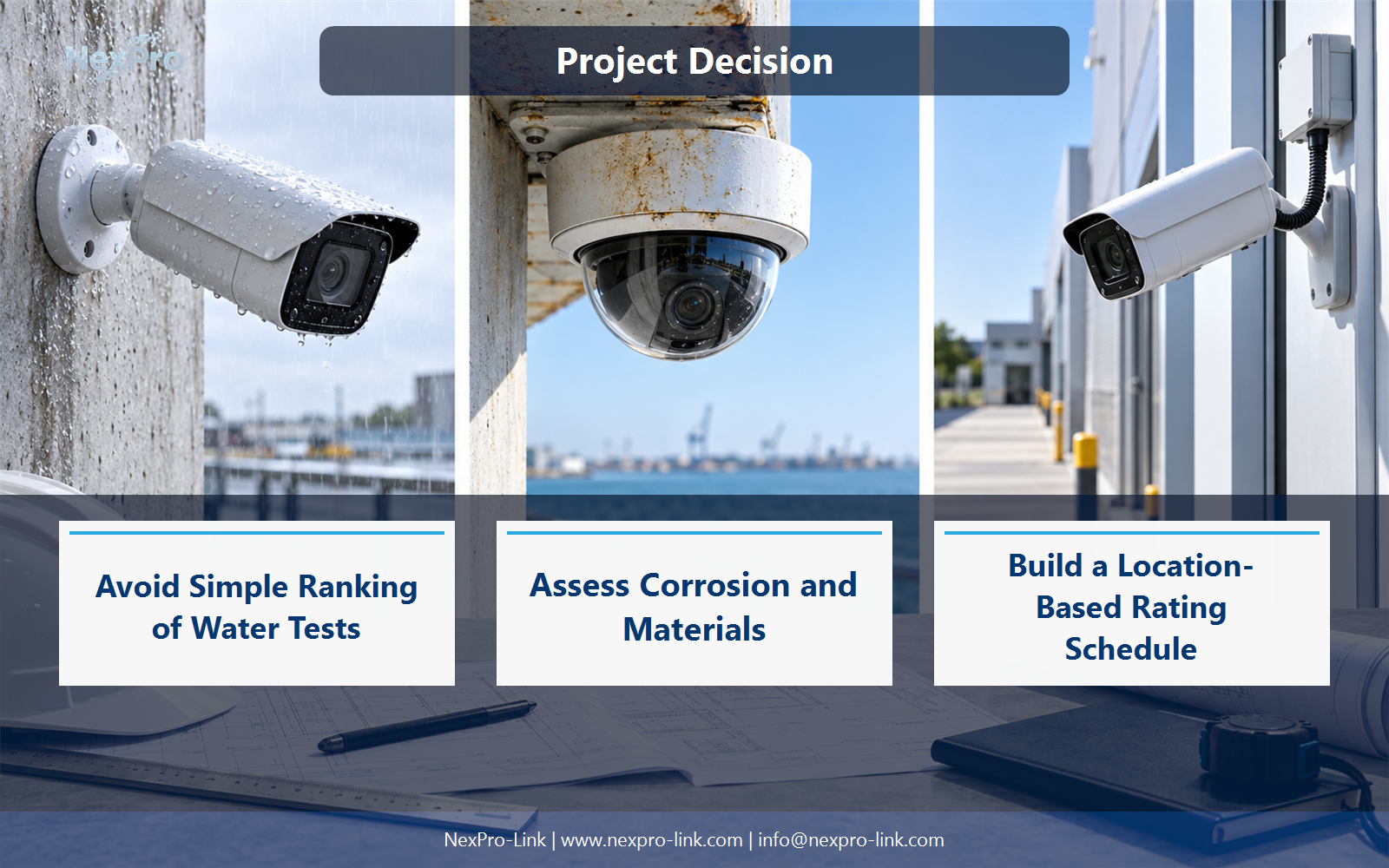
Build a Location-Based Rating Schedule
List the exact model and its stated ingress and temperature values, then record any separate mechanical or environmental requirement for the location. The supplied BL2812M and DM2812M series list IP66 and an operating range of −20°C to +60°C. Do not upgrade those values to fit a tougher location; specify the appropriate equipment category instead.
Use Location, Exact model, IP, Temperature, Separate requirement as the handoff between design and procurement.
Engineering references
These sources support the general planning principles. Always use the selected product's current datasheet and applicable project standards for final design.