Plan IP CCTV cybersecurity baseline with practical guidance on inventory devices and management owners and design an approved remote access path. NexPro-Link project guide.
Section 01
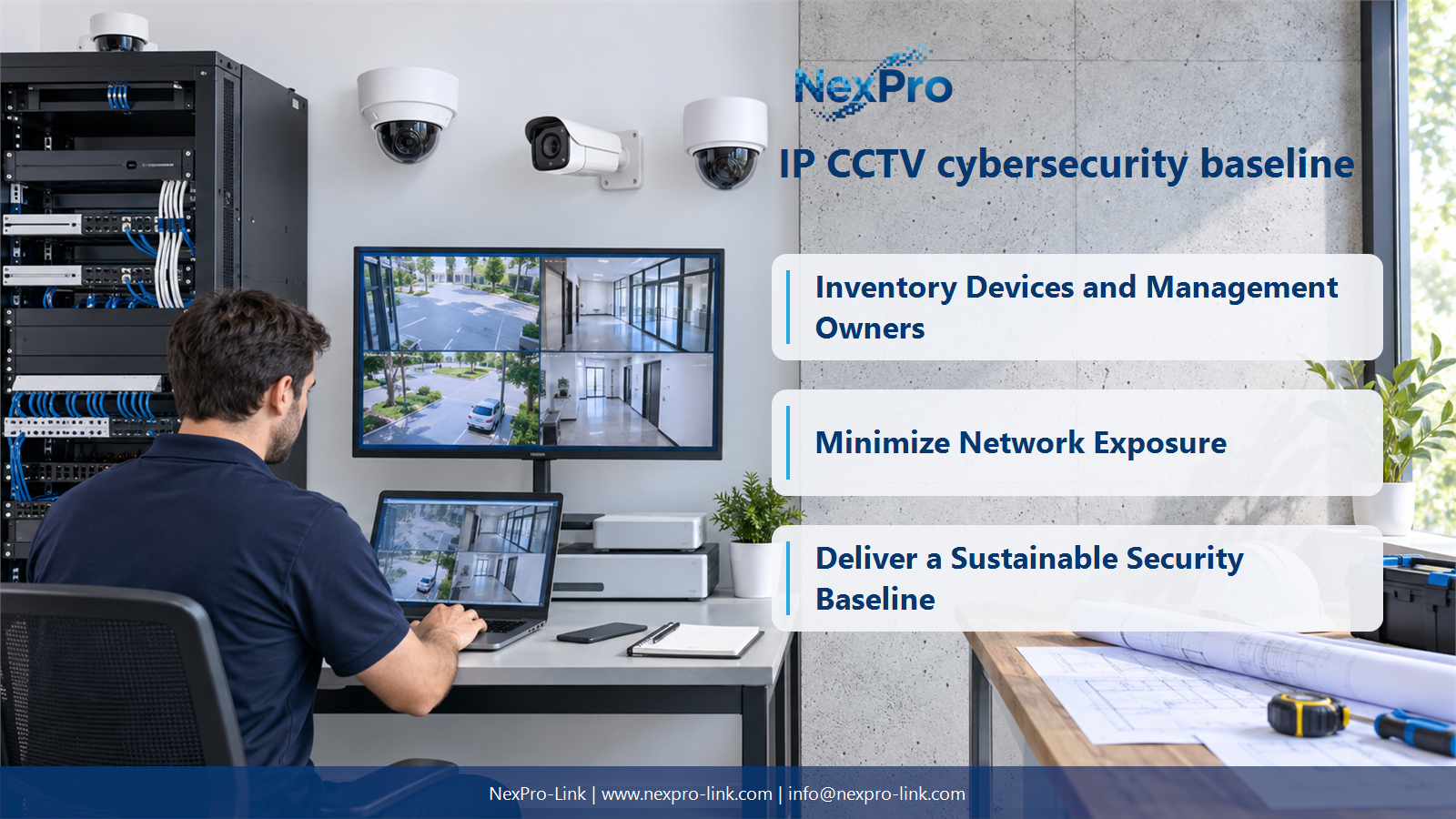
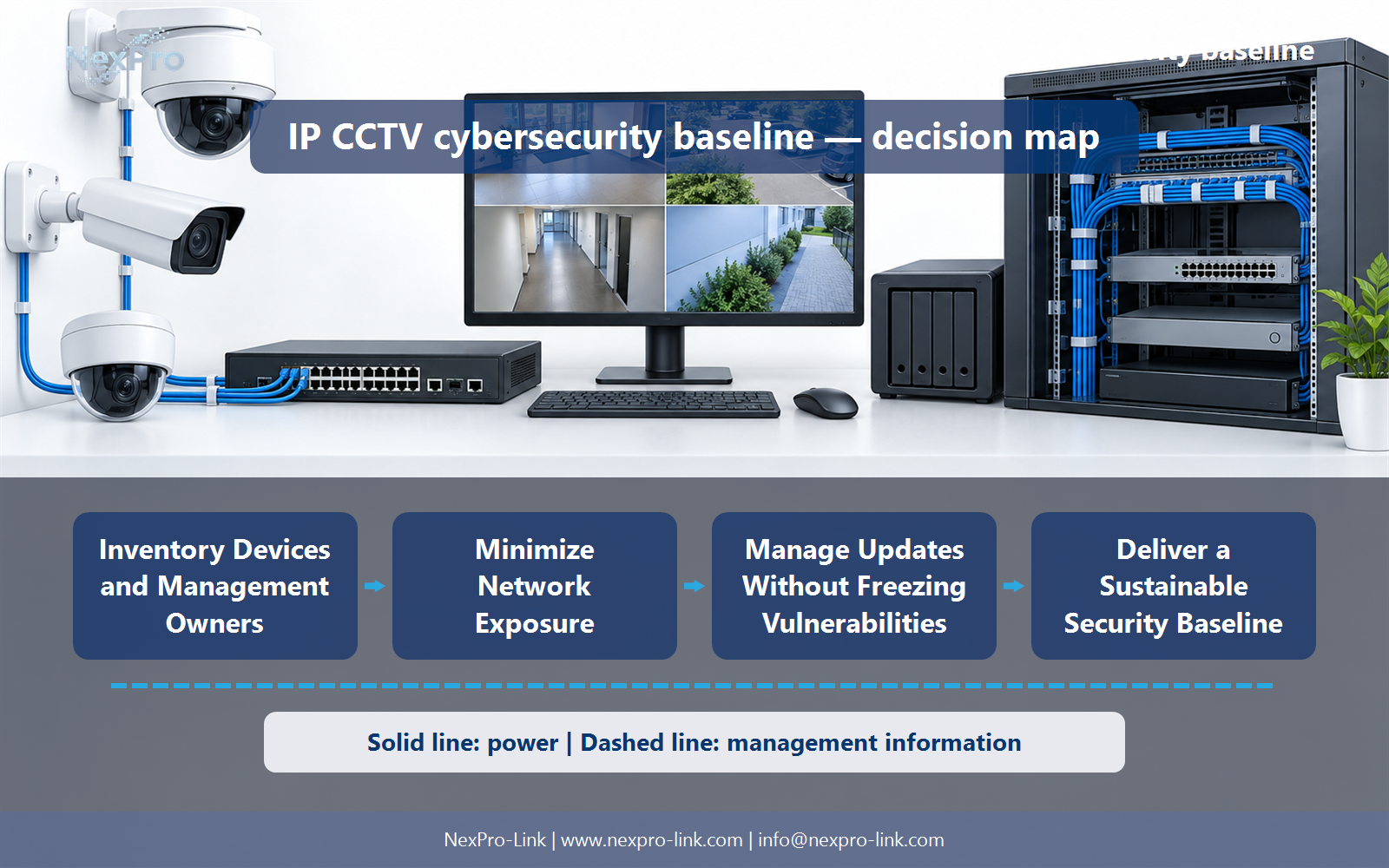
Inventory Devices and Management Owners
Begin with an inventory of devices, software versions, management addresses and responsible owners. Without that map, the client cannot determine which equipment is affected by a security notice or who may change settings. Keep sensitive configuration details in controlled handover material rather than publishing them in a general article or public drawing.
Turn the answer into a working record using Asset, Firmware, Management owner, Network zone.
| Decision area | Buyer question | Required output |
|---|---|---|
| Inventory Devices and Management Owners | What should a CCTV security handover begin with? | Begin with an inventory of devices, software versions, management addresses and responsible owners. |
| Create Separate Accounts and Roles | Should all CCTV users share the installer account? | No. |
| Minimize Network Exposure | Does a CCTV VLAN provide complete network security? | A VLAN organizes traffic into a separate network segment, but access between segments still needs explicit controls. |
Section 02
Create Separate Accounts and Roles
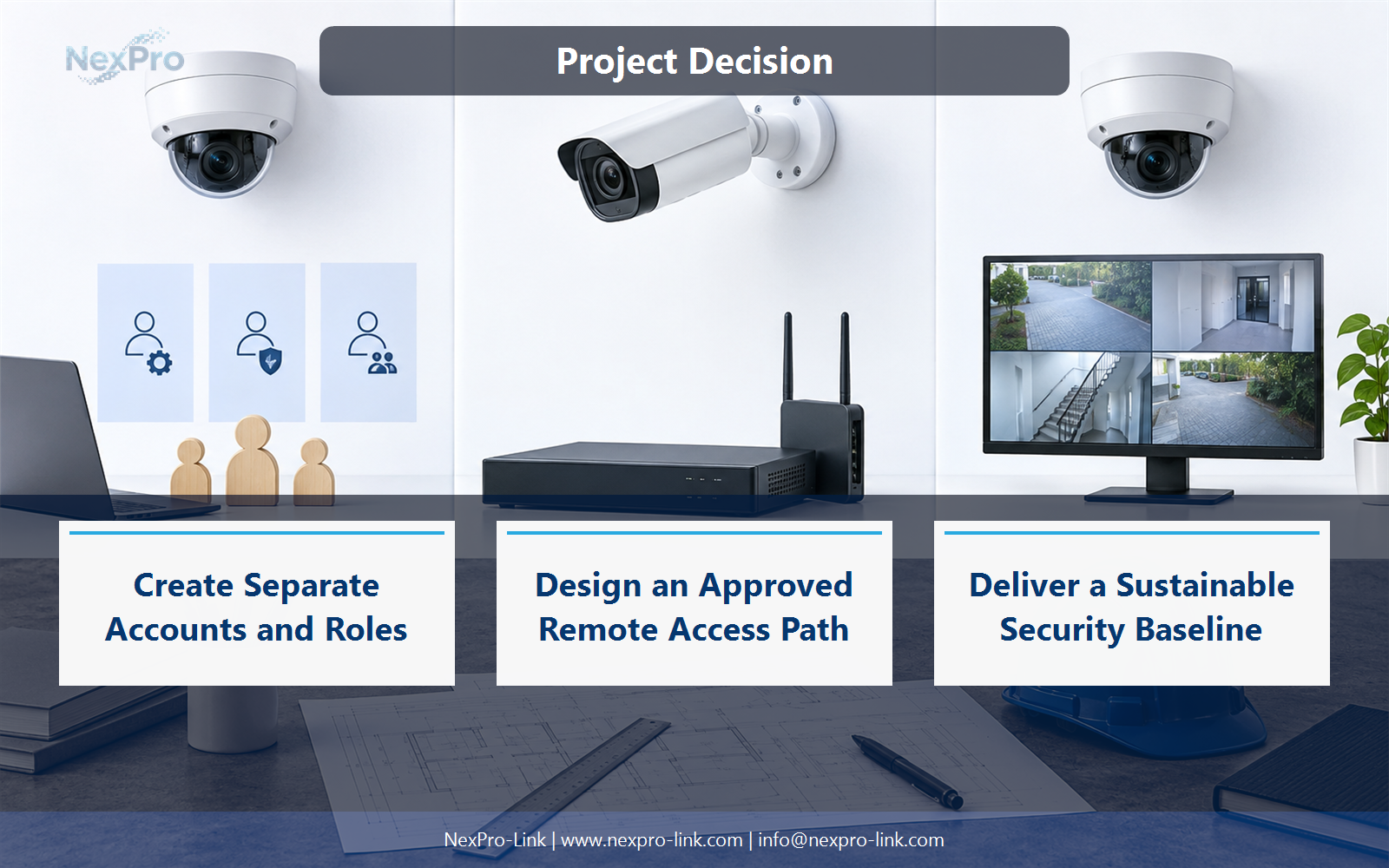
No. Separate administration from routine viewing and give each role only the functions it needs. Remove temporary installation access through the agreed handover process and store recovery information securely. A role plan makes maintenance and incident review more accountable than distributing one powerful password to every operator.
Use Role, View, Export, Configure, Account owner to compare options on the same basis. Keep product capability, project assumption and operating responsibility in separate columns.
Section 03
Minimize Network Exposure
A VLAN organizes traffic into a separate network segment, but access between segments still needs explicit controls. Define which recorders, clients and management services can communicate with cameras. Disable unnecessary services where supported and avoid exposing device management directly to the public internet merely to make remote viewing convenient.
The project output should make Source zone, Destination, Required service, Access decision traceable from input to acceptance.
- Confirm the answer to: Does a CCTV VLAN provide complete network security?
- Record the project fields: Source zone / Destination / Required service / Access decision.
- Keep product capability, project assumptions and site responsibility in separate records.
Section 04
Design an Approved Remote Access Path
No. Assess identity controls, service dependence, data handling and account recovery for the selected remote service. A managed gateway or VPN may be appropriate when supported by the owner's IT design, but the choice must fit the site. The camera protocol list alone does not establish a secure remote-access architecture.
Record Remote role, Approved path, Authentication, Expiry, Recovery before selecting a product family. That makes later substitutions possible without silently changing the operational requirement.
Section 05
Manage Updates Without Freezing Vulnerabilities
No. Track security notices and supported releases, evaluate relevant fixes, and test updates on representative devices before wider rollout where practical. Urgent risk may require accelerated mitigation. Keep compatibility, configuration backup and the vendor-supported recovery method visible instead of choosing between uncontrolled updates and permanent firmware stagnation.
Review Device family, Current version, Change reason, Pilot, Recovery with the party that will operate or maintain the system.
Section 06
Deliver a Sustainable Security Baseline
Provide the device inventory, role design, allowed traffic, remote-access arrangement and update ownership in the agreed secure format. Record unresolved limitations and operational responsibilities. NexPro-Link product discussions should use the actual device capabilities; features found in another manufacturer's hardening guide must not be attributed to NexPro-Link equipment.
Use Control, Implemented setting, Responsible owner, Maintenance action as the handoff between design and procurement.
Engineering references
These sources support the general planning principles. Always use the selected product's current datasheet and applicable project standards for final design.