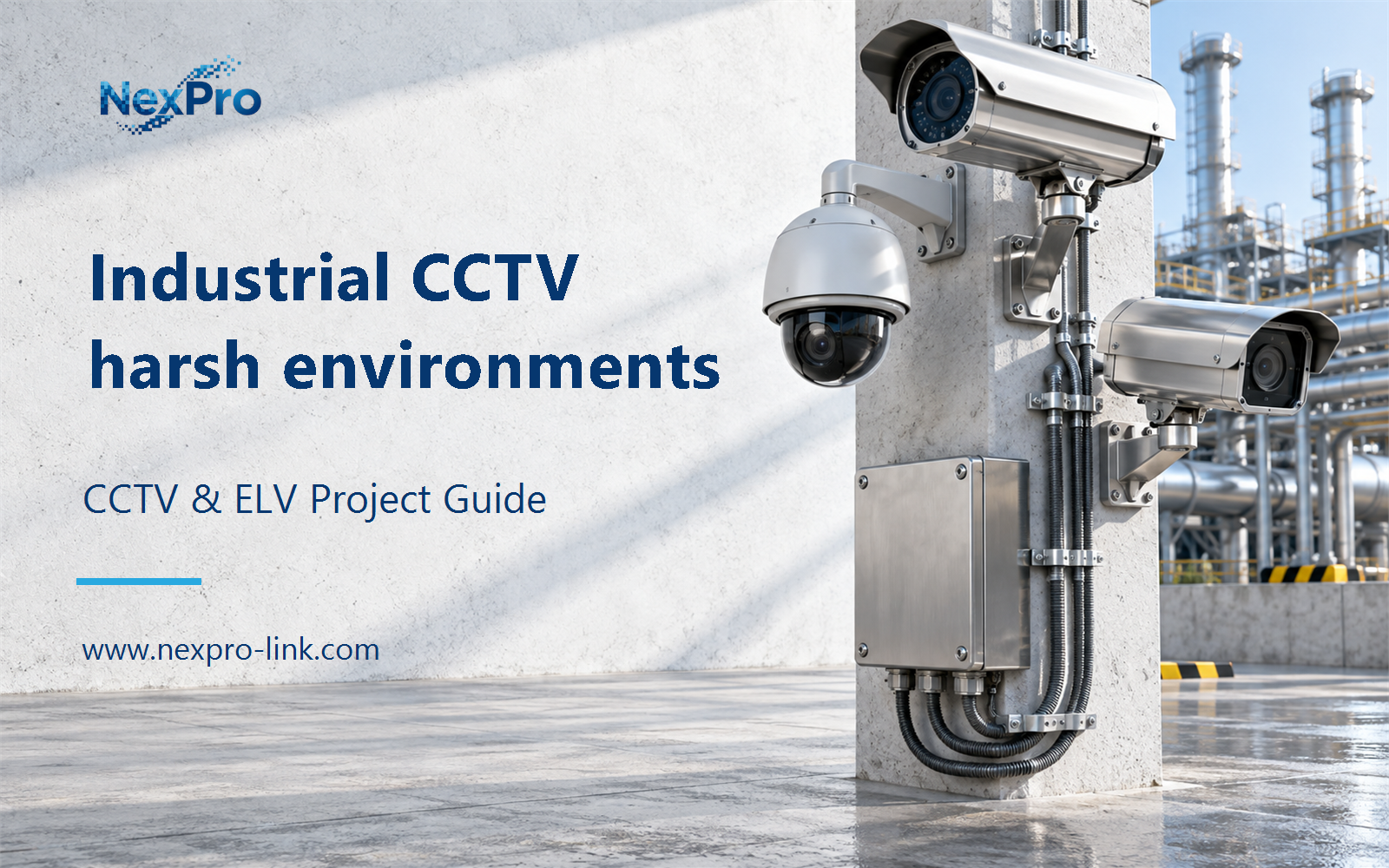
Plan industrial CCTV harsh environments with practical guidance on classify each environmental stress and place recording equipment in suitable areas. NexPro-Link project guide.
Section 01
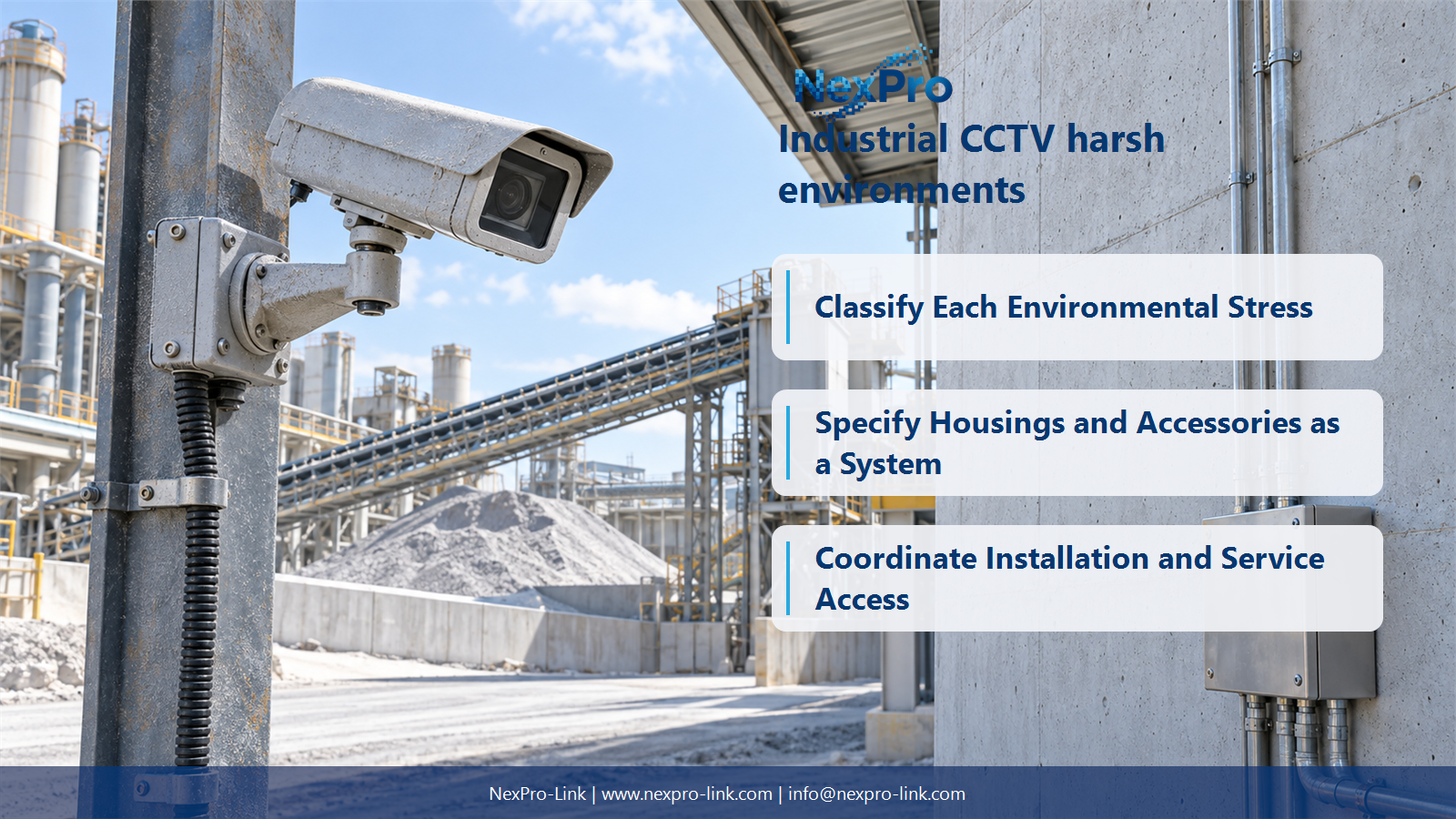
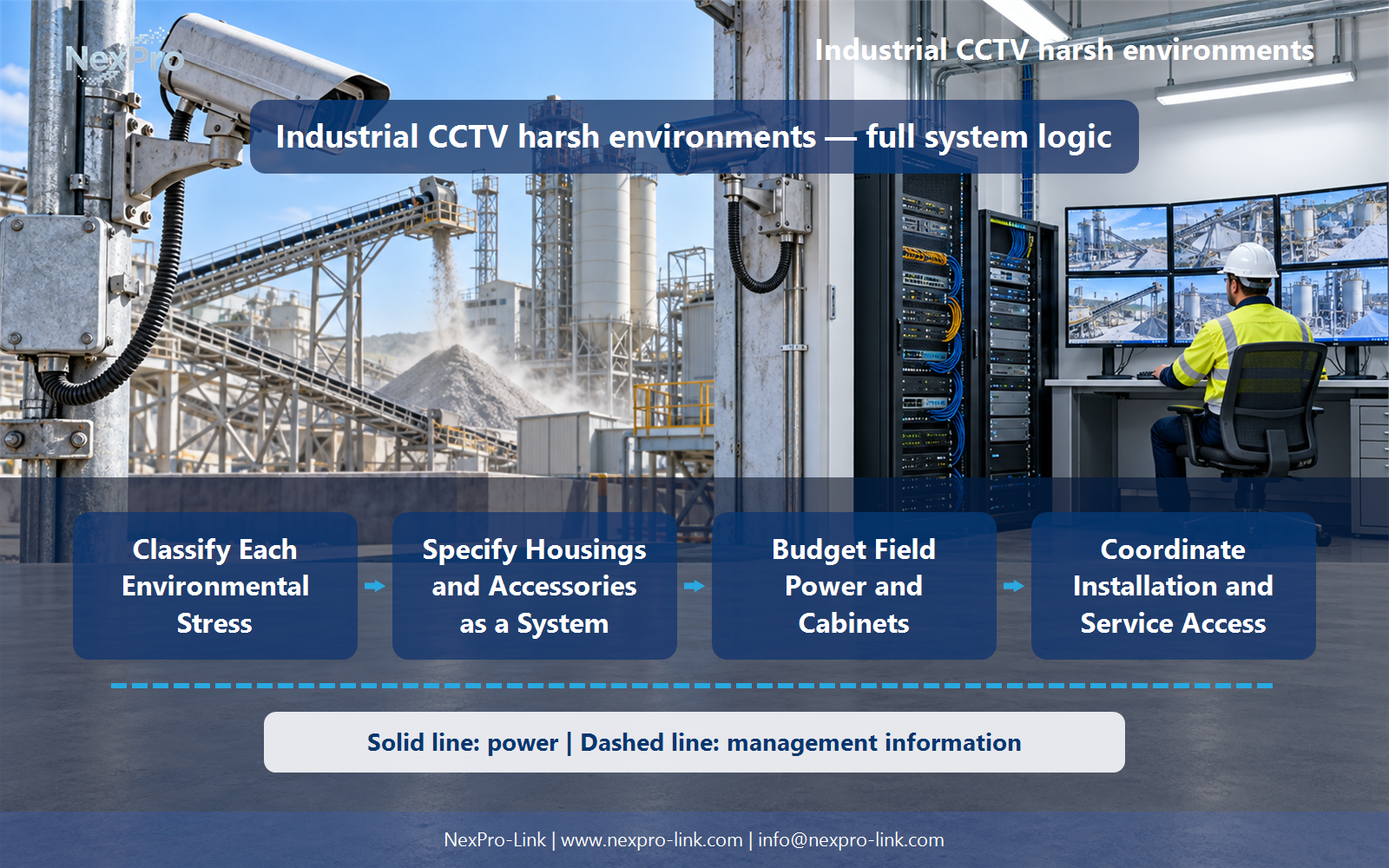
Classify Each Environmental Stress
Dust, temperature, vibration, cleaning and chemical exposure affect different parts of the installation. Specify each condition at the actual device location. A single industrial label or enclosure rating does not describe every environmental stress the camera, connectors and network equipment must withstand.
Turn the answer into a working record using Location, Dust, Temperature, Vibration, Chemicals.
| Decision area | Buyer question | Required output |
|---|---|---|
| Classify Each Environmental Stress | What makes industrial CCTV selection different? | Dust, temperature, vibration, cleaning and chemical exposure affect different parts of the installation. |
| Keep IP and Explosion Protection Separate | Does IP67 mean a camera is explosion-protected? | No. |
| Specify Housings and Accessories as a System | Can a protective housing solve every camera environment problem? | It may address certain conditions only when the complete arrangement is suitable, including heat removal, window effects, power and entries. |
Section 02
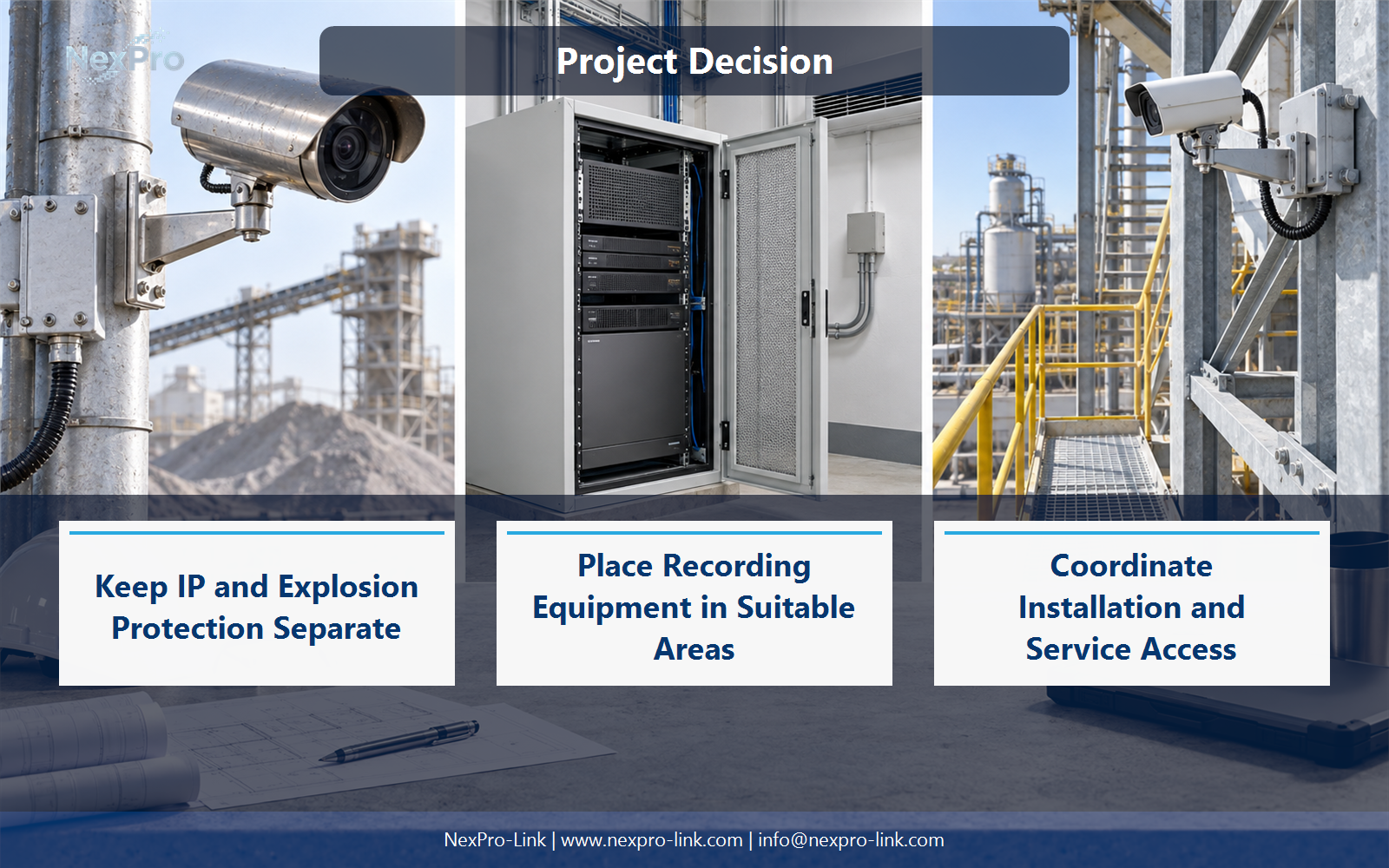
Keep IP and Explosion Protection Separate
No. An ingress-protection rating and explosion-protection suitability address different requirements. Do not combine them in one unqualified product description. Hazardous-area selection needs the appropriate complete equipment arrangement and specialist design for the classified location, not an ordinary camera chosen only by IP rating.
Use Requirement, Meaning, Equipment scope, Separate decision to compare options on the same basis. Keep product capability, project assumption and operating responsibility in separate columns.
Section 03
Specify Housings and Accessories as a System
It may address certain conditions only when the complete arrangement is suitable, including heat removal, window effects, power and entries. Added heaters or fans change loads and maintenance. Do not assume an enclosure automatically extends every camera specification or grants a certification to its contents.
The project output should make Housing function, Camera condition, Accessory load, Maintenance traceable from input to acceptance.
- Confirm the answer to: Can a protective housing solve every camera environment problem?
- Record the project fields: Housing function / Camera condition / Accessory load / Maintenance.
- Keep product capability, project assumptions and site responsibility in separate records.
Section 04
Place Recording Equipment in Suitable Areas
Not when a more suitable controlled location can meet the architecture. Keep recorder and storage conditions within their specified limits and use an appropriate network path from the field. Remote placement changes backbone and power dependencies, which must remain visible in the design.
Record Field equipment, Recorder room, Backbone, Environment before selecting a product family. That makes later substitutions possible without silently changing the operational requirement.
Section 05
Budget Field Power and Cabinets
Include the actual camera mode and any supported housing accessories, then distinguish PoE demand from separately powered loads. Local cabinets may add their own cooling or control equipment. Protect the required recording path without assuming the camera's nominal daytime watts cover the whole field installation.
Review PoE load, Separate accessory, Cabinet service, Backup with the party that will operate or maintain the system.
Section 06
Coordinate Installation and Service Access
Include environmental specifications for cameras, connectors, cable routes, cabinets and local network equipment, along with maintenance access. State the ordinary-area and specialist-area boundaries. A complete chain is useful only when the components and installation method suit the places where they operate.
Use Component, Environment, Mounting, Service, Supply scope as the handoff between design and procurement.
Engineering references
These sources support the general planning principles. Always use the selected product's current datasheet and applicable project standards for final design.